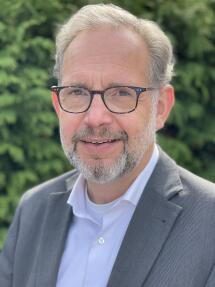
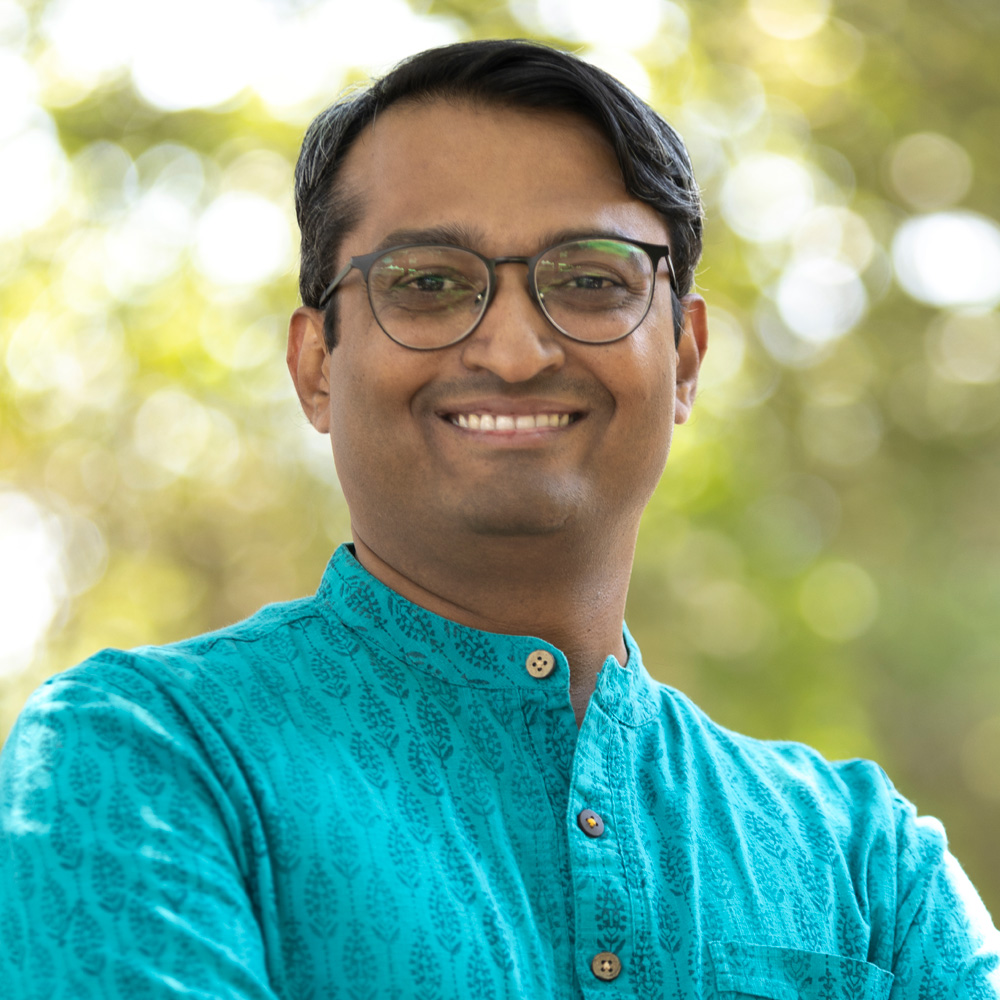
Dr. Christian Peters is an Associate Professor of Church History at the University of Münster , leading the Institute for Westphalian Church History and the Münster Research Centre for Pietism . His scholarly contributions focus on the evolution of Reformation-era theology , Pietist movements , and territorial church governance from the 16th to 18th centuries. Peters' research spans 21st-century church historiography , confessional text analysis , and regional Protestant developments . His recent publications explore Westphalian church orders , Reformation jubilees , and early modern liturgical materials , with a particular emphasis on Lutheran and Reformed interplay and territorial identity formation . His editorial work includes the Yearbook for Westphalian Church History (2018-2024), reflecting his role in academic publishing and interdisciplinary collaboration . Peters has also contributed extensively to lexicographic entries in Die Religion in Geschichte und Gegenwart and Luther Handbuch , focusing on Reformation figures and confessional doctrines .
Christopher Hearty is a Professor in the Department of Physics & Astronomy at the University of British Columbia (UBC), Faculty of Science, and serves as an IPP (Institute of Particle Physics) Principal Research Scientist. His office is located in Hennings 268 with laboratory space at TRIUMF/Hennings 222, where he conducts cutting-edge experimental particle physics research using major international facilities. Hearty earned his B.Sc. in Mathematics and Physics from Simon Fraser University (1982), followed by a Ph.D. in Physics from the University of Washington (1987). He completed postdoctoral research at Lawrence Berkeley National Laboratory from 1987 to 1994 before joining UBC. B.Sc., Mathematics and Physics, Simon Fraser University, 1982 Ph.D., Physics, University of Washington, 1987 Postdoctoral Researcher, Lawrence Berkeley National Laboratory, 1987-1994 His research program focuses on direct searches for physics beyond the Standard Model through e+e- collisions, with particular emphasis on dark sector phenomena including dark photons, axion-like particles, and strongly interacting dark matter. As a key contributor to the Belle II experiment, he develops advanced calorimeter calibration techniques, reconstruction algorithms, and trigger systems while mentoring students in machine learning applications for large-scale data analysis. His work bridges theoretical phenomenology with experimental verification in the search for new fundamental particles. Recent publications demonstrate a concentrated effort on dark sector exploration at Belle II, featuring innovative approaches like graph neural networks for photon reconstruction and sophisticated analysis of displaced vertices. The research spans both visible and invisible decay channels, significantly advancing constraints on dark matter models while establishing Belle II's sensitivity to elusive particles through precision measurements of e+e- collision data. Hearty's scientific recognition includes: APS Fellow (2015) Breakthrough Prize in Fundamental Physics (2016) as part of the T2K collaboration He actively supervises graduate students on thesis projects spanning dark photon searches, axion-like particle detection, and detector development, while serving on UBC's teaching peer review committee and as LHCb chief reviewer for CERN's LHCC committee. His mentorship provides students with hands-on experience in international collaborations, detector instrumentation, and advanced data analysis techniques. Based at TRIUMF Canada's particle accelerator centre and UBC's Department of Physics & Astronomy, Hearty leads a research group within the global Belle II collaboration. His team contributes to multiple detector subsystems including calorimetry and tracking systems, while developing novel analysis frameworks for new physics signatures in high-energy collision data.
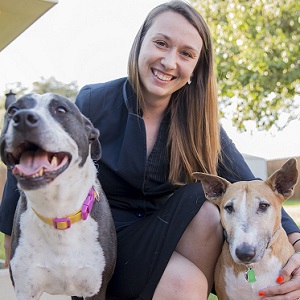
Alexandra Protopopova is an Associate Professor in the Applied Biology department at the Faculty of Land and Food Systems , University of British Columbia. She holds the NSERC/BC SPCA Industrial Research Chair in Animal Welfare and focuses on improving animal shelter practices and companion animal welfare. PhD in Behavior Analysis, University of Florida MS in Behavior Analysis, University of Florida BS in Pre-Veterinary and Animal Sciences, University of Massachusetts Amherst BS in Neuroscience, University of Massachusetts Amherst Her research explores companion animal behavior , shelter interventions , and human-animal relationships , with recent work on pet owner behavior during climate change, shelter stressors, and animal adoption strategies. Her publications span journals like Journal of Applied Animal Welfare Science and Behavioral Processes . Her awards include the NSERC/BC SPCA Industrial Research Chair . She supervises graduate student Lexis Ly (PhD in Applied Animal Biology) and collaborates on interdisciplinary research projects involving undergraduate students.
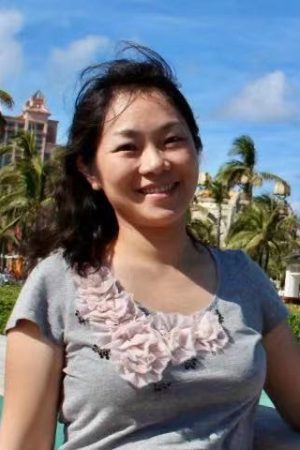
Jing Yang is a full Professor and Director of MS CS Program in the Computer Science Department at the University of North Carolina at Charlotte (UNCC). She has been actively involved in data visualization and visual analytics research since joining UNCC in 2005 after completing her PhD at Worcester Polytechnic Institute. Dr. Yang earned her Bachelor's degrees in Engineering Mechanics and Computer Science from TsingHua University in 1997 and completed her Ph.D. in Computer Science from Worcester Polytechnic Institute in May 2005 under advisors Matthew O. Ward and Elke A. Rundensteiner. Her research focuses on developing visual analytics techniques for abstract data including multidimensional data, time-oriented data, networks, hierarchies, text documents, and trajectory data. She conducts design studies for application domains such as sports, bioinformatics, finance, network security, and health, while exploring fundamental visualization topics like interactions, insight management, clustering-based approaches, and animations. Her recent work emphasizes sports analytics, urban data, and multivariate time series visual analytics. Analysis of Dr. Yang's publication record reveals a strong focus on practical applications of visualization techniques across diverse domains. Her work consistently bridges theoretical visualization frameworks with real-world data challenges, particularly in transportation (taxi trajectories), sports (tennis match analysis), financial transactions, and bioinformatics. The publications demonstrate an evolution from foundational visualization techniques to increasingly sophisticated domain-specific applications. Dr. Yang has secured substantial research funding from NSF, EPA, DHS, and industry partners including Google and Bank of America. Her grants portfolio includes significant projects like TrajAnalytics (NSF, $200,950), Visualizing Event Dynamics (NSF EAGER, $75,317), and Visualizing High Dimensional Categorical Datasets (Google Faculty Research Award, $60,000), among others totaling over $4 million in research support. As an educator, Dr. Yang has taught numerous courses including Visual Analytics, Information Visualization, and Database Design. She directs the Charlotte Visualization Center and has mentored numerous students through research projects. Her collaborative approach is evident in her extensive co-authorship network spanning multiple institutions and disciplines. Current research directions include narrative animation for streaming text visualization and advanced techniques for exploring high-dimensional categorical datasets.
Kalina Bontcheva is a Senior Researcher in the Natural Language Processing Group within the Department of Computer Science at the University of Sheffield. She holds an EPSRC Career Acceleration Fellowship (working part-time since October 2015) focused on personalized summarization of social media content. Her research spans multiple EU-funded projects including PHEME (computing veracity of social media), TrendMiner, DecarboNet, and uComp, with significant contributions to the GATE (General Architecture for Text Engineering) open-source NLP infrastructure since 1999. Dr. Bontcheva's research interests focus on the intersection of natural language processing and social media analysis. Her work encompasses NLP for social media, semantic search, information extraction from social platforms, crowdsourcing of NLP corpora, collaborative text annotation, semantic technologies, and text mining and analytics. She has particular expertise in developing methods for personalized, abstractive multi-document summarization across different social media platforms, addressing the challenges of noisy, jargon-filled and dynamic content. Her interdisciplinary approach combines machine learning, semantic technologies, and social dimension analysis to create systems that adapt to individual users' information seeking goals. Analysis of her recent publications reveals a strong focus on social media processing challenges, with emphasis on Twitter analysis, temporal expression recognition, and handling noisy text. Her work consistently addresses the unique characteristics of social media content and develops specialized techniques for information extraction, sentiment analysis, and user geolocation within these platforms. The GATE framework serves as the foundation for much of her tool development, demonstrating her commitment to creating reusable, open-source NLP infrastructure. Her most significant award is the EPSRC Career Acceleration Fellowship, which supports her work on personalized social media summarization. This prestigious fellowship includes a substantial budget of £560k and involves collaborations with industry partners including The Press Association, British Telecom, and Fizzback. Dr. Bontcheva has led numerous major research projects throughout her career. She was Principal Investigator on three EU-funded projects (MUSING, TAO, and ServiceFinder) between 2006-2009, coordinating the TAO consortium with seven partner institutions. She currently leads the PHEME EU project and serves as PI for TrendMiner and DecarboNet European projects, while also contributing as Co-I on the uComp project. Her project portfolio demonstrates consistent success in securing competitive research funding across multiple domains within NLP and semantic technologies. She works within the Natural Language Processing Group at the University of Sheffield, which has been central to the development of the GATE infrastructure. Her work connects with various initiatives including the GATE Cloud platform and the TextVRE project for e-humanities textual studies. She has established collaborations with organizations including the Press Association, British Telecom, Oxford Internet Institute, and Sheffield's Department of Journalism to ensure her research addresses real-world needs across different user communities.
Brian Towles is an Adjunct Assistant Professor in the Department of Electrical and Computer Engineering at Duke University. He earned his D.Phil. from Stanford University in 2005 and has contributed extensively to computer architecture and machine learning systems through research and publications. His work focuses on specialized hardware for molecular dynamics simulations and network-on-chip design. Research Interests: Dr. Towles specializes in computer architecture, particularly in network-on-chip design, event-driven computation, and low-latency interconnects for scientific computing. His research enables high-performance simulations in molecular dynamics and machine learning, with notable collaborations on Anton/TPU series supercomputers. Publication Trends: His publications span from 2001 to 2024, emphasizing Custom ASICs for scientific computing (Anton 2/3, TPUv4) Optimized interconnects and routing algorithms Event-driven and cycle-accurate simulation frameworks Resilient systems for large-scale machine learning
Xiaonan Lu is an Associate Professor of Electrical Engineering Technology at Purdue University's School of Engineering Technology, with a courtesy appointment in the Elmore Family School of Electrical and Computer Engineering. His research focuses on critical challenges in modern power systems dominated by inverter-based resources, particularly stability and control in microgrids and renewable-integrated grids. His research interests span power systems engineering with emphasis on small-signal stability analysis, dynamic modeling of hybrid AC/DC microgrids, and advanced control strategies for grid-forming and grid-following inverters. He investigates AI-assisted modeling techniques, resilience enhancement through hydrogen integration, and data-driven optimization of microgrid operations to address challenges in low-inertia power systems and distributed energy resource coordination. Analysis of his recent publications (2024-2025) reveals dominant trends toward AI-aided stability assessment, seamless control transitions between inverter modes, and quantifiable trade-offs in voltage regulation and power sharing. His work consistently addresses practical implementation challenges including communication delays, cyber resilience, and standardized testing methodologies for inverter-dominated systems.
Ronald J. Glotzbach is an Associate Professor at Purdue University's West Lafayette campus within the School of Applied and Creative Computing . His work focuses on web programming and development , leading projects that integrate dynamic content, databases, and educational technologies . He has taught courses such as CGT 356 (Web Programming), CGT 353 (Interactive Media), and CGT 456 (Advanced Web Programming). B.S. in Computer Graphics Technology M.S. in Technology Ph.D. in Curriculum and Instruction (pursuing) His research explores leading-edge web technologies for delivering interactive content, emphasizing web-enabling software, dynamic media integration, and mobile programming . Key trends in his publications include RSS technologies in education , web-based evaluation systems , and geospatial data tools for environmental sciences. Scientific awards include: Outstanding Professor (2003, 2004) CGT Dwyer Award for Outstanding Undergraduate Teaching (2005) CGT Outstanding Un-Tenured Faculty Award (2008) Professor Glotzbach has led numerous student teams in CGT projects , served as SIGGRAPH Student Volunteer Chair (2003-2005) , and collaborated with industry partners like Boeing (F-15 Distributed Mission Trainer) and Microsoft (XML Documents Testing Team) . He also provided expert testimony in a copyright case (2006) for Wargo & French, LLP.
Orit Shaer is a Professor and co-Chair of Computer Science at Wellesley College , where she founded and directs the Human-Computer Interaction (HCI) Lab . Her work bridges tangible interaction, human-AI collaboration, and mixed-reality interfaces, focusing on transforming work and learning environments through embodied technologies. Education : B.A. from Academic College of Tel-Aviv, M.S. and Ph.D. in Computer Science from Tufts University Research interests center on novel human-computer interaction paradigms : Human-AI collaboration frameworks Tangible and embodied interface design Mixed-reality applications for productivity Genomics collaboration tools STEAM education technologies Recent publications highlight human-AI co-creation (CHI 2024), temporal dynamics in automated work (CHIWork 2024), and pandemic-era remote interaction studies (IEEE Pervasive Computing 2021). Awarded: NSF CAREER Award Agilent Technologies Research Award Google App Engine Education Award Pinanski Prize for Excellent Teaching Best Paper Honorable Mention (ACM CHI 2014) Honorable Mention (CHIWork 2022) She co-founded the international CHIWork Symposium and chairs the ACM TEI conference. Her NSF IRES grant (2022) supports US-German collaboration on human-automation interaction.
Gerardo Schneider is a Full Professor in Computer Science at the University of Gothenburg, Sweden, and holds a joint appointment at Chalmers University of Technology. He serves as Head of the Data Science and Artificial Intelligence (DSAI) Division and has previously led the Formal Methods Division and acted as Director of Graduate Studies. University of Gothenburg: 2009–present Chalmers University of Technology: 2009–present Uppsala University: 2002–2003 University of Oslo: 2005–2009 His research focuses on formal methods for software engineering, including contract specification and analysis , privacy policy formalization , model checking , and runtime verification . He works on verification of real-time systems, embedded systems (e.g., smart Java cards), and blockchain-based smart contracts. Key projects include: X-LEGAL (2020–2023): Smart Legal Contracts (Swedish Research Council) PolUser (2016–2019): User-Controlled Privacy Policies (Swedish Research Council) ARVI (2014–2018): Runtime Verification Beyond Monitoring (ICT COST Action) ReMU (2013–2017): Reliable Multilingual Digital Communication (Swedish Research Council) He has supervised numerous PhD and Master’s students in formal methods, blockchain security, and privacy compliance. His tools include SPeeDI (Polygonal Hybrid Systems Verification), CLAN (Contract Normative Conflict Detection), and AnaCon (Controlled Natural Language Analysis).
Professor Nicole Koenig-Lewis is a leading academic in Marketing at Cardiff Business School , with affiliations to the Centre for Climate Change and Social Transformations (CAST) and the International Society for the Circular Economy (IS4CE) . Her career spans over two decades, including roles at Swansea University and Cardiff University, culminating in her current professorship since 2023. Professor of Marketing - Cardiff Business School (2023-present) Reader in Marketing - Cardiff Business School (2018-2023) Senior Lecturer - Cardiff Business School (2016-2018) Research Focus : Her work bridges Sustainable Consumption , Access-Based Consumption , and Consumer Behavior Change , particularly through Sport/Cultural Events and Circular Economy frameworks. Recent projects include developing sustainability toolkits for rugby events and analyzing the psychological drivers of eco-packaging adoption. Publication Trends (2025-2019): Over 40 publications in journals like Journal of Business Research , European Journal of Marketing , and Journal of Environmental Psychology , with recurring themes in Behavioral Indicators , Event Sustainability , and Circular Consumption . Scientific Recognition : Recipient of multiple ESRC/UKRI grants, Outstanding Contribution Awards , and Best Paper Prizes . Notably led interdisciplinary teams to Highly Commendable 'Outstanding Partnership Impact' (2025) and 'Excellence in Environmental Sustainability' (2022) . Supervised 9 PhD students (current and past) Co-led 7 sustainability toolkits/conference impact projects Contributed to Routledge Companion to Marketing & Sustainability (2025) Labs & Collaborations : Co-founded the Cardiff University Festival Research Group , collaborating with organizations like The R&A , Pledgeball , and Welsh Government to transform events into sustainability catalysts. Currently mentors 4 active PhD students in circular economy and behavioral change.
Onita Basu, Professor in the Department of Civil and Environmental Engineering at Carleton University's Faculty of Engineering and Design, specializes in water and wastewater treatment technologies. With a Ph.D. from the University of Waterloo, she leads the Basu Research Group, focusing on filtration/membrane bioreactors, biological removal of pharmaceuticals, and community-based water solutions in Tanzania. Her teaching includes courses like ENVE 3001 Water Treatment Principles and Design and graduate-level membrane processes. B.A.Sc., M.A.Sc. (University of British Columbia) Ph.D. (University of Waterloo) Professional Engineer (P.Eng.) Research Interests: Professor Basu investigates integrated water treatment systems, emphasizing membrane fouling control, nanoparticle disinfection mechanisms, and removal of recalcitrant organics. Her work bridges advanced technologies like ceramic ultrafiltration with practical implementations in low-resource settings through projects such as the Tanzania Water Hub. Recent Publications: Her 2025 studies on silver-doped zinc oxide for antimicrobial water treatment and PFAS removal strategies highlight emerging contaminant solutions, while 2024 work explores graphene oxide adsorption and climate change education programs. Earlier articles focus on membrane fouling, nanoparticle elution, and biofiltration optimization. Labs & Projects: The Basu Research Group operates pilot plants for membrane testing, biofiltration systems, and community engagement initiatives in Tanzania. They hosted Carleton's 3MT event in 2023 and collaborate with institutions like Humber College on NSERC-funded projects.
Prof. Mike Barth is a Professor for Networked Secure Automation Technology at the Karlsruhe Institute of Technology (KIT), affiliated with the Department of Electrical Engineering and Information Technology (ETIT) and the Institute for Control Systems (IRS). His academic background includes a doctorate from Helmut Schmidt University (2011) and a master's degree from Pforzheim University (2008). He previously held roles as a researcher at ABB and as a professor at Pforzheim University, focusing on blended learning and Industry 4.0 integration. Education: PhD in Automation Technology, Helmut Schmidt University (2011) M.Sc. in Product Development, Pforzheim University (2008) Diploma in Mechanical Engineering, Pforzheim University (2006) Research Interests: Automation technology, control systems, Industry 4.0, cyber-physical systems, digital twin engineering, cybersecurity, and IoT protocols. Teaching: Courses include System Modeling, Cyber Physical Production Systems, and Digital Twin Engineering. His research emphasizes secure automation architectures, decentralized systems, and model-based engineering. He chairs multiple committees including IFAC TC3.1 and the VDI/VDE Society for Measurement and Automation. Over 50+ publications span topics like simulation models, industrial security, and robotic integration. Labs/Teams: Leads the IRS Automation Technology team, focusing on innovation in control systems and digital twin applications.
Tim C. McAloone is a Professor and Head of Section at the Department of Civil and Mechanical Engineering Design for Sustainability, Technical University of Denmark (DTU). His work focuses on Design for Sustainability, eco-innovation, and climate action, with a strong emphasis on engineering design and product development. Based in Kgs. Lyngby, Denmark, he leads initiatives addressing sustainable practices in engineering and technology. McAloone has organized major events such as the 18th International Conference on Engineering Design and the Product Development Day, demonstrating his role in advancing academic and industrial collaborations. He has actively participated in workshops and conferences like Nordic Climate Action Weeks and The Future of Eco-Innovation, highlighting his contributions to eco-innovation and climate strategies. With 297 publications and 58 projects to his name, his research spans sustainable design methodologies and systemic approaches to environmental challenges. McAloone holds 13 prizes, reflecting his impactful contributions to the field. His work bridges academia and industry, emphasizing practical solutions for sustainability through design.
Harsha Gangammanavar is an Associate Professor in the Department of Operations Research and Engineering Management (OREM) at Southern Methodist University (SMU), affiliated with the Data Science Institute. He holds a Ph.D. in Operations Research and M.S. in Electrical Engineering from The Ohio State University, and a B.E. in Electronics and Communication Engineering from Visvesvaraya Technological University, India. Education: Ph.D. in Operations Research, The Ohio State University M.S. in Electrical Engineering, The Ohio State University B.E. in Electronics and Communication Engineering, Visvesvaraya Technological University Research Interests: His work focuses on stochastic programming, large-scale computational optimization, and their applications in infrastructure systems, healthcare, and wireless communication. Key areas include optimization under uncertainty, stochastic decomposition methods, and scalable algorithms for power systems and renewable energy integration. Recent Activities & Awards: Recipient of NSF XTRIPODS grant for collaborative research in data science (2024). DOE Office of Science grant for multiscale stochastic optimization (2022). ONR grant for decomposition-based stochastic models in discrete-event systems (2022). Awarded INFORMS Undergraduate Student Paper Award (2021) and INFORMS Minority Affairs Poster Competition (2016). Advising & Grants: Current advisees include Ph.D. students Ishara A.A.D.H., Jackson Forner, Chhavi Sharma, and Zhiyuan Zhang. Former students Niloofar Fadavi, Sakitha Ariyarathne, and others have secured roles in industry and academia. Active in securing grants from AFOSR, ONR, DOE, and NSF. Labs & Teams: Leads research on stochastic optimization algorithms, power grid resilience, and healthcare applications through interdisciplinary collaborations. Open to motivated students for Ph.D. research in optimization and data science.