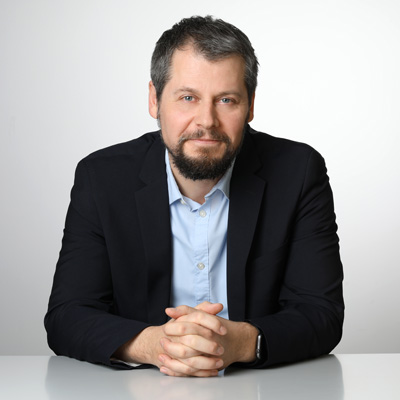
Prof. Dr. Tobias Schütz is affiliated with the Faculty VI - Spatial and Environmental Sciences at the University of Trier , Germany, where he leads the Hydrology team. His research focuses on advanced hydrological modeling, groundwater-stream interactions, urban hydrology, and contaminant transport dynamics. Current faculty member (no part-time status) Active in urban water balance modeling and wetland systems analysis Extensive publication record in peer-reviewed journals Research Interests: Dr. Schütz investigates complex hydrological processes across spatial and temporal scales, including: Quantifying groundwater inflows using thermal imaging Modeling hyporheic exchange in stream networks Urban water balance frameworks for sustainable cities Contaminant mitigation in artificial wetlands Dynamic boundary conditions in water quality systems Flood generation after extreme precipitation Recent Publications: His 2022-2021 work demonstrates innovative approaches in: Non-destructive biofilm enzyme analysis Larval drift experiments in stream ecosystems Multi-model hyporheic exchange quantification Permeable pavement water balance frameworks Urban evapotranspiration downscaling methods Professional Activities: He actively contributes to: Urban hydrology conferences (EGU, Hydrology Days) Editorial work in hydrological publications Datasets for soil moisture and temperature analysis Interdisciplinary collaborations with environmental engineers and ecologists
Dr. Thomas Iserloh is a Researcher in Physical Geography at the University of Trier, Faculty VI. His work focuses on geomorphological, hydrological, and soil-physical processes with particular emphasis on experimental soil erosion research. He has established himself as a leading expert in rainfall simulation techniques and their application to understanding erosion processes in various landscapes, especially steep-slope vineyards. His research interests span geomorphological processes, hydrological dynamics, soil physics, land use change impacts, and sustainable agricultural practices in steep terrain. Dr. Iserloh has developed specialized expertise in using rainfall simulators to study soil erosion mechanisms under controlled conditions, with significant contributions to understanding the combined effects of wind and rain on erosion processes. Analysis of his recent publications reveals a strong focus on comparative studies of soil erosion processes across different landscapes, particularly in vineyard settings across Europe. His work demonstrates a consistent trajectory toward more sophisticated experimental methodologies, integration of technological innovations (like sensor-equipped 'smartstones'), and practical applications for sustainable land management in vulnerable agricultural systems. Dr. Iserloh serves on the editorial boards of the Journal of Soil and Water Conservation and the Spanish Journal of Soil Science, and is an active member of several professional organizations including the European Geosciences Union, German Society for Geomorphology, and German Society of Soil Science. In addition to his research, Dr. Iserloh teaches Foundations of Physical Geography covering geological processes, climate geography, soil geography, and various geomorphological topics, along with field and laboratory methods in Physical Geography. His teaching integrates his research expertise in experimental methodologies for studying earth surface processes.
Dr. Joscha Becker is a Researcher at the University of Hamburg, affiliated with the Faculty of Mathematics, Computer Science and Natural Sciences and the Department of Earth System Sciences. He works in the Working Group for Soil Protection and Soil Technology (AG Bodenschutz und Bodentechnologie) under Prof. Dr. Annette Eschenbach at the Institute of Soil Science. Since October 2019, he has been conducting research on ecosystem carbon, nutrient, and water cycles, with a focus on plant-soil interactions and climate change impacts on soil systems. 2017: Dr. rer. nat. in Biodiversity and Ecology program, University of Göttingen 2013: Diplom-Geoökologe (Geoecology), University of Potsdam Becker's research focuses on the interconnection of ecosystem carbon, nutrient, and water cycles; plant-soil interactions; spatial dynamics of biogeochemical process structures; and climate and land use effects on soil carbon sequestration. His work spans diverse ecosystems including tropical forests on Mount Kilimanjaro, estuarine environments along the Elbe River, and agricultural systems in Namibia. His research employs field studies, laboratory analyses, and modeling approaches to understand biogeochemical processes under changing environmental conditions. His publication record demonstrates a strong focus on carbon cycling in diverse ecosystems, with recent work examining soil organic matter composition along elevation gradients, carbon stabilization in floodplains and estuaries, and nitrogen cycling in agricultural systems. His research increasingly addresses climate change impacts, particularly examining how sea-level rise, saltwater intrusion, and extreme heat events affect soil processes and ecosystem functioning. Becker teaches several courses at the University of Hamburg including the Seminar Basiswissen Boden (B.Sc. Geosciences), Geochemical Basic Practical (B.Sc. Geosciences), Lab Practical 'Analysis & Evaluation of Soil as a Protected Resource' (M.Sc. Geosciences), and Field Practical 'Interactions in the Soil, Water Balance and Vegetation System' (M.Sc. Geosciences). He also supervises student theses.
Professor Susanne Crewell is a leading researcher in atmospheric science at the University of Cologne's Institute for Geophysics and Meteorology. She leads the Atmospheric Water Cycle and Remote Sensing (AWARES) research group, focusing on advanced remote sensing techniques to study atmospheric processes with particular emphasis on the Arctic climate system. Her research spans multiple areas including atmospheric water cycle dynamics, microwave radiative transfer, sensor synergy at ground-based atmospheric observatories, and the integration of observational data with atmospheric models. A significant portion of her work addresses water vapor, clouds, precipitation and radiative effects in the Arctic, utilizing data from long-term measurements at Ny-Ålesund and major field campaigns like MOSAiC and EUREC4A. She also investigates tropical cloud systems and their response to global warming, as well as developing satellite-based monitoring techniques for atmospheric parameters. Her recent publications reveal a strong trend toward integrating multiple observational platforms and applying advanced analytical techniques, including artificial intelligence applications for atmospheric data analysis. This interdisciplinary approach spans from ground-based instrumentation development to satellite data validation and climate model improvements. Professor Crewell actively supervises numerous doctoral and master's students as evidenced by her extensive research group, and collaborates with international partners across major atmospheric research initiatives. Her work has significant implications for understanding climate change mechanisms, particularly in sensitive polar regions, and for improving weather and climate prediction models.
Andrea Schmidts is an Assistant Professor leading an Emmy Noether research group at TranslaTUM and the Department of Medicine III, Technical University of Munich School of Medicine. Her work focuses on overcoming cancer resistance to CAR-T cell therapy through CRISPR-based high-throughput screening and advanced gene editing techniques to engineer resilient CAR-T cells for clinical translation. Dr. Schmidts completed medical training at Freiburg and Aberdeen Universities, followed by hematology/oncology specialization starting in 2013. Her 2017-2022 research at Harvard Medical School established foundational work in adoptive cell therapies. Her current research program bridges basic science and clinical application in cancer immunotherapy. Her research interests center on CAR-T cell resistance mechanisms, with emphasis on dual-targeting strategies for antigen escape, cytokine signaling modulation (particularly IFNγ pathways), and novel engineering approaches including non-cleavable hinges and switchable CAR systems. Recent work integrates generative AI for de novo binder design and nucleocytosolic delivery systems for programmable editors. Analysis of her 2020-2025 publications reveals dominant themes: overcoming antigen escape in multiple myeloma through TACI/BCMA dual-targeting, stromal penetration in solid tumors via mesothelin CAR-T cells secreting bispecific molecules, and toxicity management through IFNγ pathway modulation. Her work spans hematologic malignancies and solid tumors with strong clinical trial orientation. Key awards include: Emmy Noether-Program, German Research Foundation (2022) John Hansen Research Grant, DKMS (2020) Research Fellowship, German Cancer Aid (2018) Scholar, German National Academic Foundation (2008) As head of the CAR-T Cell Therapies group at TranslaTUM, she directs translational research from bench to bedside, utilizing TUM's Preclinical Imaging Core and collaborating with clinical oncology teams. Her work includes developing early-phase clinical trials for relapsed/refractory malignancies and engineering next-generation CAR-T platforms with improved safety profiles.
Mai S. is a researcher at Deutsches Elektronen-Synchrotron (DESY) working in the Photon Science division. Their research focuses on using X-ray free-electron lasers to study ultrafast molecular dynamics and photochemical processes, with particular emphasis on molecular imaging techniques and photo-protection mechanisms relevant to biological systems. Mai S. specializes in Coulomb explosion imaging , a cutting-edge technique that enables direct observation of molecular structural changes during photoexcitation events. Their work bridges physics and chemistry to investigate how heterocyclic molecules like 2-thiouracil redistribute photoenergy into electronic and nuclear degrees of freedom. This research has significant implications for understanding DNA photo-protection from UV damage and developing organic photocatalysis applications. Recent publications demonstrate expertise in capturing symmetry reduction during internal conversion processes using advanced X-ray methodologies. The 2025 Nature Communications paper provides unprecedented insights into ultrafast molecular dynamics, representing a major contribution to the emerging field of attosecond chemistry. Mai S.'s work exemplifies the application of DESY's world-class X-ray facilities to solve complex problems in molecular science. Mai S. is part of an international collaborative team utilizing DESY's photon science infrastructure to push the boundaries of molecular imaging. Their research contributes to the development of new methodologies for visualizing molecular processes with both high temporal ( femtosecond ) and spatial ( atomic ) resolution, enabling scientists to observe previously inaccessible quantum mechanical phenomena in complex molecular systems.
Uri Borges is a Researcher at the Institute of Psychology , German Sport University Cologne . Previously a PhD student in the Section Performance Psychology at the same institution, Borges focuses on interdisciplinary research at the intersection of neuroscience, sports science, and psychophysiology. Current Role: Researcher in Health & Social Psychology Research Affiliation: Institute of Psychology, German Sport University Cologne ORCID: 0000-0002-1032-0580 Research Interests center on: Neural mechanisms of emotion regulation in sports Vagus nerve stimulation and cognitive functions Heart rate variability (HRV) applications Aggression dynamics and recovery processes Psychophysiological responses to stress Performance optimization through biofeedback Recent Publications demonstrate expertise in: Vagus nerve stimulation physiology Exercise psychology interactions Systematic review methodologies Respiratory-biofeedback interventions Elite athlete performance optimization Stress-coping mechanisms Scientific Awards : Second Prize at Promotoren Think Tank Pitch-Event (2023) Best Poster Award at 55th German Sport Psychology Association Annual Conference (2023) Academic Contributions : Peer-reviewer for journals: European Journal of Sport Science, Physiological Measurement Session Chair at European Congress of Sport & Exercise Psychology (2024) Guest Lecturer on taVNS cognitive applications (2024)
Marco Grawunder is a Lecturer at the Institute of Dance and Movement Culture, German Sport University Cologne. His work focuses on arts education, particularly in dance and movement, with an emphasis on personality development, participant empowerment, and teaching skills. He actively bridges artistic practice with social dialogue through research and community projects. His research examines interpersonal trust as a constitutive element in artistic-educational processes using Movement Theatre methodology. Key interests include how improvisation fosters collaborative learning environments and the role of physicality in democratic education. Projects like Act 4 Democracy and Listen to Gym demonstrate practical applications of his theoretical work in social integration and language acquisition contexts. Recent publications (2021-2024) reveal consistent focus on dance pedagogy's evolving methodologies, particularly addressing challenges in virtual teaching environments and group improvisation dynamics. His work consistently connects movement-based practices with broader educational frameworks and social cohesion objectives. Scientific recognition includes: Three consecutive DSHS Cologne Teaching Awards for Practical Courses (2015, 2018, 2022) Brühl City's Sportlerehreplakette honor (2021) Research funding supports significant initiatives: Act 4 Democracy (2024-present): Democracy education through movement-based formats Listen to Gym (2015-present): Second language acquisition via embodied learning Interpersonelles Vertrauen (2020-present): Trust dynamics in Movement Theatre pedagogy Grawunder collaborates extensively within the Institute of Dance and Movement Culture, notably with Christian Büning and Claudia Steinberg. He co-organizes annual events including ITB tanzt performances and Fachtag Tanz in der Kindheit conferences, maintaining active connections between academic research and public artistic engagement.
Prof. Lutz Engelke serves as Honorary Professor for Transformation Design within the Design Department at the University of Applied Sciences Potsdam, while simultaneously leading TRIAD Berlin—a globally operating creative agency with offices in Berlin and Shanghai that employs 200 professionals across 47 disciplines. His career uniquely bridges academic theory and industry practice at the intersection of science, culture, and business, specializing in award-winning theme worlds, expo pavilions, museums, and corporate events. Studied literature, psychology, journalism, and film studies at Freie Universität Berlin Awarded Fulbright scholarship for studies at Cornell University, USA Engelke's research centers on transformation design as a catalyst for innovation, examining how spatial and experiential design addresses global challenges. His work integrates digital communication ecosystems, organizational creativity frameworks, and the globalization of design practices. He investigates the ecology of innovation processes, the 21st-century role of design in societal transformation, and the conversion of physical spaces into dynamic narrative experiences. Core interests include museum studies, exhibition design methodologies, and future-oriented design applications in rapidly evolving technological landscapes. Analysis of his 2000-2017 publications reveals consistent interdisciplinary exploration at the nexus of design, media theory, and societal evolution. Dominant themes include digital communication metamorphosis, innovation ecology within organizational systems, and spatial design's transformative potential. His scholarship consistently bridges theoretical frameworks with real-world implementations—evidenced by World Expo pavilions and major museums—to demonstrate design's capacity for shaping future societal trajectories through practical application. While specific scientific awards remain unlisted in source materials, Engelke's projects—including the Chinese 'Urban Planet' pavilion at Shanghai's 2010 World Expo (attracting 8.2 million visitors) and the German Football Museum—carry explicit 'award-winning' designation, reflecting significant industry recognition for experiential design excellence. As an Honorary Professor, Engelke likely influences academic development through industry-academia linkages despite no documented formal advisees. TRIAD Berlin's execution of high-profile projects for FIFA, Siemens, and the German Football Association indicates substantial project funding streams, though dedicated research grants aren't specified in available records. TRIAD Berlin functions as Engelke's primary innovation laboratory, operating as a 'Think & Do Tank' where theoretical concepts undergo rapid prototyping and real-world implementation. This 200-person multidisciplinary collective—spanning 47 professions—serves as a dynamic hub for cross-sector collaboration, exemplified by initiatives like the twelve 'Future Energy Forum' conferences for Expo 2017 in Astana, Kazakhstan.
Prof. Dr. Helga Schmid is a Professor of Design Theory and Design Research at the Design Department of Potsdam University of Applied Sciences. Her academic journey includes a PhD in Visual Communication from the Royal College of Art, an MFA in Design from the School of Visual Arts (New York), and a Diploma in Communication Design from Fachhochschule Augsburg. Her research focuses on Design Theory , Temporal Systems , and Time Perception , with a critical lens on clock time, synchronization processes, and alternative temporal frameworks. She explores how design can challenge hegemonic time structures and shape future-oriented practices. Recent publications include peer-reviewed articles on topics like temporal wisdom , atemporal events , and anti-clockwise time resistance , alongside a monograph titled Uchronia: Designing Time (2020). Her work emphasizes interdisciplinary intersections between design, anthropology, and digital humanities. She is affiliated with the German Society for Design Theory and Research (Deutsche Gesellschaft für Designtheorie und -forschung) and maintains active collaborations in artistic and academic research.
Krzysztof Onak is the Shibulal Family Career Development Assistant Professor in the Faculty of Computing & Data Sciences at Boston University. He is actively engaged in research and teaching, with a focus on theoretical foundations of algorithms for big data and their applications in AI and machine learning. PhD, Massachusetts Institute of Technology (2010) Researcher, IBM T.J. Watson Research Center Simons Postdoctoral Fellow, Carnegie Mellon University His research interests include theoretical computer science , streaming algorithms , sublinear-time algorithms , and parallel and distributed computing models . He works on algorithmic techniques for taming big data, such as sampling, sketching, and dimensionality reduction, with applications in machine learning and artificial intelligence. His work bridges theory and practice, addressing challenges in modern data processing frameworks like MapReduce. The most recent publications highlight a strong focus on efficient graph algorithms in distributed and streaming settings, dynamic data structures , and fairness in machine learning . His work frequently appears in top-tier venues such as STOC, FOCS, SODA, and ICML, demonstrating both theoretical depth and practical relevance. Scientific awards and recognitions include: ACM ICPC World Champion Gold Medalist, International Olympiad in Informatics Krzysztof Onak advises several PhD students and postdoctoral researchers, including Esty Kelman, Dragos Ristache, Themistoklis Haris, and Zi Song Yeoh. He has secured research funding through academic appointments and fellowships, and he is actively involved in the theoretical computer science community as a program committee member and workshop organizer. He has taught courses such as Algorithmic Techniques for Taming Big Data and Algorithms for Data Science . He is involved in organizing key academic events, including the Workshop on Emerging Models of Colossal Computation (E=mc²), the Workshop on Local Algorithms (WOLA 2022), and the Simons Semesters on Algorithms for the Massive Parallel Computation Model. He also contributes to the community through SUBLINEAR.INFO, a curated list of open problems in sublinear algorithms.
François Bodin is a Professor at University of Rennes 1, affiliated with IRISA (Institut de Recherche en Informatique et Systèmes Aléatoires), where he leads the Logica research team focused on data logistics. His work bridges technical performance with environmental sustainability, data governance, and system interoperability within collaborative systems. His research interests center on organizing distributed processing chains with emphasis on: Data logistics for sustainable computing Exascale computing infrastructure (Numpex project) Smart city applications (AQMO air quality monitoring, RUDI open data platform) High Performance Computing optimization Environmental impact of digital technologies His publication trends show strong focus on practical applications of computing technologies in urban environments, with particular attention to sustainability metrics and open data frameworks. Recent work connects exascale computing with smart city challenges. Bodin demonstrates commitment to environmental responsibility, implementing a personal policy since January 2020 to avoid air travel. His research group develops open-source software solutions for metropolitan data platforms and environmental monitoring systems. He actively participates in research community building through events like the Data STUE Thematic School (2024) and Teratec Forum discussions on reconciling digital sobriety with performance requirements.
Prof. Dr. Matthias Trier is a Professor of Business Informatics with a focus on Social Computing at Paderborn University, specifically within the Faculty of Business Administration and Economics and the Department of Information Systems. He serves as Head of the Chair of Business Informatics, especially Social Computing, and coordinates the mentoring program for Master's students in Business Informatics and Management Information Systems. Prof. Trier's research comprehensively addresses innovative technologies and digital social behaviors in social media and digital collaboration contexts. His work includes analysis of digital customer behavior on platforms like Twitter, Instagram, and Reddit; evolution of employee networking using event-based dynamic network analysis; barriers and opportunities for expertise exchange within companies; and new digital interaction opportunities in social VR. His methodological focus involves mixed-method approaches combining quantitative, qualitative, and network analysis methods, with particular emphasis on event-driven dynamic network analysis. His recent publications demonstrate a strong trajectory toward digital responsibility frameworks, sustainable digital enterprise transformation, and social media management practices. The research shows progression from practical social media applications toward comprehensive frameworks for responsible digitalization and sustainability. Prof. Trier actively mentors Master's students through the program's mentoring initiative and oversees several capacity-limited modules related to social media, virtual reality experiments, and digital collaboration. His research group focuses on key areas: Enterprise Social Media (ESM) : Conception and implementation of enterprise social media applications Social Business Models (SBM) : User/consumer behavior in social business contexts Social Media Analytics (SMA) : Metrics and analysis of dynamic collective processes Social Computing (ISC) : Innovative social computing applications and impacts Strategic Information Management (SIM) : Strategic information management in innovation contexts
Katharina Rohlfing is a Professor of Psycholinguistics at Paderborn University, working within the Faculty of Arts and Humanities in the Institute of German Studies and Comparative Literary Science. She serves as Speaker for the Transregional Collaborative Research Centre 318 and is the Scientific Director of the SprachSpielLabor. Her office is located at Technologiepark 6 in Paderborn. Her research focuses on language acquisition, cognitive development, multimodal interaction, gesture and learning, and developmental robotics. Her work bridges linguistics, psychology, and human-robot interaction, with particular emphasis on how children develop language skills and how technology can support inclusive education. Her recent publications demonstrate increasing interdisciplinary work spanning linguistics, cognitive science, education, and human-robot interaction. She has been actively publishing in both theoretical linguistics journals and interdisciplinary venues focused on technology-enhanced learning. Her research increasingly incorporates robotics and digital media as tools for understanding and enhancing language development. Honorable mention at the IDC (Interaction Design and Children) (2021) Best Paper Award IEEE Transactions on Autonomous Mental Development (2016) Best Paper Award ICDL 2009 (2009) Dilthey Fellow, VolkswagenStiftung (2006) Emmy Noether-Fellow, Phase 1 (DFG) (2002) Professor Rohlfing has served in various academic leadership roles including as Specialty Chief Editor for Frontiers in Psychology: Developmental Psychology (2020-2022), Member of the Senate of Paderborn University (2018-2021), and Chair of Education for the IEEE Transactions on Cognitive and Developmental Systems Technical Committee (2012-2018). She is actively involved in multiple research projects including SAYL, SAIL, TRR 318, and merits, which focus on language development, inclusive education, and human-robot interaction. She directs the SprachSpielLabor and oversees research projects examining early language development with digital media and social robots. Her work increasingly focuses on how technology can promote inclusion opportunities in digital society, particularly for young children.
Ahmed Alia is a researcher at Forschungszentrum Jülich GmbH, affiliated with the Institute for Advanced Simulation (IAS) and specifically the Civil Safety Research (IAS-7) department. His work focuses on applying artificial intelligence and deep learning to complex data analytics, with a strong emphasis on crowd dynamics and safety in public spaces. Education: PhD in Artificial Intelligence from the University of Wuppertal (2024) Alia's research develops intelligent frameworks for analyzing crowd behavior, including pushing detection in videos, real-time trajectory prediction, and dataset creation for deep learning applications. He employs machine learning, large language models, and visualization techniques to model pedestrian interactions and improve safety at event entrances and railway platforms. His publications highlight a trend toward integrating deep learning with social psychology and civil engineering principles, creating systems for early pushing detection in crowded environments, 3D motion analysis, and benchmark datasets like RPEE-Heads. These works have been published in journals such as Complex & Intelligent Systems , IEEE Access , and Frontiers in Social Psychology . Scientific Awards: Best Presenter Award at CompAuto 2023 Alia contributes to projects including CrowdDNA, CroMa, and Pushing in Crowds, collaborating with teams like PeTrack on optical head tracking software. His work bridges technical innovation with behavioral insights to address safety challenges in dense public spaces.