- Cognitive Neuroscience
- Memory
- Aging
- +۵ مورد دیگر
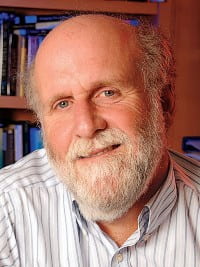
Daniel L. Schacter is the William R. Kenan, Jr. Professor of Psychology at Harvard University, where he has served since 1991 and chaired the Psychology Department from 1995–2005. He leads the Schacter Memory Lab, pioneering research on human memory's cognitive and neural foundations through behavioral experiments and neuroimaging. His educational trajectory includes a B.A. from the University of North Carolina at Chapel Hill (1974) and a Ph.D. from the University of Toronto (1981), followed by a professorship at the University of Arizona (1987–1991) before joining Harvard. Dr. Schacter's work centers on memory's constructive nature—exploring why memory is inherently fallible and how distortions reveal fundamental mechanisms. His seminal contributions include the theory of episodic simulation (memory's role in imagining future events), links between memory and creativity, aging effects on cognition, and the neural basis of memory errors. He integrates fMRI, cognitive paradigms, and neuropsychological approaches to dissect these processes. Recent publications (2023–2025) emphasize clinical applications in mental health (e.g., suicidal adolescents), AI-creativity interactions, and aging-related memory changes, consistently highlighting the adaptive value of memory distortions across diverse contexts. Major accolades include: Warren Medal from the Society of Experimental Psychologists American Psychological Association's Award for Distinguished Scientific Contributions Election to the American Academy of Arts and Sciences and National Academy of Sciences William James Book Awards for Searching for Memory (1996) and The Seven Sins of Memory (2001) His lab secures substantial grant funding to investigate memory's role in future thinking and creativity, producing over 400 publications. Mentoring spans generations of cognitive neuroscientists, though specific advisees aren't listed in source materials. The Schacter Memory Lab maintains a collaborative environment focused on memory's adaptive functions using cutting-edge neuroimaging and behavioral methods.