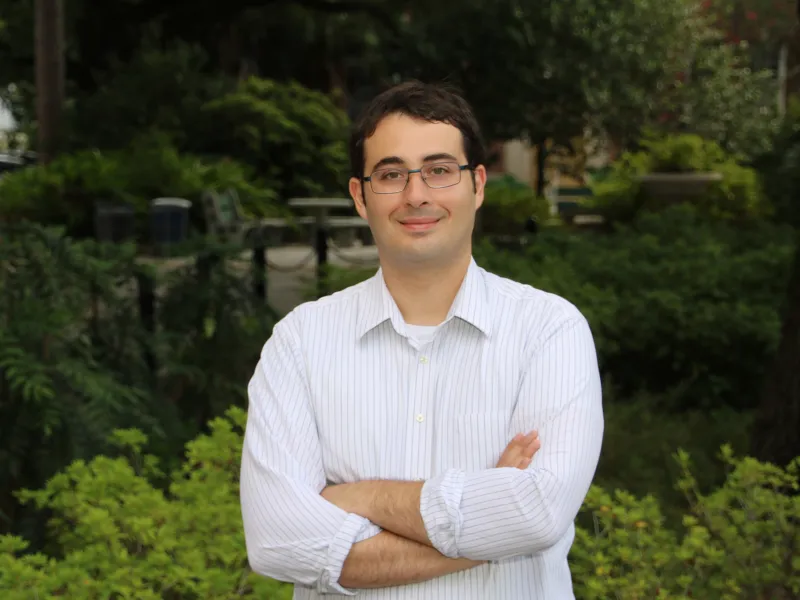
Patrick Rafail is Professor of Sociology at Tulane University's School of Liberal Arts, specializing in social movements, protest policing, and computational methods. Current research examines protest policing dynamics, Tea Party mobilization, and machine learning applications for social analysis. Research Programs: Protest policing in urban environments Media coverage of social movements Machine learning for content analysis Political consequences of the Tea Party Awards: NSF grants, Russell Sage Foundation funding, and multiple research fellowships. Teaches research methods, statistics, and social movement courses.
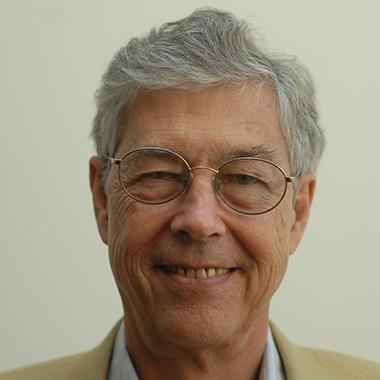
Peter Dolog is an Associate Professor at the Department of Computer Science, Aalborg University, Denmark. He is affiliated with The Technical Faculty of IT and Design. His research focuses on Recommender Systems, Web Engineering, Machine Learning, and Health Informatics. He leads projects such as the MEco Medical Ecosystem and the IWIS Intelligent Web and Information Systems initiative. His work emphasizes explainable AI, knowledge graphs, and social media analytics for public health monitoring. Notable contributions include hypergraph-based recommendation models and sensitive information detection in legal documents. Projects include MEco (medical event surveillance) and IWIS (web systems personalization), funded by EU and national grants. His research spans 148 publications, with recent work on explainable recommendation systems and neural networks for medical data analysis. Collaborations include the University of Vienna and international conferences like ECIR and RecSys. Media coverage highlights his work on using social media for epidemic detection. Key research areas include recommendation systems with attention mechanisms, knowledge graph integration, and ethical AI applications in healthcare. His methodologies bridge machine learning with user-centric design, emphasizing transparency and explainability in AI-driven systems.
James Curran is Professor of Communications at Goldsmiths, University of London, and a leading scholar in media history and political economy of media. He co-directs the Goldsmiths Leverhulme Media Research Centre with £1.25 million funding. Position: Professor of Communications Department: Media, Communications and Cultural Studies Email: j.curran@gold.ac.uk His research spans media history (e.g., Power Without Responsibility with Jean Seaton) and contemporary journalism (e.g., Media and Democracy ). He has conducted four ESRC-funded comparative journalism studies. Recent work focuses on internet studies , including co-authored Misunderstanding the Internet . His research reveals the paradox of media power and democratic participation through 11-nation comparative studies like 'Media System, Public Knowledge and Political Engagement'. Scientific awards include: 2019 International Communication Association Fellows 'classic book' Award for Power Without Responsibility (8th edition) 2011 Edwin C. Baker Award for media, markets and democracy research He has taught at California, Oslo, Pennsylvania, Stanford, and Stockholm universities as Visiting Professor, and supervised over twenty PhD theses. His edited works like Media and Society (6th edition) continue shaping media education.
Benjamin V. Gaglioti is an Assistant Professor at the University of Alaska Fairbanks (UAF) within the Water and Environmental Research Center (WERC) and as an affiliate at Columbia University's Lamont-Doherty Earth Observatory. His work bridges Geology, Ecology, and Climate Science , focusing on paleoclimatic reconstruction via geochemical and sedimentary proxies, including dendrochronology, stable isotope analysis, and Quaternary geology. Ph.D. in Paleoecology (2016, UAF) M.S. in Biology (2010, UAF) B.A. in Northern Studies (2007, Sterling College) His research investigates historical climate change impacts on Arctic and boreal ecosystems, such as permafrost carbon release, glacier dynamics, wildfire regimes, and beaver-driven permafrost degradation. Key projects include NSF-funded studies on Arctic warming, tree growth, yellow-cedar drought stress, and Holocene glacier fluctuations. Recent publications (2024–2021) emphasize permafrost stability , glacial-climate interactions , beaver ecosystem engineering , and tree-ring proxies for winter climate . He is a National Geographic Explorer for his work on ancient ghost forests and climate history. NSF Arctic Natural Sciences (2022–2025) NSF EPSCoR (2022–2024) Joint Fire Science Program (2016–2020, 2020–2023) NSF Paleoclimate Program (2020–2023) NSF Office of Polar Programs (2019–2022) Media coverage highlights his work on glacial microclimates and ancient ghost forests , including interviews in Science Daily and Phys.org . His collaborations span institutions like UAF, Columbia University, and the University of Arizona.
Shirantha Welikala is an Assistant Professor in the Department of Electrical and Computer Engineering at Stevens Institute of Technology's Charles V. Schaefer, Jr. School of Engineering and Science. He joined Stevens in Fall 2023 after serving as a Postdoctoral Research Fellow at the University of Notre Dame. His research focuses on the analysis, control synthesis, and topology design of large-scale networked systems using dissipativity theory, with applications spanning vehicular platoons, smart grids, and multi-agent systems. His research interests encompass control and optimization of cooperative multi-agent systems, networked systems control, passivity-based control, and machine learning applications in robotics and smart grids. Key areas include: Distributed control synthesis for networked systems Dissipativity-based co-design of controllers and topologies Multi-agent coverage optimization Event-driven control strategies Publications demonstrate strong focus on control theory and optimization, with recent emphasis on decentralized approaches, performance guarantees, and real-world applications. Research consistently bridges theoretical contributions with practical implementations in cyber-physical systems. Dr. Welikala has received significant recognition including: Best Paper Award at Mediterranean Conference on Control and Automation (2022) Rising Star in Cyber-Physical Systems (2022) President's Award for Scientific Research from Sri Lanka (2022, 2019) Outstanding PhD Dissertation Award from Boston University (2021) He actively seeks PhD students for research in networked systems and mentors through courses including EE 602 (Analytical Methods) and EE/CPE 345 (Modeling and Simulation). Dr. Welikala leads research in intelligent control systems, collaborating with industry partners to translate theoretical advances into practical solutions for next-generation interconnected systems.
Qingru Xu is an Assistant Professor in the Department of Communication at the University of Kentucky's College of Communication and Information. Her research focuses on sports media, gender studies, cross-cultural communication, and media production analysis with a particular emphasis on Olympic events and nationalistic framing in journalism. She investigates topics such as athlete self-presentation on social media, gender representation in sports broadcasts, and cultural differences in media consumption patterns. Her work explores how digital platforms reshape athlete communication, including studies on athlete selfies during Olympics, transgender athlete visibility, and pandemic-era media behavior. Xu also analyzes media ecology structures between US and Chinese news coverage of international sporting events, highlighting nationalism and gender norms in content production. Key research trends include examining media framing of sports through gendered lenses, contrasting state vs commercial media narratives in China, and evaluating digital media strategies to enhance visibility for niche sports. Her publications consistently bridge communication theory with applied analyses of global sports events. Selected honors and awards are not explicitly listed in the provided text. Advising and grant details are not available in current records. Xu is affiliated with research spaces within the College of Communication and Information, contributing to interdisciplinary projects on media, sports, and cultural studies.
Sreedevi Sampath is an Associate Professor in the Information Systems Department at the University of Maryland, Baltimore County (UMBC), within the College of Engineering and Information Technology (COEIT). She earned her Ph.D. in Computer and Information Sciences from the University of Delaware under Dr. Lori Pollock's advisement. Her research focuses on software engineering, testing, security, and privacy, with a strong emphasis on web application testing and combinatorial methodologies. Education: Ph.D. in Computer and Information Sciences, University of Delaware (2006) M.S. in Computer and Information Sciences, University of Delaware (2002) B.S. in Computer Science and Engineering, Osmania University (2000) Research Interests: Sampath’s work spans software testing, security, and privacy, with a focus on user-session-based testing, combinatorial testing strategies, and dynamic web application analysis. She has contributed to frameworks for test suite prioritization and reduction, as well as tools for automating testing processes. Research Trends: Her articles highlight advancements in web application testing, including combinatorial approaches for navigation graphs, volatility predictors in open-source software, and empirical studies on regulatory ambiguity. These studies emphasize practical applications and tool development to enhance testing efficiency and security. Awards: Lauri Pfeffer Shinn Memorial Award (2005) State Merit Scholarship (1996) Ranked among Top Ten in the Tenth Mathematical Quiz (1996) Advising & Grants: Sampath has advised numerous graduate and undergraduate students, including Ronald Perrella and Benjamin Houdeshell. She has secured grants from the National Science Foundation (NSF) and the Office of Naval Research (ONR), focusing on combinatorial testing and software reliability. Her service roles include Director of Undergraduate Programs at UMBC and editorial board membership at the Journal on Software Testing Verification and Reliability . Labs & Teams: She collaborates with the Empirical and Applied Software Engineering Lab and actively participates in conferences and workshops, contributing to the academic community through reviews and presentations.
Daniel Paluszczyszyn is Senior Lecturer in the School of Engineering and Sustainable Development at De Montfort University, affiliated with the Interdisciplinary Group in Intelligent Transport Systems (DIGITS). His research bridges automotive engineering and infrastructure systems. Current projects focus on sensor modeling for connected autonomous vehicles, developing test scenarios for non-line-of-sight navigation, and container-based software updates for automotive systems. His water systems research includes pump optimization and network simplification tools. Specializes in Bayesian pollution modeling and neural network traffic prediction Developed Water Advisory Demand Evaluation Toolkit for resource planning Leads research in range-extended electric vehicle management systems His publications demonstrate consistent innovation in applying computational methods to transportation and hydraulic engineering challenges.
Dr Roger Engel is an Adjunct Associate Professor in the Faculty of Health at Southern Cross University and an Honorary Senior Research Fellow at Macquarie University's Faculty of Medicine, Health and Human Sciences. With over 40 years of clinical experience as a chiropractor and osteopath across urban, rural, private, and public healthcare settings in Australia and internationally, he bridges clinical practice with academic research. His dual appointments reflect his commitment to advancing evidence-based manual therapy within academic medicine. Dr Engel completed his PhD at Macquarie University in 2012 with research titled The Effect of Manual Therapy on Respiratory Function in Chronic Obstructive Pulmonary Disease . This foundational work established his expertise in respiratory manual therapy and remains central to his ongoing research program. His primary research focuses on chronic respiratory disease management through manual therapy interventions, particularly for COPD, alongside significant contributions to paediatric health, maternal care, and mild traumatic brain injury rehabilitation. Recent work increasingly addresses scoliosis management, telehealth implementation in osteopathic practice, and scope-of-practice analyses for manual therapy professions. His research consistently emphasizes evidence generation through randomized controlled trials, systematic reviews, and qualitative studies exploring clinician and patient perspectives. Analysis of his 15 most recent publications reveals three dominant research trajectories: (1) respiratory-focused studies building on his COPD expertise through pulmonary rehabilitation and outcome measure validation; (2) methodological innovations in osteopathic evidence generation including telehealth feasibility and adverse event reporting standards; and (3) population-specific applications addressing infantile colic, scoliosis, and osteoarthritis through manual interventions. His work demonstrates strong alignment with UN Sustainable Development Goals related to health and wellbeing. Dr Engel actively contributes to the osteopathic community as Associate Editor of the International Journal of Osteopathic Medicine , Member of the Osteopathy National Steering Committee, and Mentor for Osteopathy Australia. He serves as Founding Co-Chair of the Osteopathic Research Alliance (ORA), which coordinates multi-institutional research efforts to strengthen osteopathy's evidence base. As a co-supervisor for higher degree research students, he guides emerging scholars in manual therapy research methodology and clinical application.
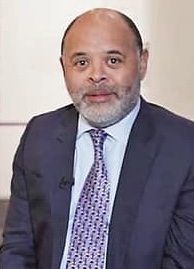
Professor Kurt Barling is Deputy Dean (Research & Knowledge Exchange) at Middlesex University's Faculty of Arts and Creative Industries. With a distinguished 26-year career as a BBC journalist covering international conflicts and social issues, Barling specializes in journalism practice, diversity in media, and the impact of AI on journalism ecosystems. His research examines media representation of inequality, AI's role in local journalism, and historical journalism practices. Barling holds a first-class degree in Languages and Politics (1984), MSc in Comparative Government (1985), and PhD in International Relations (1989) from the London School of Economics. He is fluent in French and German. His current research focuses on AI's impact on media communications and archival/heritage sectors. Teaching responsibilities include PhD supervision on digital media transformations, MSc Digital Journalism (Technological Advances module), and BA Creative Writing & Journalism. He actively judges national media awards including RTS, BAFTA, and Orwell Prize, and gives motivational talks in schools through the Speaker4Schools programme. Fellow Royal Society of Arts Trustee, Park Theatre London Senior Fellow, Higher Education Academy
Avinash Unnikrishnan is a Professor and Chair in the Department of Civil, Construction, and Environmental Engineering at the University of Alabama at Birmingham (UAB). He holds a B.Tech. from the Indian Institute of Technology Madras, an M.S. from Vanderbilt University, and a Ph.D. from the University of Texas, all in civil engineering fields. His research focuses on optimizing urban mobility networks, resilient infrastructure systems, and the intersection of transportation with public health and pedagogy. He has contributed to studies on EV charging equity, disaster-related pathogen assessments, and drone-integrated logistics systems. Unnikrishnan's work spans transportation policy, infrastructure resilience under extreme events, and sustainable urban systems. His recent research includes analyses of post-pandemic shopping behavior in New Delhi, risk-based asset management for bridges, and the impact of truck platooning on bridge loading. He has also explored the implications of home deliveries during and post-COVID-19 lockdowns, emphasizing equity and environmental justice. He has advised several research projects funded by state and federal agencies, including studies on speed zoning methodologies, freight flow prediction using weigh-in-motion data, and motor carrier safety in Oregon. His expertise in interdisciplinary methods has led to innovations in transportation modeling, logistics optimization, and infrastructure durability assessment. Labs/Teams: While specific lab names aren’t mentioned, his research involves collaborations with state transportation departments (e.g., ODOT) and interdisciplinary teams focusing on urban systems, environmental health, and infrastructure resilience.
Tim Pollock is the Haslam Chair of Business and Professor of Entrepreneurship at the University of Tennessee's Haslam College of Business. He holds the Kinney Family Faculty Research Fellowship and is a Research Fellow at the Neel Corporate Governance Center and Oxford University's Corporate Reputation Centre. Previously, he taught at Penn State, University of Maryland, and University of Wisconsin-Madison. His research focuses on the social construction of value in corporate governance, executive compensation, IPO markets, and entrepreneurial environments. Key areas include reputation dynamics, celebrity influence, media effects, and strategic decision-making. He has won multiple awards, including the IDEA Thought Leader Award and Oxford's Best Published Paper Award. Pollock has authored How to Use Storytelling in Academic Writing and co-edited The Oxford Handbook of Corporate Reputation . He teaches entrepreneurship and organization theory, receiving the Mabel C. Chipman Teaching Excellence Award. His work appears in top journals like Academy of Management Journal and Administrative Science Quarterly . He serves on editorial boards for major journals and contributed to the Corporate Reputation Review . His research explores topics like CEO celebrity, IPO firm strategies, and minority-owned firm alliances, blending organizational theory with practical managerial insights.
Linda Hunt is a Lecturer in Media and Communication at the University of Tasmania's School of Creative Arts and Media, Media Discipline. She holds a PhD (2024) and a BA Honours (2016), both from the University of Tasmania. Her research focuses on Antarctic science communication, media's role in public engagement with environmental and geopolitical issues, and the interplay between news, science, and politics in the Antarctic region. Prior to academia, she worked as a broadcast journalist for ABC News, covering science, environment, and health, with notable assignments in Antarctica. Administratively, she serves as Volunteer & Excursion Committee Chair for the 18th Biennial Conference on Communication and Environment (2025) and previously held roles such as Director Partnerships and Engagement (2021–2023). She has redesigned postgraduate Strategic Communication courses and contributed to the School's communication and engagement strategy. Her teaching includes units like Professional Science Communication and Oral History . Linda is affiliated with the Public Engagement with Antarctic Research Action Group (SCAR), Antarctic Southern Ocean Mission Integrator (ASOMI), and the Antarctic Women's Network. She has organized events like the Antarctica Day Symposium and participated in media interviews addressing topics such as Antarctic governance and journalism ethics. Her funded projects include the AAD-UTAS collaboration (2022–2024), focusing on public engagement with Antarctic science. Her research outputs span peer-reviewed articles, conference presentations, and contributions to oral history pedagogy.
Matthew P. Hitt is an Associate Professor at Colorado State University, affiliated with the Institute for Research in the Social Sciences and Political Science Department. He holds a Ph.D. from The Ohio State University (2014) and a B.A. from Colorado State University (2007). Ph.D., The Ohio State University (2014) B.A., Colorado State University (2007) Hitt specializes in judgment and decision-making in American politics, focusing on elite institutions like Congress, the judiciary, and media. His methodological expertise includes time series analysis, causal inference, event history analysis, game theory, and network analysis. Research examines how institutional and external factors influence collective political choices. Recent publications address Supreme Court ethics, polarization, media effects, and decision-making under political risk. His work spans journals like American Journal of Political Science , Scientific Reports , and Energy Policy , with notable books on judicial indecision and polarization mitigation. Scientific awards include: 2015 Edward S. Corwin Prize (Best Dissertation in Public Law) 2019 AEJMC Lynda Lee Kaid Award (Political Communication) Hitt's research receives National Science Foundation funding. He teaches courses in judicial politics, legislative politics, American government, and quantitative methodology, reflecting his interdisciplinary approach to political institutions and behavioral analysis.
Catherine Berjohn is a Researcher at the Infectious Disease Clinical Research Program (IDCRP) , affiliated with the Naval Medical Center San Diego (NMCSD) . Her work spans Infectious Diseases , Virology , and Public Health , with a focus on SARS-CoV-2 , HIV , and Vaccine Research . Her research explores: Post-acute effects of SARS-CoV-2 (e.g., cardiac findings, neuropsychological symptoms) Long-term HIV complications (e.g., viremia-related non-AIDS events) Respiratory disease epidemiology (e.g., tobacco use and influenza-like illness) Recent publications highlight her contributions to understanding viral load thresholds , vaccine efficacy , and neurological sequelae of infectious diseases. She was honored with the FIDSA designation by the Infectious Diseases Society of America (2020). Collaborations with institutions like the Military , Open Forum Infectious Diseases , and PLoS ONE underscore her interdisciplinary impact. Media coverage of her work includes six mentions across platforms like NAMRU SOUTH and IDSA .