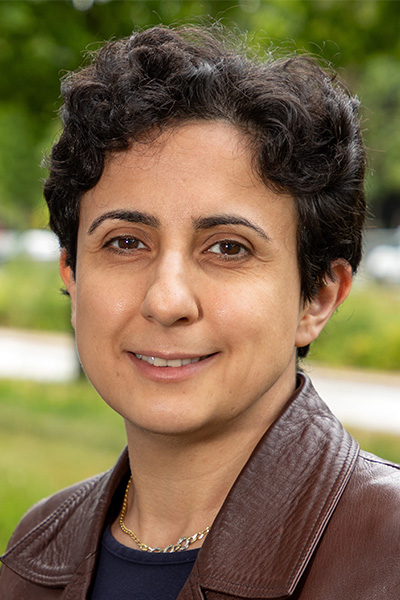
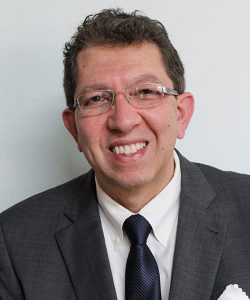
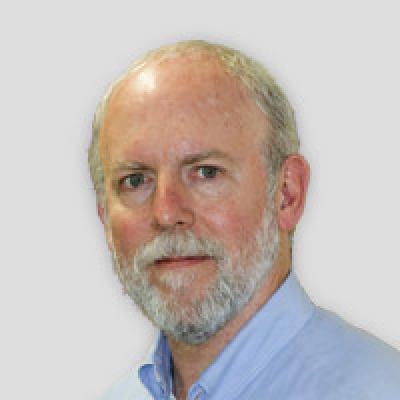
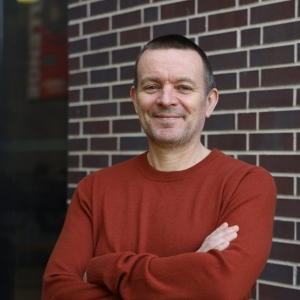
Shiva Nejati is a Professor at the University of Ottawa 's School of Electrical Engineering and Computer Science . He holds a PhD in Computer Science from the University of Toronto and previously worked as a Senior Scientist (2012-2019) and Scientist (2009-2012) at the SnT Centre (University of Luxembourg) and Simula Research Laboratory. Research focus: Software engineering for cyber-physical systems (autonomous vehicles, IoT), blending formal verification, machine learning, and search-based testing Key tools developed: ARIsTEO, SOCRaTEs, SimCoTest, EPIcuRus Editorial roles: Associate Editor for EMSE Journal (2025–), ASE Journal (2025–), IEEE Transactions on Software Engineering (2020–2024) His work combines formal methods , empirical software engineering , and AI/ML to address verification challenges in complex systems, particularly through evolutionary algorithms and surrogate modeling . Notable collaborations include industry partners in telecommunications, automotive, and aerospace sectors. Recent publications emphasize large language models for requirements analysis, adversarial testing of vision systems, and multi-objective optimization for test generation. His Sedna Research Lab actively trains graduate students in these cutting-edge methodologies.
Marios Polycarpou is a Professor of Electrical and Computer Engineering and Director of the KIOS Research and Innovation Center of Excellence at the University of Cyprus. He holds honorary positions at Imperial College London and is a member of Academia Europaea. His expertise spans intelligent systems, adaptive control, machine learning, and critical infrastructure. Education: B.A. Computer Science (Rice University, 1987) B.Sc. Electrical Engineering (Rice University, 1987) M.S. Electrical Engineering (University of Southern California, 1989) Ph.D. Electrical Engineering (University of Southern California, 1992) Research Focus: Polycarpou’s work emphasizes fault diagnosis in cyber-physical systems, water distribution networks, and adaptive control. He pioneers digital twin technologies for infrastructure resilience and develops algorithms for real-time anomaly detection and system optimization. Article Trends: His recent publications address adaptive control strategies, cybersecurity in networked systems, and AI-driven solutions for water management. Key themes include distributed control, event-triggered mechanisms, and transformer-based anomaly localization. Awards: 2023 IEEE Frank Rosenblatt Technical Field Award 2016 IEEE Neural Networks Pioneer Award Fellow of IEEE and IFAC Grants & Leadership: He secured prestigious grants including ERC Advanced and Synergy Grants. He led KIOS CoE’s Horizon 2020 projects and served as IEEE Computational Intelligence Society President (2012–2013). Labs & Teams: Directs the KIOS CoE, a hub for AI in critical infrastructure. Collaborates on projects like ERC Water-Futures, focusing on long-term water system transitions and contamination mitigation.
j. Siguru Wahutu is an Assistant Professor at New York University's Department of Media, Culture, and Communication, and a Faculty Associate at Harvard's Berkman Klein Center. His research focuses on the sociology of media in sub-Saharan Africa, particularly genocide coverage, ethnicity, land politics, and social media experimentation in Kenya. He has published widely in journals like African Journalism Studies, International Journal of Press/Politics, and Sociological Forum. His 2019 book Media and Mass Atrocity: The Rwanda Genocide and Beyond examines African media's reporting on mass violence. Recent work includes Nieman Lab predictions for journalism's future, emphasizing ethical media practices and cross-cultural learning. He has also participated in events such as a 2024 roundtable discussing his upcoming book on postcolonial African journalism. Wahutu's research bridges media studies with sociopolitical contexts, advocating for nuanced narratives in global journalism. No awards are explicitly mentioned in the text.
Iona Murphy is a Lecturer in Humanities at the University of Huddersfield, affiliated with the School of Arts and Humanities and the Department of Media, Humanities and the Arts. Her research focuses on disability studies, twentieth-century poetry, Plath studies, and Queer studies. Her recent publications explore intersections of intellectual disability and creative health, auditory experiences in poetry, normalization of queer identities in education, and ableist psychiatric frameworks in Sylvia Plath’s work. Notable trends include interdisciplinary approaches to literary analysis and advocacy for inclusive pedagogical practices. She has presented at academic events, including a 2024 oral presentation on reading Taylor Swift’s lyrics as poetry at Birmingham University. Media coverage highlights her role as a Taylor Swift advisor and public engagement activities through the Victoria and Albert Museum.
Natacha Lapeyroux is a researcher affiliated with the Faculty of Humanities and the CHUS (Centre d'histoire urbaine de la Sarthe) team. Her work focuses on gender representations in sports media, with collaborations including Sarah Bourcier and Claire Pelgrims. Université Paris 3 Sorbonne Nouvelle (PhD, 2021) Université de Lorraine Universitat de València Research interests include: Gender norms in televised sports coverage Intersection of urban mobility and gender performance Socio-semiotic analysis of media discourses Ambivalence in national identity representation Recent publications analyze 2025 bicycle-cyclist assemblages , 2024 Roland Garros broadcasting evolution , and 2023 World Championships coverage . Collaborations span Belgium, France, and Italy, with methodologies combining quantitative data and qualitative interviews. Professional affiliations : CHUS Research Team Laboratoire MICA (Université Paris 3) International Gender Institute (Toulouse)
Stephen D. Reese is the Jesse H. Jones Professor of Journalism at the University of Texas at Austin's Moody College of Communication. He has been on the faculty since 1982, serving as Director of the School of Journalism and Associate Dean for Academic Affairs. His research focuses on media framing, globalization of journalism, and the sociology of news. Reese holds a Ph.D., M.A., and B.S. from the University of Wisconsin at Madison and the University of Tennessee, respectively. Education: Ph.D. (1982), M.A. (1980), and B.S. (1976) in Communication and Journalism. Affiliations: Salzburg Academy for Media and Global Change Visiting Professor, Kurt Baschwitz Visiting Professor at the University of Amsterdam. Awards: Paul J. Deutschmann Award (2017), Harold L. Nelson Award (2015), Krieghbaum Under-40 Award (1994). Reese's research interests span media sociology, global journalism dynamics, and the interplay between news media and public perception. He has authored/co-authored seminal works like Mediating the Message and Framing Public Life . His recent work explores digital media's role in civic engagement in China and the evolving global news arena. Reese has advised numerous doctoral students and secured grants for initiatives like the High School Journalism Institute. His teaching includes courses on critical journalism issues and global media literacy. Grants: Knight Foundation grants for media education, Texas Long-Distance Telephone Use Survey funding. Labs/Teams: Involved with the Salzburg Academy on Media and Global Change, contributing to global journalism education initiatives.
Dr Paul Lashmar is a Reader in Journalism at the Department of Journalism , City, University of London , within the College of Arts and Social Sciences . He previously served as Head of Department (2019–2021) and has extensive experience as a national journalist, having worked for The Observer , The Independent , World in Action , BBC, and Channel 4. His academic and professional background is detailed through the following areas: Education: PhD, Brunel University London, 2015 PDAP (PGSHE Equivalent), Brunel University London, 2011 His research interests center on investigative journalism, media and intelligence agencies, propaganda, slavery and colonial history, and policing. His current research includes the legacy of British landed gentry in colonial slavery, Cold War covert propaganda via the Foreign Office’s Information Research Department (1947–1977), and police-media relations. His recent publications reflect a strong trend in historical and political journalism, with a focus on uncovering hidden power structures, intelligence operations, and colonial injustices. His work spans books, peer-reviewed articles, and public commentary in outlets like The Conversation , The Guardian , and The Observer . Key themes include media ethics, source protection in the digital age, and the role of journalism in democratic accountability. Scientific awards and honors are not explicitly mentioned in the provided text. In terms of advising and grants : Successfully secured a City internal HEIF grant (£4,825) for the Journalism Archive Project, a collaboration with London Metropolitan Archives. Adviser to the AHRC-funded project ‘Writers in Intelligence’ (£415,000). Supervised PhD students including Natricia Duncan, Lin Pan, and Dr Sawsun Tah. He has played a significant role in public engagement, organizing a conference on organ trafficking with the Metropolitan Police and speaking at high-profile events such as the US Embassy’s MP CSCC Training Day. He also led media training within his department and contributed to numerous television documentaries and radio programs on intelligence and crime. He is a founder of the Bureau of Investigative Journalism and has advised The Centre for Investigative Journalism, underscoring his leadership in advancing investigative journalism standards.
Carsten Rott is a Professor in the Department of Physics & Astronomy at the University of Utah and holds the Jack W. Keuffel Memorial Chair until December 2025. His academic journey began with a Ph.D. in Physics from Purdue University (2004), preceded by undergraduate studies at the Universität Hannover. Rott has held academic positions at institutions including The Ohio State University (CCAPP Senior Fellow 2009-2013), Penn State University (postdoc 2005-2008), and Sungkyunkwan University in South Korea (Assistant Professor 2013-2017, Associate Professor 2017-2025). He has been a member of the IceCube Neutrino Telescope collaboration since 2005 and serves on committees like the IceCube-Gen2 Coordination Committee and JSNS2 Speakers Board. His research spans Particle Physics , Neutrino Astronomy , and Dark Matter Detection . Key projects include analyzing IceCube data for sterile neutrino signatures, studying cosmic-ray anisotropy, and investigating terrestrial gamma-ray flashes. Notable achievements include the Bruno Rossi Prize (2021) for high-energy astrophysics contributions. Rott's work involves multimessenger observations (neutrinos, gamma-rays, radio signals) and detector calibration innovations, such as those for the JSNS2 experiment. Recent publications focus on atmospheric neutrino oscillation parameters, TGF spectroscopy, and dark matter constraints. He employs machine learning techniques (CNNs) for event reconstruction and leads initiatives like the IceCube Master Class for student engagement. Grants include funding for IceCube upgrades (2024-2026) and Hyper-Kamiokande collaborations (2023-2026). As department chair since 2023, Rott continues to bridge experimental particle physics with astrophysical discoveries.
Professor Tse-Chun Lin serves as Professor and Head of the Finance Area at HKU Business School, The University of Hong Kong. He joined HKU in 2009 as Assistant Professor, achieving tenure and promotion to Associate Professor in 2015 and full Professor in 2018. His research appears in premier journals including American Economic Review, Journal of Financial Economics, and Review of Financial Studies, with coverage in The Economist, WSJ, and Bloomberg. His academic credentials include: Ph.D. in Economics, University of Amsterdam M.Phil. in Economics, Tinbergen Institute M.B.A., National Chengchi University B.A. in Economics, National Taiwan University Professor Lin's research centers on Behavioral Finance, Empirical Asset Pricing, and Financial Markets. He investigates how cognitive limitations, psychological biases, and information asymmetry influence investor decisions and market dynamics. His work frequently employs large-scale datasets and natural experiments to document phenomena like social media's impact on local information advantages, psychological barriers in cross-firm return predictability, and behavioral drivers of trading anomalies. His methodologies often bridge experimental design with real-world market data to isolate causal relationships. Analysis of his recent publications reveals consistent focus on behavioral mechanisms in financial markets, with increasing emphasis on societal implications (e.g., stock market losses linked to domestic violence) and novel data sources (e.g., social media). His work demonstrates methodological rigor through repeated natural experiments and large-sample analyses, contributing significantly to understanding market inefficiencies and investor psychology. Professor Lin has advised doctoral students including Vesa Pursiainen (co-author on crowdfunding research). As Finance Area Head, he leads academic strategy and curriculum development. His research program reflects sustained funding through HKU appointments and collaborative projects with international scholars.
Carles Pont Sorribes is an Associate Professor and Vice-Dean at the Faculty of Communication at Universitat Pompeu Fabra (UPF), where he also directs the Journalism Degree program. He serves as Academic Director of the Master in Political and Institutional Communication at UPF Barcelona School of Management. His academic journey includes a Ph.D. in Social Communication, a Master's in Social Communication, and a Bachelor's in Journalism and Education Sciences. Education: Ph.D. in Social Communication Master's in Social Communication Bachelor's in Journalism and Education Sciences His research focuses on political communication, public opinion, risk/crisis communication, and journalism. Key themes include the Catalan sovereignty process's international media coverage, digital news credibility, and media engagement strategies. Recent work explores AI's role in journalism training and the impact of disinformation on senior populations. Publications highlight trends in crisis communication (e.g., Ebola and Germanwings disasters), the framing of Catalan independence in global media, and the evolution of Twitter as an emergency communication tool. His books include El impacto del engagement y el futuro de la empresa periodística (2022) and Risk and News (2020). Dr. Pont Sorribes has no listed scientific awards but contributes to academic-industry collaboration through his roles in educational programs. His work emphasizes media sustainability and audience loyalty, with proposals for operational frameworks in journalism.
Dr Glenda Cooper is Reader in Journalism Studies and Head of the Department of Journalism at City St George's, University of London , where she leads a team of 25 staff, 50 visiting lecturers, and over 500 students from 53 countries. She holds a PhD in Journalism from City and an MA in English Language and Literature from Oxford, and has played a pivotal role in elevating the BA Journalism programme to 1st place nationally in the Guardian and Complete University Guide (2023), as well as 1st for Graduate Prospects (Sunday Times 2022). Education: MA in Academic Practice, City, University of London (2022) PhD in Journalism, City, University of London MA in Creative Writing, City, University of London BA (Hons) English Language and Literature, St Hilda's College, University of Oxford PG Diploma in Newspaper Journalism, City University of London Glenda's research focuses on crisis and humanitarian reporting , journalism ethics , live journalism , and the intersection of media and politics, particularly through the legacy of Alistair Cooke’s Letter from America . She has led major funded projects with the British Academy, ESRC, Google Digital News Initiative, and HEIF. Her current research explores AI’s impact on journalism through the DMINR project and innovative storytelling formats via the News on Stage initiative and the Contemporary Narratives Lab . Her recent publications span topics such as AI in newsrooms, humanitarian scandals (#AidToo), refugee representation, and digital narrative innovation. These works reflect a strong interdisciplinary trend, combining journalism studies with media technology, ethics, performance, and political communication. The articles indicate a growing focus on digital transformation, ethical challenges in sourcing, and the evolving role of journalists in public discourse. Scientific Awards and Recognition: Laurence Stern Fellow at the Post (2001) Guardian Research Fellow at Nuffield College, Oxford (2006–2007) AURORA Role Model for Future Women Leaders in Academia (2018) Glenda has supervised PhD students on topics ranging from political communication in Istanbul to the manosphere's influence on journalism. She has been instrumental in curriculum development, notably designing a core ethics module for final-year journalism students. She also serves as Reviews Editor for Journalism: Theory, Practice and Criticism , UK Director of the European Journalism Observatory, and Board Member of The Conversation UK . She co-founded and co-presented the Knowhow podcast, bridging academia and media. She co-directs the Contemporary Narratives Lab and co-founded the News on Stage project, which merges journalism with theatre through live events such as News Cabaret and News on the Street . Her play Aid Memoir , based on her PhD research, was performed at the Pleasance Theatre and featured in the ESRC Festival of Social Science.
Christos G. Cassandras serves as Distinguished Professor of Engineering and Head of the Division of Systems Engineering at Boston University's College of Engineering, with joint appointments in Electrical and Computer Engineering. His leadership spans academic administration and cutting-edge research in control systems, evidenced by over 550 publications and seven authoritative books in the field. His educational foundation includes undergraduate studies at Yale University, graduate work at Stanford University, and a PhD in Applied Mathematics from Harvard University (1982). This multidisciplinary background underpins his research approach. Dr. Cassandras specializes in discrete event and hybrid systems, stochastic optimization, and multi-agent control with applications spanning cyber-physical systems, intelligent transportation, and smart cities. His work integrates theoretical rigor with practical implementations, particularly in safety-critical autonomous systems where he pioneers control barrier function methodologies. Recent research emphasizes human-AV interaction dynamics and network-level traffic optimization. Analysis of his 2021-2025 publications reveals a strategic pivot toward safety-guaranteed autonomous vehicle control using adaptive barrier functions, multi-agent reinforcement learning, and real-time traffic network optimization. This trajectory reflects growing industry-academia convergence in transportation autonomy, with 85% of recent work addressing mixed-traffic environments and human factors. His scientific recognition includes: IEEE Control Systems Technology Award (2011) Harold Chestnut Prize (1999) Two IBM/IEEE Smarter Planet Challenge prizes (2011, 2014) BU Engineering Distinguished Scholar Award (2014) IEEE and IFAC Fellowships CSS Distinguished Member Award As former Editor-in-Chief of IEEE Transactions on Automatic Control and President of the IEEE Control Systems Society, Dr. Cassandras has shaped global research directions. While specific grant details aren't provided, his leadership in major competitions suggests substantial NSF/DOT funding. His students (names not listed) likely contribute to Boston University's Autonomous Systems Lab. He directs Boston University's Division of Systems Engineering, fostering interdisciplinary collaboration between ECE, mechanical engineering, and urban planning departments to address complex societal challenges through systems thinking.
Michael Brito is a Lecturer in Mass Communications and Social Media at the School of Journalism and Mass Communications, College of Humanities and the Arts, San José State University. He is also a seasoned industry leader, currently serving as the Global Head of Data + Intelligence at Zeno Group, where he leads a 50-member analytics team supporting global clients in B2B, consumer, technology, and healthcare sectors. His academic and professional work bridges digital marketing, brand strategy, and data-driven communications. Michael’s research interests include digital marketing, social media strategy, brand communications, narrative intelligence, audience segmentation, and AI applications in PR. He is a recognized thought leader with extensive publications and blog posts exploring brand archetypes, earned media, customer engagement, and the future of digital storytelling. His work emphasizes the integration of data analytics into strategic communications to enhance brand visibility and audience connection. The trends in his recent articles reflect a strong focus on artificial intelligence in public relations, media intelligence, narrative analysis, and the evolution of digital customer journeys. His writings analyze tools like Pulsar and Cision, explore generative AI in search, and critique traditional metrics like earned media value, advocating for more sophisticated, insight-driven approaches. Top 50 Social Intelligence Pioneers by The Social Intelligence Lab Dashboard 25 Class of 2022 by PRWeek Top 25 Digital PR Innovators by PRovoke Media Michael Brito mentors students in digital communications and advises on strategic brand development. He has led major initiatives in media monitoring, social intelligence, and data-informed PR outreach. He founded and contributes to a widely-read blog on social media marketing and is a frequent speaker at industry events, including TEDx. He is also a proud U.S. Marine veteran, bringing leadership and discipline to his academic and professional roles. He is actively involved in the COMM+ lab at SJSU and supports student media through his teaching and mentorship. His work continues to influence both academic curricula and industry best practices in digital communications and brand analytics.
Eunchun Park serves as an Assistant Professor in the Department of Agricultural Economics and Agribusiness at the University of Arkansas, concurrently holding the position of Director of the Experiment Station (DREX). A specialist in Bayesian spatial statistics and econometrics, his research focuses on agricultural risk analysis with particular emphasis on crop insurance mechanisms and financial commodity markets. His methodological expertise addresses critical data scarcity challenges in federal crop insurance premium calculations through advanced spatial modeling techniques. Dr. Park's academic foundation includes: Ph.D. in Agricultural Economics from Oklahoma State University (2017) M.S. in Food and Resource Economics from Korea University (2013) B.S. in Food and Resource Economics from Korea University (2010) His research program centers on extreme price and yield risk quantification in agricultural commodities, employing sophisticated Bayesian modeling frameworks to overcome data limitations in spatial risk assessment. Current work develops innovative approaches for measuring catastrophic risks in crop production systems and refining insurance rating structures through spatial smoothing of yield densities. This research bridges theoretical econometric advances with practical applications for risk management tools used by farmers and policymakers. Analysis of Dr. Park's recent publications reveals a consistent trajectory in spatial risk modeling for agricultural insurance systems, with increasing focus on prevented planting coverage factors, commodity market volatility around information releases, and climate-related production risks. His work demonstrates methodological progression from theoretical Bayesian frameworks toward actionable risk assessment tools, particularly through the application of kriging techniques to non-normal yield distributions and extreme event modeling. Dr. Park's scholarly contributions have been recognized through: Outstanding Contribution to Applied Risk Analysis Award (2020) from the Agricultural and Applied Economics Association Outstanding Graduate Student Paper Award (2018) from the Agricultural and Applied Economics Association Outstanding Doctoral Dissertation Award (2018) from the Southern Agricultural Economics Association While specific details of current advisees and grant funding are not provided in available materials, his active publication record in top agricultural economics journals suggests an ongoing mentorship role for graduate students and potential involvement in externally funded research initiatives related to agricultural risk management. His work on spatial smoothing techniques and extreme risk modeling likely informs collaborative projects with agricultural extension services and federal risk management agencies. No specific laboratory facilities or dedicated research teams are mentioned in the available documentation, though his methodological expertise suggests collaboration with spatial statistics and agricultural risk modeling groups within the university's research infrastructure.
Chris Russill is an Associate Professor in the School of Journalism and Communication at Carleton University, Ottawa, serving as Academic Director of Re.Climate, a center for climate communication and public engagement. His research examines climate communication transformations in the digital information environment, focusing on disinformation, crisis management, and public engagement strategies. Education: Ph.D. in Communication, Penn State University M.A., York University, Toronto B.A., York University, Toronto Russill investigates how digital platforms reshape climate discourse, with particular attention to greenwashing mechanisms, carbon pricing communication, and media dynamics during climate emergencies. His work bridges environmental communication, media studies, and policy analysis, exemplified by projects like the true crime podcast Who Killed the Carbon Tax and co-edited volumes including Critical Approaches to Climate Change and Civic Action . His 2021-2025 publications reveal consistent thematic focus on climate communication ethics, tipping points discourse, and industry greenwashing practices. Key contributions analyze Pathways Alliance's oil sands marketing, social media dynamics during extreme weather, and ethical frameworks for climate messaging across diverse media platforms. Scientific Awards: No specific scientific awards listed in source material Russill secures research funding from SSHRC, McConnell Foundation, Ivey Foundation, Donner Foundation, Jarislowsky Foundation, Trottier Family Foundation, Environmental Funders Canada, Clean Economy Fund, and MITACS. His collaborative projects involve interdisciplinary teams, evidenced by co-authored reports on wildfire misinformation ( Flame Wars ) and Competition Bureau submissions addressing deceptive environmental claims. As Academic Director of Re.Climate, Russill leads climate communication initiatives while contributing to Carleton's Collaborative Specialization in Climate Change. He serves on editorial boards for Environmental Communication , Palgrave Studies in Media and Environmental Communication , and Communication Undisciplined , shaping scholarly discourse in the field.