Dr. Guillermo Amador is an Assistant Professor in the Experimental Zoology department at Wageningen University & Research. His research focuses on understanding how animals interact with complex environments through locomotion, adhesion, and fluid dynamics. He investigates biological systems like insects, plants, and marine organisms to inspire bio-engineered solutions for robotics, microfluidics, and material science. Amador received his PhD in Mechanical Engineering from Georgia Institute of Technology (USA), followed by postdoctoral research at the Max Planck Institute for Intelligent Systems (Germany) and a Marie Sklodowska-Curie fellowship at TU Delft (Netherlands). His expertise spans biophysics, biomaterials, and biomechanics, with a focus on self-cleaning mechanisms and bioadhesion. He collaborates with the 4TU consortium on Dutch Soft Robotics to develop bio-inspired designs. His work bridges fundamental biology with engineering applications, emphasizing interdisciplinary approaches to solve challenges in robotics and environmental science. Amador teaches courses including Biomimetics and Functional Zoology , integrating his research into education. His research highlights include studies on cuttlefish suction cups, stick insect adhesion, and pollen transport mechanisms in pollinators.
Alexandra Horowitz is a Senior Research Fellow and Adjunct Associate Professor at Barnard College. She has been teaching since 2004, specializing in dog cognition and olfactory research. Her academic roles span the Departments of English and Psychology, reflecting her interdisciplinary focus on animal behavior and human-animal interactions. Education: M.S. and Ph.D. in Cognitive Science from UC San Diego; B.A. in Philosophy from the University of Pennsylvania. Research interests include naturalistic observations of dog social play, testing anthropomorphic assumptions, and characterizing canine olfactory abilities. She has authored influential books like Inside of a Dog and Being a Dog , exploring how dogs perceive the world. Her work frequently appears in top journals and media outlets, including the New York Times and TED-Ed. Recent articles highlight studies on dog navigation, play behavior, and olfactory perception. She has been recognized as among the Top 2% of Cited Authors globally. Her presentations and lectures span academic conferences, museums, and public forums, emphasizing science communication.
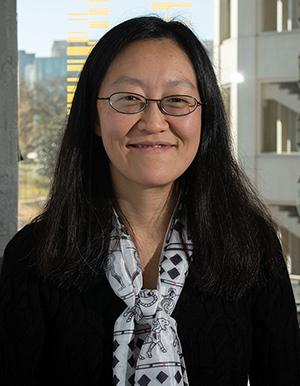
Hang Lu is a Professor and holds the Cecil J. "Pete" Silas Chair of Chemical & Biomolecular Engineering at the Georgia Institute of Technology. Dr. Lu also holds a Love Family Professorship and leads the Lµ Fluidics Group, which focuses on engineering microfluidic systems and machine learning tools to address complex questions in neuroscience, developmental biology, and cell biology that are difficult to address with conventional techniques. Dr. Lu's research lies at the intersection of engineering and biology, with primary interests including: Microfluidic systems for high-throughput screens and image-based genetics and genomics Systems biology: large-scale experimentation and data mining Microtechnologies for optical stimulation and optical recording Big data, machine vision, and automation Developmental neurobiology, behavioral neurobiology, and systems neuroscience Cancer biology, immunology, embryonic development, and stem cells Her laboratory engineers microfluidic devices and BioMEMS to study neuroscience, genetics, cancer biology, and biotechnology. These miniaturized Lab-on-a-chip tools operate at scales comparable to biological systems, leveraging unique micro and nano-scale phenomena to gather large-scale quantitative data about complex biological systems. Current projects include Microfluidics for Life Sciences, Optical Neuron Recordings and Manipulations, Machine Learning Tools for Neuroscience, Measuring and Modeling Behavior, and High-throughput, High-content Cell-based Assays. Analysis of Dr. Lu's recent publications (2024-2025) reveals a strong trend toward integrating microfluidics with advanced computational methods: Development of deep learning frameworks for biological image analysis Advanced neuron tracking and functional imaging techniques Non-invasive characterization of 3D organoid cultures Sophisticated neuromechanical modeling of locomotion Microfluidic temperature control systems for in vivo studies Label-free imaging pipelines for neural development Dr. Lu's significant professional honors include: Cecil J. "Pete" Silas Chair of Chemical & Biomolecular Engineering Love Family Professorship The Lµ Fluidics Group actively mentors students and postdocs, currently accepting new postdoctoral researchers. The lab receives substantial funding for interdisciplinary projects at the engineering-biology interface, with research implications spanning fundamental biological understanding to therapeutic development. The group operates within Georgia Tech's School of Chemical & Biomolecular Engineering, with specialized facilities for microfluidic device fabrication, biological experimentation, and advanced imaging, maintaining strong collaborative ties across engineering, neuroscience, and biological disciplines.
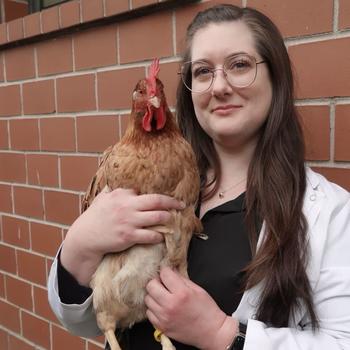
Larissa Schlegel-Pape serves as a Scientific Associate at the Department for Ornamental and Pedigree Poultry within the Farm Animal Clinic of Freie Universität Berlin's Faculty of Veterinary Medicine. Her work focuses on developing innovative methods for assessing chicken welfare through the creation of the "Stressed Chicken Scale," which aims to systematically identify stress indicators in poultry. Her research interests center on animal welfare science, specifically stress assessment in chickens using both behavioral observation and computer vision technology. She investigates how body posture, movement patterns, and other visual indicators can reliably signal discomfort or stress in poultry, with the goal of creating practical assessment tools for veterinarians and poultry farmers. Her work bridges veterinary medicine, ethology, and technological innovation, contributing to refinement research (one of the 3Rs principles) in animal husbandry. Analysis of her publications reveals a strong focus on developing and validating the Stressed Chicken Scale across multiple contexts. Her work spans methodological development, practical implementation studies, and technological integration with computer vision systems. The research demonstrates progression from conceptual framework to validation studies and practical application, with increasing sophistication in assessment techniques and broader implications for animal welfare standards in poultry farming. Schlegel-Pape actively collaborates with the Federal Institute for Risk Assessment (BfR) and participates in interdisciplinary projects involving artificial intelligence applications in agriculture. She presents her findings regularly at major German veterinary conferences including the DVG (Deutsche Veterinärmedizinische Gesellschaft) events, DACh Epidemiology conferences, and specialized poultry medicine gatherings. Her work contributes significantly to advancing animal welfare assessment methodologies and promoting refinement in poultry husbandry practices.
Krista Milich is an Assistant Professor of Biological Anthropology at Washington University in St. Louis, specializing in primate behavioral ecology and socioendocrinology. She holds a PhD from the University of Illinois at Urbana-Champaign and has conducted postdoctoral research at the University of Chicago and the University of Texas at Austin. Her work integrates field studies with laboratory analyses to understand primate social systems, reproductive strategies, and conservation challenges. Her research focuses on reproductive physiology, sexual selection, and zoonotic diseases in nonhuman primates. Key projects include long-term studies of red colobus monkeys in Uganda’s Kibale National Park, collaborative community conservation efforts to reduce human-wildlife conflict, and investigations into Zika virus in Amazonian primates. She also examines hormonal correlates in spider monkeys and woolly monkeys, linking social behavior to ecological and physiological factors. Her academic trajectory includes postdoctoral fellowships at the Institute for Mind and Biology (University of Chicago) and the Department of Anthropology (UT Austin), where she expanded into genetics and microbiome research. Her lab emphasizes comparative approaches to primate behavioral ecology, with fieldwork in Africa, South America, and Puerto Rico.
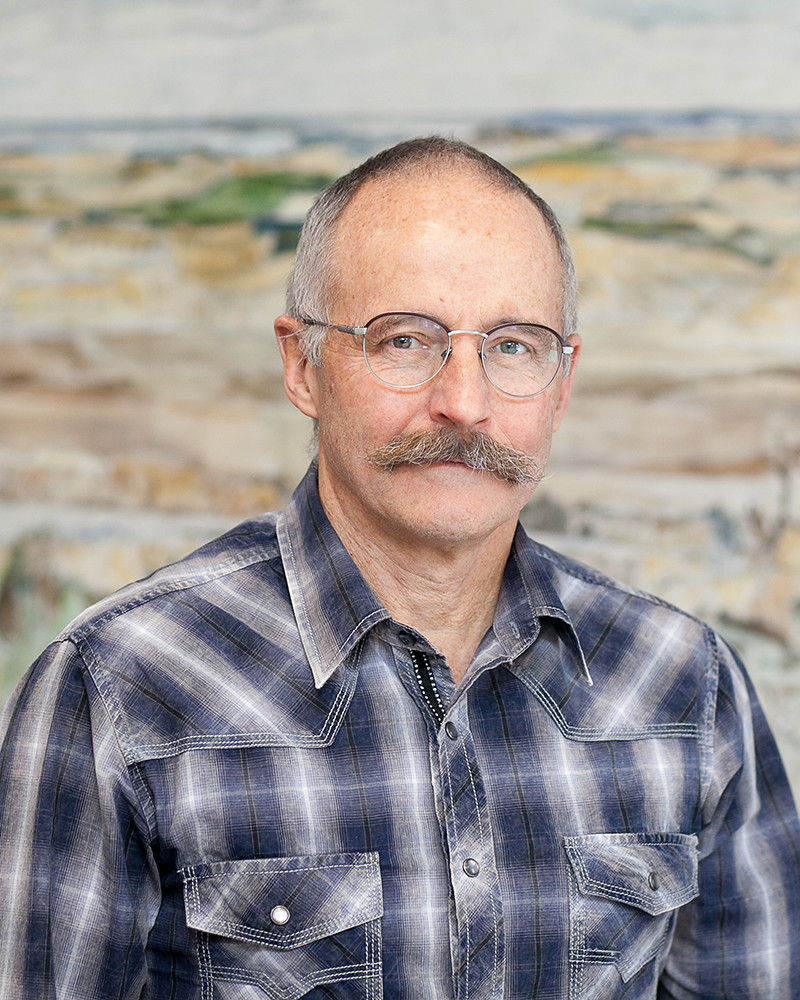
Trent K. Bollinger is a Professor in the Department of Veterinary Pathology at the University of Saskatchewan's Western College of Veterinary Medicine (WCVM), and serves as Regional Director for the Western/Northern Region of the Canadian Wildlife Health Cooperative (CWHC). His academic credentials include a BSc (Honours) from the University of Saskatchewan (1984), a DVM (Distinction) from the University of Saskatchewan (1988), and a DVSc in Pathology from the Ontario Veterinary College (1992). Dr. Bollinger's research focuses on the pathology and epidemiology of diseases in wildlife and fish, with particular emphasis on chronic wasting disease in deer/elk and white-nose syndrome in bats. He has conducted extensive studies on disease transmission dynamics, wildlife population health, and the ecological impacts of emerging pathogens. His work bridges veterinary science, ecology, and conservation biology. His publications demonstrate expertise in viral and bacterial zoonoses, fungal pathogens affecting bats, and spatial epidemiology of wildlife diseases. Recent research highlights include investigating sylvatic plague in prairie dogs, coronavirus persistence in hibernating bats, and landscape connectivity's role in chronic wasting disease spread. His studies often combine molecular diagnostics, field observations, and ecological modeling. Dr. Bollinger collaborates with national and international wildlife agencies, contributing to disease surveillance and management strategies for endangered species. His work emphasizes the interconnectedness of wildlife health, ecosystem health, and public health concerns.
Dr James Herbert-Read is an Associate Professor and Whitten Lecturer in Marine Biology at the Department of Zoology, University of Cambridge. He serves as Deputy Head of Department (Postgraduate Education) and leads the Marine Behavioural Ecology Group. His research focuses on understanding how animals, particularly marine organisms, collect and process information from their environments to make behavioral decisions, with emphasis on social interactions, adaptation mechanisms, and ecological constraints. His group employs theoretical frameworks, controlled experiments, and quantitative field studies to investigate behavioral diversity in marine species. Key themes include collective behavior, predator-prey dynamics, camouflage strategies, and the impacts of environmental stressors on animal decision-making. Recent publications highlight work on lionfish vocalization mechanisms, cuttlefish camouflage, citizen science applications in marine research, and behavioral responses to visual and acoustic noise. Scientific awards and affiliations include: Whitten Lecturer in Marine Biology Associate Professor, University of Cambridge He has supervised research projects on topics such as: Social attraction in invasive fish species Evolution of coordinated movement Neurophysiological basis for leadership in shoals Maternal effects on offspring exploration
Jessica Mayhew is an Associate Professor in the Department of Anthropology at Central Washington University. She specializes in primate behavior, biological anthropology, and cognitive ethology, with a focus on social play, dominance hierarchies, and communication patterns in primates such as chimpanzees, macaques, lemurs, and gorillas. Her research integrates field studies, captive observations, and interdisciplinary approaches to understand primate social dynamics and conservation challenges. Her work extends to historical analysis, such as interpreting Bronze Age wall paintings depicting primates, and modern contexts like examining the impact of human caregivers on captive primates and the portrayal of nonhuman primates in digital media. She has conducted studies in diverse locations including China, Madagascar, and sanctuaries in the United States. Mayhew’s publications span topics like lateralization in lemurs, dominance behavior in Tibetan macaques, and paternal care in orangutans. She teaches courses on biological anthropology, primate origins, nonverbal communication, and primatology, reflecting her expertise in both academic instruction and applied research. Her advising and grants focus on primate behavior studies, with notable projects including camera trap deployments in China and collaborative work at sanctuaries. No specific labs or teams are listed, though her collaborative nature is evident through joint publications with institutions like Duke Lemur Center and international field collaborations.
Joe Paton is a Professor and Principal Investigator at the Champalimaud Neuroscience Programme, Champalimaud Foundation in Lisbon, Portugal. He leads the Paton Lab which focuses on understanding how animals determine which environmental cues are predictive of behaviorally relevant events, known as the credit assignment problem. His research combines behavioral experiments with neurophysiological recordings in rodents to investigate neural mechanisms of time perception and decision making. Dr. Paton's research interests center on interval timing, temporal processing in the brain, and the neural basis of learning. His work particularly examines how the striatum and dopamine systems contribute to time perception and how animals solve the credit assignment problem through statistical inference in the time domain. His lab employs advanced techniques including optogenetics, neural recordings, and computational modeling to address these questions. Analysis of Dr. Paton's recent publications reveals a strong focus on striatal function in timing processes, with particular attention to how neural populations encode temporal information. His work bridges behavioral neuroscience with computational approaches, demonstrating how timing mechanisms influence decision making and learning processes. The research spans multiple levels from cellular mechanisms to behavioral outputs. Midbrain dopamine neurons control judgment of time (2016) Striatal dynamics explain duration judgments (2015) A Scalable Population Code for Time in the Striatum (2015) The Neural Basis of Timing: Distributed Mechanisms for Diverse Functions (2018) Dr. Paton has mentored numerous PhD students and postdoctoral researchers through the INDP (International Neuroscience Doctoral Program) and supervises a diverse team including research technicians, postdocs, and students. His lab has contributed significantly to understanding the neural basis of time perception and its role in learning and decision making. The Paton Lab also develops experimental tools and frameworks like Bonsai for behavioral neuroscience research.
Dr. Nilo Merino Recalde is a Postdoctoral Researcher at the Edward Grey Institute, University of Oxford. His research focuses on animal culture, acoustic monitoring of biodiversity, and applied machine learning. He employs interdisciplinary approaches spanning visual arts, anthropology, and biology to study animal behavior and ecology. His current work emphasizes large-scale acoustic data collection and analysis, with a particular interest in bird song and cultural evolution. Research interests include: Animal culture and its transmission mechanisms Acoustic ecology and biodiversity assessment using sound Machine learning applications in ecological research Data visualization and open science practices His publications highlight advancements in phylogenomic analysis, acoustic datasets for wild bird populations, and software tools like pykanto for bioacoustic research. He actively develops open-source tools to democratize data analysis in ecology. No scientific awards or grants are listed. He currently advises no students but collaborates widely in multidisciplinary teams. His primary affiliation is the Edward Grey Institute's Sheldon Group, where he integrates fieldwork and computational methods to understand animal behavior at ecological and evolutionary scales.
Christena Nippert-Eng is Professor of Informatics at Indiana University's Luddy School with adjunct appointment in Sociology. She directs the Animal Computer Interaction Track and researches cognition, privacy, ethnography, and human-animal interaction. Her work combines sociological frameworks with technology design. Nippert-Eng has authored influential books on boundary negotiation and ethnographic methods. Her current research examines privacy negotiations with domestic robots and human-animal-computer interaction. She has consulted for major technology companies including HP, Motorola, and Steelcase. Her publications demonstrate sustained interdisciplinary examination of privacy practices across contexts including homes, workplaces, online gaming, and social media, increasingly focusing on technology-mediated interactions and ethical considerations.
Cindy Hazan is the Andrew H. & James S. Tisch Distinguished University Professor in the Department of Psychology at Cornell University's College of Human Ecology. Her research focuses on human mating, pair bonding, and individual differences in attachment processes across the lifespan. Her work applies ethological attachment theory to understand how interpersonal bonds develop, utilizing mixed-method approaches like diaries, physiological monitoring (heart rate, stress markers), behavioral observations, and reaction time tasks. She investigates the mechanisms underlying attachment formation and its impacts on happiness, health, and longevity. As a faculty member, she teaches and advises in psychology, with public engagement activities related to social bonding and relationship science. No specific publications or awards are listed in the provided text.
Ian Gilby is an Associate Professor at the School of Human Evolution and Social Change, Arizona State University. His research focuses on the social behavior, ecology, and cognition of wild chimpanzees, particularly within the context of long-term studies at Gombe National Park, Tanzania. Gilby investigates topics such as cooperative hunting, dominance hierarchies, social bonding, and the influence of ecological factors on primate behavior. His work bridges primatology, evolutionary biology, and conservation science, with a strong emphasis on understanding the adaptive strategies of chimpanzees in complex social environments. Key themes in Gilby’s research include the evolution of cooperation, reproductive strategies, and the ecological drivers of social behavior. He has contributed significantly to studies on chimpanzee aggression, hunting tactics, and the role of vocal communication in group coordination. His findings highlight the intricate relationship between social structure, ecological conditions, and individual success in primate communities. Notably, Gilby is involved in the Gombe Chimpanzee Project, analyzing long-term datasets to address questions about data sharing in conservation science and the impacts of environmental changes on wildlife. While no formal awards or grants are explicitly mentioned in the provided texts, his extensive publication record underscores his expertise in primate behavior and ecology.
Thad Starner is a Professor in the College of Computing at Georgia Institute of Technology and Technical Lead/Manager on Google's Glass. He directs the Contextual Computing Group (CCG), co-founded the Animal Computer Interaction Lab, and contributes to Georgia Tech's Ubicomp Group and Brainlab. A wearable computing pioneer since 1993, he has over 500 publications and 80 issued U.S. patents. Coined 'augmented reality' in 1990 Developed CopyCat for ASL learning in deaf children Invented Passive Haptic Learning for skill acquisition His research spans wearable interfaces for Deaf-hearing communication, dolphin interaction systems (CHAT), dog-handler communication (FIDO), and brain-computer interfaces for ALS patients. Current projects focus on optical aging simulation, XR input methods, and animal behavior telemetry. Recent publications (2023-2025) explore AR display ergonomics, AI-augmented reasoning, sign language recognition, and animal-computer interaction. His work has been featured in 60 Minutes, BBC, National Geographic, and Time Magazine. CHI Academy (2017) Lemelson-MIT Prize finalist White House Champions of Change finalist He advises graduate students in wearable systems and teaches AI and prototyping courses. His lab developed the Perceptive Workbench for gesture tracking and created early Eigenfaces research for face recognition.
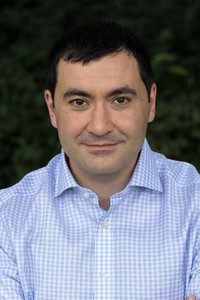
Mikail Rubinov serves as Assistant Professor of Biomedical Engineering (primary appointment), Computer Science, Psychiatry, and Psychology at Vanderbilt University's School of Engineering. His interdisciplinary work bridges computational neuroscience, network science, and clinical applications. His research focuses on integrative statistical models of large-scale neural data , exploring brain network organization across species and scales. Key interests include evolutionary principles of brain networks, transcriptomic basis of neural individuality, information transfer in neural systems, and neuropsychiatric connectivity phenotypes. The Rubinov Lab develops computational frameworks for analyzing complex neural systems and integrates neuroscientific knowledge with multi-omics data. Recent publications reveal strong trends in network neuroscience methodology development (circular analysis frameworks, unbiased sampling techniques) and translational applications (epilepsy networks, autism spectrum connectomics, gut-brain axis interrogation). His work increasingly incorporates transcriptomic data with neuroimaging at biobank scale. NIH Grant Writing Workshop (June 2022) NIH Workshop Short Talks (April 2023) Rubinov actively mentors graduate and undergraduate students across Biomedical Engineering and Computer Science. His lab maintains collaborations with UCSF, HHMI Janelia Research Campus, Weizmann Institute, and international neuroscience consortia. Current projects include integrative models of large-scale neural data and transcriptomic basis of neural individuality. The Rubinov Lab operates within Vanderbilt's Department of Biomedical Engineering with extensive cross-school collaborations. Technical resources include GitHub repositories for constraint network models (cnm-code), volumetric segmentation (voluseg), and brain connectivity toolboxes.