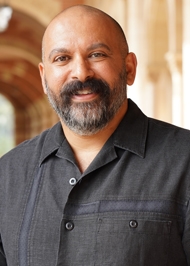
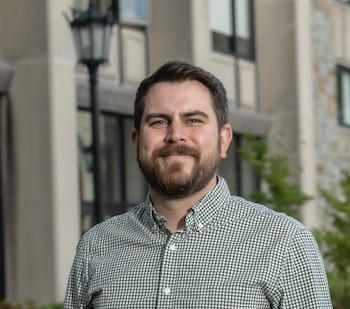
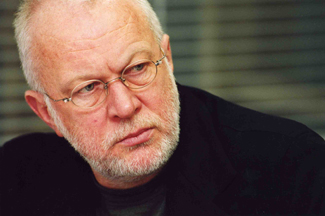
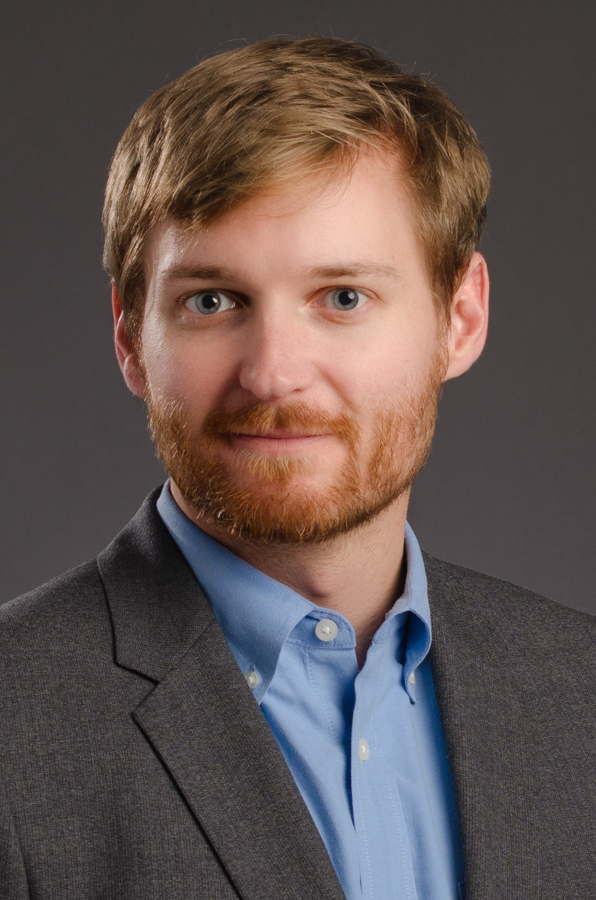
Sharese King is the Neubauer Family Assistant Professor of Linguistics at the University of Chicago, where she has taught since 2018. She earned her Ph.D. and Master's in Linguistics from Stanford University, focusing on language variation across African American communities. Her research bridges sociolinguistics, critical race theory, and phonetics to examine how African American speech is constructed, racialized, and socially evaluated. Education: Ph.D., Linguistics, Stanford University (2018) M.A., Linguistics, Stanford University Research Interests: Sociolinguistics Language Variation & Change African American Language Critical Race Theory Phonetic and experimental analysis Dialect and judicial systems Notable Contributions: Interdisciplinary studies on raciolinguistics and courtroom bias Analysis of /s/ articulation in intersectional contexts Reconceptualization of AAVE as AAL to emphasize linguistic diversity Fieldwork in Bakersfield, Rochester, and Chicago Publications in American Speech , Journal of Sociolinguistics , Language , and Nature Scientific Awards: Provost's Postdoctoral Fellowship Neubauer Family Assistant Professorship Labs & Projects: Co-founder of the Chicagoland Language Project
Jonathan Rosa is Associate Professor in the Graduate School of Education, Center for Comparative Studies in Race and Ethnicity, and, by courtesy, Departments of Anthropology, Linguistics, and Comparative Literature at Stanford University. He serves as Director of Stanford's Program in Chicanx-Latinx Studies and has held leadership positions including President of the Association of Latina/o and Latinx Anthropologists of the American Anthropological Association. Dr. Rosa's educational background includes: Ph.D. in Sociocultural and Linguistic Anthropology from the University of Chicago (2010) M.A. in Sociocultural and Linguistic Anthropology from the University of Chicago (2006) B.A. in Linguistics and Educational Studies from Swarthmore College (2003) Dr. Rosa's research examines the co-naturalization of language and race as a key feature of modern governance, tracking colonially structured interrelations among racial marginalization, linguistic stigmatization, and institutional inequity. His scholarship centers on raciolinguistic ideologies, Latinx studies, and educational justice, with a community-based approach that develops tools for challenging systemic vulnerability. He investigates how race and language are jointly defined across historical, geopolitical, and institutional contexts, with particular focus on Latinx communities and educational settings. His recent publications demonstrate a consistent thematic focus on decolonizing linguistic and educational frameworks, challenging standard language ideologies, and examining the intersections of race, language, and power. The work spans multiple disciplines including sociolinguistics, anthropology, education, and critical race studies, increasingly emphasizing undoing raciolinguistics and addressing coloniality in language education and assessment practices. Dr. Rosa has received numerous prestigious awards for his scholarship: Distinguished Summer Scholar, Banks Center for Educational Justice, University of Washington College of Education (2024) Outstanding Book of the Year Award for "Looking like a Language, Sounding like a Race," American Association of Teaching and Curriculum (2022) First Book Award for "Looking like a Language, Sounding like a Race," American Association for Applied Linguistics (2021) Prose Award for Excellence in Language & Linguistics for "Looking like a Language, Sounding like a Race," Association of American Publishers (2020) Charles A. Ferguson Award for Outstanding Scholarship, Center for Applied Linguistics (2018) Dr. Rosa actively mentors doctoral students across multiple programs, serving as primary advisor for students researching race, ethnicity, language, and education. His research has been supported by major grants from the National Science Foundation, Andrew W. Mellon Foundation, Woodrow Wilson National Fellowship Foundation, and Ford Foundation. He collaborates extensively with community organizations, particularly in Chicago, to develop educational approaches grounded in decolonial praxis, focusing on how scholarship can serve as a platform for social transformation. Dr. Rosa co-directed Stanford's Center for Global Ethnography (2021-2023) and directed Stanford's Program in Chicana/o-Latina/o Studies (2020-2023). He serves on multiple editorial boards including Current Anthropology and Equity & Excellence in Education, and has held leadership positions in professional organizations including President of the Association of Latina/o and Latinx Anthropologists (2020-2022).
University of California, Los AngelesUnited States
H. Samy Alim is a Professor and David O. Sears Presidential Endowed Chair in the Division of Social Sciences at UCLA, holding a joint appointment in the Department of Anthropology. He serves as Associate Director of the Ralph J. Bunche Center for African American Studies and leads the UCLA Hip Hop Initiative. Alim’s research focuses on Hip Hop Culture, Black Language, and Culturally Sustaining Pedagogies, with over 25 years of scholarship in these areas. His work bridges academia and activism, emphasizing Hip Hop’s transformative role in global social justice movements. Alim earned his PhD in Anthropology from Stanford University (2003), following MA (2002) and BA (1999) degrees. His academic contributions include twelve authored/edited books, such as Freedom Moves (2023) and Articulate While Black (2012). His research spans Hip Hop’s linguistic innovations, racialized language politics, and its pedagogical potential in education. Key projects include ethnographic studies in Cape Town, South Africa, and collaborative initiatives like the UC Press Hip Hop Studies Book Series. He co-edits the Oxford Handbook of Language and Race and directs the Center for Race, Ethnicity, and Language. Alim has engaged with global Hip Hop artists (e.g., Chuck D of Public Enemy) to co-produce knowledge, emphasizing Hip Hop as a site of theorizing and activism. His teaching and research highlight intersections of language, race, and power, advocating for pedagogies that sustain cultural identities while fostering equity. Collaborations with organizations like Heal the Hood in South Africa reflect his commitment to community-driven scholarship.
Josh Seim is an Assistant Professor of Sociology at Boston College, affiliated with the Morrissey College of Arts and Sciences. His work focuses on the sociologies of work, medicine, welfare, punishment, pedagogy, and ethnographic methods. He holds a Ph.D. from the University of California, Berkeley, and has published widely in top journals including *American Sociological Review* and *Social Problems*. Education: B.A., Gonzaga University M.S., Portland State University Ph.D., University of California, Berkeley Research Interests: His research explores how institutions like healthcare systems, welfare offices, and penal institutions interact with urban poverty. Recent projects include studies on ambulance crews’ labor processes, welfare bureaucracy, and post-prison labor. His writing also emphasizes pedagogical innovation in sociology teaching and ethnographic methodological rigor. Key themes include the governance of suffering, medical labor, and carceral systems. Publications & Books: Bandage, Sort, and Hustle: Ambulance Crews on the Front Lines of Urban Suffering (UC Press, 2020) The Welfare Assembly Line: Public Servants in the Suffering City (forthcoming UC Press, 2026) Teaching: Sociology 7715: Classical Sociological Theory (graduate) Sociology 7716: Contemporary Sociological Theory (graduate)
K. Michael Hays is the Eliot Noyes Professor of Architectural Theory at Harvard University's Graduate School of Design (GSD) and Co-Director of the Master in Design Studies program. He has been a faculty member since 1988, specializing in architectural history and theory. His research focuses on European modernism, critical theory, and contemporary architectural practice, with notable contributions to the field through writings on figures like Mies van der Rohe and Peter Eisenman. Education: He holds a Bachelor of Architecture (1976) from Georgia Institute of Technology, a Master of Architecture in Advanced Studies (1979) from MIT, and a PhD in History, Theory, and Criticism of Architecture and Art (1990) from MIT. Research Interests: Hays is renowned for founding the journal Assemblage , a pivotal forum for architectural theory. His work bridges historical analysis and contemporary practice, emphasizing theoretical frameworks for understanding modernism and its evolution. He has curated exhibitions at institutions like the Whitney Museum of American Art (as its first Adjunct Curator from 2000–2009). Publications: His authored and edited works include Architecture's Desire , Inscriptions: Architecture Before Speech , and critical studies on architects such as Buckminster Fuller and Diller + Scofidio. These publications explore themes of representation, modernist aesthetics, and interdisciplinary design. Awards and Roles: While no specific awards are listed, his academic leadership roles include Chair of the GSD PhD Committee (1995–2005) and Director of Advanced Independent Study Programs. He has also served on editorial boards for journals like Assemblage and Thresholds . Labs and Collaborations: Hays collaborates with academic and institutional partners, notably through curatorial projects and his role in shaping the GSD's theoretical curriculum. His influence extends to both pedagogical innovation and scholarly discourse in architectural education.
Mulki Al-Sharmani is a Professor at the University of Helsinki, affiliated with the Faculty of Arts and the Department of Cultures (specializing in Middle Eastern Studies). Her research focuses on Islamic feminism, Muslim family law, gender studies, and transnational migrant communities. She examines how religious texts and practices intersect with legal frameworks and social dynamics in contexts like Egypt, Finland, and the Somali diaspora. Her work includes analyzing Islamic legal reform, gender equality in marriage, and the lived experiences of Muslim women. Key publications explore Qur'anic hermeneutics, the role of feminist activism in legal change, and the wellbeing of transnational families. She has contributed to projects like 'Reclaiming Adl and Ihsan in Muslim Marriage' and co-edited volumes on Islamic ethics and family law reform. Research interests: Islamic feminist theory, Middle Eastern legal traditions, transnational family dynamics, and religious praxis. Recent articles highlight themes like Qur'anic ethics of marriage, legal pluralism in Finland, and the political dimensions of Egyptian family law reform. Active in international conferences, including presentations at SOAS University of London, American University in Cairo, and panels on Islamic law and gender at venues like MESA and EASR. Involved in interdisciplinary initiatives such as the Africa Research Forum and Musawah's global network for equality in Muslim family laws.
University of California, Los AngelesUnited States
Anna Morcom is Professor and Mohindar Brar Sambhi Chair of Indian Music in the Department of Ethnomusicology at UCLA's Herb Alpert School of Music. She previously held a professorship at Royal Holloway, University of London, and earned her Ph.D. from SOAS (School of Oriental and African Studies) in 2002, where she also completed her undergraduate studies in Ethnomusicology and Hindi (1993-1996). Her research spans music and dance in India and Tibet, employing ethnographic and oral historical methods to examine the intersections of musical culture with politics, nationalism, identity, gender, inequality, economic development, and media. Morcom's scholarship is notable for its interdisciplinary approach that bridges traditional and popular musics with contemporary theoretical frameworks. Her work demonstrates significant trends toward examining music within economic frameworks, particularly through her founding of SEM's Special Interest Group on Economic Ethnomusicology. Recent publications increasingly focus on cultural economies, performance labor, and the relationship between artistic practice and economic systems in South Asia. Society of Ethnomusicology's Allan Merriam prize (2014) Marcia Herndon prize of SEM's Gender and Sexualities section (2014) Morcom's research has been supported by multiple grants from the Leverhulme Trust and the British Academy. She has been interviewed by prominent media outlets including BBC Radio 4's Thinking Allowed, The Hindu, Tehelka, and Scroll regarding her influential work on Indian dance cultures. As founder of SEM's Special Interest Group on Economic Ethnomusicology, she has shaped scholarly discourse on the economic dimensions of musical practice. Her current projects include the monograph on Hindustani music and co-editing two significant volumes: Creative Economies of Culture in South Asia: Craftspeople Performers (Routledge) and the Oxford Handbook of Economic Ethnomusicology (OUP).
Massachusetts Institute of TechnologyUnited States
Dean Eckles is an Associate Professor of Marketing at MIT Sloan School of Management and serves as an Associate Director of the MIT Institute for Data, Systems, and Society (IDSS). He is also affiliated with the MIT Schwarzman College of Computing through the Institute for Data, Systems & Society and its Statistics and Data Science Center. Additionally, he leads the analytics research area at the Initiative on the Digital Economy and organizes the annual Conference on Digital Experimentation (CODE@MIT). His educational background includes a BA in philosophy, BS and MS in cognitive science, MS in statistics, and PhD in communication, all from Stanford University. Prior to joining MIT, Eckles worked as a scientist at Facebook, where he contributed to areas including News Feed, messaging, advertising, tools for randomized experiments, and survey methods. He previously held research positions at Nokia and Yahoo. Eckles's research primarily focuses on social influence mediated by interactive technologies, examining how communication technologies mediate, amplify, and direct social influence. His work spans multiple specific areas including social interactions, contagion, and interventions in networks; experimental design and inference in networks; and methods for causal inference. His research often combines social science with advanced statistical methods. His notable publications include research on long ties in social networks and their relationship to economic prosperity, how network structure affects social contagions, and algorithmic transparency in social media platforms. His work has appeared in prestigious journals including PNAS and Nature Human Behaviour, and he has provided expert testimony before the US Senate on algorithmic ranking. Long ties, disruptive life events and economic prosperity (PNAS) Long ties accelerate noisy threshold-based contagions (Nature Human Behaviour) Algorithmic transparency and assessing effects of algorithmic ranking (Senate testimony) Eckles actively shares his research through social media platforms including Bluesky, Twitter, and Mastodon, as well as through his blog and contributions to the Gelman et al. blog. His work bridges academic research with practical applications in technology and policy.
Diane E. Austin is a Professor and Director of the School of Anthropology at the University of Arizona. She also serves as a Research Anthropologist at the Bureau of Applied Research in Anthropology (BARA). Her work focuses on environmental anthropology, particularly community dynamics in industrial and environmental contexts, with a strong emphasis on social justice and collaborative research. She has over 25 years of experience leading interdisciplinary projects in the U.S., Mexico, and Gulf Coast regions. Austin's research spans diverse areas including Native American communities, U.S.-Mexico border sustainability, Gulf Coast oil industry impacts, and urban food systems in arid regions. She has pioneered long-term partnerships with tribal organizations, federal agencies, and community groups, earning recognition such as the University Distinguished Outreach Professor (2008) and Distinguished Director (2023). Her recent work highlights longitudinal studies on the Deepwater Horizon oil spill's social effects, binational environmental initiatives in Nogales, and community-based approaches to disaster resilience. She coordinates BARA's internship and post-baccalaureate programs, supporting hundreds of students in applied anthropological research. Awards: Partners in Conservation Award (2010), Border Research Partnership Award Finalist (2012) Leadership Roles: Chair of the Good Neighbor Environmental Board, Member of the Gulf Research Program Advisory Board Key Projects: Southern Paiute cultural preservation, Gulf Coast oil industry studies, Nogales reforestation initiatives Austin’s teaching includes courses on ethnographic methods, data analysis, and mixed-methods research. She actively engages in policy advocacy, contributing expert testimony in legal proceedings related to environmental disasters and labor rights.
Prof. Dr. Eva Spies is a Professor for the Study of Religion with Focus on Africa at the University of Bayreuth within the Faculty of Humanities & Social Sciences . She holds a PhD in Cultural Anthropology from the University of Mainz and leads the Research Section Moralities in the Africa Multiple Cluster of Excellence (EXC 2052). Key Roles : Principal Investigator, Bayreuth International Graduate School of African Studies (BIGSAS) Vice Dean of Research Co-founder, German Association for the Study of Religion's Africa working group Research Interests span religious plurality, development cooperation, and transformative practices. She coined the concept of religious engineering to analyze how religious resources shape social/political worlds. Regional expertise in Niger/West Africa and Madagascar/Indian Ocean , with focus on: South-South mission Religion and pandemic response Intercultural hermeneutics Epistemological conflicts Material culture in development Projects : Africa Multiple Cluster of Excellence (2025): "Religious engineering. The making of moralities, development and religion in Niger" Humboldt Research Hub (2021): "Fighting pandemics with religion?" (with Moi University and University of Zimbabwe) Education : PhD in Cultural Anthropology, University of Mainz
Susan Pfeiffer is a Research Professor of Anthropology at the University of Toronto, affiliated with the Department of Anthropology within the Faculty of Arts and Science. Her research focuses on bioarchaeology, skeletal biology of past populations, and repatriation of human remains, particularly among Southern African Khoe-San and North American Great Lakes communities. She holds a Ph.D. (1976), M.A. (1972), and B.A. (1968) in Anthropology and Religion from the University of Toronto and the University of Iowa. Education: Ph.D. in Anthropology, University of Toronto (1976) M.A. in Anthropology, University of Toronto (1972) B.A. in Religion, University of Iowa (1968) Her research interests include paleopathology, adult age estimation, evolutionary theory, and collaborations with Indigenous communities. Notable works include her 2022 book Osteobiographies , which explores repatriation frameworks globally, and studies on Huron-Wendat ancestral repatriation and Southern African skeletal analysis. Dr. Pfeiffer has received prestigious awards such as the 2019 AAAS Fellowship and the 2016 J. Norman Emerson Medal. Her publications bridge bioarchaeological methodological advancements with ethical repatriation practices, emphasizing cross-cultural collaboration in anthropology. Key Awards: AAAS Anthropology Section Fellowship (2019) Ontario Archaeological Association Medal (2016) University of Toronto Teaching Excellence Award (2001) Her work integrates skeletal analysis with community partnerships, addressing both scientific and cultural dimensions of human remains research. Collaborations with First Nations and African groups highlight her commitment to ethical, culturally sensitive archaeology.
Jens Edlund is a Professor at KTH Royal Institute of Technology's Division of Speech, Music and Hearing. His research focuses on speech technology, dialogue systems, prosody, and evolutionary phonetics. He has contributed to foundational work on speech synthesis, conversational interaction, and multimodal corpora like the D64 corpus. Key projects include the MonAMI Reminder system and analysis of primate vocalizations to understand speech evolution. Edlund has collaborated extensively with global researchers, producing over 150 peer-reviewed works. His work integrates computational methods with linguistic and biological insights, emphasizing human-like dialogue systems and cross-species vocal analysis. Education: Ph.D. in Speech Technology (2011, KTH) Grants: Multiple EU and Swedish Research Council grants for speech technology and interdisciplinary studies Research labs include the KTH Speech, Music and Hearing Lab and collaborations with institutions like Max Planck Institute for Evolutionary Anthropology. Current work explores evolutionary origins of speech biomechanics and AI-driven speech synthesis evaluation.
Roswitha Skare is a Professor of Documentation Science at the Department of Language and Culture, UiT The Arctic University of Norway, within the Faculty of Humanities, Social Sciences and Teacher Education. She is actively engaged in research and teaching, focusing on documentation studies, public libraries, archives, museums (LAM sector), digitalization, and film history. Her research interests include: Documentation and document theory Paratext and digital documents Public libraries and their role in society Libraries and social media Migration and refugee services in libraries Film history, especially silent films and early documentaries Cultural memory and Sámi cultural resilience Institutional convergence in cultural policy Her recent publications (2019–2025) reveal a strong focus on public libraries during and after the Covid-19 pandemic, the role of libraries in supporting immigrants and refugees, theoretical developments in document studies, and historical film analysis—particularly Robert Flaherty’s Nanook of the North . She frequently collaborates with scholars such as Andreas Vårheim, Noah Lenstra, and Sigrid Stokstad. Her work appears in journals like Journal of Documentation , Library & Information Science Research , and Proceedings from the Document Academy . Roswitha Skare teaches courses such as: MDV-1001: Multimediale dokumenter: Historie, teori og analyse MDV-1203: Bibliotek og formidling MDV-1207: Dokumentinstitusjoner og digitalisering MDV-1206: Prosjektoppgave i bibliotek- og dokumentasjonsvitenskap She supervises bachelor’s, project, and master’s students in library and documentation science. She is a member of the research group Engaging Conflicts in a Digital Era (ENCODE) and participates in projects such as LAMCOM – Libraries, archives, and museums in the community and SAMCOM - Sámi cultural centers as community and cultural resilience infrastructure , which explore the societal roles of cultural institutions and Indigenous resilience. No scientific awards are listed in the provided text.
London School of Economics and Political Science (LSE)United Kingdom
Dr Alison Powell is an Associate Professor in the Department of Media and Communications at the London School of Economics and Political Science (LSE), serving as Programme Director for the MSc Media and Communications (Data and Society). Her research focuses on technology design, public sector technology, and digital futures. She is known for her book Undoing Optimization: Civic Action in Smart Cities (2021) and her participatory research method, data walking. From 2019–2023, she directed the JUST AI network, supported by the Ada Lovelace Institute and UKRI, advancing AI ethics research. Her work integrates critical theory, participatory methods, and interdisciplinary collaboration. Education: PhD in Communication from Concordia University (Canada), MA in Media Studies from Toronto Metropolitan University, and postdoctoral research at the Oxford Internet Institute. Prior to academia, she worked in the film and TV industry. Research interests include civic engagement in data-driven governance, ethical AI, and participatory urbanism. She has advised projects like Africa Just AI and Operationalising Ethics for AI, funded by Horizon Europe, AHRC, and the Open Society Foundations. Her articles address topics such as AI governance, urban light ecology, feminist research praxis, and the ethical implications of technology for marginalized communities. She contributes to blogs like Media@LSE and leads initiatives at Polis and the LSE’s Digital Futures for Children project. Grants and collaborations include work with Projects by IF, Open Rights Group, and the Human Data Interactions Network (EPSRC). She explores intersections of technology, justice, and sustainability, emphasizing equitable and inclusive innovation.
Dr. Yaron Meron is a Lecturer and researcher in design at the University of Sydney's School of Architecture, Design and Planning. He holds a PhD (RMIT, Melbourne) and two Master's degrees (RMIT, Central St Martins). His work bridges academic research and professional practice, focusing on graphic and communication design, socially engaged design, AI integration, and responsible design thinking. Meron’s research explores interdisciplinary challenges, design collaboration, and the societal impact of emerging technologies like AI. He coordinates the Civic & Social Design Research Group. Educations: PhD in Design (RMIT University, Melbourne) MA in Design (RMIT University, Melbourne) MA in Communication Design (Central Saint Martins, London) Research Interests: Graphic design as an interdisciplinary practice Artificial intelligence in design education and practice Media literacy and defamiliarisation techniques Socially engaged design methodologies Design briefs and stakeholder relationships Articles & Trends: Recent publications emphasize AI's role in design education, speculative urban futures, and critical design approaches to media literacy. His work frequently intersects with pedagogy, ethics, and technology’s societal implications. Labs/Teams: Coordinator of the Civic & Social Design Research Group, fostering collaborative projects on responsible design and interdisciplinary innovation.