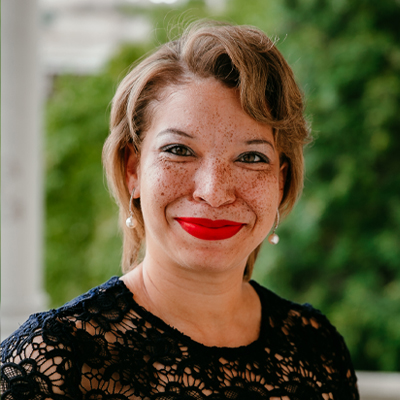
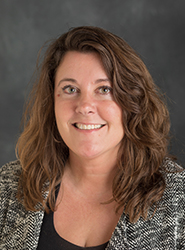
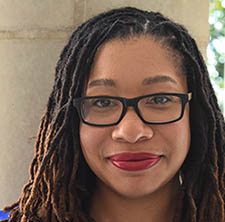
Antoinette Landor is Associate Professor in Human Development & Family Science at the University of Missouri's College of Education & Human Development. Her research examines how skin tone discrimination, racial socialization, and systemic racism impact health outcomes and relationship dynamics. Recent studies investigate ethnic-racial identity development, COVID-19 vaccine hesitancy in Latinx communities, and racialized body image frameworks. Landor's work advances understanding of colorism's psychological impacts across developmental stages. She holds a PhD from the University of Georgia and completed NIH postdoctoral training at UNC-Chapel Hill.
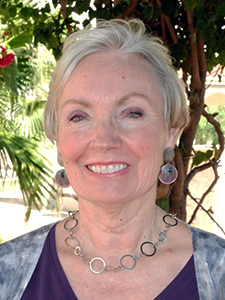
Dr. June Melby Benowitz serves as an Associate Professor of History at the University of South Florida Sarasota-Manatee campus, where she specializes in American women's political engagement within conservative movements. Her scholarly contributions include the critically acclaimed Days of Discontent: American Women and Right-Wing Politics, 1933-1945 and the Encyclopedia of American Women and Religion , recognized as an “Outstanding Textbook of 1999” by Choice magazine. Her academic credentials include: BA from Portland State University MA from Portland State University PhD from the University of Texas at Austin Benowitz’s research interrogates the paradox of women’s participation in right-wing politics, examining how conservative female activists navigated education policy, school prayer debates, and anti-communist campaigns from the New Deal era through the Cold War. Her work reveals the complex intersections of gender, religion, and political ideology, challenging monolithic narratives about women’s political alignment. By analyzing grassroots movements like the Minute Women of the U.S.A. and individual figures such as Grace Wick, she demonstrates how conservative women strategically leveraged maternalist rhetoric to advance their agendas while maintaining traditional gender roles. Her publication trajectory shows consistent focus on 20th-century American conservatism, with recent works expanding to examine Baby Boom generation activism. Conference presentations at King’s College London (2013) and Oxford (2011) indicate international scholarly recognition of her expertise in religion’s role in American political life. Her scholarly recognition includes: Outstanding Textbook of 1999 by Choice magazine for Encyclopedia of American Women and Religion Benowitz’s extensive contributions to reference works like the New Handbook of Texas and Women in World History demonstrate her commitment to documenting underrepresented historical narratives. Her conference papers and book chapters reveal ongoing engagement with evolving methodologies in political and gender history.
Sasha Fleary is Associate Professor and founder of the Child Health Equity Research Lab at CUNY Graduate School of Public Health & Health Policy. Her mixed-methods research focuses on health promotion for children, adolescents, and parents through culturally-responsive interventions addressing health disparities. Current NIH-funded research examines health literacy's role in chronic disease prevention and community health organization. Research explores mental health literacy, public libraries as health promotion spaces, and racial/ethnic health disparities. She chairs the Child and Family Health Literacy Special Interest Group and serves as Treasurer of the International Health Literacy Association. Publications appear in Annals of Behavioral Medicine, American Journal of Health Behavior, and BMC Public Health. NIH BIRCWH Scholar Current NIH NIDDK R21 grant recipient
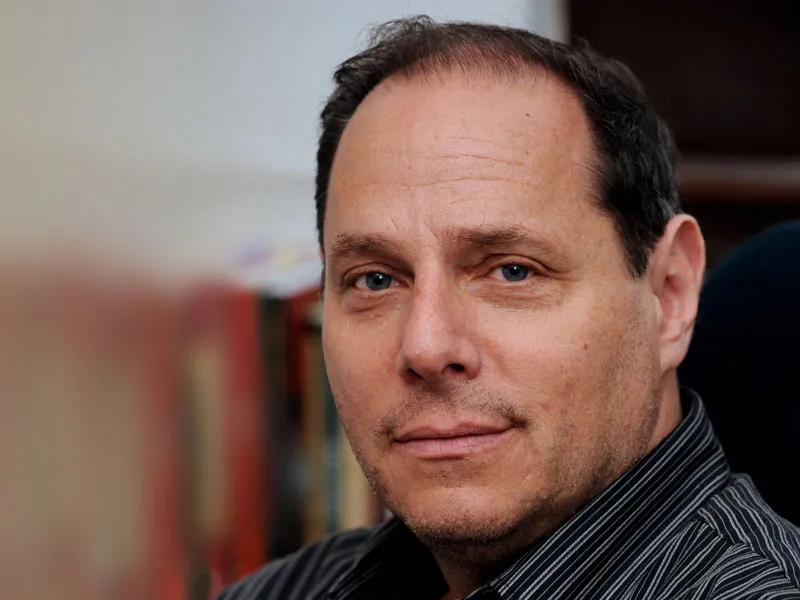
Joel Dinerstein is a Professor of English and Sizeler Family Professor of Judaic Studies IV at Tulane University in New Orleans. He also serves as director of the New Orleans Center for the Gulf South. Ph.D. in American Studies from the University of Texas at Austin (2000) M.A. in American Studies from the University of Texas at Austin (1995) B.A. in English from the University of Buffalo (1979) His research focuses on cultural history , American cool , jazz , race and ethnicity , popular music , and technology's impact on culture . His work bridges literature, music, and urban studies. The articles/books he authored reveal trends in 20th-century American culture , jazz evolution , racial dynamics , urban cool , and media's role in defining cultural icons . Notable themes include appropriation of African-American aesthetics and gender representation in coolness. Scientific Awards Student Body Award for Excellence in Undergraduate Teaching Dinerstein has advised undergraduate and graduate students in American literature, jazz, and cultural studies. He consults for HBO's Boardwalk Empire , the National Endowment for the Humanities, and Putumayo Records. His teaching includes courses on race and ethnicity , Jewish-American culture , and New Orleans second-line traditions . As a jazz DJ for WWOZ-FM and member of the Prince of Wales Social Aid & Pleasure Club, he actively engages with New Orleans' cultural and musical heritage. He curated the American Cool exhibit at the National Portrait Gallery, co-authoring its catalog.
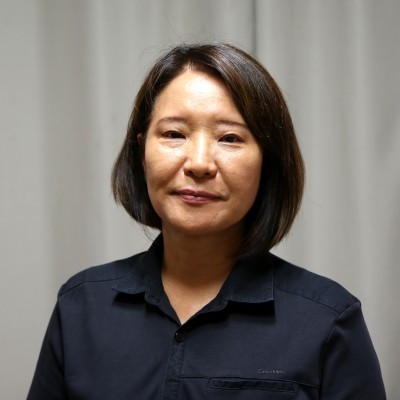
Eunju Lee is Associate Professor at the University at Albany's School of Social Welfare, where she serves as PhD Program Director and leads the Center for Human Services Research. Her academic credentials include a PhD in Sociology from UAlbany with certificates in Women and Public Policy. Dr. Lee's research focuses on child welfare systems, kinship care dynamics, and early childhood interventions. She currently directs two major projects: the Healthy Families New York randomized trial examining home visiting effectiveness across 15 years, and the Kinship Care Demonstration Project analyzing support systems for relative caregivers. Her methodological expertise spans both quantitative and qualitative approaches. Teaching responsibilities include MSW child welfare policy courses, program evaluation methodologies, and doctoral research seminars. Her scholarship addresses immigrant adaptation, gender equity, and racial disparities in service systems.
Mary Ann Bodine Al-Sharif serves as an Associate Professor of Higher Education in the School of Education at the University of Alabama at Birmingham (UAB), with a secondary appointment as Associate Scientist in the College of Arts and Sciences. She also holds administrative roles as Assistant Director and previously Interim Director of the Office of Professional Studies and Experiential Learning (OPSEL) in the Graduate School. Her educational background includes a PhD and M.Ed. in Adult and Higher Education from the University of Oklahoma, an MA in English from the University of Central Oklahoma, and an Associates Degree in General Studies from Mineral Area College. She is certified in International Student Services from Western Kentucky University. Dr. Bodine Al-Sharif is a critical qualitative researcher whose work focuses on three core areas: student identity development, global movements in higher education, and issues of social justice, institutionalized oppression, and advocacy within higher education. She explores the lives of individuals living at intersections of ability, race, religion, ethnicity, and gender expression, examining both micro-level identity experiences and macro-level power structures. Her methodological approaches include critical discourse analysis, critical narrative inquiry, scholarly personal narrative, critical autoethnography, and phenomenology. Her recent publications (2022-2025) demonstrate consistent scholarly output with a clear thematic focus on international graduate students, online education challenges, and intersectional identities in higher education. These works reveal an evolving research trajectory from foundational identity studies toward practical applications for supporting marginalized student populations and faculty in digital learning environments. 2024-2025 Fulbright U.S. Scholar Award - Saudi Arabia Saudi Fellow/Invited Scholar by Ministry of Education in Kingdom of Saudi Arabia (2019) Social Justice Graduate Research Fellow (2010-2011) Faculty Fellow in Education Abroad (2021-2022) Dr. Bodine Al-Sharif actively mentors doctoral students as committee chair and member, with particular focus on issues of identity, international education, and social justice. Her teaching philosophy emphasizes learner-oriented approaches that bridge theory and practice through collaborative interaction and round-table discussions. She has served as reviewer for Journal of College Student Development, Journal of International Students, and Journal for the Study of Postsecondary and Tertiary Education. Her administrative experience in OPSEL demonstrates commitment to experiential learning and professional development for graduate students.
Stephanie A. Bohon is a Professor and Head of the Sociology Department at the University of Tennessee, Knoxville, within the College of Arts and Sciences. She joined the university in 2006 and holds a PhD in Sociology and Demography from Pennsylvania State University (1998). Her research focuses on social demography, new destination immigration, Latino migration patterns, urban sociology, and quantitative methodologies. Dr. Bohon’s work emphasizes the adaptation and integration of Latino migrants in Southern U.S. regions, contrasting their experiences in traditional vs. emerging gateway cities. She also examines structural conditions affecting police-involved killings, racial disparities in criminal justice systems, and environmental policy dynamics. Her methodological expertise includes causal inference in population trends and gender diversity measurement in higher education. Her recent publications (2019-2024) highlight themes of racial taxation in urban planning, police brutality disparities, eco-mom theories, and data-driven approaches to demographic research. She has contributed to policy debates on environmental regulations, immigrant labor conditions, and academic gender equity. Bohon teaches courses in sociological research methods, population studies, urban sociology, and quantitative analysis at both undergraduate and graduate levels. She has advised on studies involving Latino migrant housing needs, criminal justice impacts on mental health, and environmental policy frameworks.
Jessica Jackson is an Associate Professor of History and Director of Social Studies Teaching at Colorado State University. Her research focuses on immigration history, southern U.S. history, race relations, and social studies education. She holds a PhD from the University of California, Santa Cruz. Jackson's award-winning book Dixie's Italians examines Sicilian racialization in the Jim Crow Gulf South, while her current project explores anti-immigrant lynching violence in Colorado. She teaches courses on U.S. immigration history and social studies pedagogy. Her work bridges immigration, southern, and Italian history, challenging traditional black/white racial narratives. Recent scholarship includes presentations on teaching place-based curriculum, the legal borderlands of Colorado, and the legacy of lynching violence. Jackson has been featured in PBS documentaries, the New York Times, and the Washington Post. As an educator, she emphasizes culturally responsive teaching methods and has organized workshops on teaching difficult historical topics. Her research often involves collaboration with K-12 educators to develop hyperlocal, culturally sustaining curricula.
Joane P. Nagel is a University Distinguished Professor at the University of Kansas, specializing in sociology with a focus on gender studies, climate change, indigenous ethnic renewal, and the intersections of masculinity with nationalism and militarization. Her research bridges environmental policy, cultural anthropology, and postcolonial theory. She holds an office in Fraser Hall and is reachable at nagel@ku.edu. Her work critically examines how gendered and racialized power structures shape responses to global challenges like climate change. Notable projects include analyzing hegemonic masculinity in climate science narratives and exploring the resurgence of Native American ethnic identities through activism and cultural preservation. She has pioneered interdisciplinary approaches linking environmental crises to socio-political inequities, particularly through lens of gender and race. Recent scholarship includes exploring parallels between pandemic responses and climate adaptation strategies, as well as deconstructing colonial myths through cinema analysis. Her book Gender and Climate Change: Impacts, Science, Policy (2016) remains a foundational text in environmental gender studies. Nagel has contributed to policy dialogues on climate justice while maintaining a long-term focus on decolonizing methodologies in sociological research. Key Themes: Gender & Climate Policy, Indigenous Sovereignty, Militarized Masculinity, Ethnic Identity Politics Methodological Strengths: Qualitative research, historical analysis, ethnographic fieldwork, policy critique
Roe Bubar, J.D. is a Professor of Ethnic Studies at Colorado State University with joint appointments in the School of Social Work and affiliation in Women's Studies. She holds a B.A. from the University of New Hampshire and a J.D. from the University of Colorado, complemented by mediation certification from CSU. Her work focuses on sexual violence, child maltreatment in tribal communities, and Indigenous methodologies. A licensed attorney and mediator, she collaborates with tribal, state, and federal agencies. Research interests include intersectionality, racial microaggressions against Indigenous peoples, and decolonizing research practices. Teaching spans courses like Federal Indian Law, Indigenous Film, and Ethnic Studies research methods. Notable awards include the JSWE Best Research Article Award (2014) for work on professional power dynamics in social work education. Publications emphasize Indigenous-centered approaches to health disparities, legal frameworks, and child welfare. Current projects explore sexual assault of Indigenous women/children, Native youth health, and professional power dynamics. Her work bridges academia and community action through policy engagement and tribal collaboration.
Alisha Gaines is the Timothy Gannon Associate Professor of English at Florida State University , specializing in African American literature, Black feminisms, and empathy studies across racial lines. Her academic journey includes a PhD in English and a certificate in African and African American Studies from Duke University, followed by the Carter G. Woodson Postdoctoral Fellowship at the University of Virginia (2009-2011). Ranks: Associate Professor Departments: Department of English Her research interrogates the political consequences of racial empathy and historical reenactment through projects like Black for a Day: White Fantasies of Race and Empathy (UNC Press, 2017). This work constructs a genealogy of white liberals temporarily 'becoming' Black under the guise of racial reconciliation, analyzing cultural phenomena from Finian's Rainbow to Rachel Dolezal's media narrative. Recent publications include contributions to Neo-passing: Performing Identity after Jim Crow (2018) and critical analyses of transatlantic historical reenactments of slavery. Her interdisciplinary teaching spans African American literature, black queer theory, and New Southern studies. Scientific Awards: 2014-2015 McKnight Junior Faculty Development Fellow 2014 Transformation Through Teaching Award 2017 University-wide Undergraduate Teaching Award Her public scholarship appears in the New York Times , Smithsonian Magazine , and podcasts like New Books in African American Studies and Faculty Fridays , addressing contemporary issues of race, empathy, and cultural representation.
Crystal Fleming is a Professor of Sociology at Stony Brook University, specializing in Critical Race Theory, Global White Supremacy, and Mindfulness in Oppressed Communities. She holds a Ph.D. in Sociology from Harvard University (2011). Her work critiques racial oppression across national contexts, with a focus on France and the U.S. Fleming’s research bridges academic rigor and public engagement, as seen in her best-selling books *How to Be Less Stupid About Race* (2018) and *Rise Up!* (2021), which received multiple awards including Booklist Editor’s Choice and School Library Journal Best Book. Her research areas include racial temporality, collective memory, anti-blackness, and the intersections of spirituality and activism. Recent projects analyze mindfulness practices among marginalized groups and global white supremacy dynamics. Fleming’s publications span peer-reviewed articles in journals like *Social Problems* and *Sociology of Race and Ethnicity*, as well as edited volumes such as *Beyond White Mindfulness* (2022). Awards include recognition for her impactful public scholarship, with a focus on demystifying racism for broader audiences. She actively engages in public speaking and media commentary on racial justice issues. Fleming’s work emphasizes actionable strategies against systemic racism, combining scholarly analysis with accessible activism.
Salil D. Benegal is the Joseph B. Board Assistant Professor of Environmental Policy in the Department of Political Science at Union College. His research focuses on climate change policy, environmental public opinion, and the intersection of race, science communication, and political psychology. He holds a Ph.D. in Political Science and M.A. in Economics from the University of Connecticut, and a B.Sc. in Chemistry from Illinois Institute of Technology. Benegal's research analyzes how economic frames, racial attitudes, and partisan divides shape environmental opinions. His work examines climate policy support mechanisms, misinformation correction techniques, and the psychological underpinnings of climate denial. Recent publications explore pandemic impacts on scientific trust, racial animus in belief formation, and economic framing of renewable energy. In teaching, he covers US Environmental Policy, Climate Change Politics, Energy Policy, and Research Methods. He has received grants from DePauw University's Asher Fund and participated in NSF-funded projects at UConn's Brain Imaging Research Center.
University of Illinois at SpringfieldUnited States
Dr. Isabel Skinner is an Assistant Professor at the School of Politics and International Affairs within the University of Illinois Springfield (part of the University of Illinois system). Her research focuses on American Politics, political behavior, and public opinion, with specializations in immigration policy, race and ethnicity politics, and political psychology. PhD in Government and Public Policy from University of Arizona Her work explores how security framing affects public opinion on refugee policy, the role of religious identity in immigration attitudes, and the impact of political cues on policy perception. She has published in leading journals including American Political Science Review and Public Opinion Quarterly , while also engaging in public-facing scholarship through op-eds in The Chicago Tribune and Ms. Magazine . Dr. Skinner's media appearances include television interviews on ABC News and radio broadcasts on NPR Illinois, where she discusses election dynamics, political rhetoric, and policy implications. She teaches graduate and undergraduate courses on citizenship, border politics, and marginalized groups in American political systems.
Rebecca J. Erickson is a Professor of Sociology and Chair of the Departments of Anthropology & Sociology at the University of Akron. Her research focuses on the emotional dynamics within healthcare professions, particularly nurses' emotional labor, mental health, and work-family balance. Funded by the National Science Foundation and the Health Resources and Services Administration, her work addresses compassion capability in caring professions and organizational interventions to enhance empathy. She collaborates with institutions like Akron City Council on public safety initiatives. Erickson teaches courses including Introduction to Sociology, Sociological Theory, and Sociology of Mental Illness. Her recent projects include developing replicable compassion capability measures and evaluating organizational practices to promote empathy in healthcare settings. Education: Ph.D. in Sociology from Washington State University (1991). Research Interests: Emotion management in occupational settings Healthcare workforce well-being Gender and race dynamics in caregiving professions Qualitative methodologies (e.g., audio diaries) Publications highlight her contributions to understanding nurse well-being, work-family spillover, and compassion fatigue. Her work bridges sociology, public health, and organizational behavior, with implications for healthcare policy and professional training.