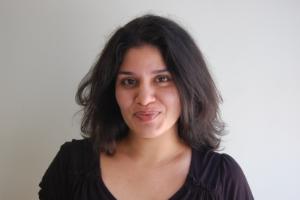
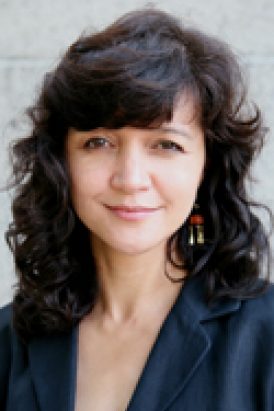
Kristia Wantchekon is an Assistant Professor in the Department of Psychology at Georgetown University's College. She holds a Ph.D. from Harvard University and a B.A. from Yale University. Her research focuses on ethnic-racial identity development, particularly among adolescents, and its intersection with academic adjustment, discrimination experiences, and intergroup contact. She explores how identity processes and contextual factors influence youth mental health and educational outcomes, with a special emphasis on designing school-based interventions to foster inclusive environments. Her work analyzes how teachers and educators navigate race-related conversations, curriculum design, and professional development to address systemic inequities. Recent studies investigate Colombian adolescents' academic adjustment through an ethnic-racial lens and contextual moderators of identity interventions, including family socialization and ethnic background. Key themes in her publications include the role of ethnic-racial identity in mitigating discrimination impacts, the psychometric validation of identity measures for marginalized groups, and the moderating effects of identity centrality on intervention efficacy. Her research consistently bridges developmental, social, and educational psychology to promote equity in academic settings. No scientific awards or grant details are listed in the provided materials. She has not yet disclosed advising relationships or lab affiliations.
University of California, Los AngelesUnited States
Min Zhou is a Distinguished Professor of Sociology and Asian American Studies at UCLA, and Director of the UCLA Asia Pacific Center. She holds the Walter & Shirley Wang Endowed Chair in U.S.-China Relations and Communications. A member of both the National Academy of Sciences and the American Academy of Arts and Sciences, her work focuses on migration studies, race and ethnicity, and Chinese diasporas. She previously directed the UCLA Asian American Studies Department (2001-2005) and served as Tan Lark Sye Chair Professor at Nanyang Technological University, Singapore (2013-2016). Her research explores transnationalism, immigrant entrepreneurship, ethnic supplementary education, and China’s internal migration dynamics. Notable publications include Chinatown (1992), The Asian American Achievement Paradox (2015), and Contemporary Chinese Diasporas (2017). She has received major awards such as the 2017 ASA Distinguished Career Award and the 2016 Bourdieu Prize for sociology of education. Education: Ph.D., Sociology, State University of New York at Albany Key Grants: Russell Sage Foundation grants (2005-09), Singapore Ministry of Education Tier 2 grant (2016-21) Labs/Teams: Directs the UCLA Asia Pacific Center; collaborates with global scholars on projects like 'Immigration and Integration in the Pacific Rim'
Yvonne Fabella serves as Associate Director of Undergraduate Studies and History Undergraduate Advisor in the Department of History at the University of Pennsylvania's School of Arts & Sciences, where she guides curriculum development and student academic pathways. Her educational credentials include: B.A. in History and French from American University M.A. in History from University of Maryland at Baltimore County Ph.D. in History from State University of New York (SUNY) at Stony Brook Dr. Fabella's research centers on colonial Caribbean societies with rigorous analysis of race formation, gender dynamics, and revolutionary movements in the French Atlantic world. Her work examines how enslaved and free people of color navigated colonial hierarchies through legal challenges, cultural practices, and resistance strategies, particularly in pre-revolutionary Saint Domingue. Her publications reveal consistent thematic focus on creolization processes, whiteness construction, and citizenship debates that preceded the Haitian Revolution, demonstrating interdisciplinary methodology bridging social, cultural, and political history frameworks. As an educator, she teaches specialized courses including HIST 233 (Pirates, Rebels and Runaways: Unofficial Histories of the Colonial Caribbean; Race, Slavery and Revolution in the French Atlantic World) and HIST 248 (The Haitian Revolution), emphasizing marginalized perspectives in Caribbean historiography.
Barbara Applebaum is a Professor in the Department of Cultural Foundations of Education at Syracuse University's School of Education. She specializes in social justice pedagogy, white complicity, and moral education. Her research focuses on addressing systemic inequities in education through critical whiteness studies and epistemic justice frameworks. Education: Ph.D. in Moral and Multicultural Education, University of Toronto (1994) M.A. in Moral Development & Education, Hebrew University of Jerusalem (1990) B.A. in Philosophy/Education, Hebrew University of Jerusalem (1987) Research Interests: Applebaum's work examines white educators' moral responsibility, willful ignorance in educational contexts, and strategies to dismantle complicity in racial hierarchies. She critiques liberal discourses that obscure systemic racism and advocates for vigilant humility in pedagogy. Teaching: Recent courses include 'Critical Whiteness Theory and Education' and 'Epistemic Injustice in Education.' She prioritizes curricula that center marginalized voices and challenge dominant narratives. Service: Serves on Syracuse University's Senate committees, including the Provost’s Advisory Council for Tenure and Promotion. Editorial roles include the Studies in Philosophy and Education and Whiteness and Education . Labs/Teams: Engaged in collaborative projects with the Complicity Network and the Philosophy of Education Society, focusing on ethical pedagogy and social justice advocacy.
Jonathan Santo is a Professor of Psychology at the University of Nebraska at Omaha (UNO), where he serves as Director of the Graduate Developmental Psychology Program and as a faculty member in the Office of Latino/Latin-American Studies. His research explores peer relations, cultural differences in self-esteem, and classroom-level influences on child and adolescent development, with a focus on improving school environments and fostering positive social interactions. ORCA Faculty Fellow His research spans broad areas including Developmental Psychology , Social Support Systems , and Cross-Cultural Peer Dynamics , with specific attention to peer victimization , self-continuity , school climate , and developmental trajectories in Brazilian and Colombian youth . Recent publications analyze topics like hikikomori experiences , friendship security , and HPA axis dysregulation in adolescents. Scientific awards include the ORCA Faculty Fellow recognition. His work often involves longitudinal assessments of peer relationships cross-cultural comparisons (Brazil, Colombia, China, Nigeria, Singapore, U.S.) policy-focused blog posts on family separations and school interventions
Geraldine Heng is the Mildred Hajek Vacek and John Roman Vacek Chair in English at the University of Texas at Austin, where she is cross-appointed to Middle Eastern Studies, Women's Studies, Jewish Studies, and the Rapoport Center for Human Rights and Social Justice. Elected to the American Academy of Arts and Sciences in 2023 and a Fellow of the Medieval Academy of America, she founded and directs the Global Middle Ages Project (G-MAP), a major interdisciplinary initiative promoting global perspectives on premodernity. With a Ph.D. from Cornell University, Heng has pioneered the field of premodern critical race studies, fundamentally challenging the assumption that race is a modern construct. Her research focuses on literary, cultural, and social encounters between worlds, particularly through the lenses of race, gender, sexuality, class, and religion, with special attention to medieval Europe's interactions with Asia and Africa. Heng's scholarly work reveals how medieval global connections shaped cultural production and identity formation long before the so-called 'Age of Exploration.' Her approach synthesizes literary analysis, historical research, and critical theory to uncover the deep roots of globalization and its implications for understanding contemporary identity politics and cultural exchange. Her publications demonstrate a consistent trajectory toward increasingly global frameworks, moving from studies of medieval romance to comprehensive examinations of early global interconnectedness. This evolution reflects her commitment to dismantling Eurocentric narratives of the medieval world and revealing the complex networks of exchange that characterized premodern societies across Afro-Eurasia. 2019 PROSE prize in Global History 2019 Academy of American Literature prize in Historical Studies 2019 Robert W. Hamilton Grand Prize 2020 Otto Gründler prize Fellow of the American Academy of Arts and Sciences (2023) Fellow of the Medieval Academy of America Heng has secured approximately $750,000 in grants for digital projects and held eight major fellowships at research centers. She co-edits the Cambridge University Press Elements series in the Global Middle Ages and the University of Pennsylvania Press series RaceB4Race: Critical Studies of the Premodern. Her teaching encompasses courses on early global literatures, premodern race, Crusades literature, Arthurian traditions, and feminist theory. As founder and director of the Global Middle Ages Project (G-MAP), Heng has built an international scholarly network that challenges traditional disciplinary boundaries and promotes collaborative approaches to studying premodern global connections. The project has fostered numerous digital initiatives, publications, and conferences that have significantly reshaped how scholars understand medieval intercultural exchange.
Kihana Miraya Ross is an Assistant Professor in the Department of Black Studies at Northwestern University, affiliated with the Weinberg College of Arts & Sciences. She holds a Ph.D., M.A., and B.A. from UC Berkeley in Social and Cultural Studies of Education, African American Studies, and Sociology. Her research focuses on antiblackness in education, Black educational fugitivity, and educational reparations, employing critical ethnography and participatory design methods. Her book project examines the afterlife of school segregation and strategies for Black educational futurities. She co-directed the documentary Stolen School , exploring the closure of Evanston’s Foster School and its lasting impacts. Ross has received major grants from the Spencer Foundation and fellowships from the Ford Foundation. Education: Ph.D. in Social and Cultural Studies of Education (UC Berkeley, 2016) M.A. in Social and Cultural Studies of Education (UC Berkeley, 2011) B.A. in African American Studies, Sociology, and Education (UC Berkeley, 2002) Key Projects: Spencer Foundation-funded research on Evanston’s educational reparations Documentary Stolen School (2023) Awards: 2021 Spencer Foundation Large Grant 2017 Ford Foundation Postdoctoral Fellowship Ross’s work bridges historical analysis and contemporary activism, advocating for systemic change through frameworks like Black fugitivity. She collaborates with community organizations like Shorefront Legacy Center and mentors interdisciplinary projects on race, education, and spatial justice.
University of California, Los AngelesUnited States
Melanie Molina, MD, MAS is an Assistant Professor of Emergency Medicine at the University of California, San Francisco (UCSF) and Affiliate Faculty of the Philip R. Lee Institute for Health Policy Studies. She serves as Co-Director of the Social Emergency Medicine and Health Equity Section and holds a secondary appointment in the Department of Medicine’s Division of Clinical Informatics and Digital Transformation. Clinically, she works at Zuckerberg San Francisco General Hospital and UCSF Medical Center. National Clinician Scholars Program Fellowship (2023) MAS in Clinical Research, UCSF (2023) Residency in Emergency Medicine, Harvard Medical School (2021) MD in Medicine, The University of Texas at Austin (2017) BS/BA in Biology and Hispanic Studies, The University of Texas at Austin (2012) Dr. Molina’s research centers on leveraging technology to address social determinants of health in emergency settings, with a focus on vulnerable populations. Her work spans health equity, opioid use disorder interventions, microaggressions in healthcare, and clinical informatics. She pioneers EHR-enabled tools to integrate social care into emergency clinical workflows while minimizing clinician burden. Her NIH-funded projects emphasize practical solutions for racial and ethnic health disparities, particularly in vaccine delivery and social risk documentation. Her recent publications (2024-2025) reveal three dominant trends: (1) Integration of AI and informatics for social risk screening and clinical decision support, (2) Health equity interventions targeting vaccine hesitancy and long COVID disparities, and (3) Critical analysis of DEI implementation challenges in academic emergency medicine. The work consistently bridges technical innovation with community-centered approaches to address systemic inequities. National Institutes of Health NIDA Loan Repayment Award (2024-2025) National Hispanic Medical Association Top 40 Under 40 (2024) UCSF John A. Watson Faculty Scholar (2023) National Institutes of Health NIAID Loan Repayment Award (2022-2024) Academy for Women in Academic Emergency Medicine Outstanding Research Publication Award (2021) Harvard Medical School Presidential Scholars Public Service Initiative Award (2017) Dr. Molina actively mentors medical students, residents, and fellows in health equity research. As Principal Investigator on multiple NIH and foundation grants—including the Harold Amos Medical Faculty Development Program grant ($825,575, 2024-2028) and an NIH/NIDA K23 award (2024-2029)—she leads projects developing EHR-integrated interventions for social risk documentation and opioid use disorder treatment. Her PROBOOSTVAXED trial addresses vaccine hesitancy through ED-based delivery across eight U.S. cities. She co-directs the Social Emergency Medicine and Health Equity Section within UCSF’s Department of Emergency Medicine, collaborating closely with the Action Research Center for Health Equity and the Philip R. Lee Institute for Health Policy Studies. Her team integrates clinical informatics expertise with community health workers to develop scalable solutions for social risk mitigation in safety-net emergency departments.
University of California, Los AngelesUnited States
Kyeyoung Park is Professor of Anthropology and Asian American Studies at UCLA, holding the Korea Times-Hankook Ilbo Endowed Chair in Korean-American Studies. She is a sociocultural anthropologist whose work focuses on inequality, social justice, and the migration of people, particularly displaced populations and their relationship to political economy, critical race theory, and transnationalism. Her research spans Korean American communities in the United States and Korean diaspora communities in Latin America, examining how structural forces shape cultural beliefs and ideologies across different contexts. Ph.D., City University of New York (1990) Professor Park's research centers on urban anthropology, inequality across race, class, and gender dimensions, migration and diaspora studies, and transnational processes. She examines how structural imperatives of migration lead to transformations in gender, kinship, family, politics, and religion among Korean diaspora communities. Her work employs intersectional analysis to understand multi-ethnic relations, with particular focus on Korean communities in both the United States and Latin America, exploring how axes of inequality impact racial minorities and their relationships with each other in global contexts. Her recent scholarship demonstrates consistent focus on Korean diaspora communities across the Americas, bridging urban anthropology with critical race theory to examine how race, class, and gender intersect in immigrant experiences. She has made significant contributions to understanding Korean-Latino relations in Los Angeles and Korean immigrant entrepreneurship in South American textile industries, reflecting her broader interest in immigrant adaptation and inter-ethnic dynamics across diverse geographic settings. Professor Park has received numerous prestigious awards and grants for her scholarship: 1998 Outstanding Book Award from the Association for Asian American Studies for "The Korean American Dream: Immigrants and Small Business in New York City" 1997-98 Visiting Scholar Award from the Russell Sage Foundation 2016-19 Research Grant from The Republic of Korea's Ministry of Education and Korean Studies Promotion Service 2008-09 Translation Grant from The Overseas Korea Foundation for "The Korean American Dream" 2008-09 AAP Faculty Recognition Award from UCLA Professor Park has secured substantial research funding throughout her career, including multiple grants from The Academy of Korean Studies, Korea Foundation, and UCLA research programs. Her funded projects have examined Korean diaspora communities across the Americas, with particular focus on transnational connections between Korean American and Latin American contexts. She has served as Principal Investigator on projects exploring Korean routes of migration in the Americas and second-generation Korean American transnationalism, demonstrating her sustained commitment to understanding immigrant experiences through anthropological and interdisciplinary lenses. Professor Park has been actively involved with UCLA's Center for Korean Studies (CKS) and the International Institute, where she served as Deputy Program Chair for Korean Studies in Latin America from 2006-2011. Her collaborative work extends to research teams examining Korean diaspora communities across the Americas, including partnerships with scholars in Latin America. She has also participated in interdisciplinary initiatives such as UCLA's Urban Humanities Institute Faculty Research Seminar, reflecting her commitment to cross-disciplinary approaches to understanding migration, diaspora, and transnational processes.
Ari Schlesinger is an Assistant Professor of Computer Science at the University of Georgia (UGA), directing the Socially Responsible Tech Lab. She holds a PhD from the School of Interactive Computing at Georgia Institute of Technology. Her research focuses on anti-discriminatory computing, technology policy, and equitable sociotechnical systems. She advocates for reducing computing-enabled harm to advance justice in technology. Education : PhD in Human-Centered Computing (HCC), Georgia Tech Affiliations : ACM's U.S. Technology Policy Committee Her work spans Human-Computer Interaction (HCI), Artificial Intelligence (AI), and broader CS applications. Key interests include addressing algorithmic bias, inclusive design, and policy frameworks for ethical computing. She has developed strategies to mitigate discrimination in technical systems through frameworks like anti-discriminatory computing. Awards include the 2021 Outstanding Graduate Teaching Assistant Award and a Best Paper Award at CHI 2018. Her research has been featured in venues like CSCW and CHI, focusing on topics from chatbot ethics to decentralized social networks. Lab : Socially Responsible Tech Lab at UGA Grants/Advising : Advises graduate student Eddie Alexander Gomez Schieber. Active in policy advocacy and academic leadership roles.
Dr. Prerna Arora is Associate Professor of Psychology and Education at Teachers College, Columbia University, within the Graduate School of Education, Health & Psychology and the Department of Health Studies & Applied Educational Psychology. She directs the School Mental Health for Minoritized Youth and Families (SMILE) Research Lab, where she leads innovative research on mental health equity for immigrant-origin, racial and ethnic minoritized, and historically marginalized youth. Ph.D. in School Psychology – University of Texas at Austin M.A. in Educational Psychology – University of Texas at Austin B.S. in Biology – Arizona State University Predoctoral Internship – Children’s Hospital of Philadelphia Postdoctoral Training – University of Maryland School of Medicine Dr. Arora’s research focuses on culturally tailored mental health interventions, school-based services, barriers to care, and trauma-informed, equity-driven practices. Her work is grounded in participatory action research and mixed methods, aiming to bridge research-practice gaps and empower communities. She has led major funded projects from the Spencer Foundation, National Institute of Mental Health (NIMH), and the U.S. Department of Education, including a $4.9 million grant to train clinicians in culturally responsive services. Her recent publications reflect a strong thematic focus on mental health disparities, cultural adaptation of interventions, school climate, and help-seeking behaviors among AAPI, Latino/a, and immigrant youth. The body of work demonstrates a commitment to advancing equity, social justice, and measurement-based care in school psychology. American Psychological Association Minority Fellowship Program Spencer Foundation Research Grant NIMH Funding U.S. Department of Education OSEP Grant ($4.9 million) Dr. Arora actively mentors PhD and graduate students, many of whom co-author her publications. She has secured major grants that support training, research, and community partnerships. Her leadership extends to editorial roles as Associate Editor of School Mental Health and Consulting Editor of School Psychology Review , and she is a vocal advocate for diversity, equity, and inclusion in academic training and practice. She collaborates extensively with NYC-based organizations, building community-driven research models through the SMILE Lab.
Brandon L. Velez is an Associate Professor of Counseling Psychology at the Graduate School of Education, Health & Psychology at Teachers College, Columbia University. His research examines the intersections of oppression and collective identity with mental health and career outcomes for sexual, gender, and racial/ethnic minority populations. He is affiliated with the Counseling & Clinical Psychology department and leads the Stigma, Identity, and Intersectionality Research Team. Ph.D. in Counseling Psychology, University of Florida, 2014 Predoctoral Internship, Georgia Institute of Technology Counseling Center, 2014 M.S. in Psychology, University of Florida, 2011 B.S. in Psychology (summa cum laude), B.A. in Religion (cum laude), Minor in Anthropology, University of Florida, 2009 Dr. Velez’s work focuses on minority stress , intersectionality , and the well-being of multiply marginalized groups, including LGBTQ+ people of color, transgender individuals, and women of color. His studies explore how systemic discrimination and coping strategies influence mental health , body image , and career development , often integrating theories like objectification and work adjustment. His recent publications analyze: Protective effects of womanist attitudes on women of color Minority stress in transgender communities and bisexual women Applications of work theory to racial and sexual minorities Resilience mechanisms against systemic oppression Scientific honors include graduating summa cum laude (B.S.) and cum laude (B.A.) from the University of Florida. He does not currently advise new Ph.D. students for the Fall 2025 cohort.
Mienah Z. Sharif serves as an Assistant Professor at the University of California - Berkeley in the School of Public Health - Division of Community Health Sciences, with an affiliate appointment in Epidemiology at the University of Washington. Her academic journey includes a PhD from the University of California Los Angeles (2016), an MPH from the same institution, and a BA in Economics and Government from Smith College. PhD, University of California Los Angeles, 2016 MPH, University of California Los Angeles BA, Economics and Government, Smith College Dr. Sharif employs a social justice, global, and intersectional approach to examining health inequities among racial and ethnic minority groups across the lifecourse. Her research centers on structural factors, differential exposure to adverse social conditions, and psychosocial factors influencing health and wellbeing. She extends her work on racism and discrimination to examine religious identity as structural inequality through the racialization of religion. As a mixed-methods researcher, she prioritizes community-engaged research aimed at guiding health and social policies addressing systemic inequities. Her publication record demonstrates consistent focus on structural determinants of health, with recent work examining Palestinian health equity, immigrant and refugee health during the pandemic, and critical race approaches to health research. Her articles span public health, epidemiology, and social justice domains, with increasing emphasis on practical applications for policy development and health equity interventions. Dr. Sharif's scholarly contributions reflect a commitment to addressing health disparities through rigorous research grounded in critical race theory and social justice frameworks. Her work bridges academic research with community needs, emphasizing the importance of structural interventions to address systemic health inequities.
Laura Fine is a Professor of English and holds the Norma Rose Chair in English at Meredith College. She specializes in literary analysis with a focus on gender, race, and cultural dynamics in American and Southern literature. Her research explores themes such as identity formation, social critique, and narrative structure in works by authors like Harper Lee, Jesmyn Ward, and Bonnie Jo Campbell. She actively contributes to academic conferences and publications, balancing her scholarly work with department leadership and undergraduate education. Dr. Fine earned her B.A. from the University of Minnesota, followed by M.A. and Ph.D. degrees from the University of California at Davis. Her teaching philosophy emphasizes connecting students to literary themes through small-class discussions, fostering critical thinking and effective communication. Her research spans contemporary and classic texts, with publications analyzing gender in modern American fiction, race in Southern Gothic narratives, and postcolonial identity in works like Jhumpa Lahiri’s stories. Recent work includes a chapter on rape culture in Bonnie Jo Campbell’s fiction and re-evaluations of Harper Lee’s legacy. As department head, Fine prioritizes community-building among English majors, faculty, and staff. She has contributed to major reference works like the Encyclopedia Britannica and engages with public discourse through platforms like The Conversation.
Kelly Askew is a Professor of Anthropology and Afroamerican & African Studies at the University of Michigan’s College of Literature, Science, and the Arts. She holds a PhD in Anthropology (Harvard, 1997) and a BA in Music and Anthropology (Yale, 1997), with over three decades of fieldwork in Tanzania and Kenya. Education PhD in Anthropology, Harvard University (1997) BA in Music and Anthropology, Yale University Key Roles Chair of the Department of Anthropology Niara Sudarkasa Collegiate Professor Her research bridges three primary domains: Postsocialist transitions (e.g., property rights formalization and land conflicts), art and political aesthetics (e.g., Swahili music, African visual arts, ethnographic filmmaking), and indigenous political movements (e.g., Maasai and Parakuyo pastoralists). She has produced award-winning documentaries like The Chairman and the Lions (2013) and Maasai Remix (2019), which examine cultural resilience and land rights. Scientific awards include being a finalist for the African Studies Association Herskovits Award (2002). Recent publications analyze land dispossession mechanisms, postsocialist cultural production, and media’s role in political identity. She has secured grants from the National Science Foundation, National Endowment for the Humanities, and Ford Foundation.