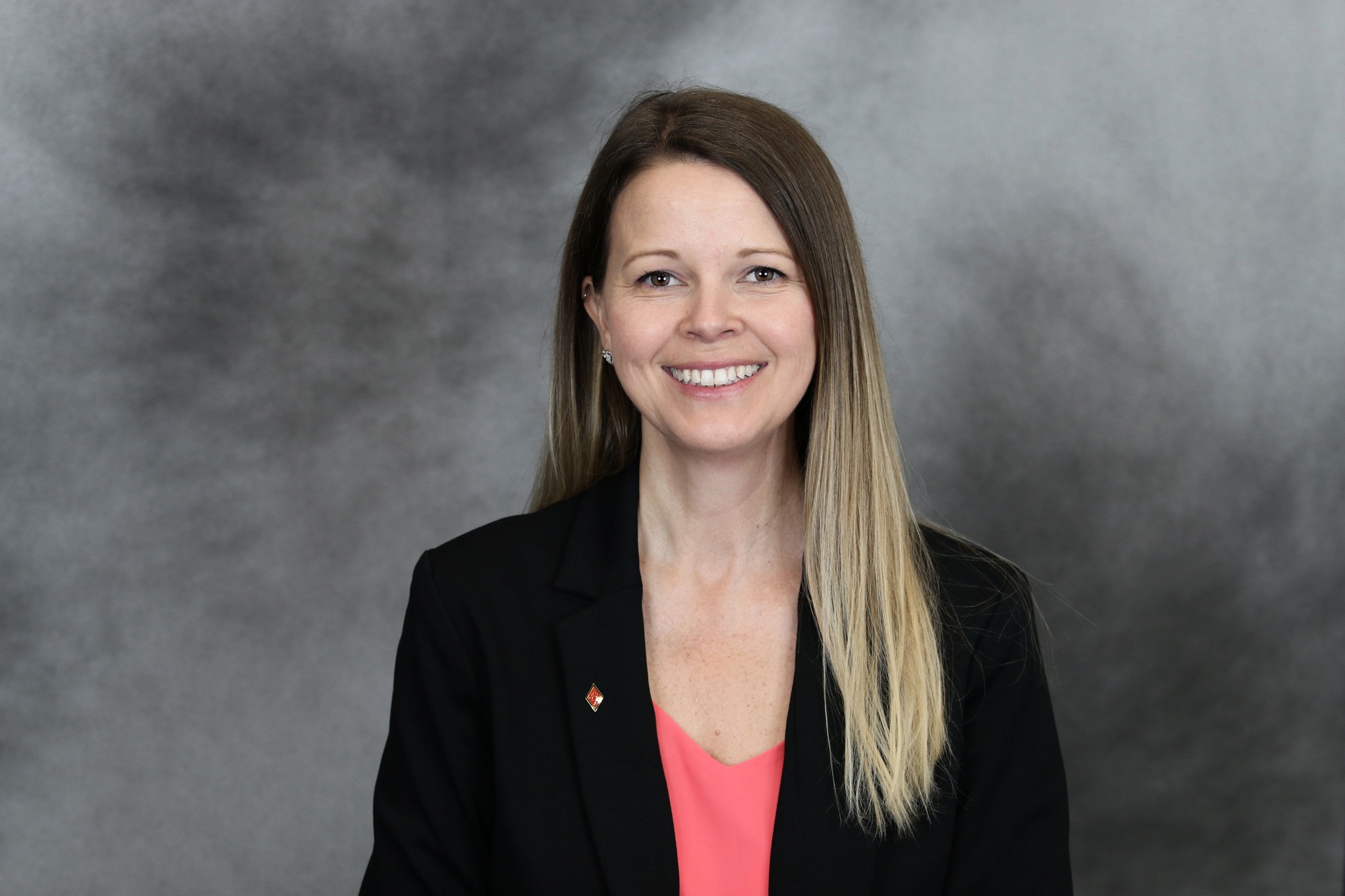
Jillian Bohlen is an Associate Professor at the University of Georgia within the College of Agricultural & Environmental Sciences , specifically the Department of Animal and Dairy Science . Her work focuses on dairy cattle reproduction, teaching, and youth development in agricultural sciences. Education: B.S. in Dairy Science, University of Georgia (2003) M.S. in Dairy Science, University of Georgia (2005) Ph.D. in Animal Sciences, Clemson University (2012) Dr. Bohlen's research emphasizes applied reproduction in cattle , including synchronization techniques, ultrasound applications in reproductive programs, and embryo competency. She integrates students into all research projects despite lacking a formal research appointment. Her teaching interests span dairy cattle production , reproductive management , and contemporary agricultural issues , with courses like ADSC 3620 (Dairy Cattle Production), ADSC 4010 (Issues in Animal Agriculture), and ADSC 4410 (Applied Reproductive Management). Scientific awards include: Student Career Success Influencer Award (2024) Russell Award for Excellence in Undergraduate Teaching (2023) UGA Creative Teaching Award (2022) CAES Early Career Teaching Award (2022) Hoard's Dairyman Youth Development Award (2021) Larry Benyshek Teaching Award (2017) She actively promotes agricultural education through programs like the Commercial Heifer Project , Dairy Cattle Judging , and Dairy Quiz Bowl . Additionally, she participates in funded projects related to methane emissions , heat stress mitigation , and antibiotic alternatives in dairy farming.
Dr. med. vet. Stefan Borchardt is a scientific assistant at the Farm Animal Clinic, Department of Veterinary Medicine, Freie Universität Berlin, specializing in reproductive medicine and udder health for ruminants and camelids. His work focuses on dairy cow fertility, metabolic disorders, and automated monitoring systems. Department: Farm Animal Clinic (Ruminants & Camelids) Working Group: Reproductive Medicine & Udder Health Email: stefan.borchardt@fu-berlin.de Location: Königsweg 65, Building 34, Room 1.26, Berlin His research spans reproductive cycles, progesterone supplementation, colostrum quality, and postpartum diseases. Key technologies include automated activity monitoring and sensor integration for estrus detection. Recent publications (2025–2024) analyze progesterone devices, estrus detection systems, colostrum management, and metabolic health in dairy cows. These works emphasize precision livestock tools and evidence-based protocols.
Jeremy G Powell is a Professor in the Department of Animal Science within the Dale Bumpers College of Agricultural, Food and Life Sciences at the University of Arkansas. He serves as the Director of the Experiment Station and has been with the university since 2002, progressing from Assistant Professor to Associate Professor and ultimately to his current Professor position. His primary responsibilities include planning, coordinating and executing beef cattle research, with a focus on health management and disease prevention. Dr. Powell earned his BS in Animal Science from the University of Arkansas, Fayetteville, followed by a DVM in Veterinary Medicine from Oklahoma State University, Stillwater, and completed his PhD in Animal Science from the University of Arkansas, Fayetteville. His educational background has provided a strong foundation for his research and teaching career in veterinary medicine and animal science. Dr. Powell's research focuses primarily on beef cattle health, with specific interests in health management, disease prevention, parasitology, animal wellbeing, and immunology. His work evaluates strategies and technologies to improve cattle health and wellbeing, particularly in relation to castration methods, pain management, reproductive management, and parasite control. He has conducted extensive research on anthelmintic efficacy, estrous synchronization protocols, and the effects of various management practices on cattle performance and health. His research portfolio demonstrates a strong commitment to improving practical beef production systems through scientific investigation. Analysis of Dr. Powell's recent publications reveals consistent focus areas in beef cattle production, with particular emphasis on reproductive management, parasite control, pain management alternatives, and nutritional interventions for cattle grazing endophyte-infected tall fescue. His work bridges basic science with practical applications for producers, addressing critical issues in the beef industry through innovative research approaches including microneedle drug delivery systems and computational analysis of cattle phenotypes. The Arkansas Governor's Cup, First Place Agri. Division Faculty Advisor, 2018 NACADA Faculty Academic Advising National Award, 2010 DBCAFLS Alumni Society Outstanding Advising Award, 2009 The Honor Society of Agriculture Gamma Sigma Delta Honorary Inductee for Outstanding Student Advising, 2006, University of Arkansas Golden Key National Honor Society Dr. Powell is actively involved in pre-veterinary student advising, for which he has received multiple awards including the NACADA Faculty Academic Advising National Award in 2010. His teaching responsibilities include three undergraduate courses: Introduction to Animal Health, Diseases of Livestock, and Companion Animal Management. He also serves as the faculty administrator for the UA beef cow-calf research farm and provides veterinary patient care for university animals including beef cattle, sheep, swine and horses. His work demonstrates significant collaboration with colleagues across multiple institutions, as evidenced by the extensive co-authorship on his publications. As faculty administrator for the UA beef cow-calf research farm, Dr. Powell oversees research operations focused on practical beef production issues. His research team investigates various aspects of cattle health management, with recent projects examining microneedle patch technology for drug delivery, evaluation of alternative castration methods, and reproductive management strategies using sex-sorted semen. The research program maintains strong connections with industry stakeholders to ensure practical relevance of findings to beef producers.
Marieke Gilmartin is an Associate Professor and Associate Chair for Research in the Department of Biomedical Sciences at Marquette University. She leads a research team investigating fear memory formation and its neurobiological underpinnings, with a focus on understanding mechanisms contributing to disorders like PTSD and sex differences in psychiatric vulnerability. Education: Ph.D. in Neuroscience, Penn State College of Medicine (2007) Postdoctoral Training, University of Wisconsin-Milwaukee (with Dr. Fred Helmstetter) Research Interests: Neural circuits supporting fear memory encoding and retrieval Sex differences in fear-related neural circuits Role of stress and sex hormones in memory persistence Optogenetic and electrophysiological approaches in rodent models Current Projects: Hippocampal contributions to aversive learning Sex differences in fear circuitry across aging and Alzheimer's Neural encoding modulation by circulating sex hormones Advising & Team: Doctoral Students: Grace Schamber, Lila Metko Master's Student: Charlotte Siu Undergraduate Researchers: Emma Eshoo, Julie Schultz, Adam Warda, Collin Schlut, Raya Broeren, Isabella Vasser, Alessio Valsecchi Labs & Resources: Laboratory focuses on preclinical rodent models Utilizes optogenetics, electrophysiology, and molecular techniques Lab website: [link not provided]
Joseph Dalton is a Professor and Extension Specialist in Dairy Science at the University of Idaho, affiliated with the Department of Animal, Veterinary and Food Sciences within the College of Agricultural and Life Sciences. He is based at the Caldwell Research and Extension Center, where he conducts applied research and outreach focused on improving reproductive efficiency in dairy cattle. Ph.D. in Animal Science – Virginia Tech M.S. in Animal Science – Utah State University B.S. in Animal Science – Cal Poly Dr. Dalton's research centers on enhancing artificial insemination success in dairy herds through optimization of sperm dosage, synchronization protocols, heat detection accuracy, AI technician training, and identification of fertility markers. His work bridges practical extension services with advanced genomic investigations. His recent publications demonstrate a strong focus on both physiological and genetic aspects of cattle reproduction, including genome-wide association studies on conception rates, milk yield, and spontaneous abortion, as well as applied trials on synchronization and insemination techniques. These studies reflect an integrative approach combining field data with laboratory and genomic analyses. While no specific scientific awards are listed, Dr. Dalton's extensive publication record in high-impact journals such as Theriogenology , Journal of Dairy Science , and BMC Genomics underscores his scholarly contributions. His collaborative research network includes experts in genomics, physiology, and extension across multiple institutions. As a professor and extension specialist, Dr. Dalton likely mentors graduate students and supports breeding programs through outreach. He leads research efforts at the Caldwell Research and Extension Center, contributing to improved dairy management practices in Idaho and beyond.
Dr. Dinesh Dadarwal is an Assistant Professor in the Department of Large Animal Clinical Sciences at the Western College of Veterinary Medicine, University of Saskatchewan. His academic background includes a B.V.Sc.&A.H. (1999), M.V.Sc. (2001), Ph.D. (2012), and Diplomate status from the American College of Theriogenology (2017). He specializes in food animal theriogenology, focusing on bovine reproduction and reproductive pathology. His teaching responsibilities include farm animal reproduction, cow palpation labs, and clinical rotations in large animal imaging and neonatal management. Dr. Dadarwal's research centers on bovine genital mucosal immunity, uterine microbiome interactions, and endometritis. He explores cytokine responses in postpartum cows and clinical applications of estrus synchronization and oocyte competence assessment. He is affiliated with the ONE Reproductive Health research group and has authored over 30 peer-reviewed publications. Education: B.V.Sc.&A.H., CCS Haryana Agricultural University, 1999 M.V.Sc., Rajasthan Agricultural University, 2001 Ph.D., University of Saskatchewan, 2012 Diplomate, American College of Theriogenology, 2017 Awards: Diplomate, American College of Theriogenology (2017). Key Research Areas: Bovine uterine immunity and microbiome Cytokine expression in endometritis Oocyte competence and mitochondrial dynamics Ultrasonographic imaging in reproductive diagnostics His work bridges clinical practice and research, addressing challenges in livestock fertility and reproductive health.
Gaffari Türk is a full Professor at the Department of Reproduction and Artificial Insemination , Fırat University Faculty of Veterinary Medicine (Elazığ, Türkiye) since 2014. He completed his DVM (1998) and PhD (2004) at the same institution, focusing on seasonal reproductive physiology in rams . His research emphasizes natural and chemical antioxidants in male reproductive health , covering semen evaluation , testicular apoptosis , sperm DNA damage , and cryobiology of sperm . Academic Leadership: Former Vice-Dean (2022-2023), Head of Department (2015-2018), and Vice-Director (2020-2022) at Fırat University Animal Hospital Service Roles: Editorial Board Member (BMC Complementary Medicine, Asian Pacific Journal of Reproduction), Founding Member of Turkish Society of Embryo Transfer Research Trends from 189 publications show consistent focus on: Antioxidants (e.g., L-carnosine, hydrated C60 fullerene, propolis) mitigating oxidative stress in ram and rabbit semen Cryopreservation techniques improving sperm kinematics and DNA integrity Hormonal regulation (e.g., Irisin, Asprosin) in puberty onset and sexual behavior Infrastructure Development: Led projects to enhance Fırat University Animal Hospital's spermatological evaluation capabilities through grants from TÜBİTAK and Fırat University Research Units.
Prof. Dr. Wolfgang Heuwieser is a faculty member at the Free University of Berlin , specializing in Veterinary Medicine with a focus on Milk production, Fertility in cows, and Reproduction . He works at the Veterinary Clinic for Reproduction , where his research and clinical practice address critical aspects of dairy cattle health and reproductive efficiency. His research interests include Bovine Reproductive Health , Dairy Cow Fertility , and Animal Health Management . Heuwieser's work integrates advanced technologies such as automated activity monitoring , point-of-care diagnostics , and computer vision systems to optimize reproductive outcomes and general wellness in dairy cattle. Recent publications highlight his expertise in Hormonal Treatments , Heat Stress Impact , and Calving Management . His studies span 2017 to 2025 , reflecting ongoing contributions to veterinary science and dairy farming practices. Heuwieser can be contacted via email at w.heuwieser@fu-berlin.de for collaborations, expert consultations, or further information about his research projects.
Professor Allan E Herbison serves as Professor of Neuroendocrinology and Wellcome Trust Senior Research Fellow within the Department of Physiology, Development and Neuroscience at the University of Cambridge. His work is central to Cambridge Reproduction, an interdisciplinary research initiative focused on reproductive biology. As a Fellow of the Royal Society of New Zealand (FRSNZ), he maintains significant international recognition for his contributions to reproductive neuroendocrinology. Herbison's research program investigates the neural circuitry controlling fertility, with primary focus on gonadotropin-releasing hormone (GnRH) neurons and kisspeptin neurons. His laboratory employs advanced neuroscience approaches and mouse models to address fundamental questions about how these neural populations generate the pulsatile and surge patterns of hormone secretion responsible for puberty initiation and reproductive function maintenance. Current research examines neural mechanisms underlying infertility conditions like hypothalamic amenorrhea and polycystic ovary syndrome (PCOS), with particular interest in estrogen and progesterone modulation of reproductive circuitry. Analysis of his recent publications reveals a strong emphasis on neural pulse generator dynamics , kisspeptin neuron synchronization , and translational applications for infertility . His work increasingly integrates optogenetics , calcium imaging , and CRISPR-based molecular techniques to dissect reproductive neurocircuitry with cellular precision. The research demonstrates consistent progression from basic neural mechanisms toward disease models, particularly PCOS and lactational infertility. Scientific recognition includes: Wellcome Trust Senior Research Fellowship Fellowship in the Royal Society of New Zealand (FRSNZ) Herbison's laboratory maintains active collaborations across neuroscience and reproductive medicine, with significant contributions to understanding how stress, metabolic factors, and reproductive states modulate the GnRH pulse generator. Current projects investigate prolactin-mediated suppression of fertility during lactation, noradrenergic modulation of kisspeptin neurons, and evolutionary conservation of reproductive neurocircuitry. His work bridges fundamental neuroscience with clinical applications in contraception and infertility treatment.
Óscar João Pinto Mateus is a researcher affiliated with the Instituto Politécnico de Bragança , focusing on reproductive control and artificial insemination techniques in goat and sheep breeds such as Serrana, Churra Galega Bragançana, and Awassi x Sarda. His work investigates factors affecting fertility rates, including vaginal lubrication, semen preservation, cervical anatomy, and hormonal treatments. Key Research Areas: Animal Reproduction, Veterinary Science, Agricultural Biotechnology Email: oscar.mateus@ipb.pt Notable Trends: His publications emphasize optimizing breeding protocols through cervical insemination, evaluating external cervical os types, and synchronizing estrous cycles using FGA, CIDR, and ECG. Recent work (2022-2023) explores anti-reflux devices and comparative semen preservation methods.
Sandy Johnson is a Professor and Extension Livestock Specialist at the Kansas State University Northwest Research and Extension Center. With a focus on Reproductive Physiology and Cow/Calf Management , she leads applied research initiatives to advance reproductive technologies in beef cattle production. Education: B.S. in Animal Science (University of Nebraska, 1982), M.S. in Reproductive Physiology (University of Missouri, 1984), Ph.D. in Reproductive Physiology (West Virginia University, 1991) Her research emphasizes Estrous Synchronization , Cost-Benefit Analysis of Breeding Systems , and Management Strategies for AI Success . She co-developed the Estrous Synchronization Planner and contributes to the Beef Cattle Reproduction Leadership Team. She co-authored foundational studies on timed artificial insemination protocols, progestin supplementation, and hormonal interventions for postpartum beef cows. Her work bridges laboratory discoveries with practical applications for cow-calf producers. As a founding member of the Beef Reproductive Task Force , she organizes workshops to promote adoption of advanced breeding technologies. Her prior roles include postdoctoral work at West Virginia University and teaching at Fort Hays State University.
Dr. Peter Mark is a Senior Lecturer at the School of Human Sciences, The University of Western Australia. His research focuses on reproductive endocrinology, placental function in intrauterine growth retardation, and the effects of glucocorticoids on fetal and neonatal development. He investigates circadian rhythms' role in developmental programming, particularly how maternal stress and environmental factors influence fetal outcomes. His work integrates molecular biology, animal models, and clinical studies to understand mechanisms like placental glucocorticoid barriers and metabolic programming. Key Projects: CIRCA DIEM Trial (circadian cues in neonatal care), placental clock gene expression studies, and the impact of dietary omega-3 fatty acids on placental inflammation. Grants: Includes NHMRC-funded projects on large animal biotelemetry and neonatal respiratory interventions. Research Interests: Fetal programming pathways, maternal mental health effects on cortisol regulation, and the interplay between diet, obesity, and circadian gene expression in pregnancy. His studies also explore developmental consequences of glucocorticoid excess and therapeutic potentials of natural compounds like mulberry extracts.
Mushap KURU is an Associate Professor in the Department of Clinical Sciences (Veterinary Obstetrics and Gynecology) at Kafkas University's Faculty of Veterinary Medicine. He holds a PhD from Kafkas University (2015) and a Bachelor's degree in Veterinary Medicine from Adnan Menderes University (2009). His academic career spans roles as an Assistant Professor (2015–2020), Research Assistant (2009–2015), and currently as a full-time faculty member since 2015. Research focuses on reproductive physiology, oxidative stress in livestock, and hormonal interventions. Key interests include progesterone-based estrus synchronization, hydrogen-rich water effects on animal health, and neonatal sepsis in calves. He has supervised 5 PhD and master’s students, including Osman Tepe and Kader Yolcu. Teaching includes courses on reproductive health, veterinary obstetrics, and neonatology at both undergraduate and graduate levels. He has authored over 200 publications, with recent work exploring hydrogen-rich water impacts on dairy cattle and goat reproduction. His projects include studies on endometriosis in rats and antimicrobial resistance in cattle.
Buket Boğa Kuru is an Associate Professor at the Faculty of Veterinary Medicine in Kafkas University , Turkey. Her academic journey includes a Doctorate in Animal Science from Kafkas University (2018), MSc in Veterinary Parasitology from Adnan Menderes University (2012), and DVM from Adnan Menderes University (2009). She has served since 2014 as a full-time academic in the Department of Animal Husbandry and Nutrition. Doctorate: Animal Science, Kafkas University (2018) Master's: Veterinary Parasitology, Adnan Menderes University (2012) Bachelor's: Veterinary Medicine, Adnan Menderes University (2009) Her research focuses on animal genetics , reproductive biology , and nutritional impacts on livestock . Key projects include hydrogen-rich water applications in dairy goats and genetic characterization of Zavot cattle. Recent publications analyze stress responses in rats, egg quality in geese, and estrus synchronization techniques in sheep. She has contributed to 76 publications including SCI/SSCI-indexed studies on broiler nutrition, herbal feed additives, and peripartum metabolic profiles. Collaborations span 79 researchers, with notable partnerships with Mushap Kuru and Turgut Kırmızıbayrak. Current roles include Deputy Director of the Animal Experimental Research Center and participation in international conferences like the International Livestock Farming Conference.
Julie Walker is a Professor and SDSU Extension Beef Specialist in the Department of Animal Science at South Dakota State University. Her research focuses on reproductive physiology in beef cattle, including pregnancy detection methods, estrous synchronization protocols, and the impact of nutrition on reproductive outcomes. She also investigates sperm biology and fertility markers in dairy and beef bulls, leveraging proteomic and flow cytometry techniques. Her work integrates economic analyses of reproductive technologies and livestock management practices to enhance productivity and profitability in beef systems. Key research areas include evaluating CIDR-based synchronization protocols, assessing the economic impact of pre-synchronization methods, and identifying biomarkers (e.g., DAG1, SERPINA5) to predict bull fertility. She has published extensively on topics such as nutrient restriction effects on estrus and embryo development, feed additives, and frame scoring techniques for beef cattle. Through her role in SDSU Extension, Walker disseminates practical solutions to beef producers, covering topics like heat stress mitigation, feedlot performance optimization, and calf management strategies. Her outreach programs, such as Beef Day events, aim to bridge academic research with on-farm applications, ensuring producers adopt science-backed practices. While no specific awards are listed, her research demonstrates a focus on translational science with direct agricultural impacts. Ongoing work includes collaborations on crop-livestock integration and the economic evaluation of reproductive technologies, reflecting a commitment to sustainable and efficient beef production systems.