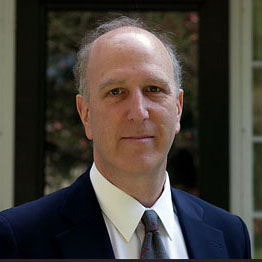
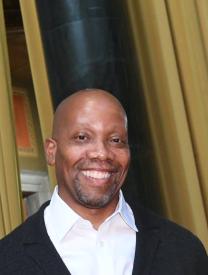
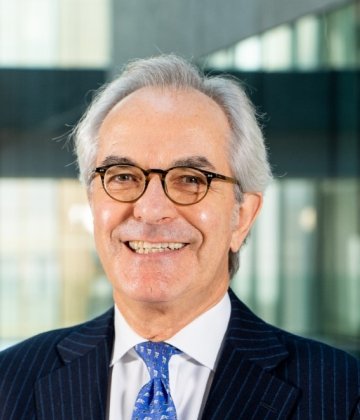
Jeffrey A. Cooper is a Professor of Law at Quinnipiac University School of Law , where he teaches courses in estate planning, wills and trusts, and taxation. He previously served as Associate Dean for Research and Faculty Development and is currently faculty adviser to the Quinnipiac Probate Law Journal . Education: AB from Harvard University, JD from Yale University, LLM from New York University Research Interests: His work focuses on tax policy , estate and gift taxation , and the intersection of federal tax law with state probate systems . He specializes in trust enforceability , uniform trust code , and historical analysis of tax legislation. Publications: Recent articles address perpetual trusts , state death tax decline , and curriculum reforms in estate planning education. His scholarship is widely published in national law journals and cited in casebooks. Scientific Awards: Academic Fellow, American College of Trust and Estate Counsel (ACTEC) Faculty Scholar, Quinnipiac University Professional Background: Before academia, Cooper practiced law for over a decade as a principal at Cummings & Lockwood, senior officer at United States Trust Company, and special counsel to Shipman & Goodwin. He also served as a senior adviser to Fiduciary Trust Company International.
Azizjon ALIMOV is a Full Professor at IÉSEG School of Management (University of Lille, France), specializing in Corporate Finance, Mergers and Acquisitions, and Law and Finance. He holds a Ph.D. in Finance from the University of Oregon (2007) and an MBA from Central Michigan University (2001). His HDR (Habilitation) in Management Sciences was awarded by the University of Lille in 2023. His research focuses on corporate governance, cross-border M&A dynamics, and the interplay between legal frameworks and financial decision-making. Key themes include intellectual property rights' impact on corporate debt costs, product market competition effects on corporate cash holdings, and government borrowing influences on acquisition strategies. His work frequently examines global contexts, with studies spanning North America, Asia, and Europe. Notable publications include analyses of IPO staging mechanisms (2024), managerial discipline through trade liberalization (2023), and the role of labor protection laws in loan contracting (2015). His recent work emphasizes reproducibility in management science methodology (2023) and cross-border regulatory challenges in M&A. No scientific awards are explicitly listed; however, his extensive publication record reflects sustained academic contributions. He has advised students across institutions including City University of Hong Kong and the Sauder School of Business, though specific advisee names are not documented here. His professional experience includes roles at the University of Arizona (2008–2010), California State University (2007–2008), and as an HSBC Visiting Assistant Professor at the University of British Columbia (2016–2018). He currently leads the Finance Track at IÉSEG, contributing to programs like the Grande École Master’s in Finance and MSc Corporate Finance courses.
Christopher J. Palmer is an Associate Professor of Finance at the MIT Sloan School of Management, specializing in financial decision-making, credit markets, and policy interventions. His research focuses on how individuals and institutions respond to economic upheavals in areas like bankruptcy, retirement savings, and real estate. He holds a PhD in Economics from MIT and a BA in Economics and Mathematics from Brigham Young University. Palmer’s work has been published in top journals such as the American Economic Review , Journal of Finance , and Review of Financial Studies . He explores topics including racial disparities in bankruptcy outcomes, consumer payment behavior, and the effects of quantitative easing. His research is supported by affiliations with the National Bureau of Economic Research (NBER) and the Jameel Poverty Action Lab (J-PAL). Key honors include the 2022 Jamieson Prize and the 2019 Society for Financial Studies Best Paper Award. Palmer has contributed to public debates on policy issues like rent control and retirement savings through media outlets such as The New York Times , Bloomberg , and Vox .
Adam Soliman is an Assistant Professor in the John E. Walker Department of Economics at Clemson University's College of Business. His research focuses on the intersection of economics, crime, and public policy, with particular expertise in drug policy, policing behavior, and enforcement strategies. Dr. Soliman's research interests center on understanding the economic incentives behind criminal behavior and law enforcement responses. His work examines how changes in punishment severity affect police behavior, with a particular focus on drug policy reforms. He investigates whether police treat enforcement effort and punishment severity as complements or substitutes, challenging conventional 'War on Drugs' approaches. His research combines economic theory with empirical analysis of geocoded crime data to provide evidence-based insights into criminal justice policy. His publication record demonstrates significant contributions to understanding drug markets, opioid epidemics, and policing strategies. His work shows that weakening drug sale penalties leads to decreased drug arrests without displacement to non-drug offenses, suggesting police treat enforcement and punishment as complements. His research indicates that certain enforcement reductions may not incur large public safety costs, challenging traditional deterrence models. As an active researcher in criminology and public policy, Dr. Soliman collaborates with scholars from various institutions including University of Colorado, University of Pittsburgh, and Duke University. His work appears in working paper series such as the Economic Research Initiatives at Duke (ERID) and has been cited in related fields including public economics, criminology, and urban studies.
Professor Huibing Zhang is a Professor of Management at the Naveen Jindal School of Management, University of Texas at Dallas. He holds a Ph.D. in Economics from Duke University (1994) and a B.S. from Shanghai Jiao Tong University, China (1984). Prior to his current position, he served as Associate Professor at the University of North Carolina at Chapel Hill (2000–2005) and Assistant Professor at Carnegie Mellon University (1994–2000). Education: Ph.D. in Economics, Duke University, 1994 B.S., Shanghai Jiao Tong University, China, 1984 His research focuses on financial economics, tax policy, and asset pricing. Key areas include the impact of capital gains taxes on asset prices, behavioral finance, and optimal portfolio strategies. He explores topics such as model uncertainty in financial markets, external habits affecting stock returns, and optimal consumption decisions under borrowing constraints. His work integrates theoretical frameworks with practical applications in taxation and investment planning. Awards and Honors: Fellow, TIAA-CREF Institute TIAA-CREF Paul A. Samuelson Award (2004) for outstanding work on optimal asset location and allocation Barclays Global Investors/Michael Brennan Runner-Up Award (2002) for research on optimal consumption and investment with capital gains taxes Undergraduate Economics Teaching Award, Carnegie Mellon University (1998) BP America Research Chair, Carnegie Mellon University (1995–1996) Grants and Contracts: Taxes, Estate Planning and Financial Theory: New Insights and Perspectives (Q-Group, 2002; TIAA-CREF, 2002) Diversification and Capital Gains Taxes with Multiple Risky Assets (TIAA-CREF, 2001) Optimal Asset Location and Allocation with Taxable and Tax-Deferred Investing (TIAA-CREF, 2000) Optimal Portfolio Choice and Consumption with Capital Gains Taxes (TIAA-CREF, 1999) Carnegie Mellon Faculty Development Fund (1998–1999)
Nikolai Roussanov is the Moise Y. Safra Associate Professor of Finance at the Wharton School, University of Pennsylvania, and a Faculty Research Fellow at the National Bureau of Economic Research. His research spans asset pricing, econometrics, household finance, and macroeconomics, with a focus on market dynamics and behavioral economic factors. His research interests include: Asset pricing anomalies and risk factor modeling Household financial decision-making under uncertainty Macroeconomic impacts on commodity and currency markets Behavioral finance and mental accounting mechanisms Recent publications analyze inflation risks across asset classes, corporate bond valuation, behavioral retirement strategies, and the role of leisure economics in declining work hours. His work frequently integrates empirical finance and econometric methodologies. Scientific contributions include: Faculty Research Fellow, National Bureau of Economic Research His scholarship bridges technical financial modeling with real-world economic phenomena, covering topics like oil price shocks, mortgage liquidity, and systemic market failures.
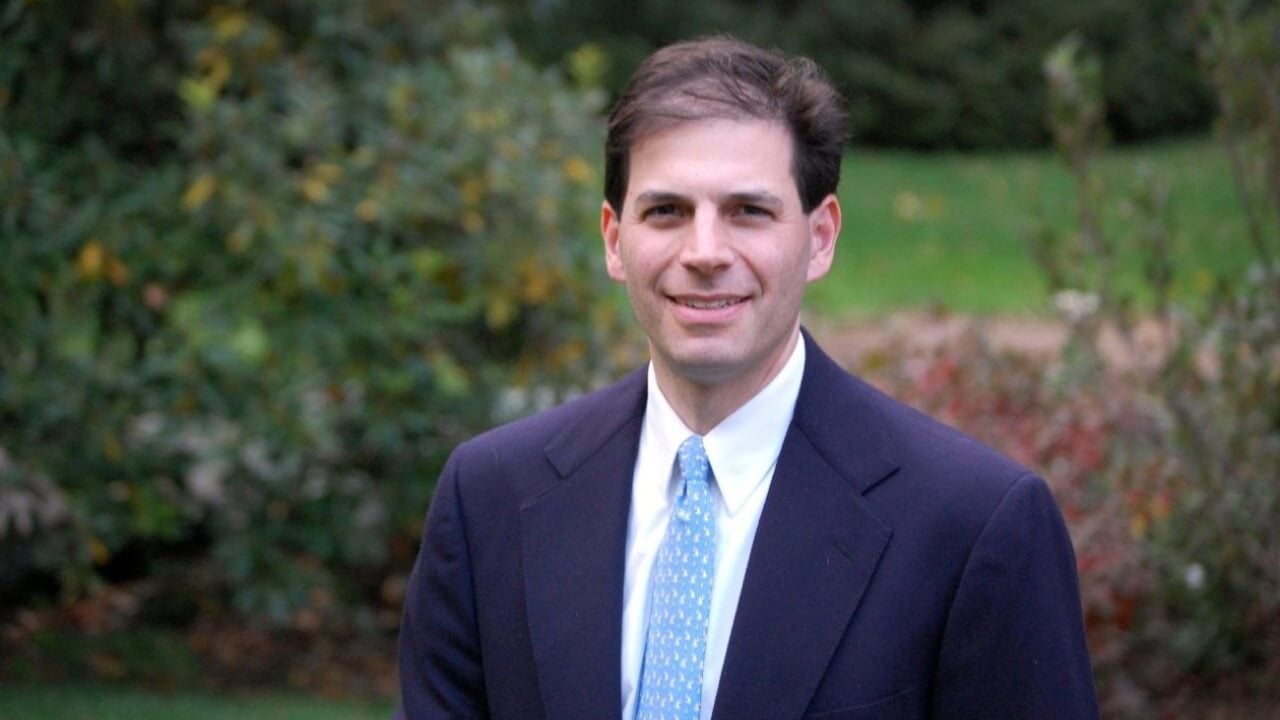
Dr. Muhammad Umar Farooq is a Lecturer and Module Director at York St John University's London Campus , specializing in Business, Marketing, and Project Management education for postgraduate students. He joined the university in 2022 and previously held roles as an Associate Lecturer at the University of West London, while also contributing to teaching and supervision at the University of East London and Regent’s University London. He holds a Doctorate in Business Administration (DBA), an MBA, and a Postgraduate Diploma in Leadership and Strategy, coupled with the prestigious Fellow of the Higher Education Academy (FHEA) distinction. His research focuses on digital marketing, SME innovation, AI applications in content creation, and project management strategies. Notable areas include generative AI for SME competitiveness, sustainable lean practices in construction, and agile methodologies in software development. He actively contributes to academic governance as an external examiner at Northumbria University and the University of Huddersfield. Teaching modules include Marketing Communication , Digital Marketing Strategy , Strategic Project Management , and Applied Research Project . His work bridges academic rigor with industry insights, emphasizing practical applications for organizational success. Research Awards: Recognized as FHEA. Professional Contributions: External examiner roles, LinkedIn engagement, and RaY Postgraduate Research supervision.
Apostolos Fasianos is a Lecturer in Economics at Brunel University London, specializing in macroeconomic implications of household financial behavior. Prior roles include economist positions at the Hellenic Ministry of Finance (2017-2020) and Central Bank of Ireland (2016-2017) , with collaborative research spanning the Bank of England and Reserve Bank of New Zealand . PhD in Economics, University of Limerick MSc in Economic Development, University of Glasgow MPhil in Economics, University of Athens Research focuses on household finance , housing economics , monetary policy , and economic inequalities . Recent work explores AI-enabled technological shocks on UK labor markets via Bayesian VAR modeling and textual patent analysis. Publications span topics like wealth inequality , housing market asymmetries , and financialization trends . Selected publications highlight interdisciplinary approaches, merging macroeconomic theory with empirical analysis of crises (e.g., Covid-19 ), housing markets, and historical financial trends. Key methodologies include textual analysis , VAR modeling , and spatial econometrics . Active in policy analysis, Fasianos represented Greece in international forums such as the EPC - Ageing Working Group and OECD Working Party 1 . Current projects include a 2023-2024 BRIEF AWARDS grant on AI’s macroeconomic impacts.
Raphaël Fischler is a Full Professor and former Dean of the Faculty of Urban Planning and Landscape Architecture at the University of Montreal. He holds dual expertise in urban planning theory, history, and practice, with a focus on North American urban development, land-use regulation, and governance. His academic roles include teaching at McGill University and serving as Dean from 2018–2023, during which he led strategic initiatives like the Quartier de l’Innovation and addressed urban challenges such as housing affordability and metropolitan governance. **Education:** PhD in Urban Planning, UC Berkeley (1993) Master of City Planning, MIT (1987) Master of Science in Architecture, MIT (1987) Bachelor of Engineering, Eindhoven University of Technology (1984) **Research Interests:** Fischler’s work explores urban planning’s historical foundations, particularly zoning’s evolution, and integrates reflective practice into pedagogy. He advises on municipal projects and contributes to policy debates on density, public participation, and sustainable urbanism. His research bridges academia and practice, emphasizing ethical planning and community engagement. **Articles Trends:** His recent publications analyze zoning’s historical role, social justice in urban redevelopment, and governance challenges in Montréal. He critiques systemic issues like housing affordability and advocates for equitable urban policies. **Awards & Recognition:** Fellow of the Canadian Institute of Planners (2020) Émérite Member, Order of Quebec Urban Planners (2014) McGill Principal’s Excellence in Teaching Award (2013) **Grants & Teams:** He collaborates with institutions like the Centre de recherche interdisciplinaire en études montréalaises (CRIEM) and advises public agencies on metropolitan development. His work spans academic leadership, professional practice, and public advocacy, addressing urban challenges through interdisciplinary approaches. **Labs/Teams:** Affiliated with the CRIEM , focusing on Montréal’s urban history and contemporary planning issues. He mentors students in urban policy and design through studio courses and thesis supervision.
Jerold S. Kayden is the Frank Backus Williams Professor of Urban Planning and Design at Harvard University's Graduate School of Design. He holds affiliations with Urban Planning and directs the Master in Real Estate Program. His expertise spans land use law, public space design, climate resilience, and urban disasters. Kayden advises governments, NGOs, and developers globally, with notable work in China, Russia, and Ukraine. He is a legal scholar with Supreme Court amicus brief experience, a Guggenheim Fellow, and recipient of the Harvard GSD 'Teacher of the Year' award. Education: Bachelor's, Law, and City & Regional Planning degrees from Harvard University Research Interests: Kayden focuses on urban legal frameworks, disaster resilience, and public-private space dynamics. His work bridges law, policy, and design, addressing climate adaptation and equitable urban development. Notable books include Privately Owned Public Space: The New York City Experience and Urban Disaster Resilience . Recent Articles: His 2022 Today’s Global contribution explores cross-cultural urban governance, while 2021's America examines legal history and urban resilience. Post-pandemic urban resilience analyses and legal analyses of Midtown Manhattan’s development highlight his recent work. Awards: Guggenheim Fellowship NEA Fellowships ACSP, ABA, ASLA, and EDRA awards Harvard GSD Teaching Excellence Advising & Grants: Principal Investigator for the Harvard-Netherlands Climate Adaptation Project (2009–2011). Advises the National Trust for Historic Preservation and leads the non-profit Advocates for Privately Owned Public Space . Collaborates with World Bank, UNDP, and the Dutch Government on land use policies. Labs/Teams: Leads urban resilience initiatives at Harvard GSD, coordinating interdisciplinary teams on climate adaptation and legal frameworks.
Stephen Billings is an Associate Professor of Finance at the Leeds School of Business, University of Colorado Boulder, where he holds the Global Real Estate Capital Markets Chair position. He serves as the faculty director of the MS in Real Estate program and research director for the CU Real Estate Center. His work spans multiple research centers including the Center for Research on Consumer Financial Decision Making and the Michael A. Klump Center for Real Estate. Billings received his PhD in Economics from the University of Colorado, a MS in urban planning from the University of North Carolina, and a BS in economics from Georgetown University. Prior to joining CU Boulder in 2016, he was faculty at the University of North Carolina Charlotte with appointments in both economics and public policy, where he also served as faculty director for the real estate center. His research focuses on the intersection of housing, schools, neighborhoods and crime, addressing critical policy issues including the impact of public investment in light-rail transit on neighborhoods, school segregation's influence on academic achievement and crime, neighborhood gentrification causes, lead-based paint in low-income housing, and the effects of sea level rise and natural disasters on neighborhood sorting and household finances. Billings employs sophisticated analysis of large micro-datasets with studies based on data and policies in Charlotte, NC and Denver, CO. His work connects urban economics with public policy, demonstrating how neighborhood environments shape individual outcomes across multiple dimensions. Billings' recent publication record demonstrates a consistent focus on neighborhood effects, school choice impacts, crime economics, and housing market dynamics. His work frequently examines the intersection of race, housing, and economic outcomes, with particular attention to policy implications. He has developed innovative methodological approaches to studying residential amenities and neighborhood spillovers, with increasing attention to climate change impacts on housing markets. His research appears in top journals including The Quarterly Journal of Economics, American Economic Review: Insights, and Journal of Urban Economics. As an educator, Billings teaches undergraduate and masters classes in real estate finance and economics, as well as doctoral and masters level courses on cost-benefit analysis and statistical methods. He has extensive consulting experience conducting economic impact studies, including assessments of North Carolina's public higher education system, affordable housing needs in Colorado communities, and the economic effects of marijuana legalization on property markets. His practical policy work complements his academic research, creating a bridge between theoretical insights and real-world applications. Billings leads significant research initiatives through the CU Real Estate Center, where he directs studies examining the impact of business improvement districts and other urban development policies. His work bridges academic research with practical policy applications, making substantial contributions to our understanding of how housing, education, and neighborhood environments shape individual outcomes and community development. His December 2023 memo on the HUD Officer Next Door Program exemplifies his engagement with current housing policy issues.
Wei Xiong is the Hugh Leander and Mary Trumbull Adams Professor in Finance and Professor of Economics at Princeton University, affiliated with the Department of Economics and Bendheim Center for Finance. His research centers on behavioral finance and capital market imperfections with a focus on China's financial system and commodity markets. His educational background includes: Ph.D. in Finance from Duke University (2001) B.S. in Physics from University of Science and Technology of China (1993) Research Interests: Professor Xiong's work fundamentally explores behavioral finance and capital market imperfections , pioneering studies on speculative bubbles , heterogeneous beliefs in asset pricing , and financing frictions . His recent scholarship critically examines the financialization of commodity markets , belief distortions during financial crises , and the unique institutional dynamics of China's hybrid economy , where state and market forces interact. Publication Trends: Xiong's 48 publications in top-tier journals reveal an evolving trajectory from classical behavioral finance (2001-2013) toward contemporary China-focused systemic analysis (2017-2025). Recent works integrate cryptocurrency economics, real estate risk management, and policy design in emerging markets, demonstrating methodological rigor through structural modeling and empirical analysis of large-scale financial datasets. Scientific Awards: 2012 Smith Breeden Award (first prize) for the best non-corporate finance paper published in Journal of Finance 2013 NASDAQ OMX Award for the best asset pricing paper presented in Western Finance Association Meetings Professional Activities: As NBER research associate and former Management Science finance editor (2009-2011), Xiong bridges academia and policy. He co-founded VoxChina.org to foster China-world economic dialogue and co-edited The Handbook of China’s Financial System (Princeton University Press). His keynote addresses at major conferences—including the 2024 Chinese Economists Society meeting on “Information Discovery in a Hybrid Economy”—demonstrate sustained policy influence. Labs and Initiatives: Xiong leads Princeton's Bendheim Center for Finance research initiatives and directs VoxChina.org, which produces influential policy analyses on China's economy. His recent work includes the NBER-commissioned study on commodity market risks and ongoing projects examining big tech lending models and data privacy impacts on digital finance.
Lance Freeman is the Penn Integrates Knowledge (PIK) Professor of City and Regional Planning and Sociology at the University of Pennsylvania's School of Arts & Sciences. His research focuses on neighborhood dynamics, gentrification, urban poverty, housing policy, and the interplay between the built environment and public health. He holds a Ph.D. in City and Regional Planning from the University of North Carolina at Chapel Hill (1997), an MRP in Regional Planning (1991), and a B.S. in Business Administration from SUNY Buffalo (1987). Prior to academia, he worked at Mathematica Policy Research and as a City Planner at the New York City Housing Authority. Freeman teaches courses on urban planning theory, quantitative methods, and community development at Columbia University and the University of Delaware. His research interests include understanding neighborhood change, leveraging social media and technology for urban analysis, and promoting equitable urban development. Key publications include There Goes the Hood: Views of Gentrification from the Ground Up (2006), A Haven and a Hell: The Ghetto in Black America (2019), and co-authored Planning and Control of Land Development (2020). He has contributed to debates on inclusionary zoning, racial equity planning, and the impacts of urban policies on marginalized communities. Freeman's work intersects urban sociology, policy analysis, and spatial demography. His recent studies explore gentrification migration patterns, the role of social media in neighborhood change, and historical segregation dynamics. He advocates for evidence-based planning to address urban inequality and spatial injustice.
Huamin Qu is a Chair Professor in the Department of Computer Science and Engineering at the Hong Kong University of Science and Technology (HKUST). He serves as the Founding Dean of the Academy of Interdisciplinary Studies (AIS), Founding Head of the Division of Emerging Interdisciplinary Areas (EMIA), and was the Founding Acting Head of Computational Media and Arts (CMA) at HKUST(GZ). Qu directs the VisLab and coordinates the Human-Computer Interaction (HCI) group. He obtained his BS in Mathematics from Xi'an Jiaotong University and MS/PhD in Computer Science from Stony Brook University. Qu's research integrates Data Visualization , Human-Computer Interaction , and Human-Centered AI , with applications in urban informatics, social networks, and explainable AI. His work focuses on developing interactive systems for big data analytics, visual storytelling, and AI-driven decision support. Research extends to multimodal communication, fintech, and augmented reality applications. His publications emphasize visual analytics for complex datasets (mobility, social media, financial), interaction techniques for immersive environments, and AI-enhanced visualization tools. Recent works explore explainable AI interfaces and large-scale data communication frameworks. IEEE Visualization Academy (2020) IEEE VGTC Technical Achievement Award AI 2000 Most Influential Scholar (2019, 2023, 2024) 21 Best Paper/Honorable Mention awards IBM Faculty Award (2009) APICTA Merit Award (2015) Yelp Dataset Grand Prize (2018) Qu has advised 48 PhD graduates (21 now faculty at institutions like UC Davis, University of Minnesota, Texas A&M) and 30 MPhil students. He secured major grants including RGC theme-based projects (digital citizenship, air pollution), UGC AoE (slope safety), and China's 973 Program. As VisLab director, he leads 20+ researchers in visualization/HCI projects adopted by Microsoft, IBM, Huawei, and Tencent.
Maurizio Dallocchio is a Full Professor of Corporate Finance at Bocconi University and SDA Bocconi School of Management. He served as Dean of SDA Bocconi (2003–2007) and has held leadership roles in academic and professional institutions, including Chair of the Audit Committee of the European Investment Bank (EIB). His research focuses on corporate valuation, mergers & acquisitions (M&A), and sustainable finance. Dallocchio founded DGPA & Co., a corporate finance consultancy, and advises public and private entities globally. He has taught at leading institutions like London Business School and NYU Stern School of Business. Educational Background: Ph.D. in Business Administration, Bocconi University Advanced studies at London Business School and New York University Stern School of Business Research Interests: Prof. Dallocchio’s work emphasizes corporate restructuring, ESG integration in finance, and strategic valuation methodologies . Recent studies explore environmental performance in emerging markets and the resilience of conglomerates during economic crises. He advocates for sustainable investment strategies that balance financial returns with societal impact. Professional Engagements: Board member roles at Klepierre Management, General Finance, and Podravska Banka Past Director of the Master in Corporate Finance program at SDA Bocconi Labs/Teams: Leads research initiatives at Bocconi’s Corporate Finance and Real Estate Department, collaborating with global institutions on projects involving corporate governance, M&A analytics, and sustainable development.



/prod01/yorksjacuk/media/content-assets/staff-profile-images/1705856253539.jpg)