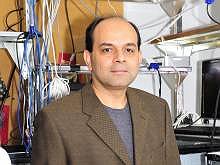
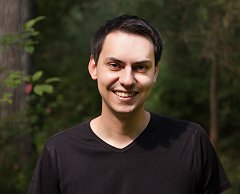
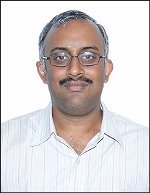
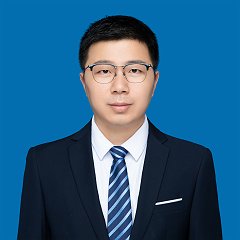
Prof. Dr. Martin Bogdan is a faculty member at the University of Leipzig since 2008, currently holding the Professorship for Neuromorphic Information Processing in the Faculty of Mathematics and Computer Science . His academic career spans roles as a research assistant, assistant professor, and department head at institutions including the University of Tübingen and University of Leipzig. Education : Studied technical computer science at Fachhochschule Offenburg (1987–1993) and industrial informatics at Université Grenoble I (1991–1993); earned PhD in 1998 from University of Tübingen. Research Interests focus on: Neuromorphic Information Processing Spiking Neural Networks Brain-Computer Interfaces (BCI) Embedded Systems for Bio-Analogous Processing Real-Time Signal Processing in Medicine Machine Learning Applications in Neurology Mainframe Computing Techniques Article Trends show expertise in: spiking neural networks for real-time applications; BCI systems for locked-in syndrome patients; hyperspectral imaging for agricultural analysis; FPGA-based evolving hardware; and machine learning applications in medical diagnostics. His work bridges neuroscience, computer science, and biomedical engineering. Academic Roles include leadership of the NeuroTeam (2000–2015), editorial positions, and extensive teaching experience in technical computer science and neuromorphic systems. Labs & Teams : Leads the Neuromorphic Information Processing division; collaborates with researchers including Dr. Sophie Adama, Dr. Jörn Hoffmann, and engineers like Max Braungardt.
Atif Memon is a Professor in the Department of Computer Science at the University of Maryland, College Park (UMCP), where he has been a faculty member since 2001, progressing from Assistant Professor to Associate Professor and finally to Professor in 2015. He is also a Professor at the Institute for Advanced Computer Studies at UMCP. Dr. Memon founded and heads the Event Driven Software Lab (EDSL), where his research focuses on design, development, quality assurance, and maintenance of event-driven software applications. Dr. Memon received his Ph.D. in Computer Science from the University of Pittsburgh in 2001, with a dissertation titled "A Comprehensive Framework for Testing Graphical User Interfaces." His advisors were Martha Pollack and Mary Lou Soffa. Prior to his Ph.D., he earned an M.S. in Computer Science from King Fahd University of Petroleum and Minerals in Saudi Arabia (1995) and a B.C.S. in Computer Science from the University of Karachi (1991). Dr. Memon's research primarily focuses on software testing, particularly for event-driven systems. He is renowned for designing and developing GUITAR, a model-based GUI testing framework that operates on Android, iPhone, Java Swing, .NET, Java SWT, and web systems. His work extends to Community Event-based Testing (COMET), a community infrastructure for event-based testing researchers. His research interests include: Automated GUI and mobile application testing Model-based software testing techniques Event-driven software quality assurance Testing methodologies for emerging technologies Test automation and script maintenance Flaky tests and test reliability Dr. Memon's recent publications demonstrate a strong focus on practical applications of software testing, particularly in mobile environments. His work bridges theoretical testing concepts with real-world implementation challenges, with significant contributions to GUI test automation, mobile application testing, and test script maintenance. The trend in his recent work shows increasing emphasis on mobile platforms, security testing, and addressing the challenges of flaky tests in continuous integration environments. His research spans both academic innovation and practical industry applications, as evidenced by his collaborations with companies like Google, Apple, and others. Among his notable achievements, Dr. Memon received the Best Paper Award at SECURWARE 2014 for his work on "N-Gram Based User Behavioral Model for Continuous User Authentication" and a retrospective award for the most influential paper among the papers of 2003 Working Conference on Reverse Engineering. Dr. Memon currently advises six PhD students at Maryland on various aspects of testing event-driven software systems, and so far six students have completed their doctoral thesis work under his guidance. His research has been supported by significant funding from agencies including DARPA, NSF, NIH, and NSA for projects such as "Vetting Android Applications for Security Using Graphical User Interface Logic," "COMET - Community Event-based Testing," "Algorithms and Software for the Assembly of Metagenomic Data," and "Research in Science and Public Policy for the U.S. National Security Agency." As the founder and head of the Event Driven Software Lab (EDSL), Dr. Memon leads a team focused on advancing the state of the art in testing event-driven software applications. The lab has developed several influential tools and frameworks, most notably GUITAR, which has been widely adopted in both academic and industrial settings. Dr. Memon has also been instrumental in developing community infrastructure for testing researchers through COMET, enabling uniformity in experimentation and benchmarking in event-driven software testing.
Matthias Kettl is a researcher at Ludwig Maximilian University of Munich specializing in formal verification and software analysis. Affiliated with the SOSY Lab, his work focuses on advancing verification frameworks and fault detection methodologies. His research spans Formal Verification , Software Verification , and Distributed Systems , with significant contributions to mutation testing fault patterns, verification witness analysis, and distributed program synthesis. Key projects include enhancements to the CPAchecker framework and empirical studies of partial program fixes. Recent publications demonstrate strong trends in scalable verification techniques, with increasing emphasis on distributed computing approaches for handling complex software systems. His work bridges theoretical formal methods with practical tool development. As an active contributor to major software engineering conferences (ASE, ICSE, ESEC/FSE), Kettl maintains strong industry-academia connections through open-source projects on GitHub, including contributions to sv-benchmarks and benchexec frameworks.
Raghavan Komondoor is an Associate Professor in the Department of Computer Science and Automation at the Indian Institute of Science (IISc), Bangalore. His research focuses on programming languages, program analysis, and software engineering, with a strong emphasis on developing automated tools that help programmers understand, verify, and transform programs quickly and reliably. His primary research interests include: Programming languages and program analysis Software verification and testing Static analysis techniques Null dereference verification Points-to analysis Web application analysis ORM-based controller verification Memory optimization in Java programs Code clone detection and elimination Dr. Komondoor has developed several influential research tools including NPEDetector for null dereference verification, Ross for verifying Java program safety, DFAS for static analysis of asynchronous systems, PageModeler for web application analysis, and ORMInfer for verification of ORM-based controllers. His research spans over a decade with publications in top-tier software engineering conferences including ASE, ICSE, ISSTA, and SPLASH. His recent publications demonstrate a consistent focus on formal methods and program verification, with significant contributions to symbolic fixpoint algorithms, ORM controller verification, and controller synthesis over infinite state spaces. These works build upon his earlier foundational research in points-to analysis, web application analysis, and null pointer verification. Dr. Komondoor's service contributions to the academic community include: Program Committee Co-Chair for ATVA 2025 Organizing co-chair for ISEC 2024 Chair of PhD Symposium committee for ISEC 2020 Program committee membership for ICSE (2018-2025), ASE (2019-2020), ISSTA (2022), and numerous other major conferences He has successfully mentored numerous PhD and M.Tech students, many of whom now work at leading organizations including Microsoft, Siemens Research, Goldman Sachs, and academic institutions. Currently, he advises multiple PhD students and M.Tech researchers in the Programming Languages Laboratory at IISc. He teaches courses on Program Analysis and Verification, Principles of Distributed Software, and Formal Methods in Software Engineering, and maintains active research projects with open positions for research staff.
Yan Lei is a Professor at the School of Big Data & Software Engineering, Chongqing University, China, specializing in software quality improvement through advanced fault localization, program repair, and testing methodologies. His research bridges software engineering with data science to address challenges in deep learning systems and hardware description language (HDL) programs, evidenced by extensive publications in CCF-A venues including ASE, FSE, and TSE. Dr. Lei obtained his Ph.D. under Prof. Xiaoguang Mao at Chongqing University and conducted research at UC Davis with Prof. Zhendong Su. His educational background informs his interdisciplinary approach to software engineering challenges. His research focuses on three interconnected pillars: Fault Localization and Program Repair: Developing deep learning and metamorphic techniques for precise bug identification and automated repair Data Science for SE: Applying representation learning and contrastive methods to software testing challenges Testing Deep Learning Systems: Addressing API misuses and error-handling bugs in neural network applications Analysis of his 2023-2024 publications reveals a strategic shift toward multi-fault scenarios and cross-framework solutions, with increasing emphasis on hardware-aware testing and compilation error repair. His work consistently integrates generative models and semantic learning to overcome data imbalance issues. His scientific recognition includes: ACM SIGSOFT Distinguished Paper Award for coincidental correctness detection research at ASE 2024 IEEE TCSE Distinguished Paper Award for flaky test prediction at SANER 2024 Dr. Lei directs significant research initiatives including a National Natural Science Foundation project (2023-2026) on multi-fault program repair and previously led a foundational fault localization study (2017-2019). His teaching portfolio spans undergraduate software testing and graduate courses for international students, reflecting commitment to pedagogy. Current projects like Data Fusion for Smart Megalopolis demonstrate applied research impact in Chongqing's technological development.
Guangjie Li is a researcher at the National Innovation Institute of Defense Technology, actively contributing to software engineering research through publications in premier conferences including ASE, ESEC/FSE, and SANER. His work bridges theoretical program analysis with practical machine learning applications for software development challenges. His research focuses on: Fault localization techniques enhanced by statement-level error analysis Deep learning-driven detection of code smells like feature envy Automated extraction of program elements across software versions Empirical validation using real-world codebases Integration of version control data in program analysis Recent publications demonstrate a consistent trajectory toward machine learning augmentation of traditional software engineering tasks, particularly in debugging and code quality assessment. His methodologies emphasize practical applicability through real-world example integration, addressing critical gaps in automated software maintenance.
Manuel Rigger is an Assistant Professor at the National University of Singapore's School of Computing, Department of Computer Science. He leads the Trustworthy Engineering of Software Technologies (TEST) Lab, focusing on improving data-centric systems' reliability. Prior to joining NUS, he was a postdoctoral researcher at ETH Zurich and completed his PhD at Johannes Kepler University Linz. His research centers on database systems reliability, software testing, and program analysis. Rigger's work has uncovered over 1,000 unique bugs in critical systems, significantly enhancing real-world software reliability. His research spans automated testing techniques, logic bug detection, query optimization, and compiler technologies, with strong practical impact through widely adopted tools like SQLancer. Rigger's publication record shows consistent high-impact contributions, with recent work focusing on database isolation levels, cardinality estimation testing, and query plan guidance. His research bridges theoretical foundations with practical applications, addressing fundamental challenges in data management systems. The TEST Lab's approach combines traditional testing methods with innovative learning-based techniques to automate database validation at scale. He has received numerous accolades including the EuroSys 2024 Best Paper Award, ICSE 2023 Distinguished Paper Award, and multiple Distinguished Artifact Awards. His work has been recognized with prestigious awards from Amazon Research, Google, and the Singapore government. EuroSys 2024 Best Paper Award for 'Validating Database System Isolation Level Implementations with Version Certificate Recovery' ICSE 2023 ACM SIGSOFT Distinguished Paper Award ASPLOS 2022, OSDI 2020, and OOPSLA 2020 Distinguished Artifact Awards AWS Database Services Amazon Research Award 2024 Singapore Open Research Award 2024 Rigger actively mentors students at all levels, with numerous Master's and Bachelor's theses supervised. His teaching includes courses on software engineering foundations and advanced software testing. He serves on program committees for major conferences including PLDI, ISSTA, and ASPLOS, and organizes workshops like the Fuzzing and Software Security Summer School. His research has practical industry impact with tools like SQLancer being widely adopted in the database community.
Karl Friston FMedSci FRSB FRS is a Wellcome Principal Research Fellow and Scientific Director at the Wellcome Trust Centre for Neuroimaging, and Professor at the Institute of Neurology, University College London. He also serves as an Honorary Consultant at The National Hospital for Neurology and Neurosurgery, UK. Friston is a theoretical neuroscientist and authority on brain imaging who has made seminal contributions to neuroscience methodology and theory. Friston's research interests span theoretical neurobiology, computational neuroscience, and computational psychiatry. He invented statistical parametric mapping (SPM), voxel-based morphometry (VBM), and dynamic causal modelling (DCM). His most significant theoretical contribution is the free-energy principle for action and perception (active inference), which provides a unified framework for understanding brain function. His work integrates predictive coding, Bayesian inference, and information theory to explain perception, action, and learning. His research has profound implications for understanding schizophrenia through the dysconnection hypothesis, which frames psychosis as a failure of hierarchical predictive coding. Friston's publication record demonstrates consistent thematic development across decades, with recent work focusing on active inference, free-energy minimization, and computational psychiatry. His articles reveal a progression from methodological innovations in neuroimaging to comprehensive theoretical frameworks that unify perception, action, and learning under Bayesian principles. The recurring themes include hierarchical generative models, precision weighting, and the role of prediction errors in neural processing. Young Investigators Award in Human Brain Mapping (1996) Fellow of the Academy of Medical Sciences (1999) President of the international Organization of Human Brain Mapping (2000) Minerva Golden Brain Award (2003) Fellow of the Royal Society (2006) Medal, College de France (2008) Weldon Memorial prize and Medal (2013) Charles Branch Award for unparalleled breakthroughs in Brain Research (2016) Glass Brain Award - lifetime achievement award in human brain mapping (2016) As Scientific Director of the Wellcome Trust Centre for Neuroimaging, Friston leads one of the world's premier neuroimaging research centers. His theoretical work has generated numerous research programs across multiple institutions investigating active inference in perception, action, psychiatry, and even developmental biology. His frameworks have been applied to diverse areas including robotics, machine learning, and philosophical questions about consciousness and agency. Friston's work continues to shape the theoretical foundations of cognitive neuroscience through both his mathematical innovations and conceptual frameworks that unify previously disparate phenomena.
Hila Peleg is an Assistant Professor at the Technion - Israel Institute of Technology , working at the intersection of Programming Languages , Software Engineering , and Human-Computer Interaction . She co-leads the TecSE lab with Prof. Shachar Itzhaky, focusing on programmer tooling inspired by programming language theory.
Dr. Flavio Toffalini serves as Assistant Professor of Cybersecurity at Ruhr University Bochum (RUB) since September 2024, holding the Chair for Automated Security Analysis. His research group focuses on advancing system security through innovative approaches to software testing and trusted computing. Dr. Toffalini completed his Ph.D. at Singapore University of Technology and Design (SUTD) in 2021 under Professor Jianying Zhou, followed by postdoctoral research at EPFL's HexHive group with Professor Mathias Payer. His educational background includes a Master's degree from the University of Verona (2015) focused on web security. His research centers on system security with emphasis on automatic software testing (particularly fuzzing), threat mitigation, and trusted execution environments (SGX, TrustZone). Current projects explore browser/interpreter testing, memory safety mechanisms, and compiler-assisted security hardening. He actively develops novel fuzzing techniques to uncover deep vulnerabilities in complex systems. Analysis of his 2023-2025 publications reveals dominant themes in JavaScript engine security (DUMPLING), adaptive fuzzing (TuneFuzz), and trusted computing hardening (TLBlur). His work bridges theoretical security concepts with practical implementations, often yielding tools adopted by the security community. Notable scientific recognition includes: Distinguished Paper award at NDSS 2025 for JavaScript engine fuzzing research Distinguished Paper award at NDSS 2025 for type confusion mitigation Best Paper award at ACNS 2022 for IoT attestation systems Dr. Toffalini currently supervises three Ph.D. students (Tobias Wienand at RUB, Nicolas Badoux and Han Zheng at EPFL) and has guided multiple MSc theses. His research is supported through projects in software analysis, vulnerability detection, and system security, with active recruitment for students specializing in fuzzing and trusted computing. He leads the Automated Security Analysis research group at RUB, maintaining strong collaborations with EPFL's HexHive group. The team actively develops tools for interpreter testing, reverse engineering, and trusted execution environment security, with current projects focusing on extending fuzzing to new programming languages and mitigating microarchitectural vulnerabilities.
Sarah Nadi is an Associate Professor of Computer Science at New York University Abu Dhabi and holds an adjunct professor position at the University of Alberta. She co-directs the SANAD lab where she leads research on developing automated support tools to enhance software developer productivity and effectiveness. Dr. Nadi's research program centers on mining software repositories to extract insights from version control systems, issue trackers, and developer Q&A sites. Her work specifically addresses critical challenges in software library usage including selection processes, API misuse prevention, and migration to alternative libraries. Recent projects demonstrate increasing integration of AI techniques with traditional software engineering problems, particularly in understanding developer workflows around third-party libraries. Analysis of her recent publications reveals a strong methodological focus on empirical software engineering with particular expertise in Python ecosystem analysis. Her research trajectory shows evolution from foundational API usage studies toward sophisticated library migration frameworks and LLM applications in developer tooling, maintaining consistent emphasis on empirical validation through large-scale repository analysis. Dr. Nadi actively contributes to the software engineering community through leadership roles including ASE 2025 Area Chair, program committee service for major conferences (ICSE, ESEC/FSE, ICSME), and keynote presentations such as at ESEC/FSE 2021 Doctoral Symposium. She maintains active supervision of research students and regularly hires fully funded PhD candidates for the SANAD lab at NYUAD. The SANAD lab under her co-direction develops practical tooling for software developers with current projects focused on library migration benchmarking (PyMigBench), API misuse detection, and evaluating LLM impacts on development workflows. The lab maintains international collaborations and publishes consistently in top-tier software engineering venues.
Sang Kil Cha is an Associate Professor at KAIST (Korea Advanced Institute of Science and Technology) where he holds positions in both the Graduate School of Information Security and the School of Computing. He serves as the director of the Cyber Security Research Center (CSRC) at KAIST and leads the SoftSec Lab. Dr. Cha received his Ph.D. and M.S. degrees from Carnegie Mellon University and his B.S. degree from Korea University. Current Position: Associate Professor, KAIST Leadership: Director of Cyber Security Research Center (CSRC) Laboratory: Head of SoftSec Lab Education: Ph.D. and M.S. from CMU, B.S. from Korea University Dr. Cha's research focuses on the intersection of computer security and software engineering, with particular emphasis on building and evaluating systems that can analyze programs. His work spans software security, software engineering, software systems, and program analysis. He has made significant contributions to binary code analysis, fuzzing techniques, and reverse engineering. His research has practical applications in vulnerability detection, malware analysis, and secure software development. His publication record demonstrates consistent high-impact contributions to the field, with numerous papers in top-tier security and software engineering conferences including IEEE S&P, USENIX Security, ISSTA, and ICSE. His recent work shows a continued focus on advancing fuzzing methodologies, binary analysis techniques, and security applications for blockchain technologies. Dr. Cha's research group has produced influential tools such as B2R2 (a binary analysis framework) and ofuzz (a fuzzing framework). ACM Distinguished Paper Award USENIX Distinguished Paper Award Best Paper Award NDSS Best Paper Award As an educator, Dr. Cha has taught courses including Binary Code Analysis and Secure Software Systems, Advanced Software Security, and Introduction to Information Security. His research group has mentored numerous students who have become co-authors on his publications. His work is supported by various research grants focused on software security and analysis techniques. The SoftSec Lab maintains active collaborations with both academic and industry partners in the security research community.
Dr. Yanyan Jiang is an Associate Professor at Nanjing University, China, specializing in software systems with a focus on validation, verification, and synthesis. His research spans software testing, analysis, and program synthesis, with significant contributions to the field of software engineering. Dr. Jiang's research interests include: Software Testing - particularly code coverage validation and Android application testing Software Verification - with focus on compiler validation and system correctness Program Synthesis - especially for dynamic software updates and state transformation Operating Systems - including educational approaches and system design principles His recent work shows a strong trend toward practical applications of software engineering research, with focus on Android systems, compiler validation, and self-adaptive software. His publications demonstrate expertise in both theoretical approaches to software validation and practical tools for real-world systems, particularly in the areas of code coverage validation, dynamic software updating, and compiler verification. Dr. Jiang has received numerous prestigious awards: SOSP'23 Best Paper Award ACM SIGSOFT Distinguished Paper Awards (ICSE'21 and ASE'18) ACM Europe Council Best Paper Award Microsoft Research Asia Fellowship Award CCF Outstanding Doctoral Dissertation Award Dr. Jiang actively contributes to the software engineering community through program committee memberships at major conferences including ASE, ICSE, and ESEC/FSE. He also serves on the Steering Committee for regional Computing Olympiad contests and as a Technical Committee member for the Asia-Pacific Informatics Olympiad (APIO) 2022-2024, demonstrating his commitment to both research excellence and educational outreach in computer science.
Yijun Yu is a Professor of Software Engineering at The Open University, UK, where he leads research on automated techniques to enhance software engineering productivity and software quality. He serves as Associate Editor for the Software Quality Journal and Chair of the BCS Specialist Group on Requirements Engineering, while actively contributing to program committees of premier conferences including ICSE, FSE, RE, ICSME, and SEAMS. His research spans Requirements Engineering, Automated Software Engineering, and Software Maintenance and Evolution, with emphasis on developing methods for software adaptation, security enhancement, and resilience engineering. Key contributions include techniques for requirements-driven adaptation, Rust-based safety mechanisms, and socio-technical resilience frameworks that bridge theoretical advances with practical industry applications. Analysis of his 2018-2024 publications reveals a strong trajectory in programming language safety (particularly Rust transpilation), neural code representation learning, and adaptive security systems. His work consistently addresses real-world challenges in memory safety, vulnerability prediction, and autonomous system behavior through innovative static analysis, machine learning, and formal methods approaches. His scientific achievements include: 10 Year Most Influential Paper award (CASCON’16) 6 Best Paper awards (SEAMS’18, iRENIC’16, TrustCom’14, EICS’13, VMPDP’01) 3 Distinguished Paper awards (RE’11, BCS’08, ASE’07) Best Tool Demo Paper Award (RE’13) Best Student Paper Award (PDCS’02) As Principal Investigator, Professor Yu has managed knowledge transfer projects with industry leaders: NATS (air traffic management) Huawei (telecommunications) IBM (enterprise software) CA Technologies (IT management) RealTelekom (network solutions) These collaborations focus on translating academic research into practical solutions for requirements engineering, adaptation techniques, and security challenges in industrial software systems.
Tianyi Zhang is a Tenure-Track Assistant Professor of Computer Science and Societal Impact Fellow at Purdue University's College of Science, where he leads the Human-Centered Software Systems Lab. His research focuses on building interactive intelligent systems that synergize human expertise with machine intelligence to improve programming productivity and software robustness. Dr. Zhang's research interests span Software Engineering, Human-Computer Interaction, and Artificial Intelligence. His work centers on developing systems that augment human intelligence with data-driven insights and augment machine intelligence with human guidance, primarily for programming domains including software developers, novice programmers, and computer end-users. His research on code mining and visualization helps programmers make more informed decisions through GitHub and Stack Overflow analysis, while his work on program synthesis assists novices with enriched feedback loops and interpretability. His recent publications (2024-2025) demonstrate a strong focus on leveraging large language models for code generation, program repair, and data wrangling, with particular emphasis on interactive systems that incorporate human feedback. This research direction shows consistent growth in understanding the intersection between human cognition and AI capabilities in programming contexts. Awards and Recognition: NSF Career Award for research on safe and reliable LLM-based code generation Amazon Research Award for human-in-the-loop deep learning optimization Best Paper Honorable Mention Award from SIGCHI for visualizing examples of deep neural networks Best Paper Honorable Mention Award from VAHC for interactive cohort analysis Dr. Zhang actively serves the research community as Program Committee member for major conferences including ICSE, ASE, FSE, CHI, and UIST. His service includes chairing workshops and student research competitions, demonstrating his commitment to mentoring the next generation of researchers. His lab develops systems that address real-world challenges in programming productivity and software safety, with applications spanning from autonomous driving systems testing to data science workflows.