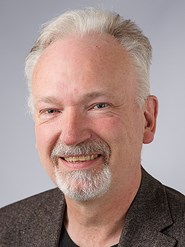
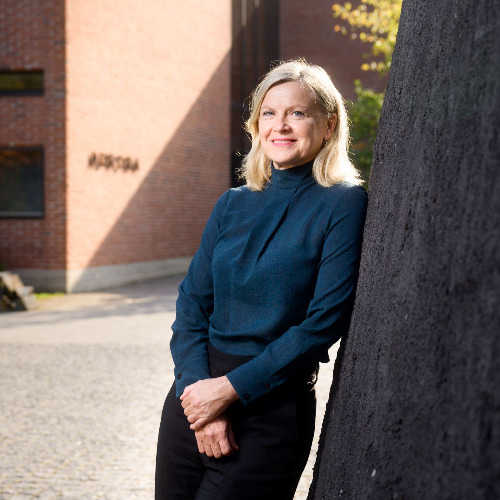
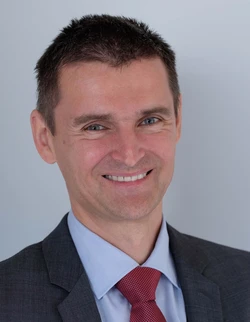
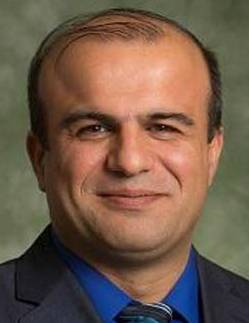
Philipp Krueger is a Full Professor of Finance at the University of Geneva and holds a Senior Chair at the Swiss Finance Institute . He is also a Research Member of the European Corporate Governance Institute (ECGI) and a Fellow of the CEPR Climate Change and the Environment Programme. Ph.D. in Economics (Summa cum laude), Toulouse School of Economics, 2010 Co-Director, Master of Science in Wealth Management (University of Geneva, 2022–present) His research focuses on ESG investing , climate finance , corporate governance , and behavioral finance . His work has been cited in major regulatory frameworks including SEC Final Rules on Climate Risk Disclosures (2024) and referenced in speeches by central bankers globally. Key contributions include: Highly cited paper on Climate Risk Disclosure and Institutional Investors (Review of Financial Studies 2023) Landmark study on ESG Rating Disagreement (Financial Analysts Journal 2021) Pathbreaking work on Corporate Goodness and Shareholder Wealth (Journal of Financial Economics 2015) His scientific awards include the Moskowitz Prize in Socially Responsible Investing (2015), EFMA Larry Lang Corporate Finance Best Paper Award (2011), and multiple best paper prizes at international conferences. He serves on the Board of Experts at Inrate AG (Zurich) and advises UBS Switzerland on ESG investing.
Anders Behndig is a Professor and senior consultant (attending) physician at the Department of Clinical Sciences, Section of Ophthalmology , Umeå University. His clinical and research work focuses on cataract surgery, corneal crosslinking for keratoconus, intraocular lens complications, and surgical outcomes analysis. Position: Professor, Senior Consultant Ophthalmologist Institution: Umeå University, Sweden Department: Clinical Sciences/Ophthalmology Behndig’s research spans cataract surgery optimization (e.g., prioritization during pandemics, bilateral surgery trends), corneal crosslinking (epi-on vs. epi-off protocols), and intraocular lens stability . His work often leverages large-scale registries like the Swedish National Cataract Register and EUREQUO to analyze complication risks and surgical outcomes. Recent publications highlight trends in refractive surgery (customized crosslinking for myopia), uveitis and diabetic retinopathy in cataract outcomes, and machine learning applications for predicting posterior capsule rupture. Collaborative efforts include multinational registry studies and evaluations of anesthesia techniques in cataract procedures.
Nicole Mills serves as Joint Director of Language Programs (interim), Coordinator of the French language program, and Language Advisor for the Office of International Education at Harvard University, while holding an adjunct lecturer appointment in Education at the Harvard Graduate School of Education. She co-founded the Certificate in Teaching Language & Culture and actively shapes language pedagogy through administrative leadership and innovative curriculum design across multiple Harvard departments. Her educational background includes a Ph.D. in French and Educational Studies and an M.A. in French literature , both from Emory University. These qualifications underpin her interdisciplinary approach to language education, bridging theoretical linguistics with practical pedagogy. Mills’ research pioneers the integration of virtual reality and artificial intelligence in language learning, focusing on psychological aspects of language acquisition, immersive cultural experiences, and curriculum development. Her work demonstrates how experiential learning contexts can transform traditional language instruction, particularly through projects like the La République VR environment that immerses students in Parisian life through diverse perspectives. This research intersects digital humanities, critical theory, and French literary studies to create transformative educational experiences. Her publication trajectory reveals a clear evolution from foundational self-efficacy studies toward cutting-edge explorations of AI and immersive technologies in language education. Recent work emphasizes pedagogical innovation during crises (like pandemic teaching transitions) and the systematic integration of emerging technologies into language program infrastructure, reflecting both theoretical depth and practical applicability. Innovation in Language Program Direction Award (2020) from the American Association of University Supervisors and Coordinators ABL Connect award for Teaching Innovation (2018) from Harvard's Center for Teaching and Learning Mills has secured significant grant funding including Harvard's HILT grants (2017-2020) for VR initiatives and Provost Fund support for AI pedagogy projects. Her collaborative approach is evident in partnerships with Wonda VR, Harvard's Center for Technology in Government, and international institutions for VR/AI development, while her co-founding of the Charlie Archive demonstrates commitment to digital humanities infrastructure for preserving cultural responses to global events. She leads the La République VR project team and the Charlie Archive curation group, fostering interdisciplinary collaboration between technologists, language educators, and digital archivists to create resources that bridge academic research with real-world cultural contexts.
Ioana Galu serves as Associate Professor of Violin and Viola in the Department of Music at the University of South Dakota, directing the Violin/Viola Studio and performing with the Rawlins Piano Trio. Previously on faculty at Heidelberg University (2004-2016) and The College of Wooster (2014-2016), she maintains active roles with the Eastern Music Festival since 2004 and co-founded the Romanian-American chamber music festival 'American Musicians in Transylvania'. Her educational background includes: Doctor of Musical Arts in Contemporary Music, Bowling Green State University (2012) Artist Diploma in Violin Performance, University of Cincinnati College-Conservatory of Music (2011) Master of Music in Violin Performance, Bowling Green State University (2003) Master of Music in Violin Performance and Chamber Music, Gheorghe Dima Music Academy, Romania (1999) Bachelor of Music in Violin Performance and Pedagogy, Gheorghe Dima Music Academy (1998) Dr. Galu's research examines Contemporary Music performance practices, Solo Violin Repertoire interpretation, Injury Prevention methodologies, and Performance Anxiety management. Her work bridges technical mastery with expressive artistry, focusing on physical sustainability and psychological resilience for string musicians through practical pedagogical frameworks. Recent scholarly presentations reveal evolving interests in efficient practice systems, bowing mechanics, and the socio-artistic dimensions of performance. She increasingly explores mindfulness applications, genre-crossing repertoire, and recovery of women composers' works, demonstrating commitment to both technical innovation and social relevance in string performance. Notable awards include The American Prize in Chamber Music (2022), Chamber Music Community Engagement Award (2009), and multiple competition prizes from George Enescu Violin Competition (1996) to CCM Concerto Competition (2004). As advisor and grant recipient, she directs the Rawlins Piano Trio with four consecutive South Dakota Arts Council Touring Arts Roster grants (2018-2026). Her leadership extends to Music4Romania board membership and co-founding initiatives promoting Romanian-American cultural exchange. Dr. Galu performs as concertmaster for multiple orchestras and maintains active chamber music collaborations, notably through her festival work connecting Transylvanian and American artists.
Anne Traynor is an Associate Professor in the Department of Educational Studies at Purdue University 's College of Education. Her expertise lies in educational measurement, psychometrics, and research methodology. Education: Ph.D. in Measurement and Quantitative Methods from Michigan State University (2014) Experience: Associate Professor (2020–present), Assistant Professor (2014–2020), and prior roles including Quantitative Methods Consultant and ACT, Inc. researcher Her research focuses on test score validation , curriculum alignment , and scoring rubric refinement . Recent work examines instructional sensitivity in science assessments and large-scale educational data analysis. She teaches graduate courses in psychometric theory, item response theory, and international education data analysis. Her publications address technical challenges in educational measurement, including alignment indices and rubric impacts on self-regulation.
Douglas G Down is a Professor in the Department of Computing and Software at McMaster University . He leads the Resource Allocation and Stochastic Systems Lab (RASSL) and serves as co-PI of the Computing Infrastructure Research Centre (CIRC) . Education: Ph.D., University of Illinois at Urbana-Champaign His research focuses on stochastic modelling , scheduling , and performance evaluation of computer systems, with recent work on intelligent control of data centers , thermal-aware workload management , and data-driven resource allocation for healthcare systems. Publications span queueing theory , energy-aware scheduling , and machine learning applications in logistics. Recent scholarly trends include deep learning for pandemics (2023-2025), stochastic optimization of cooling systems (2024), and hybrid models combining queueing theory with AI (2023). He has pioneered frameworks like MGST for scheduling in heterogeneous grids and contributed to cache locality improvements in Hadoop systems. Scientific Awards: Nominated for Best Paper at MASCOTS 2013
Professor Jaana Kolu works at the University of Eastern Finland within the School of Humanities . Her research focuses on language contact , translanguaging , bilingualism , and youth language in the Tornedalen region along the Swedish-Finnish border. She has contributed extensively to studies on multilingual practices in minority language contexts, particularly through her work on the Meänkieli language and its sociolinguistic dynamics. Key Research Themes Translanguaging in border communities Code-switching among bilingual youth Language policies for minority languages Discourse analysis of identity performance Historical language contact patterns Notable Publications Svenskan i Finland 20 (2024) – comprehensive edited volume Translingual Practices and Identity (2023) – book chapter Meänkieli in the Media (2023) – journal article Kolu's work bridges theoretical sociolinguistics with practical language education initiatives, including early Swedish language integration in teacher training. She actively engages with Meänraatio , a minority language radio channel, to study real-world multilingual communication strategies.
Dr. Lipeng Wan is a tenure-track Assistant Professor of Computer Science at Georgia State University (GSU), located at 25 Park Place, room 733. He holds a B.Eng. in Communication Engineering from Nanjing University of Science and Technology (2008), an M.Eng. in Information and Communication Engineering from Southeast University (2011), and a Ph.D. in Computer Science from the University of Tennessee, Knoxville (2016). Prior to joining GSU, he served as a Computer Scientist at Oak Ridge National Laboratory (ORNL), first as a postdoctoral researcher (2016–2018) and later as a full-time research staff member (2018–202?). His research focuses on big data management and analytics , high-performance and data-intensive computing , and resilience and performance optimization for distributed systems . Key interests include scientific data workflows, I/O innovations for exascale systems, and error-controlled data compression frameworks like MGARD and HPDR. Dr. Wan’s recent work emphasizes adaptive data transmission (e.g., JANUS), load balancing in cloud environments (SciLance), and optimizing file access patterns on HPC systems. His publications address challenges in exascale computing, including I/O performance, geographically distributed data management, and feature-preserving compression for climate simulations. He leads research at GSU in collaboration with national labs like ORNL, focusing on advancing scalable data management techniques for high-performance computing applications.
Wei Li is a Professor in the Department of Computing at Nova Southeastern University's College of Computing & Engineering. He joined NSU in 2005 after earning his Ph.D. from Mississippi State University. His research focuses on enhancing computer system security through interdisciplinary approaches, including network security, artificial intelligence applications, and software engineering practices. Dr. Li’s research areas encompass computer security, network security, software engineering, artificial intelligence, and database systems. His work bridges theoretical advancements and practical cybersecurity solutions, such as improving intrusion detection systems, analyzing social engineering attack vulnerabilities, and developing machine learning models for IoT security. His recent publications (2020–2025) address topics like password policy effectiveness, remote worker cybersecurity risks, and adaptive deep learning models for anomaly detection. These contributions highlight his focus on mitigating organizational cybersecurity risks through empirical studies and innovative technical solutions. No scientific awards or grants are explicitly listed in the provided information. His advising record remains unspecified, and no active labs or teams are mentioned.
Professor Rhona Flin is a distinguished academic at Robert Gordon University's Aberdeen Business School, where she conducts groundbreaking research on human performance in high-risk work settings. Her expertise spans safety culture, organizational psychology, and non-technical skills development across various high-stakes industries including oil and gas, emergency management, and healthcare. Professor Flin earned her Bachelor's degree in Psychology from the University of Aberdeen in 1977, followed by a PhD in Psychology from the same institution in 1983. Her academic journey has positioned her as a leading expert in understanding how psychological factors influence safety, decision-making, and technology adoption in complex work environments. Professor Flin's research primarily focuses on human performance in high-risk settings, examining safety culture, organizational dynamics, and critical non-technical skills including situation awareness, decision making, teamwork, leadership, and coping with stress and fatigue. Her work bridges psychological theory with practical applications in industries where human error can have catastrophic consequences. A significant portion of her recent research investigates the psychological factors that influence the adoption of new technologies, particularly in the energy sector, where she has conducted innovative benchmarking studies on organizational innovation culture. Analysis of Professor Flin's recent publication record reveals several key trends. Her work increasingly focuses on emergency management decision-making, with multiple 2024 publications examining cognitive challenges in crisis situations and the training methods needed to improve performance. She has also expanded her research into renewable energy sectors, particularly wind power, where she investigates human factors in both onshore and offshore operations. Another significant thread in her recent work involves the development of behavioral marker systems for assessing non-technical skills across various domains, from helicopter operations to surgical settings. Professor Flin has contributed to professional guidelines such as those developed with the Difficult Airway Society and the Association of Anaesthetists on implementing human factors in anesthesia, demonstrating the practical impact of her research. As an academic supervisor, Professor Flin has guided numerous doctoral candidates through their research journeys. Her current and recent supervisees are investigating diverse topics including implementation of ISO 45003 in UK HEIs, sustainable business practices in the oil and gas industry, challenges facing Omani citizens in logistics, and decision-making competence in health supply chains. Her supervision portfolio demonstrates her ability to mentor research across multiple disciplines while maintaining focus on core themes of human performance, safety, and organizational culture. Professor Flin is actively involved in the Energy, Sustainability & Society Research Group at Robert Gordon University. Her collaborative approach is evident in her numerous multi-institutional projects that bring together experts from psychology, business, engineering, and healthcare to address complex human factors challenges in high-risk environments.
Prof. Ondrej Vaculin, Ph.D., is a Professor at Technische Hochschule Ingolstadt (THI), specializing in passive vehicle safety, mechatronic systems, and automated driving. He joined THI in 2018 and previously held roles at TÜV SÜD Prague (2008–2018) as Vice President for Safety and Security in Automotive, and as a researcher at Czech Technical University (2005–2008) and DLR Oberpfaffenhofen (2000–2005). His research focuses on enhancing vehicle safety through advanced simulation, sensor integration, and machine learning applications. Education: Ph.D. in Mechanics of Solids, Deformable Bodies and Continua from Czech Technical University in Prague (2001), and a degree in Technical Cybernetics from the Faculty of Electrical Engineering at the same university (1991). His work bridges theoretical research and practical implementation, addressing challenges in automated driving systems, crash simulation, and human body diversity in safety design. Research interests include passive safety systems, autonomous vehicle dynamics, and infrastructure integration for safety enhancements. Recent publications emphasize collaborative smart infrastructure, sensor fusion for free space detection, and machine learning in crash detection. He actively contributes to FISITA, serving as a Council Delegate and member of technical committees. Awards/memberships: Active in FISITA, holding leadership roles in technical committees. No explicit awards listed, though his contributions to automotive safety standards are notable. Grants and advising: While no specific grants or students are detailed, his extensive industry and academic collaborations (e.g., IN2Lab testing field projects) highlight his role in applied research and development.
Professor Paul R Fleming is a Professor of Sports Surface and Ground Engineering at Loughborough University’s Wolfson School. He leads the Sports Technology Institute, focusing on innovative research in sports surfaces and transport infrastructure. With over 30 years of experience in geotechnical engineering, his work spans novel field testing methods, soil-structure interaction, and sustainable solutions for sports and transport systems. He holds a BEng and PhD, alongside professional memberships in MCIHT, GMICE, and SFHEA. His research themes include sports surface science (player safety, biomechanical performance, injury risk) and transport infrastructure resilience under climate change. He has supervised 21 PhD students and published over 150 articles. Recent projects include FIFA-funded studies on artificial turf safety, HS2 trackbed foundation innovations, and climate-resilient transport networks. His work bridges academic research with industry applications, emphasizing practical solutions for surface maintenance, drainage systems, and material durability. Key Research Areas: Artificial turf degradation, rotational traction mechanisms, sustainable drainage, and high-speed railway foundations. Collaborations: Nanyang University of Technology, Technical Surfaces Ltd., and EPSRC-funded initiatives. Expertise: Geotechnical testing, surface biomechanics, and infrastructure resilience. His publications analyze surface performance under dynamic loads, injury mitigation strategies, and the integration of sensor technology for real-time monitoring. Current work explores predictive modeling of artificial turf systems and advanced athlete-surface interaction analysis.
Mohammad T. Khasawneh is a SUNY Distinguished Professor and Director of the School of Systems Science and Industrial Engineering at Binghamton University. He leads the Watson Institute for Systems Excellence (WISE) and the Healthcare Systems Engineering Center. His roles include Director of the Manhattan Graduate Program in Health Systems. Education: BS and MS in Mechanical Engineering from Jordan University of Science and Technology (1998, 2000), PhD in Industrial Engineering from Clemson University (2003). Research focuses on healthcare systems engineering, operations management, and data science. His work optimizes healthcare systems for improved patient outcomes and cost efficiency. Key areas include predictive analytics, hospital resource utilization, and clinical performance improvement. He has generated over $15M in external funding and led projects with U.S. hospital systems. Notable achievements include developing the Executive Master of Science in Health Systems and an MS in Healthcare Systems Engineering. His research has produced 60+ journal articles and 120+ conference papers. Awards include SUNY Chancellor’s Awards for Teaching (2011) and Scholarship (2021), University Awards for Graduate Director (2015) and International Education (2016). He is an IISE Fellow and holds honorary visiting professorships at Hebei University of Technology (China) and Vellore Institute of Technology (India). Grants and funding: $2.5-3M annually via WISE, $39M in software/equipment grants. Lab/Initiatives: Healthcare Systems Engineering Center, WISE, and multiple hospital partnerships.
Dr. Juan Carlos De Luna Ducoing is a Research Fellow at the University of Surrey, specializing in advanced wireless communication systems with a focus on MIMO (Multiple-Input Multiple-Output) technologies. His work integrates neuromorphic computing, quantum annealing, and non-linear processing to enhance the efficiency and scalability of next-generation wireless networks. Research Interests: MU-MIMO detection and precoding Neuromorphic computing applications Quantum computing in wireless systems 6G network architectures Non-linear signal processing Hardware-software co-design (e.g., SWORD platform) Key Publications: His recent work includes NeuroMIMO (2024), which explores neuromorphic principles for power-efficient MU-MIMO detection, and Scalable MU-MIMO User Scheduling (2023), addressing resource allocation in dense networks. He also contributed to quantum annealing-based detection (2022) and Gyre Precoding (2021), achieving significant SNR gains. Collaborations: Works closely with Konstantinos Nikitopoulos and the SWORD research team to develop open-source platforms for rapid prototyping of advanced communication systems.
Alex Alvarado is a Full Professor in the Signal Processing Systems department at Eindhoven University of Technology (TU/e), leading the Information and Communication Theory Lab (ICT Lab). He is also affiliated with TU/e's Center for Wireless Technology in Eindhoven. His academic career includes roles as a Senior Research Associate at University College London (2014–2016), Marie Curie Intra-European Fellow (2012–2014), and Newton International Fellow (2011–2012) at the University of Cambridge. Alvarado is a Senior Member of the IEEE and has held editorial and committee positions in major conferences like OFC and ECOC. Alvarado holds an Electronics Engineer degree (2003) and MSc (2005) from Universidad Técnica Federico Santa María, Chile, followed by a Licentiate of Engineering (2008) and PhD (2011) from Chalmers University of Technology, Sweden. His research focuses on high-speed secure data transmission in optical and wireless systems, emphasizing energy-efficient algorithms and theoretical limits of telecommunication systems. Key areas include communication theory, information theory, optical fiber systems, and nonlinear interference mitigation. His recent articles explore advanced modulation formats, machine learning applications for channel estimation and decoding, and innovations in free-space optics and MIMO systems. This work contributes to UN Sustainable Development Goals related to affordable and clean energy, industry innovation, and responsible consumption through energy-efficient communication solutions. Scientific Awards: ERC Starting Grant (2018) NWO VIDI Grant (2016) 2015 Journal of Lightwave Technology Best Paper Award 2015 IEEE Exemplary Reviewer Award 2018 and 2023 Asia Communications and Photonics Conference Best Paper Awards 2019 Optoelectronics and Communications Conference Best Paper Award Alvarado's advising contributions include supervising 12 research works. His grants include NWO VIDI and ERC Starting funding. He leads projects like NESTOR (Next-gen optical networks) and LaiQa (Quantum Key Distribution). His lab, the ICT Lab, drives theoretical and applied research in communication systems.