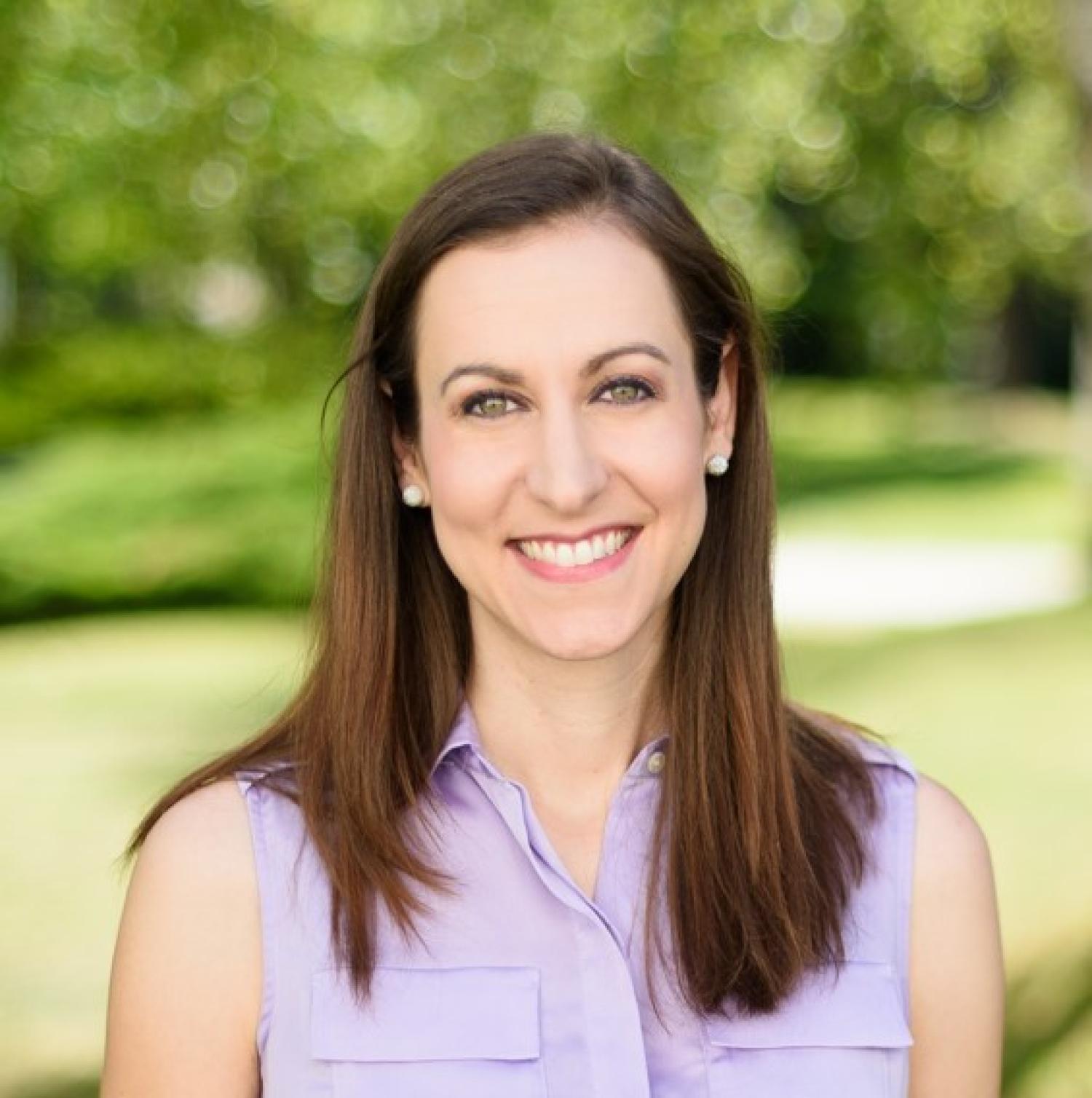
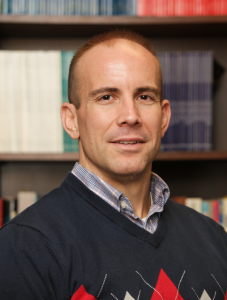
Kathleen McKeown is the Henry and Gertrude Rothschild Professor of Computer Science at Columbia University , where she has been a faculty member since 1982. She served as Founding Director of the Data Science Institute (2012–2017), Department Chair (1998–2003), and Vice Dean for Research (2003–2005) at the School of Engineering and Applied Science . Education : PhD in Computer Science and Information Science (1982) and MS in Computer and Information Science (1979) from the University of Pennsylvania , AB in Comparative Literature (1976) from Brown University Her research focuses on Natural Language Processing , Text Summarization , and Natural Language Generation , with applications in Social Media Analysis , Disaster Response , and Energy Behavior Messaging . She has pioneered neural methods for summarization, sentiment analysis in low-resource languages, and multi-media explanations. Her work includes 15 recent publications (2011–2013) on topics like discourse relation disambiguation , MT error correction , influencer detection , and hierarchical web summarization , reflecting trends in deep learning , cross-lingual NLP , and social media analytics . Honors & Awards : IEEE Innovations in Societal Infrastructure Award (2023) AAAI Fellow (1994) ACM Fellow (2003) Founding ACL Fellow (2012) Anita Borg Women of Vision Award (2010) NSF Presidential Young Investigator (1985) She leads the NLP Group at Columbia, focusing on real-time disaster updates , behavioral NLP , and sentiment analysis for marginalized communities. Her career spans leadership roles , grant-funded research , and foundational contributions to text generation and summarization .
Alixandra Barasch serves as Associate Professor of Marketing and PhD Program Director at the University of Colorado Boulder's Leeds School of Business, where she holds the Gordon and Susan Trafton Faculty Scholar designation. Her academic leadership extends to editorial roles at top journals including the Journal of Consumer Research and Journal of Marketing as Associate Editor, and editorial review boards at Journal of Marketing Research , Journal of Consumer Psychology , and Journal of Personality and Social Psychology . Barasch earned her PhD in Marketing from The Wharton School at the University of Pennsylvania. Prior to joining CU Boulder, she served as Assistant Professor at New York University and Visiting Associate Professor at INSEAD. Her educational background includes a Fulbright Scholarship where she taught at the University of Macau and conducted research at the Hong Kong University of Science and Technology. Before graduate studies, she worked at MDRC, a non-profit focused on education policy research. Her research program investigates how digital technologies reshape consumer behavior and well-being across three interconnected streams. The first examines how technologies like photo-taking, live streaming, and personal quantification affect enjoyment, memory formation, and interpersonal relationships during experiences. The second stream explores online communication dynamics, including information sharing, status signaling through social media, and inferences from digital signals. The third focuses on morality and prosocial behavior, investigating motivations for good deeds, perceptions of others' prosocial actions, and evaluations of technological innovations' fairness and welfare impacts. Analysis of her recent publications reveals consistent exploration of digital behavior patterns, particularly streak psychology, authenticity signaling through imperfections, and technology's impact on experience evaluation. Her work bridges consumer psychology with practical applications in digital marketing, social media strategy, and ethical technology design. Barasch's research demonstrates how seemingly small digital behaviors—like photo angles, error corrections, or streak tracking—create significant psychological effects that shape consumer decisions and well-being. Early Career Award from the Association for Consumer Research (2023) Marketing Science Institute Young Scholar (2021) Barasch's scholarship has been widely disseminated through publications in top-tier journals including Journal of Consumer Research , Journal of Marketing Research , Journal of Marketing , Journal of Personality and Social Psychology , and Psychological Science . Her work receives significant media attention, regularly featured in New York Times , The Atlantic , Time , Washington Post , Fast Company , Wired , and NPR . While specific grant information isn't detailed in the source material, her Fulbright Scholarship and MSI Young Scholar designation indicate substantial research support. As PhD Program Director, Barasch leads doctoral education in marketing at Leeds School of Business, shaping the next generation of consumer researchers. Her research program operates at the intersection of marketing, psychology, and technology, examining how digital tools reshape fundamental human experiences from memory formation to social connection. The lab environment she cultivates emphasizes rigorous experimental methods combined with real-world relevance, as evidenced by her strong media presence and editorial leadership in the field.
Dr. Maarit Korpi-Lagg is an Associate Professor in the Department of Computer Science at Aalto University's School of Science. She specializes in High-Performance Computing (HPC), numerical modelling, and astroinformatics, with a focus on solar magnetic activity and dynamo theory. Her work bridges computational methods with astrophysical phenomena. External Positions: Corresponding Fellow, Nordic Institute for Theoretical Physics (2020–2025) Independent Max Planck Research Group Leader, Max Planck Institute for Solar System Research (2016–) Research interests include: High-Performance Computing for astrophysical simulations Solar magnetic field dynamics and sunspot analysis GPU-accelerated code development Stellar convection zones and atmospheric modeling Her recent publications highlight advancements in exascale astrophysics data analysis, solar dynamo simulations, and cross-disciplinary applications like epidemic modeling via computational methods. Key collaborations span Europe and global institutions. Scientific Awards: Grand Challenge Award (2018) for galactic dynamo research Nordita Corresponding Fellowship (2020) She leads multiple projects, including ERC UniSDyn and NEOSC, focusing on cosmic magnetism and GPU-based stencil computations. Her work contributes to UN Sustainable Development Goals, particularly quality education and planetary science.
Galen Reeves is an Assistant Professor at Duke University with a joint appointment in the Department of Electrical and Computer Engineering and Department of Statistical Science since Fall 2013, reflecting his interdisciplinary expertise bridging engineering and mathematical sciences. His research establishes rigorous theoretical frameworks at the intersection of information theory, machine learning, and statistical signal processing, focusing on fundamental limits in high-dimensional inference problems. His academic background features elite training across top institutions: PhD in Electrical Engineering and Computer Sciences, University of California, Berkeley (2011) MS in Electrical Engineering, University of California, Berkeley (2007) BS in Electrical and Computer Engineering, Cornell University (2005) Reeves' research centers on mathematical foundations of data science, with seminal contributions to compressed sensing, tensor estimation, and coding theory. He investigates information-theoretic bounds for estimation problems, develops efficient algorithms like approximate message passing, and analyzes generative AI model behavior under recursive training conditions. His work demonstrates how statistical physics approaches solve complex problems in communication theory and high-dimensional statistics. Analysis of his 2021-2025 publications reveals three dominant trends: breakthroughs in channel capacity using Reed-Muller codes, theoretical analysis of generative models and diffusion sampling, and fundamental limits in tensor/matrix estimation. These works consistently integrate information theory with machine learning, emphasizing scalability challenges in high dimensions and algorithmic robustness under heteroskedasticity. His scientific recognition includes: NSF VIGRE fellowship supporting postdoctoral research at Stanford University (2011-2013) NSF CAREER award (2018) for Theoretical Foundations for Probabilistic Models with Dense Random Matrices While no specific students are documented in the source text, his faculty position entails graduate mentorship in both ECE and Statistical Science departments. Research funding primarily stems from the NSF CAREER grant advancing probabilistic modeling, complemented by earlier fellowship support. His collaborations span Stanford University, EPFL, TU Delft, and Microsoft Research. Though no dedicated lab is mentioned, his joint appointment fosters cross-departmental research at Duke, particularly in projects like 'Modeling Traffic with Self Driving Cars' which applies statistical learning to autonomous systems. His work maintains strong ties to industry through past Microsoft Research internships and ongoing computational applications in communications and AI.
Alireza Sheikh is a University Researcher in the Department of Electrical Engineering at Eindhoven University of Technology (TU/e), specializing in Signal Processing Systems. He is affiliated with the ICT Lab at TU/e and has been actively involved in research projects such as FUN-NOTCH: Fundamentals of the Nonlinear Optical Channel. Dr. Sheikh received his B.Sc. (Hons.) degree in electrical engineering from Ferdowsi University of Mashhad, Iran, in 2011, his M.Sc. (Hons.) degree in communication systems engineering from the University of Tehran, Iran, in 2014, and his Ph.D. degree in electrical engineering from Chalmers University of Technology, Sweden, in 2019. Prior to joining TU/e, he was a visiting researcher at the Institute of Communications and Navigation, German Aerospace Center (DLR), Germany, in 2017-2018. Dr. Sheikh's research focuses on communication systems with particular emphasis on data protection and efficient communication. His primary research interests include channel coding , optical communication , wireless communication , information theory , machine learning , and estimation theory . He is particularly interested in designing low-complexity coding schemes for next-generation communication systems that can protect data against imperfections. His recent publications demonstrate a strong focus on improving communication systems through advanced coding techniques and signal processing methods. His work spans optical communications (addressing nonlinearity issues), wireless communications (particularly Massive MIMO systems), and fundamental information theory problems. A common thread in his research is the development of practical, high-throughput solutions for real-world communication challenges, with significant contributions to product codes, error correction, and nonlinearity-tolerant communication schemes. Dr. Sheikh has contributed to significant research projects, most notably as a project member of FUN-NOTCH (Fundamentals of the Nonlinear Optical Channel), which runs from 2018 to 2025. This project focuses on addressing challenges in optical communications, particularly related to nonlinearity, modulation formats, and product codes. He is actively involved in teaching, specifically in the course "Applications of Information Theory (5LSF0)" at TU/e, demonstrating his commitment to sharing knowledge with the next generation of engineers and researchers.
Sven Oskarsson is Professor at the Department of Political Science at Uppsala University, where he teaches methodology courses at various academic levels. His primary research examines political representation, participation patterns, and the emerging field of social science genomics, investigating genetic influences on political behavior. His interdisciplinary work appears in leading journals including Nature , American Political Science Review , and American Journal of Political Science . Oskarsson's research program bridges political science and genetics, focusing on: Genetic foundations of political traits and behaviors Intergenerational transmission of political inequality Voter turnout determinants across diverse populations Methodological innovations for causal inference in social genomics His work employs large-scale datasets and innovative designs to analyze how biological and social factors interact to shape political outcomes. Analysis of his recent publications reveals dominant research themes: Genetic associations with socioeconomic outcomes and political behaviors Voting pattern disparities across demographic groups Methodological advances in social science genomics Cross-national comparative studies of political behavior His scholarship demonstrates consistent focus on disentangling genetic and environmental influences through twin studies, adoption designs, and genomic analyses.
Andrej Bogdanov is a Professor in the Department of Computer Science at the Weizmann Institute of Science's Faculty of Mathematics and Computer Science. With a prolific publication record spanning over two decades from 2002 to 2025, he has established himself as a leading researcher in theoretical computer science and cryptography. His research interests span multiple areas of theoretical computer science, with a particular focus on cryptography, computational complexity, pseudorandomness, and secret sharing. His work often bridges theoretical foundations with practical cryptographic applications, exploring the mathematical underpinnings of secure computation and cryptographic primitives. His research has evolved to address contemporary challenges in quantum computing security and machine learning evaluation. Bogdanov's publication record shows consistent contributions to top-tier conferences including FOCS, STOC, CRYPTO, TCC, and ITCS. His work demonstrates deep theoretical insights while maintaining relevance to practical cryptographic applications. Recent publications indicate expanding interests into quantum computing security and machine learning evaluation frameworks. Bogdanov has collaborated extensively with leading researchers in theoretical computer science, most notably with Alon Rosen (31 joint publications), as well as Siyao Guo, Yuval Ishai, and Chin Ho Lee. His collaborative work spans multiple institutions and reflects the interdisciplinary nature of modern theoretical computer science research. His academic contributions include foundational work on pseudorandom generators, secret sharing schemes, hardness amplification, and more recently, contributions to post-quantum cryptography and quantum security. His research has been supported by multiple grants that have enabled his team to explore the theoretical boundaries of cryptographic security.
Shriram Krishnamurthi is a Professor in the Computer Science Department at Brown University, Providence, RI. With a prolific research career spanning over three decades (from 1994 to present), he has made significant contributions across programming languages, formal methods, and computer science education. His work bridges theoretical foundations with practical educational applications, particularly in making complex concepts accessible to students. Dr. Krishnamurthi's research interests encompass programming languages, formal methods, type systems, and computer science education. His work often focuses on the intersection of these areas, particularly how to make formal methods and advanced programming concepts accessible to students through innovative language design and educational tools. He has developed several educational frameworks that have been adopted in both university and K-12 settings, demonstrating his commitment to improving computer science education at all levels. His recent publications reveal a strong focus on making formal methods more approachable through grounded language design, addressing student misconceptions in programming through innovative assessment techniques, and developing practical tools like Forge for teaching formal methods. His work on Rust's type system, privacy-aware static analysis, and document calculus demonstrates the breadth of his research interests while maintaining a consistent thread of improving programming language understanding and usability. As a dedicated educator and researcher, Krishnamurthi has mentored numerous PhD students who have become prominent researchers in their own right, including Ben Greenman, Tim Nelson, Kuang-Chen Lu, and Will Crichton. His collaborative approach is evident in his extensive publication record featuring collaborations with both established researchers and emerging scholars.
Rong-Rong Chen is an Associate Professor in the Department of Electrical & Computer Engineering at the University of Utah's College of Engineering, where she has been employed since August 2003, progressing from Assistant Professor (2003-2011) to her current position (2011-present). Her educational background includes a BS in Applied Mathematics from Tsinghua University (1994), an MS in Mathematics from the University of Illinois at Urbana-Champaign (1996), and a PhD in Electrical Engineering from UIUC (2003). Dr. Chen's research focuses on wireless communication systems , with particular expertise in underwater acoustic communication, signal processing, information theory, and queueing networks. Her work bridges theoretical foundations with practical applications in modern communication systems. Her recent publication on OTFS and OFDM channel estimation demonstrates her continued contribution to advancing wireless communication technologies, particularly in comparing next-generation modulation schemes. Best Paper Award, IEEE Global Communications Conference (2021) NSF Faculty Early Career Development (CAREER) award (2006) University Fellowship for graduate study at UIUC M. E. Van Valkenburg Graduate Research Award for excellence in doctoral research at UIUC Dr. Chen has secured significant research funding including current projects on decentralized intelligent spectrum sharing in UAV networks (SWIFT/DISH-UNET), smart radio environments with reconfigurable intelligent surfaces (REFLECT-MMWAVE), and improving MRI technology through signal processing. She teaches courses including Engineering Probability & Statistics, Information Theory, and thesis research for PhD students.
Marc Snir is a Professor at the University of Illinois’s Siebel School of Computing and Data Science. He has led significant research contributions in high-performance parallel computing, including work on the Message Passing Interface (MPI) and IBM’s SP scalable parallel system. As Department Head from 2001–2007, he oversaw the transition to the Siebel Center and expanded the department’s capabilities. He later served as the first director of the Illinois Informatics Institute, chief software architect for the Blue Waters supercomputer, and co-director of the Universal Parallel Computing Research Center (UPCRC). His research focuses on parallel computing systems, fault resilience, and I/O optimizations. He has been recognized with the 2014 Distinguished Alumni Service Award. His work spans exascale computing, distributed systems, and machine learning applications in HPC. He has contributed to projects like Argo (an exascale OS/runtime), Aluminum (a GPU-aware communication library), and LCI (Lightweight Communication Interface). His research emphasizes improving scalability, energy efficiency, and reliability in high-performance systems. He has advised numerous students (names not listed here) and led teams in advancing HPC tools and methodologies. His involvement in initiatives like UPCRC and the Blue Waters project underscores his commitment to bridging theoretical research and practical applications in computing.
Dr. Kao-Yueh Kuo is a Researcher at the University of Sheffield's School of Mathematical and Physical Sciences, affiliated with the Inorganic Semiconductors Research Cluster. His work focuses on quantum error correction, decoding algorithms, and fault-tolerant quantum systems. He investigates advanced methods like belief propagation and quantum approximate optimization to enhance quantum code performance under realistic noise models. Key research interests include: Design and analysis of quantum error-correcting codes Efficient decoding strategies for topological and LDPC codes Integration of coding theory into quantum communication networks Algorithm optimization for fault-tolerant quantum memory systems Recent publications emphasize decoding algorithm improvements, with notable contributions to: Generalized data-syndrome codes Exploitation of degeneracy in quantum codes Fault-tolerant belief propagation systems Comparison of 2D topological code performance No scientific awards are explicitly listed in the provided information. Labs/Teams: Active contributor to the Inorganic Semiconductors Research Cluster, focusing on quantum information and materials science intersections.
Raymond Pettit is an Assistant Professor in the Department of Computer Science at the University of Virginia, where he focuses on computing education research and teaching. With 12 years in industry and 16 years in academia, he transitioned from full-time industry work to academia in 2004, completing a Ph.D. as a graduate assistant. His career includes roles at Abilene Christian University before joining UVA in 2018. He specializes in bridging academia and industry needs through research in programming education, AI integration in teaching, and human factors in computing. Education: Earned a Ph.D. in Computer Science (institution unspecified) while working as a graduate assistant. Prior industry experience included software development for private companies and government research organizations. Research Interests: Computer Science Education with a focus on AI in education, programming pedagogy, and error message design. Key areas include: Generative AI impact on teaching methodologies Metacognitive strategies for novice programmers Gender dynamics in online learning platforms Human factors in compiler error messages Publications: Recent work explores AI integration in courses, collaboration policies, and emotional impacts of AI tools. Themes include bridging academia-industry gaps and improving error message usability. Awards: No awards explicitly listed in the provided text. Advising & Grants: While no specific grants or advisees are mentioned, his teaching roles and research activities suggest involvement in educational initiatives. He has transitioned from adjunct to full-time roles, indicating sustained academic commitment. Labs/Teams: No specific lab affiliations or collaborative teams mentioned in the text.
Peter Finn serves as Senior Lecturer and Events Officer in the Department of Criminology, Politics and Sociology at Kingston University's School of Law, Social and Behavioural Sciences. With over a decade of teaching experience at Kingston and Goldsmiths, University of London, he holds a PhD and MSc from Kingston University alongside a BA from Liverpool University. His research centers on the intersection of national security and human rights, particularly examining the logic underpinning policies at this nexus. Key interests include US electoral systems, the relationship between national security and official records, executive power (especially the US presidency), and the impact of generative AI on political processes. Finn actively investigates how democratic oversight functions within security frameworks and analyzes electoral dynamics through projects like '50 States or Bust!' Finn's scholarly impact spans 15+ recent publications analyzing 2024 US elections, Trump-era politics, and AI's role in democracy. His work reveals consistent focus on election integrity, historical documentation of political events, and emerging challenges from artificial intelligence in political communication. Notable patterns include real-time analysis of electoral developments and critical examination of official record-keeping during crises. As Project Lead for the 'Covid-19 and Democracy Project' and Web Lead for the American Politics Group of the Political Studies Association, Finn bridges academic research with public engagement. His media contributions to The Guardian, The Conversation, and LSE USAPP demonstrate significant knowledge transfer. Academic leadership includes managing module teaching teams, research assistants, and editorial roles for edited volumes on national security and democracy. Finn also serves as Academic Misconduct Lead and holds Fellowships from the Higher Education Academy.
Daniel S. Roche is a Professor in the Department of Computer Science at the United States Naval Academy . He focuses on developing efficient algorithms for mathematical problems, particularly leveraging randomization to enhance performance in terms of time, space, or communication. His research areas include polynomial computation, sparse polynomial interpolation, and applied cryptography, with a special interest in secure cloud computing and privacy-preserving technologies. Roche has contributed to advancements in oblivious RAM and sparse polynomial operations , authoring numerous publications in top-tier conferences such as CCS, NDSS, and ISSAC. His work is supported by the U.S. National Science Foundation (Award #1618269) . Roche actively collaborates with researchers like Mark Giesbrecht, Adam J. Aviv, and Seung Geol Choi. Research Trends : Recent publications highlight Roche's work on unbalanced private set union protocols, randomized prime generation in arithmetic progressions, and enhanced verification techniques for polynomial matrices. His articles from 2019–2025 emphasize sub-linear communication protocols , memory-efficient algorithms , and applied cryptographic systems . Contact : roche@usna.edu | Office: 438 Hopper Hall, USNA | Phone: (410) 293-6814
John V. Petrocelli is a Professor of Psychology at Wake Forest University, with his office located in Greene Hall 459. He can be reached at (336) 758-4171 or petrocjv@wfu.edu. Dr. Petrocelli is an experimental social psychologist whose research focuses on bullshit detection, evidence-based management, persuasion and influence, and decision making. He is the author of "The Life-Changing Science of Detecting Bullshit," which was a finalist for the Audie Award for Humor. Dr. Petrocelli's research interests include: Social psychology of bullshit and deception Evidence-based management and decision making Persuasion and influence in organizational contexts Counterfactual thinking and its impact on judgment Leadership development and communication A/B testing and evidence-based culture in workplaces His recent publications demonstrate a clear trajectory toward understanding bullshit detection mechanisms, their cognitive underpinnings, and practical applications for improving critical thinking. Dr. Petrocelli's work reveals that bullshit communications have devastating effects on beliefs, memory, attitudes, and decision making, contrary to the common assumption that bullshitting is harmless. His research shows there are over three dozen situations and reasons people engage in bullshitting in professional contexts. Dr. Petrocelli has received notable recognition for his work, including being a finalist for the Audie Award for Humor. His research has been featured across multiple media platforms, and he is frequently invited as a keynote speaker on critical topics related to organizational communication and decision-making. As a prominent speaker, Dr. Petrocelli offers presentations on: The Life-Changing Science of Detecting Bullshit Promoting an Evidence-Based Culture in the Workplace The Arts and Sciences of Persuasion and Influence at Work Best Practice Decision Making Through Evidence-Based Management His expertise in A/B testing provides organizations with practical frameworks for moving from intuition-based management to evidence-based practices that generate sustainable competitive advantages. Dr. Petrocelli argues that evidence-based management produces superior results precisely because so few organizations implement it effectively.