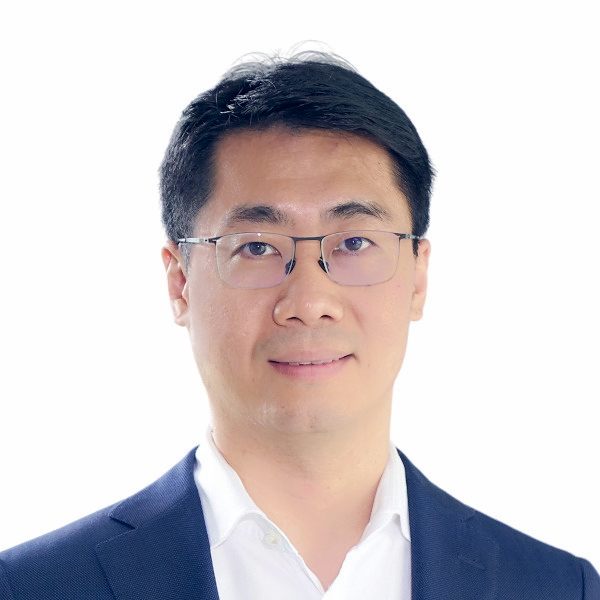
Timothy Robert Merritt is an Associate Professor at Aalborg University's Technical Faculty of IT and Design , Department of Computer Science. His research bridges Artificial Intelligence , Human-Robot Interaction , and Human-Centered Computing with a focus on enhancing wellbeing and designing playful, sustainable technologies. His work spans autonomous systems, shape-changing interfaces, and applications of AI in creative practices. PhD in Integrative Sciences and Engineering (2012) from National University of Singapore Research interests include: Generative AI in design and critical reasoning Autonomous Systems (drones, robots) for search and rescue Human-AI Collaboration in multi-robot environments Interactive Systems for education and health Sustainable Technology through digital fabrication and art-science fusion Recent publications address Generative AI in design research, auditory interventions for driver safety, and trust in multi-drone interfaces. He leads and collaborates on projects like NAMUR (Natural-language Assisted Multi-robot Interaction) and HERD (Human-AI Collaboration with Drone Swarms). He organized the Aalborg Robotics Challenge Workshop (2024) and has been featured in media for public demonstrations with celebrities like Will Smith and Rick Astley. His work involves grants such as the ERASMUS+ funding for robotics and sustainability initiatives.
Joy L. Lee is an Assistant Professor at UMass Chan Medical School within the T.H. Chan School of Medicine , Department of Population and Quantitative Health Sciences . Her research focuses on healthcare quality improvement, electronic communication in clinical settings, and health information technology's impact on patient safety. PhD in Health Services Research from Johns Hopkins Bloomberg School of Public Health MS in Health Policy and Management from Harvard T.H. Chan School of Public Health BA in Sociology from Bowdoin College Her research areas include health informatics , transgender healthcare , and health communication technology . Key publication themes span patient-provider secure messaging , health disparities , and digital health interventions . Co-authors include Adrian Zai , Nathaniel Hafer , and Jamie Faro . Active networks in Health Informatics , Medical Communication , and Health Equity fields.
Prof. Dr.-Ing. habil. Volker Kühn serves as Professor and Head of the Institute of Communications Engineering at the University of Rostock within the Faculty of Computer Science and Electrical Engineering. He concurrently holds the position of Vice Dean of the Faculty while directing academic operations as Chairman of both the Electrical Engineering and Medical Information Technology Examination Boards. His research integrates wireless communications theory with biomedical applications, specializing in spatial modulation techniques, information bottleneck optimization, and electrical impedance tomography signal processing. Current work focuses on machine learning-enhanced physiological monitoring systems and distributed compression algorithms for sensor networks, with significant contributions to bias-free spectral estimation from irregularly sampled data. Analysis of his 2021-2025 publications reveals three dominant research thrusts: (1) neural network applications for medical signal processing, (2) information-theoretic optimization of communication protocols, and (3) advanced spectral estimation methods for biomedical and sensor data. This interdisciplinary approach bridges communications engineering with healthcare technology development. Prof. Kühn actively mentors students as Study Advisor for Electrical Engineering and Academic Advisor for Medical Information Technology. His leadership extends to the ITG Technical Committee 5.1 on Information and Systems Theory and IEEE societies. The Institute of Communications Engineering under his direction maintains specialized laboratories for wireless communications testing, medical signal acquisition, and MIMO system prototyping, supporting both fundamental research and industry collaboration projects in 5G/6G technologies and healthcare IoT.
Thanh H. Nguyen is an active Assistant Professor in the Department of Computer Science within the College of Arts and Sciences at the University of Oregon. She teaches courses including Introduction to Artificial Intelligence (CS 471/571) and Multi-Agent Systems (CS 410/510), with office hours held in Deschutes Hall. Her educational background includes a Ph.D. from the University of Southern California (2016), a postdoctoral position at the University of Michigan (2016-2018), and a B.Sc. from Hanoi University of Science and Technology. Her research bridges theoretical AI with practical applications addressing real-world societal challenges. Dr. Nguyen's work focuses on Artificial Intelligence applications for societal benefit, particularly in Public Safety and Security (urban crime prevention, counterterrorism), Cybersecurity (protection from stealthy botnets), Sustainability (wildlife and fish protection), and Public Health (diabetes prevention). Her research integrates techniques from Multi-Agent Systems, Game Theory, Machine Learning, and Optimization with insights from Psychology and Conservation Biology. Her recent publications demonstrate strong trends in security games, adversarial learning, and health applications, with significant focus on strategic deception, robust decision-making under uncertainty, and real-world deployment of AI systems. The work shows increasing interdisciplinary collaboration and practical implementation of theoretical models. Deployed Application Award (IAAI 2016) for PAWS wildlife protection system Runner-up Best Innovative Application Paper Award (AAMAS 2016) WiSE Merit Fellowship from University of Southern California (2015) Runner-Up Best Paper Award at Recourse-21 Workshop (ICML 2021) Army Research Office Grant (~$343K) for Adversarial Reasoning (2020-2023) Dr. Nguyen actively advises PhD students including Sarah Kinsey and Michael Dushkoff (co-advised with Prof. Allen D. Malony), along with numerous master's and undergraduate students. Her research has received significant grant funding, including an Army Research Office grant for developing methods to tackle sequential and coordinated attacks in security domains with real-time information. Her work on the PAWS (Protection Assistant for Wildlife Security) system has been deployed by NGOs like Panthera and the Wildlife Conversation Society in conservation areas in Malaysia and Uganda. She leads the AI Lab at the University of Oregon, which focuses on multiple research projects including AI for Public Health, Deception in Security Games, Security in Data-based Decision Making, Information Leakage and Exploration, and Game Theory for Cybersecurity. The lab maintains strong industry and NGO partnerships for real-world application of research findings.
Charbel ABDEL NOUR is a Research Teacher in the Department of Mathematical and Electrical Engineering (MEE) at IMT Atlantique, a leading French engineering school. His work focuses on the intersection of wireless communications, signal processing, and error correction coding. Based in Brest, France, he actively contributes to research in next-generation communication systems. Dr. ABDEL NOUR's research interests span wireless communications, 5G/6G technologies, Internet of Things applications, error correction coding, and massive MIMO systems. His work addresses critical challenges in modern communication systems including high-throughput requirements, low-latency constraints, and efficient spectrum utilization. His research demonstrates strong theoretical foundations with practical implementation considerations, often bridging the gap between algorithm design and hardware implementation. His recent publications (2023-2025) reveal a consistent focus on improving communication system performance through innovative coding techniques, particularly in turbo decoding architectures, FBMC systems, and spectrum access methods for IoT applications. His work shows progression from theoretical analysis to practical implementation, with several publications addressing both algorithmic improvements and hardware considerations. Multiple publications on turbo decoding architectures with performance improvements Research on FBMC/OQAM systems as alternatives to OFDM for 5G/6G Work on spectrum access techniques for massive IoT connectivity Studies on minimum distance estimation for error-correcting codes Application of machine learning techniques to communication problems Dr. ABDEL NOUR collaborates extensively with researchers across multiple institutions, including CNRS, INSA Rennes, and other French research organizations. His work often receives funding from significant national initiatives like the Beyond5G project and France Relance economic recovery plan. His research has practical applications in next-generation wireless systems, with potential impact on future communication standards.
Markus Huff serves as a Full Professor of Applied Cognitive Psychology and head of the Applied Cognitive Psychology group at the Eberhard Karls University of Tübingen since 2020. He concurrently leads the Perception and Action research group at the Leibniz Institute for Knowledge Media (IWM). His research program investigates perception and action processes within digital environments through a perception-oriented framework that examines how media-mediated content influences human cognition and behavior. Dr. Huff earned his academic foundation in psychology, mathematics, and computer science at the University of Tübingen. Following his psychology degree, he completed his doctorate (Dr. rer. nat.) at the IWM and University of Tübingen with groundbreaking research on verbal influence on visual memory, which earned him the prestigious Leibniz Young Researcher Award in 2007. His academic trajectory includes postdoctoral positions at IWM, University of Tübingen, and Washington University in St. Louis, followed by a junior professorship in general psychology at Tübingen before heading the Department of Research Infrastructures at the German Institute for Adult Education. Professor Huff's research spans four primary interconnected domains. His Multimodal Perception research investigates how humans process and mentally organize media content across various formats including texts, images, comics, and videos. The Perception and Interaction in Social Networks focus examines the complex interplay between attitudes, knowledge, and metacognition during information reception and social interaction in digital spaces. His work on Perception and Action with Digital Agents explores human-AI communication dynamics, while his research on Risk Perception of Artificial Intelligence addresses the psychological dimensions of human responses to emerging digital technologies. Additionally, he conducts significant metascientific research examining policy effectiveness in the research process, with notable findings on research data policies. Analysis of Professor Huff's recent publication record reveals a clear trajectory toward increasingly sophisticated investigations at the intersection of cognitive psychology and digital technology. His work demonstrates methodological rigor across visual perception, audio-visual integration, event comprehension, and the cognitive impacts of digital environments. A particularly noteworthy trend is his expanding focus on AI-related perception and risk assessment, reflecting the growing importance of human-AI interaction in contemporary cognitive science. His research consistently bridges theoretical cognitive frameworks with practical applications in educational technology, health communication, and digital media design. Leibniz Young Researcher Award by the Leibniz Association (2007) Professor Huff directs a multidisciplinary research group comprising members from both the Applied Cognitive Psychology group at the University's Department of Psychology and the Perception and Action group at the Leibniz Institute for Knowledge Media. His research program has secured substantial funding, evidenced by his prolific publication record in high-impact journals spanning psychology, cognitive science, human-computer interaction, and educational technology. His grant portfolio reflects strong interest in understanding human cognition in digital contexts, with particular emphasis on educational applications, health communication, and human-AI interaction. His laboratory work employs advanced experimental methodologies including eye-tracking, behavioral experiments, and computational modeling to investigate how people process information across various media formats and interact with increasingly sophisticated digital agents. The research environment fosters collaboration between cognitive psychologists, computer scientists, and educational researchers, creating a rich interdisciplinary context for advancing understanding of human perception and action in our rapidly evolving digital landscape.
David Macdonald is an Assistant Professor in the Department of Economics, Philosophy and Political Science at the University of British Columbia's Okanagan campus, within the Irving K. Barber Faculty of Arts and Social Sciences. He holds an office in ART 275 and can be reached at david.macdonald@ubc.ca. His research focuses on intersections of crime and criminal justice policy, public economic systems, and labor market dynamics. Notable areas include analyzing how institutional trust influences public support for policies like free trade and immigration, and exploring the socioeconomic factors driving political behavior and labor union dynamics. In parallel to his economics-focused work, Macdonald has contributed to interdisciplinary research in dental radiology and healthcare systems, examining topics such as early cardiovascular risk identification through dental imaging, pediatric radiography accuracy, and frail elderly patient care strategies. His publications bridge social science and medical domains, reflecting a commitment to addressing both societal and clinical challenges through evidence-based approaches. Recent scholarship highlights include investigating political trust effects on free trade attitudes (2024), dental imaging's role in cardiovascular risk reduction (2024), and the impacts of income inequality on civic engagement (2021). This dual focus on policy analysis and healthcare innovation underscores his methodological versatility and commitment to impactful research.
Aitor Ugarte Iturrizaga is a part-time lecturer at Universidad Carlos III de Madrid, specializing in health communication, strategic communication, and the intersection of media with public health. His work emphasizes the role of media in shaping health narratives, particularly post-pandemic shifts in health journalism and the use of AI in science communication education. Research interests include analyzing how media represents health issues across print, radio, and television; evaluating the impact of strategic communication in healthcare organizations like Madrid Salud; and exploring the ethical implications of AI-generated content in journalism. He has also investigated public health campaigns, patient empowerment, and the cultural dimensions of health advocacy. His publications span over two decades, focusing on themes such as health communication strategies, media's role in social determinants of health, and organizational culture transformation for sustainability. While no awards are explicitly mentioned, his work reflects contributions to advancing health communication practices and pedagogical innovation in journalism education. Ugarte Iturrizaga’s research often bridges theory and practice, addressing real-world challenges such as misinformation in health reporting, the integration of technology in communication, and fostering trust between institutions and the public. His articles highlight the evolving landscape of health communication in both digital and traditional media contexts.
Markku-Juhani Saarinen is a Professor of Practice in Computing Sciences at Tampere University, affiliated with the Faculty of Information Technology and Communication Sciences. He holds a Ph.D. from Royal Holloway, University of London (2009), and is a Docent in Cryptography and Information Security. His expertise spans applied cryptography, cryptographic engineering, post-quantum cryptography, and security assessments. He has led research on lattice-based cryptography, side-channel resistant implementations, and hardware security. Key contributions include the Round5 post-quantum encryption scheme, RISC-V entropy source interfaces, and the BLAKE2 cryptographic hash function. He has published extensively at top venues like CRYPTO, EUROCRYPT, and PQCrypto, and co-edited conference proceedings such as the 2024 PQCrypto workshop. His research focuses on securing cryptographic systems against quantum computing threats, optimizing implementations for embedded devices, and advancing hardware-software co-design for cryptographic primitives. He actively collaborates with industry and academia to bridge theoretical advancements with practical applications in secure communication and embedded systems.
Jesper Bengtson is a Lecturer in Theoretical Computer Science specializing in Programming Logic and Semantics at the IT University of Copenhagen. His research primarily focuses on formal methods for programming languages, with particular expertise in session types, separation logic, and proof assistants. Dr. Bengtson's research interests center around programming language theory and formal verification. His work explores how to mathematically verify software correctness through logical frameworks. He specializes in session types for communication protocols, separation logic for reasoning about concurrent programs, and developing tools for interactive theorem proving. His research bridges theoretical computer science with practical applications in software verification. His publication record shows consistent contributions to programming language theory over the past decade, with a clear trend toward applying formal methods to concurrent and distributed systems. Recent work demonstrates increasing focus on mechanized verification of session type systems and integration of session types with separation logic for concurrent program verification. Dr. Bengtson has been involved in several significant research projects including MECHANIST (MECHANIsation of Session typEs, 2021-2025), ToMeSo (Tools and Methods for Scalable Software Verifications, 2009-2013), and a general-purpose framework for software verification (2013-2017). These projects were funded by major Danish research foundations including Danmarks Frie Forskningsfond and Independent Research Foundation of Denmark. His work has been featured in media outlets, including a 2015 article titled 'Danish researcher wants to eradicate software errors' and a 2021 piece about 'Natural or woke? Big shooter introduces controversial soldier,' indicating public engagement with his research.
Dr. Marcus Greferath is an Adjunct Professor at the Department of Mathematics and Systems Analysis, Aalto University, School of Science. He holds dual roles as a Visiting Professor in both the Department of Mathematics and Systems Analysis and the Algebra and Discrete Mathematics division. His research focuses on algebraic coding theory, combinatorics, and applications of finite rings in coding and cryptology. Greferath has contributed significantly to areas such as rank metric codes, network coding, and error-correcting codes over finite structures. Research Interests: Greferath's work bridges pure mathematics and applied coding theory. Key areas include the study of codes over finite rings and modules, applications of combinatorial designs, and the development of decoding algorithms. His recent projects address adversarial error correction in distributed storage systems and privacy-preserving information retrieval using finite geometries. Publications: His most recent works include advancements in MacWilliams duality for rank metric codes (2025), adversarial error correction frameworks (2024), and combinatorial design mosaics (2018). These reflect a strong emphasis on algebraic foundations and their practical implications in modern communication systems. Patents: He co-invented encoding schemes for LDPC codes (US2010199142, 2010) and magnetic resonance methods using phase-modulated pulses (US2011241667, 2011), showcasing his translational research impact. Labs/Teams: Active in the Algebra and Discrete Mathematics research group at Aalto University, contributing to projects on subspace codes and network security. Collaborates internationally on topics like finite quasi-Frobenius modules and linear code structures.
Shauna Concannon is an Assistant Professor in the Department of Computer Science at Durham University, specializing in Digital Humanities and Computational Linguistics. Her research focuses on the societal and ethical implications of emerging technologies, particularly in natural language processing (NLP), dialogue systems, and AI bias mitigation. She holds a PhD from Queen Mary University of London and has conducted postdoctoral research at the Universities of Cambridge, York, and Newcastle. Her work emphasizes participatory design, feminist approaches to data science, and equitable technology development. Shauna’s academic journey began with a master’s in modernist literature from the University of Oxford, followed by interdisciplinary training in computational linguistics. She explores how technologies mediate human interaction, including studies on harmful biases in AI systems and the linguistic encoding of societal values. Her recent projects address ethical AI in storytelling, empathy measurement in dialogue systems, and public engagement with open data through personalized narratives. Education: PhD in Computational Linguistics (Queen Mary University of London) Masters in Modernist Literature (University of Oxford) Key Research Themes: Ethical AI and algorithmic bias Social impact of conversational AI Feminist data science methodologies Public participation in technology governance Her publications span computational social science, digital humanities, and human-computer interaction, with notable contributions to frameworks for responsible AI in nonprofit contexts and analysis of pandemic-era science communication. Shauna currently advises four postgraduate students exploring topics like bias reduction in machine translation and ethical design for children’s conversational AI.
Prof. Liu Yang is a full Professor and University Leadership Forum Chair at the School of Computer Science and Engineering, Nanyang Technological University (NTU). He holds the President’s Chair in Computer Science and Engineering and serves as Executive Director of the Cyber Research Programme Office and Cyber Security Research Centre @ NTU. His research focuses on Cybersecurity, Software Engineering, and Artificial Intelligence, with contributions in formal verification, program analysis, and deep learning systems. He leads projects like the Securify initiative and develops tools such as the Process Analysis Toolkit (PAT) for system verification. Education: Ph.D. (2010) and Bachelor of Computing Science (2005) from National University of Singapore. Research Interests: Cybersecurity (malware analysis, vulnerability detection), Software Engineering (formal verification, program analysis), AI (security, robustness, explainability), and Automotive Security. His work bridges formal methods, program analysis, and machine learning to address challenges in secure systems and autonomous systems. Notable Achievements: Over 6000 citations (2020), H-index 38, awards include Nanyang Assistant Professor (2013), NRF Investigatorship (2020), and ACM Distinguished Speaker. His research spans journals like IEEE Transactions on Software Engineering and conferences such as NeurIPS, CVPR, and ICSE. Grants and Leadership: Principal Investigator of grants totaling over 5M SGD, including projects on vulnerability detection, formal verification, and cybersecurity. Organizes international conferences like ASE, ICSE, and FM, and serves on editorial boards such as IEEE Access. Labs/Teams: Leads the Cyber Security Research Centre @ NTU and collaborates on projects like the HP-NTU Digital Manufacturing Corp Lab and the National Satellite of Excellence in Singapore.
Lionel Parreaux is an Assistant Professor at the Hong Kong University of Science and Technology (HKUST) in the Department of Computer Science and Engineering since February 2021. He obtained his PhD in Computer Science from the Swiss Federal Institute of Technology, Lausanne (EPFL) in 2020, where he developed the Squid type-safe metaprogramming library for Scala. Research Interests: His work spans programming languages, type systems, functional programming, generative programming, language design, and compiler optimizations. He focuses on improving program correctness and performance through advanced type theory and compilation techniques. Publications: His recent articles concentrate on type inference methodologies, compiler optimizations (especially for functional programs), metaprogramming, and formal verification of language features. Key themes include constraint-based type systems, deforestation techniques, polymorphic subtyping, and error message improvements. Research Group: He leads a team of 8 PhD students and 1 MPhil student, with 2 MPhil students graduated in 2024. Actively recruits students for projects in programming languages and compilers. Projects: A Lightweight Type System for Scope and Effect Safety (Huawei-funded, 2024–) Optimizing Functional Programs via Graph Reduction (RGC Early Career Scheme, 2022–2025)
Monica Karlsson serves as a Senior Lecturer at Halmstad University's School of Education, Humanities and Social Sciences, Sweden, where she conducts research at the intersection of English as a Second Language (ESL) and Applied Linguistics. Her academic profile centers on vocabulary acquisition, idiom comprehension, and language teaching methodologies, with particular emphasis on Swedish learners of English. Her research portfolio reveals consistent focus areas: Comparative analysis of L1 (Swedish) and L2 (English) competencies Idiomatic expression acquisition and pedagogy Polysemy and lexical semantics in second language learning Grammar instruction and writing development Corpus-based linguistic analysis Pragmatic aspects of language teaching Examination of her 15 most recent publications (2013-2022) demonstrates evolving methodological sophistication from quantitative corpus studies to mixed-methods pedagogical research. Key thematic trajectories include the cognitive processing of idioms and polysemous words, the impact of teacher feedback on writing development, and the application of word play in vocabulary instruction. Her work consistently bridges theoretical linguistics with practical classroom applications, particularly for Swedish educational contexts. Dr. Karlsson maintains active scholarly engagement through journal publications, books, and research reports, with her 2022 publications indicating ongoing productivity in idiom research and vocabulary studies. Her institutional affiliation with Halmstad University's education-focused school positions her work within Scandinavian second language acquisition research traditions.