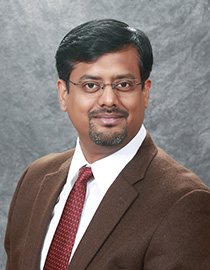
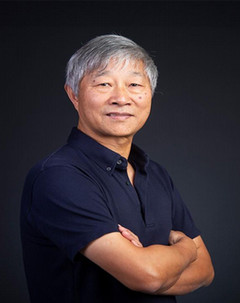
Raktim Bhattacharya is a Professor in the Department of Aerospace Engineering at Texas A&M University, serving as Director of the Graduate Studies Program. He holds a Ph.D. in Aerospace Engineering from the University of Minnesota (2003) and a B.Tech from IIT Kharagpur (1996). His research focuses on uncertainty quantification, robust control, and nonlinear systems, with applications in aerospace systems design and control. Dr. Bhattacharya leads the Intelligent Systems Research Laboratory (ISRL), advancing algorithms for next-generation aerospace systems operating in uncertain environments. His work integrates optimal control, stochastic modeling, and data-driven methods to enhance system reliability and performance. Notable contributions include probabilistic robustness analysis, model validation frameworks, and sparse sensing architectures. Recent research trends emphasize optimal transport theory for state estimation, privacy-aware machine learning, and sensor-actuator co-design for resource-constrained systems. His publications span topics like UAV configuration optimization, LPV control frameworks, and invariant set estimation using physics-informed neural networks. Dr. Bhattacharya’s lab collaborates on projects involving tensegrity structures, cyber-physical systems, and space situational awareness. His work addresses challenges in hypersonic flight dynamics, celestial navigation, and resilient control under actuator degradation.
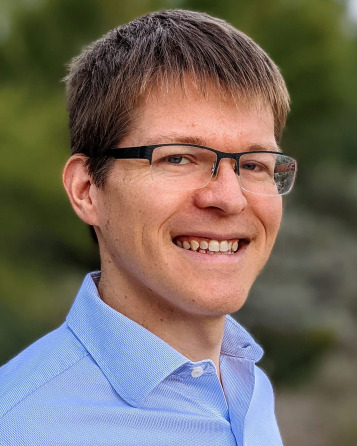
Dr. Robert Lunde is an Assistant Professor in the Department of Mathematics and Statistics at Washington University in St. Louis. He holds a PhD in Statistics and Data Science from Carnegie Mellon University and completed postdoctoral research at the University of Michigan and University of Texas at Austin. His research encompasses statistical inference for network data, resampling methods, and distribution-free inference. Key areas include conformal prediction for network-assisted regression, bootstrap methods for streaming algorithms, and theoretical analysis of network resampling techniques. His work bridges high-dimensional statistics with computational efficiency in network analysis. Dr. Lunde has taught courses including Mathematical Statistics at Washington University and Probability Theory at Carnegie Mellon. His instructional approach emphasizes foundational theory and practical applications of statistical methods.
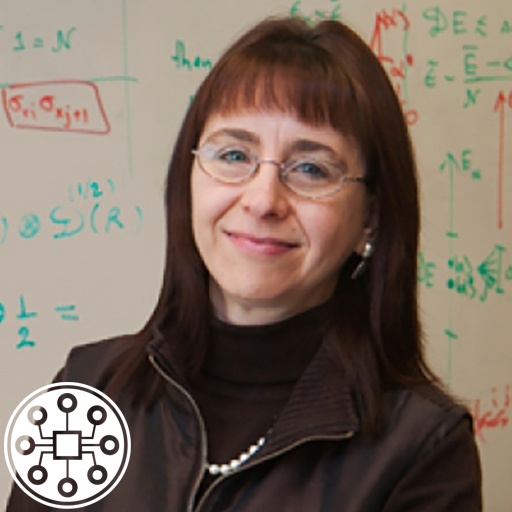
Lorenza Viola is the James Frank Family Professor of Physics at Dartmouth College, specializing in quantum information science. Her theoretical research focuses on quantum control, noise mitigation, and topological quantum systems. Education includes an MS in Physics from University of Trento (Summa Cum Laude) and PhD in Theoretical Physics from University of Padua. Research encompasses quantum characterization/control of open systems, quantum noise spectroscopy, fault tolerance, model reduction, and topological quantum matter. Current projects investigate non-Markovian dynamics, bosonic zero modes, dissipative phase transitions, and entanglement properties. Honors include APS Fellowship (2014). Service includes Divisional Associate Editor for Physical Review Letters (2018-2024) and Partner Investigator with the Australian Research Council Centre for Engineered Quantum Systems.
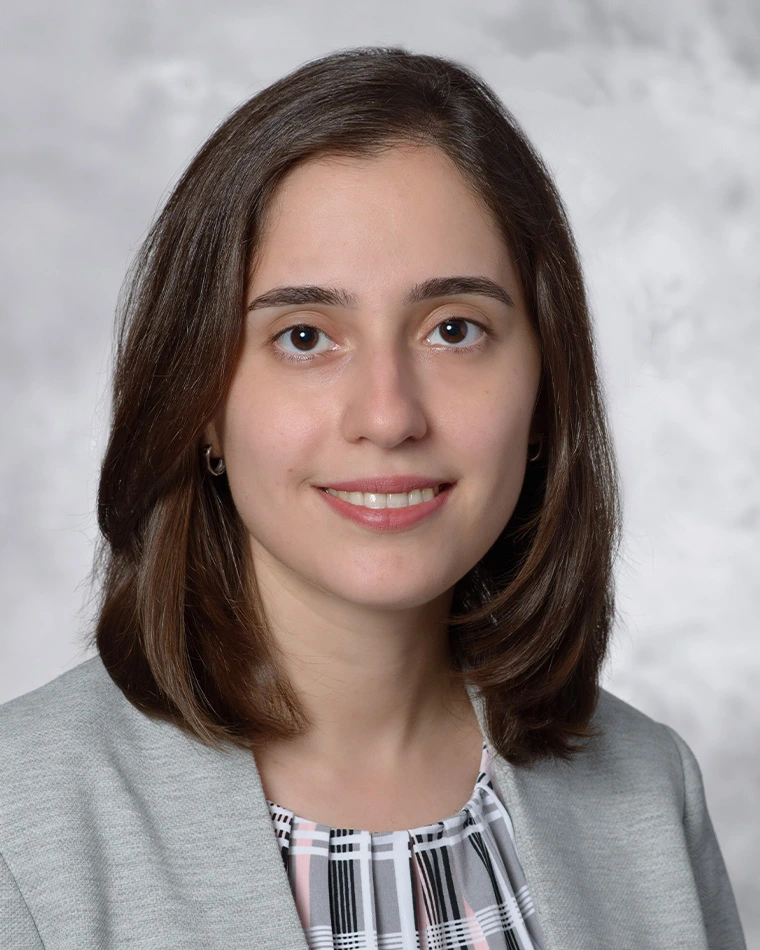
Afrooz Jalilzadeh is an Assistant Professor in the Department of Systems and Industrial Engineering at the University of Arizona, part of the College of Engineering. She is also a member of the Applied Mathematics and Statistics Graduate Interdisciplinary Programs (GIDP), highlighting her strong cross-disciplinary research profile. She leads the Optimization and Mathematical Analysis (OPTIMA) Lab, which focuses on algorithmic innovation for stochastic optimization and variational problems. PhD in Industrial Engineering and Operations Research, The Pennsylvania State University BS in Mathematics, University of Tehran, Iran Her research lies at the intersection of stochastic optimization , variational inequalities , and machine learning , with applications in game theory, healthcare, and power systems. She develops and analyzes algorithms such as stochastic approximation, primal-dual methods, and variance-reduced schemes to solve complex minimax and equilibrium problems. Her work emphasizes theoretical convergence guarantees and computational efficiency. The recent publications show a strong trend in nonconvex-concave saddle-point problems , stochastic Nash games , and projection-free optimization . These are central to modern machine learning and adversarial training. Keywords across her work include stochastic approximation, accelerated methods, risk aversion, and distributed computing, indicating a deep engagement with both theoretical and applied aspects of optimization. Her scientific recognition includes: Teacher of the Year, College of Engineering, University of Arizona (Spring 2022) Gerald J. Swanson Prize for Teaching Excellence NSF Grant: Generalized Stochastic Nash Equilibrium Framework James E. Marley Graduate Fellowship Max and Joan Schlienger Graduate Scholarship Third Place in INFORMS Poster Competition (2018) University Graduate Fellowship, Penn State (2015) H. Marcus Dean’s Chair Scholarship, Penn State (2015) She actively advises students and researchers in her OPTIMA Lab, with multiple publications co-authored with graduate students. She has secured competitive grants, including an NSF award, supporting her research group. Her lab seeks students with strong mathematical and coding skills (MATLAB/Python) for PhD-level research in optimization and mathematical analysis. The OPTIMA Lab conducts cutting-edge research in algorithm design for stochastic variational inequalities , Nash equilibrium computation , and minimax optimization . The lab emphasizes theoretical rigor and practical implementation, with applications spanning machine learning, healthcare, and energy systems. It has published in top venues such as NeurIPS, ACM TOMACS, and Mathematical Programming.
Kristopher Klein is an Associate Professor at the Lunar and Planetary Laboratory (LPL), University of Arizona, within the Department of Planetary Sciences, College of Science. He earned his Ph.D. from the University of Iowa in 2013 and has been a faculty member at LPL since 2017. His research focuses on theoretical and computational plasma physics in the context of solar and heliospheric systems. Education: Ph.D., 2013, University of Iowa Years with LPL: 2017–present Dr. Klein's research centers on fundamental plasma phenomena in the heliosphere, particularly turbulent heating, energization mechanisms, and departure from thermodynamic equilibrium in collisionless plasmas like the solar wind. He employs analytic theory, numerical simulations (e.g., AstroGK, HVM, gkeyll), and spacecraft data from missions such as Parker Solar Probe and HelioSwarm. He is a co-developer of the Arbitrary Linear Plasma Solver (ALPS), an open-source tool for dispersion analysis. His recent publications (2019–2025) reveal a strong focus on plasma turbulence, wave-particle interactions, kinetic instabilities, and solar wind heating mechanisms. The work frequently combines Parker Solar Probe observations with theoretical modeling to understand energy transfer at kinetic scales. Themes include ion and electron heating, stochastic heating, cyclotron damping, and multi-scale turbulence characterization. Scientific Awards: 2024 AAS Harvey Prize 2022 Landau-Spitzer Award for Outstanding Contributions to Plasma Physics Dr. Klein advises graduate students including Niranjana Shankarappa and Waverly Gorman, with former student Teddy Broeren (Ph.D., 2023). He leads major NASA-funded research projects related to the HelioSwarm and Parker Solar Probe missions. His involvement includes being Deputy Principal Investigator for HelioSwarm and Co-Investigator and Project Scientist for the SWEAP instrument on Parker Solar Probe. These roles involve significant grant leadership and collaboration with interdisciplinary teams. He is actively involved in instrumentation and data analysis, particularly through quasi-thermal noise spectroscopy and wave-particle correlation techniques. His work bridges theory, simulation, and observational data to advance understanding of space plasma physics.
Xuebin Zhang is an Assistant Professor in the Department of Geography at the University of Victoria and serves as the Director, President, and CEO of the Pacific Climate Impacts Consortium (PCIC). His role combines academic research with leadership in applied climate science, focusing on regional climate impacts in Canada and globally. Institution: University of Victoria School: Faculty of Social Sciences Department: Department of Geography Leadership: Director, President & CEO, PCIC Dr. Zhang holds a PhD from Lisbon, an M.Eng, and a B.Eng from Hohai University. His research centers on the detection and attribution of climate change, particularly focusing on weather and climate extremes at regional and global scales. He has made significant contributions to understanding how human activities influence extreme precipitation and temperature events. His recent publications demonstrate a strong trend in analyzing extreme climate events using advanced statistical methods such as optimal fingerprinting and Bayesian analysis. These studies often involve large international collaborations and utilize climate model simulations (e.g., CMIP6) to attribute observed changes to anthropogenic forcing. Key areas include extreme precipitation, temperature variability, drought, and flood events across North America and China. Dr. Zhang has been deeply involved in major scientific assessments: Coordinating Lead Author, IPCC 6th Assessment Report (Working Group I, Chapter on Extremes) Co-chair, Expert Team on Climate Change Detection and Indices (WCRP) Co-chair, Grand Challenge on Weather and Climate Extremes (WCRP) Fellow of the Royal Society of Canada He leads and mentors a broad team of scientists at PCIC, overseeing projects related to climate analysis, hydrologic impacts, and computational support. While specific student names are not listed, his leadership role implies extensive supervision of postdoctoral researchers and graduate students. He has secured significant research funding through PCIC and federal programs to support climate modeling, monitoring, and impact assessments. His work directly informs policy and adaptation planning in British Columbia and across Canada.
Bin Peng is a Professor in the Department of Econometrics and Business Statistics at Monash University. His research focuses on developing novel econometric models and methods, particularly in panel data analysis, time series econometrics, and climate data modeling. He holds a PhD in Econometrics from Monash University (2013) under Professors Giovanni Forchini and Don Poskitt, preceded by a BSc in Mathematics from Nanjing University (2007). His work addresses structural changes in factor models, time-varying parameters in vector error-correction frameworks, and productivity convergence in manufacturing sectors. Key contributions include nonparametric panel models for climate data and methodologies for handling interactive effects in panel data with general factors. Peng has received multiple Dean’s Awards, including the 2021 Early Career Research Excellence Award, 2023 Commendation for Excellence, and 2024 Researcher of the Year. He leads a 2021–2025 project on modeling time trends in panel data, funded by Monash University. His recent articles (2021–2025) emphasize methodological advancements in econometric theory, applied to climate science, economic growth, and macroeconomic policy.
James B Ames is a Professor and Faculty Director of the NMR Facility at the University of California, Davis. His research focuses on using NMR and biophysical techniques to study neuronal calcium sensor proteins involved in signal transduction, particularly in vision processes like phototransduction. Key proteins under investigation include recoverin, GCAPs, DREAM, and CaBPs. He has held academic positions since 1998, including appointments at the University of Maryland Biotechnology Institute and UC Davis, and has received awards such as the AAAS Fellowship (2016) and Beckman Young Investigator Award (2000). Education: Ph.D. in Chemistry, University of California, Berkeley (1992) B.S. in Chemistry, University of Michigan (1986) Postdoctoral Fellow at Stanford University (1993-1997) Research Interests: Ames' work integrates molecular biology, biophysics, and structural biology to understand how calcium-binding proteins regulate cellular signaling. His lab uses NMR spectroscopy to elucidate atomic-level structural changes in proteins like GCAP1 and recoverin, linking these changes to their roles in diseases such as cone dystrophy and pain modulation. Recent studies explore the dynamics of voltage-gated ion channels and the thermodynamics of signal transduction. Awards: Fellow of the American Association for the Advancement of Science (2016) Beckman Young Investigator Award (2000) Grants & Advising: No explicit grant details or student advisees listed, but his publications include collaborations with postdoctoral fellows and graduate students. His work is supported by NIH and NSF grants implied through publication affiliations. Labs & Teams: Ames directs the NMR Facility at UC Davis, housing advanced spectroscopic equipment for structural biology research. His lab collaborates with neuroscientists and biophysicists to bridge molecular mechanisms and physiological outcomes.
Pau Batlle Franch is a Research Fellow in the Computing and Mathematical Sciences Department at California Institute of Technology (Caltech), working with Professor Houman Owhadi. He holds a PhD from Caltech (June 2025) and was a research affiliate at NASA Jet Propulsion Laboratory (JPL). His research focuses on the intersection of statistics and applied mathematics, including frequentist confidence intervals in inverse problems, game-theoretical uncertainty quantification, and Gaussian processes. He has applied his work to domains like remote sensing, biology, earthquake prediction, and telecommunications engineering. Education : PhD in Computing and Mathematical Sciences (Caltech, 2025); Double undergraduate degree in Mathematics and Engineering Physics from Universitat Politècnica de Catalunya (CFIS program); Research visitor at NYU's Center for Data Science. His research interests include optimization-based statistical methods, Gaussian process frameworks for scientific computing, and uncertainty quantification in physical systems. Notable contributions include resolving the Burrus conjecture and developing computational hypergraph discovery techniques applied to NASA JPL projects. His work bridges theory and application, addressing challenges in ill-posed inverse problems and robust statistical inference. Recent activities include presenting at SIAM conferences and workshops on inverse problems in Earth science. His Gaussian process methods have been published in journals like PNAS and SIMODS, with applications ranging from PDE solving to RNA classification. Collaborations include JPL and the Groningen seismic study. Grants & Collaborations : Ongoing work with NASA JPL on lunar rover control and computational graph discovery; Seismic modeling in the Groningen gas field with epistemic/aleatoric uncertainty frameworks. He maintains an active GitHub profile showcasing projects in machine learning and scientific computing, including repositories like DarwinProjectAnalytics and emb4class .
Elizabeth Chin is an Assistant Professor in the Department of Biostatistics at the Bloomberg School of Public Health, Johns Hopkins University. Her work bridges biostatistics, causal inference, and public health, with a strong focus on equity and ethical decision-making systems. PhD in Biomedical Data Science, Stanford University (2022) BS in Applied Mathematics, UCLA (2017) Her research interests include causal inference, algorithmic fairness, machine learning, and their application to public health challenges such as health inequities, environmental justice, and policy evaluation. She develops statistical methodologies to improve the robustness and fairness of data-driven decisions, particularly in vulnerable populations including incarcerated individuals. Elizabeth Chin's recent publications span high-impact areas such as mental health care disparities, forensic statistics, environmental lead exposure, and pandemic response. Her work often appears in top journals like Nature Machine Intelligence , NEJM , JAMA Pediatrics , and PNAS . A key trend across her articles is the use of advanced statistical methods to address structural injustices and inform equitable policy. National Science Foundation Graduate Fellowship Stanford Graduate Fellowship She has advised and collaborated with leading researchers in biostatistics and public health. Her work has received significant media attention and has been referenced in policy discussions, indicating real-world impact. Elizabeth Chin is actively contributing to national conversations on data ethics, health equity, and scientific rigor in public health.
Tao Lin is a Tenure-Track Assistant Professor and Principal Investigator of LINs Lab at Westlake University, School of Engineering. He leads cutting-edge research in deep learning optimization, generalization, and robustness, particularly in distributed and federated settings. Prior to this, he was a Ph.D. student at École Polytechnique Fédérale de Lausanne (EPFL), Switzerland, under the supervision of Prof. Martin Jaggi and Prof. Babak Falsafi. Doctor of Science, School of Computer and Communication Sciences, EPFL, Switzerland (2017–2022) Master of Science, School of Computer and Communication Sciences, EPFL, Switzerland (2014–2017) Bachelor of Engineering (with honors), College of Electrical Engineering, Zhejiang University, China (2010–2014) His research focuses on the intersection of optimization and generalization in deep learning, leveraging theoretical and empirical insights into loss landscapes and training dynamics to design efficient and robust learning and inference methods. This includes work on decentralized and federated learning under noisy, heterogeneous, and hardware-constrained environments. His work spans algorithmic innovation, theoretical analysis, and practical system integration. The recent publications from his lab demonstrate a strong trend in advancing federated learning, efficient inference for large language models, multimodal foundation models in pathology, and robust training under distribution shifts. Key themes include communication efficiency, model personalization, gradient tracking, and hardware-aware learning. His group has published at top venues including NeurIPS, ICML, ICLR, CVPR, and ECCV, with several papers receiving oral or spotlight presentations. ECCV Best Paper Candidate, 2024 Top 2% Scientists Worldwide 2024 (Stanford University) Doctoral Program Thesis Distinction Award, EPFL, 2022 Outstanding Performance Bonus, EPFL, 2021–2022 Top Reviewer: NeurIPS, ICML, AISTATS He advises multiple Ph.D. and master’s students, including Yongxin Guo, Futing Wang, Peng Sun, and Yuxuan Sun, whose work has been accepted at premier conferences. He has secured competitive grants as PI and participant, including the National Natural Science Foundation of China for Excellent Young Scientists Fund (Overseas) and the Science and Technology Innovation 2030 – Major Project. He also contributes to the community through service as an area chair (NeurIPS, ICML), reviewer for top journals and conferences, and organizer of workshops and academic events. His open-source contributions, such as Post-local SGD, have been integrated into PyTorch. Tao Lin teaches graduate courses such as Research Methodology of Computer Science and Technology and Deep Learning at Westlake University. He is actively involved in academic governance, serving on committees for student seminars, academic exchange, doctoral studies, and teaching leadership. The LINs Lab runs a regular research seminar on Deep Learning and Optimization, fostering a collaborative and dynamic research environment.
Jean-Yves Le Boudec is a Professor at École Polytechnique Fédérale de Lausanne (EPFL), affiliated with the School of Computer and Communication Sciences and the Institute of Electrical Engineering. He has been a key figure in advancing the theory and application of network calculus and deterministic networking, contributing significantly to standards such as IEEE Time-Sensitive Networking (TSN) and IETF DetNet. His research focuses on network calculus , time-sensitive and deterministic networking , traffic regulation , worst-case delay analysis , and cyber-physical systems , with cross-cutting applications in smart grids , real-time communication , and network security . He has co-authored foundational texts on network calculus and developed theoretical frameworks for traffic regulators, service curves, and delay bounds in complex networked systems. The recent publications highlight a strong trend in analyzing and improving performance guarantees in deterministic networks, including scheduling mechanisms like Deficit Round-Robin and Cyclic Queuing and Forwarding, traffic shaping via interleaved regulators, and security against time-synchronization attacks in power systems. The work spans theoretical modeling using stochastic and min-plus/max-plus algebra, practical algorithm design, and application to critical infrastructure. IEEE Fellow Le Boudec has advised numerous researchers and PhD students, including Ehsan Mohammadpour, Ludovic Thomas, and Seyed Mohammadhossein Tabatabaee. His collaborative projects often involve grants related to European and Swiss research initiatives in networking and smart grid technologies. He leads a research group focused on networked systems at EPFL, contributing to both theoretical advances and real-world implementations in industrial and energy-critical networks. His lab work centers on modeling and verification of time-sensitive network behaviors, integrating formal methods with practical experimentation. The team investigates regulators, shapers, and synchronization mechanisms, aiming to ensure robustness, predictability, and security in next-generation communication infrastructures. Future work continues to explore the interplay between communication, control, and energy systems in highly reliable environments.
Ngoc Tien Tran is a Junior Professor for Numerical Simulation at the Institute of Mathematics, Faculty of Mathematics, Natural Sciences and Technology, University of Augsburg since 2023. Previously, he was a Research Associate at Friedrich Schiller University Jena (2021-2023) and Humboldt University of Berlin (2018-2021). Dr. Tran's educational background includes: Doctorate in Mathematics, Humboldt University of Berlin (2021) Master of Mathematics, Humboldt University of Berlin (2018) Bachelor of Mathematics, Humboldt University of Berlin (2016) Dr. Tran's research focuses on advanced numerical methods for complex mathematical problems. His primary areas of interest include numerical methods for completely non-linear second-order PDEs , the convergence behavior of adaptive methods , nonstandard discretizations and hybridizable methods , and convex minimization and eigenvalue problems . His work bridges theoretical mathematics with practical computational techniques, developing innovative approaches to solve challenging problems in numerical analysis. Dr. Tran's publication record demonstrates a consistent focus on hybrid high-order methods and their applications to various mathematical problems. His recent work shows a progression from foundational methods to specialized applications in areas like the Monge-Ampère equation, eigenvalue problems, and convex minimization. A notable trend is his emphasis on guaranteed error control and stability analysis, reflecting a commitment to robust and reliable numerical methods. Dr. Tran is involved in research supported by the ERC Consolidator Grant and participates in the GAMM Workshop on Numerical Analysis and the One World Numerical Analysis Seminar. As a Junior Professor at the University of Augsburg, Dr. Tran advises students and contributes to the Numerical Mathematics research team. His teaching includes courses such as 'Finite elements in the calculus of variations' and a 'Seminar on Numerics' for Summer semester 2025. He is part of a vibrant research community that includes colleagues like Daniel Peterseim and Tatjana Stykel, as well as numerous research associates.
Hendrik-Jan Megens is an Assistant Professor in Animal Breeding and Genetics at Wageningen University & Research (WUR), Netherlands, affiliated with the Wageningen Institute for Advanced Studies (WIAS). His dr.ir. title reflects a Dutch engineering doctorate, and he maintains an active research profile with over 200 publications and 51 datasets. His work integrates genomic analysis with conservation and aquaculture applications across vertebrate species. Research interests focus on: Genomic consequences of inbreeding in fragmented populations Environmental adaptation mechanisms in aquaculture species Structural variants in chromosome evolution Functional annotation of deleterious mutations Epigenetic regulation in reproductive transitions Genotype-environment interactions in growth traits Recent publications (2023-2025) reveal dual expertise in wildlife conservation (European wild boar, sharks) and aquaculture genomics (tilapia, seabream, oysters). Key trends include application of long-read sequencing (Pore-C) for structural variant detection, pCADD-based prioritization of causal mutations, and investigation of polyploidy effects in teleost fish. His work bridges fundamental evolutionary questions with practical breeding challenges. Megens has co-supervised 12 research projects including five PhD candidates: S. Ousley: Super corals project (reef restoration genomics) G. Kuguru: Black tipped reef shark diversity (Maldives) A. Blasweiler: AquaFAANG (fish health immunology) X. Yu: Nile tilapia adaptation architecture H. van Kruistum: Livebearing fish reproductive genomics He leads projects on genomic tools development (pCADD) and contributes to international consortia like the European Reference Genome Atlas. His team collaborates across WUR's Animal Breeding and Genetics group, focusing on translating genomic findings into conservation strategies and sustainable aquaculture practices through field studies and computational pipelines.
Dr. Hannah Sirianni is an Assistant Professor of Geographic Information Science & Technology in the Department of Geography, Planning & Environment at East Carolina University. She leads the Coastal Geography & Terrain Analysis Lab, which specializes in advanced mapping, monitoring, and modeling of coastal environments to support sustainable development and resilience decision-making. Her research employs cutting-edge geospatial technologies including airborne/terrestrial laser scanning, RTK-GNSS, sUAS, and geospatial AI techniques. Education: Ph.D. in Geosciences from Florida Atlantic University M.A. in Geography from University of Hawaiʻi at Mānoa B.A. in Geography (Highest Honors) from University of Hawaiʻi at Mānoa Research Focus: Dr. Sirianni's research integrates geomatics, GeoAI, OBIA, SfM photogrammetry, and Monte Carlo simulation to address coastal challenges. Her work focuses on shoreline dynamics, bluff erosion, living shoreline effectiveness, and coastal carbon capture monitoring. Current projects include the Sugarloaf Island Restoration and monitoring olivine sand placement for climate mitigation. Publication Trends: Her recent publications demonstrate strong focus on coastal vulnerability assessment, LiDAR/UAS applications, shoreline classification, storm impact quantification, and machine learning applications in geospatial analysis. Research consistently addresses practical coastal management solutions. Grants & Projects: Co-PI for NOAA Sea Grant/USCRP project: "Co-developing a community and data-driven framework for coastal protection decision-making" Living shoreline restoration research at NC Aquarium at Pine Knoll Shores Coastal Carbon Capture™ monitoring using UAS technology Student Advising: Dr. Sirianni actively mentors graduate and undergraduate researchers in coastal geospatial applications. Current advisees include 3 MS students and 1 PhD candidate, with 12 former students now working in environmental science and GIS positions. Lab Operations: The Coastal Geography & Terrain Analysis Lab conducts extensive fieldwork including sUAS surveys, RTK-GNSS measurements, and bathymetric mapping, supported by collaborative partnerships with NC Coastal Federation and other institutions.