معرفی
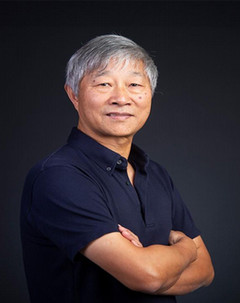
Xuebin Zhang is an Assistant Professor in the Department of Geography at the University of Victoria and serves as the Director, President, and CEO of the Pacific Climate Impacts Consortium (PCIC). His role combines academic research with leadership in applied climate science, focusing on regional climate impacts in Canada and globally.
- Institution: University of Victoria
- School: Faculty of Social Sciences
- Department: Department of Geography
- Leadership: Director, President & CEO, PCIC
Dr. Zhang holds a PhD from Lisbon, an M.Eng, and a B.Eng from Hohai University. His research centers on the detection and attribution of climate change, particularly focusing on weather and climate extremes at regional and global scales. He has made significant contributions to understanding how human activities influence extreme precipitation and temperature events.
His recent publications demonstrate a strong trend in analyzing extreme climate events using advanced statistical methods such as optimal fingerprinting and Bayesian analysis. These studies often involve large international collaborations and utilize climate model simulations (e.g., CMIP6) to attribute observed changes to anthropogenic forcing. Key areas include extreme precipitation, temperature variability, drought, and flood events across North America and China.
Dr. Zhang has been deeply involved in major scientific assessments:
- Coordinating Lead Author, IPCC 6th Assessment Report (Working Group I, Chapter on Extremes)
- Co-chair, Expert Team on Climate Change Detection and Indices (WCRP)
- Co-chair, Grand Challenge on Weather and Climate Extremes (WCRP)
- Fellow of the Royal Society of Canada
He leads and mentors a broad team of scientists at PCIC, overseeing projects related to climate analysis, hydrologic impacts, and computational support. While specific student names are not listed, his leadership role implies extensive supervision of postdoctoral researchers and graduate students. He has secured significant research funding through PCIC and federal programs to support climate modeling, monitoring, and impact assessments. His work directly informs policy and adaptation planning in British Columbia and across Canada.