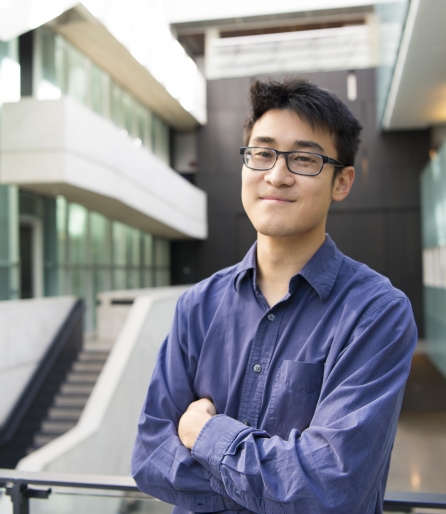
Professor Daniel Wigdor is a prominent academic and entrepreneur in Human-Computer Interaction (HCI), holding the rank of Professor at the University of Toronto’s Department of Computer Science. He also serves as Associate Chair for Industrial Partnerships and has held roles at Meta’s Reality Labs Research and Facebook Reality Labs. His research focuses on inventing technologies that enhance human capabilities through novel sensing systems, AI, and haptic interfaces. Key projects include VibraForge, AeroHaptix, and Nabokov’s Cards, emphasizing tactile feedback and creative AI tools. Wigdor has published over 130 peer-reviewed papers, holds 60+ patents, and received awards like the Alfred P. Sloan Fellowship and Ontario Early Researcher Award. Education & Affiliations: PhD in Computer Science (implied, though specific details not provided) Alumnus of the University of Toronto’s Department of Computer Science Former positions at Cornell Tech, Microsoft Research, and Harvard Research Interests: Wigdor’s work spans haptics, VR/AR interfaces, AI-assisted creativity, and multimodal interaction systems. His lab develops tools like TactileNet (digital touch systems) and Fidgets (predictive UI components), reflecting a focus on practical, user-centric innovations. Recent Work Trends: His publications emphasize scalable vibrotactile systems (e.g., VibraForge), UAV teleoperation safety (AeroHaptix), and AI-driven creative writing tools (Nabokov’s Cards). These projects highlight a blend of technical depth and societal impact. Awards: Alfred P. Sloan Foundation Research Fellowship (2015) Ontario Early Researcher Award (2014) Multiple Best Paper Awards at CHI Advising & Grants: Wigdor has mentored over 50 students and postdocs, many advancing to academic and industry roles. Notable advisees include Zhicong Lu (CityU Hong Kong) and Haijun Xia (UC San Diego). His grants support projects like the Symphony of Devices and cross-device software tools. Labs & Teams: Leads the University of Toronto’s HCI research group and co-founded Tactual Labs (2013) and Chatham Labs (2019). Current projects include predictive UI toolkits and AI-assisted creative systems.