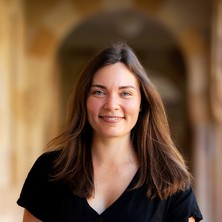
Professor Susan Baker is an Emerita Professor and Co-Director of the Sustainable Places Research Institute at Cardiff University's School of Social Sciences. Her work focuses on environmental governance, sustainable development, and EU policy impacts. She explores participatory democracy, ecofeminism, and the integration of local ecological knowledge in conservation efforts. Key areas include climate change governance, biodiversity management, and gender perspectives in environmental policy. Research interests span environmental policy in Eastern Europe, ecological restoration, and the dynamics of social-ecological systems. She has contributed to projects on marine conservation in the Seychelles, rangeland management in Iceland, and seagrass ecosystems in the Turks and Caicos Islands. Her recent work emphasizes participatory approaches to land-use planning and stakeholder engagement in upland landscapes. Professor Baker has authored influential books on sustainable development and co-edited volumes on governance practices in Europe. She was awarded the prestigious medal for outstanding research in Wales in 2024. Her roles include supervising PhD students on topics like sustainable development goals, climate governance, and environmental justice.
Professor Pia Bäcklund is affiliated with the Department of Geosciences and Geography at the University of Helsinki, Faculty of Science. Her research focuses on urban geography, sustainability, environmental policy, and citizen participation in spatial planning. She leads projects on geothermal energy risks, sustainable housing policies, and interdisciplinary collaboration in urban development. Her work bridges environmental sciences with socio-spatial analysis, emphasizing governance challenges in urban sustainability. Key research affiliations include the Helsinki Inequality Initiative, Helsinki Institute of Sustainability Science, and Helsinki Institute of Urban and Regional Studies. Her recent projects address induced seismic risks from geothermal energy, multispecies urban spaces, and co-production of planning policies. Publications highlight themes like neighborhood vitality, wind energy integration, and participatory urban governance. Her work critiques depoliticization trends in planning and explores ethical dimensions of land-use decisions. She advocates for equitable urban development through institutional collaboration and citizen engagement.
Sam Silva is Assistant Professor in Earth Sciences, Civil and Environmental Engineering, and Population and Public Health Sciences at the University of Southern California. He leads the Atmospheric Composition and Earth Data Science group, investigating atmospheric chemistry's role in air quality and climate change through computational modeling and machine learning. Silva holds a PhD in Environmental Engineering and Computation from MIT and a BSc in Physics and MSc in Atmospheric Science from the University of Arizona. Previously, he was a Linus Pauling Distinguished Postdoctoral Fellow and Research Data Scientist at Pacific Northwest National Laboratory. Research focuses on atmospheric chemical composition using computer models, data science, and machine learning to address global environmental challenges. Work emphasizes aerosol-cloud interactions, chemical cycling dynamics, climate-health relationships, and equitable modeling approaches. Publications demonstrate strong trends in developing machine learning frameworks for atmospheric and climate science, with applications in chemical transport modeling, health impact assessments, and biogeochemical cycling. Recent work advances interpretable AI methods while addressing urban air quality-climate interactions.
Professor Patrizia Lombardi is a distinguished Full Professor at the Politecnico di Torino, serving as Vice Rector for Sustainable Campus and Living Lab and leading the Interuniversity Department of Territorial Sciences, Planning and Policies (DIST). With over 30 years of research experience, she is internationally recognized for her expertise in sustainable urban development, smart cities, and decision support systems for sustainability assessment. She coordinates the Interdepartmental Center R3C - Responsible Risk Resilience Center and serves as Chair of the Sustainable Development Solutions Network Italy Chapter. Her academic foundation includes a Laurea in Architettura, Master in Regional Planning and Real Estate, and PhD in Business and Informatics from Salford University (UK). This interdisciplinary background enables her unique approach that bridges architecture, urban planning, and business informatics to address complex sustainability challenges. Professor Lombardi's research focuses on developing innovative decision support tools for sustainable development, with particular expertise in circular economy frameworks, smart city evaluation methodologies, and transformative resilience strategies. She pioneers interactive Spatial Decision Support Systems based on multicriteria analysis that enable more inclusive urban planning processes. Her recent work emphasizes ESG sustainability metrics for both public and private sector applications, particularly in urban regeneration contexts and sustainable campus development. Her extensive publication record of over 270 works (h-index 38, over 6,700 citations) demonstrates consistent contributions across multiple sustainability domains. Her research reveals a strong focus on practical applications of sustainability theory, with particular emphasis on circular economy implementation, urban resilience planning, and participatory assessment methods across diverse international contexts. Major scientific recognitions include: Emerald Literati Awards 2020 - Outstanding Paper Siebel Energy Institute - Smart Energy Award (2016) Career AIDDA Association Award for sustainable development (2021) Career FIDAPA BPW Italy Excellence Woman Award (2018) Honorary Fellow of Western Sydney University (2023) Alumni Achievement Award from University of Salford (2012) Professor Lombardi actively mentors doctoral students working on urban and regional development topics, while leading major research initiatives including AGRITECH (National Research Centre for Agricultural Technologies), The New European Bauhaus POLITO Official Partner, and SCORE (EU Research Project). Through her leadership in the Sustainable Development Solutions Network Italy Chapter, she connects academic research with practical implementation of the UN Sustainable Development Goals at the national level. She coordinates the Green Team at Politecnico di Torino and leads the institution's participation in the Sustainable Campus Network. Her work with the R3C Center focuses on developing practical approaches to risk management and resilience building in urban contexts, demonstrating her commitment to translating theoretical sustainability concepts into actionable solutions for communities.
Daniel Ho is the William Benjamin Scott & Luna M. Scott Professor of Law at Stanford University, holding concurrent appointments in Political Science and Computer Science (courtesy). He serves as Director of the Regulation, Evaluation, and Governance Lab (RegLab), and as Senior Fellow at multiple institutes including Stanford HAI and the Institute for Economic Policy Research. His roles include advising the White House on AI policy, serving on the National AI Advisory Commission, and advising the U.S. Department of Labor on responsible AI implementation. Ho holds a J.D. from Yale Law School and a Ph.D. from Harvard University, with prior judicial clerkship experience at the U.S. Court of Appeals. His research focuses on AI governance, legal technology, environmental policy, and algorithmic fairness, integrating computational methods with public administration challenges. Key research interests include AI's societal impacts, legal reasoning automation, regulatory innovation, and equity in algorithmic systems. His work bridges technical and legal domains, addressing challenges in cybersecurity, environmental protection, tax auditing, and racial disparity analysis. Recent projects involve developing benchmarks for AI legal reasoning and frameworks for auditing generative models. Ho leads interdisciplinary teams advancing AI policy implementation, including tools for mapping historical racial covenants and assessing environmental enforcement through satellite imagery. His work emphasizes practical solutions for government agencies, combining technical rigor with legal expertise to shape equitable outcomes.
Dr. Sachit Mahajan Senior Researcher and Lecturer in the Computational Social Science (COSS) group at ETH Zurich, Switzerland. Specializes in responsible AI, participatory sensing, and computational social science with a focus on integrating ethical frameworks into technology development. Affiliations: Department of Humanities, Social and Political Sciences (D-GESS), ETH Zurich. Education: PhD in Social Networks and Human-Centered Computing (Academia Sinica), Postdoctoral Research (University of Cambridge and University of Surrey). Research: Develops frameworks for AI ethics, citizen science, and urban sustainability. Notable projects include the greenR package for urban greenness quantification, CAR routing algorithm for air quality navigation, and VAYU toolbox for sensor data analysis. Explores co-creation methodologies for equitable technology governance. Key Contributions: Over 30 peer-reviewed publications, including work on participatory environmental monitoring and smart city design. Active in open-source tool development and global citizen science initiatives. Awards: While no explicit awards listed, recognized for impactful contributions to open-source urban analytics and ethical AI frameworks.
Kristen Hall, AICP, is a Lecturer in Real Estate Development + Design. She specializes in complex urban infill projects in politically challenging landscapes, focusing on creating equitable, sustainable, and resilient communities. She holds an MCP with Certificate in Urban Design from Massachusetts Institute of Technology and a BA from Tulane University. Her professional experience includes leading urban design for major San Francisco waterfront redevelopment projects including Mission Rock with the San Francisco Giants and the Potrero Power Station redevelopment. She has international experience designing master plans, developing guidelines, directing public outreach, leading entitlement processes, and creating implementation strategies for diverse clients including cities, private developers, institutions, and public-private partnerships.
Dr Hedda Ransan-Cooper is a Senior Research Fellow at the School of Engineering, Australian National University (ANU). Her research focuses on the social and political dimensions of energy systems, particularly community batteries, virtual power plants, and inclusive outcomes in renewable transitions. She holds a PhD and supervises research students in energy-related fields. Dr Ransan-Cooper has led projects like the Bruny Island Battery Trial and contributed to initiatives such as the Neighbourhood Battery Initiative and Symphony Project, addressing energy equity, grid resilience, and sustainable policies. Her work explores how care practices uphold energy systems, the role of democratic practices in environmental governance, and the emotional dynamics of adopting new energy technologies. She has analyzed microgrid site selection, vehicle-to-grid trials, and solar-battery adoption challenges. Her research integrates technical, social, and policy perspectives to advance equitable energy solutions. Key projects include the Accelerating Zero-Emission Vehicle Adoption initiative and the Southcoast Grid Reliability Feasibility study. She collaborates on regulatory frameworks for community-scale energy storage and network pricing models that balance customer and distributor benefits. Her findings inform policy development and sustainable urban planning, emphasizing justice and participatory approaches.
George Farmer is a Lecturer in Experimental Psychology at the Division of Psychology Communication and Human Neuroscience. He holds a PhD from his 2015 thesis titled A Computational and Behavioural Analysis of Rationality in Contextual Preference Reversals , supervised by Professors Warren P.A. and El-Deredy W. His research focuses on decision-making processes, particularly in autism spectrum conditions, intertemporal choices, and medical decision interfaces. Notable areas include cognitive biases, information sampling in autism, and user-centered design for healthcare communication. He has contributed to redesigning genetic test reports and breast cancer decision-support systems. Farmer’s work intersects psychology, neuroscience, and behavioral economics, with 13 peer-reviewed articles since 2011. His media engagement includes an expert commentary on rationality for THE CONVERSATION . Collaborations span institutions globally, addressing topics like dual-task performance, sensory integration in autism, and heuristic-based decision-making. His research aligns with UN Sustainable Development Goals, emphasizing equitable access to health information and evidence-based practices.
Dr Julia Loginova is a Researcher at the University of Queensland's Centre for Social Responsibility in Mining (CSRM), within the Faculty of Engineering, Architecture and Information Technology. She holds a PhD from the University of Melbourne, focusing on Indigenous community responses to climate change and resource extraction in the Arctic. Her expertise spans sustainability, energy transitions, and the geopolitics of resources. Dr Loginova is involved in teaching courses on global change, sustainable cities, and geopolitics, emphasizing mixed-method research approaches. Her research interests include globalization of resources, governance of energy transitions, Indigenous participation, and socio-economic redistributions. She leads projects on Indigenous co-ownership of renewable energy, coal transitions, and risk assessment in resource regions. Key grants include the ARC Discovery Project on sustainable copper networks and the NEXTRUSH project on critical minerals geopolitics. Dr Loginova collaborates on evidence-based decision-making with industry partners and emphasizes accountable data practices. She is available for supervision across topics like mining's social aspects, resource geopolitics, and GIS/network analysis applications.
Gurch Randhawa is Professor of Diversity in Public Health and Director of the Institute for Health Research at the University of Bedfordshire. He holds extensive leadership roles including Non-Executive Director positions at Hertfordshire & West Essex Integrated Care Board and Forestry England. His research examines health inequalities, organ donation disparities, and COVID-19 impacts on ethnic minorities. Professor Randhawa developed the seminal Faith Engagement & Organ Donation Action Plan commissioned by NHS Blood and Transplant, used internationally as a blueprint for equity in transplantation systems. Current projects include investigating air pollution impacts on children's respiratory health (£20,000 UKRI funding) and community-based approaches to reduce COVID-19 vaccination hesitancy. His publication record demonstrates strong focus on equitable healthcare access and culturally competent interventions.
Patricia Fitzpatrick serves as Professor in the Department of Geography at the University of Winnipeg, teaching core courses including GEOG-2419 (Sustainability: Resources, Policy and Activism in Canada), GEOG-3512 (Human Geography in Northern Canada), and GEOG-4450 (Geographical Perspectives on Environment and Sustainability) from her office in Lockhart Hall. Her research program centers on Environmental Impact Assessment with specialized expertise in public participation frameworks, multijurisdictional assessment coordination, and adaptive management systems. She actively investigates Community Appropriate Sustainable Energy solutions and Mineral Resource Governance, particularly within Northern Canadian contexts where Indigenous community engagement proves critical. Her work consistently bridges academic theory with policy implementation through direct engagement with regulatory bodies. Analysis of her 2019-2025 publication trajectory reveals deepening focus on cross-jurisdictional public participation mechanisms and sustainable energy transitions in Indigenous communities. Recent work demonstrates increasing international collaboration, notably contributing to global impact assessment follow-up standards while maintaining strong regional focus on Manitoba and Canadian Arctic energy systems. Professor Fitzpatrick maintains an active graduate supervision role with documented co-authorship alongside students including R. Leonhardt, M. Kvern, K. Robb, S. Broomfield, M. Boerchers, and M. Wheeler on publications addressing community renewable energy governance and regulatory tribunal engagement.
Neil Jones is Professor of English Legal History at the University of Cambridge's Faculty of Law and Fellow of Magdalene College, specializing in the development of equitable doctrines and trust law. Research Focus: Examines historical evolution of legal institutions with expertise in: Chancery practice in Tudor/Stuart England Trusts and uses development Statute of Uses (1536) Property law transformation Key Contributions: Sutherland Prize-winning work on resulting trusts and David Yale Prize research on uses upon uses. Recent publications analyze: Common injunctions in jurisdictional conflicts Pre-1837 testamentary practices Policy influences on commercial law Professional Roles: Literary Director of the Selden Society and Co-Director of Cambridge's Centre for English Legal History.
Andrea Hicks is the Keith and Jane Nosbusch Associate Professor in Engineering Education at the University of Wisconsin-Madison's Department of Civil & Environmental Engineering. Her work focuses on environmental impacts of emerging technologies, emphasizing sustainability through interdisciplinary approaches combining industrial ecology tools (e.g., life cycle assessment) and social sciences (e.g., agent-based modeling). She explores topics like nanomaterials, autonomous vehicles, and closed-loop food systems, addressing Jevons Paradox and systemic equity in sustainability solutions. Her research spans environmental systems analysis, techno-economic assessments, and human behavior modeling to mitigate unintended consequences of technological adoption. Education details are not explicitly provided in the text, but her academic role indicates advanced qualifications in environmental engineering or related fields. She leads projects on circular economy applications, environmental policy implications, and sustainable infrastructure. Recent studies include desalinization brine utilization, nanopesticide risks, and AI integration in sustainability education. She emphasizes real-world impacts through community-based learning and partnerships, such as the Green Fund initiative. Her work bridges technical and social dimensions to achieve equitable environmental outcomes. Her research has explored transportation emissions during pandemics, resilience in healthcare systems, and lifecycle impacts of aquaponics. She advocates for systemic equity in industrial ecology applications, addressing biases in machine learning models. Her lab investigates topics like phosphorus recovery in wastewater and carbon monoxide conversion to bioplastics, reflecting her focus on material and energy cycles. Despite no awards listed here, her publications highlight contributions to sustainable resource management and climate action strategies.
Brian Patterson is an Associate Professor in the BerbeeWalsh Department of Emergency Medicine at the University of Wisconsin – Madison, with tenure. He holds additional roles as Physician Administrative Director for Clinical AI at UW Health and Medical Informatics Director for Predictive Analytics and Clinical Decision Support. His work focuses on integrating artificial intelligence and predictive analytics into healthcare systems to enhance patient care and operational efficiency. Dr. Patterson collaborates across disciplines, including the Wisconsin School of Business, College of Engineering, and Department of Biostatistics & Medical Informatics. His research interests center on clinical informatics and geriatric emergency medicine, particularly leveraging routine clinical data to improve care for older adults. Key projects include automated risk scoring for fall prevention post-emergency visits and developing AI-driven interventions to reduce hospital readmissions. He leads the Emergency Care Systems Lab, advancing innovations in emergency department workflows and patient outcomes. Education: Undergraduate at Pennsylvania State University; Medical and Graduate Degrees from Northwestern University Feinberg School of Medicine. Administrative Roles: Clinical AI Strategy Development, Predictive Analytics Leadership. Key Awards: Fellow of the American Medical Informatics Association (2025), UW Health Physician Excellence Award (2025). His funded research includes AHRQ grants for fall prevention interventions and NIA support for dementia care initiatives. Dr. Patterson’s publications span AI applications in healthcare, emergency department outcomes, and geriatric care innovations. He actively engages in policy and governance frameworks for clinical AI deployment to ensure equitable and safe implementation.