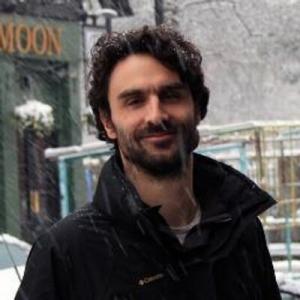
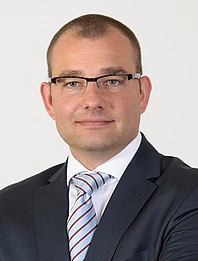
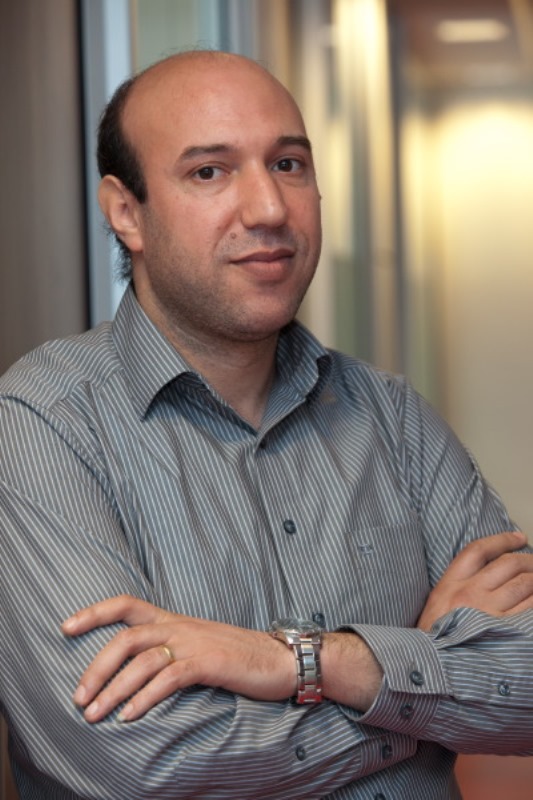
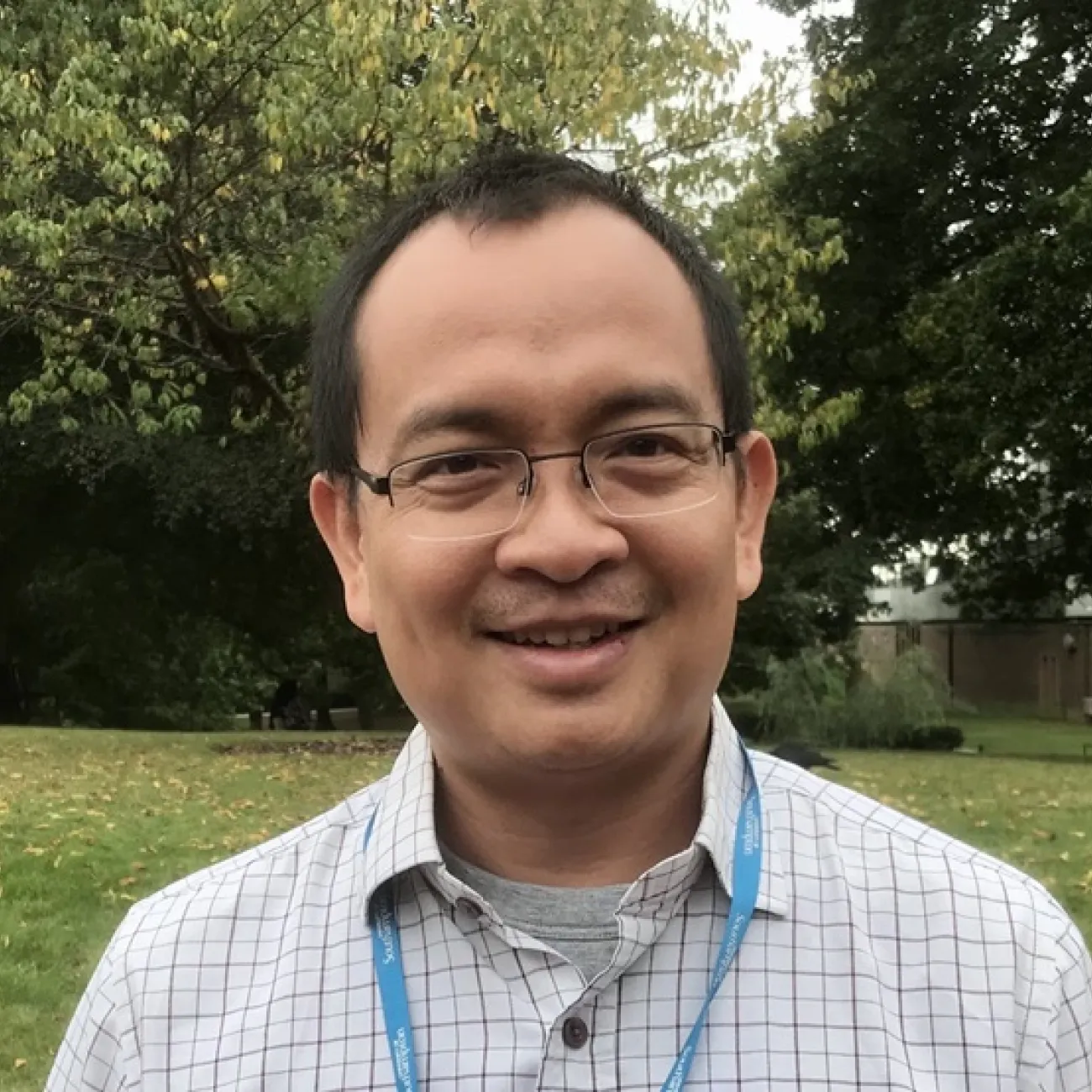
Thibaut Lamadon is an Associate Professor of Economics at the University of Chicago's College, holding tenure since 2015. He specializes in labor economics, macroeconomics, and econometrics, focusing on topics like labor market matching, wage dynamics, and unobserved heterogeneity. His research integrates theoretical models with empirical methods, addressing issues such as firm effects, worker sorting, and productivity shocks. Lamadon earned his Ph.D. from University College London in 2014. He teaches advanced courses like Econ 34430: Topics in Labor Markets , emphasizing structural econometric techniques and dynamic contracting. His work includes developing Stata and Julia tools for labor market analysis, such as the LEEDTWOWAY module. Key contributions include studies on the reliability of firm effect estimates and the impact of amenities on labor markets.
Robert Lewis-Swan is the Tedd S. Webb Presidential Professor in the Homer L. Dodge Department of Physics and Astronomy at the University of Oklahoma. His research focuses on non-equilibrium many-body physics in atomic, molecular, and optical (AMO) systems, with applications to quantum technologies. He explores quantum phenomena like entanglement and coherence in diverse systems including neutral atoms, polar molecules, and trapped-ion crystals. His work combines analytical and numerical methods to study complex interactions and quantum control. Education: B.Sc., University of Queensland, 2011 Ph.D., University of Queensland, 2015 Research interests include quantum simulation, cavity QED, spinor Bose-Einstein condensates, and quantum-enhanced sensing. Recent work highlights include studies on dynamical phase transitions, quantum chaos, and precision metrology using trapped ions and Rydberg systems. Selected Awards: Tedd S. Webb Presidential Professorship (2025) His lab develops tools for quantum state preparation, noise mitigation, and quantum control, with applications in next-generation quantum devices. Collaborative efforts span theoretical modeling and experimental implementations in AMO systems.
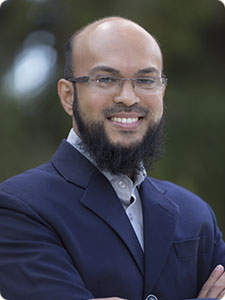
Mohammad T. Irfan is the John F. and Dorothy H. Magee Associate Professor of Digital and Computational Studies (DCS) and Computer Science (CS) at Bowdoin College, with a joint appointment between the two departments. He also serves as the Director of the DCS Program. Irfan holds a PhD in Computer Science from Stony Brook University (2013), and an MS and BS in Computer Science and Engineering from Bangladesh University of Engineering and Technology (2006 and 2004, respectively). His research focuses on computational game theory, AI, social network analysis, economics, and image analysis of art, supported by an NSF grant. He teaches courses such as DCS 1500 and CSCI 2320, emphasizing interdisciplinary approaches to computational methods. Research interests include strategic interactions in networks, microfinance markets, and the application of game theory to social influence and art authentication (e.g., Jackson Pollock paintings). Irfan’s work bridges AI and social sciences, with notable achievements like a Best Paper Award with an undergraduate student. His teaching philosophy emphasizes student engagement and the liberal arts tradition, fostering a supportive environment for learning and research. Scientific contributions span algorithmic game theory, equilibrium computation, and network influence models. Grants and awards highlight his interdisciplinary impact, including NSF funding for research on influence games. Irfan’s leadership in creating Bowdoin’s DCS program reflects his commitment to fostering interdisciplinary education and innovation.
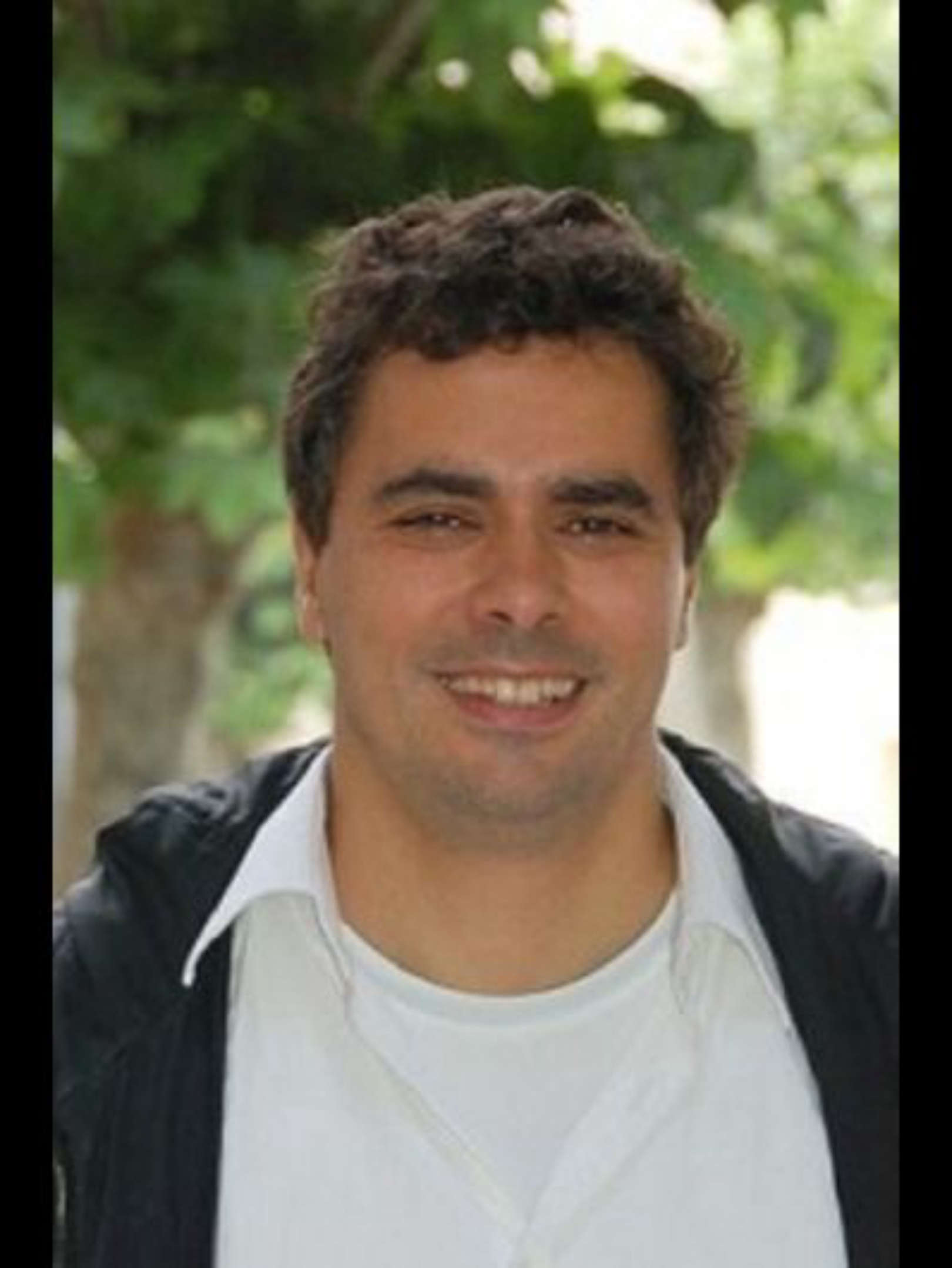
Marco Faillo is an Associate Professor in the Department of Economics and Management at the University of Trento, specializing in Political Economy (SECS-P/02). He holds a PhD in Economics and Management from the Sant'Anna School of Advanced Studies (2006) and has been affiliated with the Institute of Economics at Sant'Anna since 2018. His academic career includes roles as a researcher and project leader across multiple institutions, including the University of Trento and the University of Teramo. Research interests include institutional economics, behavioral and experimental economics, bounded rationality, and ethics in economics. Notable projects include leading the Trento unit in the national research program on Impact Finance for Social Enterprise (2017–2021) and contributing to studies on CSR governance and social cohesion. He has organized major conferences, including the 2022 SIDE Annual Conference in Palermo, and served on committees for the Italian Society of Law and Economics. His experimental work spans distributive justice, cooperation mechanisms, and the impact of social norms on economic behavior. Engagements include the European Business Ethics Network and the French Association of Experimental Economics. He has collaborated with institutions like the Fondazione Cassa di Risparmio di Trento and the Politecnico di Milano on projects addressing social finance and corporate responsibility.
Prof. Dr. Stefanie Schwedler is a Professor in the Department of Chemistry Didactics at Bielefeld University's Faculty of Chemistry. Her research focuses on improving chemistry education through innovative teaching methods, particularly the use of simulations and digital tools. She actively contributes to teacher training programs, emphasizing inclusive education and professional development for educators. She holds leadership roles in the Center for General Studies and the Bielefeld School of Education (BiSEd), promoting interdisciplinary collaboration and educational policy. Her work bridges university and school-level chemistry education, addressing challenges such as conceptual understanding in physical chemistry and the integration of technology in teaching. Recent research includes studies on simulation-based learning, assessment methods, and fostering science identity among students. She is involved in projects like LFB-Labs-digital, aiming to enhance teacher training through digital laboratories. Her contributions extend to curriculum design, inclusive pedagogy, and fostering collaboration between researchers and practitioners in chemistry education.
Alberto A. Pinto serves as a full Professor in the Department of Mathematics at the Faculty of Sciences, University of Porto, Portugal. He concurrently holds a research position at the Laboratory of Artificial Intelligence and Decision Support within the Institute for Systems and Computer Engineering (LIAAD, INESC TEC), where he has been Research Coordinator since May 1, 2011. His academic journey began with a Master's thesis at the University of Warwick (1989) under David Rand, followed by a PhD (1991) on universality features of maps at the boundary between order and chaos. As a postdoctoral researcher with Dennis Sullivan at the City University of New York, he expanded his foundational work in dynamical systems. Pinto's research spans both theoretical and applied domains, with significant contributions to dynamical systems (particularly fine-scale structure of hyperbolic diffeomorphisms), game theory , mathematical economics , and financial mathematics . His work bridges pure mathematics with practical applications in immunology, epidemiology, climate science, and energy systems. He has published over one hundred scientific articles and authored the influential book 'Fine Structures of Hyperbolic Diffeomorphisms' (2010). His recent publications (2024-2025) demonstrate continued scholarly productivity across diverse fields including cooperative game theory, machine learning applications in pedestrian modeling, financial market prediction, and economic equilibrium theory. These works reflect his evolving research trajectory from pure dynamical systems toward increasingly interdisciplinary applications. President of International Center for Mathematics (CIM) 2011-2016 President of General Assembly of CIM since 2016 Founder and co-Editor-in-Chief of Journal of Dynamics and Games (2014-present) Executive Coordinator of Scientific Council of Exact Sciences and Engineering at FCT (2009-2010) Pinto has supervised numerous graduate students across mathematical economics, game theory, and financial mathematics. His editorial work includes founding the Springer Proceedings in Mathematics series through 'Dynamics and Games I and II' (2011), and contributing to multiple volumes in the CIM Series in Mathematical Sciences published by Springer-Verlag. At INESC TEC, he leads research in artificial intelligence and decision support systems, connecting theoretical mathematics with practical computational applications.
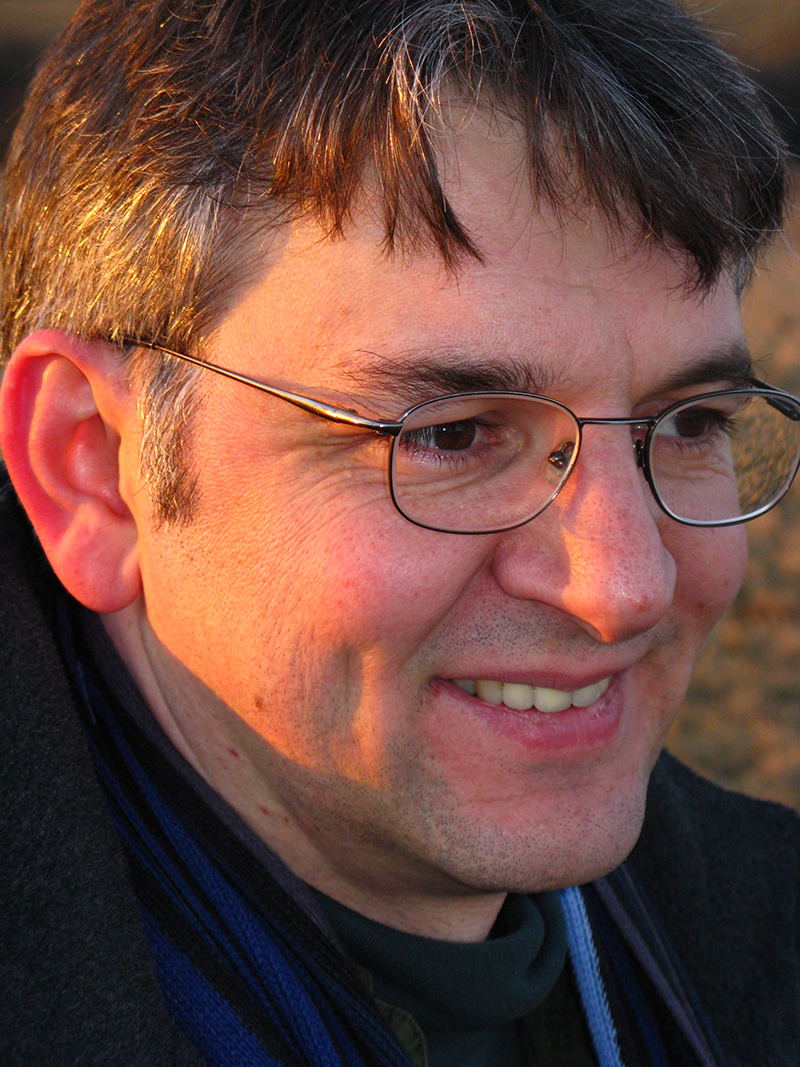
Peter M. Hoffmann is an Adjunct Professor in the Department of Physics and Astronomy at Wayne State University's College of Liberal Arts and Sciences, with secondary appointments in the College of Engineering and Biomedical Physics program. His research focuses on molecular machines, nanoconfined liquids, and biophysics, employing advanced atomic force microscopy (AFM) techniques. PhD in Materials Science, Johns Hopkins University M.S. in Physics, Southern Illinois University Vordiplom (BS equivalent) in Physics & Mathematics, Technische Universität Clausthal Hoffmann's experimental work investigates how molecular motors extract order from chaos through Brownian ratcheting mechanisms. His team has developed cutting-edge AFM methodologies to study nanomechanical properties of confined water films, ionic effects on liquid ordering, and biomolecular interactions at the single-molecule level. Recent publications focus on graphene oxide fluid dynamics, mechanochemical solvation effects, and advanced AFM data analysis techniques. His research bridges soft matter physics, biophysics, and materials science through interdisciplinary approaches. Scientific recognition includes: National Science Foundation CAREER Award Wayne State Presidential Excellence in Teaching Award Richard Barber Faculty Award Sultana N Nahar Excellence in Teaching Award Abel Wolman Fellowship Studienstiftung des deutschen Volkes Fellowship Hoffmann's educational initiatives include co-authoring the textbook Quantitative Understanding of Biosystems and leading the $3M NSF IUSE grant to transform STEM education through evidence-based pedagogy. His lab actively mentors graduate students like Zachary Auner, Gobin Acharya, and Ramesh Tripathi, working at the intersection of physics and biological systems.
Andreas Heinrich Hamel is a Tenured Full Professor at the Faculty of Economics and Management , Free University of Bozen-Bolzano, Italy. His research focuses on advanced mathematical fields including convex and variational analysis, set-valued optimization, mathematical finance (market models with transaction costs), mathematical economics (incomplete preferences and game theory), and multivariate statistics (quantiles). Academic Rank: Professor Institution: Free University of Bozen-Bolzano School: Faculty of Economics and Management Professor Hamel co-developed the groundbreaking area of Set Optimization , with applications in mathematical finance, economics, statistics, game theory, and multi-criteria decision making. His work includes inventing set optimization approaches to risk measures for multivariate positions and developing optimization methods for economics and business applications. Recent publications highlight his expertise in set-valued risk measures, variational principles, and duality theories. His research spans topics such as cone distribution functions, multivariate shortfall risk measures, and utility maximization under transaction costs, reflecting interdisciplinary contributions to financial mathematics and optimization.
Prof. Jörg Schiller is a University Professor and Head of the Department of Insurance Economics and Social Systems at the University of Hohenheim. He serves as Dean of the Faculty of Economics and Social Sciences since 2022 and has held leadership roles including Senate membership since 2010. His research focuses on behavioral insurance, insurance fraud, climate-related risk management, and regulatory frameworks in insurance markets. Schiller earned his PhD from the University of Hamburg (2004) and completed his habilitation at WHU Otto Beisheim School of Management (2008). Education: 1999: Diplom-Kaufmann (Business Studies), Goethe University Frankfurt 2004: Doctorate in Economics, University of Hamburg 2008: Habilitation, WHU (Vallendar) Research Interests: Schiller’s work bridges theoretical and applied economics, addressing topics like moral hazard, insurance fraud mechanisms, and the insurability of climate risks. He emphasizes behavioral aspects of insurance demand and brokerage practices, with recent studies exploring disaster relief policies and premium subsidies. Professional Activities: As Dean, Schiller oversees academic governance and strategic development. He co-organizes the Behavioral Insurance Workshop and leads the part-time MSc in Finance program. His publications frequently appear in top journals such as Journal of Risk and Insurance and European Economic Review . Awards & Recognition: While no specific awards are listed, his academic leadership roles and prolific publication record indicate significant scholarly impact. Advising & Grants: Supervises doctoral and master’s students in insurance economics. His research has examined heterogeneous selection in dental insurance and skin cancer screening program efficacy. Collaborates widely with institutions like the Munich Risk and Insurance Center. Labs/Teams: Leads a research group focused on behavioral and quantitative insurance analysis, supported by studies on fraud detection systems and regulatory design.
Edward C. Rosenthal is a Professor at the Fox School of Business and Management, Temple University, specializing in the Department of Statistics, Operations, and Data Science. He holds a Ph.D. from Northwestern University and has extensive teaching experience in operations management, game theory, and supply chain logistics across undergraduate, graduate, Honors, and Executive MBA programs. His research focuses on game theory applications, logistics optimization, and behavioral decision-making. Rosenthal has received prestigious awards including the Great Teacher Award and Lindback Award for Distinguished Teaching. Education: Ph.D., Northwestern University His research interests span cooperative/noncooperative game theory, mechanism design, logistics systems, and behavioral decision theory. Key contributions include work on interdependent security games, supply chain cost allocation, and pricing models in on-demand services. He authored influential books like The Era of Choice (MIT Press, 2005) and The Complete Idiot’s Guide to Game Theory (2011). Recent articles explore topics such as network security strategies, ride-sharing pricing, and journal ranking methodologies. His work bridges theoretical frameworks with practical applications in logistics, transportation, and market dynamics. Awards: Great Teacher Award, Lindback Award Teaching: Operations Management, Game Theory, SCM Internships Rosenthal’s research also addresses real-world challenges like over-targeting in markets and optimal supply chain policies under disruptions. He collaborates on mechanisms for fair cost allocation in public transit and infrastructure networks.
Wotao Yin is a Professor of Mathematics at the University of California, Los Angeles, with a distinguished research career spanning over two decades in optimization theory and its applications. His work bridges theoretical mathematics with practical applications in machine learning, image processing, and signal analysis. As a leading researcher in optimization algorithms, he has made significant contributions to the development of methods like ADMM (Alternating Direction Method of Multipliers), proximal algorithms, and decentralized optimization techniques. Department: Department of Mathematics School: College of Letters and Science University: University of California, Los Angeles Yin's research focuses on developing efficient algorithms for large-scale optimization problems, with particular expertise in convex and nonconvex optimization, distributed and decentralized optimization, and mathematical foundations of machine learning. His work has profound implications for image reconstruction, signal processing, and modern machine learning systems. He has pioneered methods for handling sparse data, non-smooth objectives, and constrained optimization problems that arise in real-world applications. An analysis of his recent publications reveals a strong trend toward addressing optimization challenges in machine learning, particularly in federated learning, attention mechanisms, and nonconvex problem structures. His work demonstrates a consistent pattern of bridging theoretical optimization with practical machine learning applications, developing algorithms that balance computational efficiency with theoretical guarantees. Recent papers show increasing focus on heterogeneous data settings, large language model optimization, and fundamental limitations of optimization methods in complex learning scenarios. Throughout his career, Professor Yin has mentored numerous PhD students and postdoctoral researchers who have gone on to successful careers in academia and industry. His collaborative network spans multiple institutions worldwide, with particularly strong connections to researchers in China and across the United States. His work has been supported by various funding agencies recognizing the fundamental importance of optimization theory for advancing computational science. Professor Yin leads a vibrant research group focused on mathematical optimization and its applications, where students and collaborators work on cutting-edge problems at the intersection of mathematics, computer science, and engineering. The group maintains strong connections with both theoretical and applied research communities, participating in major conferences across optimization, machine learning, and computational mathematics.
Dr. Amani Elobeid is a Teaching Professor in the Department of Economics and holds the Ron and Lynn Deiter Endowed Chair for Sustaining Excellence in Agricultural Business at Iowa State University (ISU). She is affiliated with the Center for Agricultural and Rural Development (CARD) and oversees the Agricultural Business program and club. Her expertise lies in agricultural policy analysis, biofuel impacts, and climate change effects on agricultural systems. Education: Ph.D., Economics, Iowa State University, 2001 M.S., Economics, Iowa State University, 1994 B.S., Economics, University of Khartoum, Sudan, 1986 Research Interests: Dr. Elobeid’s work focuses on modeling agricultural and biofuel markets, assessing policy impacts on global commodity markets, and analyzing climate change and geopolitical effects on food security and environmental outcomes. She has contributed to understanding the trade-offs between biofuel expansion, land-use changes, and carbon emissions. Awards: Ron and Lynn Deiter Endowed Chair (2021) Excellence in Teaching Award (2020) University Professional and Scientific Research Awards (2014, 2013) Fulbright Scholarship (1989) Teaching and Advising: She teaches undergraduate economics courses, coordinates Principles of Economics, and advises students in the Agricultural Business program. Her grants and research projects focus on sustainable agricultural practices and policy analysis. Labs/Teams: Affiliated with ISU’s Center for Agricultural and Rural Development (CARD), collaborating on interdisciplinary research addressing agricultural sustainability and global commodity dynamics.
Rabia NESSAH is a Full Professor of Quantitative Methods at IÉSEG School of Management in Lille, France. She holds a Ph.D. in Industrial Systems and Optimization (2005) from Technologic University of Troyes and an HDR in Economics and Mathematics (2013) from University of Paris Est. Her academic career includes prior roles as Lecturer at Technologic University of Troyes (2002–2006) and Université de Tizi-Ouzou, Algeria (2001–2002). Her research focuses on game theory, optimization, and scheduling algorithms, with notable contributions to equilibrium solutions (Berge, Nash, and hybrid variants), production scheduling models, and mathematical economics. She has published extensively in journals like European Journal of Operational Research , Journal of Mathematical Economics , and Mathematical Social Sciences , and co-authored books on revolutionary choice theories and voting paradoxes. NESSAH teaches courses in quality control, production planning, and optimization methods at the undergraduate level. Her work bridges theoretical advancements in game theory with practical applications in operations research and economic modeling.
Frits de Nijs is a Research Fellow in the Department of Data Science & AI at Monash University. His work focuses on advancing artificial intelligence techniques for energy systems optimization, multi-agent decision-making, and sustainable infrastructure. He has contributed to projects such as the Human-in-the-loop Microgrid Project and RACE for 2030 CRC, addressing challenges in renewable energy integration and smart grid management. Key research areas include reinforcement learning applications for energy curtailment, HVAC control systems, and resource-constrained multi-agent planning. His projects often bridge AI methodologies with real-world energy challenges, aiming to enhance grid reliability, carbon efficiency, and fair resource allocation. Notable collaborations involve researchers in machine learning, sustainable energy, and building automation. He has actively participated in 6 major research projects since 2020, including initiatives on AI-ready buildings and probabilistic multi-agent learning environments. His publications span conferences like AAAI, NeurIPS, and IEEE Power & Energy Society events, emphasizing peer-reviewed contributions to energy-AI intersections.
Dr. Vuong Phan is an Associate Professor in Operational Research at the School of Mathematical Sciences, University of Southampton. His research focuses on continuous optimization, dynamical systems, optimal control, variational inequalities, and equilibrium problems with applications in engineering, economics, and biochemistry. He has taught modules such as Operational Research II, Optimization, and Introduction to Python. He currently supervises three PhD students and has held academic positions at institutions including the University of Vienna, Vienna University of Technology, and the University of Luxembourg. His work bridges theoretical advancements in optimization with practical applications in interdisciplinary fields. Research interests include solution methods for continuous optimization, dynamical systems, optimal control, and equilibrium problems. His work emphasizes applications in engineering systems, economic models, and biochemistry, particularly in constraint-based modeling of human metabolism. Recent projects involve developing algorithms for variational inequalities and equilibrium control problems, with applications to traffic assignment and network optimization. Publications span journals like Computational Optimization and Applications, Journal of Optimization Theory and Applications, and Bioinformatics, highlighting contributions to algorithm design, convergence analysis, and interdisciplinary applications. He actively mentors students and contributes to teaching in mathematical sciences.