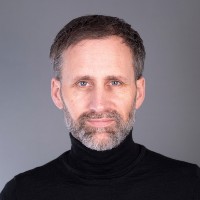
Dr. Joshua Brinkerhoff is an Associate Professor in Mechanical Engineering at the University of British Columbia Okanagan Campus. He serves as the Associate Director for Research & Industrial Partnerships in the School of Engineering and leads the UBC-Okanagan Computational Fluid Dynamics Laboratory. His research spans computational fluid dynamics, turbomachinery, multiphase flows, hydrogen safety, wind energy, and biofluid mechanics. He teaches courses in mechanics of materials, alternative energy systems, turbulence, computational fluid dynamics, and aircraft design. PhD, Aerospace Engineering (Carleton University, Ottawa, ON) BEng, Aerospace Engineering (Carleton University) Dr. Brinkerhoff’s research interests include: Computational Fluid Dynamics (CFD) for laminar-to-turbulent transition and instability analysis Wind energy systems and turbine aerodynamics Hydrogen storage and safety protocols for transportation Biofluid mechanics for respiratory diseases and aneurysm modeling Multiphase flows in industrial and environmental contexts His publications focus on CFD simulations for: Aerosol dispersion and mitigation in indoor environments Wind farm interactions and atmospheric gravity waves Cavitation and phase transitions in cryogenic and LNG systems Heat transfer optimization in industrial and thermal systems Instability dynamics in buoyancy-driven and swept flows Turbulent structures in fluidized beds and reactors Dr. Brinkerhoff has no listed scientific awards in the provided data but has extensive contributions to renewable energy, hydrogen safety, and medical fluid dynamics. His laboratory develops open-source tools like TOSCA for large-eddy simulations and investigates practical applications in urban air quality, dental aerosol control, and turbine wake modeling.
Dr. James W. Navalta is an Associate Professor in the Department of Kinesiology and Nutrition Sciences at the University of Nevada, Las Vegas. His research focuses on physiological responses to outdoor exercise (hiking, trail running) and the validity/reliability of wearable technology. He earned his B.S. in Physical Education and Biology from Brigham Young University–Hawaii, M.S. in Kinesiology from UNLV, and Ph.D. in Exercise Physiology from Purdue University. Education: B.S. - Physical Education & Biology, Brigham Young University–Hawaii M.S. - Kinesiology, University of Nevada, Las Vegas Ph.D. - Exercise Physiology, Purdue University His research portfolio includes: Wearable technology validation for physiological measurements Comparative studies of indoor vs outdoor exercise environments Impact of gender-inclusive approaches on sports science Metabolic and cardiovascular responses to unconventional workouts Psychological benefits of nature immersion Recent publications demonstrate expertise in: Wearable device accuracy testing VO2max and lactate threshold validation Environmental influence on exercise physiology Methodological improvements in data collection Gender-inclusive research design Outdoor activity impact assessment As co-founder and executive editor of the International Journal of Exercise Science, he contributes significantly to academic discourse. He also serves on editorial boards for journals related to digital health and exercise technology.
Cornelia Betsch serves as Director of the Institute for Planetary Health Behaviour (IPB) at the University of Erfurt, where she holds a professorship in Health Communication within the Faculty of Philosophy. She is responsible for the Master's program in Health Communication through the Department of Media and Communication Studies and leads the Health Communication Working Group at the Bernhard Nocht Institute for Tropical Medicine in Hamburg as an external position. Her interdisciplinary work bridges behavioral science, psychology, and public health to address critical global challenges. Habilitation (2006), University of Erfurt: 'The role of risk perception and risk communication in prevention decisions – the example of vaccination decisions' PhD (Dr. phil., summa cum laude, 2006), University of Heidelberg: 'Preference for intuition and deliberation– measurement and consequences of affect- and cognition based decision making' Diplom in Psychology (2002), University of Heidelberg Betsch's research focuses on understanding health and planetary health behaviors, particularly examining vaccination behavior, prudent antibiotic use, and climate-friendly actions. Her work extends globally, with investigations in various African countries on vaccination and antibiotic practices. She pioneered the influential COVID-19 Snapshot Monitoring (COSMO) and subsequently developed the Planetary Health Action Survey (PACE), large-scale studies that regularly track public knowledge, risk perception, protective behaviors, and trust during crises. Her research emphasizes applying behavioral and cultural insights to design effective policy frameworks and explanatory communication that promotes positive health behaviors. The 15 most recent articles showcase Betsch's research evolution toward integrating behavioral science with planetary health, climate action, and vaccine communication. Her work increasingly examines the psychological foundations of climate behavior while maintaining her established expertise in vaccine hesitancy and antimicrobial resistance. Recent publications demonstrate methodological diversity, including systematic reviews, meta-analyses, survey experiments, and large-scale monitoring datasets that bridge academic research with practical policy applications. German Psychology Prize (2021) Thuringian Research Prize (2022) Betsch has secured research funding from independent research organizations, ministries, and foundations to support her work on health communication and planetary health behavior. She serves as a scientific advisor to multiple organizations including the WHO Technical Advisory Group on Behavioral and Cultural Insights, Science Media Center Germany, and Museum für Naturkunde Berlin. At the Bernhard Nocht Institute for Tropical Medicine, she established the WHO Collaborating Center for Behavioral Research in Global Health, demonstrating her commitment to translating research into global health practice. Her engagement extends to policy advising, having served on the Corona Expert Council of the Federal Chancellery during the pandemic. As Director of the Institute for Planetary Health Behaviour, Betsch leads an interdisciplinary team applying social and behavioral science perspectives to planetary health and the climate crisis. The institute serves as a hub for research, education, and science communication at the intersection of human health and environmental sustainability. Her work through the IPB emphasizes Open Science principles and aims to understand the comprehensive factors influencing climate-friendly behavior to identify effective intervention points for policy development.
Professor Desheng Liu is affiliated with the Department of Geography at The Ohio State University , within the College of Arts and Sciences . His research focuses on developing spatial and statistical methodologies for environmental monitoring and ecological processes. He holds a Ph.D. in Environmental Science from UC Berkeley (2006) and additional degrees in Statistics, Environmental Science, and GIS. Education: Ph.D., 2006: Environmental Science, University of California, Berkeley M.A., 2004: Statistics, University of California, Berkeley M.S., 2003: Environmental Science, University of California, Berkeley B.E., 2001: GIS, Wuhan University, China Research interests include Remote Sensing , Spatial Statistics , GIScience , and Land Cover Change . His work emphasizes statistical modeling of spatial-temporal dynamics in environmental systems. Recent publications (2008–2012) explore topics like land-cover trajectory reconstruction, thermal infrared downscaling, and object-based classification techniques. No scientific awards are explicitly listed in the provided text. Advising and grants information is not detailed here, though his CV may contain additional details. He is involved in teaching advanced courses such as Quantitative Geographical Methods and Spatial Statistics.
Andrew Francis-Tan serves as Assistant Dean (Student Affairs) and Senior Lecturer at the LKY School of Public Policy, National University of Singapore. Previously, he was associate professor of economics at Emory University. His academic journey spans prestigious institutions including the University of Chicago where he earned his Ph.D. in economics, establishing his foundation in quantitative research methods. Francis-Tan's research program focuses on education, labor economics, and demography, with particular emphasis on patterns of inequality and public policies designed to empower vulnerable populations. His work explores how factors such as race, gender, and religion influence social identities and outcomes across diverse contexts, especially in Asia and Latin America. His interdisciplinary approach bridges economics, sociology, and public policy to address complex social challenges. His extensive publication record shows a clear research trajectory examining ethnic identity formation, religious dynamics under restrictive regulation, gender empowerment effects, and affirmative action policies. The publications span multiple high-impact journals across disciplines including Political Science, Sociology, Public Health, and Economics, demonstrating the cross-cutting relevance of his work. As an educator, Francis-Tan teaches advanced quantitative methods courses for PhD students (PP6706), education economics and policy (PP5196), and principles of economics for policy (PP5001). His teaching portfolio reflects his expertise in applying economic frameworks to policy analysis and his commitment to training the next generation of policy professionals with rigorous analytical skills.
Dr. Ralph Evins is an Associate Professor and Director of the Graduate Program in the Department of Civil Engineering at the University of Victoria. He holds affiliations with the Urban Energy Systems laboratory at Empa and ETH Zurich in Switzerland. His expertise spans building energy simulation, energy system optimization, and machine intelligence applications in sustainable design. Evins holds an MEng from Imperial College London and an EngD from the University of Bristol. His research focuses on computational problem-solving in energy systems, including surrogate modeling, optimization algorithms, and machine learning. He develops tools like the Holistic Urban Energy Simulation (HUES) platform and BESOS software framework to bridge building, district, and city-scale energy analysis. His work emphasizes holistic systems thinking, integrating energy hubs, thermal modeling, and digital twin technologies. Recent articles explore surrogate model refinement, inverse modeling for building characterization, and decarbonization strategies. He collaborates with industry to translate academic innovations into practical solutions. Evins advises students in energy systems and leads projects on net-zero building design, retrofit prioritization, and smart grid integration. His research addresses challenges in climate adaptation, energy efficiency, and sustainable urban development through interdisciplinary approaches.
Smita Ghosh is an Assistant Professor in the Department of Mathematics and Computer Science at Santa Clara University, part of the College of Arts and Sciences. Her research focuses on social network analysis, algorithms for information diffusion, and applications in cybersecurity, disaster management, and machine learning. She holds a B.Tech. from the West Bengal University of Technology, India, and an M.S. and Ph.D. from the University of Texas, Dallas. Her work addresses challenges in rumor containment, clickbait detection, and optimizing network models for social media content analysis. Recent publications include studies on hypergraph-based solutions for rumor blocking and stochastic models for emergency response in social networks. She also explores cross-modal topic modeling for enhancing content detection algorithms. Notable contributions include developing data-driven strategies for identifying hate speech spreaders and improving wildfire severity predictions using environmental features. Her research bridges theoretical computer science with real-world applications in public health, education, and disaster management. Her academic contributions include organizing conference proceedings like the 18th International Conference on Algorithmic Aspects in Information and Management (AAIM 2024). She actively contributes to educational initiatives such as the Classroute project, creating multilingual educational content for Punjabi and Urdu speakers.
John C. Mutter is Professor of Earth and Environmental Sciences and International and Public Affairs at Columbia University, with appointments in the Department of Earth and Environmental Sciences (DEES) and the School of International and Public Affairs. He is a faculty member of the Earth Institute and Director of Graduate Studies (DGS) for the Ph.D. program in sustainable development. His research focuses on geophysics, climate systems, marine seismology, and sustainable development. He co-teaches courses on Science for Sustainable Development and Disasters and Development. Dr. Mutter has published notable works including The Disaster Profiteers (2015) and Climate Change Science (2020), examining the intersection of environmental science and societal impacts.
Catherine Guastavino is a Professor at McGill University's School of Information Studies (within the Faculty of Arts) and an Associate Member at the Schulich School of Music. She also contributes to the Centre for Interdisciplinary Research in Music Media and Technology (CIRMMT). Her roles include leading research projects and supervising graduate students in music technology and related fields. She holds a PhD in Psychoacoustics from Université Pierre et Marie Curie (Paris VI), an MSc from IRCAM (France), and a BSc in Mathematics from McGill University. Her research focuses on auditory perception, soundscape analysis, human-computer interaction, and urban acoustics. Notable projects include the 'Sounds in the City' partnership addressing urban noise policy and the development of immersive soundscape simulation tools. She leads or co-leads grants from SSHRC, NSERC, and MITACS, emphasizing interdisciplinary approaches to sound in urban environments. Guastavino's work bridges academic research with practical applications, such as designing sound installations for public spaces and improving acoustic environments in transportation and performance venues. She collaborates with city planners, musicians, and engineers, reflecting her commitment to making cities sound better through evidence-based strategies. Key Projects: SSHRC Partnership Grant for urban soundscape management (2018-2023) NSERC Discovery Grant on auditory localization (2019-2024) MITACS projects on Montreal festival soundscapes and noise policy Labs & Partnerships: Multimodal Interaction Laboratory (MIL) Collaborations with Ville de Montréal and Quartier des Spectacles Education: PhD: Psychoacoustics (Paris VI) MSc: Computer Science & Music Technology (IRCAM) BSc: Mathematics (McGill) Her teaching includes courses like Music Information Retrieval, integrating computational methods with artistic and scientific applications.
Dr Thomas White is a Senior Lecturer and ARC Discovery Early Career Fellow at the School of Life and Environmental Sciences, University of Sydney. He leads the Sensory and Evolutionary Ecology (SEE) Lab, focusing on understanding how organisms gather and exchange information to solve ecological challenges. His research spans adaptive evolution, communication systems, and the ecological consequences of sensory interactions, with particular emphasis on insects and invertebrates. Current research themes include predator-prey deception (e.g., spider lures), pollinator behavior, and the ethics of invertebrate welfare. He coordinates courses such as LIFE4000 and BIOL2033, integrating field experiments, modeling, and meta-analysis. Notable awards include the ARC DECRA Fellowship and grants from the Hermon Slade Foundation. His lab actively collaborates on interdisciplinary projects, including software tools for color analysis (e.g., pavo package in R). Students advised include Georgie Brennan, Kristin Hubakk, and Rui Shi, exploring topics like pollination systems and spider communication. Key Projects: Nocturnal pollination resilience, invertebrate sociality, and defensive displays Grants: ARC DECRA (2020), Australia & Pacific Science Foundation (2024) Labs/Teams: Sensory and Evolutionary Ecology (SEE) Lab at University of Sydney
Professor Thomas Astell-Burt is a Professor of Cities and Planetary Health at the University of Sydney's School of Architecture, Design and Planning. His work focuses on the intersection of urban environments, green spaces, and public health. He is a member of the Sydney Environment Institute and the Charles Perkins Centre. His research examines how urban planning and green infrastructure can mitigate health inequities, combat climate change, and improve mental/cardiometabolic health. Key areas include nature prescriptions, heat-related mortality, and the role of green spaces in reducing loneliness. Recent grants include projects on aged care workforce sustainability, nature-based strategies for loneliness reduction, and the PANDA Trial for cardiometabolic disease prevention. Over 180+ publications span peer-reviewed journals like Scientific Reports , Climate , and PloS One , with a focus on global health trends and urban environmental policies. His work bridges epidemiology, urban design, and interdisciplinary collaboration to inform evidence-based health policies. Key affiliations include leadership roles in global health initiatives and collaborations with institutions like the University of Glasgow. His research has been cited in policy frameworks addressing urban sustainability and planetary health.
Jakob Wiedekind is a DAAD Visiting Assistant Professor of Political Science at the University of North Carolina at Chapel Hill (UNC), effective Summer 2024. He holds a PhD from Leibniz Universität Hannover (Germany, 2023) and previously served as a postdoctoral researcher and teaching fellow there. His research focuses on American and European politics, transatlantic relations, climate change policy, and foreign policy analysis. He has conducted research at UNC as a visiting scholar in 2021 and holds prestigious fellowships including the John-F.-Kennedy Memorial Fellowship (Harvard) and a Feodor-Lynen Postdoctoral Fellowship (Humboldt Foundation). PhD: Faculty of Philosophy, Leibniz Universität Hannover (2023) Postdoctoral Research: Department of Political Science, Leibniz Universität Hannover Visiting Scholar: UNC Chapel Hill (2021) His work bridges comparative politics and international relations, with current projects emphasizing transatlantic climate policy collaboration. Recent publications include studies on polarization, US foreign policy assertiveness, and the 2020 US presidential election’s sociopolitical context. Awards: John-F.-Kennedy Memorial Fellowship, Feodor-Lynen Fellowship Research and advising: Active in mentoring through his academic roles, though specific advisee names are not listed here. Continues research on American politics alongside transatlantic climate initiatives. Labs/Teams: Engaged in collaborative projects on climate policy and transatlantic governance, though formal lab affiliations are unspecified.
Dr. Philipp Rode is Executive Director of LSE Cities and Associate Professor (Education) at the London School of Economics' School of Public Policy. He leads interdisciplinary urban development research, focusing on transport, sustainability, and governance. His work spans global urban challenges, including climate policy, emergency governance, and urban transitions. Rode co-founded the Urban Age Programme and advises international organizations like UCLG and Metropolis. He holds degrees in transport systems (TU Berlin), city design (LSE), and urban governance (PhD, LSE), and has authored/co-edited influential books such as Governing Compact Cities and Shaping Cities in an Urban Age . Affiliations: LSE Cities, University of St. Gallen (Visiting Professor) Key Roles: Co-Director of LSE's MSc in Cities, Lead of Emergency Governance Initiative Global Engagement: Partnered with OECD, UNDP, World Resources Institute, and over 50 city governments Research interests center on multi-dimensional urbanization, socio-technological transitions, and governance systems. His recent work emphasizes emergency governance frameworks for cities, climate-resilient urban policies, and accessibility strategies. Rode has contributed to shaping the UN's New Urban Agenda and advised the Global Commission on the Economy and Climate. Publications span peer-reviewed journals ( Transport Policy , Environment and Planning B ) and edited volumes addressing urban sustainability, transport governance, and strategic planning. His work bridges academic insights with policy impact, emphasizing actionable frameworks for equitable and resilient cities.
Dr. David Burton is a Professor in the Department of Plant, Food, and Environmental Sciences at Dalhousie University's Faculty of Agriculture. He serves as Director of the Centre for Sustainable Soil Management and leads initiatives in soil health, greenhouse gas emissions, and sustainable agricultural practices. His teaching spans undergraduate and graduate courses in soil science, nutrient management, and climate change. Research focuses on microbial metabolism in soil, nitrogen cycling, and the environmental impacts of agricultural practices. He co-founded the Atlantic Soil Health Lab and manages the Greenhouse Gas Analysis Lab. Key affiliations include the Canadian Society of Soil Science (Fellow), Soil Conservation Council of Canada, and Fertilizer Canada's 4R Research Network. Recent work emphasizes soil's role in climate resilience, including presentations on regenerative farming and soil carbon sequestration. He collaborates with government and industry to develop climate-smart soil management policies and tools for nitrogen management optimization. Awards: Fellow of the Canadian Society of Soil Science Labs: Centre for Sustainable Soil Management, Greenhouse Gas Analysis Lab, Atlantic Soil Health Lab Grants: NSERC CREATE Climate Smart Soils
Chandan J Vaidya is a Professor in the Department of Psychology at Georgetown University, directing the Developmental Cognitive Neuroscience Laboratory (DCNL). His research focuses on cognitive neuroscience mechanisms underlying adaptive behaviors, particularly implicit learning, executive control, and their dysfunction in ADHD, ASD, and other developmental disorders. Using multidisciplinary methods including fMRI, behavioral testing, and genetic analysis, he investigates how dopamine systems, brain connectivity, and environmental factors influence cognitive processes. Primary appointment: Professor, College of Arts and Sciences - Department of Psychology Education: Ph.D. from Syracuse University Research interests include neurodevelopmental disorders, neuroimaging of cognitive control, and translational neuroscience. Recent work examines striatal connectivity changes in ADHD due to stimulant use, executive dysfunction subtypes in autism, and brain correlates of reward processing in obesity. Key findings highlight hyperconnectivity in ASD, dopamine genotype influences on executive function, and age-related changes in default mode networks. Ongoing studies explore transdiagnostic models of psychopathology and precision medicine approaches in neurodevelopmental disorders. Lab activities focus on translational research bridging basic neuroscience with clinical applications. Collaborations involve pediatric neurology, psychiatry, and computational modeling.