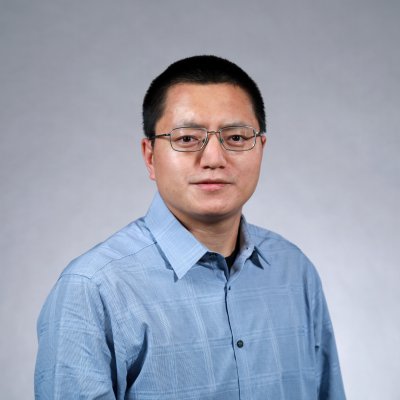
Hannes Hick is a Professor at Graz University of Technology , affiliated with the Institute of Machine Elements and Development Methodology . His research focuses on mechanical development, tribology, and systems engineering for automotive and industrial applications. He actively contributes to engineering education and methodology standardization. Research Interests Hydrogen internal combustion engines System modeling and digital twins Tribology in electric drivetrains Sustainable engineering practices MBSE (Model-Based Systems Engineering) Friction and wear analysis Article Trends His recent work emphasizes hydrogen propulsion systems, model-based approaches for interdisciplinary engineering challenges, tribological optimization for sustainable mobility, and integrating AI with mechanical design workflows. Labs and Teams He leads research at the Institute of Machine Elements, focusing on mechanical validation and development methodologies for advanced powertrain systems.
Christoph Gehlen is Professor and Chair of Materials and Materials Testing in Civil Engineering at the Technical University of Munich (TUM), based at Franz-Langinger-Str. 10 in Munich. His research group focuses on advanced concrete technologies, materials science, and digital construction methods, with significant contributions to additive manufacturing in civil engineering through the Collaborative Research Center TRR 277. His research spans concrete technology, durability assessment, and sustainable construction practices. Key interests include corrosion mechanisms in reinforced concrete, non-destructive testing methodologies, and additive manufacturing techniques like Selective Paste Intrusion (SPI). Recent work emphasizes 3D concrete printing for structural applications, life cycle assessment of printed elements, and fundamental studies on material behavior under environmental stressors including carbonation, chloride exposure, and freeze-thaw cycles. Analysis of his 15 most recent publications (2024-2025) reveals dominant research trajectories in digital fabrication of concrete structures, particularly SPI-based additive manufacturing. His work integrates materials science with structural engineering to develop functionally graded components, assess sustainability metrics, and solve reinforcement integration challenges. Significant interdisciplinary efforts address durability issues through electrochemical monitoring, coda wave interferometry, and advanced imaging techniques for concrete microstructure characterization. Gehlen leads the Chair of Materials and Materials Testing in Civil Engineering at TUM, which operates advanced laboratories for concrete characterization including confocal laser scanning microscopy and virtual testing environments. His team actively participates in TRR 277 (Additive Manufacturing in Construction), developing fabrication-aware design methods and experimental validation protocols for novel construction technologies.
Prof. Dr. Marek Basler is an Associate Professor of Infection Biology at the Biozentrum, University of Basel , leading a research group focused on the Type VI Secretion System (T6SS) in bacterial pathogens. His work bridges structural biology, molecular microbiology, and computational analysis to unravel the mechanisms of this contractile nanomachine. PhD in Microbiology (2007, Institute of Microbiology, CAS, Prague) Postdoctoral Fellow (2007–2013, Harvard Medical School) Assistant Professor (2013–2018) and Associate Professor (since 2018) at Biozentrum His research explores the structure, assembly, and therapeutic potential of the T6SS, a critical virulence factor in pathogens like Pseudomonas aeruginosa . Key themes include bacterial defense strategies , intermicrobial competition , and host-pathogen interactions . Recent projects highlight T6SS roles in antibiotic resistance and horizontal gene transfer . The most recent publications (2025–2024) reveal novel insights into T6SS activation by environmental stress , toxin diversity , and host cell targeting . Trends span microbial ecology , nanomachine dynamics , and computational modeling of bacterial interactions. Scientific Awards : EMBO Membership (2023) ERC Consolidator Grant (2019) EMBO Gold Medal (2018) Friedrich Miescher Award (2018) EMBO Young Investigator (2015) His lab (Basler Lab) utilizes state-of-the-art microscopy , biochemical techniques , and live-cell simulations (e.g., BacFighT6 ). Collaborations span institutions like Harvard Medical School and NCCR-AntiResist , with future work targeting antibacterial therapies .
Adriano Jorge Cardoso Moreira is an Associate Professor with Habilitation at the Department of Information Systems, School of Engineering, Universidade do Minho, Portugal. He is also a Senior Researcher at the Algoritmi Research Centre and Scientific Coordinator of the Urban and Mobile Computing department at Centro de Computação Gráfica. His research focuses on indoor positioning , mobile and context-aware computing , urban computing , and simulation of wireless networks . Research Interests : Indoor Positioning, Mobile Computing, Urban Mobility, Sensor Networks, Wi-Fi and UWB Localization, Smart Cities. Leadership : Coordinated the Computer Communications and Pervasive Media Group (2008-2016), Scientific Committee member (Director of MAP-tele PhD program in multiple terms), and leads the Master in Telecommunications and Informatics since 2021. Publications : Over 100 papers, including IEEE Transactions and Sensors journal articles, with an h-index of 23 and 2136 citations. Awards : First and second prizes in EvAAL-ETRI Indoor Localization Competitions (2015, 2016, 2017).
Ratnak SOK is an Associate Professor at Waseda University, specializing in thermal engineering, electrified vehicles, and internal combustion engine research. His work spans transportation electrification , CFD modeling , waste heat recovery , and low-carbon/e-fuel ICEs with aftertreatment systems. Doctor of Engineering (2015, Waseda University) MSME (2011, Institut Teknologi Bandung) Diplôme d'Ingénieur (2009, Institut de Technologie du Cambodge) DUT (2006, Institut de Technologie du Cambodge) His research focuses on xEV thermal management , internal combustion engine efficiency , and thermoelectric waste heat recovery , supported by 44 peer-reviewed papers and 340 Scopus citations. Recent work integrates machine learning and CFD simulations for combustion control and battery modeling. Scientific accolades include: Young Investigator Award (2025 Japan Society of Automotive Engineers) SAE International Journal editorial board member Chair, 2025 ASME Rail Transportation Symposium His academic leadership extends to organizing technical sessions at IEEE, SAE, and FISITA conferences.
Paolo Riva is a Full Professor of Structural Engineering at the Department of Design and Technologies of the Faculty of Engineering, University of Bergamo. He has served as Dean of the Faculty of Engineering (2009-2012) and Director of the Department of Engineering at the same university since 2012. His expertise lies in seismic engineering and structural analysis of reinforced concrete structures. Professor Riva graduated in Civil Engineering from Politecnico di Milano in 1984 and earned his Ph.D. in Civil Engineering from the University of Waterloo, Canada in 1987. He began his academic career as a researcher at the University of Brescia (1991-2001), became Associate Professor there in 2001, and joined the University of Bergamo as Full Professor in 2005. His primary research interests focus on the seismic behavior of reinforced concrete structures, particularly structural walls and prefabricated structures. He also specializes in seismic retrofitting of historic buildings, nonlinear analysis of reinforced concrete structures, and fire behavior of reinforced concrete structures. His work bridges theoretical analysis with practical applications for enhancing structural safety in earthquake-prone regions. Professor Riva's recent publications demonstrate a strong focus on seismic damage assessment, structural retrofitting solutions, and sustainability in structural engineering. His research often addresses practical challenges in post-earthquake scenarios, including damage identification through advanced monitoring techniques and development of innovative retrofit strategies for existing structures. A notable trend is his increasing emphasis on integrating sustainability principles into seismic retrofitting practices. Seismic Reliability of Structures (WP3 - Reluis), 2022, 24 months Structural vulnerability models for natural hazards and industrial cascading effects, 2024, 33 months Sustainable Approaches For Earthquake Resistant_REhabilitation solutions for the BUILT environment, 2024, 15 months Professor Riva has directed all these research projects as Scientific Director. His expertise has been recognized through appointments to post-seismic emergency commissions following major earthquakes in Italy, where he provided critical guidance on intervention methods for seismic repairs and improvements for public and monumental buildings.
Jingyi Chen is a Professor in the Department of Chemistry and Biochemistry at the University of Arkansas. She serves as Vice Chair in the College of Arts & Sciences and leads the Chen Research Group focused on rational design and synthesis of functional nanomaterials for energy conversion and human-health applications. PhD, Chemistry & Nanotechnology – University of Washington (2006) MA, Chemistry – State University of New York College at Buffalo (2002) BS, Chemistry – Sun Yat-sen University (1997) Her research spans three major projects: Project I: Developing cost-effective catalysts for fuel cell applications through precise synthesis of copper-based bimetallic nanocrystals. Project II: Surface modification of nanoparticles with polydopamine for bio-related applications like low-friction coatings. Project III: Creating nanoplatforms for targeted drug delivery against antibiotic-resistant infections and cancer. Recent publications focus on nickel phosphide nanoparticles (2024), perovskite oxide oxygen evolution catalysts (2023-2024), and silver nanoparticle antimicrobial mechanisms (2020-2023). Her group has produced 15+ recent publications in journals like ACS Nano , J. Phys. Chem. C , and ACS Infectious Diseases . Award highlights include: Thomson Reuters Top 1% Highly Cited Researcher (2015-2018) Arkansas Research Alliance Fellow (2018) Women’s Giving Circle Award (2014) Ralph E. Powe Junior Faculty Enhancement Award (2011) She has mentored over 20 graduate and undergraduate students , including Ryan Manso (PhD 2022), Isabelle Niyonshuti (PhD 2021), and David Thompson (DOE SCGSR awardee 2022). Her lab (CHBC 304/306/309) employs advanced tools like synthesis setups , electrochemical stations , and laser irradiation systems .
Kate Laskowski is an Associate Professor in the Department of Evolution and Ecology at University of California, Davis , focusing on behavioral diversity and plasticity. Her research explores how evolutionary processes shape developmental mechanisms generating individual variation. Education: B.S. in Biological Sciences (2006, UMBC), Ph.D. in Integrative Biology (2013, University of Illinois) Her work integrates ultimate and proximate perspectives to analyze how genetic, parental, and experiential cues build phenotypes. Recent research emphasizes clonal fish models to study non-genetic origins of behavior, eco-evolutionary dynamics, and collective behavior across scales. Publications from 2023-2025 highlight themes in behavioral repeatability , predation risk responses , genetic life-history trade-offs , and social conformity vs. individuality . Her methods combine experimental studies with statistical modeling and meta-analytic frameworks. Scientific Awards: Sloan Fellow (2023) Kate collaborates with the Center for Population Biology and advises in the Animal Behavior and Population Biology graduate programs. Her lab investigates behavioral individuality in clonal systems, with applications to conservation and evolutionary theory.
Bo Markussen is a Professor at the University of Copenhagen within the Department of Mathematical Sciences . He is also a member of the Data Science Laboratory , where he contributes to statistical methodology and interdisciplinary collaborations. His academic journey began with a Cand.Scient (MSc) and PhD in Statistics from the University of Copenhagen, awarded in 1998 and 2002 respectively. 2012–present: Professor, Department of Mathematical Sciences, University of Copenhagen 2009–2012: Associate Professor, Department of Basic Sciences and Environment, University of Copenhagen 2006–2009: Assistant Professor, Department of Basic Sciences and Environment, University of Copenhagen Bo Markussen's research focuses on applied statistics , particularly in functional data analysis and multiple testing corrections in genetics . His work spans diverse domains including environmental science, agriculture, and public health. Recent research output highlights applications in Arctic climate data analysis, fire risk modeling, plant stress phenotyping, and nutritional biomarker prediction. His recent publications demonstrate a strong trend toward machine learning integration with statistical modeling , addressing challenges in high-dimensional data analysis and environmental risk assessment. Collaborations span institutions in Denmark and internationally, reflecting his engagement in pan-Arctic climate studies and tropical agricultural research. 2018–present: Associate Editor, Scandinavian Journal of Statistics 2017–2019: Chair, Danish Society for Theoretical Statistics 2015–2017: Board Member, Danish Society for Theoretical Statistics As a central figure in the Data Science Laboratory , Markussen leads statistical consultancy initiatives and contributes to methodological advancements. His expertise bridges theoretical statistics with real-world applications, particularly in handling complex datasets across biological and environmental domains.
Kristine Beate Walhovd is a Professor at the Department of Psychology , University of Oslo, and co-leader of the Center for Lifespan Changes in Brain and Cognition (LCBC) . She is affiliated with the UiO:Life Science initiative and has led major projects like Lifebrain (€2.5M) and Neurocognitive Plasticity (ERC Starting Grant, €1.5M). Current roles: Professor (since 2016), Co-leader of LCBC Key affiliations: University of Oslo, Lifebrain Consortium, UiO:Life Science Her research focuses on lifespan brain and cognitive changes , examining both positive/negative developmental trajectories from age 4 to 90. She studies interactions between biomedical risks (e.g., Alzheimer's, fetal drug exposure) and cognitive outcomes, employing MRI , DTI , and ERP methodologies. Recent publications highlight work on Alzheimer's biomarkers , sleep-brain interactions , memory consolidation , and fetal brain influences . Her 2025 papers in Scientific Reports and Neurobiology of Aging examine hippocampal stability and brain network segregation. Awards include: 2015 University of Oslo Research Prize (shared with Anders Fjell) 2011 Member, Norwegian Academy of Sciences and Letters 2006 His Majesty the King's Gold Medal for best doctoral thesis She supervises doctoral candidates and teaches cognitive neuroscience , experimental methods , and thesis writing .
Damian Grela is a Lecturer in the Department of Automation and Computer Science at the Faculty of Electrical and Computer Engineering, Cracow University of Technology. His work spans two distinct research domains: software engineering (focusing on BPEL processes, web services, and fault injection testing) and environmental engineering (specializing in diatomite-based biogennic pollutant removal, rain gardens, and surface water quality monitoring).
Yue Li is the Leonard Case Jr. Professor in the Department of Civil and Environmental Engineering at Case Western Reserve University. He specializes in resilient and sustainable infrastructure systems, focusing on structural reliability, probabilistic design, and climate change adaptation. His research addresses risk assessment for infrastructure under extreme events, including earthquakes, hurricanes, and climate impacts. Education: PhD in Civil Engineering, Georgia Institute of Technology, 2005 Research Interests: Dr. Li’s work integrates advanced statistical methods and data-driven approaches to enhance infrastructure resilience. Key areas include: Probabilistic modeling of structural systems Risk-informed decision-making for multi-hazard mitigation Climate change impacts on material durability and performance Asset management and lifecycle cost analysis Notable Contributions: His recent publications emphasize data-driven resilience metrics for water systems and seismic risk assessment for bridges. He has pioneered frameworks for evaluating infrastructure vulnerability under climate change, including corrosion effects and extreme weather adaptation. Awards: ABSE Outstanding Paper Award (2023) Case School of Engineering Teaching Award (2020) Nomination for John S. Diekhoff Award (2019) Leadership Roles: Dr. Li serves as Section Editor for the ASCE Journal of Structural Engineering and chairs multiple technical committees on safety and reliability. He leads initiatives to standardize multi-hazard design practices and resilience evaluation methodologies.
Dr. Elia Gironacci is a Lecturer and Director of Studies in Civil and Environmental Engineering at the University of Warwick's School of Engineering. He holds a PhD in Computational Mechanics (Warwick, 2018), MSc (2013) and BSc (2010) from the University of Marche, Italy. His research focuses on computational fracture mechanics of quasi-brittle materials and engineering education for apprenticeship programs. Teaching responsibilities include leading modules like ES196 Statics and Structures and ES1A4 for apprentices. He manages the Civil Infrastructure Engineering Degree Apprenticeship program and chairs the University Apprenticeship Tutor Network. His work integrates advanced numerical methods with educational innovation, particularly in STEM induction programs and apprenticeship learning experiences. Key research contributions include stochastic modeling of crack propagation, non-local probabilistic methods, and shale rock fracture mechanics. His work bridges computational mechanics with practical engineering applications, emphasizing dimensionality reduction techniques and material heterogeneity. He actively participates in institutional committees (Education, Health & Safety) and has published in journals like Rock Mechanics and Rock Engineering and International Journal of Mechanical Sciences. His book chapter on STEM induction frameworks highlights his dual focus on research and pedagogy.
Xiaobo Li is a Professor in the Department of Bio-Medical Engineering at New Jersey Institute of Technology. Holding a Ph.D. in Computer Aided Geometric Design from the University of Birmingham and a B.S. in Automation from Nanjing University of Aeronautics, their research bridges computational methods with neuroimaging and psychiatric disorder analysis. Ph.D., University of Birmingham (Computer Aided Geometric Design, 2004) B.S., Nanjing University of Aeronautics (Automation, 1999) Dr. Li’s work focuses on applying machine learning and graph theory to understand brain network abnormalities in conditions like ADHD , schizophrenia , and traumatic brain injury . Their studies analyze structural-functional connectivity , reward processing , and gut-brain axis interactions using fMRI , fNIRS , and diffusion tensor imaging . Recent publications highlight their development of tools like the GAT-FD MATLAB toolbox for brain network analysis and their exploration of multimodal MRI in schizophrenia diagnosis. They also investigate the neurobiological effects of photobiomodulation and vision therapy interventions.
Shiguo Jiang is a tenured Associate Professor in the Department of Geography, Planning, and Sustainability at the University at Albany's College of Arts and Sciences. Currently on sabbatical during Fall 2025, he maintains active research leadership through the Spatial Analysis Laboratory. His affiliations extend to the PhD Program in Information Science (College of Emergency Preparedness, Homeland Security and Cybersecurity) and the MS Program in Biodiversity, Conservation, and Policy (Department of Biological Sciences), reflecting his interdisciplinary approach. Dr. Jiang's educational background includes a PhD from Ohio State University (2012), an MS from Peking University (2004), and dual BS/BA degrees from Peking University (2001). His research integrates geospatial technologies with spatial statistics to investigate land use dynamics, forest ecosystems, and human-environment interactions. Key application areas include urban systems analysis, climate change modeling, and crime pattern detection, with notable fieldwork in the Maya Forest of Belize. His publication portfolio reveals an evolution from urban fractal analysis (early Beijing studies) toward integrated socio-ecological research, with recent emphasis on crime geospatial modeling and climate-ecosystem interactions. The 15 most recent articles demonstrate methodological innovation in remote sensing reconstruction and spatial statistics, applied across environmental, criminological, and public health domains. Dr. Jiang actively mentors graduate students across departments including Geography, Sociology, Information Science, and Criminal Justice. While currently unable to fund Graduate Research Assistants, he collaborates with students who secure external funding. His Spatial Analysis Laboratory requires technical proficiency in programming (Python/R/Matlab) and geospatial software, welcoming undergraduates through postdoctoral researchers with relevant skills.