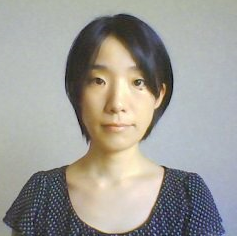
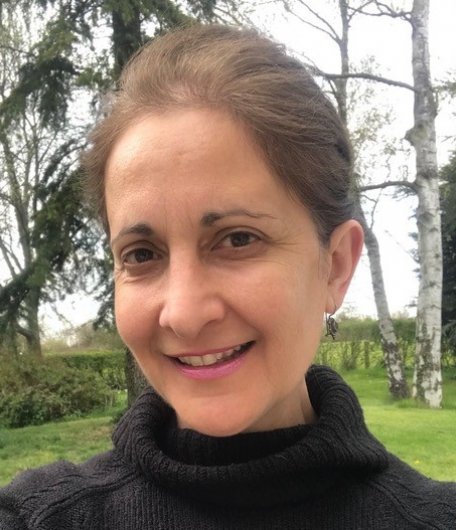
Dr. Boris Worm is a Full Professor in the Department of Biology at Dalhousie University, affiliated with the Faculty of Science. His academic journey includes a MSc (University of Kiel, 1996) and PhD (University of Kiel, 2000), followed by postdoctoral research at Dalhousie University and the Leibniz Institute for Marine Science. He specializes in marine conservation biology, biodiversity science, community ecology, and macroecology. His research focuses on global marine biodiversity trends, ecosystem functioning, and conservation solutions. He teaches Biology 2060: Introductory Ecology and BIOL 3065: Conservation Biology , emphasizing quantitative methods and policy implications. His lab (wormlab.biology.dal.ca) explores topics like phytoplankton dynamics, fisheries impacts, and climate adaptation. Recent work addresses bycatch mitigation, climate risk indices, and fisheries governance. Collaborations include Ocean School (oceanschool.nfb.ca), promoting ocean literacy. He advises PhD and MSc students researching fish population dynamics, elasmobranch bycatch, and open-ocean ecosystems. Education: MSc, University of Kiel, Germany (1996) PhD, University of Kiel, Germany (2000) Postdoc, Dalhousie University (2000–2003) Postdoc, Leibniz Institute (2003–2004) Labs & Teams: Worm Lab (marine conservation and biodiversity)
Professor Carl Thompson is a leading academic in applied health research at the University of Leeds' School of Healthcare within the Faculty of Medicine and Health. His roles include being a registered nurse with extensive NHS experience, from nursing assistant to NHS Trust non-executive director. Previously, he held a personal chair in health sciences at the University of York. His expertise spans clinical decision making, implementation science, and evidence-based healthcare. Research focuses include care home quality improvement, wearable technology applications, and computerised decision support systems. Notable projects include the £2m CONTACT study on Bluetooth wearables for contact tracing in care homes and the STaRQ study examining nurse staffing impacts on care quality. He collaborates internationally with institutions in Australia, the Netherlands, Canada, and the US. Education: DPhil in Social Policy (University of York, 1996), BSc Hons in Social Policy (1st class, 1993), RN qualification (York College of Nursing, 1989). Grants: Secured or collaborated on £20m+ projects from NIHR, MRC, and ESRC. Teaching: Covers medical informatics, decision making, and leadership in healthcare education. Awards: No specific awards listed, though his extensive funding and leadership roles reflect professional recognition. Leadership: Former Director of Research in the School of Healthcare and Pro Dean for Applied Health Research. His research emphasizes 'how people use information in clinical practice and policy making,' with a focus on translating evidence into practice. He advises on national funding panels (NIHR HSDR, Irish Health Research Board) and mentors PhD students in decision science and implementation research. Current initiatives include the Nurturing Innovation in Care Homes (NiCHE Leeds) collaboration and membership in the NIHR Yorkshire and Humber CLAHRC's Improvement Science theme. He actively supports implementation science through visiting professorships at the Universities of Alberta and East Anglia.
Prateep Nayak is a Professor at the School of Environment, Enterprise and Development within the University of Waterloo. His academic focus combines political science, environmental studies, and international development through transdisciplinary research on human-environment connections. With expertise in commons governance, social-ecological resilience, environmental justice, and political ecology, he has taught courses like INDEV 100: Introduction to International Development SUSM 675: Governing the Commons INDEV 617: Environmental Change and Governance He has received prestigious awards including the Trudeau Scholarship, Harvard Giorgio Ruffolo Fellowship, Canada's Governor General Academic Gold Medal, and SSHRC Banting Fellowship. Professor Nayak's research explores social-ecological systems, emphasizing vulnerability-to-viability transitions in small-scale fisheries, gender dynamics in dried fish value chains, and multidimensional justice in coastal governance. His Google Scholar publications since 2017 highlight Asia-Africa comparative studies, marine protected areas, and policy frameworks for adaptive management. Article keywords reveal engagement with climate resilience, equity in resource access, and institutional pluralism in governance systems. Scientific awards include Trudeau Scholar Harvard Giorgio Ruffolo Fellow in Sustainability Science Canada's Governor General Academic Gold Medal SSHRC Banting Fellow His fieldwork experience includes development projects in India focusing on community-based governance of land, water, and forests at the research-implementation-policy interface. Current teaching aligns with his expertise in international development and environmental governance, while historical publications show long-term engagement with coastal systems analysis and regime shifts.
Professor Elena Giovannoni is a full-time faculty member at the University of Birmingham , where she holds the position of Professor of Accounting and serves as Head of the Department of Accounting within the Birmingham Business School . She is an active researcher and academic leader with a strong international presence. Research Interests: Elena Giovannoni's research bridges critical and historical perspectives in accounting and organization studies. She investigates performance measurement and management control systems across diverse sectors—including the space industry, food industry, knowledge-intensive organizations, and the arts—with a focus on organizational change and sustainable development. Her work explores how calculative practices shape responses to climate change, often through a temporal lens. Methodologically, she employs case studies , archival research , and multimodal approaches . Recent Publications Trends: Her recent scholarly output (2018–2025) reveals a consistent focus on the interplay between accounting, history, and visuality. She examines accountability in cultural contexts (e.g., music, art), the materiality of organizational objects, and the future of sustainability reporting. Her editorial work on the Handbook of Historical Methods for Management underscores her leadership in advancing historical methodologies in management research. Scientific Recognition: Higher Education Academy Fellowship (2017) Editorial Board Member, Accounting Forum Editorial Board Member, Accounting, Auditing & Accountability Journal Editorial Board Member, Accounting History Editorial Board Member, Family Business Review Editorial Board Member, Organization Studies Advising and Grants: She has led multiple projects funded by international bodies, resulting in publications in top-tier journals. While no specific advisees are listed, her role as department head and PhD supervisor implies significant mentoring responsibilities. She contributes to academic knowledge dissemination through editorial leadership and collaborative research. Labs and Research Groups: While no formal lab is mentioned, her research is closely tied to the Department of Accounting and its research clusters, particularly those focused on critical accounting, sustainability, and historical methods. Her collaborative work with scholars across Europe indicates strong international research networks.
René Bohnsack is a Full Professor of Strategy and Innovation at the Universidade Católica Portuguesa (UCP), Lisbon. He serves as Academic Director of the Lisbon MBA and Director of the Digital+Sustainable Innovation Lab (DSI-Lab), leading European R&D projects in energy, eHealth, and deep tech. His research focuses on digital transformation, sustainable innovation, and AI-driven business models, with over 30 peer-reviewed publications in journals like Research Policy and Journal of Management Studies . Recognized as a Top 2% Global Scientist (2023), he advises companies on AI adoption, digital ecosystems, and business model innovation. Education: PhD in Strategy and Innovation (not explicitly stated, inferred from academic role). Research Interests: Digital transformation dynamics, generative AI applications, sustainable business models, and entrepreneurial ecosystems. Key Venture Experience: Co-founder of fitbase.de (sold to PE 2020), scoocs.co, and co-mind.ai. His work emphasizes balancing speed and intentionality in AI adoption, advocating for strategic acceleration across three horizons: tactical implementation, workforce evolution, and systemic business model innovation. He frequently speaks at global conferences and is a TEDx speaker. Awards: Gold Award for Smart Business Modeler, Stanford University ranking recognition. Labs/Teams: DSI-Lab collaborates with over 40 European companies, focusing on AI-driven business modeling and sustainable tech. Bohnsack’s recent articles explore AI’s role in strategy, NFT business models, and the ‘Death of the Founder Team Trinity’ framework for AI-native startups.
Professor Wai Fong Chua is a distinguished academic in accounting practices at the University of Sydney Business School. She holds a first-class honours degree and PhD from the University of Sheffield. Her research focuses on management accounting as a social practice, qualitative fieldwork methodology, and the impact of technology on organizational control. She has contributed extensively to top-tier journals like Accounting, Organizations and Society and serves as its Editor. Her work explores big data analytics, NGO accountability mechanisms, and the interplay between emotions and accounting systems. Education: Bachelor of Arts (Honours), University of Sheffield PhD in Accounting, University of Sheffield Research Interests: Her current research investigates the transformative role of technology in accounting practices, including big data's impact on organizational control, immersive technologies for NGO accountability, and the influence of 'passionate interests' on accounting systems. She collaborates internationally with institutions like Royal Holloway University of London and the University of Bristol. Publications & Recognition: Over 50 peer-reviewed articles and book chapters, including landmark works on gamification in management control and climate-related financial disclosures. She has received prestigious awards such as the Member of the Order of Australia (2012) and an Honorary Doctorate from the University of Jyvaskyla (2009). Grants & Leadership: Led projects on climate change sustainability strategies and reconciliation initiatives with Indigenous communities. Served on editorial boards of major journals and contributed to professional accounting bodies like CIMA and Chartered Accountants ANZ. Labs/Teams: Engaged in interdisciplinary research with the Sydney Business School's Accounting Foundation and collaborates with global networks in climate finance and digital analytics.
Jazlin Ebenezer is a Professor and Charles H. Gershensen Distinguished Faculty Fellow in the College of Education at Wayne State University, Detroit, MI, USA, where she has been since Fall 2001. Prior to this, she served for ten years at the University of Manitoba, Canada. Her academic journey includes a Ph.D. in Science Education from the University of British Columbia (1991), an M.Ed. and B.A. in Education (Physical Science) from Western Washington University, and a B.Sc. (Hons) in Chemistry from Madurai University, India. Her research is centered on conceptual change teaching and learning in science and technology-embedded scientific inquiry . She has made significant contributions to science teacher education through curriculum development, qualitative research, and international collaboration. Her work emphasizes student-centered, inquiry-based learning and the integration of technology to enhance scientific understanding. The 15 most recent publications reflect a strong focus on technology integration in science education, teacher and student conceptions, and innovative pedagogical models. Key themes include phenomenography as an assessment tool, discourse in science classrooms, cognitive development through multiple representations, and the use of environmental research to foster inquiry. Her research spans K-12 and higher education contexts, with a consistent emphasis on equity, holistic development, and reflective practice. Charles H. Gershensen Distinguished Faculty Fellowship (2019-21) Fulbright Specialist Award (2013-18) Marquis America Who's Who (2003) Rh Award (Research), University of Manitoba (2000) Research Merit, Faculty Association, University of Manitoba (1999) Outstanding Students Honoring Outstanding Teachers Award, University of Manitoba (1994) Dr. Ebenezer has been a principal investigator on multiple grants, including an NSF ITEST grant (PI, $1.2M) and a $1.2M NSF grant for integrating IT into Lake Erie ecosystem research. She has served as a consultant on international projects, such as a TÜBİTAK project in Turkey. Her advising includes mentoring pre-service teachers and guiding research on conceptual change and curriculum development. She has also been a member of advisory boards for large-scale educational initiatives. She has established and led research models such as the Common Knowledge Construction Model and the Technology-Embedded Scientific Inquiry (TESI) Model . She has conducted extensive international work, delivering keynotes and seminars across India, Turkey, Thailand, China, and Sri Lanka, often focusing on science education reform, qualitative research, and curriculum innovation.
Professor Karen Turner is a Professor and Director of the Centre for Energy Policy at the University of Strathclyde, which she founded in 2014. She leads research funded by UK Research and Innovation, philanthropic organizations, and government bodies. Her work focuses on ensuring equitable and sustainable transitions to net zero, influencing policy and public discourse on energy efficiency, electric vehicles, and carbon capture and storage. Education: PhD in Economics, University of Strathclyde (2002) MSc Economics, University of Glasgow (1999) BA (1st Class Honours) in Economics, University of Strathclyde (1998) Research Interests: Her research examines the economy-wide consequences of energy policy and industry developments, particularly in enabling decarbonization solutions. Key areas include: Economic impacts of energy transitions Public policy challenges in deploying large-scale decarbonization technologies Equitable prosperity in net-zero transitions Advising and Grants: Professor Turner supervises PhD students and has led over 50 projects, including: UK Energy Research Centre Phase 5 (EPSRC-funded, 2024–2028) Developing a mixed methods approach for low-carbon heat transition in Scotland (Energy Action Scotland, 2024–2027) Labs/Teams: As Director of the Centre for Energy Policy, she collaborates with institutions like the National Infrastructure Commission and the Climate Change Committee. The Centre focuses on interdisciplinary research to address global energy challenges.
Marco Seeber is a Professor at the University of Agder's Department of Political Science and Management. He holds a PhD from the University of Chieti Pescara (Italy) and has previously worked at the University of Lugano (Switzerland) and Ghent University (Belgium). His research focuses on public policy, governance, and management with specialization in higher education systems, research evaluation, and science policy. Professor Seeber's research examines policy implementation, research metrics, peer review systems, academic careers, internationalization, and interdisciplinarity in higher education. He employs comparative and quantitative methodologies to analyze governance structures and policy impacts across different educational systems. He has received significant recognition including the Swiss Prize for Research in Education (2019) and fellowships from IEEE, AIUM, and AIMBE. As Co-Editor-in-Chief of the European Journal of Higher Education, he shapes scholarly discourse in his field. He currently coordinates the Horizon CSA project IANUS (2025-) and leads courses in organizational theory, research methodology, and leadership.
Jeanette Willert is an Associate Professor at the Department of Accounting , Copenhagen Business School , specializing in Management Control Systems and Accounting Information Systems . Her research explores cross-cultural management practices, corporate governance, and digital transformation in accounting. Education: PhD in Management Control Systems, Copenhagen Business School (2016) She has published extensively on cultural influences on management controls, regulatory compliance in digital systems, and organizational performance. Her work includes empirical studies across Nordic, Anglo-Saxon, and Germanic cultural regions. Advising: Supervises graduate and diploma theses in Accounting Information Systems She also contributes to media discussions on Danish accounting legislation and participates in projects analyzing ERP system effectiveness.
Yuki Tanaka is a Professor at the Department of Contemporary Business, Faculty of Economics, Hosei University . Her research focuses on financial accounting and ESG disclosures , examining how corporate sustainability reporting impacts decision-making and organizational value. PhD in Commerce from Hitotsubashi University (2012) Specializes in empirical research using econometrics, text mining, and field studies Active in Japan Bankers Association and Trust Companies Association of Japan Research Themes include corporate ESG disclosures, climate change risk management, and AI applications in sustainability evaluation. She leads projects like "AI-based ESG Information Analysis" (JSPS Grant-in-Aid (B), 2022-2025) and "Climate Change Disclosure Content Analysis" (JSPS Grant-in-Aid (C), 2020-2023). Professional Memberships : Japan Accounting Association Social Accounting Society of Japan Japan Investor Relations Association
Eugene Kennedy is a Professor in the Department of Educational Research at Louisiana State University's College of Human Sciences & Education. Holding a PhD in Educational Research Methodology from the University of South Carolina (1990), Kennedy's career spans academic research, state education departments, and technical consulting roles. His work focuses on educational effectiveness, psychometrics, and technology integration in education. Bachelor's: Sociology, Benedict College (1977) Master's: Educational Statistics & Measurement, University of Iowa (1982) PhD: Educational Research, University of South Carolina (1990) Kennedy's research interests include educational research methodology , psychometrics , school effectiveness , STEM education , data-driven decision making , and learning analytics . His recent publications demonstrate increasing focus on AI's role in education and data-driven strategies for improving educational outcomes. His academic work shows trends in educational technology integration , quantitative research methods , and STEM equity initiatives . Key themes include using data mining for educational insights, technology tools for school leadership, and innovative teaching strategies to improve student outcomes. Kennedy has participated in grants including: Co-PI for Evaluation proposal for the EBRPS American Recovery and Reinvestment Act Program (2010-2011) PI for Longitudinal Study with University of Louisiana Lafayette (2008-2009) Contact: ekennedy@lsu.edu | 221 Peabody Hall | 225-578-2193
Renaud Crespin serves as a CNRS Junior Professor at Sciences Po's Centre for the Sociology of Organisations (CSO), where his research integrates the sociology of public action, science and technology studies, and labor sociology to examine how health and environmental policies are rationalized through technical instruments and scientific expertise. His work critically analyzes the transnational circulation of policy instruments like screening tests across domains including blood donation, HIV/AIDS response, road safety, and drug policy. His academic credentials include: PhD in Political Science from Pantheon-Sorbonne University (2003), with dissertation on "Appropriation and public regulation of a biological tool: The social career of HIV tests, a comparative study (France, USA, Canada, Netherlands)" DEA (M.Phil) in Organisations and Public Policy from Pantheon-Sorbonne University (1995) Master's degree in Political Science from Pantheon-Sorbonne University (1994) Crespin's research reveals how seemingly neutral technical tools become embedded in complex power relations that shape professional practices and policy outcomes. His comparative studies demonstrate how instruments like workplace drug testing technologies travel across national contexts while being adapted to local organizational practices. Recent work examines pandemic response models, environmental risk assessment, and the ecosystemic approach to workplace addiction prevention, highlighting tensions between scientific evidence and political decision-making. As co-leader of the CSO's Knowledge, Science and Expertise research program since 2017, Crespin has fostered interdisciplinary dialogue on expertise in governance. His leadership extends to the CNRS' Institute for Humanities and Social Sciences scientific board (since 2014) and the CNRS' interdisciplinary commission on Methods, practices, and communications of science and techniques (since 2017). He has significantly contributed to public policy through appointments to the Observatory on Health Care Professionals' Quality of Life at Work (2018-2020) and the ANSES Environment-Health-Work national research programme's scientific committee (2014-2018).
Dr. Helen Demetriou is an Associate Professor of Psychology at the University of Cambridge Faculty of Education , where she integrates psychological research with educational practice. A Chartered Psychologist (BPS) and Fellow of Homerton College, she serves as Undergraduate Tutor and Director of Studies, while also providing support for discrimination/harassment concerns. Education: MA (Hons) in Psychology (University of Dundee), PhD in Developmental Psychology (King's College London, Institute of Psychiatry) Professional Roles: Faculty member (1998-present), British Psychological Society accreditation program coordinator, Kazakhstan teacher development consultant Her research explores children's social-emotional development , focusing on empathy, friendships, pupil consultation, and creativity in classrooms. Key projects include: OFSTED-funded studies on pupil progress QCA research on boys' MFL performance ESRC-funded pupil voice initiatives Gatsby Technical Education Project on teacher sustainability Collaborative work with Bill Nicholl on D&T classroom creativity Recent publications emphasize intersections between empathy and innovation in educational settings. She contributes to parliamentary briefings and serves on editorial boards for Improving Schools , Social Development , and Educational Studies .
Barbara Bigliardi is an Associate Professor at the Department of Engineering and Architecture, University of Parma, with national scientific qualification for full professor in Economic-Management Engineering (SSD ING-IND/35). She serves as President of the Management Engineering Program at University of Parma and Director of Bachelor's/Master's programs at University of San Marino, co-leading double-degree initiatives between the two institutions. Over 100 publications (57 SCOPUS-indexed) with H-index=20 Editorial roles: Cambridge Scholars Publishing (2019), MDPI Sustainability, Sci, European Journal of Innovation Management Key research areas: Open Innovation, Technology Transfer, Food Industry Innovation, Industry 4.0, Supply Chain Sustainability Recent Publications (2024-2025) demonstrate leadership in: Industry 4.0 integration with circular economy AI applications in public administration and healthcare Digitalization of food supply chains Green startup resource orchestration Simulation-based optimization in remanufacturing Sustainable additive manufacturing Scientific Recognition : 2005 Emerald Highly Commended Award 2013 Most Cited Paper in Trends in Food Science & Technology 2019 Highly Cited Paper in Review of Policy Research Research Leadership includes: National Observatory on Start-ups (President since 2021) National Observatory on Reputation (Vice President since 2019) INAIL-funded mobile risk assessment systems (2018-2020) INAF space technology transfer projects (2018-present) Academic Contributions : Supervised over 300 theses Deputy Coordinator of Industrial Engineering Doctoral Program Director of Management Engineering Programs (Parma & San Marino) Founder of academic spin-offs: Sistemi per il marketing di contenuto S.r.l. (2016-present), Univenture SrL (2006-2010)