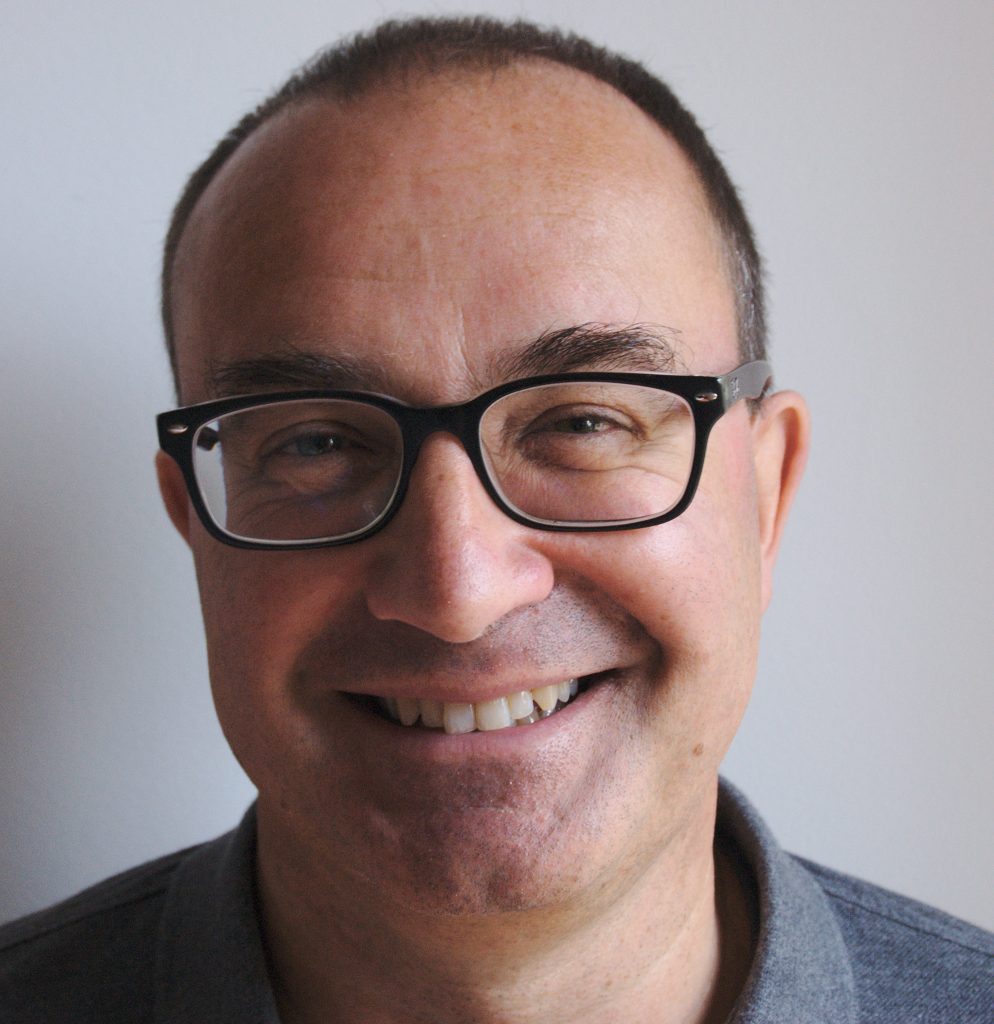
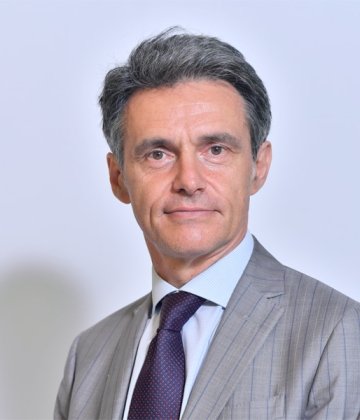
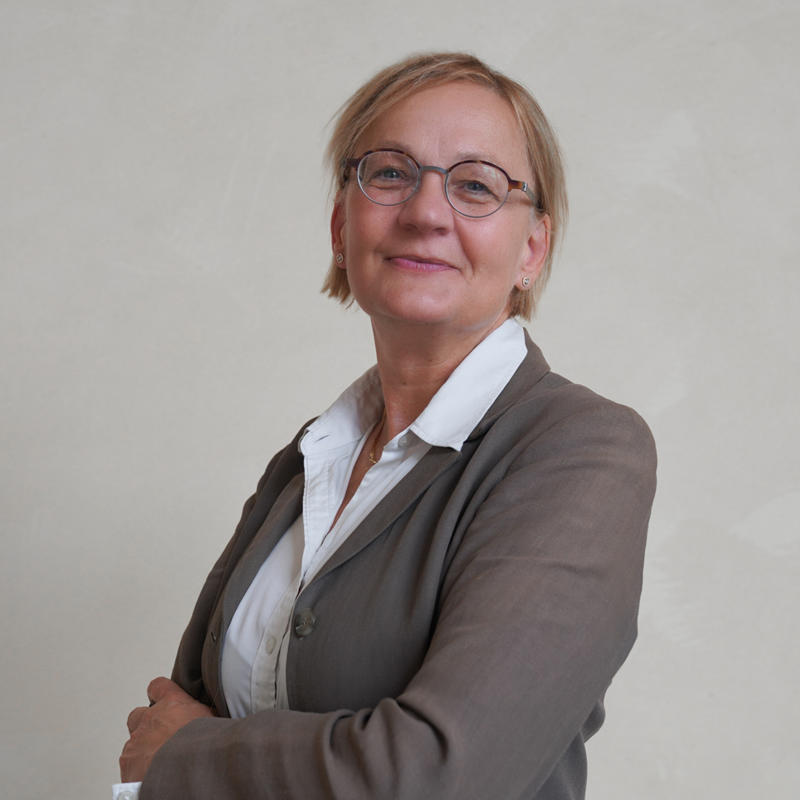
Barbara Caputo is a Full Professor at Politecnico di Torino, leading the VANDAL Laboratory and directing the AI@PoliTo Interdepartmental Lab. She holds a double affiliation with the Italian Institute of Technology (IIT) and has held roles at Idiap-EPFL and Sapienza University. Her research focuses on AI, computer vision, domain adaptation, and federated learning. She contributes to national AI policy, including the Italian Strategy on AI and the National PhD on AI for Industry 4.0. She is an ERC Laureate and ELLIS Fellow, co-founding ELLIS society. Her work spans visual place recognition, action recognition, and cross-domain learning. Education: PhD in Computer Science from KTH Royal Institute of Technology (2005). Major roles include Rector’s Advisor on AI at PoliTo, Board Member of ELLIS, and coordinator of the AI & Industry 4.0 vertical in the National PhD program. Awards include ERC Laureate (2017), ELLIS Fellow (2019), and Inspiring Fifty Italy (2018). Her research emphasizes federated learning, domain adaptation, and AI ethics. Recent articles explore domain generalization, resource-efficient federated models, and AI-environment interactions. She collaborates with institutions like MUR, CNR, and the European Commission on AI policy and tech initiatives.
Michele Zorzi is a Professor of Telecommunications at the School of Engineering, University of Padova, Italy, where he has held a faculty position since 2003. He leads the SIGNET (Signal processing and Networking) Research Group, focusing on cutting-edge wireless networking challenges including mmWave communications and underwater networks. His extensive publication record exceeds 600 papers in top-tier journals and conferences, reflecting significant contributions to the field through both theoretical and experimental work. He received his Laurea Degree (1990) and Ph.D. (1994) in Electrical Engineering from the University of Padova. Prior academic appointments include Politecnico di Milano (1993-1996), University of California San Diego (1995-1998), and University of Ferrara (1998-2003), where he progressed from Associate Professor to full Professor. His educational trajectory demonstrates deep roots in Italian academia with international exposure. Professor Zorzi's research spans wireless communications and networking, with current emphases on mmWave networking for vehicular systems, underwater acoustic/optical communications, non-terrestrial networks, and AI-driven networking solutions. His group conducts experimental validations including at-sea trials for underwater systems and testbeds for vehicular networks. Key projects include PRATA for predictive QoS in autonomous driving and IoT-based environmental monitoring of the Venice Lagoon, demonstrating practical applications of theoretical work. Analysis of his 2022-2025 publications reveals strong trends in applying artificial intelligence to networking challenges across diverse environments. There is significant emphasis on vehicular networks (predictive QoS, teleoperated driving), underwater systems (acoustic/optical communications, AUV swarms), and satellite networks (Starlink integration, NTN security). Experimental validation in real-world scenarios like the Venice Lagoon monitoring project and underwater sea trials characterizes his applied research approach. His scientific accolades include: IEEE Fellow (2007) IEEE Communications Society Best Tutorial Paper Award (2008, 2019) Stephen O. Rice Best Paper Award (2018) Multiple best paper awards at IEEE conferences (2005-2020) As principal investigator for numerous European and US research projects plus 20+ industry-funded initiatives, Professor Zorzi has mentored over 35 PhD students and post-docs. Graduates now hold prominent positions at institutions including Stanford, UCSD, CTTC, and Huawei. His SIGNET group maintains active international collaborations and contributes to open-source networking tools via GitHub, demonstrating commitment to community engagement. The SIGNET Research Group, housed within the Department of Information Engineering, operates specialized experimental facilities for mmWave and underwater communications. Current initiatives include AI-based predictive QoS frameworks for vehicular networks, underwater optical communication systems using ultraviolet light, and large-scale IoT deployments for environmental monitoring. The group's GitHub presence indicates strong open-science practices, while recent sea trials confirm hands-on experimental capabilities beyond theoretical work.
Luca De Benedictis is a Professor of International Economics and Network Analysis at the University of Macerata's Department of Economics and Law. His research focuses on international trade empirics, including trade specialization measurement, network analysis, and causal models. He has authored numerous articles on topics like gravity models, migration impacts, and historical trade networks. His work spans journals such as the Journal of the Royal Statistical Society and Network Science . He teaches courses in International Economics and Network Analysis. His research interests include economic geography, policy evaluation, and applied econometrics. Notable projects include analyzing the Erasmus Program's inclusivity, Roman road networks' legacy, and immigration's effect on trade. De Benedictis has secured funding from EU initiatives like COSTNET and GeComplexity, focusing on network data science and economic systems. He serves on editorial boards of journals like Italian Economic Journal and Journal of Historical Network Research . His work bridges theoretical models with empirical applications in trade, migration, and policy.
Anna Gottard is an Associate Professor of Statistics at the University of Florence, where she leads the Department of Statistics, Computer Science, and Applications. She directs the Florence Center for Data Science (FDS) and participates in the Technical Scientific Committee of the Tuscan Center for Big Data, Data Science, and AI (CBDAI). Her research focuses on multivariate statistical models, particularly graphical models, and extends to statistical machine learning, fair models, and directional data analysis. She is an Associate Editor for the Journal of the Royal Statistical Society Series A (JRSSA) and Statistical Methods & Applications (SMA). Her recent work includes Bayesian approaches for mixed graphical models, uncertainty-aware classification trees, and methodological advancements in latent uncertainty models. Her contributions span theoretical developments and applied research in interdisciplinary areas like biostatistics and sustainability. Her research interests emphasize bridging statistical theory with practical applications, including fairness in machine learning, interpretable models, and tree-based methodologies. She has actively contributed to open-source software, notably the Mix3Trees R package for mixed-effect tree models. Her work addresses challenges in variable selection, graphical model inference, and ethical AI practices. Current projects explore Bayesian frameworks for complex data structures and methodological improvements in graphical model interpretability. Anna has advised on interdisciplinary collaborations, such as studies on GDPR compliance in biobanking and epidemiological modeling of the SARS-CoV-2 pandemic in Tuscany. She collaborates with institutions like the CBDAI to advance data science applications in regional policy and healthcare. Her research trajectory reflects a commitment to both foundational statistical theory and real-world problem-solving across diverse domains.
Giuseppe Carlo Marano is a Full Professor at the Department of Structural, Building and Geotechnical Engineering at Politecnico di Torino. He is also a component of the SISCON Interdepartmental Center for Infrastructure Safety. With expertise in civil and structural engineering, his work focuses on machine learning applications, seismic risk reduction, and sustainable structural optimization. Education Graduated cum laude in Structural Engineering from Polytechnic University of Bari PhD in Structural Engineering from University of Florence (2000) Research Interests Marano's research spans structural optimization, seismic engineering, and machine learning applications in civil infrastructure. He develops advanced computational models for: Seismic retrofitting of existing structures Optimization of steel and masonry structures Recycled materials in concrete production AI-driven structural health monitoring Multiobjective design methodologies Publication Trends His recent work emphasizes: Machine learning for concrete mix design and damage assessment Optimization of gridshells and arch structures Seismic isolation systems and vibration control Sustainable construction practices with recycled materials Multiobjective genetic algorithms for structural design Scientific Recognitions National Scientific Qualification - First Band (2013, MIUR Italy) Certificate of Appreciation for Outstanding Lecture (2012, China) Academic Contributions As an educator, he teaches: Consolidamento Strutturale (Structural Consolidation) Dinamica delle Vibrazioni Random (Random Vibration Dynamics) Progettazione Generativa (Generative Design) He also leads Challenge@PoliTo initiatives and contributes to national infrastructure safety regulations. Research Projects ADAPT4CE - Adaptive Digital Systems for Circular Economy (2025-2028) AI-ENVISERS - AI for Seismic Retrofit Environmental Impact (2023-2025) ADDOPTML - Additive Manufacturing Optimization (2021-2025)
Francesco Pilati is an Associate Professor at the Department of Industrial Engineering, University of Trento, where he serves as local coordinator for the scientific field ING-IND/17 (Industrial Plants and Logistic Systems). He chairs the research group on Industrial Plants, Production Systems, and Logistics, and teaches courses in Industrial Plants and Design of Digital Production and Assembly Systems. As coordinator of the Master's program in Management and Industrial Systems Engineering and University Coordinator for the EIT double degree in Zero-Defect Manufacture, Pilati bridges academic leadership with advanced manufacturing research. He has also served as Invited Lecturer at universities in Vienna and Göttingen. His research focuses on integrating environmental sustainability with technical-economic criteria through multi-objective optimization and impact assessment. Key areas include: Distribution networks and warehousing systems Manufacturing and assembly line design Hybrid energy production systems Digitization of manual production processes using depth cameras Recent publications highlight applications of Industry 4.0 technologies to pandemic safety, logistics optimization, and smart manufacturing. Pilati has received significant recognition including the Philip Morris Italia Empowering Research Award (2016) and Autostrade per l'Italia academic recognition. His editorial contributions include guest editing special issues on Digital Twins and Smart Factories in Q1 journals.
Andrea Beltratti is a Full Professor at Bocconi University, specializing in financial economics and asset pricing. He holds a Ph.D. in Economics from Yale University (1989) and a B.A. in Economics from the University of Turin (1982). His research focuses on stock and bond volatility, mortgage markets, environmental economics, and financial crises. Notably, his work on asset price dynamics was mentioned during the 2013 Nobel Prize Ceremony. He teaches courses on equity portfolio management, financial investments, and real estate valuation. Education: Ph.D., Yale University; B.A., University of Turin Key Research Areas: Financial markets, banking systems, sustainable development, and macroeconomic policy Beltratti’s publications span journals like the Journal of Banking and Finance, Journal of Financial Economics, and Oxford Economic Papers. His award-winning contributions include analyses of global credit crises and asymmetric contagion effects in European sovereign debt markets. He actively contributes to academic discussions through teaching and research on fintech, infrastructure finance, and alternative investments.
Ruba Salih is a Full Professor of Anthropology at the Department of the Arts, University of Bologna. She holds a Laurea in Political Science from the University of Bologna (1994) and a PhD in Social Anthropology from the University of Sussex (2000), supported by a Marie Curie grant. Previously, she served as Full Professor at SOAS, University of London (2010–2022), and as Senior Lecturer at the University of Exeter (2007–2010). Her work focuses on transnational migration, diasporas, colonialism, Palestinian refugee politics, gender, and trauma studies. Research highlights: aesthetics of waiting among Palestinian refugees, decolonial environmental justice, and intersectional solidarity movements Leadership roles: Board Member of the Arab Council for the Social Sciences (2015–2019), Executive Board member of Insaniyyat (Palestinian Anthropologists Association) Publications include Gender in Transnationalism and Musulmane Rivelate (winner of Premio Pozzale 2011). Recent work explores the Anthropocene through colonial ecological destruction in Palestine.
Mirco Musolesi is a Full Professor of Computer Science at both University College London (UCL) and the University of Bologna. He leads the Machine Intelligence Lab at UCL, part of the UCL Centre for Artificial Intelligence. His research focuses on Machine Learning, Generative AI, and computational models of human behavior, with applications in ubiquitous systems and societal impacts of AI. Education: PhD in Computer Science from UCL (2007) and Laurea in Electronic Engineering from the University of Bologna (2002). Previous roles include positions at the University of Birmingham, Dartmouth College, and the Alan Turing Institute. Research spans multi-agent systems, reinforcement learning, and AI ethics. Notable awards include ACM UbiComp 10-Year Impact Award (2020/2024) and the NetExplorateur/UNESCO Top 100 Innovations (2011). His work on EmotionSense and CenceMe applications has been recognized with Test-of-Time awards. Recent publications (2024-2025) address moral alignment in AI agents, multi-agent environmental policy simulations, and creativity in LLMs. His labs explore AI-driven solutions for urban systems and ethical decision-making frameworks.
Glenda Sluga is a Full-time Professor with a Joint Chair in the Department of History at the European University Institute (EUI) and also holds a concurrent appointment at the Robert Schuman Centre for Advanced Studies. She is a leading scholar in international history, capitalism, and globalization, with a strong focus on 20th-century economic and diplomatic thought. Her research is widely recognized and funded by prestigious grants, including an ERC Advanced Grant and an Australian Research Council Laureate Fellowship. Her research interests span a broad range of fields including: International and Diplomatic History Global and Transnational History Capitalism and Economic History Environmental and Cultural History European Integration and Decolonisation Intellectual and Political History Recent publications highlight her engagement with global economic thinking, climate and capitalism, the history of international organizations, and the construction of international order. Her work often bridges conceptual and empirical analysis, focusing on figures like Barbara Ward and Margaret Mead, as well as major events such as the 1972 UN Conference on the Human Environment. Themes of memory, nationalism, and global publics recur across her recent output, indicating a deepening exploration of the cultural dimensions of internationalism. Her scientific honors include: European Research Council Advanced Grant (2020) Australian Research Council Kathleen Fitzpatrick Laureate Fellowship (2013) Fellow of the Australian Academy of the Humanities Glenda Sluga actively mentors PhD students and serves as second reader for numerous candidates, demonstrating strong commitment to academic training. She leads major research initiatives such as the project on ‘Twentieth Century International Economic Thinking’ and participates in working groups on business history, diplomatic history, and planetary futures. There is no indication of lab-based research, but her leadership in interdisciplinary clusters and grant-funded programs underscores her role in shaping collaborative academic environments.
Luca Iocchi is a Full Professor at Sapienza University of Rome, where he teaches in the Master in Artificial Intelligence and Robotics program. He is affiliated with the Department of Computer, Control, and Management Engineering and the Faculty of Engineering of Information, Computer Science and Statistics. Iocchi serves as an Associate Editor for Artificial Intelligence Journal and has been the scientific coordinator of Spoke of PNRR project FAIR (Future AI Research). His educational background includes: Master in Engineering in Computer Science (Laurea in Ingegneria Informatica) cum Laude, Sapienza Università di Roma, 1995 PhD in Engineering in Computer Science (Dottorato in Ingegneria Informatica), Sapienza Università di Roma, 1999 Professor Iocchi's research focuses on cognitive robotics, task planning, multi-robot coordination, robot perception, robot learning, human-robot interaction, and social robotics. His work has significant applications in security, surveillance, and environmental monitoring. He has published over 200 referred papers with an h-index of 46 (Google Scholar). His research bridges theoretical AI with practical robotic systems operating in real-world environments, with a particular emphasis on developing intelligent systems that can interact effectively with humans. His recent publications show a strong trend toward multi-agent reinforcement learning, trust modeling in human-AI teams, UAV coordination, and planning systems. There's a clear focus on making robotic systems more reliable, efficient, and capable of operating in complex real-world scenarios like healthcare facilities and smart cities. His work increasingly integrates formal planning approaches with machine learning techniques. Professor Iocchi has received numerous scientific awards: 1999 Top Paper Award WebNet'99 2006 Best Paper Award RoboCup 2006 2008 Best Robotics Demo Award AAMAS 2008 2014 Best Paper Award For Engineering Contribution RoboCup 2014 2017 RoboCup@Home SSPL 2017 - 3rd place 2018 Canada-Italy Innovation Award 2019 Best Paper Award For Engineering Contribution RoboCup 2019 As an academic advisor, Iocchi has directed the PhD Program in Engineering in Computer Science from 2020 to 2023. He has been Principal Investigator for numerous research projects including SciRoc (European Robotics League), AI4EU (European AI project), BUBBLES, AIPlan4EU, ROSITA, Trust Your Agents, and FAIR. His research has been supported by EU H2020 programs, national grants, and industry collaborations, demonstrating strong connections between academia and practical applications. Professor Iocchi is actively involved with the Cognitive Cooperating Robots Lab (LabRoCoCo) and is a key member of the RoboCup Federation, having served as Vice-President from 2019 to 2024. He has played a significant role in benchmarking domestic service robots through RoboCup@Home and the European Robotics League Service Robots (ERL-SR), which he helped establish. His leadership in organizing international scientific robot competitions has been instrumental in advancing the field of service robotics.
Dino Pedreschi is a Full Professor of Computer Science at the University of Pisa, affiliated with the Department of Computer Science (DI-UNIPI). He co-leads the Pisa KDD Lab, a joint research initiative between the University of Pisa and the Italian National Research Council’s Institute of Information Science and Technology, one of the earliest labs focused on data mining and knowledge discovery. His research spans Big Data Analytics , Social Network Analysis , Human Mobility Analysis , Privacy-by-Design , Explainable AI (XAI) , and ethical data mining . He is a pioneer in privacy-preserving data mining and has contributed significantly to understanding societal impacts of AI and big data. Recent publications highlight trends in explainable AI , fairness-aware data mining , urban mobility modeling , and socio-economic nowcasting , reflecting a strong interdisciplinary focus combining computer science, social science, and policy. Notable scientific awards include: Google Research Award on Privacy (2009) University of Pisa Ordine del Cherubino (2017) Pedreschi has played leadership roles in major conferences such as ECML/PKDD (Co-Chair 2004), ICDM (Vice-Chair 2005), and ICDE (Vice-Chair 2014). He founded the Business Informatics MSc program at the University of Pisa to train interdisciplinary data scientists. He has been a visiting scientist at the University of Texas at Austin, CWI Amsterdam, UCLA, and the Barabási Lab at Northeastern University. He actively contributes to European research initiatives including SoBigData++, FAIR, and TAILOR, and has advised on AI policy, including testimony before the Italian Parliament on AI and labor markets. He is a key member of the Pisa KDD Lab, a leading research group in data science and AI ethics, fostering collaboration between academia and public institutions.
Sveva Vitellozzi is a Research Fellow at the Department of Economics and a Teaching Tutor in the Departments of Management and Political and Social Sciences at the University of Bologna. She holds a PhD in Development Economics from the Universities of Trento and Florence. Her research focuses on behavioral development economics, applied microeconomics, and mental health economics with a strong emphasis on gendered perspectives. Her work examines themes such as gender earnings gaps in Kenya, the impact of natural shocks on women’s empowerment in Bangladesh, and mental load disparities in Italy. Collaborative projects include studies on masculinity norms and mental health in Italy, and gender differences in time use and mental health in Ghana. She also investigates the effects of climate stress on intimate-partner violence in sub-Saharan Africa and depression’s economic implications in Mexico. Her publications appear in journals like European Economic Review and World Development , with working papers exploring policy framing for gender equality and breadwinner strain effects on economic decisions in Kenya. She actively contributes to interdisciplinary research teams and is affiliated with the CEPR.
Dr. Silvia Baiocco serves as Assistant Professor at University of Rome Tor Vergata, teaching entrepreneurship, tourism management, and marketing courses across Bachelor and Master programs including 'Creation of Enterprises and Entrepreneurship' (Master), 'Fundamentals of Service Management' (Bachelor), and 'Tourism and Cultural Management for Sustainability' (Bachelor). Her institutional affiliation centers on Business Economics (sector ECON-07/A) with research rooted in co-evolutionary theory. Her research critically examines sustainable business model innovation through three interconnected lenses: (1) tourism-destination co-evolution in historic villages and Alberghi Diffusi, (2) university-industry knowledge exchange for sustainable spin-offs via PNICube Observatory frameworks, and (3) technology integration in smart tourism through AI-driven destination management. She emphasizes context-specific adaptation in both high-income (Italy) and low/middle-income settings (Ghana), with strong focus on social impact and heritage preservation. Analysis of her 2023-2025 publications reveals accelerating focus on digital tourism transformation (AI applications, smart city integration) and resilience-building in accommodation firms. Her work consistently applies co-evolutionary frameworks to decode organizational adaptation, particularly in sustainable entrepreneurship contexts. The PNICube Observatory reports highlight her policy-relevant contributions to university research valorization. As educator, Dr. Baiocco actively shapes future business leaders through courses spanning startup creation to sustainable destination management. Her research trajectory indicates deepening engagement with technology-mediated sustainability solutions and cross-sectoral innovation ecosystems, particularly through ongoing PNICube Observatory initiatives.
Matteo Bolner is a Post-Doctoral Research Fellow at the University of Bologna's Department of Agricultural and Food Sciences, specializing in livestock genomics and metabolomics. He holds a PhD in Agricultural and Food Sciences (defended March 2025) and an International Master in Bioinformatics from the University of Bologna. His research integrates genomic and metabolomic data to improve livestock sustainability, particularly in pig production systems. Key focuses include identifying metabolic pathways influencing production traits, analyzing pig viromes for disease outbreaks, and leveraging big data for One Health applications. His educational background includes a Biological Sciences degree (2018) and a bioinformatics master's (2021). He interned at CINECA's SCAI department, focusing on HPC software containerization. Current affiliations include membership in the Animal and Food Genomics group, where he explores genomic solutions for breed conservation and sustainable production. Research trends in his articles emphasize multi-omics integration to understand pig metabolism, stress responses, and breed-specific adaptations. He also applies genomics to authenticate food products and enhance conservation strategies for endangered livestock breeds like the Mora Romagnola pig. His work bridges animal science, computational biology, and agricultural sustainability. Notable contributions include developing genomic tools for honey bee population analysis and creating a catalog of mitochondrial insertions in pig genomes. Future directions involve advancing metabolomics-based precision livestock farming and applying big data analytics to livestock One Health challenges.