Dr. rer. nat. Xu Li is a researcher at the Institute of Semiconductor Technology within the TU Braunschweig (Technische Universität Braunschweig), Germany. Affiliated with the Faculty of Electrical Engineering, Information Technology, Physics , Xu Li contributes to interdisciplinary research spanning materials science, environmental science, and computer engineering. Fields of Interest : Materials Science, Environmental Science, Biotechnology, Sensor Technology, Computer Science, Civil Engineering, IoT Contact : xu.li@tu-braunschweig.de Xu Li's research focuses on: Materials Science : Developing magnetoelectric sensors with energy harvesting capabilities, exploring concrete shrinkage mechanisms using porous aggregates. Environmental Science : Investigating microplastic impacts on soil ecosystems and carbon dynamics in tea plantations. Biotechnology : Advancing PCR-based mutation detection for viral pathogens. Computer Science : Innovating face recognition algorithms and agricultural IoT systems.
Dr. Jan Köhler is a Research Group Leader and Head of Department (ad interim) at the Leibniz Institute of Freshwater Ecology and Inland Fisheries (IGB) in Berlin, Germany, where he leads Department 2: Community and Ecosystem Ecology. With over three decades of experience since joining IGB as a senior scientist in 1992, Köhler has established himself as a leading expert in freshwater ecosystems, particularly focusing on phytoplankton dynamics, aquatic macrophytes, and ecosystem responses to environmental changes. His research interests span freshwater ecology, plankton ecology, ecophysiology of algae, bistability of shallow lakes and lowland rivers, and sustainable management of inland waters. Köhler's expertise is particularly evident in his work on phytoplankton growth responses to light fluctuations, macrophyte dynamics, and ecosystem responses to human impacts, as demonstrated by his extensive publication record spanning from 1992 to projected 2025 publications. Köhler's recent research has focused on critical environmental issues including the Oder River environmental disaster of 2022, harmful algal blooms (particularly Prymnesium parvum), and the complex interactions between nutrient loading, light conditions, and aquatic ecosystem structure. His work combines field studies, experimental approaches, and modeling to understand ecosystem dynamics across multiple temporal and spatial scales. Among his notable scientific contributions are publications examining phytoplankton community shifts following storm events, the genetic basis of fish-killing toxins in algae, and the socio-ecological dimensions of aquatic plant management. His research demonstrates a consistent pattern of addressing both fundamental ecological questions and applied management challenges in freshwater systems. Award of the German Academy of Natural Scientists (1994) Köhler has led and participated in numerous significant research projects including the ODER~SO program investigating the 2022 Oder River environmental disaster (2023-2026), the MadMacs project on aquatic macrophyte management (2019-2022), and the Sino-German SIGN project focused on water quality improvement in China's Taihu region (2015-2018). His collaborative approach is evident in his extensive co-authorship network spanning multiple countries and disciplines. His laboratory and research group focus on Photosynthesis and Growth of Phytoplankton and Macrophytes, with particular attention to how these organisms respond to changing environmental conditions including light availability, nutrient concentrations, and human disturbances. This research has direct implications for understanding and managing freshwater ecosystems in the face of global environmental change.
Hassan Benchekroun is a Professor of Economics at McGill University, specializing in environmental and resource economics, industrial organization, and international trade. His research integrates dynamic game theory to analyze strategic behavior in resource markets, climate policy, and transboundary environmental issues. He is actively involved in editorial roles for leading journals and contributes to policy-relevant research on sustainable resource use and energy transitions. Education: PhD, Université Laval (1998) Research Interests: His work spans several interconnected domains: Environmental and Resource Economics: Focused on optimal extraction of exhaustible and renewable resources, strategic interactions in common pool resource games, and the design of environmental policies under uncertainty. Industrial Organization: Examines mergers, cartels, and collusion in resource markets, especially how market structure affects sustainability and welfare. International Trade: Studies the implications of trade liberalization on resource depletion and environmental outcomes, including North-South technology transfer and patent regimes. Dynamic Games: Applies differential game theory to model long-term strategic interactions in resource extraction, pollution control, and coalition formation. Research Trends: Recent publications emphasize the intersection of energy transition and mineral constraints, analyzing how limited availability of critical minerals and recycling capabilities affect the shift to low-carbon technologies. His earlier work delves into the strategic behavior of OPEC and fringe producers, the profitability of mergers under environmental regulation, and the stability of international environmental agreements. Editorial and Professional Roles: Associate Editor, Journal of Economic Dynamics and Control (2021–) Associate Editor, Dynamic Games and Applications (2010–) Associate Editor, Resource and Energy Economics (2015–) Co-Editor, Environmental and Resource Economics (2013–2017) Teaching and Mentorship: He teaches advanced courses in environmental and natural resource economics, trade theory, and microeconomic theory at both graduate and undergraduate levels. He also leads PhD research seminars, fostering the next generation of economists in strategic environmental policy and resource management.
Dr. Chiara Pischetola is a researcher at the Paul Scherrer Institute (PSI), specializing in catalysis and sustainable chemistry. She is affiliated with the Laboratory for Catalysis and Sustainable Chemistry, focusing on advanced catalytic processes for environmental and energy applications. Her research spans CO2 hydrogenation, methanol production, selective hydrogenation of alkynols, and tandem catalytic reactions. Key methodologies include gas-phase processing, bimetallic catalysts, and hydrogen transfer systems. Recent work explores LDH memory effects, perovskite-supported copper catalysts, and biomass-derived feedstocks. Notable findings include the role of alumina in Ag/ZnO catalysts, mechanistic insights into benzylideneacetophenone synthesis, and innovations in hydrogenation without external H2 supply. Publications emphasize eco-friendly processes using Au-Cu, Pd-Ni, and Fe-ZSM-5 catalysts. Her work addresses carbon capture utilization, sustainable chemical synthesis, and pollution control through heterogeneous catalysis. Current projects focus on optimizing catalyst structures and reaction conditions for industrial scalability.
Ewa M. Cukrowska is a Professor at the School of Chemistry , University of the Witwatersrand (Johannesburg, South Africa), with affiliations at the University of Johannesburg , Masaryk University (Czech Republic), and other institutions. Her research spans chemistry and environmental science, focusing on nanoparticle behavior, microplastic pollution, and analytical methods for contaminants. Her recent publications highlight studies on: Biodurability of gold, silver, and titanium dioxide nanoparticles in biological fluids Uranium adsorption using functionalized polymers Triazine herbicide extraction from food samples She has secured sponsorship from the National Research Foundation and the Centers for Disease Control and Prevention , and her work appears in journals like Molecules , Chemosphere , and Talanta . Her research integrates chemistry, environmental monitoring, and sustainable remediation technologies.
Ivan Gitsov Ivanov is a Professor at the Department of Chemistry within the SUNY College of Environmental Science and Forestry , where he also serves as Director of the Michael M. Szwarc Polymer Research Institute . His research spans polymer chemistry and green synthesis methodologies, focusing on hybrid materials with biomedical and environmental applications. PhD in Polymer Chemistry (Bulgarian Academy of Sciences, 1986) Editorial roles: MDPI Polymers , Molecules , Current Organic Chemistry Research Interests include: Design of dendritic-linear hybrid polymers for drug delivery and nanoreactors Development of green chemistry through biocatalysis and solvent-free synthesis Creation of smart hydrogels for environmental cleanup and biomedical uses Exploration of polymer-assisted biocatalysis for enzymatic efficiency enhancement Advancement of polymer recycling via controlled degradation strategies Notable Awards : 2023-2024: Courtesy Associate Professor , Biomedical and Chemical Engineering, Syracuse University 2021-2022: Fulbright Scholar at University of Aveiro, Portugal 2017: SUNY Chancellor's Award for Excellence in Scholarship 2011: External Honorary Member , ETH Zurich Polymer Chemistry Group 1999: Cottrell Scholar (Research Corporation) Publications highlight trends in biocatalytic polymer synthesis , self-assembling amphiphilic systems , and green chemistry applications across biomedical and environmental domains.
Dr. Li Ying is an Associate Professor and Doctoral Supervisor at the Department of Marine Science and Engineering, Southern University of Science and Technology (SUSTech), where she directs the Center for Marine Atmospheric Sciences. Her research focuses on atmospheric aerosol remote sensing , secondary pollution numerical modeling , and ocean-atmosphere interaction studies under climate change contexts. She holds a PhD in Atmospheric Environmental Science from the Hong Kong University of Science and Technology (2011), MSc in Atmospheric Science from Peking University (2006), and BSc in Physics from Bohai University (2002) with joint study at Tsinghua University. Her professional journey includes roles as Research Assistant Professor at HKUST (2015-2016) and Postdoctoral Fellow at HKUST (2011-2015), with visiting scholar experience at the University of Tennessee (2008-2009). Her research group develops satellite-based remote sensing algorithms for aerosol components (PM2.5, black carbon), studies ozone formation mechanisms in the Pearl River Delta, and creates novel emission control evaluation methods . She leads major projects including Shenzhen Smart City Atmospheric Monitoring and Guangdong-Hong Kong-Macao Air Quality Research Team . Scientific achievements include 60+ SCI publications in journals like Remote Sensing of Environment and Environmental Science & Technology Over 2,400 citations and H-index 24 Two ESI Highly Cited Papers Recipient of Shenzhen Overseas High-level C Talent (2017)
Jochen Arthkamp is Professor of Energy Systems Engineering and Fluid Power Machines at Georg Agricola University of Applied Sciences (THGA) since 2014, previously serving as Vice President for Studies and Teaching (2016-2019). His academic career includes professorship at FHM Tec Rheinland (2013-2014) and extensive industry experience in energy systems. Education: Mechanical Engineering Diploma (Dipl.-Ing.) from Ruhr University Bochum (1984-1989) Doctorate (Dr.-Ing. summa cum laude) from Ruhr University Bochum Department of Energy Systems Engineering (1989-1994) Research Focus: Specializes in energy conversion systems with emphasis on piston/turbine engines, power plant technology, and fluid dynamics. His work bridges fundamental combustion science and industrial applications, particularly in natural gas utilization for CHP systems, gas heat pumps, and emission reduction technologies. Current research centers on sustainable energy transitions through gas-powered solutions in industrial and residential contexts. Publication Trends: Career-spanning publications reveal evolution from fundamental combustion research (1990s N 2 O reduction in coal flames) to applied engineering solutions (2000s-2010s CHP systems and gas heat pumps). Recent work addresses Germany's nuclear phase-out through integrated gas technologies, demonstrating consistent focus on practical energy system optimization. Awards: Dr. Heinrich Kost Prize (1995, Bochum) Heinrich Mandel Prize from VGB Power Plant Operators Association (1994, The Hague) Leadership & Projects: Heads THGA's mechanical laboratory with comprehensive test facilities. Managed international projects across Romania (CHP implementation), Japan (gas heat pump commercialization), USA (aircraft de-icing), Greece (power plant reporting), and China (climate change studies), demonstrating extensive cross-border research collaboration and industry partnership development.
William W. Braham is a Professor of Architecture at the University of Pennsylvania School of Design and a leading figure in environmental building design. He directs the Center for Environmental Building + Design (CEBD) , which focuses on climate action plans and carbon footprint accounting for buildings and cities. Ph.D. in Architecture Fellow of the American Institute of Architects (FAIA) His research spans thermodynamic principles in architecture, energy systems in urban environments, and the intersection of climate policy with architectural practice. Recent projects address critical issues like: Heat stress mitigation in vulnerable urban communities Blockchain-enabled environmental accounting Bioclimatic design strategies for desert climates Urban asset spatial concentration analysis Braham’s academic work integrates computational modeling with ecological theory, evidenced by publications on machine learning applications for shading systems and ozone exposure analysis. His authored books include Architecture and Systems Ecology (2016) and Energy Accounts (2016). CEBD collaborates with diverse clients on professional projects, emphasizing thermodynamic rigor and environmental responsibility in architectural practice. Current research explores emergy-based frameworks for evaluating sustainability and the ethical dimensions of building performance metrics.
Dr. Valentin Soloiu is the Allen E. Paulson Distinguished Chair of Renewable Energy and Professor in the Department of Mechanical Engineering at Georgia Southern University, where he supervises the Renewable Energy, Combustion, Aerospace, Automotive, and Intelligent Vehicles Laboratories . Expert in advanced combustion technologies for biofuels and synthetic aviation fuels Research focus on heat transfer, emissions control, spray dynamics, and intelligent vehicle systems Research Interests span from first/second generation biofuels to smart engine control strategies and engine tribology . His work employs reactivity-controlled compression ignition (RCCI) and partially premixed combustion for NOx and PM reduction . Recent publications analyze synthetic kerosene (S8) , HEFA fuels , and alternative aviation fuels in combustion chambers. His awards include multiple NSF grants , EPA-P3 Prize , and recognition as Distinguished Associate of ASME Engine Division . Editorial roles: 18 journal/conference reviewer positions Leadership: Councilor of Council of Undergraduate Research (CUR) Labs mentor 15+ graduate students and 30+ undergraduates annually in energy research projects that have won 40+ national awards over the past decade.
Lin Lin is an Assistant Professor (Tenure Track) at the Department of Biochemistry and Molecular Biology, University of Southern Denmark (SDU), affiliated with the Molecular Microbiology VIP and SDU Climate Cluster. Her research spans microbiology, pharmacology, and molecular biology, focusing on bacterial contractile injection systems and the therapeutic potential of angiotensin receptors in hypertension, inflammation, and diabetes. Key Research Areas: Type VI Secretion System Angiotensin AT2 Receptor Signaling Phosphoproteomics in Vascular Pathways Microbial-Host Interactions Her recent work includes high-throughput assays for AT2 receptor ligands and engineering bacterial pili for environmental applications. She has no listed scientific awards or advisees.
W. Cully Hession is a Professor and Graduate Program Director in the Biological Systems Engineering (BSE) department at Virginia Tech , where he has served since 2012. He directs the StREAM Lab , focusing on ecological engineering , stream restoration , and human-natural system interactions . His career spans roles at the University of Vermont and the Academy of Natural Sciences of Philadelphia. Education : PhD in Biosystems Engineering (Oklahoma State), MS & BS in Agricultural Engineering (Virginia Tech) Licensure : Professional Engineer (VA), Certified Ecological Designer (AEES) Research Interests center on stream channel processes , floodplain connectivity , UAV applications , and climate resilience . Current projects include Beaver Dam Analogs for stream restoration, drone-based LiDAR for floodplain mapping, and virtual watershed exhibits to bridge community-scientist dialogue. His work integrates hydrology , ecological design , and interdisciplinary education . Scientific Contributions include 15 recent articles on topics like UAV monitoring , streambank erosion , and antibiotic resistance in soils . He has secured over $278,911 in USDA funding for undergraduate research training and leads NSF-REU initiatives involving 14 faculty across 5 colleges. Awards : Fellow of the American Ecological Engineering Society (2024), UCOWR Education & Public Service Award (2021), and VT-BSE Faculty of the Year (2006, 2019). Teaching & Outreach includes directing BSE design projects and co-developing Virtual Watershed exhibits. As Graduate Program Director, he expanded BSE enrollment from 40 to 70 students and secured $50k+ for graduate recruitment. The StREAM Lab engages 14+ classes across 4 colleges with real-time monitoring data.
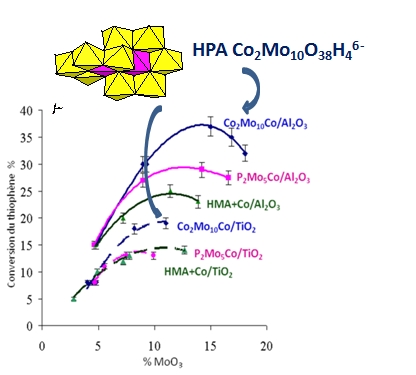
Carole Lamonier is a Professor at the University of Lille, working within the Department of Heterogeneous Catalysis at the Solid State Catalysis and Chemistry Unit (UCCS - UMR CNRS 8181). She leads research in the CEMOP group (Catalysis for Energy and Synthesis of Platform Molecules), focusing on catalyst development for petroleum fraction treatment. Her research expertise spans heterogeneous catalysis with specialization in hydrotreatment processes including hydrodesulfurization, hydrocracking, and hydrodemetallation. She is renowned for her work on heteropolyanions (HPAs) and mixed-valent HPAs for catalyst preparation, particularly the synthesis of metallic salts (Nickel and Cobalt) of HPAs for Co(Ni)-Mo, Ni-W, and Ni-Mo-V catalyst systems. Her research demonstrates that the proximity of Co-Mo species in HPA salts directly correlates with catalytic performance regardless of support material. Analysis of her recent publications reveals a strong focus on advanced characterization techniques (HAADF, QEXAFS), hierarchical catalyst structures, oxidative desulfurization methods, and the development of novel catalyst supports including Moroccan phosphates and Argentinean bentonite. Her work bridges fundamental understanding of active phase genesis with practical applications in petroleum refining and environmental protection. Scientific Recognition: Habilitation à Diriger les Recherches (HDR) awarded in 2007 Eight significant patents covering innovative catalyst preparation methods using heteropolyanions Over 60 publications since 2008 in high-impact journals including Applied Catalysis B, Journal of Materials Chemistry A, and ACS Catalysis Prof. Lamonier has supervised multiple PhD students and served on numerous thesis committees. Her research has been supported by international programs including Volubilis (2006-2009), Ecos-Sud (2008-2010), and ANR-funded 'NG2M' program. She actively collaborates with research institutions in Morocco and Argentina, reflecting her commitment to global scientific cooperation in catalysis research.
Charles Pittman Humphrey is a Professor in the Department of Health Education and Promotion at the College of Health and Human Performance, East Carolina University. His work focuses on environmental health, wastewater treatment systems, and nutrient management in coastal ecosystems. Education: B.S. and M.S. in Natural Resources and Soil Science from NC State University; Ph.D. in Coastal Resources Management from ECU. Research Interests include assessing performance of onsite wastewater systems, nutrient attenuation in natural and engineered systems, climate change impacts on coastal infrastructure, and water quality dynamics in urban and agricultural watersheds. Key projects involve permeable reactive barriers, bioreactors for nitrogen removal, and epidemiological surveillance via wastewater. Recent publications highlight 2024 studies on wastewater-based epidemiology during the pandemic, contaminant analysis in septic systems, and wetland-based phosphate/E. coli mitigation. His work spans 2014–2025 with consistent focus on septic system efficiency and coastal water quality. Scientific Awards Mike and Sherry Felts Regional Impact Research Award (2022) Surface Water/Groundwater Source Protection Award (2017) HHP Outstanding Researcher Award (2014) Grants include projects funded by NOAA, NSF, NC DEQ, and UNC System, targeting stormwater reduction, PFAS mitigation, and climate adaptation for wastewater infrastructure.
Erik Lichtenberg is a Professor in the Department of Agricultural and Resource Economics at the University of Maryland, College Park, affiliated with the College of Agriculture and Natural Resources. His research addresses economic aspects of agriculture-environment interactions, including agri-environmental programs, invasive species management, pesticide regulation, and resource conservation. He holds a B.A. in Linguistics from the University of Chicago (1973) and a Ph.D. in Agricultural and Resource Economics from UC Berkeley (1985). Research Focus Lichtenberg's work integrates environmental and agricultural economics with policy analysis. Key domains include: Design of Payment for Ecosystem Services (PES) programs and conservation contracts Economic incentives for pollution control and resource conservation Risk management in agricultural systems (pests, pesticides, climate) Food safety regulation compliance and collective action Impacts of irrigation technology and land use policies Professional Recognition Fellow, Agricultural and Applied Economics Association (AAEA) Awards from AAEA, University of Helsinki, University of Maryland, and academic journals Former co-editor, American Journal of Agricultural Economics National Academy of Sciences panelist: GMO crops, precision agriculture, pesticide policy Active Research Projects PES Program Design : Optimization of penalties/targeting in conservation contracts; stated preference analysis for buffer adoption Invasive Species Economics : Risk-based inspection protocols for international trade; pest introduction cost-benefit analysis Pollination Systems : Economic-ecological modeling of wild/managed pollinators; landscape effects on crop yields