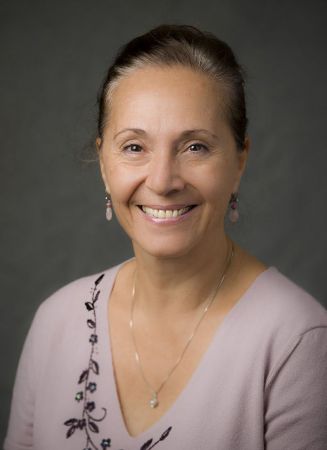
Tom Veldkamp is a Professor and Rector Magnificus at the University of Twente. His research focuses on Quaternary geology, geomorphology, and coupled human-ecological systems. He has supervised 32 PhD theses and currently advises 2 ongoing projects. His fieldwork spans over 30 countries, including Indonesia, Turkey, and Rwanda. Editorial Roles: Editor-in-Chief of Agriculture Ecosystems and Environment , former editorial roles at Landscape Ecology , Ecosystems , and others. Research Themes: Land use change modeling, soil dynamics, and sustainable development. Key regions of study include Sundaland (Indonesia), Mediterranean landscapes, and Rwanda. Recent Contributions: Over 230 publications, including landmark studies on hominin fossils in Java and landscape evolution models. His work addresses global challenges like environmental sustainability and land-use transitions, with a focus on integrating natural and social sciences.
Nonappa Nonappa is an Associate Professor (tenure track) in Nanochemistry at Tampere University's Faculty of Engineering and Natural Sciences since 2020. With a multidisciplinary background spanning organic chemistry, supramolecular systems, nanoparticle self-assembly, and advanced electron microscopy, he leads research at the intersection of materials science and biomedical applications. PhD in Organic Chemistry (IISc Bangalore, 2008) Docent in Soft Matter Microscopy (Aalto University, 2017) Executive MBA (Quantic School, 2020) Research focuses on bio-based optical materials using nanocellulose for sustainable photonics, breast cancer models via lab-on-a-chip systems, and precision nanomaterials through tailored self-assembly mechanisms. His team develops 3D extracellular matrices for cancer tissue culture and plasmonic nanodevices for photonic applications. Recent publications highlight gold/silver nanocluster assemblies (43+ citations in 2021-2025), electron tomography for structural analysis, and metastasis modeling systems. Key awards include Italy's Abilitazione Scientifica Nazionale (2018) and Aalto University's Docent title (2017).
Priya Raman, Ph.D., FCVS, is an Associate Professor of Integrative Medical Sciences at Northeast Ohio Medical University (NEOMED). She holds tenure and serves as Co-Director of the Basic and Translational Biomedicine (BTB) Graduate Program and Chair of the Kent State University-Biomedical Sciences Pharmacology Graduate Program. Her academic roles include teaching in NEOMED’s medical curriculum, focusing on pharmacology, cardiovascular systems, and clinical therapeutics. Raman’s research explores molecular mechanisms linking metabolic disorders (e.g., diabetes, metabolic syndrome) to vascular dysfunction and Alzheimer’s disease, using mouse models and cellular/molecular techniques. She has published extensively on thrombospondin-1, O-GlcNAc signaling, and atherosclerosis pathogenesis. Education: B.Pharm. and M.Pharm. (India), Ph.D. in Pharmacology (University of Louisiana at Monroe). She has over 25 years of postdoctoral and faculty experience, including roles at the Cleveland Clinic and Indiana University School of Medicine. Raman serves on editorial boards for journals like International Journal of Cardiology and Frontiers in Cardiovascular Medicine , and reviews grants for the American Heart Association and NIH. Research focus areas include: (1) Vascular smooth muscle cell phenotypic switching in metabolic diseases, (2) Non-lipid mechanisms of vascular disease in metabolic syndrome, and (3) Interactions between metabolic disorders and neurodegeneration. Her lab employs biochemical assays, mouse models (e.g., ApoE-/-, KKAy), and advanced imaging techniques to study these pathways. Notable recent work includes discovering that O-GlcNAc transferase deletion reduces atherosclerosis in hyperglycemic mice and identifying thrombospondin-1’s role in leptin-driven vascular pathology. She has also linked metabolic syndrome-induced O-GlcNAc deficits to Alzheimer’s-like cognitive impairment in aging mice. Raman is actively involved in interprofessional education and mentoring, directing graduate programs and teaching courses in pharmacology, molecular signaling, and diabetes/vascular disease. Her work bridges basic science and clinical applications, aiming to develop novel therapies for metabolic syndrome-related vascular complications.
Prof. Dr. Jing Wang is a Full Professor at the Department of Civil, Environmental and Geomatic Engineering at ETH Zürich. His research focuses on air pollution control, nanoparticle transport, and environmental health and safety (EHS) impacts of nanomaterials. He has held roles including Assistant Professor at ETH Zürich (2010–present), Research Assistant Professor at the University of Minnesota (2007–2010), and postdoctoral associate in Particle Technology (2005–2007). Education: Bachelor’s in Engineering (2000) – Tsinghua University, Beijing Master’s in Computer Sciences (2003) – University of Minnesota PhD in Aerospace Engineering (2005) – University of Minnesota Research Interests: Air/water filtration technologies Nanoparticle emission reduction and measurement Multiphase flow mechanics Environmental impacts of nanomaterials Collaborations: Industrial partnerships include 3M, BASF, Boeing, Intel, Samsung, and others in nanoparticle measurement and filtration solutions. Honors: 2011 Smoluchowski Award (Association for Aerosol Research) 2006 ‘Best Dissertation’ Award (University of Minnesota) 2004 Doctoral Dissertation Fellowship Teaching: Courses include Air Pollution Control, Environmental Engineering Seminars, and Excursions for Environmental Engineers. Labs/Teams: Leads the Particle Technology Lab and collaborates with the Institute of Environmental Engineering at ETH Zürich.
Kumar Varoon Agrawal is an Associate Professor at École Polytechnique Fédérale de Lausanne (EPFL), holding the Gaznat Chair for Advanced Separations. He is affiliated with the School of Basic Sciences (SB), the Institute of Chemical Sciences and Engineering (ISIC), and the Laboratory of Advanced Separations (LAS) in Sion, Switzerland. Additionally, he contributes to the Swiss Doctoral School in Chemical and Bioengineering (SCGC) and serves as Vice President of the Confédération des Chimistes et des Génie Chimique (CCE). Research Focus: Material Chemistry & Engineering at the Ångström scale for high-performance inorganic and hybrid membranes, emphasizing energy-efficient molecular separations. Teaching: Courses include Fundamentals of separation processes , Diffusion and mass transfer , and Chemical engineering product design . Scientific Contributions: His 15 most recent publications (2025-2020) span topics like graphene pore engineering , 2D material synthesis , carbon capture , and gas separation membranes , with keywords such as Nanotechnology , Materials Science , and Molecular Transport . Subfields include Atomic-Scale Pores , Membrane Stability , and Industrial Scalability . Students and Collaborations: He advises 10 current PhD students and has mentored 9 past PhD candidates in areas like graphene membranes , ion separation , and MOF films . He is an Academic Referent for the EPFL Carbon Team and a committee member for the EDCH Doctoral Program in Chemistry and Chemical Engineering.
Professor George Britovsek (FRSC) is a leading figure in catalysis and sustainable carbon management at Imperial College London . As Director of the MRes in Catalysis & Engineering and Head of Teaching in Inorganic Chemistry, he bridges academic leadership with cutting-edge research. His work focuses on transition metal complexes for converting ethylene , alkanes , biomass , and CO₂ into valuable chemicals and fuels through industrial collaborations. Education : M.Sc. (Technical University of Aachen, 1990), Ph.D. (Aachen, 1993) under Prof. W. Keim Postdoctoral Training : University of Tasmania (1994-1996), Imperial College London (1996-2000) His research interests span: Selective oxidation of alkanes using bio-inspired iron complexes Alkene conversions to functional polymers via novel catalysts CO₂ valorization into polymers and cyclic carbonates Biomass-derived feedstocks for chemical synthesis Recent catalysis trends highlight his work on: Designing Fe-N/C catalysts for epoxidation Developing PN3P pincer ligands for H₂ activation Creating degradable polyethylene via iron-catalyzed chain growth Modeling alternating α-olefin distributions in chromium systems Awards : Fellow of the Royal Society of Chemistry (FRSC) Students & Collaborators actively engage in: Photocatalytic polymer degradation Electrocatalytic CO₂ conversion Functionalized polymeric materials 3D-printed catalytic scaffolds His Britovsek Research Group operates at the Molecular Sciences Research Hub, White City Campus, advancing both homogeneous and heterogeneous catalysis through experimental and computational approaches.
Amy E. Fraley is an Assistant Professor at ETH Zürich, Department of Chemistry and Applied Biosciences, and leads the Medicinal Chemistry Research Group. Her cross-disciplinary work bridges natural products biosynthesis, pharmaceutical sciences, and environmental sustainability through enzymatic chemistry and biotechnology. BSc in Chemistry, Millersville University of Pennsylvania (2014) PhD in Medicinal Chemistry, University of Michigan College of Pharmacy (2019) Postdoctoral work at ETH Zürich Institute of Microbiology under Prof. Jörn Piel Her research focuses on harnessing biosynthetic enzymes (e.g., halogenases, monooxygenases, Diels-Alderases) to create sustainable bioactive metabolites. She explores natural product biosynthesis in fungi and marine bacteria, targeting disease mechanisms and green chemistry applications. Recent work includes metagenomic studies of Lake Chilika microbial mats and polyketide synthase engineering. Notable scientific awards include the 2024 JSP Fellow at Bürgenstock Conference, 2018 Rackham Predoctoral Fellowship, and multiple University of Michigan honors. Her group secured funding from the ETH4D Doctoral Mentorship Grant and Messerli Foundation . Collaborations span structural biology, synthetic chemistry, and microbiology, with key contributions to flavoenzyme characterization and bioactive compound libraries . The lab emphasizes interdisciplinary training and innovation in biocatalytic tools for organic synthesis.
Joel Weadge is an Associate Professor in the Biology Department at Wilfrid Laurier University , Waterloo, Ontario. His research focuses on bacterial biofilms, glycobiology, and protein structure-function relationships. Contact: jweadge@wlu.ca , Office: BA425 (Bricker Academic). Education: PhD in Microbiology (University of Guelph, 2006) BSc (Hons) in Microbiology (University of Guelph, 2000) Research Interests center on bacterial biofilms as virulence factors in pathogens like E. coli and Salmonella . Key areas include: Structural and functional characterization of biofilm proteins (cellulose, curli fimbriae) Enzymology of carbohydrate modifications (acetylation, phosphoethanolamine transfer) Developing therapeutics targeting biofilm synthesis Biopolymer applications for medical/industrial use Publications highlight studies on Pseudomonas and Salmonella biofilm mechanisms, glycosyltransferases, and carbohydrate-active enzymes, with methodologies spanning X-ray crystallography to high-throughput biofilm profiling. Labs and Teams: The Weadge Lab investigates biofilm roles in food/water security and oral health, utilizing enzymology, mass spectrometry, and structural biology. Current members include graduate students, technicians, and research assistants.
Robert Dick is a Professor in the Department of Electrical Engineering and Computer Science at the University of Michigan, part of the College of Engineering. He previously held roles as Associate Professor at Northwestern University and Visiting Professor at Tsinghua University. He earned his Ph.D. from Princeton University and a Bachelor's degree from Clarkson University. His research focuses on Embedded Systems, Learning Dynamics, Efficient Machine Learning, Privacy, and Censorship Resistance. Key themes include defining problems with correct costs/constraints, broadening access to information technology, mitigating negative tech impacts, and solving inference problems with limited resources. He leads the Embedded Systems Graduate Program and is a member of the Michigan Integrated Circuits Laboratory (MICL). His work spans thermal management, energy-efficient computing, and low-power wireless networks. Notable contributions include innovations in embedded system design, machine vision frameworks, and sensor networks. Courses taught include EECS 507 (Embedded Systems Research), EECS 373 (Embedded System Design), and ENGR 100 (Autonomous Systems). His recent publications emphasize AI model analysis, energy-efficient networks, and environmental sensing. Projects include MemX (attention-aware wearable tech) and LoRa-based LPWAN protocols. Dick co-founded Stryd, a company commercializing embedded systems innovations.
Scientia Professor Nasser Khalili is the Head of the School of Civil and Environmental Engineering at the University of New South Wales (UNSW). He also serves as the Director of the ARC Research Hub for Resilient and Intelligent Infrastructure Systems (RIIS), President of the Australian Association for Computational Mechanics (AACM), and a core member of the International Technical Committee on Unsaturated Soil (TC106). His research focuses on geotechnical engineering, computational mechanics, porous media behavior, and sustainable infrastructure systems. Key areas of expertise include unsaturated soils, hydraulic fracturing modeling, and advanced material characterization for asphalt mixtures. Professor Khalili's work integrates computational methods with experimental analysis to address challenges in infrastructure resilience and environmental sustainability. He has pioneered studies on pore pressure dynamics, fracture mechanics in porous media, and the application of waste materials in construction. His leadership roles in national and international committees reflect his influence in advancing geotechnical and computational engineering practices. His scientific contributions include over 150 peer-reviewed articles, with recent work emphasizing machine learning applications in civil engineering and innovative solutions for sustainable asphalt mixes. Awards include Fellowship of the Academy, recognizing his significant impact on the field.
Oswald J. Schmitz is the Oastler Professor of Population and Community Ecology at the Yale University School of the Environment. His research bridges biodiversity and ecosystem services, focusing on species interactions, climate change impacts, and conservation strategies. He employs field experiments and mathematical models to study predator-herbivore-plant dynamics, nutrient cycling, and carbon sequestration. Education: B.Sc., M.Sc., University of Guelph Ph.D., University of Michigan Research areas include: Trophic rewilding for climate solutions Human-wildlife conflict dynamics Meta-ecosystem nutrient flows Animal-driven carbon cycle modifications Context-dependent conservation strategies His 2024 Bormann Prize-winning work on calving impacts in nutrient cycles and other recent publications highlight innovative ecosystem science. Schmitz mentors students like Kristy Ferraro and collaborates with alumni such as Rob Buchkowski and Julia Monk. He teaches three conservation-focused courses with an emphasis on quantitative skills and real-world applications.
Nathan W. Hudson is an Associate Professor in the Department of Psychology at Southern Methodist University (SMU) in Dallas, Texas. Previously, he received his Ph.D. in Psychology from the University of Illinois at Urbana-Champaign in 2016. His research focuses on personality psychology, particularly how people's personalities change across time and how individuals function in romantic relationships. He leads the Δ Lab at SMU, which investigates individual differences in human personality. Education: 2016 – Ph.D., Psychology, University of Illinois at Urbana-Champaign 2011 – M.A., Psychology, University of Illinois at Urbana-Champaign 2009 – B.A., Purdue University Nathan Hudson's primary research area is volitional personality change—people's desires and attempts to change their own personality traits. His groundbreaking research has shown that approximately 90% of people want to change aspects of their personality traits, and moreover, they may be able to find some degree of success in doing so. He also studies adult attachment styles and how people function in close relationships. Hudson's work suggests that attachment anxiety is linked to false memories, and that people's attachment styles can change over time. His research integrates both theoretical and applied perspectives, with implications for therapeutic interventions and personal development. Hudson's recent publications demonstrate a clear trajectory toward understanding the mechanisms of personality change and developing effective interventions. His work spans across multiple domains of personality psychology, with a particular emphasis on the Big Five personality traits, attachment theory, and well-being. A consistent theme throughout his research is examining how people's desires for change translate into actual personality growth. His work has increasingly focused on the practical applications of personality science, including developing measures and interventions that can help people achieve their desired personality changes. Scientific Awards: Goss-Lucas Award for Excellence in Teaching James Davis Fellowship Foundation for Personality and Social Psychology Heritage Dissertation Award Hudson actively mentors students in the Δ Lab at SMU, where they conduct research on personality change, attachment, and well-being. He has secured multiple grants to support his research on volitional personality change and the development of personality assessment tools. His lab has developed several psychological measures, including the Change Goals Big Five Inventory (C-BFI2) and its variants, which are freely available for academic research. Hudson also engages with the public through his TEDx talk "You Can Change Your Personality" and has been featured in Olga Khazan's book "Me, But Better," which applies his research to real-life settings. The Δ Lab, led by Hudson, is dedicated to understanding individual differences in personality and how people can intentionally change aspects of themselves. The lab values all individual differences among humans, recognizing that variance in human thoughts, feelings, and behaviors is adaptive and makes humanity resilient. The lab wholeheartedly supports the LGBTQ+ community and emphasizes that individual differences between humans are what personality science is all about.
Professor Behzad Fatahi is a distinguished academic in Civil and Environmental Engineering at the University of Technology Sydney (UTS), specializing in geotechnical engineering, railway infrastructure, and sustainable construction technologies. With a career spanning over 16 years at UTS, he has served as Deputy Head of School - Teaching and Learning (2024-present), Head of Discipline (2020-2024), and School Research Coordinator (2012-2017). His research focuses on unsaturated soil mechanics , dynamic soil-structure interaction , and green infrastructure solutions . Academic Appointments : Professor (2024-present), Associate Professor (2017-2024), Senior Lecturer (2011-2017), Lecturer (2008-2011) Research Leadership : Supervised 21 PhD students to completion, developed groundbreaking techniques for landfill waste reuse and tyre-derived aggregates in railway construction His work on seismic resilience of LNG tanks and bioengineered soil stabilization has received international recognition, including the 2023 Best Research Paper Award at the Australasian Association for Engineering Education conference. Professor Fatahi's industry experience includes geotechnical engineering roles at Coffey International and SES Engineering prior to academia. Key Research Contributions : Developed green corridor models for railway lines using coupled flow-deformation equations Pioneered AI-integrated teaching frameworks for civil engineering education Advanced machine learning techniques for intelligent compaction and structural buckling analysis As a Category 1 supervisor , he mentors graduate researchers in Civil Engineering , Geomechanics , and Earthquake Engineering . His peer-reviewed work (>240 publications) demonstrates technical excellence and innovation across multiple geotechnical domains.
Sibel Pamukcu is a Professor in the Department of Civil and Environmental Engineering at Lehigh University, affiliated with the P.C. Rossin College of Engineering and Applied Science. Her research focuses on electroremediation of soils and groundwater, advanced geo-materials, and sensor systems for subsurface monitoring. She has held leadership roles including interim Chair of Civil and Environmental Engineering and co-director of Lehigh’s ADVANCE grant. Pamukcu teaches courses in geotechnical and environmental engineering at both undergraduate and graduate levels. Education: Ph.D. in Civil Engineering, Louisiana State University M.S. in Civil Engineering, Louisiana State University B.S. in Civil Engineering, Bogazici University, Turkey Research Interests: Her work spans electrochemical methods for environmental detoxification, development of polymer-enhanced sands, and distributed sensor networks for real-time subsurface monitoring. Key focus areas include: In-situ destruction of contaminants in clay-rich soils Enhanced oil recovery via electric fields Wireless and fiber-optic sensor systems for hazard mitigation Grants & Awards: Principal investigator on over 60 grants from NSF, DOE, DOD, and others. Notable awards include the Alfred Noble Robinson Award (Lehigh University) and the ASCE Civil Engineering Foundation Grant Award. Her lab holds multiple patents on soil remediation techniques and polymer-coated sands. Advising & Service: Supervised 9 Ph.D. and 25+ M.S. students Appointed to Martindale Center faculty and Sigma Xi leadership Contributed to 50+ peer-reviewed articles and 100+ technical publications Labs & Teams: Leads interdisciplinary initiatives in electrokinetic remediation and underground sensing, collaborating with industry partners like Electric Power Research Institute and the Pennsylvania Department of Transportation.
Ian Ewart is an Associate Professor at the University of Reading's School of the Built Environment, serving as Head of Construction and Engineering Management and Research Group Lead for Organisation, People and Technology. He chairs the Research Ethics Committee since 2016 and supervises undergraduate/postgraduate dissertations. His academic journey spans engineering and anthropology: DPhil Social and Cultural Anthropology, University of Oxford, St Hugh's College (2007-2012) MSc Material Anthropology and Museum Ethnography, University of Oxford, St Hugh's College (2006-2007) BA (Hons) Archaeology and Anthropology, University of Oxford, Harris Manchester College (2003-2006) Diploma in Management Studies, University of the West of England (1990-1994) BEng (Hons) Mechanical Engineering, Staffordshire University (1983-1987) Ewart's research integrates ethnographic methods with digital technology studies, examining human-technology interactions in construction and domestic settings. His work bridges engineering practice and social anthropology, focusing on skill transmission, sustainable design, and multisensory experiences in virtual environments. Publications from 2025-2013 reveal a dominant trajectory in digital twins for socio-ecological sustainability, VR-based occupant behavior prediction, and HBIM for heritage conservation. The corpus demonstrates consistent cross-disciplinary innovation, merging archaeological reconstructions with healthcare applications while maintaining anthropological rigor. Key recognition: ESRC Future Research Leader fellowship (2013) for Designing Healthy Homes project He supervises PhD candidates like Afolabi Dania (Nigerian sustainable construction) and Joanna Hull (Heritage BIM), leveraging ESRC funding for ethnography-VR health studies. His grants emphasize participatory design and real-world impact assessment in built environments. Leaders the Organisation, People and Technology research group, developing multisensory Roman town reconstructions with sound/smell integration to advance archaeological and architectural experience modeling.