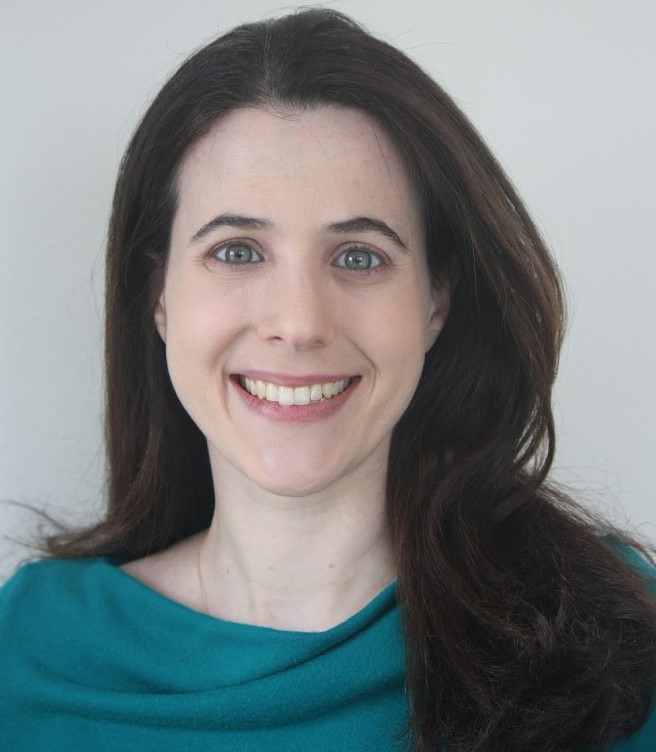
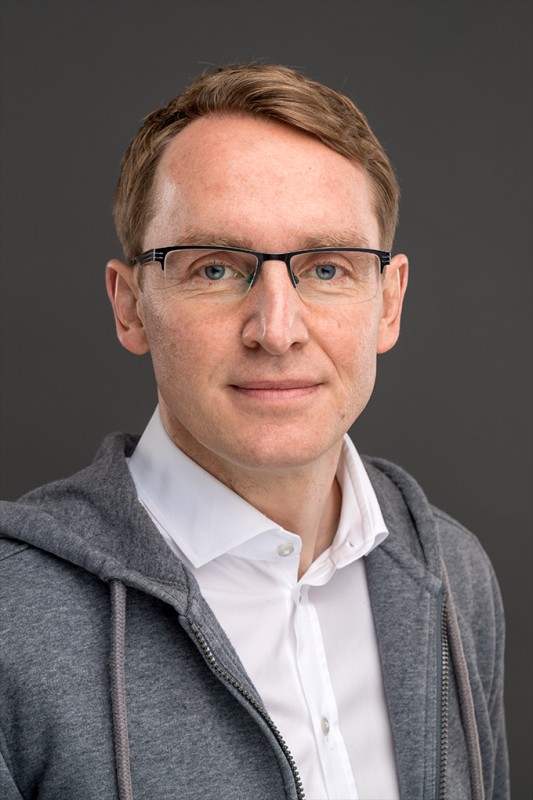
Dr. Corey T. Callaghan is an Assistant Professor in the Department of Wildlife Ecology and Conservation at the University of Florida . Based at the Fort Lauderdale Research and Education Center , his research focuses on global change ecology using big data from citizen science platforms like eBird and iNaturalist, combined with geospatial analyses and macroecological theory . Ph.D. (2019) from UNSW Sydney M.S. (2015) from Florida Atlantic University B.S. + B.S. (2013) from Canisius College His work examines urban ecology , including how species traits influence urban tolerance across birds, amphibians, and butterflies. He develops adaptive sampling frameworks to optimize citizen science data collection while addressing biases. Current projects analyze human-nature interactions through citizen science participation, secondary data in photographs, and machine learning for biodiversity monitoring. He actively contributes to conservation strategies for urban biodiversity and data-driven restoration efforts . Recent publications highlight his expertise in cross-taxa comparisons , continental-scale analyses , and ecosystem service quantification . He leads the Global Ecology Research Group at the University of Florida, emphasizing collaborative science and open-source methodologies .
Prof. Ingmar Posner is a leading figure in applied artificial intelligence at the University of Oxford, where he serves as Principal Investigator for the Applied Artificial Intelligence Lab (A2I) and founding Director of the Oxford Robotics Institute. His work focuses on enabling robots to operate effectively in complex real-world environments through experience-driven learning. Key research areas: robot learning, scene interpretation, data-efficient learning, and transfer learning Applications in manipulation, autonomous driving, logistics, and space exploration His team has produced groundbreaking work in world models, sim-to-real transfer, and constraint-based manipulation systems (e.g., COMBO-Grasp). Notable contributions include the TWIST distillation framework and foundational research in tactile data generation (TactGen). He has received multiple best paper awards at top robotics venues. Publications reveal evolving research themes: 2025 work emphasizes language-conditioned learning (Lumos) and multi-agent decision-making, while 2024 focused on diffusion models for locomotion and differentiable simulators. Earlier work spans from urban scene analysis to physically plausible scene synthesis (RELATE).
Cheryl Gaimon holds the Esther and Edward J. Brown Chair and serves as a Regents' Professor at the Scheller College of Business, Georgia Institute of Technology. She is Faculty Director of the Management of Technology (MoT) Certificate Program, which she helped establish, and teaches across all academic levels including executive education. Professor Gaimon initiated the Operations Management Program and served as its first Area Coordinator for seven years. Her academic credentials include: Ph.D. in Operations Research from Carnegie Mellon University M.S. in Industrial Administration (Operations Management) from Carnegie Mellon University B.S. in Mathematics and Economics (Magna Cum Laude) from Brooklyn College, City University of New York Professor Gaimon's research centers on managing knowledge-based resources in technology-driven environments. Her work spans Innovation and Management of Technology , Knowledge Management and Outsourcing , New Product/Process Development , Alliances for Innovation , and Sustainability Research . She examines how firms navigate technological change through strategic resource allocation, knowledge transfer, and sustainable operations, with increasing emphasis on environmental strategies in recent years. Her publication trajectory reveals consistent focus on operations management within technological evolution—from foundational work on technology acquisition and capacity planning to contemporary studies on environmental strategies and multidisciplinary technology management. Key journals featuring her research include Management Science , Operations Research , and Production and Operations Management . Major recognitions include: Regents' Professor designation (2005) by the Georgia Board of Regents The 1999 Georgia Tech Research Award for doctoral student development Brady Family Award for Faculty Research Excellence (2014) Best Department Editor Award for POM (2024) POMS Fellow status and Distinguished Service Award (2009/2014) As an educator, she has mentored doctoral students and shaped curriculum through the MoT program. Her professional leadership includes serving as POMS President (2008-2009), founding co-President of the POMS College on Product Innovation and Technology Management, and editorial roles at top journals including Management Science and Production and Operations Management . Professor Gaimon directs the interdisciplinary Management of Technology Certificate Program, fostering cross-departmental collaboration for technology management research and education while advancing sustainability integration in operations.
Steven Jackson is a Professor of Information Science and Science and Technology Studies at Cornell University's Bowers College of Computing and Information Science, with additional graduate field appointments in Communication and Public Affairs. Since July 2023, he has served as Vice-Provost for Academic Innovation at Cornell, and previously held leadership positions as Chair of Information Science and Dean of William Keeton House. His work bridges academic research with significant institutional leadership in higher education innovation. Dr. Jackson's research focuses on critical intersections of technology, society, and the environment, with three primary strands: technology ethics, law and policy; maintenance, repair and sustainability; and technology, inequality and global development. His work draws from American pragmatism, political economy, and science and technology studies, integrating methods from sociology, anthropology, philosophy, and media studies. He is particularly interested in how computing practices meet social and material worlds, with implications for infrastructure, collaboration, sustainability, and cultural practice. His recent publications reveal a strong emphasis on repair as both theoretical concept and practical methodology, exploring 'ordinary hope' as a framework for technological engagement and examining unmaking as a necessary counterpart to design. The research spans diverse geographical contexts from the global North to South, addressing caste dynamics in computing, digital authoritarianism, and infrastructure challenges in developing contexts. Dr. Jackson has received significant recognition including an NSF CAREER award and more than twenty paper awards at leading computing and information science venues. His research has been supported by major organizations including the U.S. National Science Foundation, Social Science Research Council, Ford Foundation, Sloan Foundation, World Bank, Intel Research, Atkinson Center for Sustainability, and the Canadian Social Science and Humanities Research Council. As an advisor, Dr. Jackson has mentored numerous graduate students who have gone on to prominent positions at institutions worldwide. He currently advises Jen Liu, Amy Cheatle, Daniel Mwesigwa, Johan Michalove, and Ritik Batra, while his former students include Palashi Vaghela (Assistant Professor at Simon Fraser University), Samir Passi (Responsible AI Researcher at Microsoft), Maggie Jack (Assistant Professor at NYU), and Ranjit Singh (Senior Researcher at Data and Society). Dr. Jackson convenes the Computing On Earth Lab, an experimental collaboration bringing together social scientists, humanists, artists, and engineers to rethink the material and planetary foundations of computing. The lab reflects his commitment to interdisciplinary approaches that address computing's environmental impacts and sustainability challenges.
Jarrod Ray Hore is a Scientia Lecturer in the School of Humanities & Languages at the University of New South Wales (UNSW), Sydney, and Co-Director of the New Earth Histories Research Program. His work explores environmental history, settler colonialism, and the intersections of science, geology, and cultural landscapes. Hore’s research focuses on landscape photography’s role in shaping colonial projects, earthquake geology, and the logistics of the natural history trade. He has published widely in journals like the Pacific Historical Review and Australian Historical Studies, and his award-winning book *Visions of Nature* (2022) examines how photography reinforced settler territoriality. His research interests span environmental history, transnational history, the history of science, and colonial studies. Key areas include the history of settler colonialism in Australia, New Zealand, and North America, as well as the cultural and scientific dimensions of geological exploration. Hore actively supervises HDR and honours students in environmental history, colonial history, and the history of photography. His awards include the Marilyn Lake Prize (2023) and Donna Coates Prize (2022), with shortlist recognitions for prestigious history awards. Beyond academia, he teaches courses like *A House Divided: The Making of Modern America* (ARTS2150), emphasizing U.S. histories of race, class, and global engagement. Hore’s work bridges environmental humanities and colonial studies, analyzing how visual and scientific practices reinforced imperial and settler agendas. His current projects explore the material and logistical networks underpinning natural history collections and the epistemologies of colonial geology.
Gregg M. Garfin is a Professor and Specialist in Climate, Natural Resources, and Policy at the University of Arizona’s School of Natural Resources and the Environment, and Deputy Director for Science Translation and Outreach at the Arizona Institute for Resilience. He holds a Ph.D. in Geosciences from the University of Arizona (2003), an M.S. in Geology and Geography from the University of Massachusetts (1997), and a B.S. in Geology and Geography from the same institution (1993). His work bridges science and societal decision-making, focusing on climate adaptation, drought management, and climate services. He directs the Water, Society, and Policy M.S. Program and has led interdisciplinary projects on climate resilience, including contributions to the Fourth National Climate Assessment. Roles: Professor, Deputy Director, Program Director Affiliations: Arizona Institute for Resilience, School of Natural Resources and the Environment Research Interests His research emphasizes climate adaptation strategies, climate policy, and the co-production of knowledge between scientists and decision-makers. Key areas include: Climate impacts on water resources and ecosystems Extreme heat and drought resilience in urban and border communities Climate change communication and education Awards & Recognition Garfin has received multiple accolades, including AAAS Fellowship (2020), University of Arizona Service Awards (2020, 2015), and the Global Initiative for Academic Networks (GIAN) Visiting Fellowship (2018). His work has been featured in peer-reviewed journals and media outlets, emphasizing actionable science for climate resilience. Grants & Contributions He has led federal and transnational projects, including binational climate resilience initiatives in the U.S.-Mexico border region and flood risk assessments in Seoul, South Korea. His work integrates participatory governance approaches to enhance community preparedness.
Granger Morgan is the Hamerschlag University Professor of Engineering at Carnegie Mellon University, holding joint appointments in the Department of Electrical and Computer Engineering, the Department of Engineering and Public Policy, and the H. John Heinz III College. His research focuses on science, technology, and public policy, particularly energy systems, climate change, risk analysis, and regulatory frameworks. He co-directs the NSF Center for Climate and Energy Decision Making and the Electricity Industry Center. Education: Ph.D., Applied Physics and Information Science, University of California, San Diego (1969) M.S., Astronomy and Space Science, Cornell University (1965) B.A., Physics, Harvard College (1963) Research Interests: Energy decarbonization and electric power resilience Climate change mitigation and adaptation strategies Risk assessment and policy analysis Hydrogen and nuclear energy systems Global technology adoption dynamics Awards and Affiliations: FAS Public Service Award (2016) Member, National Academy of Sciences Fellow, AAAS, IEEE, and Society for Risk Analysis National Academies Report Review Committee Co-Chair Advisory roles at DOE, PNNL, and international energy councils Advisory and Grants: Leadership in national studies on electric grid resilience and hydrogen infrastructure Recipient of NSF and industry-funded research grants Guidance on global energy policy and regulatory frameworks Labs and Teams: NSF Center for Climate and Energy Decision Making (co-director) Carnegie Mellon Electricity Industry Center Interdisciplinary energy policy research groups
Rodney Harrison is a Reader in Archaeology, Heritage and Museum Studies at the UCL Institute of Archaeology, University College London. He serves as the founding editor of the Journal of Contemporary Archaeology and has been Vice President of the Association of Critical Heritage Studies since 2012. His research focuses on critical heritage studies, contemporary archaeology, and future-making practices in heritage contexts. Harrison's work challenges traditional boundaries between past, present, and future in heritage discourse, emphasizing how heritage functions as a future-oriented practice. His research spans cultural and natural heritage, exploring connections between heritage conservation and other material legacy management systems, including nuclear waste disposal. Harrison leads the major international 'Heritage Futures' research program funded by the UK Arts and Humanities Research Council. This project represents one of the largest critical, comparative ethnographic studies of heritage practices, examining how different forms of heritage function as distinctive future-making practices across diverse contexts. His scholarly contributions include more than a dozen books and over 60 peer-reviewed articles. Notable publications include Collecting, Ordering, Governing: Museums, Anthropology and Liberal Government (2016), Heritage: Critical Approaches (2013), Reassembling the Collection (2013), Understanding the Politics of Heritage (2011), and The Heritage Reader (2008). Harrison's work consistently engages with critical theory, challenging conventional heritage frameworks and exploring innovative approaches to understanding how material and cultural legacies shape future possibilities. His research has significant implications for heritage policy, conservation practice, and theoretical developments in critical heritage studies.
İBRAHİM ERDEM SEÇİLMİŞ is a Professor of Economics at Hacettepe University's Faculty of Economics and Administrative Sciences. His research focuses on experimental economics, public goods theory, behavioral economics, and tax policy with notable contributions to understanding risk perception, social discount rates, and creative industries in Mediterranean economies. He has authored/co-authored over 40 peer-reviewed publications and edited several academic volumes. Key research areas include: Experimental analysis of public goods provision Behavioral responses to environmental policies Comparative analysis of social discount rates in transition economies Evaluation of tax reforms through behavioral lenses Impact of cultural industries on regional development Notable publications include seminal works on Turkish presidential election policies (2025), risk aversion in public goods (2019), and Mediterranean creative industries (2016). His work frequently bridges theoretical economics with policy applications, particularly focusing on sustainability and social equity. He has presented at international conferences such as the Regional Studies Association European Conference (2014) and contributed to edited volumes on game theory applications and economic philosophy. Current research trends emphasize behavioral tax policy design and the socio-economic consequences of rising inequality.
Adriana Schulz is an Assistant Professor in the Department of Computer Science & Engineering at the University of Washington's College of Engineering. She leads a research group focused on computational design, computer-aided design (CAD), and digital fabrication. Her work bridges computer science with practical applications in manufacturing, robotics, and sustainable design. Dr. Schulz received her Ph.D. in Computer Science from MIT in 2018 under the supervision of Professor Wojciech Matusik. Prior to her doctoral studies, she earned a Master's degree in Mathematics from IMPA (Instituto Nacional de Matemática Pura e Aplicada) in Rio de Janeiro, where she worked with Professor Luiz Velho, and a Bachelor's degree in Electronics Engineering from UFRJ (Federal University of Rio de Janeiro). Her research interests center around computational tools that enhance design and manufacturing processes. She develops novel algorithms for CAD systems, computational fabrication techniques, and sustainable design approaches. Her work spans multiple domains including robotics, textiles, electronics, and architecture, with a strong emphasis on creating practical tools that designers and engineers can use in real-world applications. She explores how machine learning, particularly neurosymbolic approaches, can improve design workflows and enable new capabilities in computational design systems. Analysis of her recent publications reveals a strong trend toward more intelligent and user-centered design tools. Her research increasingly integrates machine learning with traditional CAD systems to create more intuitive interfaces, supports sustainable design practices with computational tools, and develops novel fabrication techniques that push the boundaries of what's possible with digital manufacturing. She has made significant contributions to zero-waste fashion design, immersion cooling for high-performance computing, and CAD program understanding through novel representation learning techniques. Innovators Under 35 - MIT Technology Review Bolsa Aluno Nota 10 from FAPERJ Engineer 20000 award Dr. Schulz actively mentors several PhD students and postdoctoral researchers, including Haisen Zhao, Ben Jones, Yuxuan Mei, and others, often in collaboration with colleagues across different departments. Her research has attracted significant media attention, with coverage in major outlets including MIT News, BBC, IEEE Spectrum, Wired, and TechCrunch. Her work on Interactive Robogami was noted as the most read article in the International Journal of Robotics Research in its publication year. She leads a vibrant research group at the University of Washington that focuses on computational design systems, with particular emphasis on creating tools that bridge the gap between digital design and physical fabrication. Her team develops novel algorithms for CAD systems, computational fabrication techniques, and sustainable design approaches that have practical applications across multiple industries.
Deborah Fox is Associate Professor in Midwifery at the University of Technology Sydney (UTS), Faculty of Health, and a core member of the Centre for Midwifery, Child and Family Health. She serves as Co-lead of the Maridulu Budyari Gumal SPHERE Maternal and Women's Clinical Theme and Chair of the National Publicly Funded Homebirth Consortium. In 2024, she received the Faculty of Health Dean's Academic Excellence Award for Research (Mid Career Researcher), following her 2021 award as Highest Performing Early Career Researcher from the School of Nursing and Midwifery. Her research focuses on optimizing physiological processes and positive experiences for women with complex pregnancies, with particular emphasis on the mediation of technology in midwifery practice. Current projects include evaluation of non-invasive fetal ECG beltless and wireless fetal monitoring in labor and birth, and examining the social, economic and environmental impacts of telemonitoring and telehealth in pregnancy and postpartum care. Dr. Fox's scholarly work demonstrates consistent focus on technology's role in maternity care, women's experiences of monitoring during labor, and innovative approaches to midwifery practice. Her recent publications show increasing emphasis on digital health solutions, AI applications in women's health, and pandemic impacts on maternal care systems globally. Faculty of Health Dean's Academic Excellence Award for Research (Mid Career Researcher) 2024 Highest Performing Early Career Researcher award from School of Nursing and Midwifery 2021 Editorial Board Member, Women and Birth journal Dr. Fox is actively involved in higher degree research supervision and has developed innovative teaching resources, including an Objective Structured Clinical Examination for perinatal mental healthcare. She is scheduled to spend three months as a Visiting Scholar at the University of Oxford in 2025.
Peter Seele is a Full Professor at the Faculty of Communication, Culture and Society at Università della Svizzera italiana (USI). He is affiliated with the Center for Climate Finance and Sustainability (CCFS), Ethics and Communication Law Center (ECLC), and the Luxury Observatory Lugano (LOLugano). His research focuses on Corporate Social Responsibility (CSR), Business Ethics, Digital Ethics, Greenwashing, and Machinewashing. Dr. Seele holds dual PhDs in Economics (University of Witten/Herdecke, Germany) and Philosophy (University of Düsseldorf, Germany). He previously served as an Assistant Professor at the University of Basel and conducted post-doctoral research at the Institute for Advanced Studies in the Humanities (KWI) in Essen. His educational background includes studies at the University of Oldenburg and Delhi School of Economics, followed by two years as a business consultant in Frankfurt. His research explores ethical challenges in digitalization, sustainability, and technology. Notable themes include AI ethics governance, ethicswashing in corporate communication, and the interplay between blockchain and business ethics. Recent work addresses greenwashing trends, the ethical implications of algorithmic systems, and sustainable practices in luxury industries. Publications highlight critical analyses of digital ethics frameworks, sustainability backlashes, and the societal impact of emerging technologies. His interdisciplinary approach bridges philosophy, business studies, and environmental science, with a focus on practical solutions for ethical dilemmas in modern organizations. Peter Seele collaborates across academic and industrial sectors, emphasizing real-world applications of ethical theories. He advises on CSR strategies, digital transparency, and regulatory frameworks for sustainable business practices.
Dr. Robert Huber serves as a Lecturer at the Department of Environmental Systems Science at ETH Zürich, specializing in Agricultural Economics and Policy. His research focuses on the integration of interdisciplinary knowledge to analyze and evaluate management and policy options that promote sustainable development in the agricultural sector. Institution: ETH Zürich Department: Agricultural Economics and Policy Research Focus: Sustainable Agriculture and Policy Methodologies: Bio-economic and agent-based modeling Dr. Huber's research explores how multifunctional agricultural sectors can provide essential non-market goods and services while maintaining their primary economic function of food production. His work applies bio-economic and agent-based modeling techniques to understand farmers' decision-making processes regarding ecosystem services provision, coupled with economic valuation techniques to analyze societal demand for these services. His research aims to identify effective and efficient policy measures that align supply and demand for ecosystem services at landscape scale. His recent publications demonstrate strong expertise in agricultural policy analysis, climate change mitigation strategies, sustainable farming practices, and innovative modeling approaches. His work spans topics from herbicide-free agriculture using remote sensing technologies to biodiversity enhancement in agricultural landscapes and the cost-effectiveness of different climate change mitigation policies at various scales. Remote sensing applications in sustainable agriculture Behavioral aspects of farmer decision-making Policy evaluation methodologies Climate change adaptation in farming systems Economic valuation of ecosystem services Digitalization impacts on agricultural policy Dr. Huber has published extensively in high-impact journals including Journal of Agricultural Economics, People and Nature, and Q Open. His collaborative research often involves interdisciplinary teams addressing complex agricultural sustainability challenges. His publications demonstrate a consistent focus on practical policy implications derived from rigorous empirical analysis.
Sheila Jasanoff is the Pforzheimer Professor of Science and Technology Studies at the Harvard Kennedy School of Government, where she founded and directs the STS Program. Previously, she was the founding chair of the STS Department at Cornell University. She holds AB, JD, and PhD degrees from Harvard University, along with honorary doctorates from the Universities of Twente and Liège. Current Position: Pforzheimer Professor of Science and Technology Studies (2002-present) Previous Position: Professor of Science Policy and Law at Cornell University (1991-1998) Education: AB (Mathematics) from Radcliffe College, PhD (Linguistics) and JD from Harvard University Professor Jasanoff's research explores the role of science and technology in the law, politics, and policy of modern democracies, with particular attention to environmental and biotechnology regulation in Europe and the U.S. She is a pioneer in the field of Science and Technology Studies (STS), having authored over 130 articles and chapters and written or edited more than 15 books, including The Fifth Branch , Science at the Bar , Designs on Nature , The Ethics of Invention , and Can Science Make Sense of Life? Her recent scholarly work focuses on climate communication, genome editing ethics, and the integration of STS perspectives into engineering and public policy. Jasanoff's publications demonstrate a consistent engagement with how different societies conceptualize scientific knowledge and incorporate it into governance structures, with particular attention to sociotechnical imaginaries and civic epistemologies. Holberg Prize (2022), often dubbed the 'Nobel Prize for social science and humanities' SSRC's Hirschman Prize Humboldt Foundation's Reimar-Lüst Award Guggenheim Fellowship Ehrenkreuz from the Government of Austria Foreign memberships in the British Academy and the Royal Danish Academy Jasanoff has served on the AAAS Board of Directors and as President of the Society for Social Studies of Science. She is a member of the Council on Foreign Relations. Her sponsored projects include the Global Observatory on Genome Editing funded by the John Templeton Foundation and Belmont Forum Collaborative Research on Governance of Sociotechnical Transformations funded by the National Science Foundation. She has held distinguished visiting appointments at leading universities worldwide and serves on numerous scientific advisory boards including at the Holberg Foundation, National Academy of Sciences, and University of Cambridge.
Sergio Moreno Gil is a Professor in the Department of Economics and Business Management at Universidad de Las Palmas de Gran Canaria (ULPGC), Spain. He is affiliated with the GIR TIDES research group (Economy, Environment, Sustainability and Tourism) and the Institute of Tourism and Sustainable Economic Development. His academic work focuses on tourism economics, marketing, and sustainability within the Social and Legal Sciences branch. Dr. Moreno Gil's research interests span across multiple dimensions of contemporary tourism. His primary focus areas include sustainable tourism development, destination marketing, sharing economy platforms in tourism, and consumer behavior analysis. He has made significant contributions to understanding tourism in the Canary Islands, particularly through his work with the Canary Islands Tourism Observatory. His research integrates traditional tourism studies with emerging fields like neurotourism and biometric analysis of tourist experiences. His publication record shows a clear trend toward addressing contemporary challenges in tourism. Recent works focus on sustainability in mass tourism destinations, the impact of sharing economy platforms, gastronomic tourism marketing, and collaborative tourism networks. His research demonstrates a strong methodological diversity, employing bibliometric analysis, social network analysis, and empirical studies of tourist behavior. Dr. Moreno Gil has been actively involved in the Canary Islands Tourism Observatory, contributing to annual reports on tourism sustainability in the region. His collaborative work spans across the Ibero-American region, with numerous co-authorships reflecting international research networks in tourism studies.