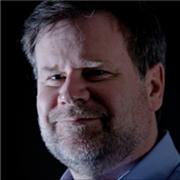
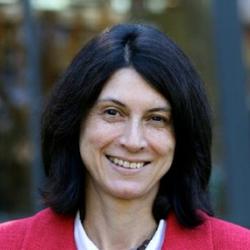
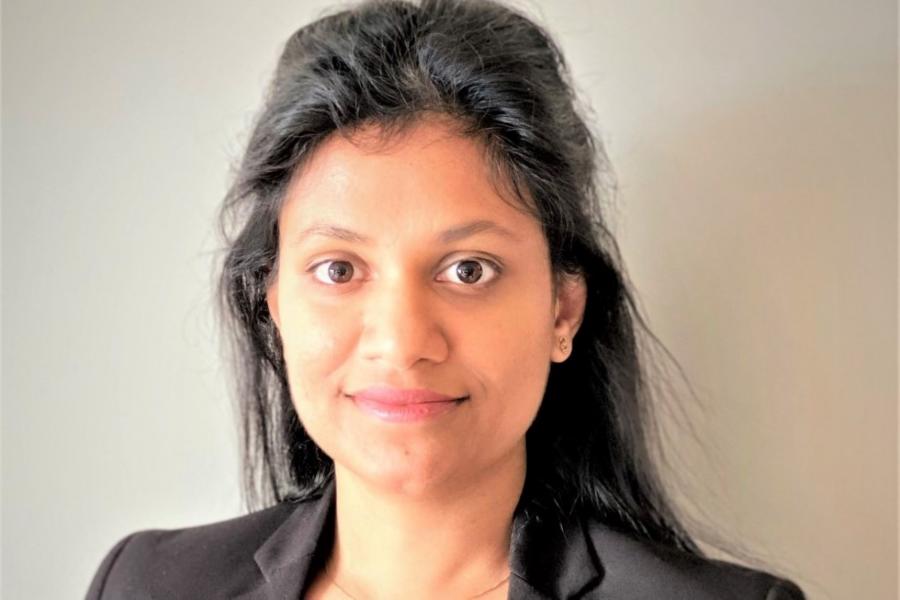
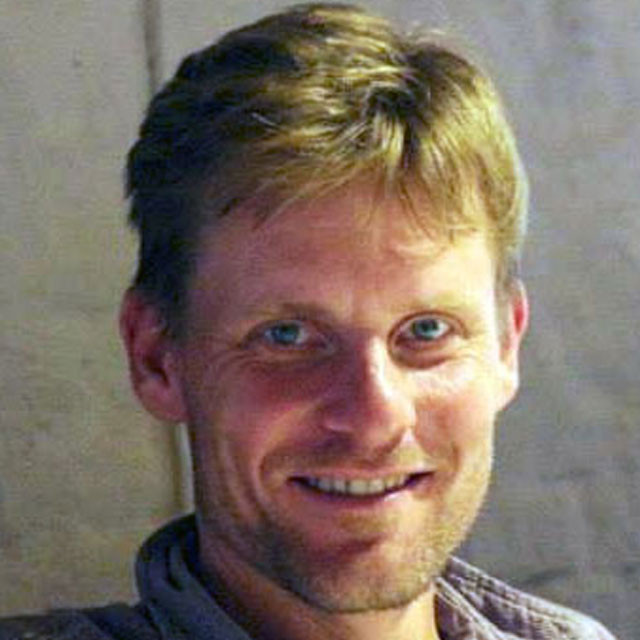
Andrew Murray is a Professor at Harvard University, affiliated with the Rowland Institute and Department of Molecular and Cellular Biology. His research focuses on evolutionary biology, genetics, and synthetic biology using budding yeast as a model organism. Primary Affiliation: Harvard University Lab: Murray Lab Collaboration: with David Nelson (Physics/MBI) Research interests include: Evolution of biological novelty through experimental evolution Cellular mechanisms for environmental adaptation Quantitative analysis of evolutionary trajectories Engineering yeast strains to test biological principles Publications span evolutionary genetics, cell biology, and biophysics with recent work on ABC transporters and yeast colony dynamics. Collaborative clinical publications also exist in cardiology and surgical outcomes. Scientific recognition includes the John Harvard Distinguished Science Fellowship .
Professor Jonathan Erichsen serves as Professor of Visual Neuroscience and Deputy Head of School within the School of Optometry and Vision Sciences at Cardiff University. With a distinguished career spanning several decades, he has established himself as a leading researcher in visual neuroscience and eye movement disorders. Professor Erichsen's research has evolved from early work on central near response pathways in the brain, including vergence and the pupillary light reflex, to a broader focus on eye movement disorders. His primary research interests include the control of visuomotor behavior, eye movement abnormalities in neurodegenerative conditions, and visual function assessment in individuals with nystagmus. He has pioneered innovative methodologies including stereotaxic surgery, immunohistochemistry, neural pathway tracing, and microstimulation in his investigations. His recent publications demonstrate a clear trend toward clinical applications of eye movement research, particularly in developing better assessment tools for visual function in nystagmus patients. The research spans from fundamental neuroanatomy to practical clinical tools, with significant contributions to understanding infantile nystagmus, Huntington's disease-related eye movement abnormalities, and visual function in children. His work increasingly integrates advanced eye tracking technologies with clinical applications. Professor Erichsen founded the Cardiff Research Unit for Nystagmus (RUN) approximately twenty years ago, establishing a large cohort of volunteers with infantile nystagmus to study how environmental factors like stress affect visual performance. More recently, he established the Eye Movement Experimental Research Group (EMERG) to expand research into eye movement abnormalities associated with neurodegenerative conditions including Huntington's disease, schizophrenia risk, and dystonia. His research has demonstrated that traditional measures of visual performance, such as visual acuity, are not significantly affected by changes in eye movements of individuals with nystagmus, suggesting the need for developing better outcome measures in clinical practice. Professor Erichsen remains actively involved in postgraduate supervision and continues to produce high-impact research in visual neuroscience.
Prof. Anna Franklin is a Professor of Visual Perception and Cognition at the University of Sussex's School of Psychology. She leads the Sussex Colour Group and Sussex Baby Lab , focusing on human color perception, development, and neural representation. Her research combines cognitive psychology, developmental science, and neuroscience to explore how color perception develops, influences aesthetics, and relates to conditions like autism. Key projects include ERC-funded initiatives studying environmental impact on color perception and developing the ColourSpot diagnostic app for childhood color vision deficiency. She also serves as Deputy Director of Research and Knowledge Exchange for the School of Psychology. Education includes a BA from the University of Nottingham and a PhD from the University of Surrey, followed by a postdoctoral fellowship. Her work spans 107+ publications, emphasizing interdisciplinary methods like hyperspectral imaging and fMRI. Collaborations include industry partnerships with ETTA LOVES and COSATTO to apply infant visual preference research in product design. Research grants include European Research Council awards (Starting Grant 2012-2017, Consolidator Grant 2018-2025) and a Proof of Concept grant for ColourSpot . Her labs investigate cross-cultural color categorization, infant aesthetics, and neural correlates of color processing. Future work focuses on calibrating visual systems to environmental statistics and improving early childhood color vision screening.
Lauri Rautkari is an Associate Professor in the Department of Bioproducts and Biosystems at Aalto University, Finland. His research focuses on water interactions in biomaterials, particularly wood, with an emphasis on developing advanced analytical methods for water vapor sorption, creating novel low-sorption materials, and investigating hygroscopicity and fungal decay resistance in modified wood systems. Research Highlights: Gas-phase ozone treatment for improved wettability, thermal and chemical wood modification, hyperspectral imaging for moisture prediction, bioinspired coatings for fungal protection, and interlaboratory studies on sorption data quality. Recent Publications: Key contributions to understanding lignin's role in moisture interactions, acetylation reversibility, and the impact of fungal degradation on heat-treated wood. The trend in his publications reflects a strong focus on hygroscopicity, chemical modification techniques (acetylation, melamine-formaldehyde impregnation), advanced imaging methods (hyperspectral, neutron scattering), and the development of sustainable wood-based materials for construction and acoustic applications. Collaborative interlaboratory efforts dominate his work, ensuring standardized methodologies for moisture analysis.
Dr. Christoph Baumgartner is Associate Professor of Ethics in the Department of Philosophy and Religious Studies at Utrecht University's Faculty of Humanities, where he also serves as Director of the Research Institute for Philosophy and Religious Studies. He has been with Utrecht University since 2004, previously serving as director of both the Research Institute for Theology and Religious Studies (INTEGON) and the Research Institute for Philosophy and Religious Studies (OFR) from 2009-2016, and resuming the OFR directorship in September 2022. His educational background includes studies in theology and chemistry at the University of Tübingen (Germany), where he earned his PhD in 2004 with a specialization in social and political ethics. Prior to joining Utrecht University, he worked as academic coordinator of the International Centre for Ethics in the Sciences and Humanities (IZEW) at the University of Tübingen from 2001-2004. He has held research fellowships at the Netherlands Institute for Advanced Studies (NIAS) from 2008-2009 and at the Max-Weber-Kolleg for Advanced Cultural and Social Studies in Erfurt from September 2019 to August 2020. Dr. Baumgartner's primary research interests focus on the politics of religion and religious diversity in the public sphere , freedom of religion , tolerance , citizenship , democratic politics and society , environmental ethics and climate change , and philosophy, religion, and social theory in the Anthropocene . His interdisciplinary approach combines philosophical reasoning with historical perspectives and social scientific approaches to examine how normative principles function in pluralistic societies. He has particular interest in how institutions, norms, values and sensibilities enable or hamper people with different religions to fully participate in social and political interactions. His recent publications reveal a consistent focus on religious diversity in liberal democracies, with particular attention to freedom of religion, blasphemy, and the relationship between religion and public culture. His work increasingly addresses environmental ethics in the Anthropocene, examining how religious and philosophical perspectives can inform our understanding of human-nature relationships. His scholarship demonstrates a progression from theoretical examinations of religious diversity toward more applied analyses of specific controversies and practices, such as handshaking customs across religious differences and the impact of the coronavirus pandemic on religious freedom. Dr. Baumgartner has been actively involved in academic leadership and program development, co-initiating and coordinating the Research Master Programme in Religious Studies together with Christian Lange and Birgit Meyer. He also coordinated Utrecht University's research focus area "Migration and Societal Change" (2019-2022) alongside Ilse van Liempt, Marcel Lubbers, and Dina Siegel. His research has been supported by various institutions including NIAS and the EU-COFUND Fellowship program. He is involved in teaching several courses including "Controversies about Religion in the Public Domain," "Ethics and Religion," "Climate Crisis in the Anthropocene: Philosophical and Religious Dimensions," and tutorials for Religious Studies. His academic work contributes to Utrecht University's research themes including "Institutions for Open Societies," "Futures of Democracy," "Migration and Societal Change," and "Pathways to Sustainability."
Patrick Bennett is a Professor in the Department of Psychology, Neuroscience & Behaviour at McMaster University , focusing on visual perception, aging, and cognitive neuroscience. His research explores how aging affects visual processing mechanisms, face identification, and perceptual learning. Key Research Areas : Aging effects on vision, Face processing, EEG dynamics, Biological motion perception, Perceptual learning Recent Publications : Analyzed visual crowding in older adults (2025), Investigated 3D target detection mechanisms (2024), Studied face mask impacts on emotion recognition (2023) Teaching : Instructs advanced statistics and research design courses for psychology students. His work combines computational methods with behavioral experiments to understand neural processing changes across the lifespan.
Professor Usha Goswami is a leading academic in Cognitive Developmental Neuroscience at the University of Cambridge, serving as Professor of Cognitive Developmental Neuroscience and Director of the Centre for Neuroscience in Education. She is also a Fellow at St John's College, Cambridge. Her work focuses on understanding the neural and cognitive foundations of language acquisition, reading development, and developmental disorders such as dyslexia. Key areas of interest include the role of rhythm perception, speech processing, and EEG-based studies of neural entrainment in typical and atypical development. Her research integrates insights from neuroscience, cognitive psychology, and education, emphasizing translational approaches to improve literacy interventions. She has conducted longitudinal studies on infants and school-aged children, examining predictors of language outcomes and the impact of rhythmic training on executive function. Her work bridges developmental linguistics, auditory neuroscience, and educational policy, with a focus on universal speech structures in child-directed communication. Professor Goswami’s contributions include pioneering studies on the neural basis of phonological awareness and the application of machine learning to decode speech information from EEG data in infants. She has also explored cross-linguistic patterns in poetry and infant-directed speech, highlighting universal acoustic features underlying language acquisition. Her research has significant implications for understanding and remediating developmental disorders, particularly dyslexia and developmental language disorder. Her lab, the Centre for Neuroscience in Education, focuses on translating neuroscientific findings into practical educational strategies. Current projects include investigating rhythm-based interventions for children with language difficulties and analyzing the acoustic properties of speech in diverse linguistic contexts.
Dr Rachel Grant is a Senior Lecturer and Course Director in Bioscience at London South Bank University (LSBU), affiliated with the Bioscience and Bioengineering Research Centre within the School of Human Sciences. She joined LSBU in 2020 after academic roles at Oxford, Cambridge, Anglia Ruskin, and Northampton Universities. Senior Lecturer, LSBU (2020–present) Course Director, Bioscience Research focus: behavioural and evolutionary ecology Her educational background includes: BSc (Hons) Biology (1986–1990) PG Dip Animal Behaviour (2000–2003) PhD (2003–2010) PG Cert LTHE (2012) Rachel's research spans behavioural and evolutionary ecology , with a focus on amphibians, reptiles, and birds. She investigates the influence of geophysical variables on animal behaviour—work relevant to conservation and hazard forecasting. A significant portion of her recent work centers on psittacine bird welfare and personality models, as well as exotic pet welfare models like the Five Domains. She also explores human behavioural ecology , particularly the evolutionary origins of patriarchy and deimatic displays in humans. Her expertise supports the UN Sustainable Development Goals in education and planetary protection. The recent publication trends highlight her interdisciplinary approach, combining zoology, conservation, animal welfare, and evolutionary theory . Her work frequently intersects with public policy, media, and ethical considerations in pet ownership and research inclusivity. Articles from 2024 demonstrate her engagement with both scientific journals and public-facing platforms, addressing topics from reptile expos to disabled researchers' career progression during the pandemic. Scientific engagement and recognition include: Media contributor: Channel 5's "Tsunami", Discovery Channel, NASA Unexplained Files News and radio interviews on animal behaviour and conservation Public engagement through documentaries and outreach Rachel leads curriculum development as Course Director and teaches modules such as Aetiology of Disease, Foundation Biology, Employability, and Level 6 Project. She mentors student research and integrates research methods and statistics into her teaching. While no formal grants or students are listed, her leadership in the DISCOVerY Project indicates involvement in equity-focused research initiatives. She is actively contributing to academic discourse through peer-reviewed publications and public science communication. She is associated with the Bioscience and Bioengineering Research Centre , where her work contributes to understanding animal-environment interactions, improving welfare standards, and promoting inclusive research practices. Her team collaborates on interdisciplinary projects linking biology, geophysics, and social sciences, particularly in risk forecasting and conservation applications.
Kurtis R. Schaeffer serves as the Frances Myers Ball Professor in the Department of Religious Studies at the University of Virginia. With over twenty-five years of specialized research experience, he has established himself as a leading scholar in Tibetan Buddhist literature and religious culture, with particular expertise in narrative and poetic traditions across Tibet, India, and Bhutan. BA, Department of Religious Studies, Lewis & Clark College BA, The Evergreen State College, Area of Emphasis: Buddhist Studies MA, Department of Asian Languages and Literatures, The University of Washington PhD, Department of Sanskrit and Indian Studies, Harvard University Schaeffer's research centers on the narrative and poetic literature of Buddhism across the Himalayan region, with extensive work on stories of the Buddha, Buddhist saints, and famous Buddhist masters. His scholarship examines how religious narratives function within cultural contexts, particularly focusing on the creation and transmission of Buddhist literary traditions. He has published groundbreaking work on the lives of Tibetan religious figures who compiled the Tibetan Buddhist Canons, the biography of a Himalayan Buddhist nun, and the evolution of stories about the Indian yogi Saraha through Tibetan history. More recently, he has expanded his research to explore the rich visual narratives of the Buddha in Tibet and Bhutan, integrating art historical approaches with textual analysis. Schaeffer's scholarly output reveals a consistent trajectory from textual analysis toward interdisciplinary approaches that bridge traditional religious studies with digital humanities. His publications include major monographs, edited volumes, and academic papers that demonstrate deep engagement with primary Tibetan sources while addressing broader theoretical questions about religious narrative, cultural transmission, and the materiality of religious texts. The progression from works like Himalayan Hermitess (2004) to his collaborative Life of the Buddha project shows an evolution toward multimodal scholarship that combines textual, visual, and digital elements. Schaeffer has held significant leadership positions including President of the Buddhist Digital Resource Center, the world's largest digital repository of Buddhist texts, and previously served as Chair of the Department of Religious Studies from 2012 to 2020. His work extends beyond traditional academic boundaries through public-facing initiatives that connect religious scholarship with contemporary social issues. Currently, Schaeffer co-directs the Religion, Race, & Democracy Lab with Martien Halvorson-Taylor, which produces the "Sacred & Profane" podcast exploring religion's role in daily life. He also co-directs The Sanctuary Lab with Halvorson-Taylor and Willis Jenkins, bringing together artists, humanists, and scientists to examine how religious connections to special places impact environmental perceptions and climate change understanding. His collaborative Life of the Buddha project combines art, literature, and digital humanities to make the largest narrative mural of the Buddha's life in Tibet accessible to the public.
Dr. Maneka Malalgoda is an Assistant Professor in the Department of Food and Human Nutritional Sciences at the University of Manitoba's Faculty of Agricultural and Food Sciences. Her research focuses on grain chemistry, processing quality, and the development of healthy grain-based food systems. PhD in Cereal Science, North Dakota State University MSc in Cereal Science, North Dakota State University BSc in Medical & Pharmaceutical Biotechnology, University of Applied Sciences, Austria Dr. Malalgoda's research investigates the physicochemical properties of grain proteins and starches, their functionality in food processing, and the biological activity of grain biomacromolecules. She explores how these components contribute to nutritional value, safety, and structural integrity in bakery applications. Her recent publications highlight advancements in protein-enriched wholegrain bread, ancient grain processing optimization, oat protein health benefits, and pesticide residue impacts on cereal chemistry. Key trends include the use of analytical techniques (HPLC, LC-MS) and the intersection of traditional grains with modern nutritional needs. Dr. Malalgoda teaches courses in food science, including FOOD 4100: Current Issues in Food and Human Nutrition , FOOD 3220: Grains for Food and Beverage , and FOOD 3200: Bakery Science and Technology . She supervises graduate research at the University of Manitoba's Ellis Building facility.
Howard Sirotkin is an Associate Professor in the Department of Neurobiology & Behavior at Stony Brook University's Renaissance School of Medicine. His research focuses on neural development, utilizing zebrafish as a model organism to study processes like neural stem cell differentiation, neurodevelopmental disorders (e.g., autism, epilepsy), and the impact of environmental pollutants like PFAS. He holds a PhD from Albert Einstein College of Medicine and has been at Stony Brook since 2002. His lab employs cutting-edge genetic tools and behavioral assays to investigate molecular mechanisms underlying nervous system formation and dysfunction. Education: B.S. Microbiology (University of Florida, 1991); M.S./Ph.D. Molecular Genetics (Albert Einstein College of Medicine, 1993/1996). Research Themes: (1) Neural stem cell regulation, (2) Disease modeling in zebrafish, (3) Chromosome engineering, (4) Environmental toxicant effects Key Technologies: Zebrafish genetics, high-resolution live imaging, CRISPR-based genome editing Lab Members: Includes PhD students (Carly Gomes, Gina Rizzo), MS students, and undergraduate researchers Grants: NIH-funded projects on PFAS toxicity and neural stem cell signaling Facilities: State-of-the-art lab in Stony Brook's Life Sciences Building with dedicated microscopy and behavioral testing suites
Todd Oakley is a Professor and Department Chair of the Department of Ecology, Evolution, and Marine Biology (EEMB) at the University of California, Santa Barbara (UCSB). He joined the faculty in 2003 and currently serves as Vice Chair of resources for EEMB, while also being a member of UCSB’s Marine Science Institute. His academic career includes a BS and MS from the University of Wisconsin-Milwaukee, a PhD in Biological Sciences from Duke University, and an NIH-NRSA postdoctoral fellowship at the University of Chicago. His research focuses on the origins and evolution of complex traits, particularly visual systems and bioluminescence in marine invertebrates. The lab investigates four main paths: (1) the evolutionary origins of vision and light-interacting genes, (2) diversification of arthropod eye designs, (3) convergent evolution in mollusks like octopuses and chitons, and (4) genetic drivers of ecological interactions in algae relevant to biofuel production. Notable tools developed include the Osiris Galaxy workflow for phylogenomic analysis and the CoMET plug-in for character evolution modeling. Dr. Oakley has advised over 17 students, including graduate and undergraduate researchers, many of whom have pursued postdoctoral or academic roles. His scientific contributions include the NIH-NRSA postdoctoral fellowship and over 119 peer-reviewed publications, often leveraging phylogenetics and genomics to address evolutionary questions. Collaborators include institutions like University of Chicago, UC-Davis, and international centers such as the University of Tartu and Museum Victoria. The lab emphasizes interdisciplinary approaches, combining fieldwork, molecular techniques, and computational biology.
Luis Emilio Bruni is an Associate Professor at Aalborg University’s Department of Architecture, Design and Media Technology, within The Technical Faculty of IT and Design. He leads the Media Cognition and Interactive Systems (MeCIS) research group and coordinates the Master of Science in Medialogy. Bruni is also the founder and director of the Augmented Cognition Lab, focusing on perception, cognition, and immersive technologies. His academic roles include PI on multiple interdisciplinary projects and board memberships in international associations like the Nordic Association for Semiotic Studies (2011–2017) and the International Society for Biosemiotic Studies (founding member, 2005). Academically, Bruni holds a Ph.D. in Molecular Biology and Theory of Science (University of Copenhagen), M.Sc. in International and Global Relations (Universidad Central de Venezuela), and B.Sc. in Environmental Engineering (Pennsylvania State University). His research spans narrative cognition, extended reality, biosemiotics, and the interplay between technology, cognition, and culture. He has conducted projects on neurocinematic analysis, interactive storytelling, and the psychological impact of digital media. Key research contributions include studies on EEG responses to branded advertising, functional connectivity in psychiatric disorders, and the role of narrative in immersive technologies. Bruni’s work bridges cognitive science, computer science, and semiotics, with applications in healthcare (e.g., pediatric counseling tools) and cultural engagement (e.g., citizen curation systems). Over 80+ publications and active participation in conferences and media discussions highlight his interdisciplinary impact.
Margaret Kalacska is an Associate Professor in the Department of Geography at McGill University, leading the Applied Remote Sensing Lab. Her research focuses on advancing remote sensing technologies like hyperspectral imaging, Remotely Piloted Aircraft Systems (RPAS), LiDAR, and thermal imaging for environmental science and natural hazard monitoring. She has pioneered the use of RPAS-HSI systems, including developing Canada’s first fully operational RPAS-HSI for the Canadian Airborne Biodiversity Observatory (CABO) since 2018. Dr. Kalacska holds a PhD and MSc in Earth and Atmospheric Sciences from the University of Alberta. Her interdisciplinary work spans Canada, Brazil, Tanzania, Ghana, the Peruvian Amazon, Panama, Madagascar, and Costa Rica. Notable achievements include being the first Canadian woman to lead an airborne hyperspectral mission (MAC-13) in Costa Rica (2013) and receiving the Silver Medal from the Canadian Remote Sensing Society (2018). Her lab specializes in integrating cutting-edge remote sensing tools for biodiversity conservation, ecosystem monitoring, and disaster response. Recent projects include the Fish + Forest initiative studying aquatic habitats in Brazil and advancing custom RPAS for hyperspectral imaging. She also collaborates with the National Research Council of Canada and international organizations like NATO. Awards: Fessenden Prize (2014), Silver Medal (2018), Steacie Prize Nomination (2020) Key Projects: CABO, Fish + Forest , RPAS-HSI System Development Technologies: UAV LiDAR, Structure-from-Motion Photogrammetry, Satellite Data Validation Her research bridges environmental science and technology, emphasizing global applications in conservation and climate resilience.
Dr. Anna Hatton is a Senior Lecturer at the School of Health and Rehabilitation Sciences , The University of Queensland. As Co-Director of the UQ Centre for Neurorehabilitation, Ageing and Balance Research and Associate Editor for Gait & Posture , she leads interdisciplinary research into sensory-based rehabilitation technologies. Her work bridges clinical practice with engineering innovation, focusing on footwear devices for balance enhancement. Research themes: novel textured/vibratory insoles , neurological gait analysis , age-related mobility Key funding: NHMRC IDEAS Grants , Bionics Queensland Challenge , Diabetes Australia , PA Research Foundation Her Young Tall Poppy Science Award (2016) recognizes contributions to plantar sensory stimulation. Current supervised projects explore bionic insole neurophysiology , combat sports injury prevention , and sport performance optimization . Media engagements focus on electromyography , sensorimotor function , and footwear interventions .