معرفی
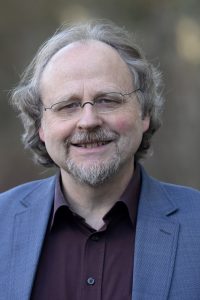
Dr. Christoph Baumgartner is Associate Professor of Ethics in the Department of Philosophy and Religious Studies at Utrecht University's Faculty of Humanities, where he also serves as Director of the Research Institute for Philosophy and Religious Studies. He has been with Utrecht University since 2004, previously serving as director of both the Research Institute for Theology and Religious Studies (INTEGON) and the Research Institute for Philosophy and Religious Studies (OFR) from 2009-2016, and resuming the OFR directorship in September 2022.
His educational background includes studies in theology and chemistry at the University of Tübingen (Germany), where he earned his PhD in 2004 with a specialization in social and political ethics. Prior to joining Utrecht University, he worked as academic coordinator of the International Centre for Ethics in the Sciences and Humanities (IZEW) at the University of Tübingen from 2001-2004. He has held research fellowships at the Netherlands Institute for Advanced Studies (NIAS) from 2008-2009 and at the Max-Weber-Kolleg for Advanced Cultural and Social Studies in Erfurt from September 2019 to August 2020.
Dr. Baumgartner's primary research interests focus on the politics of religion and religious diversity in the public sphere, freedom of religion, tolerance, citizenship, democratic politics and society, environmental ethics and climate change, and philosophy, religion, and social theory in the Anthropocene. His interdisciplinary approach combines philosophical reasoning with historical perspectives and social scientific approaches to examine how normative principles function in pluralistic societies. He has particular interest in how institutions, norms, values and sensibilities enable or hamper people with different religions to fully participate in social and political interactions.
His recent publications reveal a consistent focus on religious diversity in liberal democracies, with particular attention to freedom of religion, blasphemy, and the relationship between religion and public culture. His work increasingly addresses environmental ethics in the Anthropocene, examining how religious and philosophical perspectives can inform our understanding of human-nature relationships. His scholarship demonstrates a progression from theoretical examinations of religious diversity toward more applied analyses of specific controversies and practices, such as handshaking customs across religious differences and the impact of the coronavirus pandemic on religious freedom.
Dr. Baumgartner has been actively involved in academic leadership and program development, co-initiating and coordinating the Research Master Programme in Religious Studies together with Christian Lange and Birgit Meyer. He also coordinated Utrecht University's research focus area "Migration and Societal Change" (2019-2022) alongside Ilse van Liempt, Marcel Lubbers, and Dina Siegel. His research has been supported by various institutions including NIAS and the EU-COFUND Fellowship program.
He is involved in teaching several courses including "Controversies about Religion in the Public Domain," "Ethics and Religion," "Climate Crisis in the Anthropocene: Philosophical and Religious Dimensions," and tutorials for Religious Studies. His academic work contributes to Utrecht University's research themes including "Institutions for Open Societies," "Futures of Democracy," "Migration and Societal Change," and "Pathways to Sustainability."