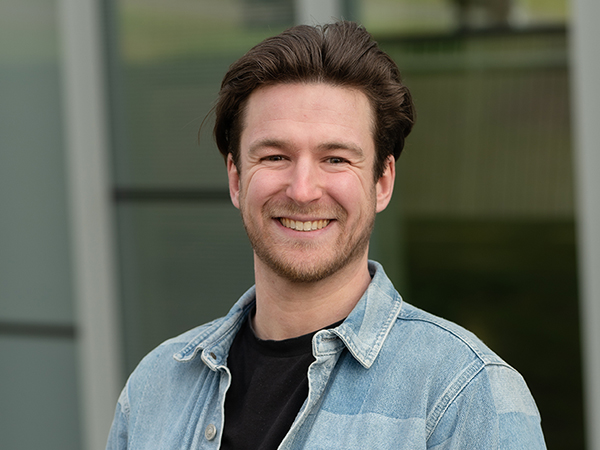
Roland Smith is a Visiting Lecturer at Rose Bruford College of Theatre Performance and National Centre for Circus Arts, while serving as a Research Associate at the University of East Anglia's School of Environmental Sciences. He is affiliated with the Tyndall Centre for Climate Change Research and the Environmental Social Sciences research group. His work focuses on climate change impacts on migration and population displacement, leveraging interdisciplinary methods including data analysis and policy research. Education: PhD candidate (Leverhulme Trust Doctoral Scholar), MSc Climate Change (Distinction, University of Sussex, 2020), BSc Physics & Philosophy (University of Bristol, 2000). Professional experience spans two decades in arts leadership (Founder/Co-Director of Theatre Deli) and consultancy roles in climate change adaptation (GFA Consulting Group, Fraser Risk Consulting). Technical expertise includes R, Python, NVivo, and strategic planning. Research outputs include analysis of sea-level rise migration impacts (2023) and submissions to UK parliamentary committees (2024). Active in cross-sector partnerships linking climate science with socio-cultural adaptation strategies.
Dr. Amii Harwood is a Lecturer in Geography and GIS at the University of East Anglia's School of Environmental Sciences. She specializes in spatial analysis, GIS applications, and translational science focused on land use policy and ecosystem services. Her work bridges environmental science and policy, emphasizing data fitness and uncertainty management in geospatial models. She contributes to the UN Sustainable Development Goals related to environmental sustainability and education. Education: PhD in Geography (2011), University of East Anglia MSc Environmental Informatics (2007), University of Leicester BSc Environmental Earth Science (2004), University of Reading Research Interests: Dr. Harwood’s work addresses real-world challenges through GIS and spatial analysis, including policy-targeted land use optimization, soil carbon economy, and error propagation in geospatial data. She co-designed spatial targeting approaches for the UK National Ecosystem Assessment, published in Science , influencing UK environmental policy. Her research integrates environmental economics and geocomputation to enhance decision-making. Awards & Recognition: The School of Environmental Sciences ranked 4th in the UK for Research Quality (REF 2021). Her work has been cited in policy documents and news outlets, with over 1,500 readers on platforms like Mendeley. Teaching & Leadership: She serves as Deputy Director for Teaching and Learning (Skills Development), focusing on quantitative skills and scripting (Python/R). Teaching interests include geographical perspectives, GIS applications, and cartography. Projects: Recent projects include the Norfolk/Suffolk 25 Year Environment Plan (2021-2023), soil carbon capture initiatives, and sustainable agriculture programs funded by Defra/ESRC/NERC and the European Regional Development Fund.
Francisco A. Gómez Vela is an Associate Professor at Universidad Pablo de Olavide, Spain. His work bridges computational techniques with biomedical and energy data analysis. Education: PhD in Computer Science (Cum Laude) from Universidad Pablo de Olavide; BSc in Computer Science from University of Seville Research interests focus on: Machine learning for genetic and biomedical data Big data and high-performance computing (HPC) in bioinformatics Energy consumption analysis in smart buildings/cities Software tools for gene network reconstruction Recent publications highlight: Ensemble approaches for gene co-expression networks Biclustering methods in biological data mining GPU-accelerated bioinformatics software Applications in cancer biomarker discovery Educational data mining for microcompetency frameworks Teaching duties include: Computer Science (BSc and MSc) Bioinformatics Project Engineering History and Digital Humanities He has participated in national research projects and R+D+I transfer initiatives, developing tools like: bioScience (HPC bioinformatics library) CyEnGNet—App (Cytoscape gene network tool) BIGO (gene enrichment analysis) GNC–app (gene network validation)
Sandhya Patidar is an Associate Professor at the School of Energy, Geoscience, Infrastructure and Society, Heriot-Watt University. She holds editorial roles in journals like Geosciences and Frontiers in Environmental Engineering, and is a member of the Royal Academy of Engineering. Her research focuses on interdisciplinary applications of data science (mathematical/statistical/machine learning) to energy, water, climate change, and environmental impact assessment. She has led projects funded by grants like EP/F038240/1 and EP/K013513/1, and developed novel methodologies in stochastic processes, complex networks, and bifurcation analysis. Education & Early Career: Previously affiliated with Shri RGP Gujarati Professional Institute (2001–2004), DAVV Indore, and RGPV Bhopal. Holds expertise in programming (Python, R, MATLAB) and has over 70 peer-reviewed publications. Three outputs won best paper awards, including recognition at climate change and low-energy architecture conferences. Research Interests: Machine learning applications in energy systems, flood risk modeling, and climate change adaptation. Specializes in techniques like Hidden Markov Modeling, time series analysis, and deep learning frameworks for energy demand forecasting and hydrological prediction. Key Contributions: Developed a physics-aware machine learning framework for hydrological models, error correction models for reservoir levels, and AI-driven heat pump usage classification. Pioneered methodologies linking climatic trends to energy demand via stochastic modeling and covariance approaches. Awards: Robert Alfred Carr Prize (2022) Sir David Wallace Prize (2008) Best Paper Awards (2011, 2019) Advising & Grants: Supervises interdisciplinary PhD projects on data analytics in climate-energy-water nexus. Collaborates on initiatives like the CEDRI project for community energy demand reduction in India. Actively engages in grant-funded research on flood inundation modeling and probabilistic climate projections. Labs & Teams: Part of the Institute for Infrastructure & Environment, leading cross-disciplinary teams in energy performance assessments, resilience planning, and environmental risk management.
Didier COQUIN is a University Professor at the Networks and Telecoms Department of IUT Annecy-Chambéry, University of Savoie Mont-Blanc. He has served as Head of the Networks and Telecoms (R&T) Department since July 2022 and previously held the role from 2014 to 2020. His research focuses on information fusion for decision-making under uncertainty, with applications in image processing, robotics, and environmental studies. He leads the AFuTé group and has organized conferences on machine learning and information fusion. Research Themes: Interval approaches and fuzzy thick sets Credibility-building methodologies Multisensor data fusion (e.g., for robotics, multispectral imaging) Adaptive fusion architectures for tree species recognition Teaching: Responsible for 1st-year computer science courses (Python programming) Machine Learning module for 5th-year engineering students Courses in telecommunications, signal processing, and probability-statistics Grants/Projects: ANR ReVeRIES (2016-2020): Smartphone-based plant recognition using fused data ANR ReVeS (2010-2014): Smartphone applications for tree species identification INTERREG France-Suisse CIME (2018-2022) Labs/Teams: AFuTé Group (Learning, Fusion, Remote Sensing) Former CoDe and FIAD groups Collaborations with EDYTEM lab on sediment core analysis
Ioannis Charalampopoulos is a bioclimatologist at the Agricultural University of Athens (AUA), Greece, affiliated with the Faculty of Crop Science and the Department of Agricultural Meteorology. His research focuses on agroclimatology, urban climate dynamics, and the application of computational tools like R and Python in environmental data analysis. He is actively involved in courses such as Agricultural Meteorology and leads the Ioannis Charalampopoulos Lab , which explores topics ranging from vineyard climate adaptation to urban thermal comfort. His research interests include the climatic impacts on human behavior, viticulture climatology, and the development of climate services for agriculture. He has contributed to studies on bioclimatic indices (e.g., de Martonne, Emberger) and their projections under climate change scenarios, emphasizing their implications for ecosystems and agricultural practices. His work also addresses urban microclimate optimization, particularly in Mediterranean cities like Athens. Charalampopoulos has collaborated on projects involving remote sensing and sensor technology for crop water management, and he advocates for interdisciplinary approaches to climate adaptation in vulnerable habitats. His lab’s methodologies integrate geospatial analysis, microclimate modeling, and policy frameworks to address environmental challenges. He maintains an active presence in both academic and applied research, bridging theoretical climatology with practical solutions for sustainable agriculture and urban design. His research outputs reflect a commitment to advancing bioclimatic science with real-world applications.
Kathleen Murphy is a Professor in the Department of Water Environmental Technology at Chalmers University of Technology, specializing in the application of spectroscopic techniques to analyze dissolved organic matter in water systems. Her research focuses on fluorescence-based methods for distinguishing water sources, detecting quality changes, and optimizing water treatment processes. She has developed influential open-source tools like the drEEM toolbox and OpenFluor database. Her work spans natural aquatic systems (freshwater/oceanic) and technical systems (drinking water, wastewater, ballast water). Current projects include improving water treatment sensors, UV disinfection indicators, and carbon management strategies. Funding sources include Formas, VINNOVA, and industry grants. Key research themes include fluorescence spectroscopy applications, organic matter reactivity, and biofilter optimization. Her interdisciplinary approach addresses global water quality challenges, with over 37 peer-reviewed publications and 10 active research projects since 2018.
David Jaime Cocovi Solberg is a postdoctoral researcher at the University of Natural Resources and Life Sciences, Vienna (BOKU), focusing on instrumentation design for exposome assessment. He is also a visiting professor at Gdańsk University of Technology (GUT) and maintains academic ties with the University of the Balearic Islands (UIB), where he completed his education and contributed to the FITRACE research group. His interdisciplinary work bridges environmental chemistry, analytical instrumentation, and data automation. Education: Bachelor in Chemistry, University of the Balearic Islands (UIB), 2010 Master in Chemical Science and Technology, UIB, 2011 PhD in Chemical Science and Technology, UIB, 2017 (cum laude) Predoctoral stays at DTU (Denmark), BOKU (Austria), and University of Valencia (Spain) His research focuses on environmental chemistry, chromatographic analysis, automation, and instrumentation technology. He specializes in the orthogonalization of separations, data processing using Python, and the development of miniaturized, field-deployable analytical systems. His work supports exposome research through innovative instrumentation and software tools. The 15 most recent publications highlight a strong trend in developing automated, miniaturized analytical systems for environmental monitoring, particularly for emerging contaminants, PFAS, and endocrine disruptors. His research integrates separation science, microfluidics, sensor networks, and machine learning, with a consistent emphasis on open-source software (e.g., CocoSoft) and real-time, on-site detection. The keywords span environmental chemistry, analytical instrumentation, and data science, reflecting his interdisciplinary approach. Scientific Awards: Recipient of 3 research awards (specific names not provided) Holds intellectual property for the software 'CocoSoft' He has delivered over 300 hours of teaching in graduate and undergraduate programs, particularly in Instrumental Methods in Environmental Chemistry and Soil Chemistry and Control at UIB. He has served as a reviewer for leading journals including Science of the Total Environment , Talanta , Micromachines , and Sensors . He has not disclosed specific grant funding, but his research output and software development suggest active project involvement. His professional service includes membership in SEQA, SECyTA, QUIMIBAL, SETAC, and the judicial expert panel of the Balearic Islands High Court. David Cocovi Solberg is actively involved in the Flow Injection and Trace Analysis (FI-TRACE) Consolidated R+D+I Group at UIB as a member, contributing to trace analysis and flow-based systems research. His work combines laboratory innovation with practical applications in environmental monitoring, supported by a strong publication record and software development.
Aseem Mahajan is a Research Fellow at New York University Abu Dhabi's Division of Social Sciences. He holds a Ph.D. in Government from Harvard University (2022) and an A.B. in Politics from Princeton University (2009). His research focuses on climate and energy politics, with a particular emphasis on climate adaptation, energy policy, and rural electrification. Education: Ph.D. in Government (Harvard University, 2022), A.B. in Politics (Princeton University, 2009). His work spans climate change mitigation, solar geoengineering, and energy demand in rural India. He has published extensively in journals like Journal of Conflict Resolution , Energy Policy , and Climatic Change , often using experimental and empirical methods to analyze policy effectiveness. Recent trends in his publications highlight interdisciplinary approaches to climate politics, including behavioral impacts of energy access, solar geoengineering perceptions, and equity norms in international climate negotiations. His research combines formal modeling with fieldwork in developing countries. Scientific Awards: Samuel P. Huntington Doctoral Fellowship (2021–2022) German Transatlantic Study Tour (2018) GSA Research Grant (2017, 2018, 2019) Initiative for Sustainable Energy Policy, Student Fellow (2017–2022) Weatherhead Graduate Student Associates Program (2017–present) EITM Summer Fellowship (2016) Weatherhead Initiative Research Cluster (2015) He has taught courses on international conflict, American foreign policy, and political economy. His computational skills include R, Qualtrics, and Python. He previously worked in economic consulting at PwC and at a community development financial institution (IFF).
Damien COURTINE is a Staff Scientist and Bioinformatician at the Microorganisms: Genome and Environment Laboratory (LMGE) at Clermont Auvergne University, where he has held a permanent position since December 2021. His work spans two research teams (MEB and IHP), focusing on bioinformatics analysis of microbial communities and genome analysis. Dr. COURTINE earned his PhD in Microbiology from the University of Western Brittany (2017), an MSc in Bioinformatics from Blaise Pascal University (2014), a BSc in Biology (2012), and a Technical Diploma in Biology laboratory technician work (2011). Prior to his current position, he was a Post-doctoral Fellow at the Center d'Immunologie de Marseille-Luminy (2019-2021). His research interests include bioinformatics, genomics, microbial ecology, metagenomics, and comparative genomics. Dr. COURTINE specializes in analyzing high-throughput sequencing data from microbial communities, developing genome analysis tools, and providing technical support related to sequencing methods. He works extensively with metagenomic, metatranscriptomic, and metabarcoding approaches, particularly focused on lake microorganism communities in Lake Pavin. Dr. COURTINE's publication record demonstrates expertise in microbial ecology, particularly in extremophiles, microbial eukaryotes, and bacterial communities in meromictic lakes. His work often involves comparative genomics of archaea (particularly Thermococcales), metagenomic analysis of freshwater ecosystems, and development of bioinformatics tools. Recent publications span from 2021-2025, showing consistent productivity across multiple high-impact journals. Since 2024, Dr. COURTINE has been teaching in the bioinformatics master's course at the University of Clermont Auvergne, where he instructs students in algorithms for short-read alignments using Python and the Burrow-Wheeler transform method. His technical expertise includes Linux, high-performance computing (SLURM), version control with git, SnakeMake pipelines, Docker/Singularity containers, and programming in Python, R, and BASH.
Evelyn Uuemaa is a Professor of Geoinformatics at the University of Tartu's Institute of Ecology and Earth Sciences, where she also served as Head of the Department of Geography (2020–2023). Her research focuses on geospatial data management, environmental modeling, and remote sensing applications. She holds a Doctorate in Landscape Ecology and Environmental Protection (2007) and has extensive experience in EU-funded projects, including Marie Curie fellowships. Uuemaa's work emphasizes machine learning for environmental spatial data and integrates remote sensing with socio-economic analysis. She leads the Landscape Geoinformatics Lab and contributes to national sustainability initiatives, such as Estonia's ecosystem service valuation projects. Her teaching includes geoinformatics fundamentals, spatial analysis, and Python/R geoprocessing. Education: PhD in Landscape Ecology (2007), MSc in Geoinformatics (2004), BSc in Physical Geography (2003). Awards: 2022 Best Lecturer, Marie Curie Fellowship (2015), Estonian Academy Prize (2004). Administrative Roles: Member of University Senate, Estonian Geoinformatics Society Board, and AGILE Council. Publications: Over 90 articles on remote sensing, hydrological modeling, and geospatial techniques, including high-impact journals like Remote Sensing of Environment and Ecological Informatics.
Abhinav Mishra is an Associate Professor and Graduate Coordinator in the Department of Food Science & Technology at the University of Georgia’s College of Agricultural & Environmental Sciences. He is based in Athens, GA, and focuses on food microbiology, predictive modeling, and quantitative microbial risk assessment to enhance food safety. Education Specific educational credentials are not detailed in the provided text. Research Interests Mishra’s research centers on: Food microbiology and microbial ecology Predictive modeling of microbial behavior in foods Quantitative microbial risk assessment (QMRA) Food safety interventions and control strategies Survival and persistence of foodborne pathogens across the farm-to-fork continuum His lab develops mathematical models to predict how pathogens like Salmonella , Listeria monocytogenes , and E. coli grow, survive, or decline under varying environmental conditions, enabling data-driven risk management. Teaching He currently teaches: FDST(MIBO) 4120/6120-4120L/6120L: Food Fermentations FDST(EHSC)(MIBO) 4320/6320-4320L/6320L: Food Safety Control Programs FDST 8090: Advanced Food Microbiology Recent Research Trends Over the past decade, Mishra’s publications have increasingly emphasized the integration of predictive models with real-world data to quantify pathogen risks in produce, meat, poultry, and dairy products. His work spans pre-harvest contamination sources, processing interventions, temperature abuse scenarios, and novel antimicrobial technologies such as UV-C and atmospheric cold plasma. A clear trajectory toward data-driven decision-making and risk-based food safety management is evident. Contact & Location Email: amishra@uga.edu Phone: 706-542-0994 Mail & Shipping: Food Science Building, 100 Cedar St., Athens, GA 30602
Francisco Álvarez Gonzalez is a Professor at the Department of Economic Analysis and Quantitative Economics, within the Faculty of Economics and Business Administration at Complutense University of Madrid. His research spans interdisciplinary fields, including microeconomics, dynamic optimization, auction theory, and machine learning applications in economics. He is affiliated with the Complutense Institute of Economic Analysis (ICAE) and Complutense Institute of International Studies (ICEI). Ph.D. in Economics, Complutense University of Madrid, 1997 B.S. in Economics, Complutense University of Madrid, 1991 His research interests focus on multi-unit auctions, dynamic optimization in economic models, machine learning integration for economic analysis, and environmental economics. He has also contributed to medical fields through collaborations on topics like critical care biomarkers and nosocomial infections. His funded projects include studies on public debt mechanisms, CO2 permits, and market institutions. Recent publications analyze renewable energy auction efficiency, firm bankruptcy prediction via XGBoost, and NO2 pollution modeling using Shapley values. He has supervised four Ph.D. students and served on editorial boards for Computational Economics and PLOS ONE. His programming expertise includes Python, R, and legacy languages like MATLAB. Key grants include Ministerio de Ciencia e Innovación's PID 2020-114309GB-100 project, ECO2017-86245-P, ECO2014-56676-C2-2-P, and SEJ2007-65722. He has held visiting positions at the Tinbergen Institute, Aix-Marseille II, University of Maryland, and CSIC's Institute for Public Policies and Goods.
Quang Hung Ha serves as an Assistant Professor in the Department of Earth & Environmental Systems at the College of Arts & Sciences, Indiana State University. He concurrently holds academic appointments at Ho Chi Minh University of Transportation (August 1, 2025 - August 1, 2028) and Fulbright University Vietnam (September 1, 2025 - December 30, 2025). He earned his Ph.D. in Spatial & Earth Sciences from Indiana State University in 2021. His research expertise spans Earth and Spatial Sciences with emphasis on drone-based geospatial analysis using Python/R scripting, GIS/Remote Sensing for environmental management, multispectral/thermal drone applications in renewable energy and agriculture, and geospatial methodologies for socio-economic policy research. His interdisciplinary work integrates environmental data science, public policy, and geopolitical analysis. No scientific awards were documented in the provided materials. Information regarding student advising, research grants, or laboratory affiliations was not specified in the source text.
Daan van Nassauw serves as a Bioinformatician in the Analysis Techniques in Life Sciences research group at the Centre of Expertise Perspective in Health, Avans University of Applied Sciences. He holds an MSc in Bioinformatics from Wageningen University (2024) and a Bachelor's degree in Biology & Medical Laboratory Research from Avans University of Applied Sciences. His academic background includes: MSc Bioinformatics, Wageningen University (2024) Bachelor Biology & Medical Laboratory Research, Avans University of Applied Sciences Daan's research spans microbial genomics, secondary metabolite synthesis, and forensic bioinformatics applications. His expertise in Python and R enables robust data analysis for projects including industrial fungal DNA analysis and environmental forensics. Current work focuses on the CRAFTing RAAKe Beer project and forensic investigation of illegal drug waste dumping, demonstrating practical applications of computational biology in industry and law enforcement contexts. Committed to academic mentorship, Daan actively tutors students while contributing to the Centre's mission through data support roles. His technical proficiency bridges biological research and computational analysis in real-world scenarios. As a core member of the Analysis Techniques in Life Sciences research group, he collaborates on interdisciplinary projects that integrate laboratory research with advanced data analytics to address contemporary health and environmental challenges.