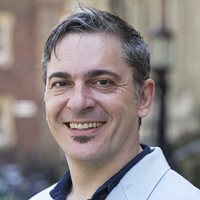
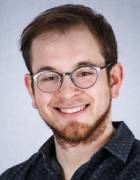
Dr. Christian Julliard is Associate Professor of Finance at the London School of Economics. His research spans macroeconomics, asset pricing, and financial econometrics, with a focus on developing empirical frameworks for risk assessment. Key contributions include Bayesian methodologies for factor model evaluation and structural analyses of interbank network risks. His work on information-theoretic asset pricing reframes traditional consumption-based models. Current projects examine corporate bond risk premia and the market costs of economic fluctuations. Recent publications feature in the Journal of Financial Economics and Journal of Finance. Dr. Julliard teaches Risk Management in Financial Markets and Financial Econometrics at postgraduate levels, emphasizing quantitative approaches to market analysis.
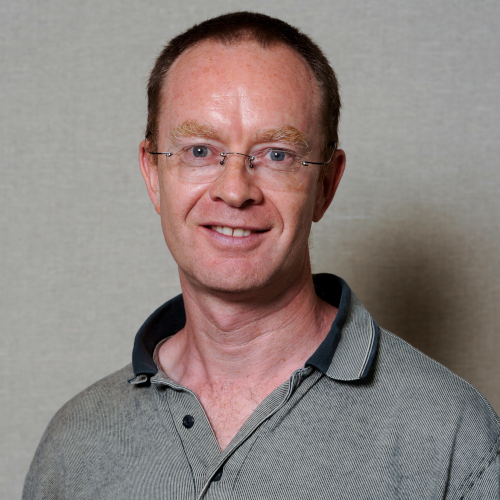
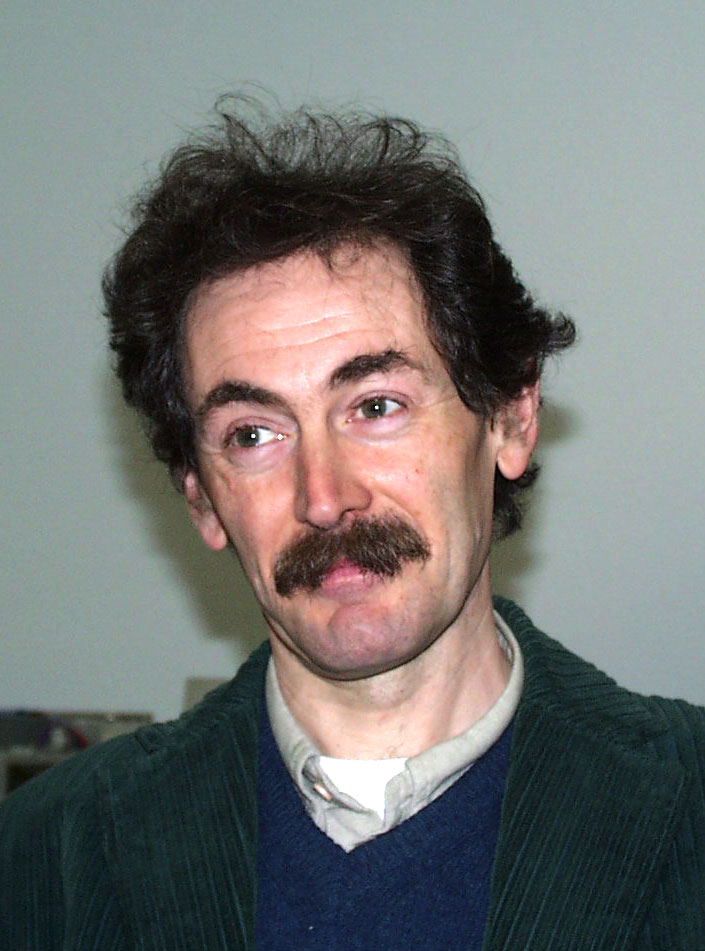
James (Jim) Kneller is a Professor in the Department of Physics at North Carolina State University (NC State). He holds a PhD from The Ohio State University (2001), and has held postdoctoral positions at NC State, the University of Minnesota, and the French Institut de Physique Nucléaire (IPN/CNRS) in France. His research focuses on theoretical astrophysics, particularly neutrino flavor oscillations in supernovae and neutron star mergers, and their implications for astrophysical phenomena like Galactic Chemical Evolution and dark energy. Kneller's work also involves developing computational tools for neutrino detection, such as the SNEWS 2.0 alert software, and他曾 was awarded the Department of Energy's Early Career Research Program in 2011. His research group collaborates on projects like the DUNE neutrino detector and explores interdisciplinary methods in scientific software development using Agile Scrum. Kneller's contributions span both fundamental physics and applied computational techniques, with an emphasis on multimessenger astronomy. Education: PhD in Physics, The Ohio State University, 2001 (Advisor: Gary Steigman) Research Interests: Kneller's research explores neutrino flavor oscillations in extreme astrophysical environments, including supernovae and neutron star mergers. His group develops advanced models to understand neutrino transport mechanisms and their effects on observable phenomena. Key areas include: Fast flavor instabilities in dense neutrino environments Three-dimensional simulations of neutrino dynamics Applications to cosmic ray spallation and dark energy Design of neutrino detection algorithms for experiments like DUNE Awards: Department of Energy Early Career Research Program Award (2011) Collaborations & Tools: Kneller's team applies innovative software development practices (e.g., Agile Scrum) to scientific projects, including the SNEWS 2.0 neutrino alert system. His work bridges theoretical physics with cutting-edge computational methods, supporting next-generation multimessenger astronomy initiatives.
Professor Marie-Therese Wolfram holds a faculty position at the Mathematics Institute of the University of Warwick. Her research focuses on applied partial differential equations, mathematical modeling in socio-economic and life sciences, and inverse problems. She is actively involved in organizing international workshops and serves on editorial boards for journals like ESAIM M2AN and Kinetic and Related Models. Her academic journey includes grants such as the Royal Society International Exchange (2022-2024) and the EPSRC First Grant (2017-2019). Notable awards include the Excellence in Gender Equality Award (2023) and the Whitehead Prize (2023). She co-leads the EDI committee at Warwick and contributes to initiatives like the Young Academy of the Austrian Academy of Sciences. Her research spans opinion dynamics, crowd modeling, and optimal transport theory. Recent work explores consensus-breaking in social networks and applications of mean-field games to knowledge growth. She collaborates internationally on projects such as the 'Multiscale Modelling of Crowded Transport' and the 'Wasserstein Gradient Flows' initiative. Teaching responsibilities include MA265 Methods for Mathematical Modelling and MA4M2 Inverse Problems. Her work bridges theoretical analysis with practical applications, reflecting her dual expertise in pure mathematics and interdisciplinary modeling.
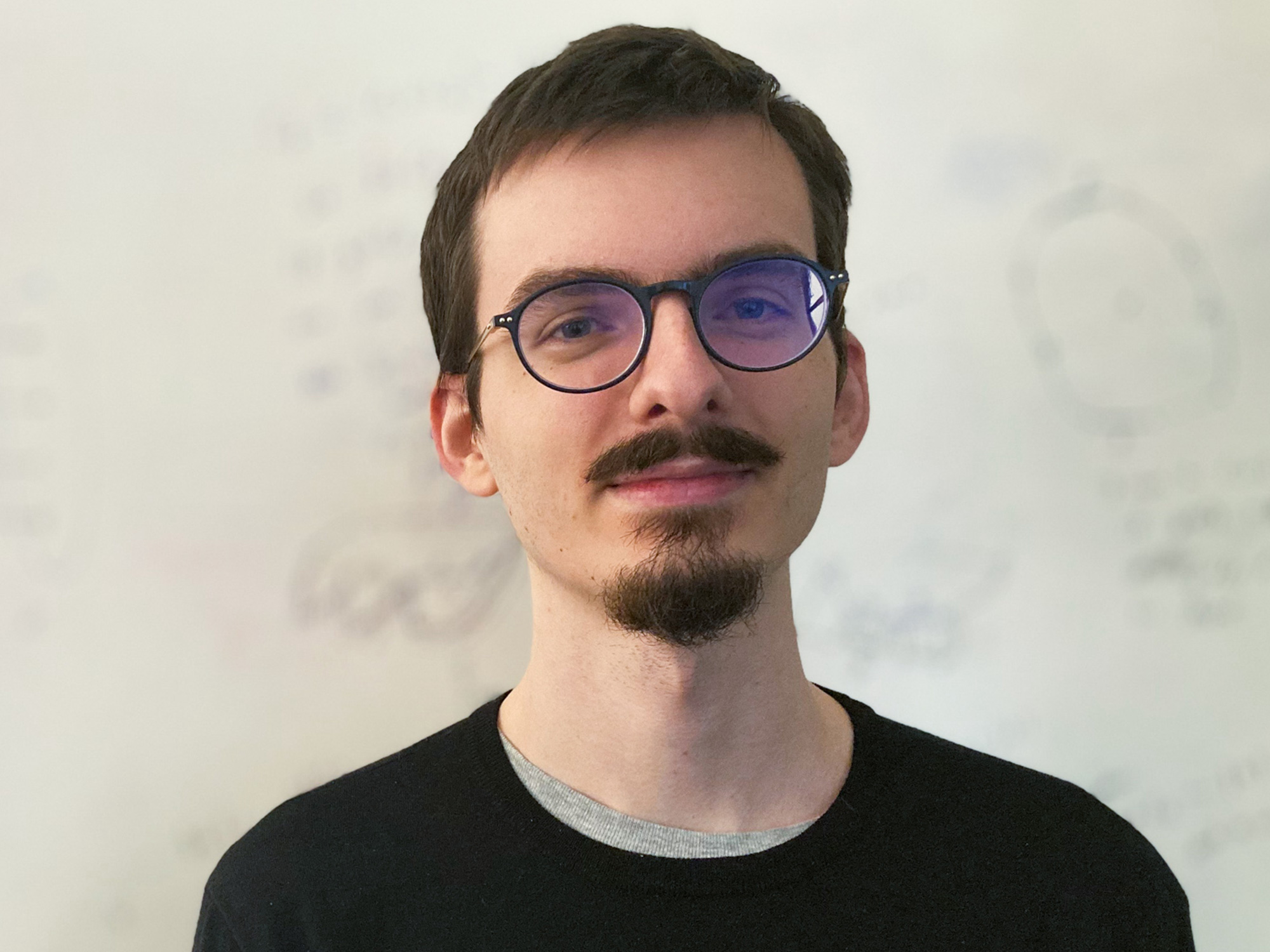
Paul Schneider is a Full Professor in the Faculty of Economic Sciences at the University of Italian Switzerland (USI), where he has been a faculty member since 2012. He is affiliated with the Institute of Finance (IFin) and the Euler Institute (EUL), contributing to interdisciplinary research in quantitative finance and econometrics. His research focuses on financial econometrics, asset pricing, and statistical methods in finance, with an emphasis on extracting latent market information under minimal assumptions. He integrates techniques from engineering, mathematics, and data science to develop robust models for financial markets. His work spans risk premia, ambiguity in investment decisions, nonlinear pricing, and model-free recovery methods. His recent publications (2023–2024) in journals such as Review of Finance , Management Science , and SIAM Journal on Mathematics of Data Science highlight trends in adaptive learning, empirical scenario generation, constrained likelihood estimation, and optimal investment under ambiguity . These reflect a strong focus on data-driven, computationally efficient, and theoretically sound approaches to financial modeling. Adaptive joint distribution learning Fast empirical scenarios Optimal Investment under Ambiguity Constrained polynomial likelihood Dispersion of Beliefs and Sentimental Recovery Scientific Awards: No specific awards or fellowships are mentioned in the provided text. Advising and Grants: While no formal list of advisees is provided, Paul Schneider has collaborated extensively with researchers such as Damir Filipovic, Fabio Trojani, and Christian Wagner, suggesting a strong mentorship and collaborative role. He has contributed to funded research projects, particularly in financial modeling and econometrics, though specific grant names are not detailed. Labs and Research Teams: He is actively involved with the Institute of Finance (IFin) and the Euler Institute at USI, which support interdisciplinary research in finance, mathematics, and data science. He has also developed computational tools such as the KDM R package for kernel density machines, indicating engagement with data science and open research practices.
Florio Maria Ciaglia is a researcher in the Department of Mathematics at Carlos III University of Madrid (UC3M), affiliated with the Applied Mathematics, Control Systems, and Signals research group. His work lies at the intersection of mathematical physics, quantum mechanics, and information geometry, with a focus on geometric and algebraic structures in quantum theory. His research interests include quantum mechanics (particularly Schwinger's picture) , information geometry , groupoids and higher categorical structures , Jordan and C*-algebras , and geometric methods in quantum information . He investigates the differential geometric foundations of quantum and classical states, monotone metrics, parametric estimation, and the role of symmetry and causality in quantum dynamics. His work often bridges abstract mathematics with foundational physical concepts. The trends in his recent publications reveal a deep and consistent exploration of geometric formulations of quantum mechanics , especially through groupoids and algebraic structures, alongside information-theoretic approaches in quantum theory . He frequently publishes in journals such as Journal of Geometry and Physics , Entropy , and International Journal of Geometric Methods in Modern Physics , reflecting a strong emphasis on mathematical rigor and physical interpretation. He has led significant research projects including: QUITEMAD-CM - QUITEMAD (2025–2028), funded by Comunidad de Madrid Classical and Quantum Information Theory and Functional Analysis: Foundations and applications (2021–2024), funded by CAM Groupoids, Von Neumann Algebras and the Mathematical Foundations of Quantum Mechanics (2021–2025), funded by AEI These projects underscore his leadership in advancing the mathematical foundations of quantum information and quantum mechanics. He collaborates within interdisciplinary teams focusing on applied mathematics and quantum systems. While no formal students or awards are listed in the provided text, his extensive publication record and principal investigator roles indicate a significant research impact.
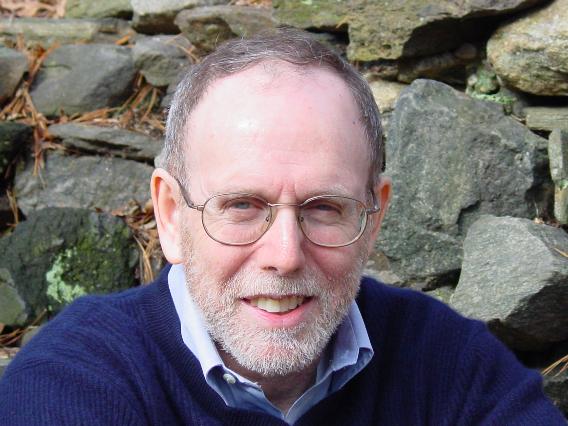
Charles S. Peskin is a Professor of Mathematics at the Courant Institute of Mathematical Sciences, New York University. He specializes in mathematical modeling and simulation of biological systems, particularly cardiovascular physiology and neurophysiology. His work focuses on the Immersed Boundary Method, a computational framework for fluid-structure interaction problems. Peskin has authored influential textbooks such as Modeling and Simulation in Medicine and the Life Sciences (2nd ed., 2002) and developed simulation tools used in biomechanics research. His research spans mathematical biology, computational fluid dynamics, and stochastic processes in biological systems. He advises PhD students on interdisciplinary projects at the interface of mathematics and life sciences. Key contributions include modeling heart valve dynamics, neural signaling mechanisms, and biomolecular motor systems. Affiliations: Courant Institute, NYU Research: Immersed Boundary Method, Cardiac Mechanics, Neurophysiology Modeling Publications: 100+ articles, 2 books Teaching: Courses on PDEs in Biology, Biomolecular Motors, and Simulation Techniques Software: MATLAB programs for cardiovascular system simulations His work bridges applied mathematics with biomedical engineering, emphasizing computational methods for complex biological systems. Recent work includes studies on entropy principles in biology and rotary molecular motor mechanisms.
Maarten Wegewijs is an Associate Professor (apl. Prof.) at RWTH Aachen University and a permanent staff member at the Peter Grünberg Institute (PGI-2) for Theoretical Nanoelektronik at Forschungszentrum Jülich, Germany. He leads research in theoretical quantum physics with a focus on quantum information, open quantum systems, and quantum transport. He is actively involved in teaching the Quantum Technology Master program at RWTH Aachen and collaborates with leading research groups across Europe. Research Interests: Theoretical and mathematical foundations of quantum information Quantum dynamics and non-Markovianity Quantum thermodynamics and heat transport Fermionic duality and exact symmetries Driven quantum systems and geometric effects Quantum transport in nanoscale and molecular junctions His recent research, reflected in 15 key themes from 2012–2023, shows a strong trend toward foundational aspects of quantum theory, particularly in information recovery, higher-order operations, and thermodynamic consistency in open systems. The work bridges mathematical physics, quantum information, and condensed matter theory. Scientific Awards and Recognition: No explicit awards listed for Maarten Wegewijs. Former student Konstantin Nestmann is a Marie Skłodowska-Curie Fellow, indicating high-quality mentorship. Advising and Research Collaborations: He has advised PhD students including Konstantin Nestmann and collaborates with prominent groups such as Mario Berta (RWTH Aachen), Janine Splettstoesser (Chalmers), Dirk Schuricht (Utrecht), and Herre van der Zant (Delft). His research has been supported through positions at the Helmholtz Association and European Commission networks. Labs and Research Teams: He leads the theoretical research group within PGI-2 at Forschungszentrum Jülich and maintains a strong affiliation with the Institute of Quantum Information at RWTH Aachen. His former Helmholtz Young Investigator Group focused on single-molecule quantum transport, continuing through international collaborations.
Prof. Tobias Meggendorfer is an academic leader in formal methods and probabilistic systems verification. He currently holds an interim professorship at the Technical University Munich (TUM) within the Computational Mathematics department under the TUM School of Computation, Information and Technology. His career includes a postdoc at the Institute of Science and Technology Austria (IST Austria) and a PhD at TUM under Prof. Jan Křetínský. His research focuses on formal verification techniques for probabilistic systems, including risk-aware verification frameworks, stochastic games, and integration of machine learning into verification processes. Notable contributions include the Owl tool library for ω-automata and LTL translations, and the PET partial exploration tool for probabilistic verification. Prof. Meggendorfer has published extensively on topics such as value iteration stopping criteria for stochastic games, entropic risk measures, and semantic learning in LTL synthesis. He actively serves on program committees for AAAI, CAV, and other top conferences, and has reviewed for journals like JACM and IEEE TSE. His work bridges theoretical foundations with practical tool development, evidenced by contributions to open-source projects like the JBDD library and DOMtutor educational framework. He has advised multiple MSc and BSc theses, translating research into impactful educational and industrial applications.
Mi Tian is a Professor of Sustainable Hydrogen Energy in the Department of Chemical Engineering at the University of Bath. Her research is highly active and centers on advanced materials for sustainable energy applications, particularly hydrogen storage and CO₂ utilization. She is involved in multiple research council-funded projects utilizing neutron scattering techniques to analyze hydrogen confinement in storage materials. University: University of Bath Department: Department of Chemical Engineering Email: mt747@bath.ac.uk Office: Wessex House 7.35 Phone: +44 (0) 1225 384348 ORCID: 0000-0001-6983-6146 Education: Doctor of Philosophy (PhD) in Mg-C composite for sustainable energy applications, University of East Anglia (Awarded: 1 July 2015) Her research interests include sustainable hydrogen energy, hydrogen storage, porous materials, Mg-based composites, activated carbon, nanoparticles, and photocatalytic CO₂ hydrogenation. Her work significantly contributes to UN Sustainable Development Goals related to clean energy and climate action. She applies advanced material characterization techniques and innovative manufacturing methods such as powder bed fusion in her research. The most recent articles indicate a strong focus on next-generation hydrogen storage technologies, including hydrate-based systems, metal–organic frameworks, and high-entropy oxides for CO₂ conversion. Her research integrates materials science with process engineering to develop scalable and sustainable energy solutions. Scientific Awards: EPSRC Women In Engineering Ambassador (June 2023) She has served as a Co-Investigator on two major research council projects related to neutron scattering analysis of hydrogen storage materials. Mi Tian actively participates in academic dissemination, including being a speaker at the Gordon Research Conference (June 2025). Although no formal advisees are listed, her collaborative network includes researchers across the UK and internationally. Her work is supported by national funding bodies and has significant industrial and environmental implications.
Ewan Davies is an Assistant Professor in the Department of Computer Science at Colorado State University, where he conducts research at the intersection of combinatorics, theoretical computer science, and statistical physics. He has previously held positions as a Postdoctoral Researcher at CU Boulder, a Research Fellow at the Simons Institute, and a Postdoc at the University of Amsterdam. His educational background includes a Ph.D. in Mathematics from the London School of Economics and Political Science (2013–2017), an M.Math from the University of Cambridge (2012–2013), and a B.A. (Hons) in Mathematics from the University of Cambridge (2009–2012). Davies’s research focuses on probabilistic and extremal combinatorics, particularly in graph coloring, independent sets, partition functions, and spin models such as the hard-core and Potts models. He employs techniques from statistical physics, entropy compression, and the Lovász local lemma to develop algorithmic frameworks for coloring and counting problems. His work often bridges theoretical insights with practical algorithmic implications, especially in the context of approximate counting and sampling. The trends in his recent publications reveal a sustained focus on algorithmic graph theory, with major contributions to list packing, local graph degeneracy, and computational thresholds in spin systems. His work frequently appears in top-tier venues such as FOCS, STOC, ICALP, and journals like Random Structures & Algorithms and SIAM Journal on Computing . He has co-authored numerous papers with leading researchers in the field, including Ross J. Kang, Will Perkins, and Alexandra Kolla. Sampling and Optimization under Global Constraints, NSF Grant #2309707 PhD Prize for Outstanding Academic Performance, London School of Economics Mathematics Department New Teacher Prize, London School of Economics Foundation Scholarship and R.A. Watchman Prize, Jesus College, Cambridge Foundation Scholarship and Sir Harold Spencer Jones Prize, Jesus College, Cambridge Foundation Scholarship and Ware Prize, Jesus College, Cambridge Foundation Exhibition and Bronowski Prize, Jesus College, Cambridge Davies actively mentors students, having supervised multiple undergraduate and graduate research projects in areas such as redistricting and graph coloring. He is also involved in organizing academic workshops, including the upcoming Rocky Mountain Summer Workshop on Algorithms, Probability, and Combinatorics. His research is supported by the National Science Foundation, and he continues to contribute to both theoretical advances and interdisciplinary applications in computer science and mathematics. He leads research on graph structure via local occupancy, regularity inheritance in hypergraphs, and the algorithmic analysis of phase transitions in statistical mechanical models. His work on the occupancy fraction and fractional coloring has provided new insights into longstanding conjectures in graph theory.
Amir Alani is a Professor at the University of West London with extensive expertise in Ground Penetrating Radar (GPR) applications for infrastructure and environmental monitoring. His research spans civil engineering, geophysics, and remote sensing, with particular focus on non-destructive testing methodologies for structural health assessment. His research interests center on Ground Penetrating Radar applications across multiple domains including structural health monitoring of bridges and tunnels, tree root mapping and assessment, airport pavement inspection, and flood forecasting systems. Dr. Alani has pioneered innovative approaches using polarimetric GPR systems for tree trunk inspection and developed enhanced data processing frameworks for mapping tree root systems in urban environments. His work integrates GPR with other technologies like InSAR (Interferometric Synthetic Aperture Radar) for comprehensive infrastructure monitoring. Analysis of Dr. Alani's recent publications reveals a strong trend toward integrating multiple sensing technologies for infrastructure monitoring, with significant work on applying GPR to environmental challenges like tree health assessment and urban flood management. His research demonstrates a consistent focus on practical applications of geophysical methods to solve real-world engineering problems, particularly in urban infrastructure contexts. Dr. Alani has been actively involved in advising PhD students and securing research grants, though specific details of these activities are not fully documented in the available publications. His research group appears to collaborate extensively with international partners across Europe. His laboratory work focuses on GPR technology development and application, with particular emphasis on tree root mapping systems and infrastructure health monitoring. The research team has developed specialized processing frameworks for GPR data analysis, including geostatistical approaches and deep learning techniques for root detection.
Miguel Escobedo Martínez is a Professor of Mathematical Analysis in the Department of Mathematics at the Faculty of Science and Technology, University of the Basque Country. He also serves as an External Scientific Member at the Basque Center of Applied Mathematics (BCAM). Research Interests Professor Escobedo specializes in Nonlinear Partial Differential Equations , with particular focus on Kinetic Equations and Aggregation and Fragmentation Models . His research explores the mathematical foundations of physical phenomena, particularly in quantum systems and particle dynamics. His work often involves rigorous analysis of existence, uniqueness, and asymptotic behavior of solutions to complex nonlinear systems. Research Trends Professor Escobedo's publications demonstrate a consistent focus on nonlinear PDEs with applications to physical systems, particularly quantum kinetic equations and coagulation-fragmentation models. His work spans from fundamental mathematical analysis to applications in quantum physics and statistical mechanics. A significant portion of his research centers on the mathematical theory of Bose-Einstein condensation and related quantum phenomena, as well as the analysis of coagulation equations that model particle aggregation processes. Projects and Affiliations Principal Investigator for research project "Partial Differential Equations: Analysis, Control, Numerics and Applications" (MTM2008-03541) External Scientific Member at Basque Center of Applied Mathematics (BCAM) Conference Participation Professor Escobedo has presented his work at various international conferences, including SIAM conferences on Nonlinear Waves and Material Sciences, where he has discussed topics such as singular solutions for the Uehling-Uhlenbeck equation and self-similar solutions for coagulation and fragmentation equations.
Dr. Abhik Ghosh Moulick is a Postdoctoral Fellow at the Institute of Nanotechnology (INT) , part of the Karlsruhe Institute of Technology (KIT) in Germany. He works under the supervision of Dr. Mariana Kozlowska and Prof. Wolfgang Wenzel . Previously, he held a postdoctoral position at the Department of Chemistry, College of Staten Island, CUNY , collaborating with Prof. Sharon Loverde . His PhD in Theoretical Soft Matter Physics was completed at the S. N. Bose National Centre for Basic Sciences under Prof. Jaydeb Chakrabarti . Research Focus: Development of computational methods to study nucleosome core particle structure/stability using multi-scale simulations. PhD work focused on protein relaxation phenomena through dihedral angle analysis. Current projects involve sequence-dependent nucleosome dynamics, DNA-protein interactions, and coarse-grained modeling. Recent Publications: Featured in J. Chem. Phys. and JPCB on nucleosome dynamics Awards: Recipient of CUNY Postdoctoral Travel Grant Conference Participation: Presented at SIMPLAIX 2025 , IMSI Workshop Chicago , and CECAM ENS Lyon
Nathan Klein is an Assistant Professor in the Department of Computer Science at Boston University, within the College of Arts and Sciences. He previously held a postdoctoral position at the Institute for Advanced Study in the School of Mathematics and completed his PhD at the University of Washington under the supervision of Anna Karlin and Shayan Oveis Gharan. His primary research lies in approximation algorithms, with a strong focus on graph problems such as the Traveling Salesperson Problem (TSP). He specializes in rounding techniques for linear programming relaxations, particularly randomized and iterative rounding methods. His work often targets improvements in approximation factors and integrality gaps for fundamental combinatorial optimization problems. The recent publications highlight a consistent theme: advancing the theoretical understanding of TSP and related graph optimization problems. Key contributions include improved approximation bounds using max entropy algorithms, dual analysis techniques, and new rounding frameworks. His research bridges theoretical computer science and discrete mathematics, with applications in network design and algorithmic foundations. Scientific Awards: No awards explicitly mentioned in the text. Nathan Klein advises graduate students and postdocs, including Zhuan Khye Koh. He has taught advanced courses such as CS 530: Advanced Algorithms, CS 237: Probability in Computing, and a specialized topics course on Rounding Techniques in Approximation Algorithms. His research is supported by his academic appointments and likely external grants, though specific grants are not listed. He maintains an active research program with a focus on open problems in TSP and LP rounding. He is involved in teaching and mentoring, with a structured curriculum emphasizing the 'Relax and Round' framework for approximation algorithms. His course materials reflect a deep engagement with both foundational and cutting-edge topics in algorithm design.
Erik Lewin is a Senior Lecturer and Associate Professor in Inorganic Chemistry at the Department of Chemistry – Ångström Laboratory, Uppsala University. He is responsible for the Master's Programme in Chemical Engineering and serves as Director of the AM@Å – Additive Manufacturing initiative at the Ångström Laboratory. His research is centered on advanced inorganic materials, particularly multi-component and high-entropy thin films, with applications in coatings and additive manufacturing. His research interests include: Structure-property correlations in new materials Design of multi-component materials (nitrides, carbides, alloys) Thin film deposition via magnetron sputtering X-ray diffraction and X-ray photoelectron spectroscopy (XPS) for materials characterization High-entropy materials and nanocomposite coatings Coatings for additive manufacturing applications His recent publications reflect a strong focus on high-entropy materials, multi-component nitrides and carbides, and surface analysis techniques, particularly XPS. Trends in his work include probing charge transfer effects, phase formation, mechanical and optical properties, and corrosion resistance in complex thin films. He frequently collaborates on studies involving HAXPES, ab-initio modeling, and industrial applications of hard coatings. Erik Lewin has not been explicitly awarded any scientific prizes in the provided text. However, his extensive publication record in high-impact journals such as Nature Reviews Methods Primers , Acta Materialia , and Journal of Applied Physics underscores his scientific impact. He supervises research and teaches in the field of materials chemistry, serving as course responsible for "Materials Chemistry" (1kb210) and lecturing in several other courses. He leads the AM@Å initiative, which fosters collaboration in additive manufacturing research, and oversees the Master's Programme in Chemical Engineering, indicating active mentorship and academic leadership. His work is supported by institutional affiliations and collaborative projects, though specific external grants are not detailed. Lewin conducts his research within the inorganic research programme at the Department of Chemistry – Ångström Laboratory, utilizing advanced facilities for magnetron sputtering, XRD, and XPS. His team investigates structure-property relationships in novel thin films, with a focus on industrial applications such as electrical contacts, wear-resistant coatings, and catalytic materials.