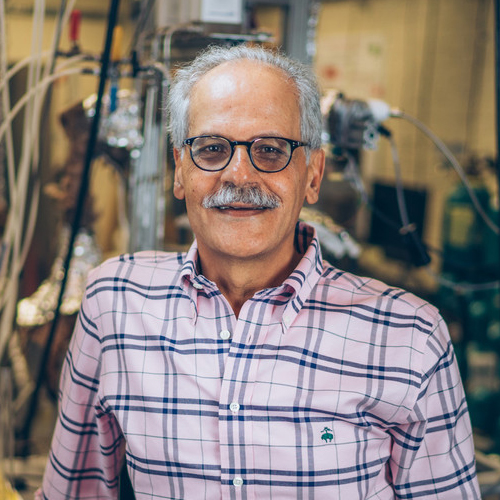
Michael J. Spivey is a Professor of Cognitive Science at the University of California, Merced, affiliated with the School of Social Sciences, Humanities and Arts. His research focuses on understanding human cognition through embodied and dynamic systems approaches, with particular expertise in eye-tracking methodologies and real-time language processing. As a faculty member in the Cognitive and Information Sciences department, he contributes to interdisciplinary research that bridges psychology, linguistics, and neuroscience. Dr. Spivey's educational background includes: Ph.D. in Brain and Cognitive Sciences from the University of Rochester (1996) M.A. in Brain and Cognitive Sciences from the University of Rochester (1995) B.A. from the University of California, Santa Cruz (1991) His research interests span psycholinguistics, visual perception, sensorimotor processing, embodied cognition, and dynamical systems theory. Dr. Spivey investigates how cognitive processes unfold in real-time through eye movements and other behavioral measures, challenging traditional modular views of cognition. His work emphasizes the continuous interaction between perception, action, and cognition, demonstrating how language processing is deeply embedded in our sensorimotor experiences. He has made significant contributions to understanding the time course of language comprehension, the role of visual context in linguistic processing, and the dynamic nature of cognitive representations. Analysis of Dr. Spivey's recent publications reveals a strong focus on embodied and dynamic approaches to cognition. His work spans diverse areas including eye-tracking and mouse-tracking methodologies, team cognition, creativity research, bilingual language processing, and the application of foraging theory to cognitive processes. A recurring theme across these publications is the investigation of real-time cognitive dynamics using continuous behavioral measures. His research increasingly incorporates ecological approaches, examining cognition in more naturalistic contexts while maintaining experimental rigor. The interdisciplinary nature of his work is evident in collaborations across psychology, linguistics, neuroscience, and even music cognition. Dr. Spivey is affiliated with the Center for Human Adaptive Systems and Environments and collaborates with researchers at Western University, Northwestern University, Brown University, and UCLA. His work with students likely focuses on training in advanced methodologies for measuring real-time cognitive processes.