Dr. Sirui Li is a Lecturer at Murdoch University's School of Information Technology within the College of Science, Technology, Engineering and Mathematics. Her research focuses on Artificial Intelligence, Natural Language Processing (NLP), Machine Learning, Knowledge Graphs, Data Analysis, Temporal Data, and Multi-modal Models, with applications in medicine, agriculture, and mining. She collaborates with industry partners like BHP and has published in journals such as Food Chemistry and Knowledge and Information Systems , as well as conferences like ICSME and IJCNN. Education: Bachelor of Advanced Computing (Honours) in Computer Science at Australian National University Master of Computing (Specialising in AI) at ANU Ph.D. in Information Technology (AI) at Murdoch University Research interests include interdisciplinary applications of AI, such as clinical coding privacy solutions, disease spread modeling, and drug repurposing for pandemics. Her work emphasizes practical industry integration, demonstrated through awards like the 2024 EMNLP Best Demo Award and the 2023 Iron Ore Circuit Hackathon innovation prize. Professional roles include IEEE Western Australia Section committee membership, conference chair positions, and peer review for top journals. She actively mentors students pursuing Honours, Master's, or PhD projects in her areas of expertise.
Professor Jun Zhang is a leading academic in cybersecurity at Swinburne University, Australia, where he directs the Cybersecurity Lab. He has been honored as Australia's top cybersecurity researcher and instrumental in establishing Swinburne as a globally recognized cybersecurity research institution. His work includes high-impact papers and multi-million-dollar R&D projects, culminating in awards like the 2021 'Top Cybersecurity Research Institution' accolade. As course director of the Bachelor of Cyber Security, he pioneered an industry-driven teaching model with Deloitte and CSIRO, significantly boosting course enrollment. His collaborations extend to Adobe's Curriculum Innovation Program and the Australian P-TECH initiative, promoting STEM education and cybersecurity awareness. He supervises doctoral candidates and leads grants focused on AI-driven cybersecurity, smart home security, and blockchain-based edge computing. His research spans vulnerability detection, GAN forensics, IoT security, and privacy preservation in OSNs. Research interests include cybersecurity fundamentals, data science applications, and distributed systems. Notable achievements include the PTFix framework for Java vulnerabilities, the IoTFuzz smart home testing system, and CTI mining methodologies. Awards reflect his mid-career research excellence and industry partnerships. His grants with CSIRO and defense organizations emphasize real-world impact, addressing challenges from malware detection to adversarial machine learning. The Cybersecurity Lab and collaborative projects like Artchain demonstrate his commitment to bridging academia and industry. Professional activities include supervising over 20 HDR students and securing grants totaling millions. His work on blockchain-based edge storage (CSEdge) and SDCCP congestion control highlights innovation in networking. Future directions include advancing AI for design collaboration with CSIRO and enhancing privacy in smart energy technologies. His contributions span technical, educational, and community outreach domains, positioning him as a pivotal figure in cybersecurity's evolution.
Dr. Tan Kim Lim is a Senior Lecturer at the James Cook University (Singapore Campus), specializing in organizational psychology and consumer behavior. He holds a PhD from Curtin University (2016–2019), an MBA from the University of Melbourne (2004–2006), and a Bachelor of Business from Monash University (1999–2002). His research focuses on the future of work, employee attitudes, technology adoption in hospitality/tourism, and consumer behavior analysis. He employs advanced methodologies like PLS-SEM and has published over 47 articles in top journals like the European Business Review and Asia Pacific Journal of Marketing and Logistics . Dr. Lim has held roles including Assistant Professor at BNU-HKBU United International College (2020–2022) and Post-doctoral researcher at the Human Capital Leadership Institute (2019–2021). He currently serves on editorial boards of the Journal of Responsible Tourism Management and Journal of Global Responsibilities , and is a member of the Singapore Human Resource Institute and Society of Industrial-Organizational Psychology. His applied research spans commissioned projects for governments and private entities, including studies on waste classification behavior, country music festivals, and AI adoption in social services. Awards include the JCUS Early Career Researcher Award (2023) and Emerald Literati Reviewer Award (2022). Dr. Lim also actively speaks at regional conferences on topics like AI in networking and post-pandemic workplace trends. His current research interests include STARA (Smart Technologies, AI, Robotics, Algorithms) impacts on work, meaningful work dynamics, and tourism behavior analysis. He supervises PhD students exploring AI in social services, indigenous tourism, and workplace technology adoption.
Dr. Teresa Wang is a Senior Lecturer in Data Science at Monash University's Faculty of Information Technology, specializing in entity/user modeling, relational/structural machine learning, and graph/network analysis. She holds a Ph.D. from the University of Queensland and degrees from Nanjing University. Currently, she directs the Master of Data Science Program and teaches courses like FIT5201 Machine Learning. Her research focuses on social, e-commerce, and health data modeling, with notable projects including the Knowledge Enriched Approach for Effective Personalization (2025–2027) and collaborations on AI in Mental Health and Site Safety. Dr. Wang has co-authored over 59 publications, emphasizing areas like ontology matching and multimodal data analysis. She actively supervises PhD students and contributes to initiatives like the CSIRO Next Generation Graduates Program for clean energy and sustainability. Education: Ph.D. in Computer Science (2017), University of Queensland Master of Computer Science (2013), Nanjing University Bachelor of Software Engineering (2010), Nanjing University Research Interests: Entity modeling, spatio-temporal data analysis, graph mining, recommender systems, and health/medical records mining. She explores applications in social media, e-commerce, and healthcare sectors. Projects: "Knowledge Enriched Approach for Effective Personalization" (2025–2027) "AI for Clean Energy and Sustainability" (2023–2027) "CSIRO Next Generation Graduates Program: AI in Mental Health" (2023–2027) "Large-scale multimodal knowledge management" (2022–2025) Grants & Collaborations: Engaged with CSIRO, Crank Group, and Pola Practice Pty Ltd. Her work aligns with UN SDGs in education and sustainable energy systems. Labs/Teams: Part of the Monash Energy Institute and Monash Data Futures Institute, contributing to interdisciplinary AI and energy research.
Professor Vallipuram Muthukkumarasamy is an Associate Professor at the School of Information and Communication Technology at Griffith University, where he has pioneered Network Security teaching and research since joining in 2001. He leads the Networking & Security and Blockchain Research Group at the Institute for Integrated and Intelligent Systems. Muthu holds a Ph.D. from Cambridge University and a B.Sc. Eng. with 1st Class Honors from the University of Peradeniya, Sri Lanka. His extensive academic appointments include Group Leader of Network Security and Blockchain Research (2008-present), Program Director for the Graduate Certificate in Blockchain Technology (2022-present), HDR Convenor (2022-present), Member of the University Council (2020-2021), and Deputy Head of School for Learning and Teaching (2013-2016). Muthu's research expertise spans Cyber Security, Blockchain Technology (DLT), and Wireless Sensor Networking. He has secured national and international funding for interdisciplinary research, published over 150 articles in international journals and conferences, and supervised more than 30 research Masters and PhD students to completion. He pioneered the Network Security teaching at Griffith and successfully proposed and led the development of Queensland's first Master of Cyber Security Program, creating a truly interdisciplinary curriculum with Law, Business, and Criminology Schools. His recent publications reveal a strong research trajectory in blockchain applications, security visualization techniques, and wireless sensor networks. His work explores DeFi user behavior analysis, NFT privacy risks in the metaverse, blockchain transaction visualization, and the integration of blockchain with AI for credit scoring systems. His wireless sensor network research focuses on energy-efficient routing protocols and network lifetime modeling. Muthu has received multiple best teacher awards from students and peers, and during his tenure as Deputy Head of School, the Griffith IT program was ranked #1 in Australia for overall student satisfaction. He successfully proposed and developed Cisco-related courses at undergraduate and postgraduate levels and instrumental in creating industry-sought-after networking and security courses across all academic levels. His funded research includes significant projects such as Increasing the South East Queensland Cyber Security Workforce, Linking Digital Payments to Crime Using Big Data Machine Learning Tools, Improving Water Markets through Digital Technologies, and developing Indo-Australian partnerships for digital transformation through blockchain. He is actively involved in community and charity activities and has been instrumental in internationalization efforts for Griffith University.
Guandong Xu is a Professor in the School of Computer Science at the University of Technology Sydney (UTS), where he has been employed since 2012. He also serves as the Director of the UTS-Providence Smart Future Research Centre, which focuses on disruptive technology for sustainability, and leads the Data Science and Machine Intelligence Lab dedicated to research excellence and industry innovation in data science and artificial intelligence. Dr. Xu holds a PhD in Computer Science from Victoria University, Australia, along with MSc and BSc degrees in Computer Science and Engineering. After holding various research positions at European and Australian universities, he joined UTS in 2012 and was promoted to Associate Professor in January 2017, then to Professor in January 2019. His research spans data mining, machine learning, social computing, recommender systems, text mining, predictive analytics, and user behavior modeling. He has published over 240 papers in these areas with increasing citations from academia. His recent work demonstrates a strong focus on integrating large language models with recommendation systems, causal inference in recommendation, multimodal learning, and fairness in AI systems. His publications reveal sophisticated graph-based approaches and addressing challenges in dynamic recommendation scenarios, particularly through temporal modeling and hypergraph structures. Dr. Xu has received numerous prestigious awards including the Digital Disruptors Winner for ICT Research Project of the Year (2021), eBay's Leaders' Choice Award (2021), and was elected Fellow of Institution of Engineering and Technology (IET), UK (2021) and Fellow of Australian Computer Society (ACS) (2022). He has shown strong academic leadership as founding Editor-in-Chief of Human-centric Intelligent Systems Journal, Assistant Editor-in-Chief of World Wide Web Journal, and founding Steering Committee Chair of the International Conference of Behavioural and Social Computing Conference. He has supervised over 25 high degree research students and secured over $8 million in research funding from ARC, government, and industry sources, including projects like 'Smart Personalized Privacy Preserved Information Sharing in Social Networks' and 'A Secured Smart Sensing and Industry Analytics Facility for Industry 4.0.' Dr. Xu directs the Data Science and Machine Intelligence Lab at UTS, which aligns with UTS research priority areas in data science and artificial intelligence. The lab focuses on research excellence and industry innovation across academia and industry, with particular emphasis on developing advanced techniques for recommendation systems, knowledge graphs, and multimodal learning applications.
Professor Zhifeng Bao is a faculty member at RMIT University's School of Computing Technologies. His research focuses on enhancing data usability across heterogeneous domains, including structured, unstructured, and spatial-temporal data. His work spans database management, keyword search optimization, social network analysis, and spatio-textual data processing. He coordinates the course COSC1169: Intranet and Internet Data Engineering and supervises PhD/Masters students in projects such as trajectory data processing, data asset valuation, and edge computing optimization. Research interests emphasize improving data accessibility and efficiency through methodologies like query relaxation, visual analytics, and provenance tracking. His recent projects include cost-effective edge node placement, traffic accident risk prediction, and differentially private federated learning. Teaching and supervision activities highlight a commitment to bridging theory and practical data engineering challenges.
Yan Wang is a Full Professor in the School of Computing at Macquarie University, Australia. He obtained his PhD from Harbin Institute of Technology (HIT), China, and has been at Macquarie since 2003 following a postdoctoral fellowship at the National University of Singapore. His research focuses on trust management, recommender systems, social networks, and services computing, with a strong emphasis on applications in cyber security and data analytics. Wang has published extensively in top-tier venues like AAAI, IJCAI, and IEEE Transactions, and has led over 25 research projects, including current initiatives like Trust-Oriented Data Analytics in Online Social Networks (DP230100676) and Combating Fake News on Social Media (2020–2023). He has received prestigious awards such as the IEEE TCSVC Outstanding Service Award (2017) and the Vice-Chancellor’s Excellence in Research Supervision Award (2014). He serves on editorial boards of journals like IEEE Transactions on Services Computing and has organized major conferences including IEEE ATC2013 and IEEE CLOUD2017. His work bridges theoretical advancements in machine learning and practical challenges in social computing, edge computing, and federated learning. Affiliations: School of Computing, Data Horizons Research Centre, Frontier AI Research Centre Key Projects: Trust-Oriented Data Analytics in Online Social Networks (2023–2026) Combating Fake News on Social Media (2020–2023) Research Themes: Recommender systems, graph learning, fake news detection, and trust management in distributed systems. Wang’s recent work explores causal representation learning, cross-domain recommendations, and privacy-preserving techniques in edge computing environments.
Sandaru Seneviratne is a Research Fellow at the School of Computing , The Australian National University , focusing on Natural Language Processing (NLP), Machine Learning, Text Simplification, and Health Informatics. His work bridges advanced language technologies with healthcare applications. PhD in Computer Science, The Australian National University Bachelor of Computer Science and Engineering, University of Moratuwa Research Interests His NLP research emphasizes text simplification frameworks like TextSimplifier and Prompt-based methods for multilingual contexts (e.g., English-Sinhala translation). He investigates factuality error detection in simplified text and lexical substitution techniques for accessibility. In Health Informatics, he contributes to medical term identification using neural networks (CNNs/Transformers), CLEF eHealth evaluations, and diabetes management technologies for teens. Earlier work includes clustering word embeddings for knowledge graphs and restaurant domain information extraction. Publication Trends His publications span 2018–2024, with recent focus on multilingual text simplification, factuality in AI-generated text, and healthcare information retrieval. Technical methods include transformers, triplet networks, and hierarchical clustering, often applied to medical/health domains.
Associate Professor Wayne Wobcke is a faculty member in the School of Computer Science and Engineering at the University of New South Wales (UNSW), where he has been employed since 2002. His academic career includes previous positions at the University of Sydney until 1998, British Telecom Labs in the UK for three years, and the University of Melbourne for one year. He holds a PhD in Computer Science from the University of Essex (1989), an MSc from the University of Queensland (1985), and a BSc (Hons) in Mathematics/Computer Science from the University of Queensland (1984). Dr. Wobcke's research spans both theoretical and practical aspects of artificial intelligence and data science. His work encompasses intelligent agents, data mining, agent-based modeling, dialogue management, personal assistants, recommender systems, and computational social science. He has collaborated extensively with industry through three Cooperative Research Centres (Smart Internet Technology CRC, Smart Services CRC, and Data to Decisions CRC), where he served as a Programme Manager and Project Leader for over 10 years. Notable achievements include developing a voice-controlled mobile application for email and calendar interaction (a precursor to Apple's Siri) and deploying a people-to-people recommender system for online dating on one of Australia's largest dating sites. His recent research focuses on data science in humanitarian contexts and machine learning applications in official statistics, conducted in collaboration with BPS (Statistics Indonesia) and STIS (Politeknik Statistika, Indonesia). His publication record shows a consistent trajectory of impactful research, with recent work concentrating on poverty targeting, domain adaptation, natural language processing for recommender systems, and political opinion mining. Scientific Awards: Best Paper Nomination, 11th Workshop on Argument Mining (2024) UNSW Arc Postgraduate Research Supervisor Award (2017, 2018) AAAI Deployed AI Application Award, Twenty-Sixth Annual Conference on Innovative Applications of Artificial Intelligence (2014) Best application paper runner up, 17th Pacific-Asia Conference on Knowledge Discovery and Data Mining (2013) Dr. Wobcke has successfully supervised numerous research students, with Irwan Rahadi currently working on 'Causal Modelling and Machine Learning for Official Statistics'. His grant portfolio includes significant funding from the Australian Research Council and various Cooperative Research Centres, totaling over $3.7 million since 2003. He teaches COMP9414 Artificial Intelligence and COMP9727 Recommender Systems at UNSW.
Dr. Wim J.C. Verhagen is an Associate Professor and Deputy Head of Department (Research & Innovation) in the School of Engineering at RMIT University, Melbourne. His research focuses on predictive maintenance, decision support systems, and aerospace engineering, with emphasis on data-driven models for aircraft systems. He holds industrial collaborations with global entities like Airbus, NASA, and KLM. Education: Former Assistant Professor at TU Delft (Netherlands), alumni of TU Delft. Academic roles include leadership in RMIT's Aerospace Engineering department since 2024. Research interests: Development of prognostics and health management (PHM) systems, maintenance decision support using NLP and mixed reality, and optimization of maintenance planning. Over 100 peer-reviewed publications. Industry projects: Principal investigator in EU-funded projects like Clean Sky 2 AIRMES (€5.6M H2020 ReMAP) and partnerships with Australian defense and aviation sectors (DSTG, CASG). Teaching: Coordinates courses in aircraft maintenance management, aviation quality systems, and analytical writing techniques. Supervises postgraduate and undergraduate research students.
Soon Lay Ki is an Associate Professor at the School of Information Technology, Monash University Malaysia, where she also serves as Associate Head (Graduate Research) since November 2018. Her academic journey began with roles at Multimedia University (MMU), where she was a Senior Lecturer and Deputy Dean (Research and Innovation) from 2016 to 2018. PhD in Web Engineering, Soongsil University, Korea Master of Science in Database, Universiti Putra Malaysia Bachelor of Computer Science, Universiti Putra Malaysia Her research centers on applied natural language processing and data management , with a focus on analyzing domain-specific and social media content. Her work spans aspect-based sentiment analysis , cyberbullying detection , misinformation detection , and relation extraction from conversational texts. Recently, her research has expanded into digital health , particularly emotion-aware mental health chatbots and emotion detection via video data. The most recent articles highlight a strong trend in AI for social good , including legal reasoning, mental health, accessibility, and public health. Her publications appear in high-impact journals and conferences such as Artificial Intelligence and Law , IEEE Transactions on Dependable and Secure Computing , and ACL-affiliated workshops. She has received notable scientific awards, including: ITEX'24 Silver Award for 'MOBOT' mental health chatbot (2024) Silver Medal at Malaysia Technology Expo 2023 for the same innovation The Incubator Grant: Bolster Category (2023) Dr. Soon has graduated seven PhD and three Master’s students, one of whom received the MMU Best Master Thesis Award in 2015. She leads multiple research grants, including FRGS-funded projects and industry collaborations with Telekom Malaysia and Intel . She is currently a Chief Investigator or Primary Chief Investigator on six active projects, including WHinc, WAge, and Epsilon, often in collaboration with Monash Australia and SEACO. She is part of key research teams such as the Action Lab at Monash University Australia and the South East Asia Community Observatory (SEACO) , contributing to inclusive research infrastructure and public health data access initiatives.
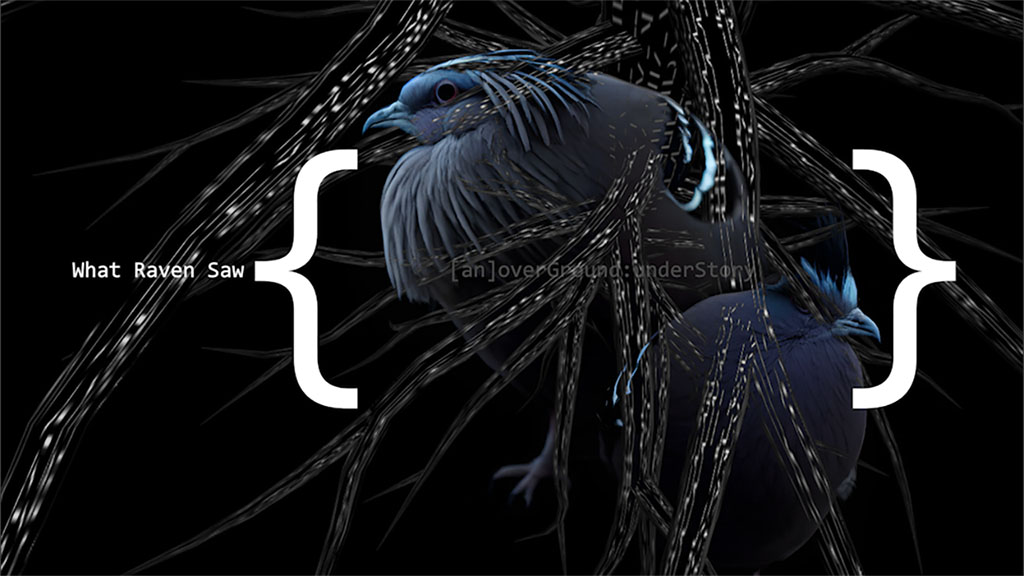
Dr. Andrew Burrell is a Senior Lecturer in Visual Communication at the University of Technology Sydney's Faculty of Design and Society. He is a practice-based researcher and educator exploring virtual and digitally mediated environments as sites for the construction, experience, and exploration of memory as narrative. His work sits at the intersection of digital media, virtual reality, and environmental humanities, with a particular focus on more-than-human ecologies and queer approaches to virtual environments. Andrew's research investigates the relationship between imagined and remembered narrative and how the multi-layered biological and technological encoding of human subjectivity may be portrayed within, and inform the design of, virtual environments. His networked projects in virtual and augmented environments have received international recognition, with recent works including "Twice, again" and "overGround:underStory," which explore the role of memory and forgetting in machine-mediated spaces and more-than-human encounters between physical and virtual ecologies. His creative practice informs his traditional research outcomes, which include publications in journals such as the Leonardo Electronic Almanac and Virtual Creativity. Andrew is particularly interested in how emerging and speculative technologies are implicated in more-than-human ecologies, and he uses creative practice to research and understand the complexities of these technologies. Andrew is a member of the UTS Visualisation Institute, a multidisciplinary research group focused on the creation of data visualizations, stories, and immersive experiences, and the School of Design's Critical Visualisation research group. He has received funding from various sources including the Australian Research Council (ARC) Discovery Projects and Create NSW. Research Interests Virtual and Augmented Reality as narrative spaces Memory construction in digital environments More-than-human ecologies and digital storytelling Queer approaches to virtual embodiment Creative applications of machine learning and AI Data visualization and environmental storytelling Accessibility and ethics in digital humanities Notable Projects Twice, again : Examines the role of memory and forgetting in machine-mediated spaces overGround:underStory : Explores entangled networks between physical and virtual ecologies Waves of Words : ARC Linkage initiative investigating language movement in pre-colonial times can't buy me love : A virtual environment collaboration with Amala Groom Layered Horizons : A geospatial humanities research platform Scientific Recognition MMUVE IT - Inter-Arts Office Australia Council Grant (2008) International presentations at conferences including ISEA (International Symposium on Electronic Art) Teaching and Supervision Andrew is an advocate for studio-based learning in which students design solutions to real-world questions through iteration and experimentation. He considers design as an anchor for interdisciplinary practice and regularly brings cross-disciplinary perspectives into his teaching. He currently supervises five PhD and master's students, with an interest in working with students at the intersection of traditional and practice-based research approaches. Research Themes in Recent Publications Andrew's recent publications demonstrate a consistent focus on the intersection of virtual environments, narrative construction, and ecological thinking. His work explores how digital technologies can be used to create new forms of storytelling that acknowledge our entanglement with non-human entities. There's a strong emphasis on ethical considerations in digital design, particularly regarding accessibility and representation. His research also investigates the application of machine learning technologies in creative practice, examining both their potential and limitations for representing human experience.
Professor Chengfei Liu is a faculty member at Swinburne University of Technology, leading the Web and Data Engineering research group and serving as focus area leader for Knowledge and Data Intensive Systems in the SUCCESS Centre. His research focuses on web data management, advanced database systems, graph data, and workflow models. He has held academic positions at the University of South Australia, University of Technology Sydney, and the University of Queensland's DSTC. His work spans data management, distributed systems, and information systems, with notable contributions to cohesive subgraph discovery and efficient algorithms. Research interests include keyword queries, uncertain data, graph databases, and artifact-centric workflows. His awards include the Vice-Chancellor's Research Excellence Award (2007) and multiple best paper/demo awards at top conferences. Professor Liu supervises numerous PhD students and holds grants from the Australian Research Council (ARC), including projects on dynamic networks, heterogeneous graphs, and information resilience. He has authored over 297 publications, with recent work addressing topics like Bitcoin transaction prediction, federated subspace clustering, and multimodal eating disorder detection. His professional roles include program committee memberships at SIGMOD, ICDM, and CIKM, reflecting his influence in data science and database research.
Dr. Xiangmin Zhou is a Senior Lecturer at the School of Computing Technologies, RMIT University, located at City Campus Australia. His research focuses on artificial intelligence, data management, distributed computing, and multimedia systems. He actively supervises Masters and PhD students in areas such as fairness-aware task recommendation in spatial crowdsourcing and adaptive multi-participant analytics. His teaching interests include social media analysis, multimedia databases, query optimization, and cloud data management. Dr. Zhou’s research interests span information systems, AI-driven recommendation frameworks, privacy-preserving techniques, and distributed computing solutions. His work emphasizes context-aware systems, ethical AI, and scalable data processing. Recent publications highlight innovations in federated learning, privacy preservation, and social media-based disaster detection. He is open to supervising students interested in his core research areas and collaborative projects. Dr. Zhou’s academic contributions include developing novel algorithms for recommendation systems, social media analysis, and real-time event detection. His projects often bridge theory and practice, addressing challenges in spatial crowdsourcing, video novelty detection, and multi-platform coordination. His work aligns with RMIT’s focus on technology-driven solutions for societal challenges.