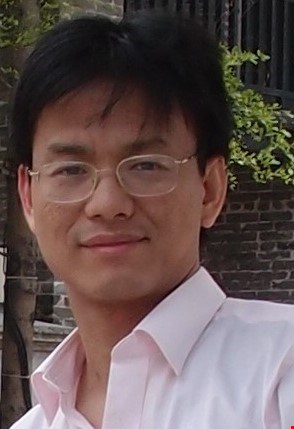
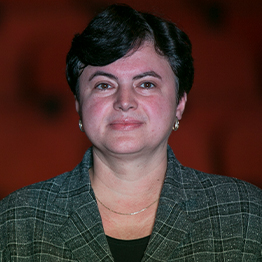
Ronaldo Mei serves as an Adjunct Instructor in the field of Entertainment Design. He is affiliated with an academic institution where he teaches courses related to 3D design and digital media, specifically ECPT-209-01: Intermediate 3D. His research and teaching interests focus on entertainment technologies and digital design. Key areas include: Entertainment Design 3D Modeling and Animation Interactive Media Development Computer Graphics Digital Arts While no publications or research projects are listed in the provided text, his course instruction suggests active engagement in applied design education. There are no listed scientific awards, grants, or student advising roles. No laboratory or research team affiliations are mentioned.
Lesley Chiou is a Laurence de Rycke Professor of Economics at the College of Arts and Sciences at Occidental College . She received her B.A. from UC Berkeley and a Ph.D. from MIT in 2005. Her research focuses on Industrial Organization and Applied Econometrics , with a particular emphasis on consumer behavior and firm strategy in digital markets. Ph.D., MIT B.A., UC Berkeley Professor Chiou's work explores how digital platforms shape economic outcomes, including studies on online advertising, copyright dynamics, and antitrust implications in search markets. Her current research investigates the intersection of algorithms , fake news , and social media in influencing consumer decisions. Her recent publications address topics such as digital inequality , advertising restrictions , and platform governance , reflecting her expertise in applied econometric modeling and industrial organization . She has received recognition for her work, including the Concurrences Review Antitrust Writing Award (2022) and the Paul Geroski Best Paper Award (2008). Paul Geroski Best Paper Award (2008) Concurrences Review Antitrust Writing Award (2022) Professor Chiou teaches courses at all levels of the economics curriculum, including Principles of Economics II , Intermediate Microeconomic Theory , and Senior Seminar . She is currently on leave for the 2024-2025 academic year.
Gianluca Mazzarella is a Lecturer at the University of Catania in the Computer Science Laboratory for Visual Arts, Music and Entertainment (INF/01). He holds a PhD in Communication of Culture and Entertainment. PhD in Communication of Culture and Entertainment, University of Catania His research focuses on digital marketing strategies for small and medium enterprises (SMEs), community management practices in SMEs, and the application of artificial intelligence to humanities disciplines. He specializes in IT solutions for SME digitalization. No scientific awards or publications could be attributed to his profile from the available data. His work appears to bridge technical computing with entertainment and cultural communication sectors.
Filippo Gabriele Prattico is a Fixed-term Assistant Professor at the Department of Control and Computer Engineering (DAUIN) at the Polytechnic University of Turin, Italy. His academic appointment falls under Law 240/10 art.24-a and he maintains active roles across multiple departments and research groups at the university. Dr. Prattico's research spans several critical areas in human-computer interaction and extended reality technologies. His primary focus areas include Autonomous and assisted vehicles , Human factors and ergonomics , Human machine interaction , Learning technologies , Training systems , Urban air mobility , and User experience in virtual and augmented reality . His interdisciplinary work bridges computer science, engineering, and human factors to develop intuitive interfaces for emerging technologies. Analysis of Dr. Prattico's publication record reveals a clear progression toward increasingly sophisticated multimodal interaction systems. Early work focused on foundational VR/AR applications for industrial robotics and sports training, while recent research addresses critical challenges in urban air mobility interfaces, autonomous vehicle communication systems, and complex multi-user simulation environments for emergency response scenarios. His publications consistently appear in high-impact venues including IEEE TRANSACTIONS ON VEHICULAR TECHNOLOGY, COMPUTERS IN INDUSTRY, and IEEE TRANSACTIONS ON VISUALIZATION AND COMPUTER GRAPHICS. Dr. Prattico has received professional recognition including the RIMINI SCHOOL 2025 'SUCCESSFULLY PARTICIPATE IN CALLS FOR RESEARCH FUNDING' badge from the Polytechnic University of Turin and completed the TRAINING COURSE IN EUROPEAN PROJECT DESIGN by Intellera Consulting Spa. He currently supervises PhD student Lorenzo Valente, whose research focuses on 'Digital Reconstruction, Simulation, and Interaction Techniques for Effective eXtended Reality Experiences.' Dr. Prattico serves as Scientific Director for the commercial research project 'Intraoral 3D scanning and reconstruction solutions using computer vision techniques' (2023-2024) and maintains active involvement in multiple research initiatives through the GRAINS research group and VR@POLITO laboratory. Dr. Prattico is an active member of the IEEE community, serving as Secretary of the IEEE Special Interest Group on Metaverse (2023-2024) and as a member of the Scientific Committee for the IEEE Consumer Technology Society's Virtual Reality, Augmented Reality and Metaverse (VAM) Technical Committee since 2018. He also contributes as Associate Editor for IEEE TRANSACTIONS ON LEARNING TECHNOLOGIES and previously served as Guest Editor for IEEE CONSUMER ELECTRONICS MAGAZINE.
Clifton Forlines is a Research Professor at Northeastern University’s Portland campus, specializing in Human-Computer Interaction (HCI), Data Visualization, and Multi-touch Interfaces. He has extensive experience in user interface design and collaborative computing, holding leadership roles at Tactual Labs and Draper Laboratory. He earned a PhD in Computer Science from the University of Toronto, and dual Masters degrees in Human-Computer Interaction and Entertainment Technology from Carnegie Mellon University. His research focuses on optimizing touch and stylus interfaces, multi-user tabletop systems, and spatial-temporal data visualization. His recent publications explore advancements in low-latency touch sensing, collaborative visual exploration, and tactile feedback efficiency. While no scientific awards are listed, his work includes 15+ patents in multi-user interactive systems and display technology. Clifton currently advises PhD student Timothy Yim and has contributed to projects like Alice—a 3D programming environment for education. He can be contacted via cforlines@gmail.com or c.forlines@northeastern.edu.
Youngdeok Hwang is an Assistant Professor in the Paul Chook Department of Information Systems and Statistics at Baruch College's Zicklin School of Business. He holds a PhD in Statistics from the University of Wisconsin-Madison and specializes in Bayesian modeling, spatio-temporal statistics, and machine learning applications for business and environmental challenges. His research integrates statistical theory with practical applications across healthcare, environmental science, and technology. Key interests include uncertainty quantification, inverse problems, and data fusion techniques for improving decision-making in complex systems. Recent work focuses on AI ethics, pollution modeling, and pandemic-related behavioral analytics. Hwang's publications demonstrate consistent emphasis on Bayesian methods and interdisciplinary problem-solving , with frequent applications in environmental monitoring (33% of recent papers), healthcare analytics (27%), and computational statistics (20%). This reflects his focus on socially impactful statistical innovation. Awards & Honors: Teaching Excellence Award (Zicklin School, 2025) Statistics in Physical Engineering Sciences Award (ASA, 2018) Career Development Award (Korean International Statistical Society, 2016) He actively contributes to academic committees including the Graduate Curriculum Committee and serves as Associate Editor for Technometrics and Applied Stochastic Models in Business and Industry.
Anthony Palomba is an Assistant Professor of Business Administration in the Communication area at the University of Virginia Darden School of Business. He teaches courses such as Storytelling with Data and Media & Entertainment Business to MSBA, MBA, and Executive MBA students. His research focuses on the intersection of entertainment, analytics, and business strategy. B.A., Manhattanville College M.A., Syracuse University Ph.D., University of Florida Palomba’s work explores how audiences engage with media content and how technology reshapes competition in media, advertising, and gaming industries. His research has been published in journals like Telematics and Informatics , Games & Culture , and Entertainment Computing . He is a recipient of the Television Academy Foundation TV Fellow , NATPE Media Fellow , and Outstanding Faculty Member Award at Darden . His thought leadership has appeared in over 50 media outlets, including The New York Times , The Verge , and CNN . Palomba will begin an MS in Economics at Purdue University’s Daniels School of Business in 2026, focusing on econometrics and financial modeling. He is an avid college sports fan and enjoys writing, media investor calls, and attending stand-up comedy performances.
Prof. Dr. Frank Schwab is a full professor and Chair of Media Psychology at the Human-Computer-Media Institute of the University of Würzburg. He has served as chairman of the examining board and academic director of the Bachelor’s program in Media Communication (BSc MK) since 2010. His research focuses on evolutionary and emotional psychological aspects of mass media, cinema, entertainment, and organizational communication. Research Interests: Evolutionary Media Psychology, psychological mechanisms of media use, internal organizational communication, and bio-psychological foundations of media motives. Affiliations: Member of the DGPs (German Psychological Society), DGPuK (German Society for Media Psychology), ICA (International Communication Association), MVE (Media Psychology and Communication), and GIB (German Informatics Society). Contact: Campus Hubland North, Oswald-Külpe-Weg 82, Room 2.014, Tel: +49 931 31-82395, Email: frank.schwab@uni-wuerzburg.de.
Lecturer Volkan AYDIN works at Karabük University's School of Foreign Languages in the Foreign Languages Preparatory Department. He has been employed since 2010 as a full-time lecturer and served as Assistant Dean from 2012 to 2015. Education: Master's Degree (2022) in Cultural Heritage and Heritage Area Management from Karabük University's Institute of Graduate Education Associate Degree (2020) in Travel-Tourism and Entertainment Services from Karabük University's Safranbolu Şefik Yılmaz Dizdar Vocational School Bachelor's Degree (2009) in English Language and Literature from Hacettepe University's Faculty of Letters Associate Degree (2018) in Computer Technologies from Anadolu University's Open Education Faculty Research Interests: English Literature and Language English for Specific Purposes (e.g., technical/professional contexts) Cultural Heritage Studies
Jelle Mast is an Assistant Professor of Journalism Studies at Vrije Universiteit Brussel (VUB), affiliated with the Linguistics and Literature Study Center for Literary and Intermedial Crossings. Holding a PhD in Communication Sciences, he maintains an active research profile with 60 research outputs and an h-index of 11 based on 337 citations. His research focuses on the intersection of visual communication, journalism practice, and professional ethics. Key areas include visual gatekeeping and user-generated imagery in news media, journalism and terrorism coverage, metajournalistic discourse, and genre hybridization in journalism and documentary. His fingerprint analysis reveals strong connections to television studies, news values, alternative media, and journalism ethics. Mast's publication record shows consistent scholarly output since 2003, with recent emphasis on computational news values analysis, media system comparisons through neoliberal frameworks, and the evolving nature of journalistic autonomy. His work spans articles, conference papers, book chapters, and datasets, with significant contributions in 2022-2025. External Position: (Vice) Chair of Visual Communication Studies Division at International Communication Association (2017-2021) Editorial Role: Co-Editor of Language & Communication journal (2024-2025) Conference Organization: Co-organized "What's (the) News?" conference (2018) and "Look Who's Talking" conference (2024-2025) His supervised work includes doctoral projects with Nils Wandels and dataset development with Guo, J. on Chinese News Values indicators. Current research projects extend through 2027, focusing on voices and sources in news media and international doctoral collaborations.
Michael Montgomery is a Lecturer at the Anderson School of Business at UCLA, focusing on media-technology convergence and executive strategy. His career spans finance, media, and technology sectors, with expertise in M&A, equity financing, and corporate restructuring. Co-Founder & President of Montgomery & Co., LLC (1999-2013) Former CEO of Sega GameWorks and Senior Executive at DreamWorks SKG Leadership roles at Walt Disney Company and Arco Solar Board Director at DreamWorks Animation, Synacor, Open Methods, and M3Bio Education : MBA, Amos Tuck School at Dartmouth College (1977) BA (magna cum laude), Rufus Choate Scholar Research Focus : While his academic role emphasizes business strategy, recent Google Scholar publications indicate interdisciplinary engagement with: Genomic analysis of rare variants and structural variation Transcriptomic profiling in aging and disease Exercise physiology and multi-omic adaptation Advanced DNA/RNA sequencing technologies and diagnostics Scientific Awards : No explicit awards mentioned in the text. Advising & Boards : Served as board member/director for multiple public and private companies, with leadership roles in audit committees and strategic initiatives.
Nathaniel Zetter is a Lecturer at Selwyn College, University of Cambridge, specializing in the intersections of modern culture, technology, and literary theory. His research explores how new media forms influence literary narratives, the cultural politics of computation, and the historical contingencies between war and sport. Completed PhD in Faculty of English, University of Cambridge Current affiliation with Cambridge Digital Humanities His work bridges disciplines through analysis of cybernetics, esports wargaming, and digital culture’s impact on narrative structures. Recent publications focus on military vision in esports, surveillance in virtual spaces, and the metaphorical entanglement of war and sport. While no formal scientific awards are documented, his scholarship contributes to critical discourse in digital humanities and media studies.
Jeff Wen is a Lecturer in Computer Science at Brunel University's College of Engineering, Design and Physical Sciences. He teaches software project management, Java programming, group projects, research project management, and introduction to programming modules. His research focuses on intelligent virtual agents, natural language processing, and technology-enhanced learning, with a particular emphasis on learning analytics and augmented reality applications. Prior to his academic role, he worked in the media/entertainment and semiconductor industries as a software engineer from 2006 to the present. Earlier, he was a research fellow in the EC SUNTool project at IESD (2003-2004) and the e-Drama project at the University of Birmingham (2004-2006). Research Interests: Jeff Wen's work bridges intelligent virtual agents and natural language processing with technology-enhanced learning , focusing on improving student engagement through augmented reality (AR) and technoself systems. His research also explores collaborative design in distributed virtual reality environments and the integration of Web2.0 for interactive learning. Publications Trend: His recent publications (2010-2016) highlight advancements in AR/social virtual worlds for education and technoself systems, while earlier works (2001-2007) emphasize foundational studies in VRML, distributed VR, and affect detection in virtual agents. Education: PhD in Intelligent Virtual Agent Animation MSc in 3D Computer Graphics Programming and Virtual Reality
Francisco José Mora Lizán is a University Professor at the Department of Computer Science and Artificial Intelligence within the Higher Polytechnic School II of the University of Alicante. He has been a faculty member since 1995 and currently serves as the Director of the Department of Computer Science and Artificial Intelligence (since February 2025). He is also a researcher in the Industrial Computing and Artificial Intelligence Research Group at the University. His academic background includes a PhD in Computer Science from the University of Alicante (awarded January 26, 2021), a Technical Engineer in Computer Science Management from the University of Alicante (June 1, 1995), and a Computer Engineer degree from the University of Alicante (January 1, 1994). Dr. Mora Lizán's primary research interests focus on Artificial Intelligence , particularly in the areas of multi-agent systems, swarm robotics, and intelligent systems for buildings. He has made significant contributions to the development of multi-agent architectures for swarm robotics and intelligent building management systems. Additionally, he has dedicated substantial effort to educational innovation , specializing in project-based learning methodologies in software engineering and multimedia engineering education. His work in this area includes developing phase-based project methodologies, evaluating cross-cutting implementations in multimedia engineering curricula, and assessing software tools for project-based learning. His publication record demonstrates a consistent trajectory from foundational work in software engineering education to more recent applications of AI in intelligent environments and educational technology. Over the past two decades, his research has evolved from traditional software engineering topics toward more specialized applications of multi-agent systems and swarm intelligence, while maintaining a strong focus on educational innovation. Dr. Mora Lizán has directed or co-directed 26 undergraduate and master's theses in the last five years, reflecting his active engagement in student mentorship. His teaching portfolio is extensive, covering courses in Computer Engineering, Multimedia Engineering, and Biomedical Engineering, with particular emphasis on project management, external internships, and multimedia projects. He has participated in numerous public research projects, including European Commission-funded initiatives like "APPRENTISSAGE COLLABORATIF EUROPEEN POUR L'ACQUISITION DE COMPETENCES PAR DES ROBOTS" and "SENIORS IN NET," as well as Spanish Ministry of Economy and Enterprise projects on swarm intelligence and adaptive swarm systems. His departmental leadership roles have included serving as Secretary (2012-2016), Deputy Director (2016-2021), and Director of the Department of Computer Science and Artificial Intelligence (2021-present).
COCULESCU CRISTINA is a Full Professor and Director of the Department of Informatics, Statistics, Mathematics at the Romanian-American University of Bucharest , Faculty of Managerial Informatics. She holds a habilitation certificate in Cybernetics and Statistics (2021), a PhD in Cybernetics and Economic Statistics (2004), and multiple degrees in Mathematics and Economics. Education: BSc in Mathematics (University of Craiova, 1996) MSc in Algebra (University of Bucharest, 1997) MSc in Cybernetics and Economic Forecasting (Academy of Economic Studies, Bucharest, 2002) Research Focus: Applied mathematics in economics, econometrics, artificial intelligence, and energy consumption modeling. Her work spans renewable energy analysis using panel data, e-learning security, and neural network applications in telework adaptability studies. Professional Affiliations: Romanian Statistical Society (RSS), Eurasia Business and Economics Society (EBES), International Institute of Informatics and Systemics (IIIS), European Academy of Management (EURAM).