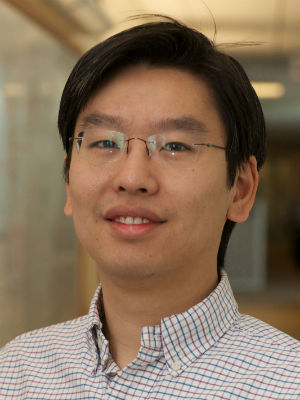
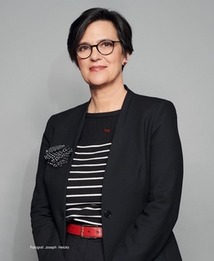
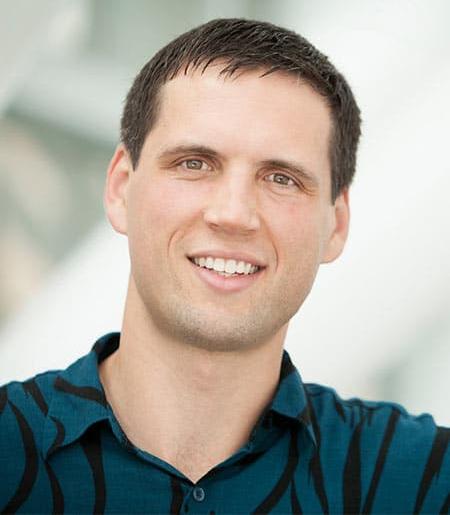
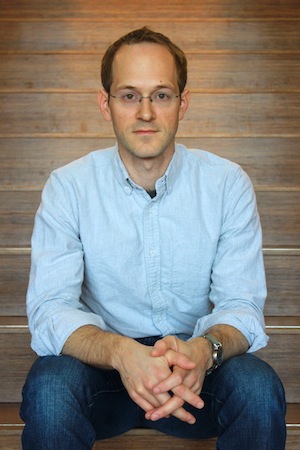
Maj Keith A. Wyman, PhD is a researcher affiliated with the Air Force Institute of Technology (AFIT), specializing in quantum optics and atmospheric photonics. His work focuses on photonic qubit propagation, atmospheric turbulence effects, and laser-based quantum technologies. He holds a PhD in Applied Physics from AFIT (2023), an M.S. in Applied Physics (2014), and dual B.S. degrees in Physics and Mathematics from the United States Air Force Academy (2012). Wyman’s research interests include developing atmospheric turbulence simulators, studying quantum communication protocols, and advancing laser technologies for free-space optical networks. His recent publications address photon pair indistinguishability, qubit degradation under turbulence, and sodium beacon systems for adaptive optics. He collaborates with institutions like Ohio State University’s Center for Quantum Information Science and Engineering. His academic contributions span conferences such as SPIE and FQMT, with a focus on experimental quantum systems and optical metrology. Wyman’s work bridges theoretical quantum mechanics with applied engineering solutions for military and civilian optical communication challenges.
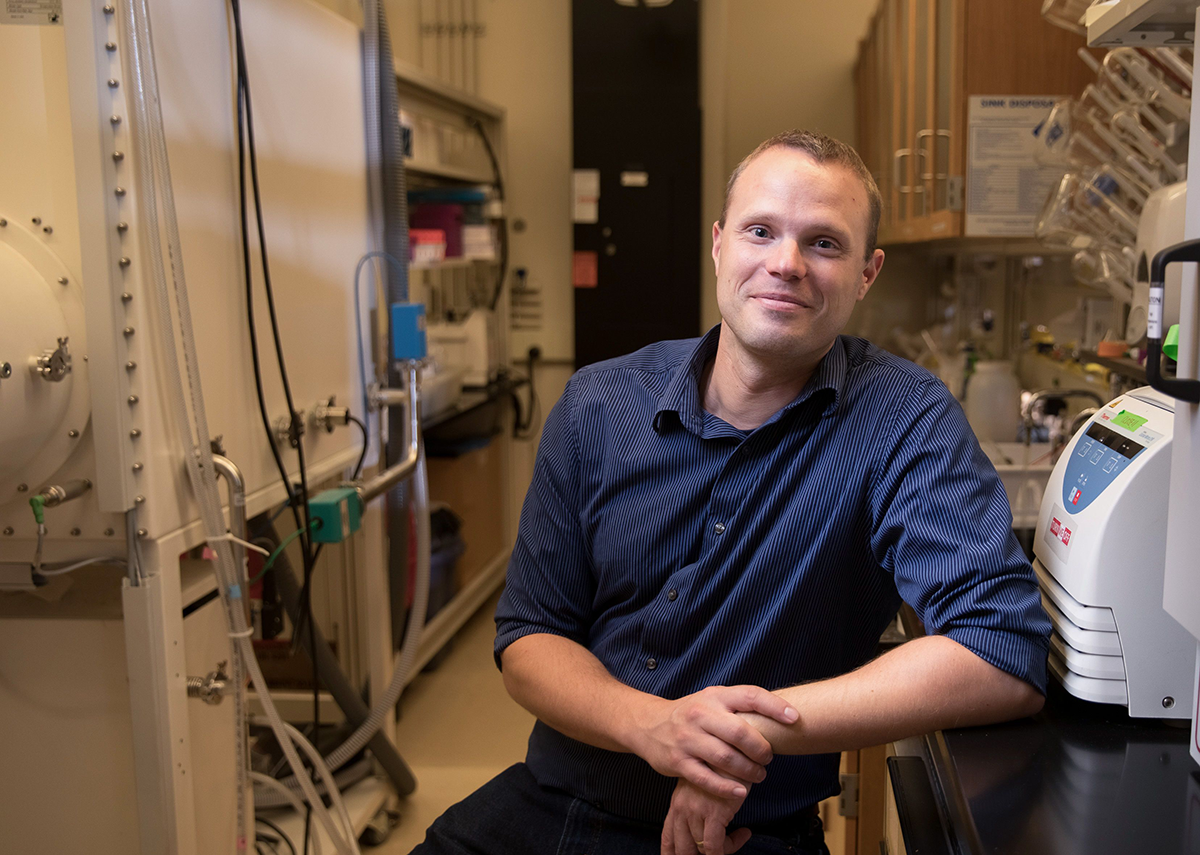
Harris H. Wang is an Associate Professor in the Department of Systems Biology and Department of Pathology and Cell Biology at Columbia University's Vagelos College of Physicians and Surgeons, where he also serves as Interim Chair of Systems Biology. He is affiliated with the Center for Computational Biology and Bioinformatics (C2B2) and the Integrated Program in Cellular, Molecular and Biomedical Studies (CMBS). B.S., Physics and Mathematics, MIT Ph.D., Biophysics, Harvard University Dr. Wang's research lies at the intersection of systems and synthetic biology, focusing on developing foundational technologies for genome engineering, microbiome manipulation, and synthetic genomics. His lab pioneers methods such as MAGE, MAGIC, CAST, and CAMII to enable high-throughput genetic manipulation, in situ microbiome engineering, and AI-driven microbial culturomics. Key research themes include understanding microbial community dynamics, engineering cellular memory systems, designing biocontained genetic circuits, and applying synthetic biology to human health challenges in personalized medicine and infectious disease. His recent publications reveal a strong trend in spatial and functional metagenomics, CRISPR-based microbiome editing, and synthetic biology tools for data storage and genetic stability. The articles span high-impact journals like Nature , Science , and Nature Biotechnology , reflecting his leadership in developing scalable, programmable biological systems. Scientific Awards: NIH Director’s Early Independence Award Forbes 30 Under 30 in Science Sloan Research Fellowship NSF CAREER Award ONR Young Investigator Award Burroughs Wellcome Fund PATH Award Schaefer Scholar Blavatnik National Award Vilcek Prize PECASE Dr. Wang has advised numerous PhD and postdoctoral researchers, many of whom have gone on to independent scientific careers. His lab is supported by major grants from NIH, NSF, DARPA, DOE, and foundations including the Bill & Melinda Gates Foundation and CZ Biohub NY. He is actively involved in educational initiatives, including organizing Columbia’s iGEM team and the Cold Spring Harbor Laboratory Synthetic Biology course. The Wang Lab is based at the Columbia University Irving Medical Center and is part of national consortia such as the Engineering Biology Research Consortium (EBRC) and the Genome Project-Write (GP-Write) initiative. The lab develops and applies cutting-edge technologies in automation, machine learning, and synthetic biology to engineer microbiomes for applications in medicine, global health, and climate change.
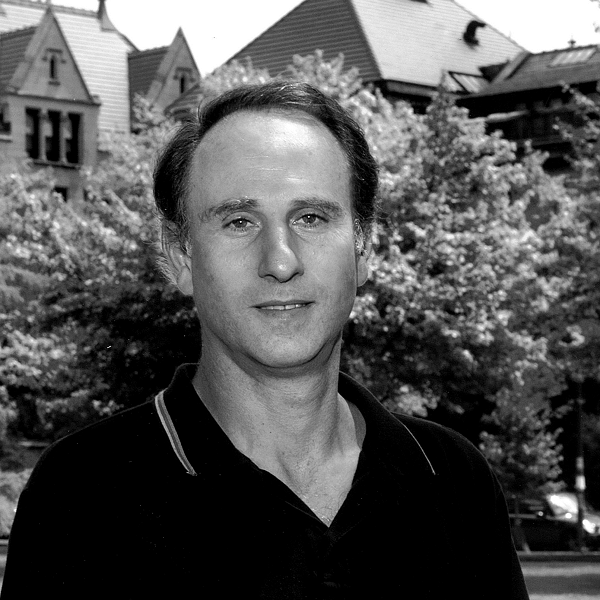
Douglas Stanford is an American theoretical physicist and Associate Professor of Physics at the Stanford Institute for Theoretical Physics, Stanford University. His work focuses on the intersection of quantum mechanics, gravity, and black hole physics. Dr. Stanford's educational background includes: B.S. in Physics and Mathematics from Stanford University (2009) M.S. in Mathematics from the University of Cambridge (2010), where he was a Marshall Scholar Ph.D. in Physics from Stanford University (2014), supervised by Leonard Susskind Stanford's research primarily explores the connections between quantum gravity, quantum field theory, and string theory. His groundbreaking work has focused on understanding the quantum mechanics of black holes through the lens of chaos theory, particularly examining the butterfly effect in black hole systems. He has made significant contributions to the ER=EPR conjecture, which proposes a deep connection between quantum entanglement (EPR) and wormholes (ER bridges), potentially resolving the black hole information paradox. His research often bridges theoretical physics with concepts from information theory and quantum computing. Stanford's publications reveal a strong focus on quantum chaos, black hole physics, and the connections between quantum mechanics and gravity. His work frequently examines the Sachdev-Ye-Kitaev model, traversable wormholes, and the mathematical structures underlying quantum gravity. The progression of his research shows an evolution from foundational work on black hole chaos to more complex explorations of quantum information in gravitational systems. Dr. Stanford has received several prestigious awards for his contributions to theoretical physics: Blavatnik Awards for Young Scientists (2017) for work in quantum gravity and condensed matter physics New Horizons in Physics Prize (2018) for improving understanding of quantum mechanics of black holes via chaos theory Gribov Medal (2019) for work on quantum chaos and its relation to near-horizon dynamics of black holes After completing his Ph.D. under Leonard Susskind at Stanford, Stanford conducted postdoctoral research at the Institute for Advanced Study in Princeton from 2014 to 2019. During this time, he collaborated extensively with leading physicists including Juan Maldacena and Edward Witten. He joined Stanford University as an assistant professor in 2019 and was promoted to associate professor by 2020. While specific grant information isn't detailed in the provided text, his prestigious awards suggest significant research funding support for his work in quantum gravity and black hole physics. Stanford is affiliated with the Stanford Institute for Theoretical Physics, where he continues his research on quantum gravity, black holes, and quantum information. His work is deeply connected to the broader theoretical physics community at Stanford, which has a strong tradition in string theory and quantum gravity research.
Prof. Paula-Irene Villa Braslavsky holds the Chair of Sociology/Gender Studies at Ludwig Maximilian University of Munich (LMU), Faculty of Social Sciences. She is on sabbatical during Summer Semester 2025 but continues research supervision and colloquia. Her research focuses on intersections of racism, sexism, and neoliberalism, with notable works like The Future of Difference and Top Girls . She co-edits the journal Gender Salon and leads projects on gender studies, queer theory, and postfeminism. Her academic contributions span monographs, anthologies, and journal articles addressing global social movements, anti-genderism, and body politics. Key themes include critical analysis of contemporary gender regimes, decolonial theory, and the sociocultural implications of neoliberalism. Her work frequently bridges theory and activism, emphasizing intersectional approaches to systemic oppression. Publications include edited volumes on #MeToo, fat studies, and the sociological analysis of bodies, reflecting her commitment to interdisciplinary research. She maintains an active academic presence through her website LMU Gender Studies and Academia.edu .
Thomas Hartman is a Professor of Physics in the College of Arts and Sciences at Cornell University. He received his A.B. in Physics from Princeton University in 2004 and his Ph.D. in Physics from Harvard University in 2010. His professional journey includes being a Member of the School of Natural Sciences at the Institute for Advanced Study (2010-2013), Research Associate at the Kavli Institute for Theoretical Physics, UCSB (2013-2014), Assistant Professor at Cornell University (2014-2020), Associate Professor at Cornell University (2020-2022), and Professor at Cornell University (2022-present). Hartman's research focuses on theoretical aspects of quantum gravity and quantum field theory, with particular emphasis on black hole information and strongly interacting quantum fields. His work explores four major interconnected areas: gauge/gravity duality (examining how quantum field theory degrees of freedom organize into fluctuating spacetime), black hole information paradox (investigating the relationship between classical black hole solutions and quantum statistical systems), new approaches to quantum field theory using dualities and entanglement dynamics, and the physics of de Sitter space with implications for early universe cosmology. His research employs techniques from string theory, holographic duality, general relativity, and quantum information theory. Analysis of Hartman's publication record reveals a strong focus on resolving fundamental questions in quantum gravity, particularly through the development of replica wormhole techniques that address the black hole information paradox. His work spans both highly mathematical approaches to quantum gravity and connections to potentially observable phenomena, with increasing emphasis on connections between quantum information science and gravitational physics in recent years. Member, School of Natural Sciences, Institute for Advanced Study, 2010-2013 Hartman has advised graduate students including Jeevan Chandra Namburi and Wan Zhen Chua, contributing to the next generation of theoretical physicists. His research group actively investigates the emergence of spacetime from quantum information principles and develops new mathematical frameworks for understanding quantum gravity. The group maintains strong connections with other leading institutions through collaborative projects and participates in major theoretical physics initiatives including Snowmass planning for future research directions in high energy physics. Hartman's research program represents a vital bridge between abstract theoretical concepts in quantum gravity and potential experimental tests, working to develop frameworks that could ultimately connect quantum gravity to observable phenomena in both high-energy physics and cosmological observations.
Professor Hendrik Vollmer is a faculty member in the Accounting Group at Warwick Business School , University of Warwick, since 2020. He previously served as Head of the Accounting Division at the University of Leicester (2015–2020) and worked at Bielefeld University in Germany for 16 years. His research bridges accounting, sociology, and environmental studies, focusing on accounting as a social practice and its role in addressing ecological challenges. Senior Fellow of the Higher Education Academy Associate Editor of European Accounting Review Member of editorial boards for Zeitschrift für Soziologie, Accounting, Organizations and Society, and Social and Environmental Accountability Journal Active in sustainability accounting research and education Contributor to interdisciplinary accounting literature Recent publications explore accounting's role in climate change mitigation, public value creation, and the spatialization of worth. His teaching modules include Accounting for Sustainability, People, Planet and Financial Accounting: Theory and Context .
Angela Capel Cuevas is an Assistant Professor of Quantum Information Theory/Theoretical Quantum Computation at the University of Cambridge's Department of Applied Mathematics and Theoretical Physics (DAMTP). Previously, she held a Junior Professorship at Eberhard Karls Universität Tübingen (2021-2024) and was an MCQST Distinguished PostDoc at TU München (2020-2021). Her research focuses on the intersection of quantum information theory and quantum many-body systems, particularly studying thermalization dynamics via quantum functional inequalities. She is a recipient of the Simons Emmy Noether Fellowship and Forbes 30 Under 30 (Spain 2023). Education: PhD in Mathematics, Universidad Autónoma de Madrid/ICMAT (2015-2019) Master in Computational Engineering and Mathematics, URV/UOC (2016-2018) Bachelor in Mathematics, Universidad de Granada (2009-2014) Research: Angela's work applies analytic and geometric tools to quantum systems, emphasizing decay of correlations in Gibbs states and quantum dissipative evolutions. Key topics include entropy inequalities, modified logarithmic Sobolev inequalities, and thermalization rates in spin chains. Her recent work bridges quantum functional analysis with practical implications for quantum computing and thermalization phenomena. Grants & Roles: PI of CRC TRR 352 'Mathematics of Many-Body Quantum Systems' (7M€) Co-PI of QuantERA project TouQan (1.25M€) Organized workshops at BIRS and Tübingen (2023-2024) Awards: Simons Emmy Noether Fellowship (2023) Forbes 30 Under 30 (2023) Vicent Caselles RSME-FBBVA Award (2022) Labs/Teams: Leads a group studying quantum dissipative systems and thermalization at DAMTP. Collaborates with institutions globally on quantum functional inequalities and Gibbs state properties.
Miriam Waltz is an Assistant Professor in gender justice and health technologies at Leiden University, with a joint appointment between the Institute for Cultural Anthropology and Development Sociology and the African Studies Centre. Her research focuses on interdisciplinary health technologies in Africa, pesticide use in Western Kenya, and perinatal healthcare in South Africa. Education: BA in Anthropology and Development Studies, University College Utrecht (2012) Honours and MA in Social Anthropology, University of Cape Town (2013–2015) Joint PhD in Anthropology (Aarhus University & University of Oslo, 2022) Research Interests: Examines pesticide use among smallholder farmers in Kenya, exploring socio-ecological dynamics and non-human entanglements. Investigates perinatal health care navigation and technological interventions in Cape Town. Explores multispecies ethnography and science-policy interfaces in African contexts.
Grégoire Ithier is a Senior Lecturer in Physics at the Department of Physics, Royal Holloway, University of London. His research focuses on quantum engineering, decoherence, thermalization, mesoscopic physics, and random matrix theory. He leads the 'TypDyn' project exploring typical dynamics of embedded quantum systems, and co-leads the Leverhulme Trust-funded 'Generation and detection of quantum signals' initiative. His work bridges theoretical and experimental domains, including superconducting circuits and cryogenic microwave engineering. Ithier's research tools include advanced numerical methods (e.g., exact diagonalization) and statistical techniques (e.g., random matrix theory). Key Projects: TypDyn: Studies typical dynamics in embedded quantum systems (2015–present) QSimFP: Quantum simulators for fundamental physics (2020–2024) A new statistical theory of disordered quantum systems (2020–2024) His experimental work involves superconducting qubits, Josephson devices, and nano-superfluidic cavities. Grants include STFC and Leverhulme Trust funding. Recent publications address quantum thermalization, many-body systems, and random Hamiltonian analysis.
Andrew Childs is a Professor at the University of Maryland, affiliated with the Department of Computer Science and the Institute for Advanced Computer Studies (UMIACS). He serves as Director of the NSF Quantum Leap Challenge Institute for Robust Quantum Simulation (RQS) and is a Fellow at the Joint Center for Quantum Information and Computer Science (QuICS). His research focuses on quantum algorithms for simulating physical systems, algebraic problems, and quantum walk protocols, with applications in quantum computing and computational complexity. University of Maryland Institute for Advanced Computer Studies (UMIACS) Joint Center for Quantum Information and Computer Science (QuICS) NSF Quantum Leap Challenge Institute for Robust Quantum Simulation Childs' research spans quantum simulation, quantum Fourier transform, phase estimation, and Hamiltonian dynamics. He has developed techniques to reduce quantum computational resources for simulating quantum systems and explored limitations of quantum computers through hidden subgroup problems and non-unitary dynamics. His publications cover diverse areas including quantum walk optimization, Hamiltonian simulation methods, and applications to cryptography and condensed matter physics. Recent works address spatial search algorithms, product formulas for commutators, and quantum routing protocols. As an educator, Childs has taught courses on quantum algorithms and information processing at both the University of Maryland and University of Waterloo, with lecture notes and materials spanning multiple years. Contact: amchilds@umd.edu | Office: ATL 3359 | Affiliated with University of Maryland's quantum research institutes.
Sebastian Thies is Professor and Chair for Ibero-American Literary and Cultural Studies at the University of Tübingen, where he has been employed since October 2012. He serves as Vice Director of the Interdisciplinary Centre for Global South Studies (ICGSS) and coordinates the BMBF/DAAD thematic network 'Futures under construction in the Global South'. His academic journey began with a PhD in Hispanic Studies from the University of Osnabrück in 2000, followed by positions at the University of Bielefeld where he progressed from Junior Professor for Hispanic Literary and Media Studies to Full Professor for Inter-American Studies. Thies' research focuses on Global South Studies, with particular emphasis on Latin American literature, film, and media. His work explores subjectivity formations, entangled temporalities, and political communication across borders. He has directed significant research initiatives including the doctoral studies program 'Entangled Temporalities in the Global South' and has co-edited major reference works such as The Routledge Handbook for Global South Studies on Subjectivities (2024). His extensive publication record demonstrates a consistent engagement with transnational cultural phenomena, particularly examining how Latin American cultural production intersects with global political and social dynamics. Thies frequently collaborates with international scholars, reflecting his commitment to transdisciplinary and transregional approaches to cultural analysis. Project Leader: Research Training Network 'Entangled Temporalities in the Global South' Vice Project Leader: Thematic network 'Literary Cultures of the Global South' Associated Investigator: BMBF-Area Studies Project 'The Americas as a Space of Entanglement' Project Leader: Research Group 'E Pluribus Unum? Ethnic Identies in Processes of Transnational Integration' Thies actively supervises doctoral students through the Interdisciplinary Centre for Global South Studies and has established collaborative networks across Latin America, particularly with institutions in Mexico and Colombia. His current research agenda focuses on 'Futures under construction in the Global South' and continues to explore the intersections of cultural production, political communication, and subjectivity formation in transnational contexts.
Bradley D. Olsen is a full professor in the Department of Chemical Engineering at the Massachusetts Institute of Technology (MIT), where he leads research at the intersection of polymer science, soft matter physics, and bioengineering. His work focuses on designing materials for critical applications in biotechnology, hemostasis, and sustainable polymer development while advancing fundamental understanding of polymer network mechanics and self-assembly. Education: Ph.D. in Chemical Engineering, University of California Berkeley (2007) S.B. in Chemical Engineering, Massachusetts Institute of Technology (2003) Olsen's research spans protein-based materials, block copolymer phase behavior, and mechanochemical hydrogels. He has pioneered methods for quantifying polymer network topology, developing hemostatic nanoparticles, and creating bio-inspired materials for selective biomolecular transport and medical applications. His recent publications emphasize data-driven approaches to polymer characterization and educational outreach in materials science. Scientific Awards: American Physical Society (APS) Fellow (2023) Fulbright Amazonia Scholar (2023) Alexander and I. Michael Kasser Chair in Chemical Engineering (2021) ACS Macro Letters Young Investigator Award (2021) MIT Committed to Caring Honor (2019) AIChE Owens Corning Early Career Award (2019) APS Dillon Medal (2018) Kavli Emerging Leader in Chemistry (2017) ACS Polymer Division Fellow (2016) Camille Dreyfus-Teacher Scholar (2015) Alfred P. Sloan Research Fellow (2014) NSF Career Grant (2013) NIH Postdoctoral Fellowship (2008-2009) Hertz Fellow (2003-2007) Barry M. Goldwater Scholarship (2002) Olsen has received significant grant support including NSF Career (2013) and AFOSR (2012) awards. His teaching activities include innovative international outreach like the 2025 soccer-themed science camp in Brazil. The Olsen Group at MIT explores advanced materials with applications ranging from trauma care to sustainable polymers.
Alexey Gorshkov is an Adjunct Professor at the University of Maryland (UMD) affiliated with the Joint Quantum Institute (JQI) and the Quantum Information and Computer Science Laboratory (QuICS). His primary academic role is in theoretical physics, focusing on quantum optics, quantum information science, and condensed matter physics. He leads a research group exploring quantum magnetism with alkaline-earth atoms, driven-dissipative systems, topological matter, and strongly interacting photons. His work bridges AMO (atomic, molecular, and optical) systems with high-energy and condensed matter physics, emphasizing quantum simulation and novel quantum technologies like precise clocks and quantum computers. Education details are not explicitly listed, but his research collaborations with institutions like JQI and UMD suggest advanced academic training in theoretical physics. His research interests revolve around understanding and controlling quantum many-body systems, particularly in far-from-equilibrium scenarios, entanglement dynamics, and dissipation effects. He has contributed to studies on Rydberg atoms, quantum routing protocols, and error mitigation in quantum simulators. Recent articles highlight his work on quantum protocols for verifying speedups, time-independent information flow, and entanglement dynamics. His group's achievements include demonstrating one-dimensional anyons and developing methods for correlated noise estimation with quantum sensors. Awards and grants are not explicitly mentioned in the provided text, but his prolific publication record indicates sustained research impact. Labs and teams associated with him include the JQI and QuICS, where he collaborates on experimental and theoretical projects. Graduate student and postdoc positions are available in his group, focusing on areas like quantum magnetism and topological systems. His work often involves close ties with experimental groups, emphasizing practical applications of theoretical breakthroughs.
David Kutasov is a Professor in the Department of Physics at the University of Chicago, affiliated with the Enrico Fermi Institute. His research focuses on string theory and quantum field theory, particularly addressing dynamics of strongly coupled systems, supersymmetry breaking, black hole physics, and cosmological singularities. Kutasov has contributed to understanding the interplay between string theory and field theory, including mechanisms for vacuum selection in early universe scenarios and brane dynamics. His work explores theoretical frameworks such as holography, time-dependent backgrounds, and tachyon condensation, with applications to particle physics and cosmology. Key research directions include analyzing string theory's predictions for nature and applying string-based insights to experimental particle physics and cosmic phenomena. Notable contributions span topics like D-brane interactions, non-supersymmetric vacua, and dualities in Chern-Simons theories. Kutasov's publications often bridge abstract string theory constructs with observable phenomena, emphasizing tools for analyzing string theory's implications in diverse physical contexts. Despite extensive contributions, no specific scientific awards are explicitly listed in the provided materials. His research remains active across multiple frontiers of theoretical physics, maintaining a strong focus on foundational questions in high-energy physics.
Ali Feizmohammadi is an Assistant Professor, Teaching Stream (LTA) in the Department of Mathematics at the University of Toronto Mississauga, affiliated with the Mathematical and Computational Sciences division. His research focuses on inverse problems, partial differential equations, and geometric analysis. He holds a position emphasizing teaching excellence within the university's framework. His work addresses advanced mathematical challenges such as coefficient identification in subdiffusion equations, fractional Laplacian problems on Riemannian manifolds, and nonlinear elliptic equations on manifolds. Recent articles highlight contributions to the Calderón problem in various contexts, wave equation control, and spacetime finite element methods. No scientific awards or grants are explicitly listed in the provided information. He has not yet listed advisees in the available data. His research trends emphasize rigorous mathematical analysis of inverse problems in both classical and fractional PDE frameworks, with applications to geometric and control-theoretic questions. Dr. Feizmohammadi's work spans theoretical advancements in inverse problems, numerical methods for control systems, and the interplay between differential geometry and PDEs. His contributions address both fundamental theory and applied methodologies in mathematical physics and engineering.