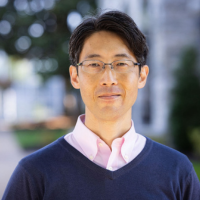
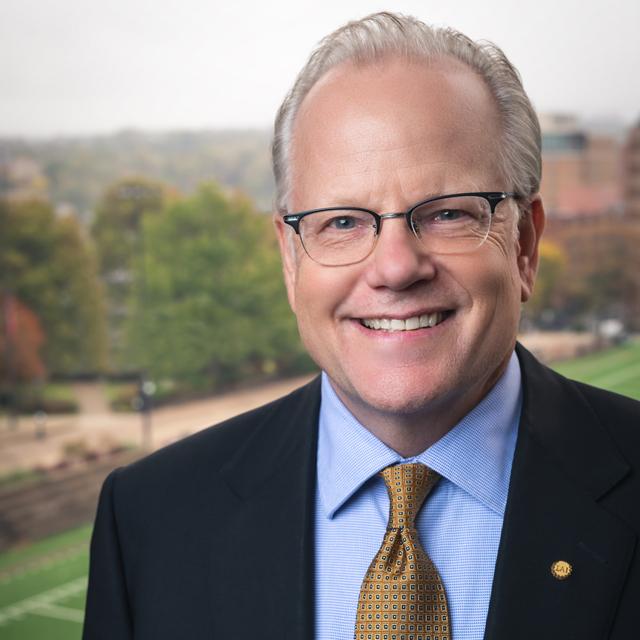
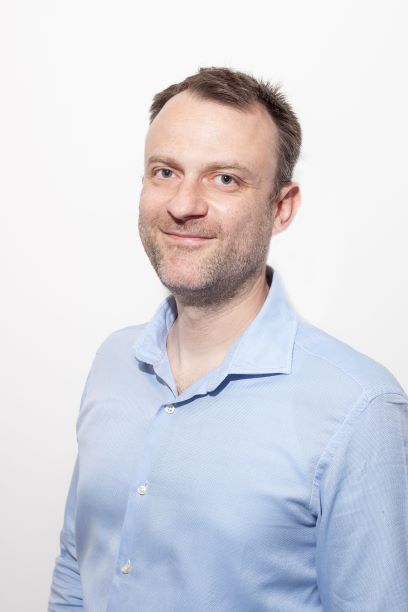
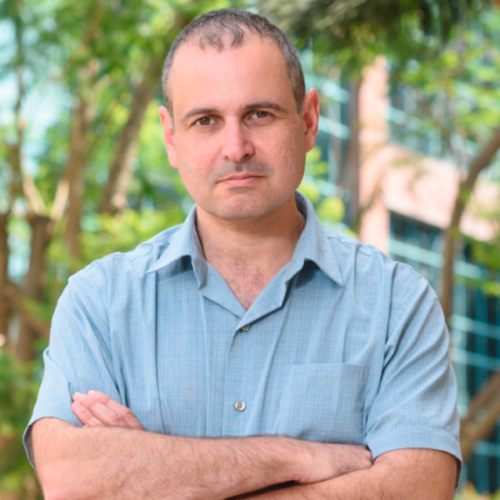
Masa Ishikawa serves as Assistant Professor of Jazz Piano at James Madison University's School of Music. Originally from Fukushima, Japan, he relocated to the United States in 2003 for musical training in Seattle and maintains an active international performance career across Italy, China, Japan, and the U.S., emphasizing meaningful musical connections with audiences and collaborators. His artistic practice centers on jazz composition and cross-cultural dialogue, particularly through works addressing the 2011 Fukushima disaster including 'Suite for the Forgotten' (2015) and 'Haseru' (2021). He specializes in blending traditional Japanese instrumentation with contemporary jazz ensembles, creating socially engaged projects that explore memory, resilience, and cultural identity through original compositions. Recent creative output demonstrates consistent evolution toward original compositions that integrate Japanese musical elements with modern jazz structures. His 2023 releases 'Montage' (trio) and 'First Note' (sextet) continue this trajectory while expanding ensemble complexity, showing clear thematic focus on cultural heritage and disaster commemoration through increasingly sophisticated arranging techniques across diverse ensemble formats.
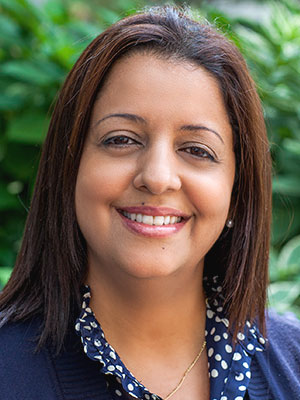
Ansaf Salleb-Aouissi is a Senior Lecturer in the Department of Computer Science at Columbia University’s Fu Foundation School of Engineering and Applied Science. She holds affiliations with the Foundations of Data Science and Health Analytics centers. With a PhD from the University of Orleans, France (2003), she pursued postdoctoral training at INRIA Rennes before joining Columbia as an Associate Research Scientist in 2006. She transitioned to her current role in 2015 after serving as an adjunct professor in Computer Science and Data Science from 2014–2015. Her research focuses on machine learning applications in healthcare, education, and infrastructure systems. Key areas include medical informatics (e.g., preeclampsia prediction, genetic associations in pregnancy), educational data mining (intelligent tutoring systems, bootcamp design), and power grid reliability. Notable achievements include winning the NIH Maternal Morbidity Data Challenge and developing tools like LogicLearner for logic education. She has contributed to projects such as analyzing CDC pregnancy data and optimizing the New York City power grid. Her work bridges theoretical machine learning with real-world applications, emphasizing interpretability, bias mitigation, and collaboration across disciplines. She has published extensively in venues like JMLR, TPAMI, and ECML, addressing topics from counterfactual explanations to ensemble learning with missing data.
Professor Alexandros ALEXAKIS is affiliated with the Physics Department at ENS-PSL, where he holds a Professor position at the ENS Physics Laboratory (LPENS). His research focuses on hydrodynamics and turbulence, particularly addressing topics such as turbulent condensates, magnetic reconnection, and large-scale self-organization in fluid systems. He explores fundamental aspects of energy cascades, intermittency, and nonlinear dynamics in both classical and magnetohydrodynamic (MHD) turbulence. His work bridges theoretical frameworks, numerical simulations, and experimental insights to understand complex fluid behaviors in geophysical and astrophysical contexts. Key research interests include the interplay between large-scale flows and turbulent dynamics, the role of helicity in MHD systems, and the statistical properties of turbulent cascades. Recent studies have addressed topics like the spreading mechanisms of turbulence, the impact of fractal forcings on intermittency, and the saturation of turbulent dynamos. His contributions span fluid dynamics, plasma physics, and nonlinear systems, with applications to astrophysical plasmas and geophysical fluid dynamics. Professor ALEXAKIS' research also involves the development of shell models and geometric microcanonical theories to describe turbulent equilibria. He has published extensively on the transition between three-dimensional and quasi-two-dimensional turbulence, the effects of rotation and stratification on energy transfers, and the statistical signatures of fluctuation relations in turbulent systems.
Stephen Ramsey, an Associate Professor at Oregon State University, holds dual appointments in the School of Electrical Engineering and Computer Science (College of Engineering) and the Department of Biomedical Sciences (Carlson College of Veterinary Medicine). With a PhD in Physics from the University of Maryland, his postdoctoral training in computational genomics at the University of Washington, and professional experience at the Institute for Systems Biology and Center for Infectious Disease Research, Ramsey bridges computational methods with biomedical applications. Education : Ph.D., Physics, University of Maryland; M.S., Physics, University of Maryland; Sc.B., Mathematical Physics, Brown University Ramsey specializes in computational systems biology , focusing on bioinformatics , biomedical knowledge graphs , and precision medicine . His research integrates machine learning , gene regulatory network modeling , and multi-omics data analysis to address challenges in rare disease diagnostics , drug monitoring , and inflammatory disease mechanisms . Current work includes AI-driven biomedical translation and electrochemical biosensor development for non-invasive diagnostics . Recent publications highlight knowledge graph applications in translational biomedicine , causal network inference in clinical-environmental data integration , and cross-species cancer transcriptomics . His team develops tools like RTX-KG2 and PloverDB to standardize biomedical data sharing and semantic reasoning . Scientific Awards : 2019 Zoetis Award (Carlson College of Veterinary Medicine) 2016 NSF CAREER Award 2016 PhRMA New Investigator Award 2010 NIH K25 Mentored Quantitative Research Award Ramsey advises in computational biology courses (CS 446/546) and contributes to biomedical AI through projects like mediKanren for rare disease diagnostics . His NSF-funded research explores gene expression noise and regulatory network dynamics , while NIH and PhRMA grants support his translational medicine initiatives. He leads the Ramsey Laboratory , which develops graph-based reasoning tools for biomedical data translation and multi-omics integration . The lab's work spans comparative oncology models, electrochemical biosensors , and knowledge graph infrastructure for clinical decision support .
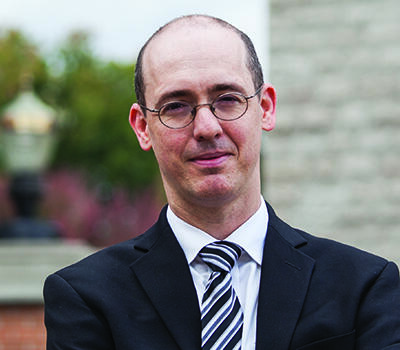
Maxim L. Yattselev is a Professor in the Department of Mathematical Sciences at Indiana University–Purdue University Indianapolis (IUPUI) . He has held prior positions as a Visiting Assistant Professor at the University of Oregon and a Visiting Scholar at Vanderbilt University. Education: Ph.D. and M.S. in Mathematics from Vanderbilt University (2007, 2004), M.S. and B.S. from Dnepropetrovsk National University (2001, 2000). Research Interests focus on meromorphic approximation, orthogonal polynomials, integrable systems, random polynomials, and spectral theory. He explores connections between these areas and applications to Painlevé equations, random matrix theory, and convergence of rational approximants. Publications highlight advancements in strong asymptotics for Angelesco systems, spectral theory of Jacobi matrices on trees, universality in random polynomial roots, and convergence properties of Padé and Hermite–Padé approximants. His work often employs Riemann–Hilbert techniques and potential theory. Advising: Mentored Ph.D. students Hanan Aljubran and Ahmad Barhoumi on random polynomials and multiple orthogonal polynomials. Teaching includes advanced courses in complex analysis, real analysis, orthogonal polynomials, and differential equations at IUPUI, University of Oregon, and Vanderbilt University.
Dr. Paul F. Doerksen is a Professor of Music Education at the Mary Pappert School of Music, Duquesne University. He previously taught at the University of Oregon and Ball State University, and held public school teaching roles in Washington and Oregon. His expertise spans instrumental music education, K-12 curriculum design, and assessment practices in music education. Education: Ph.D., Music Education, The Ohio State University Diploma of the Faculty of Fine Arts in Music (Symphonic Band & Wind Ensemble specialization), University of Calgary M.M., Instrumental Conducting, Northwestern University B.M.E., Music Education, Western Washington University Research Interests: Dr. Doerksen focuses on music teacher education, curriculum development, and assessment policy. He examines how student assessment impacts teacher evaluations, professional dispositions in educators, and the implementation of music curricula across PK-12 schools. His work bridges theory and practice through collaborative studies with educators nationwide. Publications Overview: His research emphasizes assessment practices and teacher evaluation, with recent work published by Oxford University Press and GIA Publications. Key themes include student growth measures in teacher evaluations and validation processes for measuring professional dispositions in educators. Service & Leadership: Former member of Pittsburgh Youth Chorus' Teacher Advisory Committee Current President of the Board of Directors for Three Rivers Young Peoples Orchestras Dr. Doerksen actively contributes to professional organizations like the College Music Society and National Association for Music Education, balancing academic leadership with community engagement in music education.
Jill Bernard Bracy is an Assistant Teaching Professor in the Department of Supply Chain and Analytics at the University of Missouri – St. Louis (UMSL), and Director of the Supply Chain Risk & Resilience Research (SCR3) Institute. She also serves as Assistant Director of Program Development for the Center for Transportation Studies at UMSL. Her academic roles include teaching courses in supply chain management, analytics, marketing, and transportation. Dr. Bracy’s research focuses on transportation safety, policy initiatives, autonomous vehicles, and supply chain resilience. She actively contributes to professional organizations, serving as faculty advisor to the Transportation Club and Vice President of the Council of Supply Chain Management Professionals-St. Louis Roundtable. Her research explores topics such as policy guidance for road infrastructure, autonomous vehicle impacts on motor carriers, and crash severity analysis. Notable projects include studies on temporary rumble strips in work zones and gender differences in truck crash injury severity. Dr. Bracy has collaborated on interdisciplinary projects, combining statistical methods (e.g., CHAID decision trees) with transportation policy analysis. While no formal awards are listed, her contributions to transportation safety and education reflect her leadership in these fields. She advises student organizations and engages in program development to advance transportation studies. The SCR3 Institute under her direction focuses on supply chain risk mitigation strategies, aligning with her teaching and research priorities.
Ana Isabel Pinheiro Nunes Pereira serves as Professor in the Department of Mathematics at Polytechnic Institute of Bragança, where she also holds the position of vice-coordinator for the Research Centre in Digitalization and Intelligent Robotics (CeDRI). She maintains dual institutional affiliations as a research member at Minho University's Algorithm Research Centre and represents Portugal in the European Consortium of Mathematics in Industry. Her academic foundation includes a PhD in Numerical Optimization from Minho University (2006), establishing her expertise in computational mathematics. This background directly informs her current research trajectory. Professor Pereira's research program centers on Optimization and Robotics , with expanding applications in Data Analytics and Precision Agriculture . Her methodology integrates Machine Learning for biosensor enhancement and Computer Vision for agricultural disease detection, while maintaining strong commitments to innovative teaching tools in mathematical education. This interdisciplinary approach bridges theoretical computation with industrial problem-solving through her ECMI role. Recent publications demonstrate a clear trend toward sustainability-focused applications, particularly in agricultural technology (olive/vineyard systems) and medical device optimization. Her work consistently applies multi-objective clustering and predictive modeling to translate complex data into actionable solutions for healthcare and farming industries. With over thirty research projects completed, her grant portfolio emphasizes robotics implementation , optimization frameworks , and educational innovation . She has supervised 62 students across master's and doctoral programs, fostering next-generation expertise in computational mathematics. Her leadership at CeDRI drives the institute's strategic focus on digital transformation, while her Algorithm Research Centre membership enables cross-institutional collaboration on industrial mathematics challenges. These roles position her at the forefront of applied computational research in Portugal.
Christos Diou is an Associate Professor of Artificial Intelligence and Machine Learning at the Department of Informatics and Telematics, Harokopio University of Athens, Greece. His academic career spans over 15 years of participation in national and international research projects, with a focus on machine learning algorithms, domain generalization, causal inference, and bias mitigation. He earned a BSc and Ph.D. in Electrical and Computer Engineering from Aristotle University of Thessaloniki. His research emphasizes the application of machine learning to healthcare, addressing challenges such as visual bias mitigation, causal effect estimation from observational data, and fairness-aware representation learning. Notable projects include REBECCA and RELEVIUM , both EU-funded, and MELIORA , targeting lifestyle interventions for breast cancer risk reduction. He has published extensively in top-tier venues like IEEE TPAMI, CVPR, and ICCV. Christos is a leading voice in AI ethics and healthcare innovation, with over 150 publications and best paper awards at IEEE Big Data Service 2023 and AIAI 2022. His work includes developing platforms like Effector for feature effects and Beam for behavior studies. He collaborates with institutions such as Karolinska Institutet and CERTH/ITI, and his students include PhD candidates Ioannis Sarridis and Aristotelis Ballas.
Ali Jannesari is an Associate Professor and Director of the Laboratory for Software Analytics and Pervasive Parallelism (SwAPP Lab) at the Department of Computer Science, Iowa State University. His research focuses on the intersection of High-Performance Computing (HPC) and AI, aiming to advance reliable and efficient software for modern parallel computing platforms. He has held academic and research roles including Senior Research Fellow at UC Berkeley and leadership positions in Germany's Technical University of Darmstadt and RWTH Aachen University. He holds a Habilitation in Computer Science (2016, TU Darmstadt), PhD (2010, KIT), and M.S. (2005, University of Stuttgart). Education: Habilitation in Computer Science, Technical University of Darmstadt, Germany (2016) Ph.D. in Computer Science, Karlsruhe Institute of Technology (2010) M.S. in Computer Science, University of Stuttgart (2005) Research Interests: High-Performance Computing (HPC), Machine Learning, Parallel Computing, Software Analytics, AI-driven compiler optimization, federated learning, and cross-language code analysis. His work bridges HPC and AI to enhance computational efficiency and scalability in data-driven applications. Recent Contributions: Leading research in GNN-based code parallelization (AutoParLLM), federated multimodal learning, and HPC performance optimization via graph-based methods. His lab's work has been published in top venues like NAACL, ICS, and NeurIPS. Lab & Team: The SwAPP Lab develops tools for software analytics and pervasive parallelism, with a focus on HPC-AI integration. Current projects include optimizing distributed training systems and improving code migration with LLMs.
Kristof Coussement is a Full Professor and Academic Director of the MSc in Big Data Analytics for Business at IÉSEG School of Management. He holds a HDR in Business Administration from University of Paris Dauphine and Ph.D. in Applied Economics from Ghent University. He directs the IESEG Center for Marketing Analytics (ICMA). His research focuses on big data analytics, machine learning applications in marketing, and explainable AI. He develops advanced analytical frameworks for customer behavior prediction, financial forecasting, and algorithmic decision-making. Coussement's recent work shows strong emphasis on ethical AI development, algorithmic bias mitigation, and industry-specific language modeling. His publications increasingly address the intersection of AI technology and business decision-making processes.
Qi Tang is a Research Fellow in the Department of Environmental Science at the University of Basel and concurrently serves as Coordinator of the Swiss Water Earth Systems PhD School at the University of Neuchâtel. His expertise spans hydrogeology, data assimilation, and Earth system modeling. He holds a PhD in Hydrogeology from RWTH Aachen University (2017) and has held postdoctoral positions at institutions including the Alfred Wegener Institute (Germany), the University of Basel, and the Chinese Academy of Sciences. Education: PhD in Hydrogeology, RWTH Aachen University, Germany (2012–2017) MSc in Hydrology and Water Resources, Beijing Normal University (2009–2012) BSc in Applied Mathematics, China Agriculture University (2005–2009) Research Interests: Qi Tang focuses on advancing coupled Earth system models through data assimilation techniques. His work integrates hydrological, oceanographic, and climatic processes to improve predictive accuracy. Key areas include river-aquifer interaction dynamics, satellite data integration in ocean-atmosphere models, and cloud computing for real-time water resource management. His research bridges theoretical modeling with practical applications in environmental monitoring and climate prediction. Publications: His articles emphasize data-driven approaches to environmental systems. Recent work highlights coupled model improvements using satellite data (e.g., ocean-atmosphere interactions), ensemble Kalman filtering for flood simulations, and Bayesian networks for precipitation modeling. These studies underscore his expertise in both computational methods and field applications. Advising & Grants: While no formal advisees are listed, his postdoctoral roles suggest involvement in mentoring junior researchers. No specific grants are mentioned in the provided texts. Labs/Teams: Affiliated with the Hydrogeological Processes group at the Center for Hydrogeology and Geothermal Energy (CHYN), University of Neuchâtel. This group specializes in geothermal energy, hydrochemistry, and stochastic hydrogeology.
Martin Garwicz is a Professor of Neurophysiology and Course Director at Lund University, serving as Centre Director of the Neuronano Research Center (NRC) and the Birgit Rausing Centre for Medical Humanities (BRCMH). His research focuses on cerebellar information processing, human evolution, and medical education. He has contributed to understanding developmental milestones like walking onset in mammals and the impact of carnivory on human evolution. His work intersects neuroscience, evolutionary biology, and healthcare education, emphasizing evidence-based practices. Key affiliations include the NRC and BRCMH, where he leads interdisciplinary projects on topics like existential resilience and healthscapes. Garwicz has organized major events like Neuroscience Day 2025 and contributed to initiatives promoting STEM education. His research spans over 65 publications, with recent work addressing medical student training in evidence-based medicine and cerebellar microcircuit dynamics. He coordinates projects such as 'Evolutionary Roots of Human Development' (2008–present) and 'ERiCi: Existential Resilience,' blending scientific and humanities perspectives. Garwicz’s activities include invited lectures on medical humanities and public talks on topics like digital immortality.
Leeor Kronik is a Chaired Full Professor at the Weizmann Institute of Science in Israel, where he serves as Director of the Tom and Mary Beck Center for Advanced and Intelligent Materials (since 2019). He has been a faculty member at the Weizmann Institute since 2012 and previously served as Chair of the Department of Materials and Interfaces from 2012 to 2021. Professor Kronik received his B.Sc. in Electrical Engineering, Summa Cum Laude, from Tel Aviv University in 1991 and his Ph.D. in Physical Electronics, with distinction, from the same institution in 1996. Following mandatory military service, he completed postdoctoral research as a Rothschild and Fulbright Fellow at the University of Minnesota (1999-2002). Dr. Kronik's research focuses on understanding the unique properties and behavior of materials and interfaces through first-principles quantum mechanical calculations. His work spans several key areas including halide perovskites , molecular crystals , 2D materials , and electronic structure theory . A significant portion of his research involves developing and applying density functional theory and many-body perturbation theory to predict and interpret novel experimental findings. His group has made notable contributions to optimally-tuned functionals , ensemble methods , and real-space calculations , with applications ranging from spintronic materials to biogenic structures. Analysis of Professor Kronik's recent publications reveals a strong focus on advanced materials with applications in electronics and energy. His work spans theoretical developments in computational methods, particularly in density functional theory, and their application to cutting-edge materials like halide perovskites and 2D systems. A notable trend is the integration of computational predictions with experimental validation across diverse material systems, from inorganic crystals to biological structures. His research demonstrates increasing interdisciplinary reach, connecting physics, chemistry, materials science, and biology. Professor Kronik has received numerous prestigious awards for his scientific contributions: 2021: Outstanding Scientist Award of the Israel Chemical Society 2021: Helen and Martin Kimmel award for innovative investigation 2018: Israel Vacuum Society Excellence Award for Research 2015: Inaugural UK-Israel Science Lectureship 2013: Fellow of the American Physical Society 2012: Member of the Young Israel Academy 2011: ERC Consolidator Grant 2010: Outstanding Young Scientist Award of the Israel Chemical Society 2006: Krill Prize of the Wolf Foundation Professor Kronik currently advises a research group of approximately 10 graduate students and post-doctoral researchers at the Weizmann Institute. His research has been supported by significant funding including an ERC Consolidator Grant. With over 250 peer-reviewed publications cited more than 28,000 times and an h-index of 86, his work has had substantial impact across multiple disciplines. He has presented more than 290 invited lectures worldwide, demonstrating the international recognition of his research. As Director of the Tom and Mary Beck Center for Advanced and Intelligent Materials, Professor Kronik leads a multidisciplinary team focused on developing and understanding novel materials with advanced functionalities. His research group works at the intersection of theoretical physics, materials science, and chemistry, employing computational approaches to address fundamental questions about material properties while maintaining strong connections to experimental work.
Professor Xun Yi is a faculty member at RMIT University's School of Computing Technologies, specializing in cybersecurity, data privacy, and distributed computing. His research focuses on privacy-preserving technologies in cloud systems, blockchain applications, federated learning, and secure communication protocols. He has published over 150 papers in top-tier journals and conferences, including IEEE Transactions on Dependable and Secure Computing. Since 2014, he has served as an Associate Editor for the IEEE Transactions on Dependable and Secure Computing, and has organized major events like the Australasian Information Security Conference (AISC) in 2015 and 2016. Professor Yi actively supervises PhD and Master's research projects, focusing on topics like secure IoT systems, privacy-aware machine learning, and blockchain-enabled frameworks. His work emphasizes practical solutions for real-world challenges in data security and privacy. Research Interests: Data Privacy, Cyber Security, Cloud Security, Wireless/Mobile Security, Applied Cryptography Blockchain-based Systems, Federated Learning, Privacy-Preserving AI Recent Contributions: Developed frameworks for secure data aggregation in smart grids and healthcare systems Advanced techniques for privacy-preserving federated learning and graph neural networks Contributed to standards for secure authentication in vehicular networks (VANETs) Supervision: Open to mentoring students in cybersecurity, privacy-enhancing technologies, and IoT security.