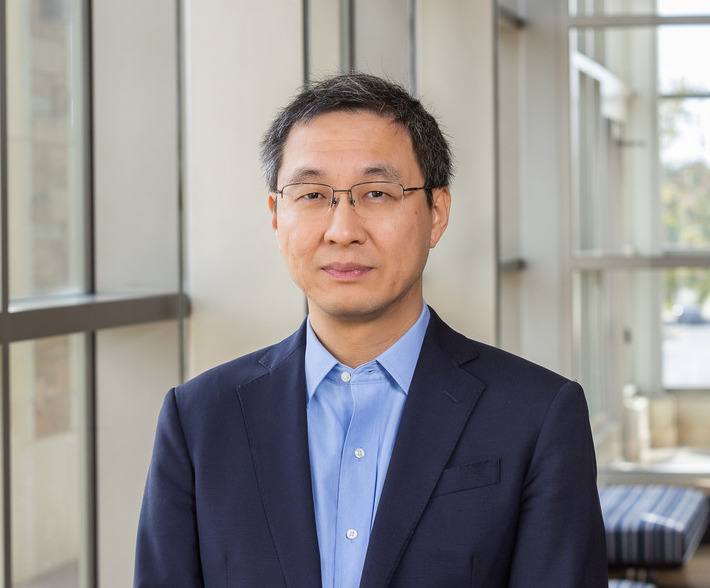
Jun Luمشاهده پروفایل
دانشیار
Jun Lu serves as an Associate Professor of Petroleum Engineering at The University of Tulsa within the College of Engineering & Computer Science. His research program focuses on critical challenges in subsurface resource management including geologic carbon storage, enhanced oil recovery, unconventional reservoir development, and scale mitigation. Educational background: Ph.D. in Petroleum Engineering, The University of Texas at Austin (2014) M.S. in Petroleum Engineering, New Mexico Institute of Mining and Technology (2005) B.S. in Environmental Engineering, Suzhou University of Science and Technology (2002) Dr. Lu's research integrates experimental and computational approaches to address pressing industry challenges. His geologic carbon storage work develops novel methods for secure CO 2 sequestration through in-situ mineralization and geobarrier engineering. In enhanced oil recovery, he pioneers advanced techniques including CO 2 microbubble flooding, carbonated water injection, and nanotechnology-enhanced processes specifically tailored for tight and unconventional reservoirs. His scale formation studies provide practical solutions for production system integrity. Analysis of his 15 most recent publications (2023-2025) reveals a dominant research trajectory centered on dual-purpose CO 2 -based methodologies that simultaneously enhance hydrocarbon recovery while enabling permanent carbon storage. His work consistently employs pore-scale visualization techniques including microfluidics and NMR spectroscopy, with increasing integration of machine learning for process optimization. Key thematic clusters include fracture management in ultraharsh reservoirs, nanoconfined fluid behavior, and rapid screening methodologies for field implementation. Scientific awards: No awards documented in available sources. Advising and grants: Student mentorship details and grant funding information are not specified in current public profiles, though his active publication record indicates ongoing research programs. Laboratory infrastructure: While specific facilities aren't detailed, his experimental work suggests access to advanced capabilities including microfluidic test systems, high-pressure core flooding apparatus, and NMR imaging equipment for pore-scale analysis.