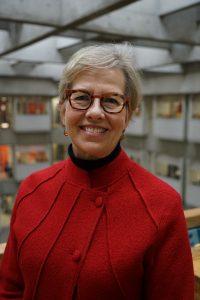
Raffaella Baccolini is a Full Professor in the Department of Interpretation and Translation at the University of Bologna's School of Modern Languages for Interpreters and Translators. She holds the scientific-disciplinary sector ANGL-01/A (English Literature) and serves as Vice Coordinator of the European Studies Bachelor's program (BAES - UnaEuropa) since 2024. Her educational background includes a PhD (1989) and MA (1983) from the University of Wisconsin-Madison, and a Degree in Foreign Languages and Literatures from the University of Bologna. Key institutional roles include President of the WOMEN Association (2021-present), Delegata DIT for Third Mission (2021-2024), and coordinator of multiple doctoral programs and EU-funded projects. Twentieth-century and contemporary American/English literature Feminist criticism and gender studies Utopian/dystopian theory and science fiction Trauma and memory studies Young adult literature and cultural translation Ethics of care in post-apocalyptic narratives Her recent publications demonstrate a consistent focus on gender-positive education through the G-BOOK series (2021-2025), ecofeminist interpretations of dystopian fiction, and critical analyses of utopian impulses in contemporary media. The work increasingly examines transmedia storytelling and social-emotional learning applications for European youth. Selected honors include: Brittingham Fellowship (University of Wisconsin-Madison) Ministry of Public Education Cultural Exchange Grant Honorary Fellow, Institute for Research in Humanities (1997) Visiting Scholar at CUNY's Calandra Institute (2012-2013) Baccolini directs the MeTRa research center and coordinates multiple EU Creative Europe projects including G-BOOK 3. She supervises doctoral candidates through the DIT Doctoral School and serves as external examiner for international PhD committees. Her leadership extends to the European Women's University Network (WOMEN) and UnaEuropa's European Studies Steering Committee. She co-directs the "Ralahine Utopian Studies" series (Peter Lang) and the online journal mediAzioni, while maintaining active roles in the Society for Utopian Studies and Utopian Studies Society Europe.