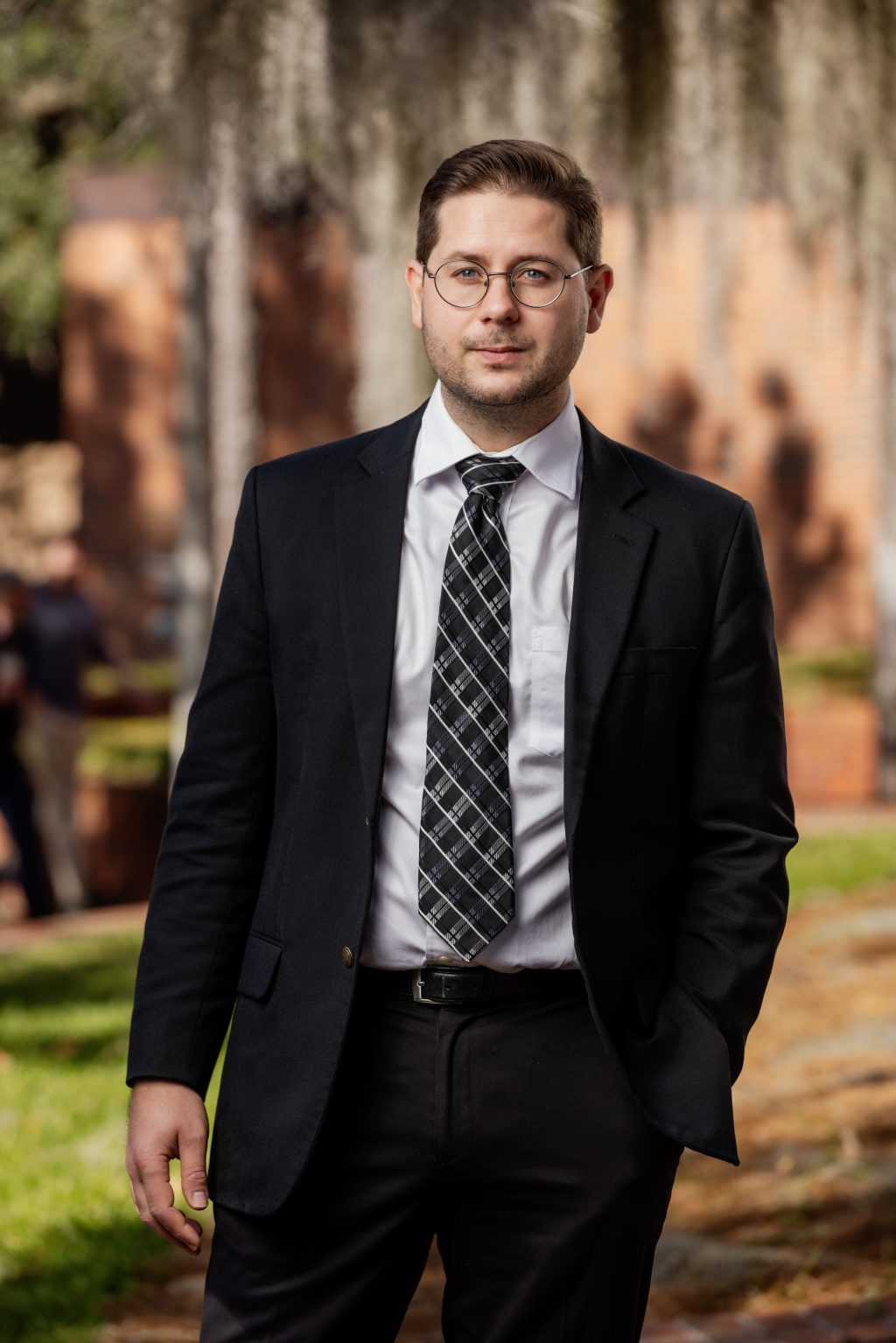
Stacey Lantagne is a Professor of Law at Western New England University School of Law , joining in 2022. Her research explores the intersection of digital creativity and intellectual property law, focusing on fanfiction and internet memes. She actively engages with pop culture and fan studies communities as a presenter and guest speaker. Education : B.A. summa cum laude, Boston College (English major, Computer Science minor) J.D. cum laude, Harvard Law School Her work addresses evolving legal challenges in digital communication, trademark expansion, and fair use doctrine. Articles like “Building a Better Mousetrap” and “Mutating Internet Memes” highlight her expertise in copyright law’s adaptation to internet culture. She serves on the Legal Committee of the Organization for Transformative Works , advocating for fan creators. Prior roles include teaching at the University of Mississippi and Loyola University New Orleans, along with intellectual property litigation experience at Goodwin Procter and Drinker Biddle & Reath.
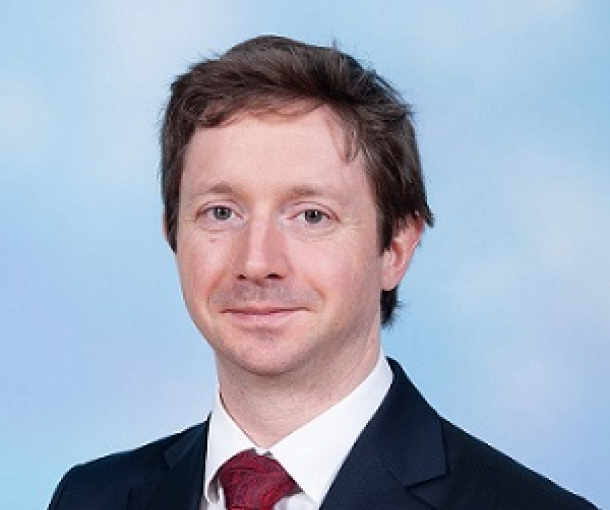
Dr Joe Sampson is a University Assistant Professor in Legal History at the University of Cambridge's Faculty of Law and a Fellow of Trinity College. His work focuses on comparative legal history, particularly examining the interplay between civilian scholarship and common law traditions. He holds a BA in Law and MPhil in Medieval History from Trinity College, Cambridge, followed by a PhD (awarded a Yorke Prize) under Prof. David Ibbetson. Previously held positions include Associate Professor at Magdalen College, Oxford (2018–2022) and David Li Fellowship at Selwyn College, Cambridge (2015–2018). Research interests include medieval and early modern legal thought, the influence of Thomist theology on natural law, and Roman legal traditions. Current projects explore autonomy in medieval civilian scholarship and Romanization in Visigothic law. He supervises doctoral research on topics ranging from medieval debt to 18th-century natural law. Teaching spans undergraduate and postgraduate courses, including a new LLM module on comparative legal history analyzing systems from ancient Mesopotamia to modern codifications. His outreach roles at Trinity include admissions tutoring in Arts & Humanities and directing legal studies. Active in research networks like the Cambridge Private Law Centre and Centre for English Legal History.
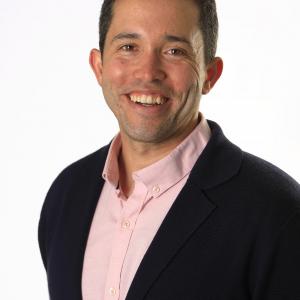
Norman Doe is Professor of Law at Cardiff University's School of Law and Politics, where he serves as Director of the Centre for Law and Religion and course director of the LLM in Canon Law. He has held significant leadership roles including Director of Research at the Law School (2011-2014) and has been instrumental in establishing key academic programs such as the LLM in Canon Law (1991) and the LLB module Law and Religion (2002). His international academic presence includes being a visiting professor at the University of Paris since 1999, KU Leuven (2013-16), and Pontifical University of St Thomas in Rome (2009). Doe earned his law degree at University College Cardiff, completed his doctorate at Magdalene College, Cambridge, and studied theology at St Michael's Theological College, Llandaff and Mansfield College Oxford University. His academic credentials include LLD (Cambridge), LLM (Wales), MTh (Oxford), PhD (Cambridge), DCL (Lambeth), and he is a Barrister (Middle Temple). Professor Doe's research focuses on Anglican canon law, comparative church law, law and religion, and the history of ecclesiastical law. His scholarly work has established foundational frameworks for understanding Christian legal systems across denominations. His book Canon Law in the Anglican Communion (1998) formed the basis for The Principles of Canon Law Common to the Churches of the Anglican Communion (2008), while his Christian Law: Contemporary Principles (2013) contributed to the Statement of Principles of Christian Law (2016) that was launched at the World Council of Churches in 2022. His recent publications demonstrate a sustained focus on historical Anglican priest-jurists, ecclesiastical legal history, and the development of Christian legal principles across traditions. His scholarly impact is reflected in his election as a Fellow of the British Academy (2024), appointment as honorary King's Counsel (2024), and previous recognition as one of the 'top ten' law and religion scholars worldwide (2018). He has received numerous honors including election to the Council of the Selden Society (2023), becoming an Academic Bencher of the Inner Temple (2021), and being listed among the 50 most influential Anglicans in the world by The Telegraph (2008). Professor Doe serves as Chancellor of the Diocese of Bangor (since 2012), functioning as president of the Diocesan Consistory Court. He has been deeply involved in global Anglican structures, serving on the Lambeth Commission (2003-2004), contributing to the Windsor Report, and working with the Anglican Communion Network of Legal Advisers. He co-founded the Interfaith Legal Advisers Network (2007) and the Law and Religion Scholars Network (2008), demonstrating his commitment to practical applications of his scholarship. His current research focuses on the history of English ecclesiastical law since the Reformation and a series of articles on clergy jurists published in the Ecclesiastical Law Journal . He is also active in multiple networks of the Cardiff Centre for Law and Religion, including the Colloquium of Anglican and Roman Catholic Canon Lawyers and the Church Law History Network. His 2023 canon law play Thrice to Rome about Gerald of Wales has been performed at St Davids Cathedral and the Temple Church London, with upcoming performances planned for Canterbury and Rome.
James Hooks is a Lecturer and Assistant Director at the Hamilton School of Classical and Civic Education, University of Florida. His roles include academic advising, course coordination, and overseeing operations for the School. He holds a D.Phil. in Theology and Religion from the University of Oxford (2023), an M.A. in Theological Studies from Regent College (2018), and a B.A. in Humanities from Athabasca University (2012). His research focuses on the intersection of religion and political thought after the Protestant Reformation, particularly examining how concepts like salvation and human nature shaped early modern European society. Central to his work is the study of Pierre Bayle’s justifications for religious toleration and their influence in 18th-century England. He also analyzes Bayle’s engagement with natural law and biblical scholarship, as well as the intellectual legacy of Mary Astell through her marginalia in the Pepys Library collection. His broader interests include secularism, Cartesian philosophy, and the history of toleration. James has taught courses such as The American Idea , (Un)Common Reads: The Case for Conscience , and Civil Discourse and the American Political Order across Canada, Japan, and the UK. Prior to his academic roles, he served as Finance Manager at the Canterbury Institute, managing operational budgets, administering the Barry Scholarship, and coordinating academic programming. He actively collaborates with faculty and students at Oxford and is involved in interdisciplinary projects at the Hamilton School. In his advising and grants work, James supports students through the Hamilton School’s programs and has experience administering scholarship funds. His current research on Astell’s engagement with French Cartesianism bridges early modern religious and philosophical thought.
Simon Stern is a Professor at the University of Toronto Faculty of Law, where he has taught since 2007, holding progressively senior positions from Assistant to full Professor since 2019. He serves as Chair in Innovation Law (2020-present) and Director of the Center for Innovation Law & Policy (2012-present). His research bridges legal doctrines with literary/intellectual history, focusing on legal fictions, the "reasonable man" standard, and intersections between law and sexuality. Ph.D. in English (UC Berkeley), J.D. (Yale), B.A. in English (Yale, magna cum laude) Editor-in-Chief of Yale Journal of Law & Humanities during law school Research interests include: law and literature, legal history, sexuality and the law, criminal law, and intellectual property. His work examines narrative techniques in legal reasoning, evidentiary standards, and historical evolution of legal concepts through literary frameworks. Recent publications analyze legal fictions, reasonable person standard evolution, and 19th-century tort law narratives. He co-edits Oxford University Press' Law and Literature series and the New Rambler Review. 2012 SLS Partnership Award for student advocacy 2023-2026 President of academic organization Serves on SSHRC Insight Grants Committee and multiple editorial boards
Catherine Valcke is a Professor at the University of Toronto Faculty of Law , where she served as Associate Dean and Acting Associate Dean. She holds degrees from the University of Sherbrooke (LL.B. Civil Law), University of Toronto (LL.B. Common Law), University of Chicago (LL.M.), and Columbia University (S.J.D.). Her academic career includes visiting appointments at the University of Montreal , University of Tunis II , and the Center for Transnational Legal Studies . Education: J.S.D., Columbia University (1997) LL.M., University of Chicago (1989) LL.B. (Common Law), University of Toronto (1988) LL.B. (Civil Law), University of Sherbrooke (1985) Research focuses on comparative legal theory , contractual obligations , and Anglo-French legal convergence , with a current SSHRC-funded project: French and English Private Law Paradigms . Her 2018 book Comparing Law: Comparative Law as Reconstruction of Collective Commitments proposes an interpretive framework for comparative studies. Recent publications analyze legal harmonization in bilingual contexts and AI’s impact on legal scholarship , including co-authorship of the forthcoming Théorie des Obligations (5th ed., 2022) and co-editorship of the Elgar Encyclopedia of Comparative Law (3rd ed., 2023). Awards include SSHRC grants and election to the International Academy of Comparative Law (2007). Her work has been cited by the UK House of Lords in Chartbrook Ltd. v. Persimmon Homes Ltd. (2009).
Alessio Reali is a Lecturer at Università Carlo Cattaneo - LIUC , specializing in Law Sciences . His academic work focuses on Trust Law , Private Law , and Intergenerational Wealth Transfer , with a particular emphasis on the application of the Hague Convention on Trusts within Italian legal systems and cross-border contexts. 2023 : Analyzed express trusts for intergenerational wealth transfers in Italian corporate/family contexts, stressing alignment with Hague Convention. 2022 : Critiqued Swiss trust law proposals as foreign-focused, warning against civil law system conflicts. 2021 : Explored Italian private law fundamentals and transnational testamentary substitution mechanics. 2020 : Addressed restitution law, mutual dissent in banking contracts, and real estate trust formalities. 2019 : Investigated collation waivers and irrevocable donor acts in inheritance disputes. His research bridges Italian Civil Code interpretations with international fiduciary frameworks, advocating for systematic legal harmonization over ad hoc solutions like 'internal trusts'. Publications demonstrate expertise in reconciling common law and civil law systems, particularly in trust instruments and transnational succession cases.
David Evan Harris is a Senior Research Fellow at the International Computer Science Institute (ICSI) and a Chancellor’s Public Scholar at the University of California, Berkeley. He serves as a Continuing Lecturer at the Haas School of Business and Senior Advisor for AI Ethics at the Psychology of Technology Institute. He is affiliated with multiple UC Berkeley centers, including CITRIS, the Center for Latin American Studies, EGAL, and the Business and Public Policy Group. M.S., Sociology, University of São Paulo B.A., Political Economy of Environment & Development, UC Berkeley His research focuses on AI ethics, misinformation, civic technology, social media policy, and global development. He explores deceptive design, digital literacy, and the societal impacts of AI, with a particular emphasis on democratic governance and human rights. His recent publications highlight AI ethics, regulatory challenges in AI governance, and international policy frameworks. Earlier work spans social movements, open knowledge, and poverty visualization. David teaches UC Berkeley courses including AI Ethics for Leaders, Civic Technology, and Futures Thinking. He founded the Global Lives Project in 2004 and previously led research at the Institute for the Future (2008–2018). Fluent in English, Portuguese, and Spanish, he has conducted research in 37 countries.
William Swadling is a Professor of Law and Senior Law Fellow at Brasenose College, University of Oxford. He holds academic associate roles at One Essex Court and is a Senior Fellow at the University of Melbourne. He has held visiting professorships at institutions including the University of Hamburg, Seoul National University, and the National University of Singapore. His legal education includes an MA from Oxford (Oxon) and an LLM from the University of London. Swadling specializes in Property Law, Restitution, and Trusts, with a focus on their intersection. His research explores equitable remedies, constructive trusts, and unjust enrichment. His work has been cited in landmark English court rulings like Westdeutsche Landesbank Girozentrale v Islington LBC , and he contributes to leading legal publications such as Halsbury's Laws of England and the Restitution Law Review . He has authored/co-authored several books, including The Quistclose Trust: Critical Essays , and edited sections on property law in academic texts. His recent research includes studies on proprietary consequences of fraud and the nature of knowing receipt in equity. He is an elected member of the American Law Institute and actively participates in academic conferences, including the 'Laws of Restitution' symposium hosted by Oxford's Private Law Research Group. Swadling teaches Restitution, Trusts, and Personal Property at Oxford, chairs faculty teaching groups in these areas, and advises on commercial law risk through his work with the Chancery Bar Association.
John G.H. Hudson is the L. Bates Lea Global Professor of Law at the University of Michigan Law School and serves as Professor of Legal History and Director of the Institute of Legal and Constitutional Research at the University of St. Andrews, Scotland. University of Oxford, MA University of Toronto, MA University of Oxford, DPhil His research focuses on medieval English and French law, lordship, and literature, particularly from the 9th to 13th centuries, and 19th-century medieval historiography. Recent publications include work on comparative legal history, colonial law, and the historical development of common law systems. His scholarship often intersects with political and social structures of the medieval period. Elected to the Royal Society of Edinburgh Elected to the British Academy Elected to the Academia Europaea
Dr Mukarrum Ahmed is a Lecturer in Business Law at the School of Law, University of Lancaster, and a barrister of Lincoln's Inn. He is a recognized expert in private international law and commercial law, with significant contributions cited by courts including the High Court of England and Wales and the European Court of Justice. His educational background includes: FHEA - PGCAP from Lancaster University PhD in Law from the University of Aberdeen Barrister qualification from Lincoln's Inn LLM from City, University of London LLB (Hons) from the University of London Dr Ahmed's research focuses on private international law (conflict of laws) , with particular emphasis on international commercial litigation and arbitration. His work explores the intersection of EU law, international legal theory, and comparative law, with recurrent themes including post-Brexit legal developments, party autonomy, methodological pluralism, and the global governance function of private international law. He approaches legal questions from theoretical, pragmatic, and comparative perspectives, contributing significantly to understanding how legal systems interact across borders. His scholarly work has been cited by prestigious courts including the High Court of England and Wales in the Etihad Airways v Flöther case and the European Court of Justice in Maersk A/S v Allianz Seguros cases. His publications reveal a consistent focus on jurisdictional issues, choice of court agreements, and the evolving landscape of private international law in the post-Brexit era, demonstrating both theoretical depth and practical relevance to international commercial disputes. Dr Ahmed has received several notable honors: University of Aberdeen's Principal's Excellence Award (2015) Fully Funded Doctoral Scholarship in Private International Law of the EU from University of Aberdeen STIP Foundation Scholarship from The Hague Academy of International Law Nomination for the Inner Temple Book Prize As an academic supervisor, Dr Ahmed oversees PhD and Master's students including Denis Carey and Shu Li, while also convening key courses such as Private International Law (LLB), International Commercial Litigation (LLM), and International Commercial Arbitration (LLM). He serves as Director of PG Recruitment and Admissions and Cluster Lead for Law, Business and the Economy in the Centre for Law and Society. His external roles include being an External Examiner at York Law School, Associate Member of research centers at Aberdeen and Stirling Universities, and Editor for prominent publications in private international law. Dr Ahmed is actively involved in the Centre for Law and Society, contributing to research clusters focused on Law, Business and the Economy. His scholarly activities span editorial work for Commentaries on Private International Law and Conflictoflaws.net, peer review for major academic publishers, and participation in international conferences addressing contemporary challenges in private international law.
Paul Daly is Professor and University Research Chair in Administrative Law & Governance at the University of Ottawa's Faculty of Law (Common Law Section), appointed in July 2019. Fluent in English and French, he maintains an active external role as part-time member of Canada's Environmental Protection Tribunal since 2019 and has held prior positions at the University of Cambridge and Université de Montréal, with visiting appointments at Harvard Law School, Université Paris II, Louvain Global College of Law, Trinity College Dublin, and Ireland's Law Reform Commission. His academic credentials include: BCL and LLM from University College Cork LLM from University of Pennsylvania Law School PhD from University of Cambridge Professor Daly's research centers on public law with exceptional focus on administrative law, examining judicial review standards, deference principles, and the constitutional foundations of administrative decision-making. His scholarship on the Vavilov framework and Doré duty has reshaped understanding of reasonableness review and fundamental rights application in administrative contexts. He pioneers interdisciplinary approaches connecting legal theory with practical governance challenges, emphasizing procedural fairness and accountability within the administrative state. Analysis of his publication trends reveals deep engagement with Canadian administrative law evolution while maintaining strong comparative perspectives across common law jurisdictions. His work consistently bridges doctrinal analysis with practical implications for tribunals, courts, and policymakers, particularly regarding standard of review methodologies and rights protection mechanisms. Scientific recognition includes: Lexpert Rising Stars Award (2023) for outstanding contributions to public law While specific doctoral students aren't documented, Professor Daly actively mentors through judicial training seminars and continuing legal education events nationwide. His scholarly influence extends through over 150 judicial citations internationally and frequent expert testimony. Grant funding details aren't specified, but his University Research Chair position signifies substantial institutional support for his administrative governance research program. His influential blog Administrative Law Matters serves as a central hub for global administrative law discourse, featuring case commentaries and theoretical analyses that directly inform judicial reasoning as evidenced by multiple Supreme Court of Canada citations.
Jordan English is an Associate Professor in the Faculty of Law at the University of Oxford and a Tutorial Fellow at Magdalen College. He specializes in private law, with a focus on contract law and property law. His research has been cited by high courts in Australia, the UK, and the Cayman Islands. He teaches Contract Law, Commercial Remedies, Restitution of Unjust Enrichment, and Land Law. English holds a DPhil in Law and a Bachelor of Civil Law (Distinction) from Oxford, alongside degrees from the University of Queensland. Education: DPhil in Law, University of Oxford Bachelor of Civil Law (Distinction), University of Oxford Bachelor of Laws (Hons I, Medal), University of Queensland Bachelor of Commerce (Accounting), University of Queensland Research Interests: Discharge of contractual obligations Proceeds of crime laws Restitution and unjust enrichment Contract and property law theory Professional Memberships: Academic Fellow of Middle Temple Academic Member of the Chancery Bar Association Publications: Author of Discharge of Contractual Obligations (Oxford UP, 2025) Co-author of Federal Proceeds of Crime Law (Thomson Reuters, 2024) Co-author of The Law of Tracing (Federation Press, 2021)
Sheila R. Foster is a tenured Professor of Climate at the Columbia Climate School and an affiliated faculty member at Columbia Law School. Her research focuses on environmental and climate justice, innovative resource governance, land use policy, and the role of local governments in addressing global challenges. She holds a J.D. from UC Berkeley and a B.A. (English, Honors) from the University of Michigan. Foster co-directs LabGov, pioneering the 'co-city' approach to urban challenges, and has authored influential books like Co-Cities and From the Ground Up . She serves on the New York City Panel on Climate Change and the Environmental Justice Advisory Board, and has been recognized with awards including the ACOEL Fellowship and the IUCN Senior Scholar Award. Education: J.D., University of California, Berkeley B.S., University of Michigan (English, Honors) Research Interests: Environmental Justice, Climate Justice, Urban Policy, Land Use, Subnational Governance, and the Co-City Model. Foster’s work emphasizes equitable urban solutions through community collaboration and policy innovation, particularly in marginalized communities. Key Contributions: LabGov’s co-city model has been applied globally to foster inclusive urban development. Her recent work advances climate justice in NYC’s adaptation strategies and explores micropolitan urban-rural linkages. She co-edits the Journal of Climate Resilience & Climate Justice and advises global networks like the Global Parliament of Mayors. Awards & Honors: ACOEL Fellow (2024) American Bar Foundation Fellow (2024) Prose Award (2023) for Co-Cities IUCN Senior Scholar Award (2018) Grants & Advising: Collaborates with local governments, federal agencies, and international bodies. Advises on climate displacement, equity in urban resilience, and global mayoral networks. Previously taught at Georgetown and Fordham Universities, holding roles such as Scott K. Ginsburg Professor of Urban Law and Policy. Labs & Teams: Co-directs LabGov, a research lab advancing urban commons and equitable governance. Partners with organizations to operationalize the co-city framework in cities worldwide.
Ewoud H. Hondius and Hans Christoph Grigoleit are leading professors in European contract law and private law harmonization. Ewoud H. Hondius is affiliated with Utrecht University - Faculty of Law and Molengraaff Institute for Private Law , while Hans Christoph Grigoleit is based at Ludwig Maximilians University of Munich - Faculty of Law . Their collaborative work focuses on equitable adjustment in contracts under changing circumstances and the convergence of European legal doctrines.