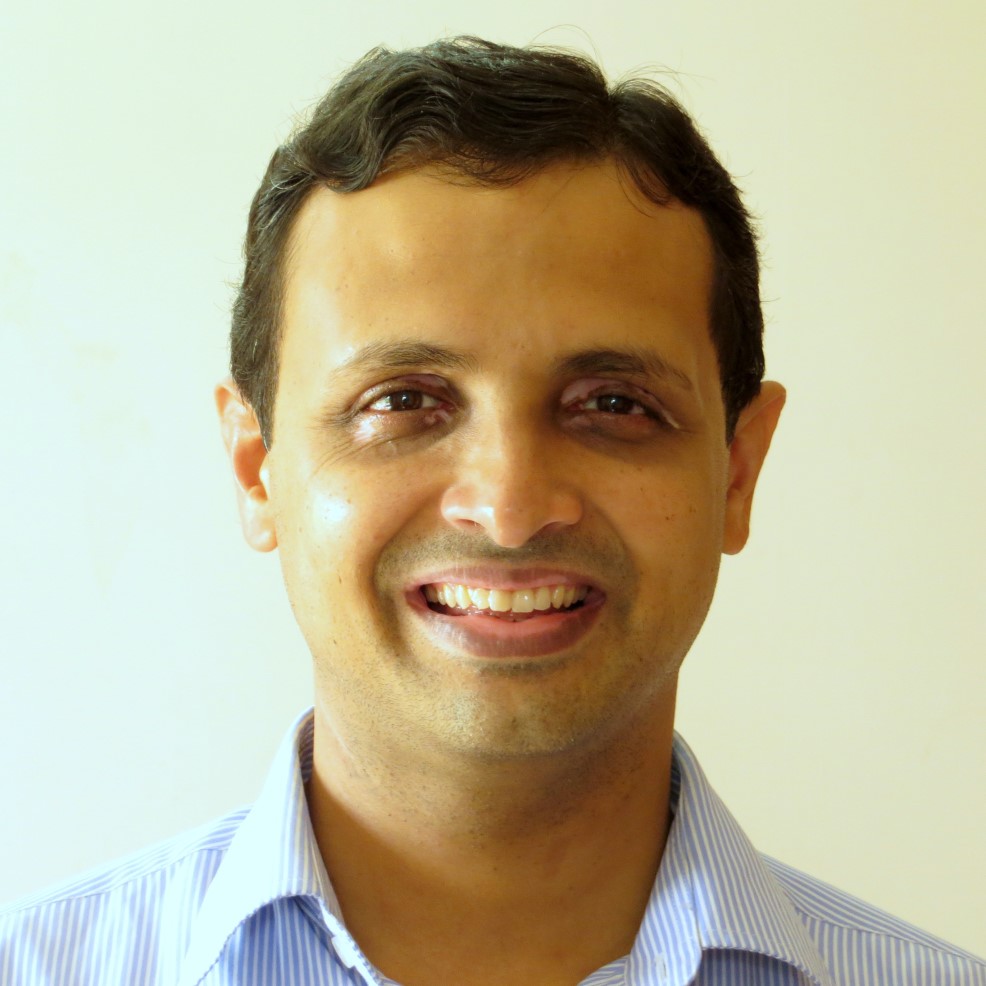
Vineeth N Balasubramanian is a Professor in the Department of Computer Science & Engineering at the Indian Institute of Technology Hyderabad, with affiliate faculty status in the Department of Artificial Intelligence. His research focuses on the intersection of deep learning, machine learning, and computer vision, emphasizing explainability, robustness, and real-world applications. He leads Lab 1055, which investigates problems such as Explainable and robust AI/ML systems Lifelong learning in evolving environments Multimodal vision-language models Applications in agriculture, autonomous navigation, and human behavior analysis His recent work includes causal reasoning in transformers, vision-language model capabilities, and drone-based object detection. Funded by organizations like Google, Microsoft, Intel, and DST, he has received multiple awards including the World's Top 2% Scientists (2022-23), INSA/INAE Fellowships, and Best Paper recognitions. Lab 1055 collaborates with institutions like CMU, UBC, and Monash University, contributing to cutting-edge advancements in AI.
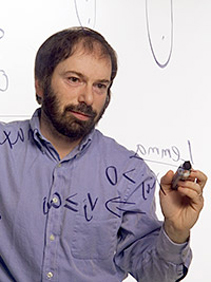
David B. Shmoys is the Laibe/Acheson Professor of Business Management & Leadership Studies at Cornell University's School of Operations Research and Information Engineering (ORIE) and holds a joint appointment in the Department of Computer Science. He is a leading researcher in approximation algorithms, stochastic optimization, and computational sustainability. His work emphasizes data-driven decision-making in enterprise and society, with applications ranging from healthcare logistics to environmental conservation. Shmoys has advised 27 Ph.D. students and served as an editorial board member for top journals like Operations Research and Mathematics of Operations Research. Education: Ph.D. in Computer Science, University of California, Berkeley (1984). Postdoctoral positions at MSRI and Harvard University, followed by faculty roles at MIT before joining Cornell. Research Interests: Design and analysis of approximation algorithms for NP-hard problems, stochastic optimization, scheduling, facility location, and inventory management. Applications include computational sustainability, epidemiological modeling, and political districting optimization. Articles Trends: Focus on optimization under uncertainty, computational sustainability, and real-world applications like air ambulance routing, bike-sharing systems, and gerrymandering analysis. Notable works include the 2018 Wagner Prize-winning paper on bike-sharing analytics and the 2013 Lanchester Prize-winning textbook on approximation algorithms. Awards: Lanchester Prize (2013), Daniel H. Wagner Prize (2018), Fellowships from ACM, INFORMS, and SIAM, NSF Presidential Young Investigator (1987). Advising & Grants: Over 27 advised Ph.D. students, with former students at MIT, Waterloo, Brown, and D-Wave. Active in grants related to data science and sustainability. Labs/Teams: Involved in the Institute of Computational Sustainability at Cornell, focusing on applying algorithms to environmental challenges. Collaborates with organizations like Motivate (bike-sharing) and Ornge (air ambulance services).
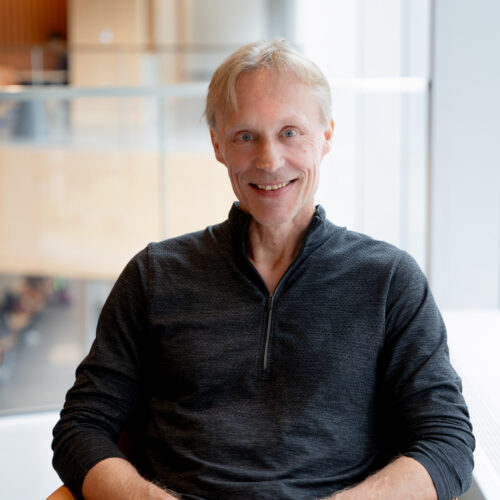
Tommi Jaakkola is the Thomas Siebel Professor of Electrical Engineering and Computer Science and the Institute for Data, Systems, and Society at the Massachusetts Institute of Technology. He received his MSc in theoretical physics from Helsinki University of Technology in 1992 and his PhD from MIT in computational neuroscience in 1997. After completing a postdoctoral position in computational molecular biology as a DOE/Sloan fellow at UCSC, he joined the MIT EECS faculty in 1998. His research advances how machines can learn, predict or control, and do so at scale in an efficient, principled, and interpretable manner. His work in machine learning extends from foundational theory to modern applications, focusing especially on statistical inference and estimation tasks that lie at the heart of complex learning problems. He designs new methods, theory and algorithms to automate the use and generation of semi-structured data such as natural language text, images, molecules, or strategies. Jaakkola applies and develops algorithms to solve multi-faceted recommender, retrieval, or inferential tasks (particularly in biomedical contexts), design and optimize molecules or reactions for drug design, and model strategic, game theoretic interactions. His recent work heavily focuses on diffusion models, protein structure prediction, molecular design, and generative AI, with significant publications in top conferences including ICML, NeurIPS, and ICLR. His scientific contributions span multiple disciplines with significant impact in both theoretical machine learning and practical applications in computational biology and chemistry, including notable work on antibiotic discovery published in Cell. Current advisees: Julia Balla, Bowen Jing, Hannes Stärk, Peter Holderrieth, Chenyu Wang Recent graduates: Gabriele Corso (Boltz PBC), Ezra Erives (DE Shaw), Jason Yim (Xaira) Jaakkola maintains an active research program through MIT's Computer Science and Artificial Intelligence Laboratory (CSAIL) and the Institute for Data, Systems, and Society (IDSS), with his office located in the Stata Center (32-G470). His work bridges theoretical machine learning with practical applications, making significant contributions to both the academic field and potential real-world impact in healthcare and drug discovery.
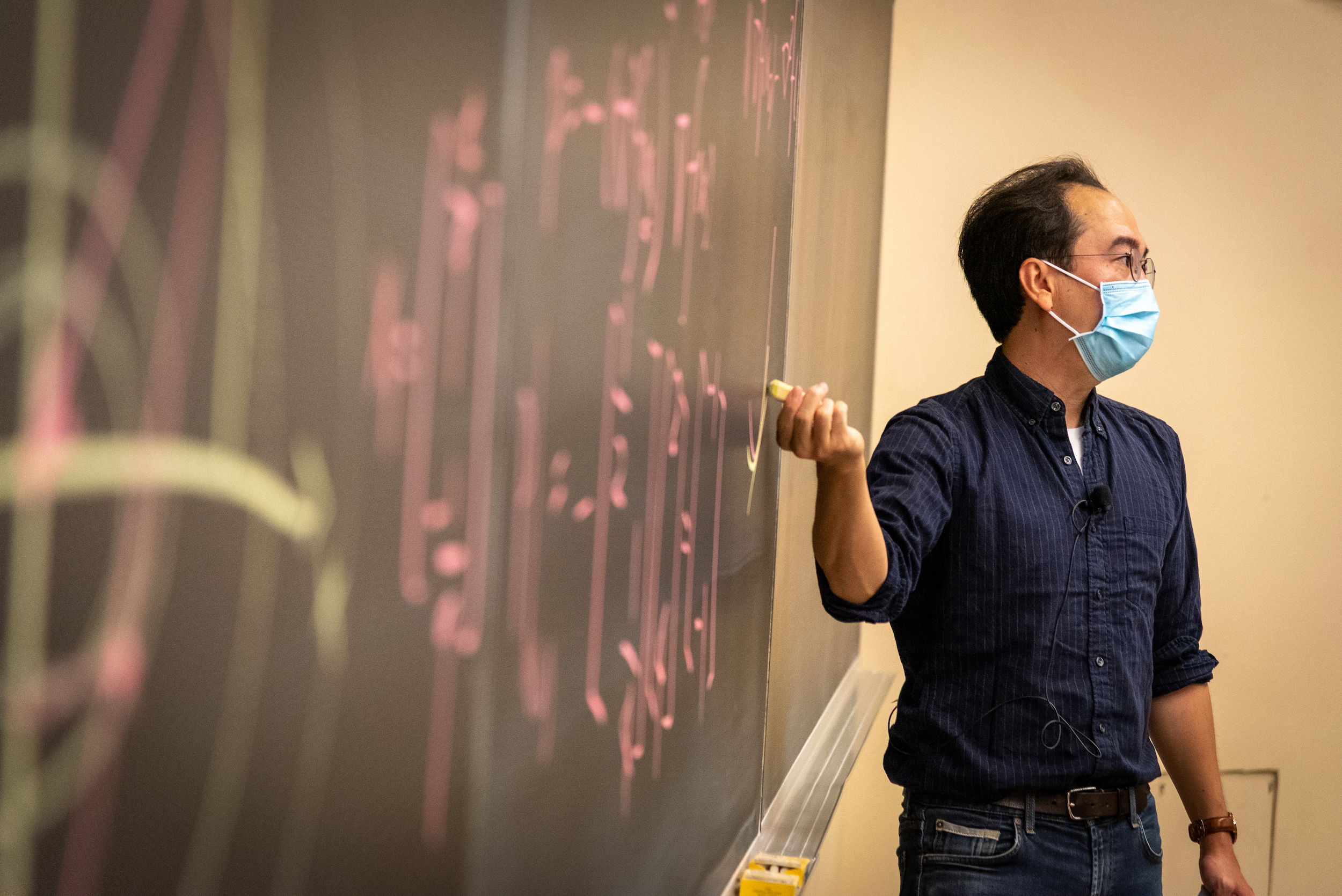
Dr. Daniel J. Hsu is a Professor of Computer Science at Columbia University, affiliated with the Foundations of Data Science Center and TRIPODS Institute. His research focuses on algorithmic statistics, machine learning theory, and their applications in public health informatics. He has advised numerous students and postdocs, and his work bridges foundational theory with practical systems like foodborne illness detection via social media analysis. Key roles: Associate Editor (ACM Transactions on Algorithms), Program Chair (ICML 2025, COLT 2019) Research areas: Foundations of Data Science, Machine Learning Theory, Fairness, and High-dimensional Statistics His work on detecting foodborne illnesses using Yelp reviews has been deployed by NYC Health departments. Recent contributions include advancements in transformer architectures, group fairness algorithms, and multi-group learning frameworks. Scientific awards include the Sloan Fellowship and multiple NSF grants. He has pioneered interactive machine teaching methods and developed algorithms for robust parameter estimation in high-dimensional settings.
Sicun Gao is an Associate Professor in the Computer Science and Engineering department at the University of California, San Diego. His research focuses on practical algorithms for NP-hard search and optimization problems in computational systems, emphasizing combinatorial perspectives in numerical and statistical contexts to achieve reliable autonomy. Research Interests: Automated reasoning, Hamilton-Jacobi reachability, safe reinforcement learning, control barrier functions, and optimization in cyber-physical systems. Teaching: Courses on AI search, optimization, and graduate research seminars. The 15 most recent publications highlight advancements in safe AI control, motion planning, and policy optimization, often integrating neural networks with formal verification. Awards include the IEEE Power & Energy Society Technical Committee Prize Paper Award and the IROS RoboCup Best Paper Award. He advises PhD students working on AI-driven control and robotics, with alumni placed at institutions like Seoul National University, Amazon, and Apple. Grants include NSF Career, Air Force Young Investigator, and DARPA Assured Autonomy funding. His lab develops tools like dReal for automated reasoning in nonlinear theories over the reals.
Nima Fazeli is an Assistant Professor of Robotics at the University of Michigan (2020–Present), holding courtesy appointments in Computer Science & Engineering (CSE) and Mechanical Engineering. He directs the Manipulation and Machine Intelligence (MMint) Lab, focusing on enabling dexterous robotic manipulation through multimodal representation learning, tactile sensing, and model-based reasoning. His work integrates mechanics, perception, controls, and planning to achieve autonomous interaction with uncertain environments. Education: PhD, MIT (2019); MSc, University of Maryland (2014); BSc, Amirkabir University of Technology (2011) Research interests emphasize embodied intelligence , including visuo-tactile fusion, contact dynamics modeling, and cross-modal learning. Recent work explores tactile shadows, deformable object manipulation, and language-guided robot control. His research is supported by the NSF CAREER grant and National Robotics Initiative, with applications in manufacturing, assistive robotics, and space systems. Publications span topics like tactile sensing hardware (e.g., GelSlim 4.0), visuo-tactile implicit representations (ViTaSCOPE), and failure recovery policies (Racer). His team’s work has been featured in outlets like The New York Times and BBC. Key Awards: NSF CAREER Grant (2024) Teaching includes Introduction to Robotic Manipulation . Collaborations involve cross-disciplinary projects with mechanical, electrical, and biomedical engineering groups.
Ole Winther is Professor in High dimensional biological data analysis/Machine learning at the Department of Biology, University of Copenhagen and Professor in Data science and complexity at DTU Compute, Technical University of Denmark. He serves as CRO and co-founder of raffle.ai, CTO and co-founder of FindZebra, Head of ELLIS Unit Copenhagen, and co-PI of the Machine Learning for Life Science Center. His research spans Bioinformatics , Machine Learning , and AI for Science , focusing on applying deep learning to biological sequence analysis, latent variable models, and medical NLP. Winther's work develops predictive and generative models for bioinformatics, with significant contributions to protein localization tools (SignalP, DeepLoc, DeepTMHMM), single-cell genomics, and novel deep learning architectures like variational autoencoders and diffusion models. Analysis of Winther's recent publications (2023-2025) reveals a strong trend toward integrating protein language models with traditional bioinformatics approaches and applying diffusion models to scientific problems. His work bridges theoretical machine learning advancements with practical applications in biology and medicine, particularly in protein sequence analysis, medical search engines, and scientific simulation acceleration. Winther currently supervises a diverse research group including Panagiotis Antoniadis, Rachael M. DeVries, Jun Wang, Beatrix M. G. Nielsen, Felix G. Teufel, Irene R. Rodriguez, Anders Christensen, and Christopher Heje Grønbech. His former students have established successful careers at institutions including Google, Apple, and various startups, with notable alumni like Casper Sønderby (Google Brain) and Søren Sønderby (Apple). He leads significant research initiatives including the ELLIS Unit Copenhagen and the Machine Learning for Life Science Center, while maintaining active industry partnerships through his co-founded companies raffle.ai (enterprise search using NLP) and FindZebra (search engine for rare diseases). His teaching includes Deep Learning courses at both DTU (02456) and University of Copenhagen (NDAK24002U).
Sham Kakade is the Rampell Family Professor of Computer Science and Professor of Statistics at Harvard University, co-director of the Kempner Institute. His research focuses on advancing artificial general intelligence through foundational work in reinforcement learning, large-scale learning systems, and autonomous agent architectures. He earned his PhD in 2003 from the Gatsby Computational Neuroscience Unit at University College London. His work emphasizes scalable optimization algorithms, distributed systems for foundation models, and understanding emergent capabilities in neural architectures. Research interests include full-stack training pipelines for foundation models, mathematical principles of large-scale learning systems, and bridging language models with embodied intelligence. He advises prospective students with backgrounds in applied deep learning or theoretical computer science, offering access to the Kempner Institute's computational resources. He serves on committees for the ACM Prize in Computing and Sloan Research Fellowships, co-organizes the Simons Symposium on Theoretical Machine Learning, and chaired COLT 2011. His lab works at the intersection of theory and practice, addressing challenges in AI's societal impact and technical scalability. Labs/Teams: Co-directs the Kempner Institute, fostering collaborations between AI researchers and social scientists. Active in Harvard's SEAS community.
Romain Lopez is an Assistant Professor of Computer Science and Biology at New York University, with a joint appointment in the Courant Institute of Mathematical Sciences and the Department of Biology. He will be joining NYU in September 2025, bringing expertise at the intersection of machine learning and computational biology. Prior to joining NYU, he was a Postdoctoral Fellow at Genentech and Stanford Medicine from 2021 to 2025, working with Jonathan Pritchard and Aviv Regev. Dr. Lopez received his educational training at prestigious institutions: PhD in Computer Science (2021) from the University of California, Berkeley, advised by Mike Jordan and Nir Yosef M.S. in Applied Mathematics (2016) from École polytechnique, Palaiseau, France Dr. Lopez's research focuses on developing machine learning methods to understand biological systems at the cellular level. His work bridges computational techniques with biological applications, particularly in single-cell and spatial omics analysis. He pioneered probabilistic approaches for single-cell analysis with scVI and co-developed scvi-tools, now widely adopted tools in the field. His research spans deep generative models, causal inference, perturbation modeling, and representation learning for biological data. His publication record demonstrates a consistent trajectory of innovation in computational biology, with recent work focusing on spatial biology, disentangled representations of cellular perturbations, and causal modeling of cellular responses. He has made significant contributions to the field of single-cell analysis, developing methods that help scientists interpret complex cellular data and predict how cells respond to various perturbations. Dr. Lopez has received numerous honors and awards for his research: Best Paper Award from the ICML Workshop on AI for Science (2024) Best Paper Award Honorable Mention from the AAAI Conference on Artificial Intelligence (2021) Best Student Poster Award from the ICML Workshop on Computational Biology (2019) UC Berkeley EECS Departmental Graduate Fellowship (2016) Carnot Foundation Fellowship (2016) Monahan Foundation Fellowship (2016) French National Defence Medal, Bronze Echelon (2014) At NYU, Dr. Lopez will lead the Biological Machine Learning group, which develops probabilistic machine learning methods to uncover biological mechanisms governing cellular behavior and disease. His lab focuses on creating tools that transform complex cellular data into biological insights, with applications in understanding cancer, immune responses, and fundamental cellular processes. His work has significant implications for precision medicine and drug discovery.
Maya Ramanath is an Associate Professor in the Department of Computer Science and Engineering at Indian Institute of Technology (IIT) Delhi. She joined IIT Delhi in 2011 after a postdoctoral research stint at the Max-Planck Institute for Informatics in Germany. Her research interests focus on database systems, information retrieval, semantic web technologies, and knowledge graph construction and applications. Education: PhD in Computer Science, Indian Institute of Science, Bangalore M.Sc.(Engg.) in Computer Science, Indian Institute of Science, Bangalore B.E. in Computer Science and Engineering, Bangalore University, Bangalore Her recent work emphasizes efficient query processing over large-scale graphs, knowledge graph applications, and natural language interfaces for semantic data. Notable contributions include algorithms for reachability approximation in web-scale graphs, speculative query planning for knowledge graphs, and exploratory querying techniques. She has collaborated extensively on projects like NAGA, ESTHETE, and KlusTree, advancing the state of the art in graph-based data management and semantic search. Publications span conferences such as ICDE, ECIR, EDBT, and VLDB, reflecting a strong focus on database systems, graph algorithms, and semantic web applications. Her work bridges theoretical foundations with practical implementations, addressing scalability and efficiency challenges in modern data management systems. Research and advising activities include supervision of projects on distributed graph processing, query optimization, and knowledge representation. She has contributed to open-source tools like LegoDB and StatiX, and her lab focuses on interdisciplinary approaches to data-centric AI.
Johnny Guzmán is a Professor of Applied Mathematics at Brown University, specializing in numerical analysis of partial differential equations and scientific computing. He holds a Ph.D. in Applied Mathematics from Cornell University (2005) and a B.S. in Mathematics from California State University, Long Beach (1999). His research focuses on numerical methods for PDEs, including discontinuous Galerkin methods, mixed finite element methods, and fluid-structure interaction problems. Key contributions include work on hybridizable and mixed finite element methods, discontinuous Galerkin discretizations, and stability analysis of numerical schemes. He has been funded by multiple NSF grants, including a Postdoctoral Fellowship (2005–2008) and awards totaling over $1M in research support. Notable recognitions include the Comfort and Urry Family Fund Prize (2013). Guzmán collaborates with institutions globally and serves on editorial boards for journals like Journal of Numerical Mathematics and Calcolo . His teaching spans computational linear algebra, numerical methods for differential equations, and finite element analysis.
Aniket (Niki) Kittur is a Professor in the Human-Computer Interaction Institute (HCII) at Carnegie Mellon University's School of Computer Science. His research focuses on AI-augmented cognition, exploring how humans and computational systems can partner to accelerate knowledge acquisition and innovation. With over 100 peer-reviewed publications and 17 best paper awards or honorable mentions, Dr. Kittur has established himself as a leader in human-computer interaction and social computing. Dr. Kittur's research spans multiple interconnected areas focused on enhancing human cognition through technology. His work on crowd-augmented cognition examines how crowds and computation can collectively enhance human intellect. In social computing, he investigates how sociotechnical architectures can motivate and coordinate large groups for complex tasks. His research in data visualization and sensemaking explores how people collect, organize, and make decisions with online information. Most recently, his work has shifted toward LLM-augmented cognition, investigating how humans and large language models can work together in partnership to achieve better decisions and greater creativity than either could alone. Dr. Kittur's publications reveal a consistent trajectory toward increasingly sophisticated human-AI collaboration systems. Early work focused on crowdsourcing complex tasks (CrowdForge, CrowdSynthesis), then evolved to knowledge acceleration systems (Knowledge Accelerator, Fuse), and has recently centered on LLM-integrated cognition (Selenite, InkSpire, BioSpark). His research consistently demonstrates practical impact, with systems influencing products used by millions and receiving coverage in major media outlets including Nature News, The Economist, and The Wall Street Journal. Kavli fellow NSF CAREER award recipient Allen Newell Award for Research Excellence Inductee into the CHI Academy 17 best paper awards or honorable mentions across his publications Dr. Kittur has advised numerous students, including Andrew Kuznetsov, and has secured major research funding from NSF, NIH, Google, Microsoft, Bosch, Toyota, and other organizations. His Skeema browser extension project, which addresses tab overload through innovative project-based organization, has shown remarkable user retention and represents a practical application of his research on knowledge acceleration. His work with industry partners has influenced products used by millions, including Semantic Reader, Google Shopping, and Wikipedia features.
Dr. Amin Keramati is an Assistant Professor of Supply Chain Management at Widener University’s School of Business Administration. He holds a PhD in Transportation & Logistics from North Dakota State University and previously served as a graduate research assistant at the Upper Great Plains Transportation Institute. His work includes federally funded projects like the Mountain-Plains Consortium’s MPC-550 project, focusing on highway-rail grade crossing safety. Dr. Keramati teaches courses in enterprise resource planning, decision analytics, database management, transportation/logistics, project management, and data analytics. Education: PhD in Transportation & Logistics, North Dakota State University Graduate Research Assistant at Upper Great Plains Transportation Institute Research Focus: Dr. Keramati develops mathematical, statistical, and machine learning approaches to solve complex problems in transportation, supply chain, and logistics. Key areas include data mining, big data decision support, transportation network analytics, project scheduling, smart manufacturing, and accident analysis. His interdisciplinary work bridges supply chain optimization with emerging technologies like blockchain for healthcare and clinical trials. Awards & Recognition: Student Paper Award, American Association of State Highway and Transportation Officials (2017) Grants & Projects: Lead researcher on the Mountain-Plains Consortium’s MPC-550 project, which expanded his dissertation work on safety systems for highway-rail crossings. Collaborates on federally funded transportation safety initiatives and supply chain optimization for bioethanol and pharmaceutical industries. Labs/Teams: Active in Widener’s School of Business research groups focusing on supply chain innovation and interdisciplinary projects combining logistics with emerging technologies.
Derek W Hoiem is a Professor in the Siebel School for Computing and Data Science at the University of Illinois Urbana-Champaign, where he has been a faculty member since 2009. His research focuses on computer vision and related areas, and he is also the co-founder and Chief Science Officer of Reconstruct, an AI-based construction technology company. His educational background includes: PhD in Robotics, Carnegie Mellon University (2007) Beckman Postdoctoral Fellowship (2008) Prof. Hoiem's research spans computer vision, with a focus on object recognition, scene understanding, and graphics. His work also extends to mobile robotics and 3D scene reconstruction. He has made significant contributions in areas such as visual recognition, 3D modeling, and the application of computer vision in construction monitoring. His recent publications (2023-2025) demonstrate a strong focus on advancing multimodal understanding, particularly in region-based representations, 3D vision, and neural radiance fields. There is a clear trend towards integrating language and vision, improving efficiency in neural networks, and applying computer vision to real-world problems such as construction progress monitoring. His scientific awards and honors are extensive and include: IEEE Fellow (2022) University Scholar (2022) Koendrink Prize (2022) Dean's Award for Excellence in Research, Associate Professor (2021) Campus Distinguished Promotion Award (2015) Best Paper Award: IEEE Winter Conference on Applications in Computer Vision (WACV) (2015) CW Gear Junior Faculty Award (2014) IEEE PAMI Young Researcher Award (2014) Dean's Award for Excellence in Research, Assistant Professor (2014) Sloan Research Fellowship (2013) Intel Early Career Faculty Honor Program Award (2012) NSF CAREER Award (2011) ACM Doctoral Dissertation Award, Honorable Mention (2008) Carnegie Mellon University SCS Distinguished Dissertation Award (2008) Best Paper Award: IEEE Computer Vision and Pattern Recognition (CVPR) (2006) Prof. Hoiem has secured significant research funding, including an NSF CAREER award and an Intel Early Career Faculty award. He is also actively involved in technology transfer, having co-founded Reconstruct where he serves as Chief Science Officer. His teaching excellence is reflected in multiple "List of Teachers Ranked as Excellent" awards spanning from 2010 to 2021. Prof. Hoiem leads a research group at UIUC focused on computer vision and 3D scene understanding. Additionally, he co-founded and serves as Chief Science Officer at Reconstruct, which develops AI-based solutions for construction monitoring.
Jiatao Gu is an Assistant Professor in the Department of Computer and Information Science (CIS) at the University of Pennsylvania, with a part-time role as Staff Research Scientist at Apple (MLR). He holds a Ph.D. in Electrical and Electronic Engineering from the University of Hong Kong (2018) and a B.Eng. in Electronic Engineering from Tsinghua University (2014). His research focuses on generative machine learning and AI agent interaction with the physical world, emphasizing multi-modal systems spanning language, images, videos, and 3D. Key themes include efficient modeling , flexible architecture design , and scalable decision-making frameworks . 2025: ICLR paper on DART framework 2024: TMLR work on GFlowNet alignment 2023: NeurIPS research on diffusion stability 2022: ACL papers on speech translation Recent publications explore diffusion models for text-to-image synthesis, 3D reconstruction, and efficient sampling techniques. His work addresses fundamental challenges in attention mechanisms, entropy collapse, and multi-stage distillation while advancing non-autoregressive translation and vision-language reasoning . Prospective students can apply through his recruitment process at UPenn. Prior affiliations include Meta AI (FAIR Labs) and academic collaborations with institutions like New York University's CILVR Lab.