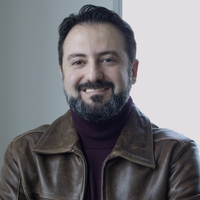
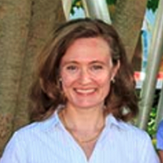
Radha Bulusu is a Postdoctoral Researcher in the Department of Chemical & Biomedical Engineering at Florida State University. Her research focuses on nonthermal plasma-based water treatment technologies, particularly for degrading persistent pollutants like per- and polyfluoroalkyl substances (PFAS). She can be contacted at rbulusuraja@fsu.edu . Research Interests: Nonthermal plasma gas-liquid reactors Reactive species (RNS, ROS) generation and dynamics PFAS degradation mechanisms in aqueous environments Electron density and plasma parameter optimization Chemical reduction/oxidation via plasma interactions Environmental remediation using nanosecond pulse discharge Publication Trends: Over the past five years, her work has focused on enhancing plasma reactor efficiency for pollutant degradation, with studies on electrode polarity effects, pulse frequency optimization, and chemical pathways in PFOA/PFOS breakdown. Key themes include defluorination mechanisms, hydrogen peroxide generation, and real-time plasma diagnostics via optical emission spectroscopy.
Joshua S. Rest is an Associate Professor and Chair of the Department of Ecology and Evolution at Stony Brook University. His research focuses on evolutionary genomics, molecular evolution, and horizontal gene transfer (HGT) in diverse organisms, including plants, protists, and viruses. Research Interests Evolutionary Genomics Protist Genomics Horizontal Gene Transfer Phylogenetics Stress Response Mechanisms Key Articles 2025: Proteome remodeling in Aurantiochytrium limacinum 2023: Horizontal gene transfer in heterotrophic protists 2021: Drought adaptation and disease susceptibility in Brassica rapa 2019: Kinase promiscuity in inhibitor binding 2016: Rapid genome evolution in Brassica rapa under drought Awards 2021 Zuckerkandl Prize Collaborations Collaborated with experts in plant sciences (Charles C. Davis, Yin-Long Qiu), virology (David P. Mindell), and protist biology (Deborah Faktorová).
Fangzhou Liu is currently a Professor at the Research Institute of Intelligent Control and Systems, School of Astronautics, Harbin Institute of Technology, China (2022–Present). He previously held a postdoctoral position (2019–2022) and completed his PhD (2014–2019) at the Chair of Automatic Control Engineering, Technische Universität München, Germany. His academic journey includes a visiting PhD stint at the University of Groningen (2018) and degrees from Harbin Institute of Technology: M.Sc. (2012–2014) and B.Sc. (2008–2012) in Control Science and Engineering. Research Interests: Focus on control of complex systems, including diffusion processes over complex networks, opinion dynamics, networked control systems, model predictive control, and sliding mode control. Key themes: large-scale systems, dynamic optimization, and robust control. Publication Trends: Recent works emphasize robotic control (reinforcement learning, barrier functions), switched systems (parameter estimation, identification), and epidemic modeling (deep transfer learning for forecasting). Collaborations with Martin Buss and others span robotics, control algorithms, and optimization. Awards: PhD Award 2019 of the Department of Electrical and Computer Engineering Labs & Teams: Affiliated with the Chair of Automatic Control Engineering (Technische Universität München) and Harbin Institute of Technology’s Research Institute of Intelligent Control and Systems. Collaborates on projects involving intelligent control, robotics, and networked systems.
Professor J.P. Allen is a full-time faculty member at the University of San Francisco (USF), serving as Professor and founding chair of the Technology, Innovation, and Entrepreneurship Department within the School of Management. His pioneering work focuses on digital transformation, open technologies, and internet business education, guiding non-technical students through creating online ventures using open source solutions. Dr. Allen's educational background includes: PhD in Information and Computer Science, University of California, Irvine (1995) MS in Information and Computer Science, University of California, Irvine (1993) MA (Cantab) honorary degree, University of Cambridge (1998) BS in Computer Engineering and BA in Mathematics, University of California, Santa Cruz (1989) His research centers on digital entrepreneurship and technology's societal impacts, particularly inequality and open source ecosystems. He examines how digital systems reshape business models while advocating for inclusive innovation, as evidenced in his books Digital Entrepreneurship and Technology and Inequality: Concentrated Wealth in a Digital World . His work bridges technical implementation with critical social analysis, emphasizing democratization of business tools. Analysis of his recent publications reveals three dominant trends: (1) Critical examination of AI's role in education and hype cycles, (2) Exploration of digital innovation systems and resistance phenomena, and (3) Persistent focus on inclusive entrepreneurship models addressing socioeconomic divides. His interdisciplinary approach spans information systems, business strategy, and social informatics. His scientific recognition includes: Fulbright Scholar in Portugal (2009-2010) Association for Information Systems Innovation in Teaching Award (2014) USF Post-Sabbatical Merit Award (2018) Multiple Outstanding Research Awards from USF's School of Management (2005, 2012, 2014) Outstanding Student Support and Advocacy Award (2006) Professor Allen has developed groundbreaking curricula for management students to build online businesses, reflecting his commitment to practical, accessible education. His Fulbright scholarship and research awards demonstrate sustained grant success, while his student-centered approach earned university-wide advocacy recognition. As founding department chair, he established frameworks for digital business education though specific lab structures aren't documented. His current work increasingly addresses generative AI's educational implications and digital inequality solutions.
Herbert Schiller is a Director of the Research Unit for Precision Regenerative Medicine (PRM) at Helmholtz Munich and a Professor for Systems Biology of the Airways and Lungs at the Medical Faculty of Ludwig Maximilian University (LMU) Munich. Previously, he served as Deputy Director of the Institute of Lung Health and Immunity (LHI) and held adjunct faculty positions at the Institute of Lung Health in Giessen, Germany. M.Sc. in Biology and Genetics (University of Vienna, 2004-2008) Ph.D. in Molecular Immunology (Medical University of Vienna, 2008) Postdoctoral training at Max Planck Institute of Biochemistry (2009-2015) His research focuses on extending human healthspan by studying genetic and environmental drivers of chronic lung disease and aging through experimental systems biology and AI-driven approaches. Key areas include: Pulmonary systems biology Regenerative medicine and stem cell biology Extracellular matrix and mechanobiology Single-cell genomics Biology of aging and autoimmune diseases His work emphasizes cross-disciplinary methods like human lung organotypic models and mass spectrometry proteomics. Research trends include lung fibrosis mechanisms, integrin-mediated mechanosensing, and AI applications in chronic disease modeling. Scientific distinctions include: W2 Professorship at LMU Munich Dick Heinegard European Young Investigator Award Helmholtz Young Investigator award German Respiratory Society (DGP) research prize EMBO long term fellowship He has secured research grants from the German Research Foundation (DFG), Chan Zuckerberg Initiative (CZI), and the European Commission. His lab employs cutting-edge single-cell RNA-seq, proteomics, and ex vivo tissue perturbation techniques to elucidate lung disease mechanisms.
Dr. Andrea Merenda is a Postdoctoral Research Associate at the School of Civil and Environmental Engineering, University of Technology Sydney (UTS). He is affiliated with the Centre for Technology in Water and Wastewater and the ARC Research Hub for Nutrients in a Circular Economy. With a PhD from Deakin University (2019), MSc in Chemical and Sustainable Engineering from Polytechnic of Turin (2015), and MSc in Chemistry and Chemical Engineering from ENSCM (2015), his work focuses on functional materials for sustainable applications. Education: PhD, Deakin University MSc Chemical & Sustainable Processes Engineering, Polytechnic of Turin MSc Chemical Engineering, ENSCM France Research Interests: Stimuli-responsive membrane reactors Functional materials for CO2 conversion Green chemistry in water remediation Atomic layer deposition for antimicrobial surfaces Service & Leadership: Board Director, Membrane Society of Australasia Member, Early Career Editorial Board (JWPE) Peer reviewer for Chemical Engineering Journal , Desalination , and ACS Applied Nano Materials Teaching: Teaching Assistant, Fluid Mechanics (UTS 2024)
Prof. Dr. Nicole Borel serves as Professor at the Institute of Veterinary Pathology within the Vetsuisse Faculty of the University of Zurich. Her primary research focuses on novel therapeutic strategies for intracellular bacterial pathogens, particularly Chlamydia species affecting both animals and humans. Her research interests center on chlamydial pathogenesis , antimicrobial resistance mechanisms , and innovative treatment approaches including water-filtered infrared A (wIRA) irradiation. She investigates the complex interactions between chlamydiae and host cells, with particular emphasis on cytokine responses and the development of persistent infections. Her work bridges veterinary and human medicine through a One Health perspective, examining zoonotic transmission pathways and comparative disease manifestations. Analysis of her publication record reveals consistent focus on chlamydial therapeutics (42% of publications), zoonotic potential (28%), and novel antimicrobial approaches (30%). Her most impactful work demonstrates the efficacy of wIRA/VIS combination therapy against chlamydial infections through both thermal and non-thermal mechanisms, with significant implications for treating chronic infections like trachoma and pelvic inflammatory disease. Leading expert on chlamydial infections in veterinary and human contexts Developed novel wIRA-based antimicrobial approaches Key contributor to understanding chlamydial persistence mechanisms Active in One Health initiatives connecting animal and human diseases Professor Borel maintains active collaborations with international researchers including Dr. Christian Blenn, focusing on translational applications of phototherapy for chronic chlamydial infections. Her work has significant implications for both veterinary practice and human medicine, particularly in resource-limited settings where conventional antibiotics may be inaccessible or ineffective.
Prof. Dr. Michael Martin is a Professor at the Professorship of Data Management , Faculty of Computer Science , Chemnitz University of Technology . His work focuses on Knowledge Graphs , Large Language Models (LLMs) , and Semantic Web Technologies , with specific emphasis on RDF/SPARQL optimization , geospatial data integration , and dataset versioning . Keywords: Knowledge Graphs, Semantic Web, LLMs, GeoSPARQL, Dataset Versioning Collaboration: Co-authors include Lars-Peter Meyer, Claus Stadler, Sara Todorovikj, and Claus Stadler Research Trends Recent publications demonstrate his leadership in LLM-KG-Bench benchmarking frameworks and CoyPu knowledge graph projects for resilience research. His work bridges Apache Spark with semantic technologies for scalable knowledge graph construction and develops domain-specific ontologies for industries like steel and copper manufacturing. Projects & Tools Martin's team created open-source platforms such as: Quit Store for distributed RDF dataset management CubeViz.js for statistical data visualization Structured Feedback protocol for decentralized data governance
Dr. Zhong Lu is the Shuler-Foscue Professor of Earth Sciences at Southern Methodist University (SMU) , where he has served since 2013. He is a leading expert in geophysics and remote sensing, with a focus on InSAR (Interferometric Synthetic Aperture Radar) applications for monitoring geohazards such as landslides , volcano deformation , land subsidence , and human-induced geohazards . Education: Ph.D. in Geophysics, University of Alaska Fairbanks (1996) M.S. in Geophysics, Peking University (1992) B.S. in Geophysics, Peking University (1989) Research Focus: Dr. Lu's research integrates remote sensing , geodetic modeling , and machine learning to study surface deformation and geohazard mechanisms. His work spans from Alaskan volcanoes to Texas sinkholes , and from coastal subsidence to glacial landslides . Key Projects: He has led or co-led numerous NASA and USGS funded projects, including mapping land deformation over the Gulf Coast , monitoring Aleutian volcanoes , and developing InSAR-based landslide inventories for the Pacific Northwest. Awards & Honors: Elected Fellow of the American Association for the Advancement of Science (AAAS) Featured in NASA/ASF 25th Anniversary Brochure Multiple journal covers and media recognitions Teaching & Mentorship: Dr. Lu teaches courses such as Radar Interferometry , Remote Sensing Principles , and Geodynamics , and is actively recruiting Ph.D. students with interests in geohazard monitoring and modeling. Labs & Teams: He leads a research group at SMU focused on advanced InSAR techniques and collaborates with USGS, NASA, and international institutions on satellite-based geohazard monitoring.
Ravi Kant serves as Principal Investigator and Adjunct Associate Professor at the University of Helsinki, with additional Visiting Professor appointments at Medical University of Gdansk, Poland and University of Nairobi, Kenya. He is affiliated with the Helsinki One Health (HOH) Viral Zoonosis Research Unit and the Emerging Infections Research Group within the Department of Virology at the Faculty of Medicine. His research focuses on viral zoonoses, emerging infectious diseases, and viral genomics. Key research areas include SARS-CoV-2 transmission dynamics, viral pathogenesis in animal models, viral metagenomics, and molecular epidemiology of emerging pathogens. His work spans both human and veterinary medicine, reflecting the One Health approach that characterizes his research unit. Kant leads multiple significant research projects including the EU-funded REFINE project (2025-2028), Pipeline for Rapid Diagnostics of Emergency Transboundary Infectious Diseases (2023-2027), and research on poxvirus epidemiology and disease control (2022-2025). His publication record demonstrates consistent output with 81 publications spanning from 2005 to 2025, with recent emphasis on SARS-CoV-2, mpox, antimicrobial resistance, and viral metagenomics. He actively supervises doctoral students across multiple programs including Biomedicine, Microbiology and Biotechnology, and Clinical Veterinary Medicine, with several ongoing doctoral supervision activities documented through 2025. His media engagement includes significant contributions to public understanding of infectious diseases, with appearances discussing topics such as the cause of dermatitis epidemics in trotting horses, innovative mobile diagnostic laboratories, and mitochondrial roles in antiviral immunity.
Benoît Barbeau is a Full Professor at the Department of Civil, Geological and Mining Engineering at Polytechnique Montréal. He serves as Director of the Center for Research, Development and Validation of Water Treatment Technologies and Processes (CREDEAU) and holds the Industrial Chair in Drinking Water (CIEP). His expertise spans water treatment technologies, with a focus on ozonation, membrane filtration, and contaminant removal including PFAS and microplastics. Ph.D. in Environmental Engineering (Polytechnique Montréal) 2004 Best Doctoral Thesis Award recipient Research interests include drinking water treatment , micropollutant removal , and water quality modeling . His work explores hybrid processes like biological ion exchange combined with membrane filtration and the application of advanced oxidation techniques for contaminant degradation. Recent publications highlight trends in PFAS remediation using activated carbon, manganese removal via ion exchange, and AI-driven water treatment process optimization. He emphasizes climate adaptation in water management and evaluates domestic filtration solutions for persistent pollutants. Scientific distinctions include 2004 Best Doctoral Thesis Award - Polytechnique Montréal Barbeau supervises numerous graduate students in projects ranging from remote water treatment systems to UV disinfection modeling. His work directly informs municipal water strategies and industrial applications, particularly in PFAS mitigation and distribution network safety.
Ippei Obayashi is a Professor at Okayama University's Center for artificial intelligence and mathematical data science, with a visiting professorship at Tohoku University's Advanced Institute for Materials Research (AIMR). His academic career spans prestigious institutions including RIKEN, Tohoku University, and Kyoto University, where he earned his Doctor of Science degree. Okayama University, Center for AI and Mathematical Data Science, Professor (2021-present) RIKEN, Center for Advanced Intelligence Project, Researcher (2018-2021) Tohoku University, Institute for Advanced Materials Science, Associate Professor (2018) Tohoku University, Advanced Institute for Materials Science, Assistant Professor (2015-2018) Kyoto University, Research Fellow (2010-2015) Educational Background: Kyoto University, Graduate School of Science, Department of Mathematics and Mathematical Analysis (2006-2010, Doctoral) Kyoto University, Graduate School of Science, Department of Mathematics and Mathematical Analysis (2004-2006, Master's) Kyoto University, Faculty of Science (2000-2004, Bachelor's) Professor Obayashi's research focuses on topological data analysis (TDA) , particularly persistent homology and its applications, alongside dynamical systems theory. His work bridges pure mathematics with practical applications in materials science, where he has developed innovative methods to analyze complex material structures. He has made significant contributions to understanding magnetic materials, amorphous structures, and crystal formation through topological approaches, often integrating machine learning techniques with traditional mathematical analysis. His research has practical implications for energy materials, battery technology, and materials characterization. His publication record demonstrates a strong trend toward applying topological methods to solve real-world materials science problems, with increasing integration of machine learning techniques. Recent work shows sophisticated applications of persistent homology to analyze neutron scattering data, magnetic properties, and structural characteristics of materials, reflecting his ability to translate abstract mathematical concepts into practical analytical tools. Scientific Awards: JCS-JAPAN Excellent Paper Award, Ceramic Society of Japan (2020) 11th Sakuramai Research Encouragement Award, RIKEN (2020) Japan Society for Industrial and Applied Mathematics Best Author and Best Paper Awards (2017) 6th Fujiwara Hiroshi Mathematical Sciences Encouragement Award (2017) AIMR International Symposium Best Poster Award (2017) Professor Obayashi actively mentors graduate students through Okayama University's Graduate Student Program and leads research initiatives including the Japan Society for Industrial and Applied Mathematics Topological Data Analysis Research Group, which he chairs. His research is supported by multiple competitive grants, including Japan Society for the Promotion of Science (JSPS) funding for projects on mathematical data science and topological structure analysis. He collaborates extensively with researchers across disciplines, particularly in materials science and engineering. He is affiliated with the Center for artificial intelligence and mathematical data science (Angels) and the Cyber-Physical Engineering Informatics Research Division (Cypher) at Okayama University, where he leads efforts to develop and apply topological data analysis methods to complex scientific problems. His laboratory focuses on creating practical software tools like HomCloud for persistent homology analysis, bridging the gap between theoretical mathematics and applied scientific research.
Steven Davis is an Assistant Teaching Professor and Assistant Dean in the Honors College at Montana State University, with dual affiliation in the Chemical & Biological Engineering Department of the College of Engineering. His work focuses on engineering education through indigenous perspectives to broaden participation and improve student retention metrics including enrollment, persistence, and graduation rates. His research centers on integrating Indigenous Knowledge Systems into engineering pedagogy, developing culturally responsive models for mentorship and experiential learning. He designs service-learning projects and co-curricular activities to engage honors students while addressing systemic barriers in STEM education for underrepresented groups. Dr. Davis' recent publication on Tipi fluid mechanics demonstrates his innovative approach to connecting traditional knowledge with engineering principles. His work reveals emerging trends in decolonizing engineering curricula through place-based learning and community-centered pedagogy. His notable recognitions include: International Engineering Education Conference Best Presentation Award (2024) International Seed Grant Award - Honor Bound & University of Waikato (2024) Outreach and Engagement Seed Grant Award - Honor Bound & PLHI (2024) Nomination for LSAMP Bridge to Doctorate Fellow (2024) Sloan Indigenous Graduate Partnership Fellow (2023) He mentors students through senior design projects (ECHM411/412) and independent studies (HONR292/492), developing experiential learning frameworks. His grant portfolio includes international collaborations with University of Waikato and PLHI focused on indigenous knowledge exchange and land-based education. Dr. Davis leads community initiatives including the Honor Bound project, serves on the Montana Land Reliance Future Montana Committee, advises the IWIKUA Indigenous Names & Place-Based Knowledge project, and participates in Blackfeet cultural education through Bobcat Singers.
Dr. Navid Bahrani is an Associate Professor and Graduate Coordinator in the Department of Civil and Resource Engineering at Dalhousie University's Faculty of Engineering in Halifax, Nova Scotia, Canada. With over 10 years of professional experience in mining geomechanics, he brings both academic expertise and practical industry knowledge to his teaching and research. Dr. Bahrani's educational background includes: Bachelor of Science in Mining Engineering from Azad University, Tehran, Iran (2006) Master of Science in Mining Engineering from University of Alberta, Edmonton, Canada (2009) Doctor of Philosophy in Natural Resources Engineering from Laurentian University, Sudbury, Canada (2015) Post-Doctoral Fellowship at the University of Toronto's Lassonde Institute of Mining (2015-2017) Dr. Bahrani's research focuses on mining geomechanics , with particular emphasis on rock mechanics, underground excavation support design, numerical modeling in geotechnical engineering, brittle fracture phenomena, and rock slope stability. His work bridges theoretical understanding with practical applications in mining and civil engineering projects. He employs advanced computational methods to simulate rock behavior under various loading conditions, with special attention to the mechanical response of jointed and defected rock masses. His research has significant implications for mine design, ground support systems, and slope stability analysis in both mining and civil engineering contexts. Analysis of Dr. Bahrani's publication record reveals a strong focus on the application of numerical modeling techniques to solve complex rock mechanics problems. His work demonstrates evolving expertise from fundamental rock mechanics characterization to sophisticated 3D modeling of mining-induced stress changes and support system behavior. A notable trend in his research is the development and validation of grain-based models that bridge the gap between continuum and discontinuum approaches in rock mechanics simulation. His publications consistently address practical engineering challenges while advancing theoretical understanding of rock mass behavior. Dr. Bahrani has received recognition for his scholarly contributions: Peter Cundall Honorable Mention Award for paper: 'Bahrani N. and Kaiser P.K. 2016. Integrated grain-based-DFN model for simulation of defected rock, Proceedings of the 4th Symposium on Applied Numerical Modeling, Peru.' As Graduate Coordinator for the Department of Civil and Resource Engineering, Dr. Bahrani oversees graduate programs and advises students in mining and geotechnical engineering. His research has been supported by collaborations with industry partners including MIRARCO's Geomechanics Research Centre and various mining operations across North America. He has been involved in numerous projects related to in situ stress measurement, rock mass deformation monitoring, laboratory testing, and numerical modeling for practical mining applications. Dr. Bahrani maintains active professional affiliations with several organizations including the International Society for Rock Mechanics (ISRM), Canadian Rock Mechanics Association (CARMA), Canadian Geotechnical Society (CGS), International Society of Explosives Engineers (ISEE), and The Canadian Institute of Mining, Metallurgy and Petroleum (CIM). His work connects with broader research communities focused on rock mechanics and geotechnical engineering applications in mining contexts.
Dr. Aude G. Chapuis is an Associate Professor in the Division of Hematology and Oncology at the University of Washington and holds the John C. and Karyl Kay Hughes Endowed Chair at Fred Hutchinson Cancer Center. She specializes in hematopoietic stem cell transplantation and immunotherapy, leading clinical trials for T-cell therapies targeting cancers like leukemia, Merkel cell carcinoma, and solid tumors. Her translational research focuses on optimizing T-cell receptor engineering to enhance anti-tumor efficacy and persistence. Her research interests include: Developing TCR-engineered immunotherapies for WT1 and viral antigens Overcoming immunotherapy resistance mechanisms Enhancing T-cell survival and function in adoptive transfer Targeting cancer-testis antigens like MAGE-A1 in solid tumors Her publications emphasize innovations in TCR gene therapy, mechanisms of immune evasion, and clinical strategies for hematologic and dermatologic malignancies. Awarded the John C. and Karyl Kay Hughes Endowed Chair, she leads a laboratory advancing cellular therapies and collaborates on multicenter trials. Dr. Chapuis mentors researchers in her lab and coordinates clinical studies, including Investigational New Drug (IND) applications for novel immunotherapies. She directs the Chapuis Lab, focusing on translational pipelines from target identification to clinical implementation.