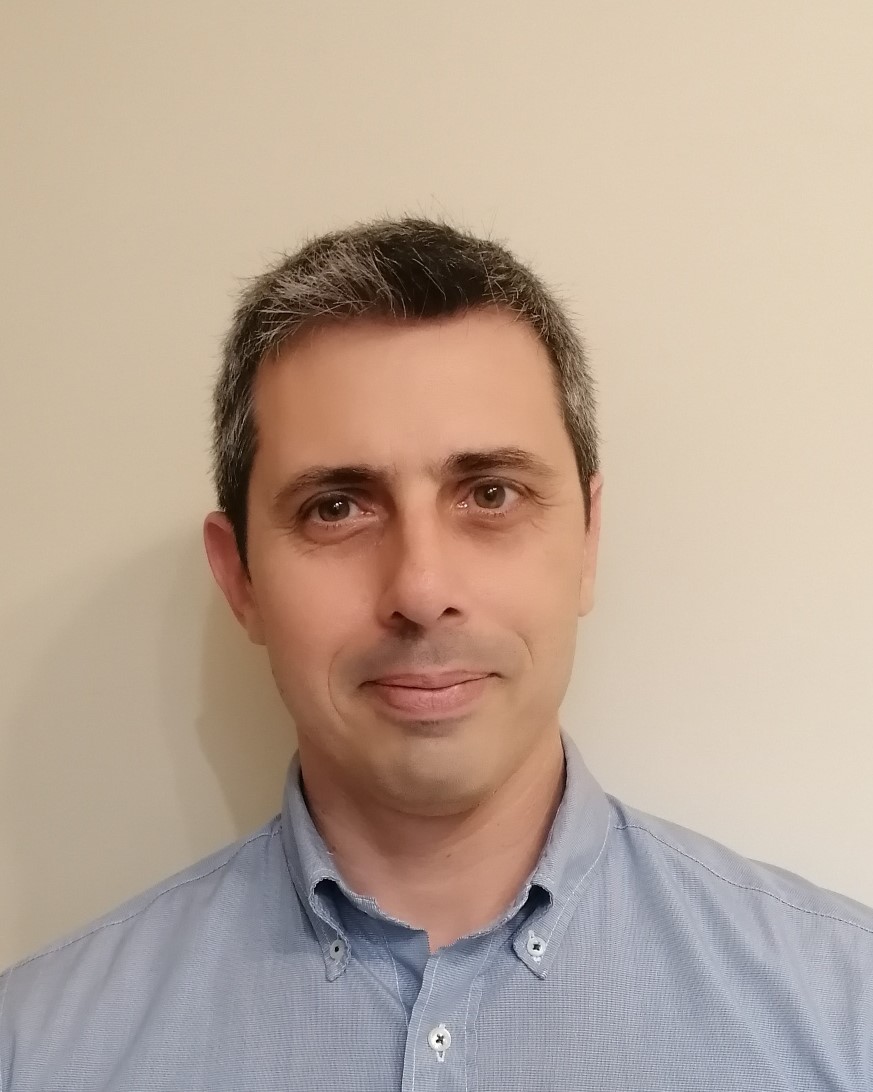
Professor David Johnstone is a Senior Professor at the School of Business within the Faculty of Business and Law at the University of Wollongong since 2017. He holds a PhD from the University of Sydney. His research focuses on evaluating probability forecasts, statistical information theory in accounting, asset pricing, cost of capital, and energy regulation. He has supervised doctoral research on corporate governance and partnership structures. Key research interests include: Probability forecasting methodologies Accounting theory and statistical rigor Energy market regulation and infrastructure valuation Asset pricing under CAPM and ESG frameworks Recent funding includes an internal grant exploring Natural Language Processing techniques to measure economic sentiment (2023). His work bridges finance theory with practical applications in regulatory frameworks and market analysis. Teaching focuses on advanced topics in finance including capital budgeting, risk assessment, and regulatory economics. He is available for PhD supervision in his core research areas.
Kalil Erazo is an Assistant Teaching Professor in the Department of Civil and Environmental Engineering at Rice University. His research focuses on structural health monitoring (SHM) for resilient civil infrastructure, particularly in regions prone to natural hazards. Erazo emphasizes integrating stochastic methods, Bayesian estimation, and advanced sensor technologies to assess structural integrity and predict performance under extreme events. Education: Postdoctoral Scholar, Rice University (2015-2016) Ph.D. in Civil and Environmental Engineering, University of Vermont (2015) M.S. in Civil and Environmental Engineering (Fulbright Fellow), Georgia Tech (2012) B.S. in Civil Engineering, Instituto Tecnológico de Santo Domingo (2009) Research Interests: Erazo’s work bridges theory and practice in resilient infrastructure design. Key areas include SHM for historic structures (e.g., UNESCO’s Colonial City of Santo Domingo), stochastic modeling for uncertainty quantification, Bayesian methods for nonlinear systems, and post-disaster decision-making frameworks. He advocates for integrating computational tools with physical infrastructure to enhance safety and sustainability. Research Group: The Structural Monitoring for Resilient and Sustainable Infrastructure group addresses National Academy of Engineering Grand Challenges by developing cyber-physical systems that monitor infrastructure health and predict performance under hazards like hurricanes and earthquakes. Outputs include sensor-based frameworks, digital twin technologies, and risk-assessment protocols.
Diangelakis Nikolaos is an Assistant Professor at the School of Chemical and Environmental Engineering, Technical University of Crete. His research focuses on advanced control strategies, optimization, and their integration within process systems engineering, particularly in pharmaceutical manufacturing and energy systems. He specializes in model predictive control (MPC), multi-parametric programming, and the unification of process design, scheduling, and control. Academic Role: Assistant Professor Department: Chemical and Environmental Engineering Institution: Technical University of Crete His work emphasizes data-driven methods and robust optimization, with applications in pharmaceutical processes, evaporation systems, and combined heat and power (CHP) systems. He has developed frameworks like PAROC for integrated optimization and control, bridging theoretical advancements with industrial applications. Key research themes include explicit model predictive control algorithms, multi-scale energy systems engineering, and the integration of design, scheduling, and control through multiparametric programming. His publications highlight contributions to MPC strategies for rotary tablet presses, robust optimization techniques, and the design of operable process intensification systems. Diangelakis collaborates on frameworks such as PAROC, which unifies process optimization and control. His research also addresses process operability and resilience, with applications to batch reactors and CHP systems. He advocates for the 'Grand Unification' of process design, scheduling, and control to enhance industrial efficiency and sustainability.
Daniel Brazier is a part-time Research Affiliate at George Mason University, focusing on advanced computing systems research. His work intersects autonomic computing, cybersecurity, and distributed systems optimization. He specializes in performance modeling for cloud/fog environments, dynamic reconfiguration strategies, and resilience engineering. Key research areas include: Autonomic resource management in edge and cloud systems Stochastic optimization algorithms Security mechanisms like moving target defense Performance-security tradeoff analysis Decentralized runtime system modeling His recent work emphasizes practical frameworks for distributed system trustworthiness and adaptive elasticity control under variable workloads. Outputs include novel meta-heuristic algorithms for virtual network optimization and analytic models for parallel server architectures. Publications highlight contributions to fog/cloud computing, manufacturing process optimization, and security-aware system design. Current efforts focus on applying decision analytics to smart manufacturing and autonomic emergency department frameworks.
Esen Yel is an Assistant Professor in the Electrical, Computer, and Systems Engineering (ECSE) department at Rensselaer Polytechnic Institute (RPI) since January 2024. She leads the Reliable Intelligent Systems Lab (RISL), focusing on enhancing safety in autonomous systems through planning, uncertainty-aware decision-making, and runtime monitoring. Her work integrates reachability analysis, machine learning, and adaptive control to ensure safe operations in unpredictable environments. Educational background: Ph.D. in Systems Engineering, University of Virginia (2021) M.S. and B.S. in Electrical and Electronics Engineering, Bogazici University, Turkey (2016 and 2014) Postdoctoral Scholar in Aeronautics and Astronautics at Stanford University (2021–2023), contributing to the Stanford Intelligent Systems Lab (SISL) and Stanford Center for AI Safety Research interests emphasize safety-critical autonomous systems , including: Uncertainty-aware planning and decision-making Runtime monitoring and recovery mechanisms Machine learning for adaptive control Formal verification of neural networks Robotics and UAV operations under degraded conditions Her publications (2017–2024) explore themes like spatiotemporal prediction, reachability analysis, meta-learning for UAVs, and safety validation in perception systems. She directs the RISL lab, advancing interdisciplinary research in reliable AI and robotics.
Mahmoud Ayyad is a Researcher at Stevens Institute of Technology, affiliated with the Charles V. Schaefer, Jr. School of Engineering and Science's Department of Civil, Environmental and Ocean Engineering. His work focuses on applying machine learning to environmental and coastal engineering challenges, including storm surge modeling, energy harvesting systems, and fluid dynamics. He holds a PhD in Civil, Environmental, and Ocean Engineering from Stevens (2023), an MS in Engineering Mathematics from Cairo University (2017), and a BS in Aerospace Engineering (2013). Research Interests: Dr. Ayyad’s research integrates artificial intelligence with environmental systems analysis. His work emphasizes: Machine learning-driven hurricane storm surge prediction under climate change scenarios Optimization of energy harvesting systems using neural networks Computational fluid dynamics for transonic aerodynamics and wave energy converters Uncertainty quantification in coastal morphodynamic models Publications: His recent work spans AI-based storm surge hazard assessment, piezoelectric energy harvesting optimization, and river ice detection using machine vision. Over 20 peer-reviewed articles demonstrate his interdisciplinary approach combining environmental engineering with advanced computational methods. Advising/Grants: While no specific grants or student advisement are documented, his research collaborations indicate active participation in Stevens' flood prediction and renewable energy initiatives. His work aligns with the Davidson Laboratory’s focus on coastal engineering and ocean systems.
Matthew Janssen is a Research Assistant Professor at the Department of Civil, Environmental, and Ocean Engineering, Stevens Institute of Technology. His research focuses on coastal hazards, littoral processes, and developing computationally efficient models to assess risks to coastal infrastructure using field observations, numerical modeling, and data-driven techniques. He holds a PhD (2022), MS (2016), and BS (2011) in Ocean Engineering from Stevens Institute of Technology and the University of Rhode Island, respectively. His work emphasizes understanding storm erosion potential, dune performance under climate change scenarios, and the impact of coastal structures. Notable contributions include methodologies for quantifying storm erosion considering sea level rise and probabilistic forecasting of coastal storm impacts. He currently serves as Assistant Director of the NJ Coastal Protection Technical Assistance Service and has prior industry experience with firms like Rising Tide Waterfront Solutions and McLaren Engineering Group. Key Research Areas: Coastal resilience, numerical modeling, climate adaptation, dune dynamics, sediment transport. Recent Focus: Long-term dune performance under extreme and nuisance erosion events; integration of machine learning (CART models) for erosion prediction. Publications highlight his work on hurricane impacts, breakwater effectiveness, and navigation channel management. He received the John P. Breslin Award (2022) and is active in professional societies like ASBPA and COPRI. His technical reports include analyses of New Jersey beach sediment characteristics and shoreline impacts at North Wildwood. He collaborates on projects balancing engineering solutions with ecological and economic considerations.
Hamid Jafarnejadsani is an Assistant Professor of Mechanical Engineering at Stevens Institute of Technology, where he directs the Safe Autonomous Systems Lab. His research develops resilient control methodologies for autonomous systems operating in adversarial environments, with applications in unmanned aerial vehicles and multi-robot systems. Education: PhD in Mechanical Engineering, University of Illinois at Urbana-Champaign (2018) MS in Mechanical Engineering, University of Calgary (2013) BS in Mechanical Engineering, University of Tehran (2011) Research focuses on cyber-physical security, adaptive control under uncertainty, and adversarial machine learning. Funded projects include NSF-supported work on attack-resilient vision-guided UAVs and IARPA contracts for neural rendering algorithms. Recent publications address distributed attack detection in multi-robot systems, adversarial image perturbations against autonomous vehicles, and emergency landing control under system failures. Dr. Jafarnejadsani teaches dynamics and control engineering courses while leading research in secure autonomous systems. Lab investigations develop novel approaches for maintaining system integrity against evolving cyber threats.
Heidar A. Malki is a Professor of Engineering Technology and Senior Associate Dean of the Technology Division at the Cullen College of Engineering, University of Houston (UH). He holds a joint appointment in the Electrical and Computer Engineering Department and has over three decades of academic and research experience. He earned his Ph.D. in Electrical Engineering from the University of Wisconsin-Milwaukee (1990). His roles include Department Chair (2009–present) and Associate Dean for Research (2004–2009). He is a Senior Member of IEEE and serves as an Associate Editor for the IEEE Transactions on Fuzzy Systems. Education: Ph.D. in Electrical Engineering, University of Wisconsin-Milwaukee (1990) M.S. in Electrical Engineering, University of Wisconsin-Milwaukee (1985) B.S. in Electrical Engineering, University of Wisconsin-Milwaukee (1983) Research Interests: Dr. Malki specializes in control systems, neural networks, fuzzy logic, and smart grid optimization. His work bridges academic research with industrial applications, particularly in the energy and telecommunications sectors. Notable areas include neuro-fuzzy controllers, power system dynamics, and cyber-security for critical infrastructure. He has collaborated with organizations like Southwestern Bell and the oil/gas industry on neural network applications. Publications & Awards: With over 100 publications, Dr. Malki’s work spans journals like IEEE Transactions on Fuzzy Systems and International Journal of Bifurcation and Chaos . His awards include the Fluor Daniel Outstanding Faculty Award (2001, 2003) and recognition in Who's Who in America . He has authored textbooks on control systems and contributed to academic volumes on fuzzy logic applications. Grants & Leadership: He secured funding for initiatives like the Houston Information Technology Workforce Certification Center and led conferences such as the 1997 IEEE International Conference on Neural Networks. His educational contributions include pioneering web-based control systems laboratories and interdisciplinary graduate programs in technology. Labs & Teams: His research teams focus on advanced wireless sensor networks, mechatronics, and energy system optimization. Collaborations extend to NASA and the U.S. Department of Energy, emphasizing applied engineering solutions for real-world challenges.
Judy Goldsmith serves as a Professor and Associate Chair in the Department of Computer Science within the College of Engineering at the University of Kentucky. Her academic profile bridges theoretical computer science with critical ethical considerations in artificial intelligence, emphasizing innovative pedagogical approaches for integrating ethics into technical curricula. Her educational foundation includes: Ph.D. in Mathematics, University of Wisconsin, 1988 Goldsmith's research program centers on Computer Ethics and Computational Social Choice , with significant contributions to Artificial Intelligence subfields including planning under uncertainty, preference handling, and computational learning theory. She pioneered the use of science fiction as a pedagogical tool for teaching ethics in computer science, developing frameworks for analyzing ethical dilemmas through narrative. Her work on coalition formation games explores stability concepts in both theoretical contexts and real-world applications ranging from competitive gaming ecosystems to military resource allocation. Analysis of her recent publications (2022-2025) reveals a dual trajectory: advancing theoretical foundations in game theory and social choice while simultaneously addressing urgent societal challenges in AI ethics and education. Her scholarship consistently demonstrates how computational social choice principles apply to Pokémon tiering systems, AI certification frameworks, and inclusive classroom practices, with a strong emphasis on social consciousness and fairness in algorithmic design. Goldsmith actively contributes to computer science education through SIGCSE initiatives, developing resources for teaching ethics using fiction and leading discussions on mentoring, diversity, and the societal impacts of AI. Her outreach extends to community engagement within the College of Engineering, focusing on making technical concepts accessible and ethically grounded through interdisciplinary approaches.
Derya Aksaray is an Assistant Professor in the Department of Electrical and Computer Engineering at Northeastern University, where she directs the Dependable Autonomy Lab (DAL). She holds a PhD in Aerospace Engineering from Georgia Tech (2014) and has prior roles as an Assistant Professor at the University of Minnesota (2018-2022), and postdoctoral positions at MIT CSAIL (2016-2017) and Boston University (2014-2016). Her research focuses on control theory, formal methods, and machine learning for robotics and autonomous systems, particularly in uncertain and dynamic environments. Education: PhD, Aerospace Engineering, Georgia Institute of Technology (2014) MS, Aerospace Engineering, Georgia Institute of Technology (2011) BS, Aerospace Engineering, Middle East Technical University (2008) Research Interests: Formal methods for autonomous systems Reinforcement learning with temporal logic constraints Multi-agent coordination and distributed planning Resilient control for robotics and aerospace systems Energy-aware planning for UAVs and heterogeneous systems Lab Activities: The Dependable Autonomy Lab develops theory and algorithms for achieving reliable autonomous robot behaviors, with experimental validation on ground and aerial robots. Current projects include resilient planning under uncertainty, distributed multi-agent systems, and reinforcement learning with formal guarantees. Advising: Prof. Aksaray supervises graduate students in PhD and MS programs, focusing on control theory, formal methods, and robotics applications. Former advisees include Ali Tevfik Buyukkocak (PhD, 2024) and Ryan Peterson (MS, 2020). Professional Affiliations: Member of the American Institute of Aeronautics and Astronautics (AIAA) and Institute of Electrical and Electronics Engineers (IEEE).
Isambo Karali is an Assistant Professor in the Department of Informatics and Telecommunications at the National and Kapodistrian University of Athens, a position she has held since November 2007. Prior to this, she served as a Lecturer at the same department from September 1999 to November 2007. Her academic career spans over three decades with significant contributions to knowledge representation, uncertainty reasoning, and semantic web technologies. Dr. Karali's educational background includes: PhD in Informatics (1995) from the University of Athens MSc in Computer Science (1988) from University College, University of London Bachelor of Mathematics (1986) from the Department of Mathematics, University of Athens Dr. Karali's research focuses on Knowledge Representation and Reasoning with Uncertainty, Artificial Intelligence, Logic Programming, and Object-Oriented Programming. She has made significant contributions to applying Dempster-Shafer theory for handling uncertainty in Semantic Web applications. Her work bridges theoretical foundations of logic programming with practical applications in knowledge representation, particularly in distributed and heterogeneous environments. She has supervised numerous PhD and master's theses in these areas. Her recent publications demonstrate a strong trend toward integrating uncertainty reasoning with Semantic Web technologies, particularly using Dempster-Shafer theory and fuzzy logic. Her work addresses challenges in managing imprecise and uncertain information in large-scale knowledge systems, with applications in recommendation systems, news analysis, and semantic search. The interdisciplinary nature of her research connects artificial intelligence, knowledge representation, and web technologies to solve complex information management problems. Dr. Karali has been actively involved in research funding and collaboration: Principal Investigator for "Handling uncertainty in data intensive applications on a distributed computing environment (cloud computing)" under the "Thalis" Program Scientific Responsible for "Artificial Intelligence and Logic Programming Techniques for Knowledge on the World Wide Web" at the National and Kapodistrian University of Athens Scientific Responsible for "Semantic Web and Logic Programming - Application to Guided Search" at the National and Kapodistrian University of Athens Participant in multiple EU research projects including MISSION, COSMOS, ADDSIA, PARACHUTE, APPLAUSE, and EDS As an educator, Dr. Karali has taught core undergraduate courses including Object-Oriented Programming and Logic Programming, as well as graduate courses on Knowledge Technologies and Artificial Intelligence. She has supervised numerous PhD and master's students, with a focus on uncertainty reasoning, semantic web technologies, and logic programming applications. Her mentorship extends to student competitions, including guiding the Department's team in the Microsoft ImagineCup 2009. Dr. Karali has also contributed to the academic community through service activities, including membership on program committees for conferences like IEEE ICTAI, reviewer for prestigious journals, and organizational roles in academic events. From 2000 to 2012, she was responsible for the Department's website, contributing to its architecture design and system development.
Ricardo Fukasawa is a Professor in the Department of Combinatorics and Optimization at the University of Waterloo, part of the Faculty of Mathematics. He holds a PhD in Algorithms, Combinatorics, and Optimization from Georgia Institute of Technology and has held postdoctoral and faculty positions at IBM Research and the University of Waterloo. His research focuses on cutting planes for mixed-integer programming, computational optimization, operations research, and routing problems, with applications in logistics and scheduling. Education: PhD in Algorithms, Combinatorics, and Optimization (GeorgiaTech, 2008); MEng and BEng in Electrical Engineering (PUC-Rio, 2002 and 2000). He has received awards such as the IBM Herman Goldstine Fellowship and the Early Researcher Award. Research interests include: Mixed-Integer Programming, Computational Optimization, Routing Problems, Stochastic Optimization, and Polyhedral Combinatorics. His work often addresses real-world challenges in scheduling and vehicle routing, leveraging algorithmic and computational methods. Publications span topics like scheduling policies, cutting planes, and vehicle routing under uncertainty. Notable contributions include dynamic scheduling frameworks and branch-and-cut algorithms for combinatorial optimization. Grants: Recipient of NSERC Discovery Grants, Waterloo Institute for Nanotechnology funding, and collaborative industry grants. Students: Supervised numerous PhD and Master’s students in optimization and operations research. Service: Editor for Operations Research and Operations Research Letters ; organizer of conferences like IPCO and ISMP. Labs and collaborations include interdisciplinary projects with industrial partners, focusing on optimizing large-scale systems and scheduling algorithms.
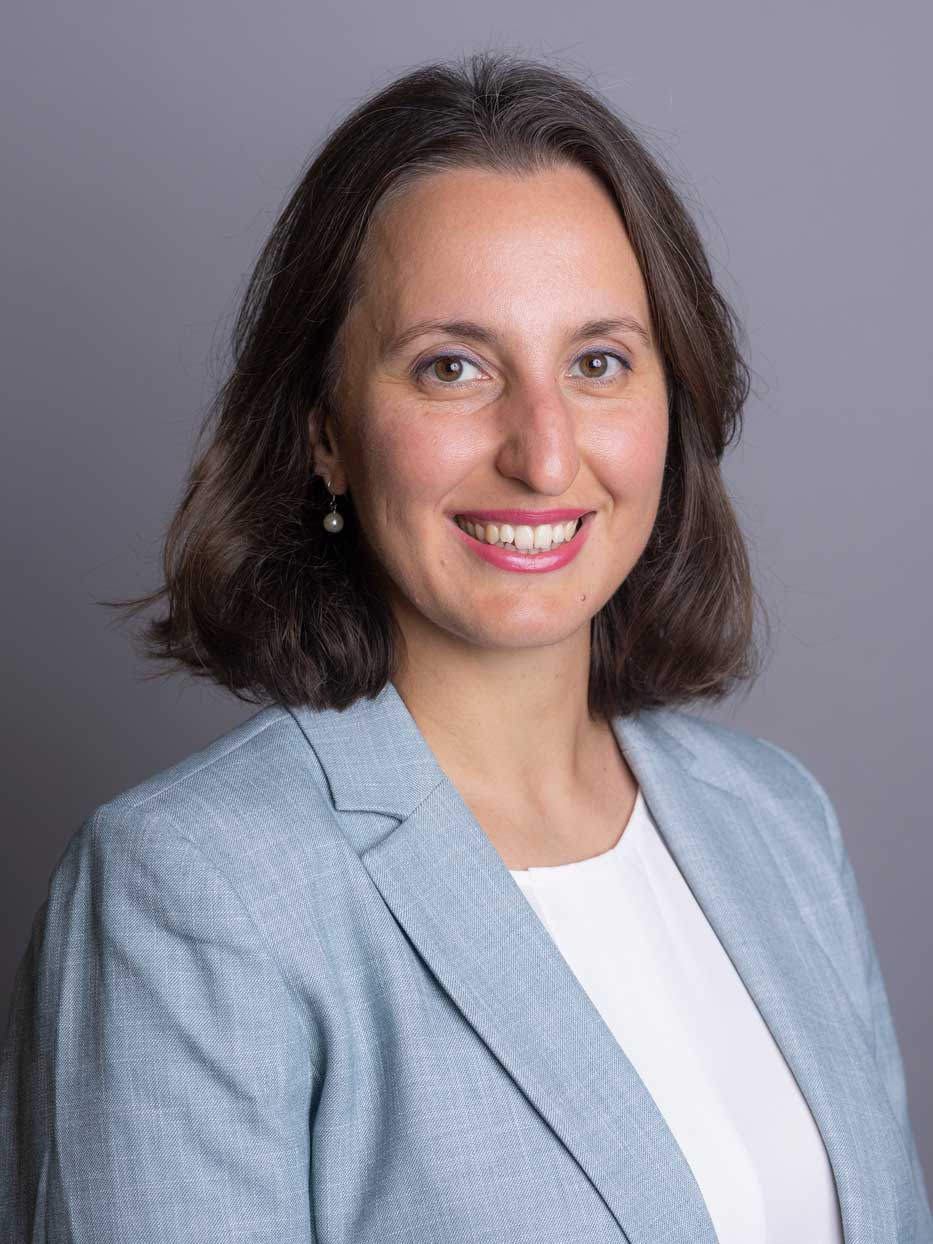
Liudong Xing is a Professor in the Department of Electrical and Computer Engineering at the University of Massachusetts Dartmouth, and Director of Research for the College of Engineering. Her research focuses on reliability modeling, analysis, and optimization of complex systems and networks, including IoT systems, cybersecurity, and fault-tolerant computing. She holds a PhD in Electrical Engineering from the University of Virginia (2002) and a BE in Computer Science from Zhengzhou University (1996). Dr. Xing teaches courses on Fault-Tolerant Computing, Master's Thesis Guidance, and Doctoral Dissertation Research. Her work has been recognized through awards such as the IEEE Region 1 Outstanding Teaching Award (2015), the ChangJiang Scholar Award (2015), and the 2018 Premium Award for Best Paper in IET Wireless Sensor Systems. She has authored influential books like Reliability and Resilience in the Internet of Things (Elsevier, 2024) and holds leadership roles in IEEE and academic editorial boards. Her research interests span system reliability engineering, probabilistic risk assessment, and decision diagrams, with recent projects funded by NSF grants (e.g., $420K for IoT cascading failure research). She advises graduate students in reliability theory and cybersecurity, and her work emphasizes practical applications in smart manufacturing, healthcare, and Industry 4.0 systems.
Charalampos (Haris) Psillakis is an Assistant Professor at the Division of Signals, Control, and Robotics within the School of Electrical and Computer Engineering at the National Technical University of Athens (NTUA). He holds a Ph.D. and Diploma in Electrical & Computer Engineering from the University of Patras. Previously, he served as an Adjunct Lecturer at multiple institutions and worked at Hellenic Electricity Distribution Network Operator (HEDNO) S.A. His research focuses on adaptive control, nonlinear control, robotics, multi-agent systems, power systems, and distributed control. Education: Ph.D., Electrical & Computer Engineering, University of Patras, 2006 Diploma in Electrical Engineering, University of Patras, 2000 Research Interests: Adaptive Control Nonlinear Control Intelligent Control Robotics and Automation Power Systems Control Multi-Agent Systems Stochastic Systems Uncalibrated Visual Servoing Publications: His work emphasizes distributed control algorithms for multi-agent systems, nonlinear control methodologies, and applications in robotics and power systems. Recent trends include consensus protocols under communication delays, adaptive neural network control, and robustness in dynamic network topologies. Teaching: He teaches courses on automatic control, nonlinear control systems, and advanced control methods at both undergraduate and graduate levels. Labs/Teams: His research is associated with the Signals, Control, and Robotics division at NTUA, focusing on robotics, power systems, and distributed control systems.

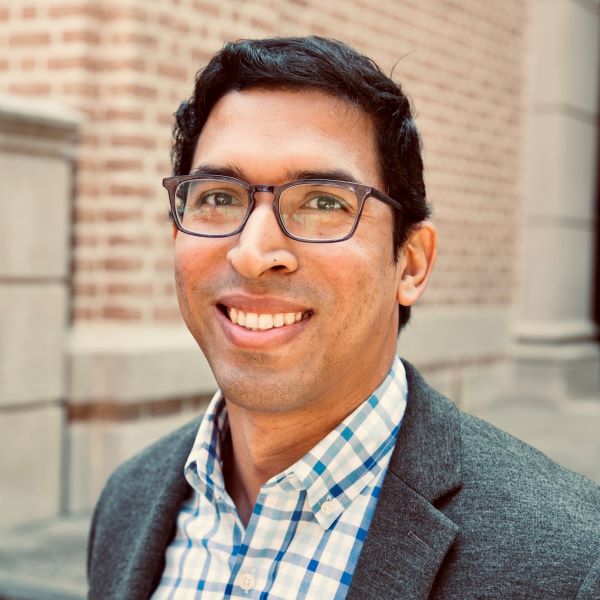

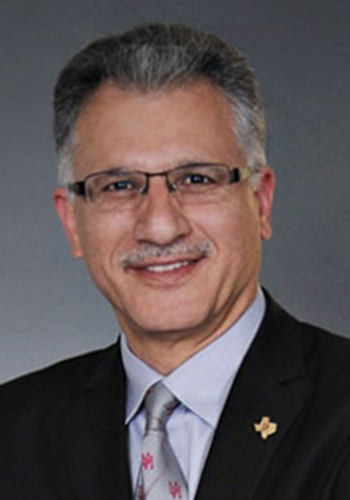
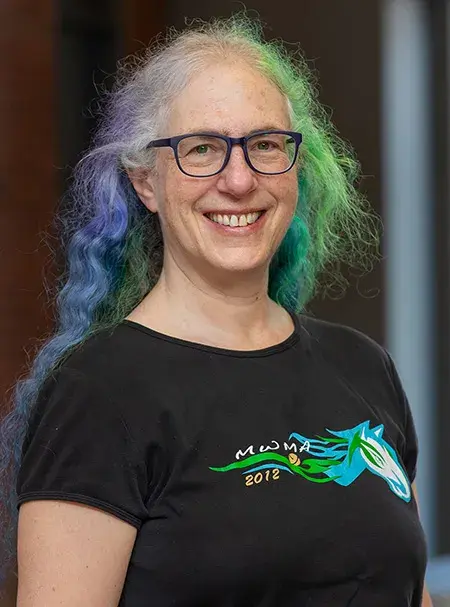
/prod01/production-cdn-pxl/media/umassdartmouth/profiles/engineering/electrical-amp-computer/231012-LIUDONG-XING-02.jpg)