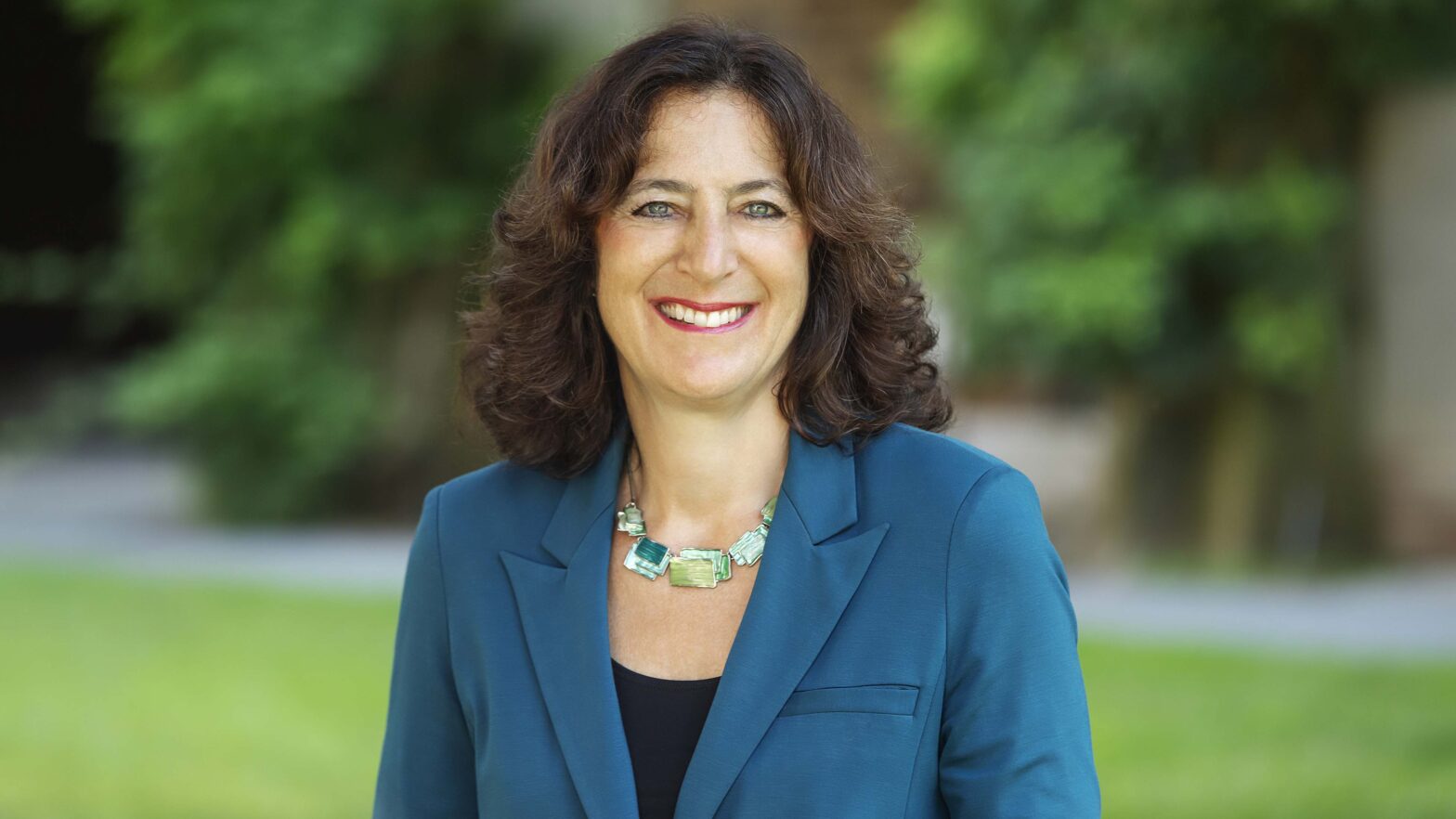
Andrea Goldsmith is the Dean of the School of Engineering and Applied Science and the Arthur LeGrand Doty Professor of Electrical and Computer Engineering at Princeton University. Previously, she held the Stephen Harris Professorship at Stanford University and remains Harris Professor Emerita there. Her research focuses on information theory, communication theory, signal processing, and their applications to wireless communications, interconnected systems, and neuroscience. She founded Plume WiFi and Quantenna, Inc., and serves on the boards of Medtronic and Crown Castle Inc. Education: B.S., M.S., and Ph.D. in Electrical Engineering, University of California, Berkeley (1986–1994) Research Interests: Her work bridges theoretical foundations with practical applications in wireless systems, including MIMO communications, cognitive radio, and the integration of machine learning in communication protocols. She also explores the intersection of wireless technology with biomedical systems and neuroscience, emphasizing innovations like smart buildings and in-body networks. Key Contributions: Authored seminal textbooks, including Wireless Communications and MIMO Wireless Communications . Inventor on 29 patents, with significant industry impact through startups. Recipient of prestigious awards such as the IEEE Sumner Award, ACM Athena Lecturer Award, and Marconi Prize. Labs & Leadership: Leads the Wireless Systems Lab at Princeton, advancing cutting-edge wireless technologies. Chair of the IEEE Board of Directors Committee on Diversity, Inclusion, and Ethics.
Boris Murmann is Professor at Stanford University, specializing in integrated circuit design, mixed-signal computing, and energy-efficient AI hardware. His research advances neural interface technologies, analog design automation, and tinyML systems. Recent work develops ultra-low-power neural recording ICs for brain-computer interfaces, RRAM-based memory systems, and open-source semiconductor design frameworks. Publications demonstrate innovations in compressive sensing for neural data, hardware-algorithm co-design, and reinforcement learning for analog circuit synthesis. Significant contributions include Medusa (TinyML processor), EMBER (RRAM macro), and methodologies for coarsely-quantized computer vision and analog design automation.
Dr. Joseph Dumpler is a Lecturer at the Department of Health Sciences and Technology at ETH Zürich, specializing in Sustainable Food Processing. He holds a PhD in Dairy Science and Technology from the Technical University of Munich, Weihenstephan, with a focus on UHT treatment of concentrated milk. His work emphasizes advancing food processing technologies, particularly in protein refinement, non-thermal methods, and membrane filtration. Educations: PhD in Dairy Science and Technology, Technical University of Munich, Weihenstephan (2017) MSc Food Engineering, Technical University of Munich, Weihenstephan His research interests include Natural Deep Eutectic Solvents (NADES) for plant protein extraction, microwave vacuum drying of dairy products, and membrane filtration optimization for microalgae and dairy systems. He has pioneered methods to refine rapeseed and pea proteins while minimizing antinutrients, and his work on microfiltration of milk products addresses emerging microbial risks. Key contributions span kinetic modeling of heat-induced protein aggregation, sustainable food processing , and non-thermal concentration techniques . His articles reflect a focus on bridging lab-scale innovations with industrial applications. Awards: J.T.M. Wouters Young Scientist Award Julius Maggi Research Award (2018) Best PhD Thesis Award from the Association of Dairy, Food and Biotechnologists (Weihenstephan) Dr. Dumpler collaborates with industry partners to translate research into scalable processes, such as NADES-based protein extraction and microwave drying systems. His current role at ETH Zürich’s Sustainable Food Processing Lab (Prof. Mathys) focuses on plant-based meat analogs and novel protein refining concepts .
David A. Muller serves as the Samuel B. Eckert Professor of Engineering in the School of Applied and Engineering Physics at Cornell University and co-directs the Kavli Institute at Cornell for Nanoscale Science. His research group focuses on developing quantitative electron microscopy methods to understand materials properties at the atomic scale, with particular emphasis on sustainable energy applications and quantum materials. Muller's laboratory utilizes some of the world's highest resolution electron microscopes housed in specially designed, environmentally isolated rooms. Muller received his undergraduate education at the University of Sydney and earned his Ph.D. in Physics from Cornell University in 1996. Between 1997 and 2003, he was a member of the technical staff at Bell Laboratories, where he applied his expertise in imaging single atoms and atomic-scale spectroscopy to determine the physical limits of transistor miniaturization. In 2003, he returned to Cornell as a faculty member, where he has since established himself as a leader in advanced electron microscopy techniques. Muller's research spans multiple frontiers in materials science, with particular focus on understanding how electronic-structure changes at the atomic scale control macroscopic behavior in diverse systems like turbine blades, fuel cells, and transistors. His current work emphasizes the physics of renewable energy materials, atomic-scale control of materials to create electronic phases that cannot exist in bulk, and developing hardware and algorithms for 'big data' acquisition from high-bandwidth pixelated electron microscope detectors. His group's work bridges theoretical physics and experimental techniques, requiring researchers who can think in both real and reciprocal space while considering both fundamental principles and practical applications. Analysis of Muller's recent publications reveals a strong trend toward advancing electron ptychography and 4D-STEM techniques for atomic-scale imaging. His group has pioneered methods for 3D atomic-scale metrology, strain mapping, and imaging of radiation-sensitive materials. The research spans applications from semiconductor technology to quantum materials and energy storage systems, demonstrating the versatility of his microscopy approaches across multiple scientific domains. Top 100 Young Innovator by Tech Review Magazine (2003) Burton Medal from Microscopy Society of America (2006) Ernst Ruska Prize of German Society for Electron Microscopy (2021) John Cowley Medal from International Federation of Societies for Microscopy (2023) Fellow of American Physical Society Fellow of American Association for the Advancement of Science Fellow of Microscopy Society of America Muller has mentored an extensive group of students and postdocs who have gone on to successful careers in academia and industry. His former students hold faculty positions at institutions including Rice University, University of Southern California, Seoul National University, Colorado School of Mines, and the University of Michigan, among others. His research has been supported by substantial grants, including a $22.5M NSF grant that accelerates materials discovery. The Muller lab maintains close collaborations with the Kavli Institute at Cornell and PARADIM (Platform for the Accelerated Realization, Analysis, and Discovery of Interface Materials). The Muller lab operates at the forefront of electron microscopy, housing specialized instrumentation including high-resolution transmission electron microscopes in environmentally isolated rooms. The group collaborates extensively with other research teams at Cornell and worldwide, focusing on understanding materials atom by atom. Current research directions include applying machine learning to electron microscopy data analysis, developing cryogenic techniques for studying low-melting-point materials, and exploring quantum phenomena in engineered materials systems.
Erhan Kutanoglu is an Associate Professor in the Operations Research and Industrial Engineering Graduate Program at The University of Texas at Austin's Cockrell School of Engineering. He joined the faculty in 2002 and received a National Science Foundation Early Career Development Award that year. His research focuses on integrating predictive models with stochastic optimization to address challenges in disaster resilience, humanitarian logistics, and semiconductor manufacturing. Key areas include hurricane mitigation, power grid resilience, and supply chain optimization. Education: PhD in Industrial Engineering from Lehigh University (1999). Research Interests: Applied operations research for manufacturing/service logistics, disaster resilience decision-making, semiconductor cycle time optimization, and inventory modeling. Recent work emphasizes hurricane evacuation planning, flood mitigation for critical infrastructure, and equity considerations in grid resilience. Publications: Over 50 peer-reviewed articles in journals like IEEE Transactions, European Journal of Operational Research, and Annals of Operations Research. Notable work includes models for power grid resilience, patient evacuation strategies, and semiconductor manufacturing efficiency. Awards: NSF CAREER Award (2002), recognized for contributions to service logistics optimization and stochastic modeling. Advising & Grants: Advised graduate students on projects involving hurricane preparedness and semiconductor scheduling. Active in collaborative research with industry partners to streamline manufacturing processes and enhance disaster response systems. Labs/Teams: Engaged with the Cockrell School's infrastructure resilience research groups and interdisciplinary teams addressing climate adaptation challenges.
John Shaw is the Harry C. Dudley Professor of Structural and Economic Geology and a Professor of Environmental Science and Engineering at Harvard University's School of Engineering and Applied Sciences. He also serves as Vice Provost for Research at Harvard, overseeing institutional research strategy and initiatives. His primary research focuses on structural geology, geophysics, and earthquake hazards, particularly in active fault systems, mountain belt tectonics, and subsurface energy development. Prof. Shaw leads the Structural Geology & Earth Resources Program, an industry-academic consortium that integrates geophysical data (3D seismic surveys, remote sensing) with advanced numerical modeling to address geological and environmental challenges. Education and professional experience: Joined Harvard Faculty in 1997. His research portfolio includes collaborations with the Southern California Earthquake Center (SCEC) and the development of critical infrastructure like the SCEC Unified Community Velocity Model (UCVM). His work emphasizes practical applications such as fault stability assessments and carbon sequestration impact studies. Research interests span: 1) active fault characterization for seismic hazard mitigation, 2) tectonic evolution of mountain belts, 3) numerical modeling of fault dynamics, and 4) geomechanical impacts of subsurface energy projects. His structural modeling innovations have advanced understanding of thrust fault systems and fault-bend folding mechanisms. Professional contributions include leadership roles in interdisciplinary consortia and development of open-source geophysical software frameworks. Administrative duties at Harvard's Office of the Vice Provost for Research (VPR) focus on advancing institutional research capacity and fostering cross-disciplinary collaborations.
Raisul Islam is an Assistant Professor of Materials Engineering at Purdue University, with a courtesy appointment in Electrical and Computer Engineering. His research focuses on advanced materials for energy technologies, semiconductor devices, and nanoscale memory systems. He holds affiliations with the College of Engineering and is actively involved in interdisciplinary collaborations. His work emphasizes the development of novel materials and device architectures for applications in solar energy, resistive memory, and neuromorphic computing. Key areas include photovoltaic cell optimization, phase-change memory innovation, and the integration of nanotechnology with electronics. Notable research trends from his publications (2020–2023) highlight advancements in tandem solar cell efficiency, thermal management in resistive memory, and multilevel switching mechanisms in ferroelectric tunnel junctions. His work bridges fundamental materials science with practical device engineering, addressing both performance and scalability challenges. Dr. Islam’s lab focuses on experimental and computational materials characterization, with a focus on thin films, nanoscale interfaces, and energy-efficient electronics. His contributions span academic journals and industry collaborations, targeting next-generation energy and computing technologies.
Virginia Davis is the Dr. Daniel F. and Josephine Breeden Professor in the Department of Chemical Engineering at Auburn University's College of Engineering. She holds a Ph.D. in Chemical and Biomolecular Engineering from Rice University, and M.S. and B.S. degrees in Chemical Engineering from Tulane University. Research Focus: Self-assembly of nanomaterials, rheology, lyotropic liquid crystals, additive manufacturing, polymers, nanocomposites, and biosensors Key Projects: USDA-funded agricultural outreach, NSF grant for MXene dispersion studies, Alabama STEM Council member Her recent publications explore cellulose nanocrystals, MXene 3D printing, and sustainable polymer recycling. Davis has received multiple honors including the Breeden Professorship, AIChE Fellowship, and Auburn University Faculty Awards for research and mentorship. Research Trends: Dominated by bio-based nanomaterials (cellulose nanocrystals, MXenes), with applications in additive manufacturing, environmental remediation (PFAS adsorption), biosensors (carbofuran detection, cancer biomarkers), and agricultural delivery systems. Scientific Awards Auburn University Faculty Awards (2023, 2025) AIChE Fellow (2023) Dr. Daniel F. and Josephine Breeden Professorship Davis leads outreach initiatives like the Tomorrow’s Community Innovators camp and collaborates with interdisciplinary teams on plastic recycling innovations. Her work emphasizes both fundamental material science and practical applications addressing environmental and agricultural challenges.
Dr. Sajid Alavi is a Professor in the Department of Grain Science and Industry at Kansas State University. He joined the faculty in 2002 after earning his Ph.D. in Food Science/Food Engineering from Cornell University (2002), M.S. in Agricultural and Biological Engineering from Penn State (1997), and B.S. in Agricultural Engineering from IIT (1995). His research focuses on extrusion processing in food, pet food, and feed applications, with expertise in rheology, food microstructure imaging, and process sustainability. He leads global projects in Africa, Brazil, India, and beyond, emphasizing sustainable food technologies and AI-driven processing innovations. Dr. Alavi is a recipient of the 2010 Young Research Scientist Award from the Cereals & Grains Association. He teaches GRSC 620 (Intro to Extrusion Processing) and GRSC 820 (Advanced Extrusion Processing), and has trained over 1,000 industry leaders through his renowned 'Extrusion Processing: Technology and Commercialization' short course. His work bridges food science and engineering, addressing challenges in plant-based meat analogs, nutrient bioavailability, and food aid product development. Key facilities associated with his work include the BIVAP Feed Quality Assurance Lab and Hal Ross Flour Mill. His research spans sensory analysis of meat alternatives, fiber utilization in pet food, and sustainability assessments of novel crops like intermediate wheatgrass. Recent studies explore insect protein in pet food, AI-driven extrusion optimization, and iron bioavailability in fortified foods. Dr. Alavi’s contributions span academic, industrial, and global food security domains, reflecting a commitment to innovative, scalable food solutions.
Grégoire DANOY is a Researcher at the University of Luxembourg's Interdisciplinary Centre for Security, Reliability, and Trust (SnT) and Head of the Parallel Computing and Optimization Group (PCOG). He specializes in artificial intelligence, with a focus on optimization algorithms, machine learning, and swarm intelligence. His work addresses challenges in cloud computing, high-performance computing, smart mobility, and unmanned autonomous systems like drone swarms. He has authored over 150 publications, including articles in IEEE Transactions and conferences like NeurIPS and GECCO. He currently leads major projects such as UltraBO (€1.019M), ADHOC (€1.291M), and SERENITY (€1.228M), collaborating with institutions in France and Poland. Education: PhD in Computer Science (2008) from École Nationale Supérieure des Mines de Saint-Étienne, Master’s in Computer Science (2004), and Industrial Engineering Degree (2003) from Luxembourg University of Applied Sciences. Research Interests: Developing novel AI techniques for solving large-scale optimization problems, with applications in distributed systems, autonomous robotics, and federated learning. He emphasizes scalable solutions for combinatorial challenges using parallel computing and swarm intelligence. Grants & Projects: Principal Investigator for EU-funded initiatives like ADARS (2021–2024) and FNR PoC/SIMMS (2019–2021). His work bridges academia and industry, with technology transfer projects in autonomous robot swarms. Awards: Recognitions include the Best Student Paper Nomination (2022), IEEE CybConf Best Paper Award (2017), and ACM GECCO nominations (2016, 2009). He serves on the editorial board of Engineering Applications of Artificial Intelligence (EAAI). Labs & Teams: Leads the Parallel Computing and Optimization Group (PCOG), focusing on interdisciplinary research in AI and distributed systems. He also contributes to outreach programs like FNR's Researchers at School.
WANG Qinghai is an Associate Professor (Educator Track) at the National University of Singapore (NUS), specializing in Non-Hermitian PT-symmetric quantum mechanics, quantum field theory, and mathematical physics. His research explores the stability of non-Hermitian systems through periodic driving, time-dependent PT-symmetric frameworks, and applications of 2×2 matrices in quantum dynamics. Recent publications focus on advanced topics in quantum mechanics, thermodynamics, and cosmological instantons, reflecting his interdisciplinary expertise. While no formal student lists or scientific awards are documented in the provided texts, his work bridges theoretical physics and applied mathematics.
Dr. Mahendra Bhandari is an Assistant Professor at Texas A&M AgriLife Research and Extension Center in Corpus Christi, affiliated with the Texas A&M College of Agriculture and Life Sciences. He holds a B.S. in Agriculture from Tribhuvan University (2011), an M.S. in Plant, Soil and Environmental Science from West Texas A&M University (2016), and a Ph.D. in Agronomy from Texas A&M University (2020). Affiliations: Texas A&M AgriLife Research, Texas A&M College of Agriculture and Life Sciences Roles: Lead researcher in Digital Agriculture, UAS-based phenotyping, and precision agriculture His research focuses on integrating remote sensing (UAS, satellite, ground sensors), big data analytics, and machine learning to improve crop management and breeding. Key areas include high-throughput phenotyping for cotton, corn, and sorghum; UAS data integration for crop yield prediction; and digital twin frameworks for in-season management. Collaborators include Dr. Juan Landivar-Bowles and Dr. Jinha Jung. Publications emphasize UAS applications in crop monitoring, yield estimation, and disease detection. His work bridges agronomic principles with emerging technologies to enhance agricultural resilience. Key Projects: UAS-based HTP system development Satellite-UAV data fusion for precision irrigation Mechanistic models for cotton yield forecasting Labs/Teams: Leads the Digital Agriculture research team at Texas A&M AgriLife, focusing on UAS innovation and AI-driven agricultural solutions.
Matteo Bolner is a Post-Doctoral Research Fellow at the University of Bologna's Department of Agricultural and Food Sciences, specializing in livestock genomics and metabolomics. He holds a PhD in Agricultural and Food Sciences (defended March 2025) and an International Master in Bioinformatics from the University of Bologna. His research integrates genomic and metabolomic data to improve livestock sustainability, particularly in pig production systems. Key focuses include identifying metabolic pathways influencing production traits, analyzing pig viromes for disease outbreaks, and leveraging big data for One Health applications. His educational background includes a Biological Sciences degree (2018) and a bioinformatics master's (2021). He interned at CINECA's SCAI department, focusing on HPC software containerization. Current affiliations include membership in the Animal and Food Genomics group, where he explores genomic solutions for breed conservation and sustainable production. Research trends in his articles emphasize multi-omics integration to understand pig metabolism, stress responses, and breed-specific adaptations. He also applies genomics to authenticate food products and enhance conservation strategies for endangered livestock breeds like the Mora Romagnola pig. His work bridges animal science, computational biology, and agricultural sustainability. Notable contributions include developing genomic tools for honey bee population analysis and creating a catalog of mitochondrial insertions in pig genomes. Future directions involve advancing metabolomics-based precision livestock farming and applying big data analytics to livestock One Health challenges.
Professor Vishnu Pareek is the John Curtin Distinguished Professor at Curtin University, leading the Western Australian School of Mines (WASM) within the Faculty of Science and Engineering. He has held academic roles including Dean of Engineering, Head of School, and various professorships since 2002. His research focuses on multiphase flow modeling, computational fluid dynamics, and reactor engineering, with applications in energy and chemical processes. He holds a BE (Hons) from MNIT, MTech from IIT Delhi, and a PhD from UNSW. Key research interests include LNG process modeling, erosion modeling, and granular flow dynamics. He has authored over 200 peer-reviewed publications, with recent work emphasizing structured packing design, biomass gasification, and additive manufacturing for process intensification. Notable projects include CFD-ANN hybrid models for fluidized beds and experimental studies on 3D-printed structured packings. His expertise spans industrial collaborations in LNG safety, fluid catalytic cracking, and biofuel production. Teaching areas include chemical engineering fundamentals and process systems engineering. He advises on energy policy and leads research teams in multiphase flow and reactor design.
Xingwang Li is an active researcher affiliated with the School of Physics and Electronic Information Engineering at Henan Polytechnic University in Jiaozuo, China. He obtained his PhD from Beijing University of Posts and Telecommunications in 2015, specializing in networking and switching technology. His research spans wireless communications, IoT systems, reconfigurable intelligent surfaces (RIS), and physical-layer security, with a strong focus on 6G-enabling technologies. Dr. Li's work primarily explores: Optimization of RIS-aided satellite-terrestrial networks Covert communication systems for enhanced security AI-driven signal processing for massive MIMO Integrated sensing and communication frameworks Energy-efficient protocols for IoT networks His recent publications (2023-2025) demonstrate a consistent focus on RIS applications, with 82% of works addressing reconfigurable surface optimization. Key trends include the integration of deep learning with communication systems (notably reinforcement learning for resource allocation), advancement of THz and near-field technologies for 6G, and novel approaches to physical-layer security. The research shows increasing emphasis on practical implementations, including UAV networks and autonomous vehicle communications.