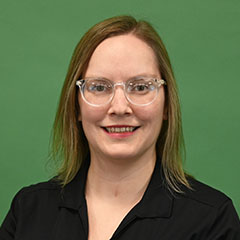
Sundas Iftikhar is a Teaching Professor at the School of Electronic Engineering and Computer Science, Queen Mary University of London. She specializes in software engineering education and research focused on artificial intelligence, fog/cloud computing, and task scheduling optimization. Her research spans AI applications in distributed systems , including Energy-efficient computing Quality of Service (QoS) optimization Deep learning for healthcare Cloud-fog hybrid architectures Recent publications analyze AI-based fog/edge computing trends , with emphasis on systematic reviews, taxonomy development, and sustainability. She also explores machine learning for serverless computing and smart home applications through fog infrastructure. Teaching duties include the Software Engineering Project module, where students work in teams to solve real-world problems.
Professor Sankar Bhattacharya is a distinguished academic at Monash University's Department of Chemical & Biological Engineering within the Faculty of Engineering. His career spans industry roles in India, Thailand, Australia, and France, followed by an academic focus on advanced coal and biomass utilization, gasification, biofuels, and catalysis. He leads a research group of 16 PhD students and two research fellows, having supervised 12 PhD completions. His work contributes to UN SDGs related to affordable and clean energy, industry innovation, and climate action. Research focuses on gasification of coal/biomass/algae, liquid fuels from brown coal, and CO₂ utilization. He advises Japan's METI on clean coal and the IEA's Cleaner Fossil Fuels program. Awards include Fellow of the Australian Institute of Energy and membership in the American Chemical Society. Key projects include leadership in ARC Research Hubs for carbon waste valorization and battery recycling. His 240+ publications span catalysis, energy systems, and waste-to-value technologies. Research highlights include catalyst development for hydrogen production, critical metal recovery from coal ash, and ammonia fuel cell innovations. Teaching commitments include courses on energy-environmental systems and biorefinery processes. Collaborations span global institutions, emphasizing sustainable energy solutions and circular economies.
Wout Weijtjens is a Research Fellow at Vrije Universiteit Brussel, affiliated with the Acoustics & Vibration Research Group in Applied Mechanics. His research focuses on structural health monitoring (SHM) of offshore wind turbines, fatigue analysis, and vibration-based damage detection using advanced signal processing and machine learning techniques. Current projects include FIRMEST (fatigue assessment of offshore wind turbine substructures) and FOOS (Forced Oscillations in turbines). His research interests span: Operational modal analysis for offshore structures Machine learning applications in SHM Fatigue life prediction under environmental variability Sensor networks for infrastructure monitoring Wind turbine dynamics under harsh conditions Recent publications demonstrate a consistent focus on developing predictive maintenance frameworks through multivariate sensor data analysis, uncertainty quantification in SHM systems, and validation of computational models against full-scale field measurements. Article trends emphasize machine learning integration with physical models for improved fatigue life assessment. Awards and recognitions include: Best Paper Award (2nd place, 2022) Poster Award (2017) Solvay Award (2015) As principal investigator on multiple grants including VLADBC7 and VLADBC9 projects, he supervises PhD candidates in vibration-based SHM and leads experimental validation at OWI-Lab's Large Climate Chamber. His team develops IoT monitoring solutions for civil infrastructure through the SMART TOWERS initiative.
SHEN Lei is a researcher at the National University of Singapore (NUS), affiliated with the Department of Physics. With a PhD in Physics from NUS, he specializes in Multiscale Modeling and Simulation and Materials Informatics , leveraging machine learning and computational methods for advanced materials discovery. Research Focus: Density functional theory, molecular dynamics, finite element analysis, and data-driven design of materials. Teaching: Modules include Mechanics and Waves (PC1433), Applied Quantum Mechanics (PC2130B), and Mechanical Properties of Materials (ESP2109). His work spans spintronics, ferroelectricity, and energy storage materials, with recent publications on interatomic potentials, sliding heterostructures, and battery anodes. He has received the Teaching Commendation Award and declined the Lee Kuan Yew Postdoctoral Fellowship . Notable Trends: Recent articles emphasize machine learning in materials science, van der Waals heterostructures, quantum transport, and medical image analysis. Subfields include Rashba spin-orbit coupling, piezoelectric tensor modeling, and defect-informed neural networks. Scientific Awards: Teaching Commendation Award (AY15/16; AY16/17) Lee Kuan Yew Postdoctoral Fellowship (2014) (declined)
Dr. Hossein Sayadi is an Assistant Professor and Associate Chair in the Department of Computer Engineering and Computer Science at California State University, Long Beach (CSULB). He holds a Ph.D. in Electrical and Computer Engineering from George Mason University, an M.S. from Sharif University of Technology, and a B.S. from K. N. Toosi University of Technology. His research focuses on hardware security , AI/ML applications , cybersecurity , and computer architecture . He leads the iSEC Lab , exploring topics like hardware trust, malware detection, and edge computing security. His work is supported by NSF grants and CSU awards, including the 2024-25 CSU STEM-NET Faculty Fellowship. Education: Ph.D., Electrical and Computer Engineering (George Mason University) M.S., Computer Engineering (Sharif University of Technology) B.S., Computer Engineering (K. N. Toosi University of Technology) His publications span conferences like IEEE ISQED, ISCAS, and DATE. He serves as Technical Program Committee Chair for IEEE ISQED (2024–2025). Awards include NSF ERI grants ($195,305) and the 2023 Multidisciplinary Research Grant. Research opportunities are available for students in machine learning , hardware security , and cybersecurity education .
Dr. Khandaker Mamun Ahmed is an Assistant Professor at The Beacom College of Computer & Cyber Sciences, Dakota State University. He teaches undergraduate and graduate courses in artificial intelligence, algorithms, and data structures. He holds a Ph.D. in Computer Science from Florida International University (2024), an M.Sc. from the same institution (2023), and a B.Sc. in Software Engineering from the University of Dhaka (2016). His research focuses on computer vision, federated learning, cybersecurity, explainable AI, vision-language models, and optimization algorithms. He has contributed to peer-reviewed publications and conference presentations, with notable work in federated learning for IoT, anomaly detection in videos, and AI applications in healthcare and agriculture. Recent articles highlight advancements in federated learning frameworks, AI-driven healthcare systems, and real-time object detection using neural networks. His work also addresses cybersecurity challenges in DevOps pipelines and generative AI for educational datasets. Recipient of the 'Best graduate student in research award' (2022), Dr. Ahmed advises on AI ethics and mentors students through academic-industry collaborations. His research bridges theoretical computer science with practical applications in agriculture, healthcare, and infrastructure monitoring.
Prof. Hendro Wicaksono is a Professor of Data-Driven Industrial Systems at the School of Business, Social & Decision Sciences, Constructor University Bremen gGmbH. His expertise lies in applying AI and data-driven methods to enhance decision-making in complex industrial systems. He holds a Dr.-Ing. from Karlsruhe Institute of Technology (Germany) and M.Sc./B.Sc. degrees from German and Indonesian institutions. Research Interests : Focuses on causal AI, explainable AI, digital twins, sustainable industrial systems, and smart cities. His work integrates machine learning with domain-specific challenges in supply chains and energy management. Projects : Led over 10 funded projects including Delfine (accelerating energy transition), Talenta (digital asset management), and xAgri (agri-food supply chain analytics). Collaborates with global partners like Stadtwerke Trier and JetBrains. Teaching : Courses include Data Management in Industry 4.0, Production Planning, and Smart Cities. Recently on sabbatical in Spring 2023. Students : Supervises 20+ PhD/Master students researching topics like causal ML in software projects, EV adoption modeling, and blockchain logistics. Affiliations : Visiting Professor at University of Exeter, Adjunct Professor at Sebelas Maret/Airlangga Universities (Indonesia), and Academic Leader at Bandung Institute of Technology.
Robert Peharz is an Assistant Professor at Graz University of Technology, where he leads research at the Institute of Machine Learning and Neural Computation. His work focuses on probabilistic machine learning, with particular emphasis on tractable probabilistic models, causality, and neurosymbolic AI. Education and Career PhD from TU Graz (Austria) in 2015 Postdoc at Medical University of Graz Postdoc and Marie-Curie Individual Fellow at University of Cambridge (2017-2019) Assistant Professor at Eindhoven University of Technology (2019-2021) Current: Assistant Professor at Graz University of Technology Research Interests Peharz's research spans multiple areas of artificial intelligence with a focus on making probabilistic reasoning both theoretically sound and practically efficient. His work addresses fundamental challenges in tractable probabilistic inference and learning, probabilistic circuits as a unified framework for deep generative models, Bayesian causal inference, and neurosymbolic AI combining sub-symbolic and symbolic approaches. His research has applications in cybersecurity, healthcare, and energy systems. Research Projects VENTUS (2024-present): Physics-informed, probabilistic and causal machine learning for wind energy systems NEO DNA (2023-present): DNA-based data storage systems using computer vision and probabilistic ML VanillaFlow (2023-present): AI-guided development of novel vanillin-based molecules for redox flow batteries Bilateral AI : Cluster of Excellence focused on Broad AI combining sub-symbolic and symbolic AI approaches Awards and Recognition Finalist for TUG's Excellent Teaching Award (2023) for all 3 of his courses Marie-Curie Individual Fellow at University of Cambridge Academic Service Peharz is actively involved in the academic community through conference organization and reviewing: Area Chair: UAI (2022), ECML/PKDD (2022) Senior Committee Member: UAI (2021), IJCAI (2019, 2020) Reviewer for major conferences including ICML, NeurIPS, AAAI, IJCAI-ECAI Teaching and Mentorship Peharz supervises multiple PhD students working on diverse projects at the intersection of machine learning, causality, and neurosymbolic AI. His current advisees include Sepideh Adamiat, Irina Dobrianski, Johannes Exenberger, Giacomo Di Gobbi, Tim d'Hondt, Christian Toth, and Thomas Wedenig. Previous students include Alvaro Correia, Martin Trapp, and David Montalvan.
Mehdi Sadi is an Assistant Professor of Electrical and Computer Engineering at Auburn University's College of Engineering. He holds a Ph.D. from the University of Florida, an M.S. from the University of California-Riverside, and a B.S. from Bangladesh University of Engineering and Technology. His research focuses on secure and reliable system-on-chip design, AI/ML-driven VLSI CAD/EDA, neuromorphic hardware, and emerging post-CMOS computing technologies. Notable achievements include earning the NSF CAREER Award for chiplet-based design optimization and a $175k NSF grant for magnetic RAM research. His work integrates machine learning with hardware co-design to enhance AI accelerators' performance, energy efficiency, and security. Recent projects include adversarial attack mitigation on AI hardware and reliability analysis of neuromorphic systems. Dr. Sadi's contributions span chiplet architecture, memory systems (e.g., STT-MRAM/SOT-MRAM), and fault-tolerant computing. He actively publishes on topics like skyrmion logic gates and TRNG implementations using MRAM. His work bridges theoretical machine learning advancements with practical hardware implementations, addressing critical challenges in next-generation computing systems.
Professor Sai Gu is a distinguished academic and leader in Chemical Engineering, currently serving as Deputy Pro-Vice-Chancellor (East and South East Asia) at the University of Warwick. He holds a Professorship in Chemical Engineering and has held senior roles at institutions including the University of Surrey, Cranfield University, and Southampton. His expertise spans bioenergy, carbon capture, materials science, and digital transformation in industry. Prof Gu earned his PhD in Material Modelling from the University of Nottingham and has led over £100 million in EPSRC/EU-funded projects, pioneering innovations like Industry 6th Sense technologies and catalytic biomass conversion. Research interests include biomass fast pyrolysis, CO2 capture via novel solvents, thermal spray coatings, and AI-driven manufacturing. He established the Centre for Bioenergy and Resource Management and leads the EPSRC-funded DigitalMetal CDT to advance metals industry digitization. Prof Gu has published 200+ papers (20,000+ citations) and is a Fellow of the Royal Academy of Engineering. His work bridges academia and industry, fostering global collaborations in clean energy and sustainable technologies. Education: PhD in Material Modelling (University of Nottingham), Postdoc at University of Cambridge Awards: FREng (Royal Academy of Engineering) Key Projects: EPSRC CDTs in NetZero and Digital Metals, 'Stepping towards Industrial 6th Sense' Labs: Centre for Connected Plants of the Future (UoS), Centre for Bioenergy (Cranfield)
Dr. Shekhar Bhansali is the Alcatel-Lucent Professor and Chair of the Department of Electrical & Computer Engineering (ECE) at Florida International University (FIU) since 2011. He holds a BS in Metallurgical Engineering (1987), MS in Aircraft Production Engineering (1991), and PhD in Electrical Engineering (1997). His research focuses on bio sensing, nanotechnology, alternative energy, and oceanographic sensing. He leads the Bio-MEMS and Microsystems Lab, holds 36 U.S. patents, and has secured funding from NSF, industry partners, and national labs like Sandia and Los Alamos. Dr. Bhansali has grown the ECE department by launching programs like the online Master of Science in Network Security and the B.S. in Internet of Things (first in the U.S.). He co-directs FIU’s Bridge to the Doctorate program, fostering STEM diversity. Awards include the 2014 FIU Top Scholar Award and 2018 AAAS Fellowship. Education: PhD in Electrical Engineering, RMIT University (1997) MS in Aircraft Production Engineering, IIT Madras (1991) BS in Metallurgical Engineering, MREC, Jaipur (1987) Research Interests: Bio-sensing, nanotechnology, alternative energy, oceanographic sensors, and materials science. Key Achievements: 36 U.S. patents and 7 invention disclosures Co-authored 139 journal papers and 200+ conference papers Recruited 14 faculty members and expanded doctoral programs Partnership with Florida Power & Light for solar energy research His work bridges innovation and societal impact, with sensors for wound monitoring, environmental sensing, and energy efficiency. Recent studies include AI-driven sensor networks for precision agriculture and wearable devices for real-time health diagnostics. Awards & Recognition: 2018 AAAS Fellow 2014 FIU Top Scholar Award Multiple mentorship awards (2003–2011) Advising & Grants: Oversaw education of over 150 graduate students via NSF-IGERT and Sloan programs. Secured grants totaling millions for interdisciplinary research. Expanded FIU’s engineering programs and faculty size. Labs & Teams: Leads the Bio-MEMS Lab, advancing micro/nano sensors and lab-on-a-chip technologies. Collaborates with industry and national labs on sensor development and energy projects.
Dr. Mohamed Soliman is the William C. Miller Endowed Professor at the University of Houston’s Cullen College of Engineering, Department of Petroleum Engineering. He holds a Ph.D. in Petroleum Engineering from Stanford University, complemented by an M.S. and B.S. from Stanford and Cairo University respectively. His research focuses on hydraulic fracturing of unconventional reservoirs, waterless fracturing using shock waves, and advanced numerical simulation techniques. He has authored over 250 technical papers and holds 35 patents, with notable works on shale gas transport, dead oil viscosity modeling, and plasma stimulation technologies. Dr. Soliman is a Distinguished Member of the Society of Petroleum Engineers (SPE) and a Fellow of the National Academy of Inventors. He has received the Gulf Coast 2020 Distinguished Achievement Award for Petroleum Engineering Research. His work bridges theoretical models with practical applications, such as the development of machine learning tools for reservoir analysis and innovative methods for fracture closure detection using wavelet transforms. His teaching spans core petroleum engineering courses including PETR 1111 (Introduction to Petroleum Engineering), advanced production operations (PETR 6372), and well completion stimulation (PETR 5397). He actively mentors graduate students, with current advisees Ibrahim Eltaleb, M. Awad, and Fatmir Likframa. His research group collaborates on projects funded by industry and government agencies, focusing on topics like microwave-assisted heavy oil recovery and geothermal reservoir characterization. Dr. Soliman’s lab develops cutting-edge tools for analyzing fracturing pressure data and interwell connectivity through signal processing. Key collaborations involve experimental validation with institutions like the University of Houston’s Advanced Energy Research Laboratory. His recent work emphasizes sustainable energy solutions, including critiques of carbon capture limitations and innovative plasma-based stimulation techniques to enhance reservoir permeability without water use.
Colleen Bailey is an Assistant Professor in the Department of Electrical Engineering at the University of North Texas. Her research focuses on the intersection of machine learning, signal processing, and energy systems, with applications spanning biomedical imaging, environmental monitoring, and edge computing. Research Interests: Machine learning optimization for edge devices Entropy-based image compression techniques Attention mechanisms in vision transformers Urban air pollution prediction models Land surface temperature super-resolution Publication Trends: Recent works emphasize compact AI architectures (e.g., MHATT network, entropy bottleneck models) for efficient processing in resource-constrained scenarios. Applications include medical imaging (Chest X-ray analysis), environmental monitoring (air quality, Martian dust storms), and energy systems (household prediction, power quality classification). Contact: Email: Colleen.Bailey@unt.edu Office: Discovery Park B252 Phone: 940-891-6874
John Harrison Kurunathan is an Integrated PhD Researcher affiliated with the CISTER Research Centre at the University of Porto, Portugal. He holds a PhD in Electrical and Computer Engineering (2021), a Master's in Very Large-Scale Integration (2014), and a Bachelor's in Electronics and Communication (2012). Education: PhD (2021) - University of Porto, Portugal MSc (2014) - SSN College of Engineering, Anna University BSc (2012) - SRM University His research focuses on Wireless Sensor Networks (WSNs) , Cyber-Physical Systems (CPS) , and Automotive Networks , with an emphasis on Quality-of-Service (QoS) optimization, secure communication, and vehicular platooning. Notable projects include SafeCOP for safety-related CO-CPS and work on IEEE 802.15.4e DSME networks. Recent publications (2023-2025) span areas like Visible Light Communication , Vehicular Security , and Machine Learning in UAV Operations , reflecting his interdisciplinary work bridging embedded systems and transportation technologies. Scientific Awards: Best oral communication Award (in ex aequo) at DCE 2019 Reviewing Roles: Conference: ICCPS, EWSN, MSN, RTN Journal: IEEE ACCESS, IEEE Transactions on Vehicular Technology, ACM Sigbed Harrison is actively involved in workshops and conferences, including chairing roles at WIN-WIN-4S 2024 and technical demonstrations at WoWMoM 2023. His work appears in venues like IEEE Transactions on ITS, IEEE COMST, and PDP 2025.
Federica FERRAGUTI is an Associate Professor at the Department of Engineering Sciences and Methods, University of Modena and Reggio Emilia. Her research focuses on robotics, control systems, and automation, with a particular emphasis on collaborative robotics, surgical robotics, and industrial applications. She teaches courses such as Industrial and Collaborative Robotics, Automatic Controls, and Collaborative Robotics for Smart Industry. Her work integrates advanced control strategies, safety protocols, and human-robot interaction principles to enhance automation in both industrial and medical contexts. Research Interests: Federica’s research spans robotics control, human-robot collaboration, surgical robotics, and safety-critical systems. She develops novel algorithms for motion planning, trajectory generation, and real-time control, with applications in manufacturing and healthcare. Her recent work includes AI-driven augmented reality systems for surgery, energy-efficient safety frameworks, and intuitive robot-assisted welding solutions. Publications: Over 40 peer-reviewed articles in journals and conferences, including work on collaborative robotics safety, real-time surgical AR integration, and industrial automation. Key contributions include high-velocity walk-through programming for industrial robots and energy-based control architectures for shared autonomy. Labs/Teams: Active in the ARSControl research group, focusing on advanced robotics systems. Collaborates with industry partners on projects like MyWelder, an intuitive welding system for SMEs. Engages in EU-funded initiatives like the SARAS project for surgical teleoperation.