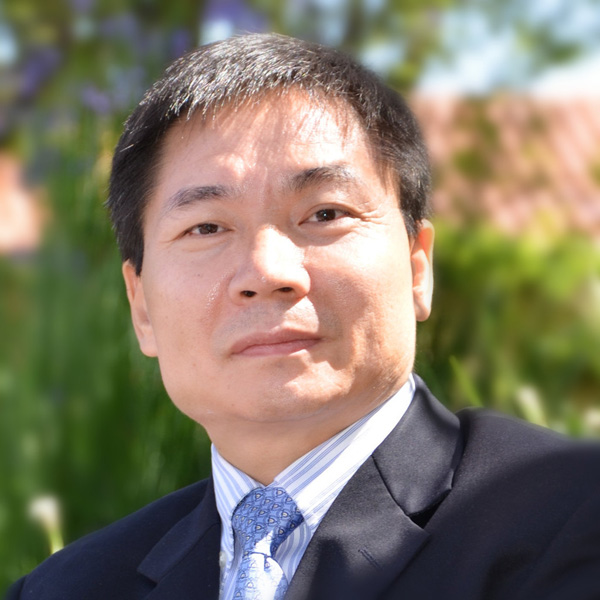
Dr. Li Baowen is Chair Professor at Southern University of Science and Technology (SUSTech) with joint appointments in the Department of Physics and Department of Materials Science and Engineering. A pioneer in phononics and thermal metamaterials, he previously held endowed professorships at University of Colorado Boulder and UC Berkeley. His research focuses on controlling heat transfer at nano scales, developing thermal metamaterials like thermal cloaks, and applying complex networks to physical systems. Dr. Li has published over 400 papers including 3 in Reviews of Modern Physics and 30 in Physical Review Letters, with more than 34,800 citations (H-index 98). He is recognized with the Brillouin Medal from the International Phononics Society and is a Fellow of the American Physical Society. He founded research centers including the China-EU Joint Lab for Nanophononics at Tongji University. His current research explores quantum phononics, machine learning applications in thermal materials, phonon lasers, and quantum sensing technologies.
Adam Jatowt is a Professor and Head of the Data Science group at the Department of Computer Science, University of Innsbruck. He also serves as Deputy Head of the Digital Science Center and Research Center for Digital Humanities. His academic career spans roles at Kyoto University (2010-2020), National Institute of Advanced Industrial Science and Technology (AIST), and visiting positions at Karlsruhe Institute of Technology, University of La Rochelle, and University of California Berkeley. Research interests focus on temporal aspects of NLP/IR, computational history, large language models, and future forecasting. He leads projects combining digital humanities with advanced AI techniques, including temporal validity assessment and hint generation systems. Recent publications (2025) emphasize LLM applications in temporal analysis, QA systems, and energy sector digitalization. His work has been recognized through awards like the Friedrich Wilhelm Bessel Research Award (2024) and top-cited paper distinction in Information Sciences. He actively organizes conferences like ECIR 2026 and Text2Story workshops. Key contributions include developing WikiHint dataset, PlausibleQA framework, and tools like Rankify. His research also addresses societal challenges through ESG rating prediction and medical LLM applications.
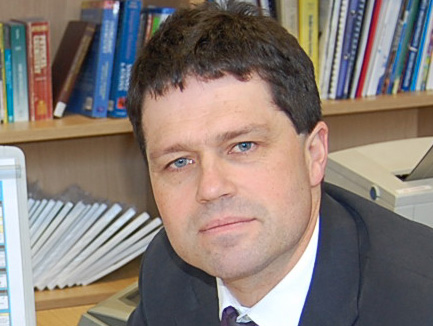
Viktor Prasanna is the Charles Lee Powell Chair in Engineering and Professor of Electrical and Computer Engineering and Computer Science at the University of Southern California. He holds courtesy appointments in Computer Science and leads the Center for Energy Informatics, focusing on interdisciplinary research linking energy technologies, computer science, and engineering. Education: BE in Electronics (Bangalore University), ME (Indian Institute of Science), PhD in Computer Science (Pennsylvania State University) His research spans reconfigurable computing, FPGA accelerators, parallel and distributed systems, and big data applications. He has pioneered high-performance architectures and algorithms using FPGAs, impacting domains like networking, security, HPC, and machine learning. Prasanna has published over 600 papers, received 22 best paper awards, and secured >$50M in grants. His work emphasizes energy-efficient computing, with recent grants totaling $12.9M (2016–2021). His h-index is 73, with 23,454 total citations. Scientific Awards: IEEE Fellow, ACM Fellow, AAAS Fellow, W. Wallace McDowell Award, multiple Distinguished Alumnus Awards He has advised over 70 doctoral students and led major centers including CiSoft (Big Data in oilfield tech) and CAST. His editorial roles include Editor-in-Chief of IEEE Transactions on Computers and Journal of Parallel and Distributed Computing.
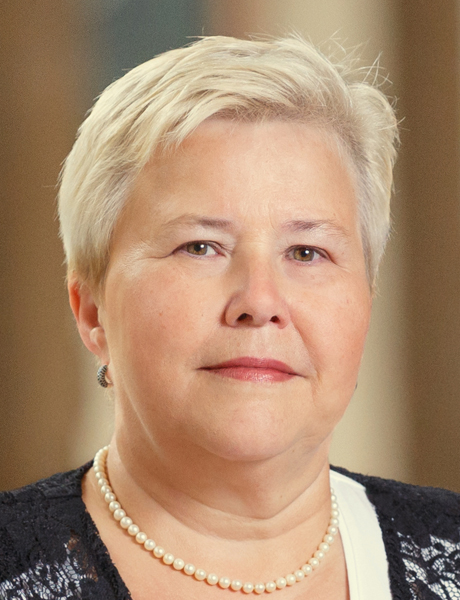
Professor Thierry Langer is a Full Professor of Pharmaceutical Chemistry at the University of Vienna’s Faculty of Life Sciences (Department of Pharmaceutical Sciences). He leads research in computational drug design, with a focus on pharmacophore modeling, 3D-QSAR analysis, and AI-driven molecular design. His work bridges theoretical and experimental chemistry, addressing targets like viral proteases (e.g., SARS-CoV-2), GABA receptors, and dopamine transporters. Research interests include: Pharmacophore-guided drug discovery for anti-viral and CNS therapies Development of next-generation computational tools (e.g., PharmacoMatch, QPhAR) Protein-ligand interaction modeling using neural networks and graph-based algorithms Recent studies focus on: Inhibitors for herpesvirus nuclear egress complexes, AI-optimized antivirals, and dopamine transporter inhibitors for cognitive enhancement. His lab collaborates on projects like the NeuroDeRisk initiative to de-risk neurotoxic compounds. Publications emphasize drug repurposing, metabolic pathway analysis, and scalable synthesis methods for promising drug candidates.
Professor Matthew Jonathan Rosseinsky holds the Chair of Inorganic Chemistry at the University of Liverpool, a position he has occupied since October 1999. His career includes significant appointments at the University of Oxford (1992-1999) and Bell Laboratories in New Jersey (1990-1992), following his DPhil at Merton College, Oxford. As a Fellow of the Royal Society and recipient of numerous prestigious awards, Professor Rosseinsky maintains an active research program and leadership roles in the international chemistry community. Professor Rosseinsky's educational background includes a First Class Honours degree in Chemistry with Quantum Chemistry from the University of Oxford (1987) and a DPhil in "Physical Properties of Superconducting Oxides and Radical Cation Salts" completed in 1990 under Professor P. Day FRS. His research focuses on the synthesis of new materials with applications in energy storage and generation, communications, separation, and catalysis. The Rosseinsky Group employs a broad range of synthesis and characterization techniques, including neutron and synchrotron X-ray diffraction, combined with computational methods in collaboration with Dr. George Darling. Current research areas include Dynapore, CO2 fuels, SOLBAT, and CATMAT projects that target specific material challenges. Professor Rosseinsky's publication record is exceptional, with 304 papers including 11 in Nature, 6 in Science, and 3 in Nature Materials, accumulating over 15,000 citations and an h-index of 56 as of 2012. His work demonstrates consistent excellence across materials chemistry, with particular emphasis on porous frameworks, electronic materials, and solid-state chemistry. Among his numerous accolades are the Harrison Memorial Prize (1991), Corday-Morgan Medal (2000), Royal Society Wolfson Research Merit Award (2002), De Gennes Prize (2009), and the prestigious Hughes Medal from the Royal Society (2011). He also holds an ERC Advanced Investigator Grant and has delivered distinguished lectures worldwide. Professor Rosseinsky has served in numerous editorial and advisory capacities, including as Associate Editor for Chemical Sciences, membership on the Royal Society Conference and Travel Grant Committee since 2007, and as a member of the International Advisory Board for the Max Planck Institut for Solid State Research since 2011. His professional activities extend to international review committees for research institutions in France, South Korea, and Saudi Arabia. The Rosseinsky Group operates within the Department of Chemistry at the University of Liverpool, collaborating extensively with researchers including Dr. John Claridge, Professor Andrew Cooper, and Professor Paul Chalker. The group maintains strong international partnerships and utilizes advanced facilities for materials synthesis and characterization to drive innovation in functional materials development.
Tina Comes is a Full Professor in Decision-Making & Digitalisation at the University of Maastricht, Netherlands. She holds a part-time position (0.2 FTE) and has previously held academic roles at TU Delft (Associate Professor in Decision-Making for Resilience, 2017), University of Agder (Full Professor in ICT, 2015-2017), and Visiting Professor at Lamsade, Université Dauphine, Paris (2014). Her research focuses on Crisis Informatics , Decision Theory , Disaster Management , Humanitarian Logistics , and Resilience . Her work spans building simulation , ventilation systems , and energy-efficient design , with grants totaling €9.6 million since 2012. Key projects include Resilient Systems (NL Ministry of Defense, 2020-2026), H2020 HERoS (2020-2023), and Climate Resilient Urban Infrastructure (Amsterdam, 2020-2022). She has supervised 6 PhD students at TU Delft (2017-2022), 3 Postdocs/PhDs at University of Agder (2013-2020), and 1 PhD at Université Toulouse (2014-2018). Her scientific awards include: 2020 José Maria Sarriegi Award by the Spanish Red Cross 2019 Emerald Literati Award 2016 Delft Technology Fellowship (acceptance rate 2012 Best Paper Award at ISCRAM Conference
Ulrike Felt is a Full Professor of Science and Technology Studies and Chair of the Department of Science and Technology Studies at the University of Vienna, where she has held academic positions since 1989. She served as Dean of the Faculty of Social Sciences (2014-2018) and Head of the Department of Science and Technology Studies during multiple periods (2004-2014, 2018-present). She also led the Interdisciplinary Research Platform 'Responsible Research and Innovation in Academic Practice' (2015-2022). With a PhD in physics and habilitation in social sciences, Felt's research spans diverse domains including life sciences, biomedicine, nanotechnologies, nuclear energy, and environmental research. Her work focuses on governance and public participation in technoscience, changing research cultures, temporal aspects of scientific developments, and responsible research innovation frameworks. She frequently conducts interdisciplinary collaborations with researchers from the sciences and comparative analyses across national contexts. Felt's recent publications demonstrate her continued engagement with cutting-edge topics including smart cities, digital health infrastructure, biobanking, border technologies, and temporal dimensions of academic work. Her work consistently examines how technological developments intersect with societal values, governance structures, and temporal frameworks. 4S Infrastructure Award (2017) Ziman Award of EASST (2014) ARS DOCENDI Austrian State Prize for Innovative Excellent Teaching (2015) UNIVIE Teaching Award (2014) Member of the SSH Panel of the ERC Felt served as editor-in-chief of Science, Technology & Human Values (2002-2007) and led the publication of the Handbook of Science and Technology Studies with MIT Press (2017). As President of the European Association for the Study of Science and Technology (2017-2020), she has significantly shaped the international STS community. Her work on card-based engagement methods (IMAGINE, RESPONSE_ABILITY) demonstrates her commitment to translating STS insights into practical tools for researchers.
Karin Ingold is a Full Professor at the University of Bern’s Institute of Political Science and leads the Policy Analysis and Environmental Governance (PEGO) research group, affiliated with EAWAG’s Social Science Department. She holds concurrent roles as Vice-President of the Oeschger Centre for Climate Change Research and President of Proclim (Swiss Climate Science Forum). Her expertise spans public policy, climate resilience, and environmental governance, with a focus on policy process theories like the Advocacy Coalition Framework and social network analysis. She has held academic positions since 2011, advancing from Assistant to Full Professor, and previously worked at ETH Zurich and UC Davis. Ingold’s research emphasizes policy design, climate policy instruments, and interdisciplinary collaboration. She co-leads the FarmCoSwiss health cohort and serves on editorial boards for journals like Policy Studies Journal and Journal of Public Policy . Her honors include the 2018 Theodore Lowi Award and the 2013 Swiss Academies Award for transdisciplinary research. Ingold’s work bridges academia and policy, addressing climate change adaptation, energy transitions, and water governance. She collaborates internationally on projects like the Mountland CCES initiative and contributes to Swiss federal climate policy through Proclim.
Miguel Angel Fernandez Sanjuan is a Full Professor of Physics at Rey Juan Carlos University (since 2002) and holds a Professor position in Applied Informatics at Kaunas University of Technology (since 2016). He has held visiting roles at University of Maryland (Fulbright Scholar), Beijing Jiaotong University, and Lanzhou University. Current affiliations: Rey Juan Carlos University (Physics), Kaunas University of Technology (Applied Informatics) Previous institutions: University of Maryland, Beijing Jiaotong University, Universidad Politécnica de Madrid His research spans nonlinear dynamics, chaos theory, and complex systems with applications in: Physics: Chaotic oscillators, Hamiltonian scattering, time-delay systems Neuroscience: Map-based neuron models, synchronization dynamics Engineering: Fault diagnosis, image processing via resonance phenomena Mathematics: Basin entropy, Wada basin analysis Recent publications focus on AI-driven chaos control, aperiodic resonance mechanisms, and biomedical applications. He has over 605 publications and 141k reads on ResearchGate. Scientific honors include: 2024: Foreign Academician, Serbian Academy of Nonlinear Sciences 2023: Full Academician, Spanish Royal Academy of Sciences 2022: James Yorke Award 2020: Chieh-Su Hsu Award Active in editorial roles (International Journal of Bifurcation and Chaos) and international collaborations. Leads the Miguel A.F. Sanjuan Lab researching complex systems and nonlinear phenomena.
Torsten Hoefler is a Full Professor of Computer Science at ETH Zurich, Switzerland, with an adjunct appointment in Electrical Engineering. He previously held roles at the National Center for Supercomputing Applications (University of Illinois at Urbana-Champaign) and Indiana University. Full Professor of Computer Science, ETH Zurich (2020–present) Adjunct Professor of Electrical Engineering, ETH Zurich (2020–present) Member at Large, ACM SIGHPC Executive Committee (2013–present) Leadership roles in the MPI Forum and Blue Waters project His research focuses on performance-centric system design , with emphasis on scalable networking, parallel programming models, and performance modeling. Key contributions include the Slim Fly network topology, Data-Centric Python framework, and innovations in parallel graph computations and RDMA-based systems. Recent publications span topics like LLM training networks , quantization geometry , chiplet interconnects , and AI-driven climate modeling , reflecting his interdisciplinary approach combining HPC, AI, and hardware-software co-design. ACM Gordon Bell Prize (2019) ERC Consolidator Grant (2020) IEEE TCSC Award for Excellence (2019) SIAM SIAG/SC Junior Scientist Prize (2012) Latsis Prize of ETH Zurich (2015) He has received multiple best paper awards at top conferences (SC10, SC13, SC14, SC19, IPDPS'15, HPDC'15, OOPSLA'16) and contributed to MPI-3 standardization.
Stefan Nastic is an Assistant Professor at the Technische Universität Wien (TU Wien), affiliated with the Faculty of Informatics and the Distributed Systems department. He serves as Curriculum Coordinator for the Master’s program in Distributed and Next Generation Computing, and is a Substitute Member of the Curriculum Commission for Informatics. His research focuses on distributed systems, edge computing, serverless computing, IoT, and smart cities. He holds a PhD in IoT cloud systems (2016) and a BSc (not explicitly stated). Key research contributions include frameworks for serverless edge-cloud continuum (e.g., HyperDrive, GoldFish), federated learning applications (e.g., adaptive human activity recognition), and IoT infrastructure governance (e.g., Polaris Scheduler). He leads projects like RapidREC (2023–2025) on supply chain optimization and participates in initiatives like TEADAL (2022–2025) for edge-cloud workflows. Publications span 30+ peer-reviewed articles in top venues like IEEE IoT, ACM, and IEEE Cloud. He supervises graduate students on stateful serverless functions, federated learning, and edge-cloud scheduling. His work addresses challenges in resource management, latency reduction, and scalable distributed systems.
Dr. Vincenzo De Maio is a PostDoc Researcher at the Department of Computational Sustainability, Faculty of Informatics, Technische Universität Wien. His research spans quantum computing, edge computing, distributed systems, and sustainable computing, with a focus on hybrid quantum-classical systems and edge AI applications. Current projects: HPQC (2023–2025), ThEMIS FWF (2024–2027), TRITON FWF (2023–2027) Previous projects: RUCON (2016–2023), SWAIN (2021–2024) His research explores the integration of quantum computing with classical systems, particularly in software engineering, workflow decomposition, and hyperparameter optimization. He also works on edge computing for smart cities, environmental monitoring, and traffic safety applications. Recent publications analyze quantum compilation bottlenecks, hybrid quantum-classical workflow orchestration, and quantum neural network optimization. He supervises master's theses on topics like quantum edge benchmarking and hyperparameter tuning. Key collaborations with Prof. Ivona Brandic and others Active in IEEE/ACM conferences and Springer publications
Reinhard Neugschwandtner is an Associate Professor at the Institute of Agronomy , University of Natural Resources and Life Sciences, Vienna . His research focuses on sustainable crop production, soil science, and precision agriculture in Pannonian climates. Key projects: Agri-photovoltaic systems, digitalization in agriculture, drought-tolerant legumes, autonomous robotics in crop technology Leadership roles: Project leader in 8+ research initiatives since 2014 Research Interests : Dr. Neugschwandtner specializes in: Soil health and earthworm ecology under different tillage systems Nitrogen dynamics in legume-cereal intercropping systems Digital tools for canopy parameter estimation and precision farming Life cycle assessment of agricultural practices Climate-smart crop management strategies Scientific Awards : Awardee of five prestigious honors including: Kardinal-Innitzer-Förderungspreis (2017) Klaus Fischer Innovationspreis für Technik und Umwelt (2016) Walter-Kubiena-Preis (2008) BISi Award (2003) Publications & Presentations : Over 171 publications and 102 presentations focusing on: Long-term tillage experiments Winter crop adaptation Intercropping efficiency Digital agriculture tools Soil nutrient dynamics
Univ.Prof. Michael Wimmer is a Professor in the Department of Computer Graphics and Visualization at TU Wien's Faculty of Informatics. His research focuses on real-time rendering, point cloud processing, GPU computing, and computational design. He leads projects involving architectural visualization, thermal simulation, and integrative design frameworks combining 4D sketching with material modeling. His work bridges computer graphics with applications in architecture and engineering. ORCID: 0000-0002-9370-2663 Research Group: Network Lab Recent research emphasizes GPU-accelerated algorithms (e.g., LOD generation for 2 billion points), real-time rendering techniques, and deep learning approaches for surface reconstruction. Collaborations span thermal simulation with civil engineers and 4D design tools for architects. Notable contributions include: Developing PPSurf for detailed surface reconstruction using point convolutions Advancing Vulkan-based rendering pipelines in academic settings Integrating light polarization for HDR imaging His lab explores applications in architectural design metaphors, computational material assessment via GeoRadar, and thermal simulation using precomputed radiative transport. Students under his supervision focus on GPU optimization, 3D reconstruction, and VR ergonomics.
Tomasz Miksa is a researcher affiliated with TU Wien's Department of Research Data Management, focusing on machine-actionable data management plans (maDMPs), semantic web technologies, and data reproducibility. He collaborates extensively on projects involving automated assessment of data management workflows, FAIR data implementation, and privacy-preserving analysis platforms. Primary affiliation: TU Wien Department: Research Data Management Key projects: WellFort, FAIR Data Austria, openEO API His research integrates semantic technologies with data governance to enhance reproducibility in scientific workflows, particularly in domains like environmental monitoring and legal informatics. Recent publications emphasize ontological frameworks (DCSO), API harmonization, and auditable machine learning systems. Notable collaborative works include: Reproducibility standards for soil moisture data Knowledge graph applications in cyber-physical energy systems Dynamic data citation mechanisms He supervises students in theses related to maDMP integration, data citation frameworks, and institutional research data planning architectures.