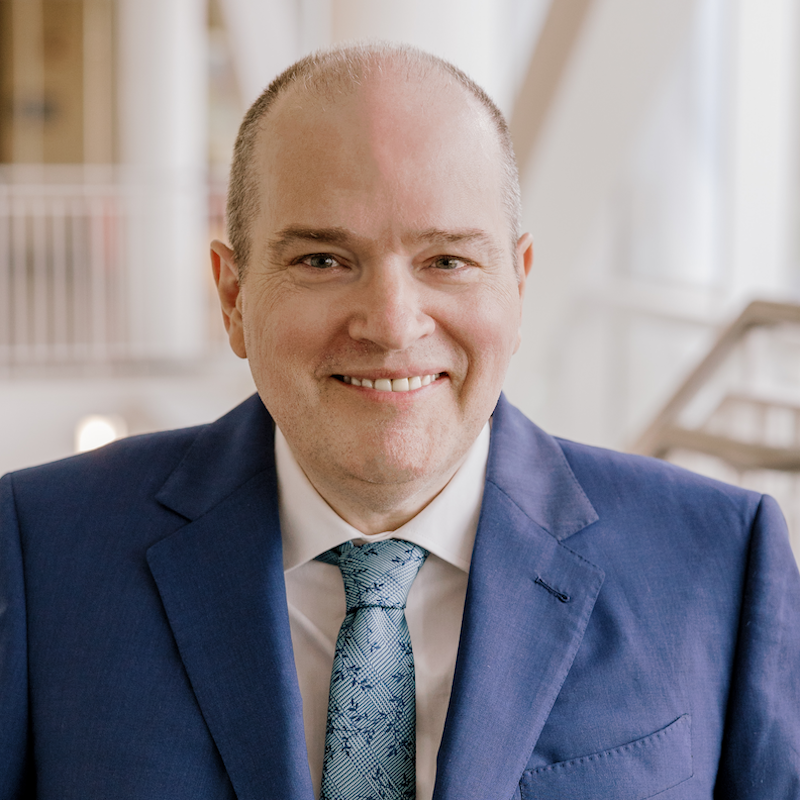
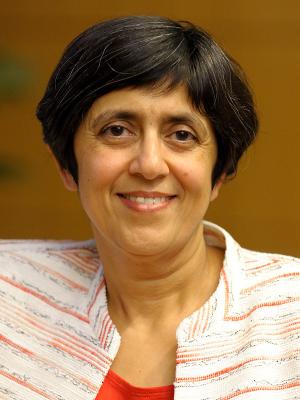
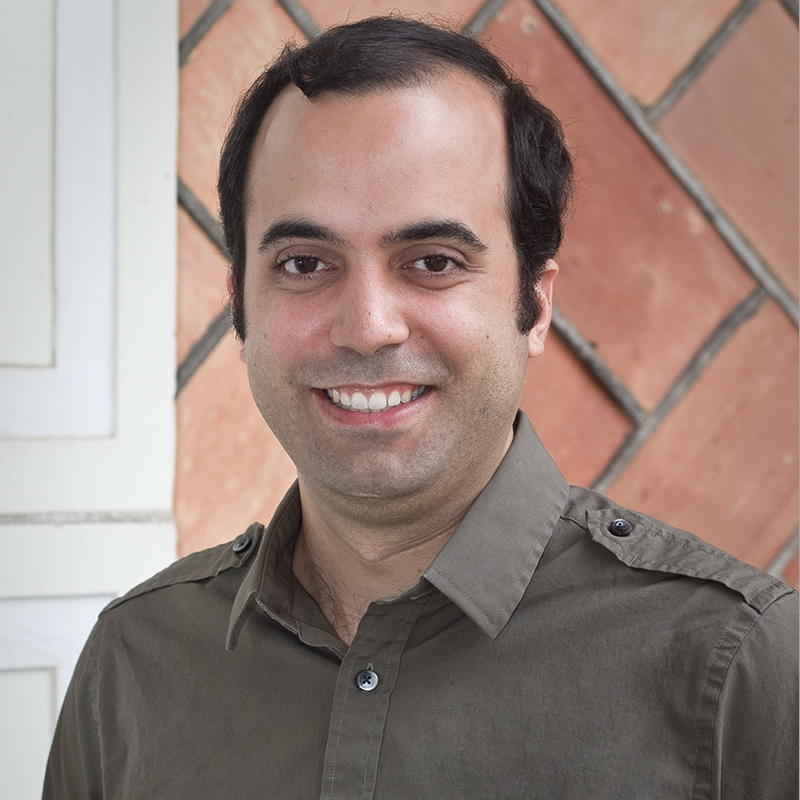
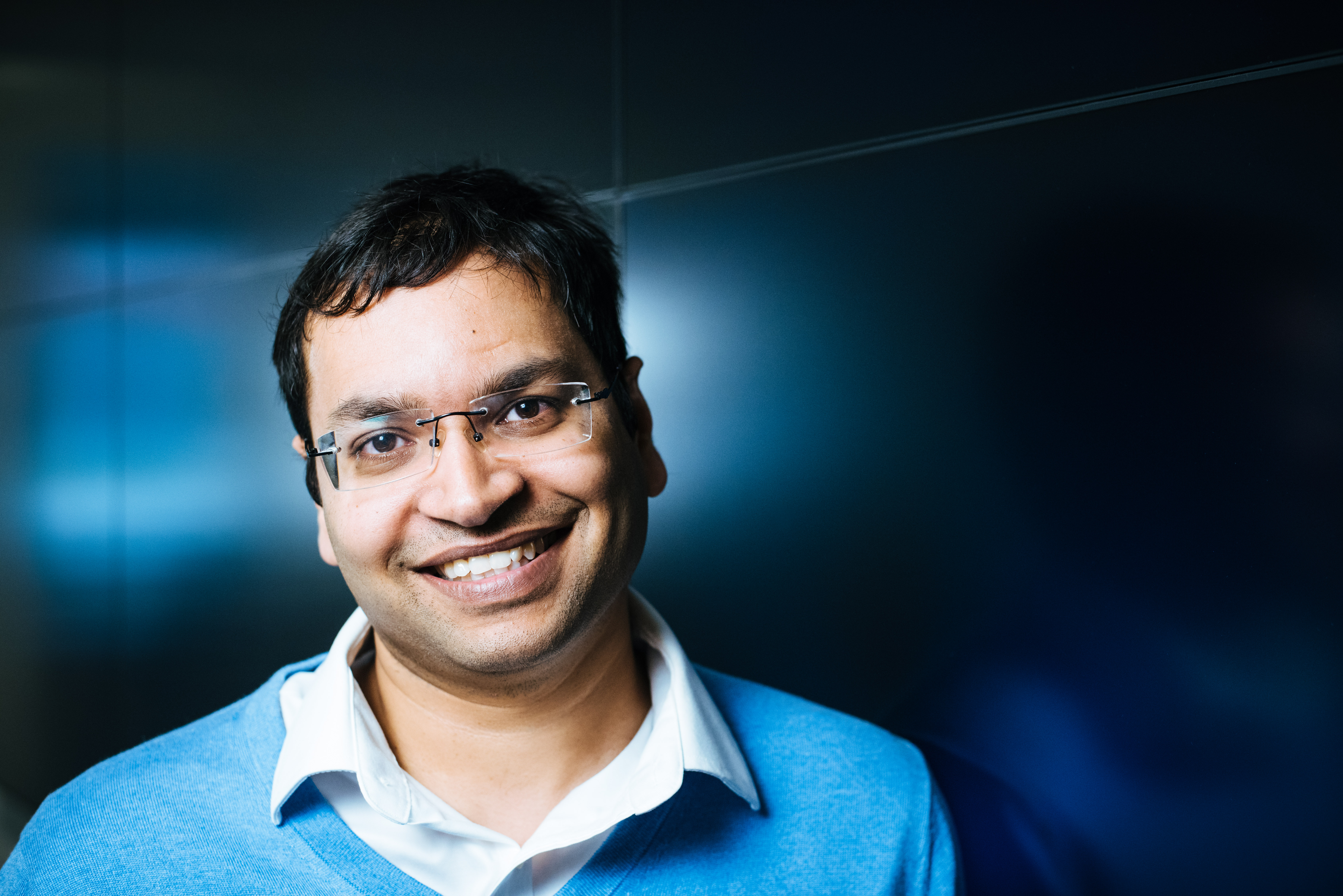
Dr. Jiamin Li is an Associate Professor at the School of Microelectronics, Southern University of Science and Technology (SUSTech), Shenzhen, China. She holds a Ph.D. and B.Eng. in Electrical and Computer Engineering from the National University of Singapore (NUS). Her research focuses on biomedical integrated circuits, energy harvesting, and wireless body-area networks. Education: Ph.D. and B.Eng. in Electrical and Computer Engineering from NUS Employment: Associate Professor (2024–Present), Assistant Professor (2022–2024) at SUSTech; Research Fellow at NUS Dr. Li's research addresses wireless body area powering , low-power biosignal interfaces , and intelligent biosignal processors . Her work leverages microsystem design for applications in biomedical engineering , particularly in energy-autonomous medical devices and human body-coupled communication . Her recent publications highlight advancements in concurrent power/data transmission , subharmonic pulse injection , and triboelectric energy harvesting for biomedical systems. Key venues include IEEE JSSC , Nature Electronics , and conferences like ISSCC and BioCAS. Awards: IEEE SSCS Predoctoral Achievement Award, ISSCC Best Demo Award, ASSCC SDC Best Design Award Committees: IEEE SSCS Women-in-Circuit (WiC) Committee, ISSCC Student Research Preview Committee Opportunities: Positions available for Ph.D., Master's, Postdoctoral Fellows, and Visiting Scholars
Kaiyuan Yang is an Associate Professor in the Department of Electrical and Computer Engineering at Rice University, leading the Secure and Intelligent Micro-Systems (SIMS) Lab. His research focuses on low-power integrated circuits and bioelectronic implants for applications like the Internet of Everything and medical devices. He holds a B.S. from Tsinghua University (2012) and M.S./Ph.D. degrees from the University of Michigan (2017). Research Interests: Low-power digital/analog/mixed-signal systems Bioelectronics and implantable devices Hardware security and PUF design Mixed-signal computing and emerging materials Recent work emphasizes magnetoelectric-powered implants, secure backscatter communication, and in-memory computing architectures. His publications span top venues like IEEE ISSCC, IEDM, and ACM MobiCom. Awards: 2022 NSF CAREER Award 2022 IEEE Top Picks in Hardware Security 2016 IEEE SSCS Predoctoral Achievement Award Dr. Yang serves on editorial boards for IEEE TVLSI and program committees for ISSCC/CICC. His lab develops miniature, secure, and energy-efficient systems for healthcare and IoT applications.
Benjamin Carrison-Schafer is an Associate Professor and Assistant Dean for Graduate Student Success at the Department of Electrical and Computer Engineering, Erik Jonsson School of Engineering and Computer Science, University of Texas at Dallas. He leads the Design Automation and Reconfigurable Computing Laboratory (DARClab), focusing on systems, high-level design, and programming methodologies for VLSI computing systems and FPGAs. Education: MBA from McGill University, Canada (2012) PhD in Electrical and Electronic Engineering from University of Birmingham, UK (2003) Research Interests: His work spans modeling, analysis, synthesis, optimization, and implementation of VLSI systems. Current projects include: Approximate Computing, High-Level Synthesis Design Space Exploration, Hardware Security, Behavioral MPSoC Optimization, and Automatic Fault-Tolerant System Generation. His research blends theory and practice, using analytical and experimental techniques to solve real-world problems. Publication Trends: Recent publications demonstrate strong focus on hardware security, FPGA optimization, and automated design methodologies. Key themes include High-Level Synthesis innovations, hardware acceleration techniques, and cross-disciplinary applications of reconfigurable computing. His work frequently addresses challenges in hardware trustworthiness, energy efficiency, and design automation scalability. Professional Activities: Associate Editor: IEEE Transactions on Sustainable Computing (2022-present) Conference Chair: ICCD 2024, DCAS 2024 Program Committee: ASP-DAC, DATE, FCCM, GLSVLSI Advising & Labs: Supervises multiple PhD and Master's students at DARClab. Current research includes domain-specific architecture design, hardware security, sustainable computing, and ML for VLSI design. The lab collaborates with industry partners like Renesas Electronics and develops commercial tools through spin-off company highX Technologies.
Larry Pileggi is the Coraluppi Head and Tanoto Professor of Electrical and Computer Engineering at Carnegie Mellon University (CMU). He is also the Department Head of CMU’s ECE Department and has held prior roles at Westinghouse Research and Development and the University of Texas at Austin. His work bridges academic research and industry innovation, with co-founding ventures like Fabbrix Inc., Extreme DA, and Pearl Street Technologies. Dr. Pileggi earned his Ph.D. in Electrical and Computer Engineering from CMU (1989), following an M.S. (1984) and B.S. (1983) in Electrical Engineering from the University of Pittsburgh. His research focuses on three core areas: secure integrated circuit hardware (mitigating supply-chain threats), integrated circuits design methodologies (supporting sub-20nm CMOS and heterogeneous technologies), and power systems simulation (developing robust grid analysis tools like SUGAR). He has been recognized with numerous awards, including the prestigious 2023 Phil Kaufman Award for contributions to electronic system design, and is an IEEE Fellow. His academic leadership includes fostering maker initiatives and interdisciplinary research programs to address future challenges in energy and computing systems. Pileggi’s advising record includes over 47 Ph.D. students, many of whom collaborate with him in industry ventures. Current and past grants support his work on resilient power grids and novel memory technologies, reflecting a commitment to both theoretical and applied research. His lab, the Pileggi Lab, develops cutting-edge solutions for energy and integrated systems, emphasizing scalable simulation, secure hardware design, and next-generation memory architectures. Collaborations span institutions like ETH Zurich and industry partners in EDA and semiconductor sectors.
Sarita V Adve is the Richard T. Cheng Professor of Computer Science at the University of Illinois at Urbana-Champaign, where she conducts research spanning hardware, programming languages, operating systems, and applications with a focus on domain-specific systems. Her work bridges theoretical foundations and practical implementations, particularly in extended reality and heterogeneous computing. Her educational background includes a Ph.D. and M.S. in Computer Science from the University of Wisconsin-Madison (1993, 1989) and a B.Tech in Electrical Engineering from the Indian Institute of Technology Bombay (1987). Prior to joining Illinois, she served on the faculty at Rice University from 1993 to 1999. Adve's research centers on generalizable and scalable specialization for domain-specific systems, with current emphasis on extended reality (XR) systems including virtual, augmented, and mixed reality. She chairs the ILLIXR consortium to democratize XR research and developed the first fully open-source XR system (ILLIXR). Her foundational contributions include memory consistency models for C++ and Java programming languages, the Spandex coherence framework for heterogeneous systems, and software-driven approaches for hardware reliability. Her work spans hardware reliability (SWAT and RAMP projects), power management (GRACE system), and instruction-level parallelism. Recent publications reveal a strong focus on energy-efficient XR systems, hardware-software co-design for AI workloads, and resilience analysis. Her team explores rendering offload, visual-inertial odometry optimization, and compositional error injection frameworks, often targeting tradeoffs between energy, latency, and accuracy in mobile and edge environments. Fellow of the American Academy of Arts and Sciences Fellow of the ACM and IEEE ACM/IEEE-CS Ken Kennedy Award Anita Borg Institute Woman of Vision in Innovation Award ACM SIGARCH Maurice Wilkes Award Alfred P. Sloan Research Fellowship UIUC University Scholar University of Illinois Campus Award for Excellence in Graduate Student Mentoring Adve actively mentors students and has received multiple teaching awards. She co-founded the CARES movement to address discrimination in CS research events and chairs CS@Illinois CARES. Her service includes leadership roles in ACM SIGARCH (2015-2019), DARPA/ISAT study group, ACM Council, and Computing Research Association. She has secured significant funding including DARPA initiatives and Google Faculty Research Awards. She leads the ILLIXR consortium and has established collaborative research programs such as the $8.3M DARPA Joint University Microelectronics Program. Her lab focuses on open-source XR development, heterogeneous system architectures, and reliability-aware designs, with strong industry and government partnerships.
Renate Sachse is a Researcher at the Chair of Structural Analysis, Technical University of Munich (TUM), where she has worked since May 2024. Previously, she held postdoctoral positions at Harvard University's Bertoldi Lab (2024) and TUM's Chair of Computational Mechanics (2021-2024), following academic staff roles at the University of Stuttgart (2015-2020). Her interdisciplinary work bridges civil engineering, biomechanics, and computational modeling. Her educational foundation includes a Master's in Civil Engineering from the University of Stuttgart (2014; thesis: 'Isogeometric contact analysis of thin-walled structures') and a Bachelor's from the same institution (2011; thesis: 'A Primary School Pavilion for Magagula in South Africa - Structural Analysis'). She also completed ERASMUS studies at ESTP Paris and internships at Foster + Partners and Werner Sobek AG. Dr. Sachse's research centers on biomechanics and biomimetics, with pioneering work on plant-inspired structures. She investigates snapping mechanisms in carnivorous plants (Venus flytrap, waterwheel plant) to develop bio-inspired adaptive systems, soft robotics, and metamaterials. Her expertise spans motion design for large-deformation structures, isogeometric analysis, and hygroscopic actuation in 4D-printed materials, emphasizing computational modeling of contact mechanics and structural stability. Analysis of her 15 most recent publications reveals a dominant focus on biomechanics (60% of articles), particularly plant movement mechanics translated into engineering solutions. Her work consistently integrates computational structural analysis with biological principles, showing increasing emphasis on motion design (25% of recent output) and additive manufacturing applications (15%). Key trends include translating snap-buckling phenomena into robotics and developing material design spaces for responsive structures. Her distinguished awards include the Bertha Benz Prize (2022), Klaus Tschira Boost Fund Fellowship (2022-2024), and University of Stuttgart Publication Award (2022). Additional recognition comprises GAMM Juniors Fellowship (2020-2022), AVK Innovation Award (2017), and Emil Mörsch Study Prize (2014). She has secured independent funding through the Klaus Tschira Boost Fund for high-risk interdisciplinary projects and participates in collaborative initiatives including CoDA, MistralWind, WINSENT, and FlexWing. While teaching advanced courses at TUM (Advanced Finite Element Methods, Theory of Plates), her mentorship focuses on computational mechanics and biomimetic design principles. Currently based at TUM's Chair of Structural Analysis under Prof. Bletzinger, she maintains active collaboration with Harvard University's Bertoldi Lab in developing next-generation adaptive structures.
Ram Rajagopal is an Associate Professor of Civil and Environmental Engineering and Electrical Engineering at Stanford University, and a Senior Fellow at the Precourt Institute for Energy. He leads the Stanford Sustainable Systems Lab (S3L), focusing on large-scale monitoring, data analytics, and stochastic control for infrastructure networks, particularly power systems. His research emphasizes renewable energy integration, smart distribution systems, and demand-side data analytics. Education: PhD in Electrical Engineering and Computer Sciences & MA in Statistics (UC Berkeley), MS in Electrical and Computer Engineering (UT Austin), and BEng in Electrical Engineering (Federal University of Rio de Janeiro). Research interests include power grid optimization, renewable energy systems, and data-driven approaches to infrastructure challenges. He has pioneered work in grid flexibility, distributed energy resources, and machine learning applications for energy systems. His lab develops technologies like Smart Dim Fuses and the EV-EcoSim platform for EV charging infrastructure optimization. Received NSF CAREER Award, Powell Foundation Fellowship, and Berkeley Regents Fellowship Over 30 patents and best paper awards Advises/founded companies in sensor networks, power systems, and data analytics Labs/Teams: Stanford Sustainable Systems Lab (S3L), Powernet Project. His work spans grid resilience, energy equity, and scalable energy solutions.
Dr. K. Max Zhang is a Professor in the Sibley School of Mechanical and Aerospace Engineering at Cornell University. He is the director of the Energy and the Environment Research Laboratory (EERL) and a fellow at the Atkinson Center for a Sustainable Future. His research is deeply interdisciplinary, focusing on sustainable energy systems, air quality, and environmental justice, with significant impacts on policy and community development in New York and beyond. Ph.D., Mechanical Engineering, University of California-Davis, 2004 B.S., Thermal Engineering, Tianjin University, 1998 B.A., English Language, Tianjin University, 1998 Dr. Zhang’s research centers on the integration of energy and environmental systems. He investigates air pollution dynamics using advanced numerical models like CTAG, with applications in near-source pollution, indoor air quality, and environmental justice. His work on renewable energy systems includes designing sustainable solar farms and managing distributed energy resources such as heat pumps to enhance grid flexibility. He also leads a pioneering initiative to create the first statewide public IoT network in the U.S., enabling hyperlocal weather forecasting and microclimate monitoring. His recent publications reflect a strong trend toward agrivoltaics, peer-to-peer energy markets, and IoT-based environmental monitoring. These works demonstrate a consistent focus on data-driven modeling, community-scale energy solutions, and the integration of social considerations into technical systems. The keywords across his articles highlight expertise in sustainability, machine learning, air quality, and energy transition. Cornell Town-Gown Achievement Award (2022) Engaged Scholar Prize, Cornell University (2017) People's Choice Sign of Sustainability Award, Sustainable Tompkins (2016) Scientific and Technological Achievement Award, Environmental Protection Agency (2015) Fellow of the American Society of Mechanical Engineers Dr. Zhang is actively involved in mentoring students and securing research grants from agencies such as the National Science Foundation (NSF) and the New York State Energy Research and Development Authority (NYSERDA). His projects often involve interdisciplinary collaboration across eight Cornell colleges and 16 academic departments. He has led initiatives such as the Cornell Atkinson Academic Venture Fund projects and the development of a county-level energy roadmap for Tompkins County. He also teaches courses in engineering thermodynamics, future energy systems, and air quality, emphasizing experiential and community-based learning. Dr. Zhang leads the Energy and the Environment Research Laboratory (EERL) and collaborates with the Atkinson Center for a Sustainable Future. His lab functions as a hub for innovation in sustainable communities, combining advanced modeling with real-world applications. Through partnerships with community organizations, government agencies, and industry, his team develops science-driven solutions to urban and rural sustainability challenges.
Adriana Tapus is a Full Professor at ENSTA Paris, affiliated with Institut Polytechnique de Paris, leading the Autonomous Systems and Robotics Laboratory (SAR) within the Computer Science and Systems Engineering Unit (U2IS). She holds an HDR (Habilitation) and a PhD from EPFL, Switzerland, with postdoctoral experience at USC. Her research focuses on socially assistive robotics, human-robot interaction (HRI), and personalized therapy for individuals with physical/cognitive impairments. She directs the IP Paris Doctoral School and coordinates national/international projects like the EU-funded ENRICHME and SWEET. Education: PhD in Mobile Robotics, EPFL (2005) Habilitation (HDR), ENSTA Paris (2011) M.S. Computer Science, University Joseph Fourier Engineer, Politehnica University of Bucharest Research Interests: Tapus pioneers socially assistive robotics, integrating machine learning, human modeling, and multimodal communication (verbal/non-verbal/para-verbal). Her work addresses adaptive therapies for vulnerable populations using robotics, physiological data interpretation, and context-aware interaction. Key themes include: Human-robot cooperation and trust Emotion recognition and expression Personalized rehabilitation systems AI ethics and human-centered design Publications: Over 150 articles, with recent work exploring humor in HRI, teleoperation trust models, and cross-cultural intelligent vehicles. Notable 2025 contributions include studies on robot laughter efficacy and multimodal facial expression frameworks. Awards: 2025: 4 IROS papers accepted 2016: 25 Women in Robotics recognition 2010: Romanian Academy Award Multiple conference best paper awards (RO-MAN, ICRA, etc.) Advising & Grants: Supervised over 20 PhD students and led projects like EU Horizon 2020 ENRICHME. Current students focus on teleoperation dynamics, robot humor, and haptic interfaces. Active in editorial roles (IJSR, THRI) and conference organization (HRI General Chair 2019). Labs/Teams: Founder of RoboticsByDesign lab and co-initiator of the Hi! Paris interdisciplinary AI center. The SAR lab develops systems for healthcare, education, and human-robot collaboration.
Michel M. Maharbiz is a Professor in the Department of Electrical Engineering and Computer Science at the University of California, Berkeley. He leads research on miniaturized bioelectronic interfaces, including neural dust implants and cyborg insects. He holds affiliations with the Berkeley Sensor & Actuator Center (BSAC), Center for Neural Engineering & Prostheses (CNEP), and SWARM Lab. His education includes a Ph.D. in EECS from UC Berkeley (2003) and a B.S. in EE from Cornell University (1997). Maharbiz's research integrates MEMS, ultrasonic systems, and synthetic biology to develop wireless neural interfaces, implantable sensors, and biohybrid devices. Key focus areas are neural dust technology for peripheral nerve recording, magnetoelastic strain sensors for medical applications, and electrochemical biosensing using bacterial flagellar motors. His publications emphasize neural interfaces, ultrasonic implants, and biomedical monitoring. Recent articles explore ultrasonic power delivery (2025), radiation detectors for oncology (2025), and fracture-healing smart plates (2019). Trends include miniaturization of wireless implants, closed-loop therapeutic systems, and novel biomaterials. Scientific Awards: McKnight Technological Innovations in Neuroscience Award (2017) Chan-Zuckerberg Biohub Investigator (2017) NSF CAREER Award (2009) MIT TR10 Top Emerging Technology (2009) Bakar Fellows Spark Award (2012) He directs the Maharbiz Lab, advancing neural dust and bioelectronic interfaces. Projects include impedance-based fracture monitoring, carbon fiber neural arrays, and hernia repair sensors. Funding includes NSF and industry partnerships for implantable device development.
Prof. Roger Wattenhofer is a Full Professor at the Department of Information Technology and Electrical Engineering, ETH Zurich, Switzerland, and Deputy head of the Computer Engineering and Networks Lab. He holds a doctorate in Computer Science from ETH Zurich (1998) and has held positions at Brown University and Microsoft Research before returning to ETH. His research focuses on distributed computing, wireless networks, and algorithmic systems design, with contributions to Byzantine agreement protocols, blockchain technologies, and neural network architectures. He teaches courses such as Distributed Systems and Computational Thinking. Education: Ph.D. in Computer Science (ETH Zurich, 1998). Research interests include distributed systems, network algorithms, and the intersection of machine learning with distributed computing. His work spans both theoretical foundations and practical implementations, addressing challenges in fault tolerance, consensus mechanisms, and algorithmic efficiency. Recent publications explore topics like adversarial robustness in voting systems, privacy in reinforcement learning, and generative music models. He actively contributes to open-source frameworks and benchmarks for neural algorithmic reasoning.
Vijay Raghunathan is a Professor in the Department of Electrical and Computer Engineering at Purdue University's College of Engineering. His work focuses on hardware and software architectures for embedded systems, wireless sensors for IoT, and wearable/implantable electronics with emphasis on low power design, energy harvesting, emerging memory technologies, and secure system design. Academic Rank: Professor Department: Electrical and Computer Engineering University: Purdue University Research Focus: Energy-efficient embedded systems, IoT, wearable devices His research explores low power design at both board-level and system-on-chip scales, micro-scale energy harvesting , and reliable/secure system design for medical devices. Recent work focuses on Processing-in-Sensor/Memory for battery-free AIoT devices, state space models for neural processing units, and security coprocessor integration in autonomous systems. Analysis of his publications reveals trends in energy-efficient neural network acceleration , approximate computing for edge inference , and compute-in-memory architectures . Key subfields include collaborative edge-cloud partitioning , sparse DNN accelerators , and security frameworks for medical devices. Vijay's work also addresses energy-accuracy tradeoffs in multimodal cognitive systems and intermittent computing using non-volatile memory technologies. His contributions span from microcontroller energy management to security protocols for implantable electronics.
Mario Berges is an Associate Professor in the Department of Civil and Environmental Engineering at Carnegie Mellon University (CMU), with a courtesy appointment in Electrical and Computer Engineering. He holds leadership roles as Co-Director of the IBM Smart Infrastructure Analytics Lab and Director of the Intelligent Infrastructure Research Lab (INFERLab). His work focuses on applying information/communication technologies to enhance the operational efficiency and resilience of built environments amid evolving resource constraints and climate changes. Education: PhD in Civil & Environmental Engineering from CMU (2010). Research Interests: Berges' research integrates smart infrastructure systems, energy efficiency, and machine learning. Key areas include non-intrusive load monitoring (NILM), structural health monitoring of pipelines, building automation systems, and urban heat risk modeling. He develops data-driven frameworks for energy disaggregation, sensor placement optimization, and real-time infrastructure diagnostics. Awards: Recognized with the 2010 FIATECH Outstanding Early Career Researcher Award and 2015 Dean’s Early Career Fellowship from CMU. Grants & Labs: Leads INFERLab, collaborating with IBM on smart infrastructure projects. His work spans academic-industry partnerships focused on building analytics, smart grid technologies, and sensor networks. Future Directions: Expanding research into AI-driven energy systems, resilient urban infrastructure, and cross-disciplinary solutions for climate adaptation.
David Wentzloff is a Professor of Electrical Engineering and Computer Science at the University of Michigan, where he has been on faculty since 2007. He directs the Wireless Integrated Circuits and Systems (WICS) group and serves as Director of the Michigan Integrated Circuits Laboratory (MICL). Wentzloff received his B.S.E. from the University of Michigan in 1999 and his S.M. and Ph.D. from MIT in 2002 and 2007. Wentzloff's research focuses on low-power integrated circuits for wireless communication in energy-constrained and volume-constrained applications. His work spans three primary areas: Synthesizable all-digital radios and radio building blocks Wireless body sensor networks (channel modeling, radios, and antennas) Radios and interfaces for millimeter-scale computing devices His innovations have significantly reduced power consumption in wireless communication for IoT devices, impacting standards including Bluetooth, WiFi, and 5G/6G. Analysis of his publication record reveals a consistent focus on ultra-low power wireless communication, with recent work emphasizing back-channel communication techniques that achieve 500x power reduction compared to conventional approaches. His research bridges theoretical circuit design with practical applications in healthcare, industrial monitoring, and consumer electronics. Wentzloff's scientific recognition includes: 2024 University of Michigan Faculty Recognition Award NSF CAREER Award (2012) DARPA Young Faculty Award (2009) Multiple best paper awards Two-time recipient of the Eta Kappa Nu Professor of the Year Award As an educator and mentor, Wentzloff has graduated 21 doctoral students and mentored dozens of master's and undergraduate researchers. He has taught courses ranging from introductory circuits to advanced graduate topics in analog and RF design. His entrepreneurial impact includes co-founding three successful companies: Everactive (formerly PsiKick), Movellus, and CubeWorks, which commercialize technologies developed in his research lab. Wentzloff leads the WICS research group, which operates within the Michigan Integrated Circuits Laboratory. His team develops cutting-edge technologies for batteryless sensing systems, millimeter-scale computing platforms, and ultra-low power wireless communication solutions that enable the next generation of Internet of Things applications.
Rakesh Kumar is a Professor and John Bardeen Faculty Scholar in the Electrical and Computer Engineering Department at the University of Illinois at Urbana-Champaign. His work focuses on computer architecture, system-level design automation, and low-power computing. PhD in Computer Engineering from University of California, San Diego BS in Electrical Engineering from IIT Kharagpur His research spans all layers of the computing stack, with key contributions to flexible computer systems , waferscale computing , error-resilient architectures , and approximate computing . He has pioneered work on voltage-reliability tradeoffs and peak power management techniques. Recent publications highlight trends in space microdatacenters , printed microprocessors , and neural graph accelerators . His work on plastic chips was recognized as one of the three biggest semiconductor headlines of 2022 by IEEE Spectrum. IEEE Fellow (2024) ISCA Influential Paper Award MICRO Test-of-Time Award ICCAD Ten Year Retrospective Most Influential Paper Award Best Paper Awards at CASES, SELSE, HPCA He has received teaching accolades including the Stanley H. Pierce Faculty Award and Ronald W. Pratt Outstanding Teaching Award . His research group explores hardware-software co-design for emerging applications in AI, IoT, and sustainable computing.