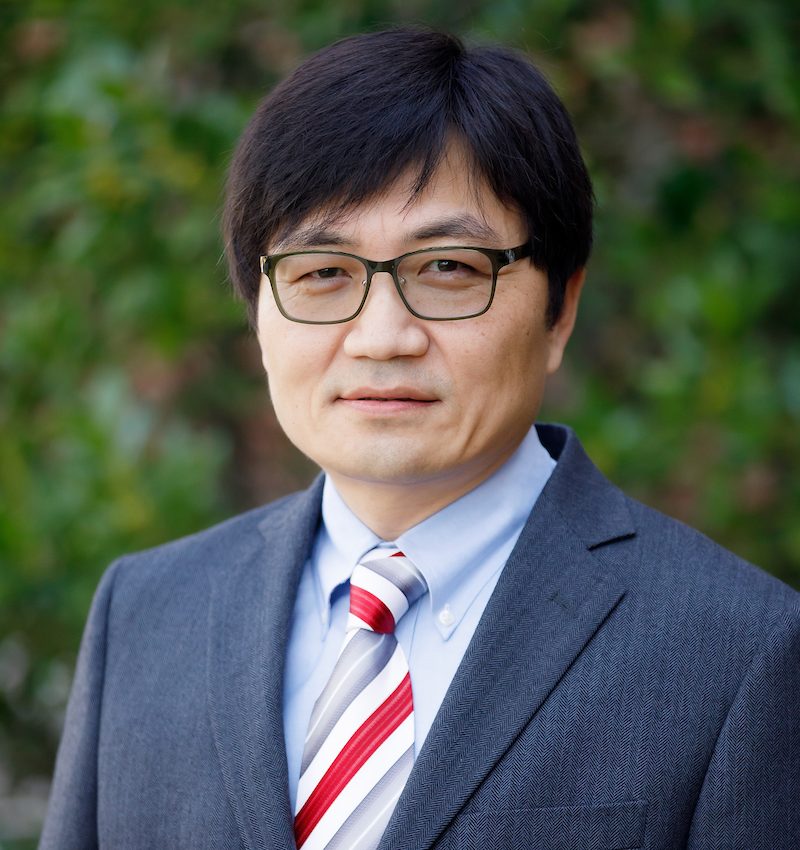
Dr. Mohamed Hassan is an Assistant Professor in the Department of Electrical & Computer Engineering at McMaster University. His research focuses on Cyber-Physical Systems-on-Chip (iCPSoCs) , emphasizing design, analysis, and deployment for critical domains like Unmanned Aerial Vehicles (UAVs), Autonomous Cars, and healthcare systems. Key research areas include hardware/software codesign, real-time systems, embedded systems, and security. He teaches courses such as COMPENG 4DM4 (Computer Architecture) and COMPENG 4DS4 (Embedded Systems) . His work bridges foundational theories (e.g., scheduling, AI) with infrastructure-level innovations (e.g., compilers, memory systems). The Fanos Research Lab he leads explores interdisciplinary solutions for efficient CPS-on-Chip, addressing challenges in multicore predictability, memory latency, and edge computing. Recent contributions include frameworks for explainable memory-centric workloads and techniques to accelerate TinyML inference. Dr. Hassan serves on Technical Program Committees for conferences like RTAS and OSPERT, highlighting his role in advancing real-time embedded systems research.
Eli Blevis is a Professor of Informatics at Indiana University's Luddy School of Informatics, Computing, and Engineering, with a joint appointment as Visiting Professor at Hong Kong Polytechnic University's School of Design. His research focuses on Sustainable Interaction Design, Visual Thinking, and Transdisciplinary Design Theory. He is renowned for integrating sustainability principles into HCI practices and exploring the role of visual media in design and education. Affiliations: Luddy School of Informatics, Computing, and Engineering, Indiana University Visiting Professor, School of Design, The Hong Kong Polytechnic University Research Interests: Sustainable Interaction Design (SID) Visual Thinking in HCI (e.g., photographic ethnography) Design Pedagogy (e.g., Design Challenge-Based Learning) Sustainability in Digital Infrastructure Cross-Cultural Design Practices His work spans over 50 publications, with awards including the CHI Best Paper and Computing Reviews Notable Paper. He advises students on projects like visible mending, nonlinear design thinking, and sustainable food systems. Blevis also curates the Visual Thinking Gallery and contributes to international conferences like NordiCHI and DIS. His lab explores tangible interfaces (e.g., MemoryReel) and eco-conscious design strategies. Awards: CHI Best Paper Award CCC Sustainability Award ACM Computing Reviews Notable Paper DIS Best Paper Award Grants and Funding: Research supported by NSF and industry partnerships.
Dr Xiaolin Wang is an Associate Professor at the Australian National University's School of Engineering. She leads a research group focused on carbon capture, hydrogen storage, thermal energy storage using phase change materials, gas hydrate sciences, and green building technologies. Her work emphasizes sustainable energy solutions and environmental engineering. She has secured over $2M in research funding, including an ARENA-funded hydrogen storage project. Education: PhD from ANU (2013), joined ANU as an education-focused lecturer in 2018. Awards: ANU Vice Chancellor’s Award for Early Career Academics, AIRAH Excellence in HVAC&R Research, and CECC Remote Teaching Award. She serves as Sub-Dean of Student Experience in her college. Research Interests: Innovations in low-capital-cost hydrogen storage via nano-scaffolding, heat/mass transfer enhancement in hydrate-based CCS, novel PCM recipes for thermal management, and strategies for green building design. Her lab explores biomimetic encapsulation for CO₂ capture and eco-friendly hydrogels for methane hydrate formation. Publications focus on hydrate-based carbon capture mechanisms, thermal energy storage systems, and advanced materials. Key projects include mass transfer enhancement for hydrate CCS and a Global Research Partnership on building physics and acoustics. Grants & Funding: ARENA hydrogen storage project, ARC DECRA Fellowship, and ANU Global Research Partnerships Scheme. Supervises research on carbon capture, thermal systems, and sustainable materials.
Cheung Ngai-Man is an Associate Professor and Associate Head of Pillar (Education) at Singapore University of Technology and Design (SUTD), part of the Information Systems Technology and Design (ISTD) pillar. He holds a Ph.D. in Electrical Engineering from the University of Southern California (2008) and has held research positions at Stanford University, Texas Instruments, IBM, and others. His research focuses on image and signal processing, computer vision, machine learning, and artificial intelligence. Education: Ph.D., Electrical Engineering, University of Southern California (2008); Postdoctoral research at Stanford University (2009–2011). Research Interests: Develops algorithms for multimedia data processing, explores interdisciplinary applications of signal processing and AI, and addresses challenges in computer vision and generative models. Recent work includes fairness in generative models, few-shot image generation, and adversarial robustness. Publications: Over 100+ peer-reviewed papers in top venues (CVPR, NeurIPS, IEEE TIP, TPAMI) focusing on computer vision, generative models, and AI security. Notable 2023 work includes studies on label-only model inversion attacks and fairness metrics in generative systems. Awards: Best Paper Finalist (CVPR 2019), SAIL Award Finalist (WAIC 2019), Outstanding Associate Editor (IEEE T-MM), Croucher Foundation Fellowship. Students: Supervised postdocs (Hossein Nejati, Fang Lu), research assistants (Mohammad Rostami), and visiting students (Ma Rui). Labs/Teams: Leads research groups in AI, computer vision, and multimedia systems at SUTD. Has spun off AI initiatives for wound care and contributed to Singapore’s National AI Strategy.
Carlos Enrique Palau is a prominent researcher in the field of Internet of Things (IoT), edge computing, and cyber-physical systems. His work focuses on interoperability, security, and scalability in distributed systems, particularly in industrial and smart city applications. He has contributed to frameworks for cloud-edge continuum integration, blockchain-based IoT solutions, and federated computing architectures. Key areas of research include: IoT interoperability and semantic frameworks Edge computing and distributed workload management Cybersecurity for IoT and critical infrastructure Smart port logistics and real-time data analytics Cognitive services in legacy port management systems His recent work explores: Data-as-a-Product frameworks for Industry 4.0/5.0 Autonomous workload scheduling in energy-efficient edge-cloud systems Deception mechanisms for IoT security Self-* capabilities in cloud-edge nodes Palau has collaborated extensively with institutions like Universitat Politècnica de València and international partners in projects funded by EU initiatives. His research addresses practical challenges in industrial IoT deployments, smart city infrastructure, and emergency management systems.
Jeffrey R. Errington is a Professor and Chair of the Department of Chemical and Biological Engineering at the University at Buffalo (SUNY). His research focuses on developing molecular simulation methods to study interfacial phenomena in complex fluids, including CO2 sequestration, enhanced oil recovery, and ionic liquid behavior. He holds a BS (1995) and PhD (1999) in Chemical Engineering from the University at Buffalo and Cornell University, respectively, and completed postdoctoral work at Princeton University. Education: BS, Chemical Engineering, University at Buffalo, 1995 PhD, Chemical Engineering, Cornell University, 1999 Research Interests: Computational methods for interfacial properties Molecular simulation of carbon capture and environmental systems Thermodynamic modeling of ionic liquids and nanomaterials Recent Work Trends: Recent articles emphasize advancing Monte Carlo and molecular dynamics techniques for studying fluid interfaces, with applications to energy storage, environmental engineering, and material science. Key themes include interfacial wetting, adsorption in nanoporous materials, and free-energy landscape analysis. Awards: NSF CAREER Award (2003) NYSTAR James D. Watson Investigator Award (2004) SUNY Chancellor’s Award for Excellence (2016) UB Exceptional Scholar Awards (2005, 2014) Leadership & Service: Director of Undergraduate Studies (2006–2014) Associate Dean for Undergraduate Education (2014–2023) Senior Associate Dean for Academic Affairs (2023–2024) Chair, CoMSEF Forum (American Institute of Chemical Engineers) His research group actively collaborates on CACHE Corporation initiatives and develops educational tools for undergraduate researchers.
Dr. Sheng Yang is an Assistant Professor in the School of Engineering at the University of Guelph. He leads the Design Innovation and Intelligent Manufacturing (DIIM) lab, focusing on advancing additive manufacturing, generative design, and smart manufacturing technologies. His research integrates IoT, big data analytics, and bio-inspired design to address challenges in aerospace, green energy, and healthcare. Key areas include computational design for additive manufacturing, data-driven mass customization, and digital twin-based optimization. Education: Ph.D. in Mechanical Engineering from McGill University (2019), followed by a Postdoctoral Fellowship at McGill (2019–2020). Joined University of Guelph in 2020. Research interests span energy efficiency, complex system optimization, and personalized healthcare products. Recent work emphasizes digital twin synchronization in robotics, machine learning for quality prediction, and sustainable additive manufacturing processes. Notable awards include the 2019 Association of Commonwealth Universities Blue Charter Fellowship and 2018 ASME Best Paper Award. His lab actively seeks partnerships in personalized healthcare, product design, and smart manufacturing. Grants and collaborations focus on advancing manufacturing technologies and sustainability. No formal advisees listed, but active in graduate training through lab projects. The DIIM lab explores cutting-edge solutions for industrial and societal challenges through interdisciplinary approaches.
Ulrich Tallarek serves as Professor of Analytical Chemistry in the Faculty of Chemistry at Philipps University of Marburg, where he has held a W3 professorship since 2011. He also serves on the Board of Directors for the Materials Science Center at the university, a position he has held since 2007. His research group focuses on the fundamental understanding of transport phenomena in porous media with applications spanning chromatography, battery technology, and microfluidic systems. The group maintains strong collaborations with institutions worldwide and secures substantial research funding for advanced computational and experimental work. Professor Tallarek's research interests center on functional porous solids, with specific focus on morphology-transport-performance relationships. His work bridges multiple scales from molecular dynamics simulations of solute behavior in nanopores to macroscopic transport in chromatographic columns and battery electrodes. Key research areas include diffusion in hierarchical porous media, electrokinetic phenomena in microfluidic systems, molecular simulation of chromatographic processes, and advanced characterization of porous materials using tomography and other techniques. His group has pioneered multiscale simulation approaches that connect molecular-level surface chemistry to macroscopic transport properties. The research output demonstrates consistent focus on understanding fundamental transport mechanisms in porous systems, with recent publications emphasizing multiscale simulation techniques, molecular dynamics studies of solvent effects in chromatography, advanced characterization of mesoporous structures, and applications to separation science and energy storage. The work shows strong integration of computational modeling with experimental validation across multiple length scales. 2003: Desty Memorial Prize for Innovation in Separation Science, The Royal Institution of Great Britain, London 2006: Young Scientist Award from DECHEMA e.V. 2011: Named Discussion Leader at the 2011 Gordon Research Conference on Physics & Chemistry of Microfluidics 2011–2012: Chairman of the German Chemical Society (GDCh), Marburg 2013: Finalist, World Technology Awards, for category Environment 2013: Named as one of the 100 most influential analytical scientists in the world (The Analytical Scientist Power List) 2017: Recipient of the Silver Jubilee Medal 2017, The Chromatographic Society, UK Professor Tallarek's research has been supported by numerous grants enabling high-performance computing resources, advanced instrumentation, and international collaborations. His group maintains strong ties with industry partners in separation science and analytical instrumentation. The Tallarek Research Group includes postdoctoral researchers, PhD students, and technical staff working across experimental and computational domains. Current projects focus on molecular simulation of chromatographic processes, advanced characterization of porous battery electrodes, and development of novel separation methodologies. The Tallarek Research Group operates state-of-the-art facilities for computational modeling, including access to high-performance computing resources at Forschungszentrum Jülich. The group also maintains experimental capabilities for chromatographic analysis, materials characterization, and microfluidic device development. Their work on physically reconstructed porous media has established new standards for connecting microstructure to transport properties in complex materials systems.
Chris Fuller, Ph.D., is the Samuel Langley Distinguished Professor of Engineering at the College of Engineering , Virginia Tech. He leads the Vibrations and Acoustics Laboratory (VAL) , focusing on active/passive noise control systems, metamaterials, and their application to aerospace, medical devices, and industrial machinery. Education: Ph.D. (1979) and B.E. (1974) from the University of Adelaide, Australia. Research Interests: Structural acoustics, adaptive materials, machine learning in noise prediction, and biomedical acoustics (e.g., neonatal incubators). Awards: ASME Rayleigh Award (2017), NASA Team Achievement Award (1996), and Fellow of the Acoustical Society of America. Recent Publications: Highlight advancements in drone noise reduction using neural networks, metamaterials for HVAC systems, and poro-elastic materials for low-frequency noise control.
Yi-Jun Chang is an Assistant Professor in the Department of Computer Science at the National University of Singapore (NUS). He previously held a Junior Fellow position at the Institute for Theoretical Studies, ETH Zurich (2019–2021), and earned his Ph.D. in Computer Science and Engineering from the University of Michigan (2019). His research focuses on theoretical computer science, particularly distributed, parallel, and sublinear graph algorithms. Ph.D., University of Michigan (2019) M.S., National Taiwan University (2015) B.S., National Taiwan University (2013) Chang’s research explores the complexity and optimization of algorithms in distributed systems, including leader election, graph shattering, expander decomposition, and subgraph detection. His work addresses fundamental challenges in time-energy trade-offs, communication efficiency, and deterministic vs. randomized approaches in models like LOCAL and CONGEST. Recent publications highlight advancements in distributed triangle enumeration, optimal coloring, shortest path computation, and certification in bounded pathwidth graphs. Awards include the PODC 2019 Best Paper and Best Student Paper Awards, followed by the 2020 PODC Doctoral Dissertation Award. PODC 2019 Best Paper Award PODC 2019 Best Student Paper Award 2020 PODC Doctoral Dissertation Award Chang teaches courses such as CS3230 (Design and Analysis of Algorithms) and CS5275 (The Algorithm Designer's Toolkit). He advises Ph.D. students Hung Thuan Nguyen and Haoran Zhou, and has collaborated with postdoctoral researchers including Gopinath Mishra and Dean Leitersdorf.
Dr. Xiaopeng Li is the Harvey D. Spangler Professor in the Department of Civil and Environmental Engineering at the University of Wisconsin-Madison, with an affiliation in the Department of Electrical and Computer Engineering. He leads the USDOT Rural Autonomous Vehicle Program and previously directed the National Institute for Congestion Reduction. He earned his B.S. in Civil Engineering from Tsinghua University (2006), M.S. in Civil Engineering (2007), M.S. in Applied Mathematics (2010), and Ph.D. in Civil Engineering (2011) from the University of Illinois at Urbana-Champaign. His research focuses on modeling and field experiments for connected, electric, and automated vehicles (CAVs), infrastructure systems analysis, and interdependent network modeling. He has pioneered physics-enhanced machine learning frameworks for vehicle control and developed simulation tools for CAV deployment. His 2025-2024 publications highlight advancements in Connected vehicle trajectory modeling Energy consumption optimization Edge computing for autonomous operations Residual learning control systems Equity analysis in AV deployment Communication technologies for V2X Awards include: TRB Best Paper Award (2025) NSF CAREER (2015) ASCE Fellow (2024) IEEE Senior Member (2022) Multiple institution-specific fellowships He has advised 15+ graduate students, secured $35M+ in grants from NSF, USDOT, and industry partners, and chairs the IEEE ITSS Emerging Transportation Technology Testing committee. His work addresses real-world AV implementation, safety validation, and sustainable transportation systems.
Dr. Hwan-Sik Yoon is an Associate Professor in the Department of Mechanical Engineering at The University of Alabama, where he focuses on applying Artificial Intelligence (AI) and Machine Learning (ML) to automotive, transportation, and manufacturing systems. His research spans modeling, simulation, and control of dynamic systems, with a strong emphasis on connected and automated vehicles (CAVs), energy-efficient routing, and sensor fusion technologies. Ph.D., Mechanical Engineering, Ohio State University, 2002 M.S., Mechanical Engineering, Ohio State University, 1998 B.S., Physics Education, Seoul National University, Korea, 1994 Dr. Yoon’s research integrates AI/ML into applications such as traffic signal control , excavator manipulator pose estimation , hybrid electric vehicle powertrain control , and factory floor safety monitoring . He is also involved in additive manufacturing , vision-based control systems , and reinforcement learning -driven automotive innovations. Recent publications highlight trends in deep reinforcement learning for vehicle energy efficiency, sensor fusion for traffic surveillance, and neural networks for dynamic system control. His work addresses challenges in multi-component failure analysis and real-time edge computing platforms . NSF Outstanding Faculty Advisor Award (2019) College of Engineering Faculty Productivity Award, Tennessee Tech University (2012) Dr. Yoon leads the Intelligent Structures and Systems Laboratory and serves as the lead CAVs faculty advisor for the University of Alabama’s EcoCAR student team, which has achieved national recognition in advanced vehicle technology competitions.
Timothy M. Jones is a Professor of Computer Architecture and Compilation at the University of Cambridge Computer Laboratory, where he leads research in systems-level computing. He is also a Fellow at Gonville and Caius College, contributing to academic leadership and student mentorship within the collegiate system. His primary affiliation with the Computer Laboratory positions him at the forefront of systems research within the university. Dr. Jones's research focuses on extracting various forms of parallelism (thread-level, data-level, memory-level) to enhance computational performance while addressing energy efficiency and reliability challenges. His work spans compiler design, binary translation, and microarchitecture optimization, with specific interest areas including: Compiler technologies for functional and parallel programming Hardware reliability and fault tolerance mechanisms Binary analysis and instrumentation frameworks Memory system optimization and virtual memory management Security enhancements through binary modification Runtime systems for heterogeneous architectures Analysis of his recent publications reveals strong emphasis on systems-level innovation, particularly in fault tolerance techniques, binary analysis tools, memory optimization, and parallel execution frameworks. His work consistently bridges theoretical computer science with practical hardware implementation challenges. Dr. Jones maintains active participation in the academic community through conference leadership roles, including serving as Program Co-Chair for CGO 2026 and committee positions at premier venues including ISMM, CGO, and ECOOP. He contributes to open-source academic resources through GitHub and maintains professional engagement via Twitter.
Professor Ibrahim Khalil is a faculty member in the School of Computing Technologies at RMIT University, Melbourne, Australia. He holds a PhD in Computer Science from the University of Bern (2003) and has extensive industry experience in Silicon Valley focusing on secure network protocols. His research spans Security, Privacy, Federated Learning, Blockchain, Quantum Computing, and Distributed Systems. He leads high-impact projects funded by ARC grants (DP250100582, DP220100215, etc.) and international initiatives like the EU’s SELFY project. His work addresses challenges in secure AI data analytics, privacy-preserving systems, and critical infrastructure protection. Khalil supervises PhD/Masters students on topics ranging from federated learning security to quantum-enhanced machine learning. Education: PhD in Computer Science (University of Bern, 2003); prior roles at EPFL, Osaka University, and industry tech hubs. Research Interests: Privacy-Preserving Technologies Blockchain Applications in Healthcare and Supply Chains Quantum Computing for Machine Learning Secure Edge Computing and Federated Learning IoT Security and Critical Infrastructure Protection Grants & Collaborations: Over 10 major grants since 2017, including ARC Discovery/Linkage Projects and international partnerships (QNRF, EU). Notable projects include Privacy-Aware Digital Twins for Critical Infrastructure and Federated Learning frameworks for GenAI models. Advising & Labs: Active supervisor of 25+ research projects since 2013, focusing on anomaly detection, secure data analytics, and blockchain-based systems. Collaborates with industry partners on defense and healthcare tech.
Silas Alben is a Professor in the Department of Mathematics at the University of Michigan, affiliated with the College of Literature, Science, and the Arts. His research focuses on applied mathematics and mathematical biology, particularly fluid-structure interactions in biological systems. He employs computational simulations and laboratory experiments to study fundamental physics of flexible bodies in fluids. Research interests include biomechanics of swimming organisms, vortex dynamics in fluid-structure interactions, and thermal transport optimization. His work bridges mathematical modeling with experimental validation to understand complex physical phenomena. Publications demonstrate strong focus on fluid dynamics applications, including vortex-enhanced heat transfer, membrane flutter dynamics, and bio-inspired locomotion. Recurring themes include optimization of fluid-structure systems, vortex wake interactions, and computational methods for aeroelastic problems.