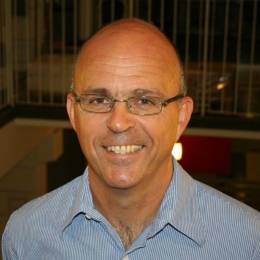
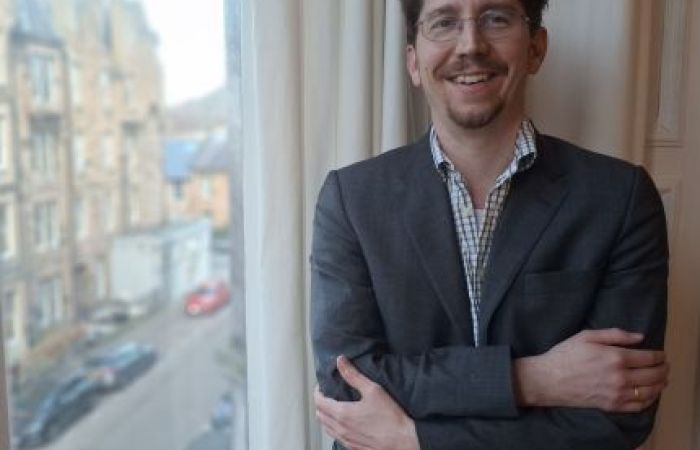
Professor Michael Ben-Gad is a Professor of Economics at City, University of London, where he has served since 2009. He previously held roles as Head of the Department of Economics (2010–2013) and Deputy Head (2008–2010). His research focuses on dynamic macroeconomics, taxation, public debt, immigration economics, and national security, with notable contributions to endogenous growth models and compositional data econometrics. He holds a PhD from the University of Chicago (1996) and has taught at institutions including the University of Houston and University of Haifa. Ben-Gad served on the U.S. National Academy of Sciences panel on immigration's economic and fiscal impacts (2014–2016) and received a 2017 Fellowship from the Royal Society of Arts (FRSA). His work spans academic journals (Economic Modelling, Journal of Economic Dynamics and Control) and media outlets (BBC, CNBC, Al Jazeera), addressing topics like Brexit economics, fiscal policy, and geopolitical challenges. He co-convenes the City Branch of Academics for Academic Freedom and is a founding member of London Universities' Council for Academic Freedom. His research grants include funding from HM Treasury/ESRC on fiscal policy and immigration (2011), the Israel Science Foundation (2007–2008), and the Samuel Ne'eman Foundation (2004). Professional roles include editorial board membership for Economic Affairs and membership of the ESRC Grant Assessment Panel (2021). He is proficient in Hebrew and contributes to policy debates on taxation, macroprudential frameworks, and defense economics.
Mauro Bambi is an Associate Professor at Durham University Business School and an Associate Fellow at the Institute of Advanced Studies. His research focuses on Macroeconomic Theory, Endogenous Growth, Habit Formation, and Behavioral Economics. He earned his PhD from the European University Institute (2007) and held positions at ETH Zurich and the University of York. He directs the Centre for Macroeconomic Policy (CEMAP) and has been recognized with the 2008 Italian Association of Applied Mathematics award for his PhD thesis. Education: PhD in Economics (European University Institute, 2007); Postdoctoral Fellowships at Université Catholique de Louvain (Belgium) and ETH Zurich (Switzerland). Research Interests: Macroeconomic Theory and Policy Design Endogenous Growth and Fluctuations Habit Formation in Economic Models Behavioral Economic Preferences Mathematical Methods in Macroeconomics Key Contributions: His work on habit formation models, time-to-build frameworks, and policy design has influenced macroeconomic theory. Recent studies analyze post-COVID demand shifts and pandemic economic impacts. Awards: 2008 Graduate Prize for Best PhD Thesis (Italian Association of Applied Mathematics). Advising and Leadership: Supervised PhD students like Federico Bertoni and Xinyi Xu. Directed CEMAP from 2019–2022, fostering macroeconomic policy research. Active in interdisciplinary collaborations at the Institute of Advanced Studies. Labs/Teams: Leader of CEMAP, collaborating with global institutions on macroeconomic policy analysis.
Per Krusell is Professor of Economics at Stockholm University and holds the Torsten and Ragnar Söderberg Chair at the Institute for International Economic Studies (IIES). He is a Fellow of the Econometric Society and served as President of the European Economic Association in 2020. He is currently the Secretary of the Prize Committee for the Sveriges Riksbank Prize in Economic Sciences in Memory of Alfred Nobel. Education: PhD in Economics, University of Minnesota Research Interests: Per Krusell’s research spans macroeconomics , inequality , climate economics , labor markets , and political economy . He has made foundational contributions to understanding incomplete markets, wealth distribution, optimal taxation, and the macroeconomic effects of climate change. His work often integrates dynamic stochastic general equilibrium (DSGE) models with heterogeneous agents to study long-run outcomes and policy impacts. Publications Trend: His recent publications (2022–2025) reflect a strong focus on climate policy , integrated assessment modeling , and macro-labor dynamics . Key themes include carbon taxation, labor supply responses to productivity growth, fiscal multipliers in heterogeneous-agent settings, and the macroeconomic consequences of vaccination and epidemic control. Awards & Honors: Fellow of the Econometric Society Torsten and Ragnar Söderberg Chair in Economics President, European Economic Association (2020) Secretary, Nobel Prize Committee in Economic Sciences Advising & Grants: While specific student names are not listed, his leadership roles in global economic associations and policy committees indicate extensive academic advising and grant involvement in macroeconomic policy and climate economics. Labs & Teams: He is affiliated with the Institute for International Economic Studies (IIES) at Stockholm University, a leading research institute in macroeconomics and international economics.
Stefanos Zenios is Professor at Stanford Graduate School of Business with dual appointments in Entrepreneurship and Operations, Information & Technology . He directs Stanford GSB’s Center for Entrepreneurial Studies and co-directs the Doerr School of Sustainability ’s Program in Ecopreneurship. His Startup Garage course has launched companies like DoorDash while alumni have raised over $3B in venture capital. He co-authored the foundational Biodesign textbook and previously served as Editor-in-Chief of Operations Research . PhD, MIT Operations Research (1996) MA, University of Cambridge (1996) BA, University of Cambridge (1992) Research Focus Dr. Zenios’ work bridges operations research and innovation management , with significant contributions to: Healthcare operations : Administrative cost reduction, organ allocation optimization, and clinical workflow improvements Entrepreneurship : Venture creation frameworks and experiential education Ecopreneurship : Sustainable business model innovation His Precedents Thinking framework (HBR 2025) has gained global recognition for solving systemic inefficiencies. Current research includes the biennial Search Fund Study with Peter Kelly. Scientific Recognition INFORMS Fellow Multiple Best Paper Awards, INFORMS CAREER Award, National Science Foundation (2000) Dhirubhai Ambani Faculty Fellow (2017–2020) George E. Nicholson Award (1997) He has received extensive media coverage in Fast Company , Time Magazine , and Stanford Business . His research has been featured in over 150 press mentions including JAMA , Harvard Business Review , and Health Affairs .
Todd Sorensen is an Associate Teaching Professor at the University of California, Merced (UC Merced), affiliated with the School of Social Sciences, Humanities & Arts and the Economics and Business Management department. He holds fellowships at IZA (Institute of Labor Economics) and GLO (Global Labor Organization). Prior to UC Merced, he served as an Associate Professor at the University of Nevada, Reno (2014–2023) and an Assistant Professor at UC Riverside (2007–2014). His professional journey includes a visiting role as Visiting Associate Professor at UC Merced before his current appointment in 2022. Education: PhD in Economics, University of Arizona, 2007 Research Interests: Todd's work focuses on labor market structures , exploring topics like monopsony power and wage-setting dynamics; immigration , including its demographic and policy implications; and discrimination , particularly in criminal sentencing and labor markets. His research has been published in journals like ILR Review , Labour Economics , and the Journal of Population Economics , with findings cited in the U.S. Economic Report of the President. Scientific Awards: Fellow at IZA (2022–present) Fellow at GLO (2022–present) Advising & Grants: Todd has advised students across various levels but no specific advisees are listed. His grants and funding sources are not detailed in the provided text. He collaborates with interdisciplinary teams and maintains affiliations across UC campuses through his and his spouse’s academic careers. Labs/Teams: Engaged with research networks at IZA and GLO, focusing on labor market policies and migration studies. Active in collaborative projects analyzing immigration trends, labor market competition, and discrimination metrics.
Dr. Juan Manuel Berbel Pineda is a full Professor at the Department of Business Organization and Marketing at Universidad Pablo de Olavide, Spain. His academic work focuses on tourism economics, sustainable tourism practices, and international business strategies, particularly within the hotel industry and textile sector. Key research areas: Tourism Economics, Sustainable Tourism, International Business Strategy Affiliated with IMEGS (Innovation and Marketing for a Sustainable Global Environment) research group Doctoral Programs: Innovation, Entrepreneurship and Family Business His research explores tourism competitiveness and internationalization patterns through empirical studies on hotel chains in Latin America, fair trade impacts in emerging economies, and post-COVID-19 rural tourism development. Analysis of 15 recent publications reveals strong emphasis on structural equation modeling, cross-cultural comparisons, and market segmentation strategies. Current academic activity includes international collaborations with institutions like Massey University, Varna University of Management, and University of Mauritius. His 2020 work on Ecuadorian chia seed exports demonstrates methodology for EU market selection using 7-dimensional indicators, while his sustainable tourism studies provide frameworks for pandemic-era tourism revival through non-overcrowding strategies.
Tim Conley is Professor and Chair at the Department of Economics, University of Western Ontario. He holds a Ph.D. from the University of Chicago (1996). His research focuses on applied econometrics with emphasis on spatial dependence, cross-sectional analysis, and empirical industrial organization. His primary research interests include methodological development in econometrics, particularly around dependence modeling in cross-sectional data and spatial analysis techniques. He has made significant contributions to understanding technology adoption in developing economies and detection of collusion in market mechanisms. Professor Conley's publications demonstrate consistent focus on developing robust statistical methods for economic applications, with recent work emphasizing practical applications in policy evaluation and market analysis. His methodological innovations have been implemented in statistical software packages used by researchers worldwide.
Anastasia Semykina is a Professor of Economics and Deputy Dean (Research and Innovation) at RMIT University's School of Economics, Finance & Marketing. She holds a PhD from Michigan State University (2006) and previously served as Charles and Joan Haworth Professor of Economics at Florida State University. Her expertise spans theoretical and applied econometrics, with a focus on panel data models, missing data estimation, and their application in labor economics, education economics, transition economies, and economic psychology. She teaches advanced econometrics and microeconomics courses at both undergraduate and graduate levels. Research Interests: Theoretical and Applied Econometrics Labor Economics Economics of Education Transition Economies Economics and Psychology Health Economics Her recent publications address topics such as panel data methodologies, healthcare cost-effectiveness analysis, and educational policy evaluation. She is actively involved in supervising PhD and Master's research students in econometrics and applied economics.
Aaron Kappeler is a Lecturer in Anthropology of Development at the University of Edinburgh's School of Social and Political Science, Department of Social Anthropology. He teaches core courses in the MSc International Development program and MA Social Anthropology, including Anthropology and Environment and Social Development. Education: PhD, University of Toronto Graduate studies, University of Heidelberg and University of Leipzig Undergraduate, University of Arizona Research Focus: Kappeler specializes in Latin American political economy with emphasis on agricultural development , petro-populism , and rural livelihoods . His fifteen-year ethnographic fieldwork in Venezuela examines state enterprises, agrarian reform under Chávez, and the interplay of race, nature, and capital in socialist policy implementation. Current work analyzes oil rent redistribution mechanisms. Publication Trends: Recent scholarship (2021-2025) reveals consistent focus on Venezuelan political economy , bridging anthropology and political science . Key themes include petro-populism's impact on rural cooperatives (2024), racialized sovereignty production (2023), and neo-structural socialism in state enterprises (2025). His work critically engages with dependency theory while documenting grassroots responses to resource nationalism. Scientific Awards: None documented in source material. Academic Supervision: Kappeler annually supervises MSc dissertations in International Development and MA dissertations in Social Anthropology. He has served as Director of Admissions for graduate development programs and coordinates departmental open-day events.
Giuseppe Fontana is an Associate Professor of Political Economy (SECS-P/01) at the University of Sannio (UNISANNIO) in the Department of Law, Economics, Management and Quantitative Methods (DEMM). He has maintained an active research profile for over two decades, establishing himself as a significant contributor to Post-Keynesian economics and monetary theory. His research interests include: Post-Keynesian Economics Monetary Theory and Endogenous Money Macroeconomic Policy and Financial Stability Financialization and Socioeconomic Impacts Economic Methodology and History of Economic Thought International Trade and Exchange Rate Theory Stock-Flow Consistent Modeling Fontana's scholarly trajectory demonstrates a consistent focus on heterodox economic approaches, particularly Post-Keynesian theory. His work evolved from theoretical contributions in the early 2000s to increasingly policy-relevant analyses of contemporary economic challenges. His recent publications show special attention to the Eurozone crisis, the impact of the COVID-19 pandemic on European economies, and the theoretical foundations of monetary production. He frequently employs stock-flow consistent modeling to provide comprehensive analyses of macroeconomic phenomena, challenging mainstream economic frameworks with alternative theoretical perspectives. Fontana has established important collaborations with scholars like Emiliano Brancaccio, Riccardo Realfonzo, and Marc Lavoie, demonstrating his integration within international networks of heterodox economists. His work has been published in leading heterodox economics journals including the Cambridge Journal of Economics, Journal of Post Keynesian Economics, and Review of Political Economy, as well as in edited volumes with major academic publishers like Palgrave Macmillan and Edward Elgar.
Tasos Kalandrakis is a Professor of Political Science at the University of Rochester, affiliated with the School of Arts & Sciences. He holds a PhD from UCLA (2000). His research focuses on political economy, game theory, legislative policy-making, and bargaining models. He has held academic roles including Associate Professor (Political Science and Economics) since 2010 and Assistant Professor roles at the University of Rochester and Yale University. His work bridges political science and economics, addressing topics like parliamentary systems, electoral competition, and institutional design. Education: PhD in Political Science (UCLA, 2000), MA in Political Science (UCLA, 1998), BA in Economics (AUEB, 1995). Research interests include dynamic legislative processes, strategic voting, and computational methods in political analysis. His recent articles explore equilibrium computation in bargaining models, minority government dynamics, and policy-making under uncertainty. He has advised multiple PhD students and contributed to conferences and journals globally. His teaching spans game theory, political institutions, and computational modeling. Service roles include organizing Wallis conferences, graduate admissions, and serving on search committees. He has held visiting fellowships and presented at institutions worldwide, including Caltech, Princeton, and the London School of Economics.
Professor Jiti Gao is a Donald Cochrane Chair in Econometrics & Business Statistics at Monash University's Faculty of Business and Economics. He leads the Department of Econometrics and Business Statistics, specializing in non- and semi-parametric econometrics, time-series analysis, and panel data methodologies. His research focuses on developing statistical models for climate change, energy demand, and financial forecasting. Affiliations: Monash University, Impact Labs Grants: Multiple ARC Discovery Projects (e.g., 2020–2025 on climate-energy time series, 2017–2020 on econometric model building) Collaborations: CSIRO, Yale University, and international partners from China, Norway, and Singapore Research interests include climate econometrics, financial time series, and policy evaluation. Over 136 publications span econometric theory and applications, with recent work on nonlinear trending models and quantile regression. His grants emphasize methodological advancements in time series and panel data analysis. Awards: Not explicitly mentioned, but recognition includes Australian Professorial Fellow status and international research leadership roles. Advising/Grants: Primary Investigator on multiple ARC-funded projects, focusing on climate modeling and financial econometrics Labs/Teams: Part of Monash's Impact Labs and collaborates with global institutions on climate and econometric initiatives
Sridhar R. Tayur is the Ford Distinguished Research Chair and University Professor of Operations Management at Carnegie Mellon University’s Tepper School of Business. He holds a Ph.D. in Operations Research from Cornell University and a B.Tech. in Mechanical Engineering from IIT Madras. His research focuses on quantum computing applications in operations research, healthcare systems optimization, and supply chain management. He has held visiting roles at MIT, Stanford, and Cornell, and founded companies like SmartOps and OrganJet. His recent work spans quantum-inspired optimization algorithms, healthcare decision support systems, and fair resource allocation policies. He has contributed to over 110 publications, including high-impact papers in Management Science , Operations Research , and IEEE Transactions . Awards include INFORMS Fellow and NAE membership. He teaches courses in quantum integer programming, healthcare operations, and service management at the Tepper School. Education: Ph.D. (Cornell), B.Tech. (IIT Madras) Research Labs: Quantum Technology Group, OrganJet Key Awards: INFORMS Fellow, NAE Member, MSOM Distinguished Fellow Teaching: MBA Operations Management, PhD Quantum Optimization, Healthcare Systems His interdisciplinary work bridges quantum computing, healthcare policy, and logistics, supported by collaborations with industry and government institutions.
Matthias Parey is a Professor in the Department of Economics at the University of Surrey. He holds additional roles as a Research Fellow at the Institute for Fiscal Studies (IFS) and the Institute for the Study of Labor (IZA), a Researcher at the ESRC Research Centre on Micro-Social Change (MiSoC), and a Research Associate at ZEW. His research spans Labour economics Economics of education Micro-econometrics Inequality Economics of innovation . His recent publications analyze high-skilled migration selection, trade shocks, cannabis market size estimation, and gasoline demand elasticity. He has contributed to journals like Review of Economics and Statistics , Economica , and Journal of the European Economic Association . Scientific awards include fellowships at IFS and IZA. His work on trade shocks examines gender-specific labor supply responses to Chinese import competition, while his cannabis market research introduces a forensic economics approach using legal inputs. Earlier studies focus on maternal education impacts on child development and the long-term labor market effects of Erasmus student exchanges.
Dimitrios P. Tsomocos is a Professor of Financial Economics at Saïd Business School and a Fellow in Management at St Edmund Hall, University of Oxford. He holds a BA, MA, MPhil, and PhD from Yale University and previously worked at the Bank of England. He serves on editorial boards including Annals of Finance and Economic Theory, and is a Senior Research Associate at the Financial Markets Group at the London School of Economics. His educational background includes: University of Oxford: M.A. by resolution, 2002 Yale University: Ph.D. in economics, 1996 Yale University: M.Phil. in economics, 1992 Yale University: M.A. in economics, 1990 Yale University: B.A. in economics, 1989 Professor Tsomocos is a mathematical economist specializing in Central Banking, Banking and regulation, Incomplete asset markets, Systemic risk, Financial instability, and Issues of new financial architecture. His research focuses on contagion, financial fragility, interbank linkages, and the impact of the Basel Accord using General Equilibrium models with incomplete asset markets, money, and endogenous default. He is working toward designing a new paradigm of monetary policy, financial stability analysis, and macroprudential regulation. His recent publications show a consistent focus on financial stability, banking regulation, and the interaction between monetary policy and financial stability. The research spans theoretical modeling of bankruptcy and default in general equilibrium frameworks, practical applications to bank regulation, analysis of commodity cycles in emerging economies, and policy responses to crises like the COVID-19 pandemic. His work frequently employs quantitative methods and general equilibrium modeling to address pressing issues in financial economics. His scientific achievements include: 2004 Bank Sabatell prize for the best work on the economics of banking (for "Book vs. Fair Value Accounting in Banking and Intertemporal Smoothing") Co-development of the Goodhart-Tsomocos model of financial fragility (2003) Testimony to House of Lords for the Economic and Financial Affairs and International Trade Sub Committee's report (2011) Appointment to Research Advisory Board, Central Bank of Russian Federation (2018) Professor Tsomocos has advised numerous PhD students and collaborated extensively with central banks worldwide. He has served as an economic advisor to a major political party in Greece and regularly provides commentary on the Greek economy. His research has had substantial policy impact, with the Goodhart-Tsomocos model implemented by more than ten central banks including the Bank of Bulgaria, Bank of Colombia, Bank of England, and Bank of Korea. He continues to collaborate with researchers from the ECB, Central Bank of the Russian Federation, and Bank of Chile on updated versions of his financial fragility model. He co-developed the Goodhart-Tsomocos model of financial fragility while working at the Bank of England, which has been implemented at various central banks globally. His research group at Oxford continues to refine this model and apply it to contemporary financial stability challenges.