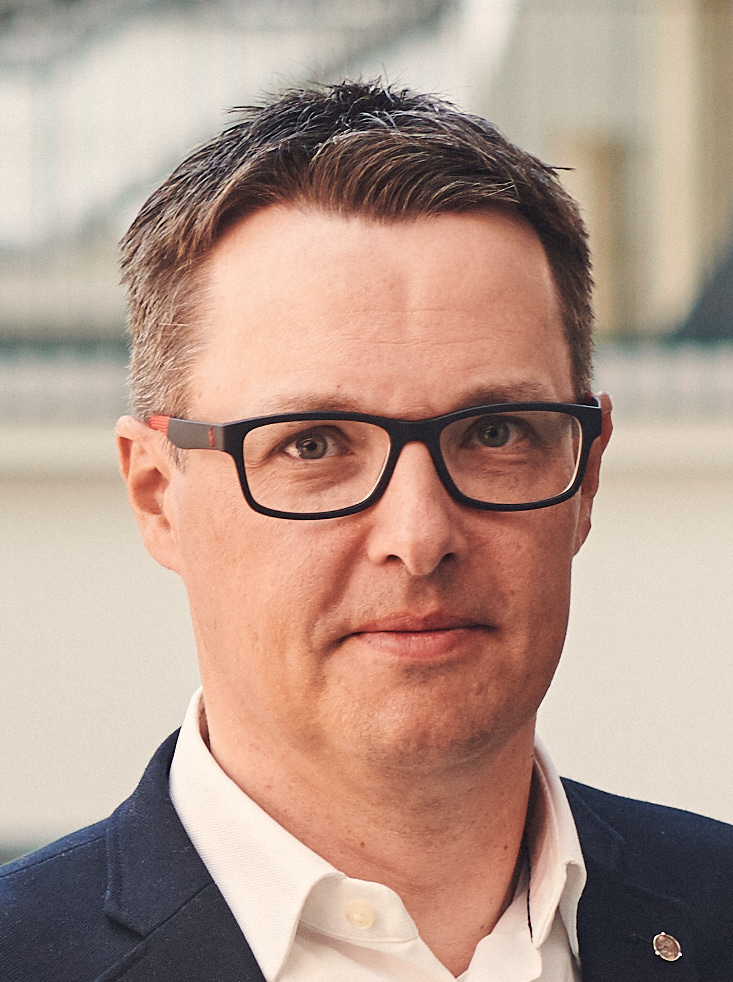
Fabian Fagerholm is an Assistant Professor in the Department of Computer Science at Aalto University. His work bridges software engineering, human-computer interaction, and empirical research methodologies. He actively participates in research groups such as Software and Service Engineering (SSE) and Human-Computer Interaction and Design (HCID). Fagerholm's research explores: Continuous experimentation in software development Developer cognition and mental models Agile methodologies and team dynamics Low-code platforms and end-user programming Software engineering education and pedagogy His publications reflect a strong empirical focus, with recurring themes of human factors in technical systems and educational innovation. He has received notable awards including: Journal of Systems and Software Best Paper Award (2018) EUROMICRO SEAA Distinguished Paper Award (2017) Teacher of the Year (2013) Nokia Foundation Scholarship (2013) Fagerholm contributes to software engineering infrastructure through tools for experimentation and boundary artifacts, enhancing collaboration in distributed teams.
Janne Lindqvist is an Associate Professor at the Department of Computer Science, Aalto University. His research bridges security engineering, human-computer interaction (HCI), and privacy, with a focus on making security systems usable and user-centric. University: Aalto University Department: Department of Computer Science Rank: Associate Professor Email: janne.lindqvist@aalto.fi Lindqvist’s work spans security engineering , privacy systems , and user research , emphasizing practical authentication methods, password management, and human behavior in security contexts. He explores how users interact with systems like TPM APIs, gesture passwords, and mobile authentication mechanisms. Recent publications highlight trends in authentication systems , ubiquitous computing security , and mobile user behavior . Key themes include biometric authentication, gesture-based security, and balancing usability with cryptographic robustness. CHI'25 Honorable Mention Award CHI'24 Best Paper Award His research integrates empirical studies with technical implementations, such as analyzing password forgetting patterns and developing acoustic sensing for vehicle detection (e.g., Auto++, BO-Ear). Collaborative efforts span machine learning, psychology, and embedded systems.
Jukka Manner is a Full Professor (tenured) of Networking Technology at Aalto University's Department of Communications and Networking (Comnet), School of Electrical Engineering. With a career spanning over two decades in internet technologies, he leads research in networking, wireless systems, and energy-efficient ICT solutions. Dr. Manner received his MSc (1999) and PhD (2004) degrees in computer science from the University of Helsinki. His academic journey has been marked by significant contributions to internet standardization through the IETF since 1999, where he served as co-chair of the NSIS working group. Professor Manner's research focuses on networking, software and distributed systems, with particular emphasis on wireless and mobile networks, transport protocols, energy efficient ICT and cyber security. His work bridges theoretical advancements with practical applications, addressing critical challenges in modern communication systems, sustainable networking practices, and security frameworks. His research group has made significant contributions to 5G technologies, UAV communications, and energy-efficient network design. His extensive publication record shows a clear evolution toward sustainability in networking technologies, with recent work focusing on energy efficiency in 5G systems, sustainable web technologies, and the environmental impact of digital infrastructure. The research demonstrates strong interdisciplinary connections between telecommunications engineering, computer science, and environmental science, with particular emphasis on reducing the carbon footprint of digital systems while maintaining performance. Cross of Merit, Signals (2014) Medal for Military Merits for contributions in national defence and C4 (2015) Professor Manner has supervised over 200 MSc theses and more than 20 doctoral dissertations, establishing himself as a dedicated mentor in the field. He has been principal investigator and project manager for over 15 national and international research projects, including serving as Academic Coordinator for the Finnish Future Internet research programme (2008-2012). His leadership extends to conference organization, having served as local co-chair of Sigcomm 2012 in Helsinki, and active participation as a peer reviewer and member of various Technical Program Committees. As an active contributor to internet standardization through the IETF, Professor Manner's work has practical impact on global networking technologies. His research group maintains strong connections with industry partners and participates in shaping future networking standards and practices, particularly in the areas of sustainable networking, 5G evolution, and security frameworks for emerging technologies.
Minni Haanpää is a University Lecturer at the Multidimensional Tourism Institute within the Faculty of Social Sciences at the University of Lapland . Her research focuses on tourism and event experiences, co-creation, inclusive tourism, and ethnographic methodologies such as videography and autoethnography. She has led and collaborated on projects addressing Nordic urban tourism, technology-mediated experiences, and peripheral destination development. Key projects include the FIT ME! initiative exploring foreign traveler ecosystems and the Tarinoita Korkalovaarasta project on urban local identity. Her work often integrates critical sociological perspectives with practical innovation, such as designing empathic phygital experiences and assessing sustainability in tourism mobility services. Education: PhD in Tourism Studies. Grants/Projects: 17 projects funded by institutions like Business Finland, European Regional Development Fund, and Lapland Regional Fund. Research outputs span 75 publications since 2006, emphasizing co-creation frameworks, human-animal relations in tourism, and smart destination strategies. She actively reviews for journals like Tourist Studies and conferences, contributing to academic discourse on tourism ethics and pedagogy. Her involvement in SINCO Lab and service prototyping environments highlights her commitment to bridging academic research with practical tourism development. Current interests include technology's role in tourism transformation and inclusive urban tourism practices.
Petri Niemi is a Researcher at LUT University within the School of Engineering Sciences , specifically affiliated with the Industrial Engineering and Management (IEM) department. His work spans interdisciplinary domains, linking engineering with business practices. Current research focuses on soil science and agricultural management, particularly analyzing soil pore structure, microbial interactions, and long-term agricultural impacts. His earlier contributions center on supply chain management, logistics optimization, and educational pedagogy, including experiential learning frameworks and student guidance systems. Research Trends: Recent publications highlight sustainable soil management and pore dynamics, while earlier works emphasize knowledge development in supply chains and logistical service innovation. His expertise bridges quantitative analysis, organizational behavior, and user-centric design. Education & Practice: While formal educational details are not public, his pedagogical involvement includes student guidance and curriculum development for secondary and higher education programs.
Johanna Virkki is an Associate Professor at the Department of Computing Sciences, Faculty of Information Technology and Communication Sciences, Tampere University. Her research focuses on smart textiles, wearable technologies, RFID systems, and their applications in healthcare, assistive communication, and human-computer interaction. She has pioneered projects integrating RFID into clothing and environments for control interfaces, physiological monitoring, and gamified therapies. Key research areas include: Development of e-textiles for AAC (Augmentative and Alternative Communication) RFID-based wearable and furniture interfaces for accessibility Sensor systems for healthcare monitoring and rehabilitation Smart spaces and IoT-enabled environments Her work emphasizes interdisciplinary collaboration, with notable contributions in: Passive RFID sensor platforms for moisture, strain, and physiological signals Co-design approaches involving speech therapists, engineers, and end-users Prototyping wearable devices for children with disabilities and elderly care Recent publications highlight advancements in: Smart furniture and textile-based AAC solutions AI-driven smart spaces and edge-cloud computing Bio-inspired sensors using animal hair and conductive yarns Johanna's research bridges technology and human needs, addressing challenges in healthcare, education, and accessibility through innovative textile and RFID systems.
Jaana-Maija Koivisto is a University lecturer at the University of Helsinki's Faculty of Medicine, Department of Nursing Science. She serves as a Clinicum Teachers' Academy Supervisor in the doctoral program, and supervises in both the Doctoral Program in Cognition, Learning, Teaching and Communication and the Doctoral Programme in Population Health. With 54 publications spanning from 2013 to 2025, her research output shows significant growth, with particular productivity in recent years (10 publications in 2020, 7 in 2022, and 6 each in 2023-2024). Dr. Koivisto holds qualifications as a Docent in Nursing, a Doctor of Philosophy in Education, and a Master of Health Sciences in Nursing. Her academic journey reflects a strong foundation in both healthcare practice and educational theory, positioning her at the intersection of nursing science and pedagogical innovation. Her research interests center on the application of virtual reality and simulation technologies in nursing education, with particular focus on empathy development, knowledge acquisition, and interprofessional competencies. She investigates how immersive technologies can enhance traditional nursing education methods, examining both quantitative learning outcomes and qualitative student experiences. Her work demonstrates a commitment to evidence-based educational practices that prepare nursing students for complex clinical environments. Analysis of her recent publications reveals a clear trajectory toward increasingly sophisticated applications of technology in healthcare education, with her 2025 work exploring generative AI integration with VR environments. The publications consistently address practical educational challenges while contributing to theoretical understanding of technology-mediated learning in healthcare contexts. As a doctoral program supervisor across multiple disciplines, Dr. Koivisto plays a significant role in shaping the next generation of healthcare educators and researchers. Her work bridges clinical practice, educational theory, and technological innovation, creating valuable cross-disciplinary connections within the university's academic ecosystem.
Kari Smolander is a Professor in Software Engineering at the LUT School of Engineering Sciences, Finland. They focus on cloud computing, digital transformation, and software development practices. Research Interests Smolander's research spans serverless computing, cloud migration strategies, DevOps, and digital identity architecture. Their work examines socio-technical challenges in platform ecosystems and enterprise software development. Publication Trends Recent publications (2024-2025) emphasize serverless computing frameworks, cloud integration challenges, and digital identity systems. Studies analyze AI adoption gaps, technical debt in cloud environments, and collaboration mechanisms in B2B platform development. Software Engineering Leadership As a faculty member, Smolander contributes to advancing cloud-native software practices through empirical studies and conceptual frameworks for modern digital infrastructure.
Mika Mäntylä is a Professor at the Department of Computer Science, University of Helsinki, affiliated with the Faculty of Science. His research focuses on software engineering, testing, log analysis, and systematic literature reviews. He leads projects such as CRITICAL (cultivating critical reading in the internet era) and a microservice anomaly detection initiative funded by the Academy of Finland. His work spans technical domains like software log anomaly detection, meta-learning applications, and social media credibility evaluation. Notable tools include Credtwi (a browser plugin for credibility assessment) and LogLead (a log analysis system). Key grants include SRC Strategic Research Council funding (2023–2026) and Academy Project funding (2023–2026). Mika’s research bridges technical and societal challenges, addressing software quality, automated anomaly detection, and user-centric credibility evaluation. His publications often emphasize empirical methods, tool development, and interdisciplinary approaches.
Samuel Salovaara is a Senior Researcher at the University of Lapland , affiliated with the Faculty of Social Sciences and the Department of Welfare, Work and Citizenship . His research focuses on digitalization in social work, particularly the role of information systems in knowledge formation and multidisciplinary collaboration. He holds a Doctor of Social Sciences degree and has held external roles as a Social Worker at Helsingin kaupunki (2019–2019) and Application Analyst at Oy Apotti Ab (2016–2019). Key projects include CHILD SOCNET (2024–2025), STePS 3.0 (2019–2022), and his personal project Väitöskirjatutkimus (2018–2024). His work bridges science and technology studies (STS) with practical applications in social welfare systems. Salovaara has received awards for impactful research, including the Parhaan paperin palkinto (2021) and Rajapinta ry:n gradupalkinto (2018). His research outputs (27 publications) analyze information system implementation, employee well-being, and cross-sector collaboration. Notable contributions include studies on client information systems, comparative professional experiences, and sociotechnical system frameworks. He actively participates in academic conferences and media engagements to disseminate findings on digitalization in social services.
Jussi Nikander is a Senior University Lecturer at Aalto University in the Built Environment domain. His work spans geoinformatics, agricultural technology, and computational data analysis. Research Interests: He specializes in geospatial data systems, cybersecurity for agricultural networks, educational technology in GIS instruction, and optimization of forestry operations. His interdisciplinary approach bridges computer science with environmental and agricultural sciences. Recent Trends: Recent publications focus on open geospatial data security, self-assessment tools in education, and agricultural knowledge processing architectures. His work often addresses practical challenges in precision agriculture and timber logistics. Projects: Notably involved in developing the Geoportti self-assessment platform and the Cropinfra data collection system for ISO 11783-compliant farm equipment.
Laura Pajula is a doctoral researcher at the Centre of Excellence in Research on Ageing and Care, affiliated with the Faculty of Humanities and Social Sciences at the University of Jyväskylä. She actively contributes to the DigiIn-project (Towards Socially Inclusive Digital Society: Transforming Service Culture), funded by the Strategic Research Council. Her work focuses on the intersection of digital public services and older adults' inclusion in society. Doctoral Researcher, Centre of Excellence in Research on Ageing and Care Project Member, DigiIn-project Part-Time Teacher (past role) Doctoral Student, University of Jyväskylä Laura’s research explores the design of digital public services for and with older adults, emphasizing mental access, peer support, and non-formal learning. She investigates how societal digitalization impacts elderly populations and identifies strategies to bridge digital divides through collaborative design and stakeholder engagement. Her publications highlight challenges in digital inclusion, including ambivalent user experiences, the role of warm experts, and systemic gaps in user involvement practices. Articles span topics from societal digital policy to practical implementations of digital support systems. Ella and Georg Ehrnrooth Foundation Grant (2025)
Didem Polad is a Doctoral Researcher at the Faculty of Law, University of Helsinki, specializing in legal frameworks for emerging technologies. Her work intersects Law, EU Law, and Data Protection, focusing on liability issues related to Artificial Intelligence and Autonomous Vehicles. Research Interests Polad investigates regulatory challenges arising from AI-induced harm, end-user liability, and the interplay between the AI Act and GDPR. Her research contributes to EU legal developments in technology governance. Projects PREST: Private Enforcement, Sustainability & Technology (2024–present) How to Regulate AI-Related Damages Liability in the EU: Academy of Finland-funded project (2019–2024) Recent Activities She has presented at international events including TILTing Perspectives 2024, IAPP Knowledge Net, KU Leuven’s LAILEC colloquium, and IE Lawtomation Days, addressing topics like AI accountability and privacy harms.
Christian Guckelsberger is an Assistant Professor in Creative Technologies at Aalto University, leading the Autotelic Interaction Research (AIR) group. He also serves as a visiting scholar at the School of Electronic Engineering and Computer Science, Queen Mary University of London, and is a principal investigator (PI) at the Finnish Center for Artificial Intelligence (FCAI) and a member of the European Laboratory for Learning and Intelligent Systems (ELLIS). His research focuses on engineering creative artificial systems that interact meaningfully with humans, leveraging intrinsic motivation as a core driver of creativity. He bridges disciplines such as artificial intelligence (AI), human-computer interaction (HCI), psychology, philosophy, and creative practice, with applications in videogames, fine art, and design. Recent research trends include modeling intrinsic motivation for AI creativity, developing formal theories of competence, applying reinforcement learning to game design, and exploring human perception of AI-generated content. His work emphasizes sustainable adoption of creative AI in society and the workplace. Scientific awards include: Honorable Mention (CHI PLAY 2023) Finalist in “AI Game Dev” Competition (2021) Best Paper Award (International Conference on Computational Creativity, 2020) Best Paper Award (IEEE Conference on Computational Intelligence and Games, 2018) Finalist in EPSRC’s “Creative Computing” Competition (2018) Best Paper Honourable Mention (CHI Play, 2017) Christian is actively involved in mentoring, offering opportunities for research visits, postdocs, PhD, and Master’s thesis projects. His work intersects AI, game design, and interdisciplinary creativity research.
Pia Hannukainen serves as Professor of Practice at Aalto University's Department of Design, where her work bridges academic research and practical applications in design innovation. With a career spanning human-centered design methodologies and collaborative development processes, she actively contributes to advancing design theory and practice. Research Focus: Her core interests encompass: User innovation methodologies and toolkit development Co-creation processes for tangible and intangible services Stakeholder communication frameworks in design Human-centered design integration in organizational contexts Participatory futuring techniques with maker communities Publication Trends: Hannukainen's research (2012-2016) demonstrates consistent focus on refining design methodologies through empirical studies. Her work explores lead user integration, service design communication, co-creation toolkits, and participatory approaches, often employing action research across multiple industries. Recent outputs emphasize practical frameworks for organizational adoption of collaborative design. Awards: Best Paper Award at the 18th International Conference on Design Theory and Methodology (ASME 2006) for contributions to design engineering research