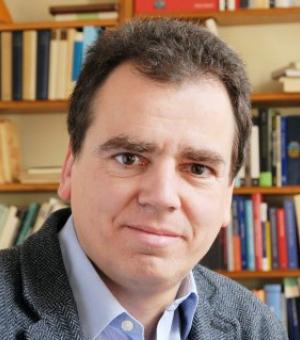
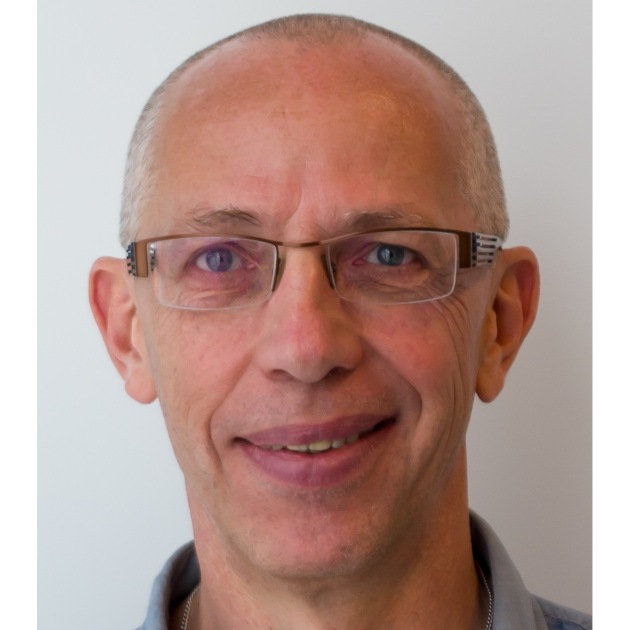
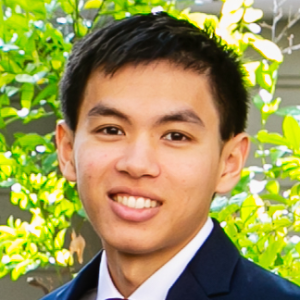
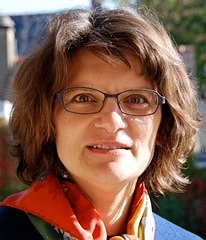
Tianqi Chen is an Assistant Professor at the Machine Learning Department and Computer Science Department of Carnegie Mellon University (CMU), with a courtesy appointment as a Professor in the Electrical and Computer Engineering Department within the College of Engineering. His research focuses on scalable machine learning systems, compiler optimization, and efficient deep learning frameworks. He holds a PhD from the Paul G. Allen School of Computer Science & Engineering at the University of Washington. Key contributions include the creation of XGBoost, Apache TVM, and MLC-LLM—widely adopted systems for machine learning and large language models. His work bridges algorithmic innovation with high-performance computing, emphasizing efficient deployment, quantization, and edge computing. Recent publications highlight advancements in LLM serving (e.g., WebLLM, Flashinfer), compiler-driven optimizations (e.g., TVM, Relax), and low-latency inference techniques (e.g., Magicdec, Tilus). These efforts address scalability, energy efficiency, and cross-platform compatibility in modern AI systems. Chen’s research has been applied to diverse domains, including music AI, browser-based inference, and microservice architectures for LLMs. His work underscores the importance of system-level thinking in advancing AI capabilities.
Prof. Matthias Nießner is a Professor at the Technical University of Munich , where he leads the Visual Computing Lab . Prior to this, he held a Visiting Assistant Professor position at Stanford University . His work bridges computer vision , graphics , and machine learning , focusing on 3D reconstruction , semantic scene understanding , and AI-driven video synthesis . Prof. Nießner has published over 150 works in top venues like SIGGRAPH , CVPR , and ECCV , with several receiving best paper awards (SIGCHI’14, HPG’15, SPG’18, SIGGRAPH’16 Emerging Tech). His research has garnered international media attention, including features in the New York Times , Wall Street Journal , and MIT Technological Review , as well as TV demonstrations (e.g., Jimmy Kimmel Live for Face2Face technology). Awards : TUM-IAS Rudolph Moessbauer Fellowship (2017–ongoing) Google Faculty Award (2017) Nvidia Professor Partnership Award (2018) ERC Starting Grant (2018, €1.5M) Eurographics Young Researcher Award (2019) Research Trends : 3D Gaussian Splatting for real-time rendering Neural Radiance Fields (NeRF) with mesh supervision Audio-driven facial animation via diffusion models Latent space diffusion for 3D scenes Self-supervised and zero-shot methods for 3D and image analysis As a co-founder and director of Synthesia Inc. , he drives democratization of synthetic media. His YouTube channel has over 5 million views, reflecting his impact beyond academia.
Mennatallah El-Assady serves as Assistant Professor at ETH Zurich's Department of Computer Science, where she leads the Interactive Visualization and Intelligence Augmentation Lab (IVIA). Her academic trajectory includes research fellowships at ETH's AI Center and doctoral work at University of Konstanz and OntarioTech University, establishing her expertise at the intersection of visualization and artificial intelligence. Her research focuses on advancing responsible data-driven decision-making through human-centered analytics, with particular emphasis on explainable machine learning systems. Dr. El-Assady combines data mining techniques with visual interfaces to create transparent AI workflows, specializing in text data analysis. Her work bridges computational linguistics, digital humanities, and information visualization to develop tools that make complex AI processes interpretable for end users. Recent publications demonstrate growing focus on generative AI's impact on visualization practices and sophisticated frameworks for interactive machine learning. Her research consistently addresses the challenge of maintaining human agency in increasingly automated systems, with applications spanning political debate analysis, musicology, and healthcare data interpretation. The trend shows increasing sophistication in evaluation methodologies for visual analytics systems. Best Paper Award: Honorable Mention for 'Progressive Learning of Topic Modeling Parameters: A Visual Analytics Framework' Dr. El-Assady actively shapes her field through workshop leadership including ArgVis (Argument Visualization), Vis4DH (Visualization for Digital Humanities), and VISxAI (Visualization for AI Explainability). Her teaching includes 'Interactive Machine Learning- Visualization and Explainability' at ETH Zurich, training next-generation researchers in human-centered AI development. She maintains strong industry connections with coverage in Forbes and ETH News regarding human-AI collaboration frameworks. The Interactive Visualization and Intelligence Augmentation Lab (IVIA) develops cutting-edge tools including explAIner for transparent machine learning, LingVis for linguistic analysis, VisArgue for debate structure visualization, and VALIDA for political deliberation analysis. These projects share a common thread of enhancing human understanding through carefully designed visual interfaces that expose AI decision processes.
Professor Johannes Zachhuber holds a professorship in Historical and Systematic Theology at the University of Oxford's Faculty of Theology and Religion. His research focuses on modern and postmodern theology, the Continental tradition of philosophy of religion (Kant, Schleiermacher, Hegel), theology of late antiquity, 19th-century theology, religion and politics, and theories of secularization. He examines theological institutions' role in shaping modern discourse while addressing contemporary debates on secularity. His scholarly work bridges historical theology with systematic inquiry, analyzing figures like Schleiermacher, Gregory of Nyssa, and Baur. Recent publications include studies on early Christian cosmology, Schleiermacher’s theology, and Baur’s historicist approach. He critiques secularization narratives and explores patristic thought’s philosophical dimensions. Publications span monographs, edited volumes, and reviews, reflecting his interdisciplinary engagement with theology’s historical and philosophical foundations. He contributes to debates on theology’s role in modern academia and society, emphasizing the interplay between historical context and theological reflection.
Luisa A. Igloria is a Professor of English and Creative Writing at Old Dominion University (ODU), holding the Louis I. Jaffe Professorship and serving as a core faculty member in the MFA Creative Writing Program, which she directed from 2009-2015. She was the 20th Poet Laureate of the Commonwealth of Virginia (2020-22), receiving the 2021 Academy of American Poets Fellowship during her term. With over 35 years of teaching experience, she leads workshops at Norfolk's Muse Writers Center and sits on its Board, cementing her role as a literary ambassador and educator. Her education includes: Ph.D. in English/Creative Writing, University of Illinois at Chicago (1995) M.A. in Literature, Ateneo de Manila University (1988) B.A. in Humanities (Comparative Literature, English, and Philosophy), University of the Philippines Baguio (1980) Igloria's research centers on Poetry, Creative Writing, and the intersection of Filipino American and Asian American literary traditions within postcolonial and diasporic frameworks. She explores themes of migration, cultural memory, and women's narratives through innovative verse, as seen in her ecopoetry (2015 Resurgence Prize) and works addressing Philippine history. Her expertise spans nonfiction and contemporary American poetry, often examining identity through the lens of the Filipino diaspora. Recent publications reveal a sustained focus on diasporic identity and postcolonial critique through daily poetic practice. Her work frequently engages with Philippine folklore, migration trauma, and cultural hybridity, blending formal experimentation with urgent socio-political commentary. Journals like Crab Orchard Review and Orion showcase her signature fusion of personal and collective histories. Key literary awards include the Gawad Pambansang Alagad ni Balagtas lifetime achievement award (2021), Crab Orchard Poetry Prize (2019), Resurgence Prize for ecopoetry (2015), May Swenson Prize (2014), and multiple Palanca Awards. ODU-specific honors comprise the Burgess Award for Research (2015) and Broderick Diversity Champion Award (2015). Igloria mentors emerging writers through ODU's MFA program and The Muse Writers Center, where she serves on the Board. Her grants include the Virginia Commission for the Arts Fiction Fellowship (2001) and Academy of American Poets Laureate Fellowship (2021) for statewide public poetry initiatives. She has also received institutional support for diaspora-focused projects like the Poetry Postcard Project. She collaborates with literary collectives including the Writers Union of the Philippines (UMPIL) and participates in international seminars such as the Summer Literary Seminars in St. Petersburg. Her daily poem-writing project since 2009 and community workshops demonstrate ongoing creative leadership beyond formal academic structures.
Yanai Toister is an Associate Professor (tenure track) specializing in Communication Sciences, focusing on interdisciplinary research at the intersection of photography, media theory, and visual culture. His work explores topics such as post-visual imagery, drone aesthetics, sensory perception, and the philosophical underpinnings of photographic systems. He has been actively publishing since 2007, with notable contributions in journals like PHILOSOPHY OF PHOTOGRAPHY and Journal of Comparative Literature and Aesthetics . Research Interests: Toister's research spans photography history , digital art , information aesthetics , and sensory studies . He critically examines how technological advancements reshape visual perception, particularly through drone imagery, algorithmic programming, and electromagnetic spectrums. Publications: His recent articles analyze the speculative camera, post-visual imagery in drone culture, and the interplay between echolocation and participatory frameworks. Earlier works include studies on Flusserian theory, the Turin Shroud, and speed in photographic practice. Awards & Activities: While no specific awards are listed, Toister is an active academic, organizing exhibitions, reviewing for journals, and delivering lectures globally (e.g., University of Wyoming, 2025). He also serves in academic committees and evaluates funding applications.
Renaud Pacalet is a Researcher at Institut Mines-Télécom – Télécom Paris , affiliated with the Communications and Electronics (Comelec) Department and the System on Chip (LabSoc) research team under the Information Processing and Communication Laboratory (LTCI). His work spans hardware security, embedded systems, and software-defined radio (SDR) architectures. Current Research: Hardware security, side-channel attacks (power, timing, fault injection), RISC-V security analysis using gem5, FPGA scheduling for cloud data centers, and model-driven design methodologies. Past Research: Hardware acceleration for ray tracing, SDR front-end processing, SoC security, and memory bus protection (SecBus project). Teaching: Courses on Digital Systems, Computer Architecture, and Hardware Security at EURECOM, including lab sessions on side-channel attacks and fault analysis. Email: renaud.pacalet@telecom-paris.fr Contact: Télécom ParisTech, Campus SophiaTech, 450 route des Chappes 06410 Biot, France
University of North Carolina at Chapel HillUnited States
Andrew Kwong is an Assistant Professor in the Department of Computer Science at the University of North Carolina at Chapel Hill, specializing in computer security and applied cryptography with a focus on side-channel attacks and defenses. His research bridges hardware vulnerabilities and cryptographic systems, particularly targeting microarchitectural weaknesses. His primary research interests include Rowhammer-based exploits , side-channel attacks on cryptographic implementations , hardware security modules , and microarchitectural vulnerabilities . Kwong investigates how physical hardware properties (e.g., DRAM disturbance errors, cache hierarchies, acoustic properties) can compromise system security, with recent work demonstrating end-to-end key recovery against post-quantum cryptography and novel Rowhammer amplification techniques. His publication record features high-impact venues including IEEE S&P (5 papers), USENIX Security (4 papers), and CCS (2 papers), with notable work When Frodo Flips receiving a Best Paper Award Honorable Mention at CCS 2022. Research trends show consistent focus on practical hardware-assisted attacks, evolving from acoustic side-channels (2018-2019) to Rowhammer sophistication (2020-2025). Best Paper Award Honorable Mention (CCS 2022) Kwong teaches graduate courses including Hardware Security and Side-Channels (COMP 790-184) and Research Topics in Computer Security (COMP 790-185), emphasizing hands-on lab assignments for conducting and defending against hardware attacks. His syllabi cover foundational topics like cache side-channels, Spectre variants, Rowhammer, and trusted execution environments, requiring students to implement real-world attacks through programming assignments.
Sandrine Blazy is a Professor in the Computer Science Department at the University of Rennes, France. She is a member of CELTIQUE (also referred to as Epicure), a joint project-team with Inria Rennes Bretagne Atlantique and the IRISA laboratory. Since 2021, she has served as deputy director of the IRISA CNRS UMR 6074 laboratory and will be the general chair for POPL 2026, which will be held in Rennes. She is also a member of the editorial board of the LMCS journal. Dr. Blazy completed her PhD at CNAM (Conservatoire National des Arts et Métiers) in 1993 with a thesis titled "La spécialisation de programmes pour l'aide à la maintenance du logiciel" (Program Specialization for Software Maintenance Assistance). She later completed her Habilitation à diriger des recherches (HDR) in 2008 at the University of Évry Val d'Essonne with a thesis titled "Sémantiques formelles" (Formal Semantics). Her research focuses on the formal verification of program transformations and semantic properties of programming languages, particularly in the context of the CompCert compiler and Verasco static analyzer. She develops mechanized semantics using the Coq (or Rocq) proof assistant to ensure software correctness and security. A prime application domain of her work is software security, including constant-time programming for cryptographic applications and software obfuscation techniques. Her teaching includes mechanized semantics (in Coq), functional programming (in OCaml), formal methods (using Why3), and software vulnerabilities. Dr. Blazy's publication record from 2019-2025 shows a sustained focus on verified compilation techniques, particularly in preserving security properties during compilation. Her work bridges theoretical formal methods with practical compiler implementation, resulting in tools that have real-world impact in safety-critical systems. She has made significant contributions to the CompCert formally verified compiler project, with particular attention to constant-time preservation for cryptographic applications and JIT compilation verification. Her scientific achievements have been recognized with several major awards: CNRS Silver Medal (2023) Lucas Award from Formal Methods Europe (2023) ACM SIGPLAN Programming Languages Software Award for CompCert (2022) ACM Software System Award for CompCert (2021) Dr. Blazy has been actively involved in the programming languages research community, serving on numerous program committees for major conferences including POPL, ICFP, PLDI, and CPP. She has mentored students and contributed to education through teaching mechanized semantics and formal methods. Her work with the CompCert compiler has led to practical applications in safety-critical systems, with industry collaborations documented in publications like "CompCert: Practical experience on integrating and qualifying a formally verified optimizing compiler" (ERTS 2018). She leads research within the CELTIQUE project team, which focuses on developing trustworthy software using deductive verification. Her team works on advancing the state of the art in formal verification of compilers and static analyzers, with applications in security-critical domains including cryptographic implementations and safety-critical embedded systems.
Joanna McGrenere is a Professor in the Department of Computer Science at the University of British Columbia . Her research focuses on Human-Computer Interaction , Personalized User Interfaces , and Universal Usability , particularly for older adults and users with aphasia . She has extensively published on cross-device learnability , collaborative environments , and adaptive interface design . Research Interests: Human-Computer Interaction Personalized User Interfaces Universal Usability Interactive Technologies for Aging Populations Recent Publications address: real-time feedback in online meetings (2025), AI support for interviews (2025), financial technology for older adults (2025), ambient social systems (2025), computer-mediated self-disclosure (2025), digital home health assessments (2024), and intergenerational VR communication (2024). Key trends show increasing focus on age-inclusive design , context-aware interfaces , and interruption management . Collaborations include: Leah Findlater (University of Washington), Andrea Bunt (University of Manitoba), Karyn Moffatt (McGill University), and Kellogg S. Booth (University of British Columbia). Her work appears in journals like ACM Transactions on Accessible Computing and International Journal of Human-Computer Studies .
Max Planck Institute for Security and PrivacyGermany
Reid Holmes is a Professor in the Software Practices Lab at the University of British Columbia's Department of Computer Science, Faculty of Science. With over 15 years of academic experience, he has progressed from Assistant Professor at the University of Waterloo (2010-2015) to Associate Professor (2015-2022) and now full Professor (2022-present) at UBC. His research spans multiple dimensions of software engineering with a strong emphasis on the human aspects of development. Dr. Holmes' research interests focus on understanding the problems software engineers encounter when creating and evolving software systems. His work examines software testing and validation, source code reuse, code search, context-sensitive example location, API understanding, speculative analysis, code review, and team awareness. He believes that by better understanding how people create, explore, evolve, and reason about software systems, we can enhance developers' effectiveness and improve software quality. His research is characterized by its practical application to real-world software development challenges. His recent publications demonstrate a consistent focus on improving developer productivity through better tools and understanding of developer behavior. The publications reveal a trajectory from traditional software engineering topics toward newer areas involving AI-assisted development, with particular attention to how generative AI affects workflow and collaboration. His work consistently bridges theoretical software engineering concepts with practical developer experience considerations. ACM SIGSOFT Distinguished Paper Award (multiple times) FSE 2024 Most Impactful Paper Award 2024 ICSE Most Influential Paper Award Winner of the 2008 MSR Mining Challenge As an educator and mentor, Dr. Holmes has supervised numerous graduate students who have gone on to successful careers in academia and industry. He has served on program committees for major software engineering conferences including ICSE, FSE, and MSR, and has been an Associate Editor for TSE since 2016. His work on developer tools like CodeShovel, Devy, and Baker demonstrates his commitment to creating practical solutions that address real developer pain points.
S Shaun Davies is an Associate Professor of Finance and the Quinby Family Endowed Faculty Fellow at the University of Colorado at Boulder , serving as Faculty Director of the Burridge Center for Finance . He holds a Ph.D. in Finance from UCLA Anderson School of Management (2013), an M.A. in Economics from UCLA (2010), and dual B.S. and B.A. degrees in Applied Mathematics and Economics from University of Colorado (2005). Research Interests: Asset Management : Analyzing ETFs, TDFs, and market dynamics. Sustainable Finance : Studying ESG impacts, divestment consequences, and socially responsible investing. Behavioral Finance : Exploring speculation sentiment, hiring biases, and investor psychology. Crowdfunding : Investigating equity crowdfunding and decentralized investment mechanisms. Article Trends: Recent work focuses on ETF market effects , retirement planning , and behavioral biases , with keywords spanning Finance, Financial Markets, and Sustainable Investing. Subfields include Index Investing, Retirement Risk, ESG Policy, and Market Democratization. Professional Recognition: 2020 Joseph L. Frascona Teaching Excellence Award 2021–2022 Steven Lindstrom Pardo Memorial Lecturer Daniels Fund Faculty Fellow Additional Contributions: Co-founder and inaugural President of the Four Corners Center for Research on Index Investments, with prior industry experience in fixed income analysis.
Prof. Peter Purgathofer is an Associate Professor at TU Wien's Department of Human Computer Interaction within the Faculty of Informatics. His work focuses on interdisciplinary research at the intersection of technology, design, and society. He leads projects such as 'Gesture controlled computer game for dementia prevention' and 'Haptic e-learning instrument for handicapped pupils,' demonstrating expertise in healthcare technologies and inclusive design. His research emphasizes ethical AI, game design for education, and human-centered interaction paradigms. Education background includes advanced degrees in engineering and informatics, reflected in his dual role as educator and researcher. Notable contributions include co-creating flipped classroom models for large cohorts, integrating adversarial chatbots into AI ethics curricula, and developing peer-review frameworks for large university courses. Over 20 student theses supervised span topics from AI ethics to gamified health interventions. Publications highlight his work in design-based research, educational technology, and healthcare applications. Projects often involve co-creation with students and end-users, emphasizing participatory design principles. Ongoing interests include responsible innovation in technology and bridging societal challenges through interactive systems.
Andrea Barbon is an Assistant Professor at the University of St. Gallen's School of Finance within the Department of Finance. His research focuses on financial markets, algorithmic trading, cryptocurrency dynamics, liquidity provision, and market microstructure. He has collaborated with institutions like the Swiss Finance Institute and Peak Capital Trading. His work addresses topics such as DeFi, stablecoin monetary policy interactions, and NFT bubble formation. Barbon's research outputs span 12 scholarly papers, with significant contributions to understanding trading strategies (e.g., day trading systems, intraday momentum), cryptocurrency market quality, and liquidity risks in option markets. Notable articles include 'Nonstandard Errors' (Journal of Finance, 2024) analyzing liquidity through multi-analyst studies and 'Gamma Fragility' (2020) exploring option market imbalances. His articles consistently engage with high-frequency data, algorithmic systems, and emerging financial technologies like blockchain. While no awards or grants are explicitly mentioned, his prolific publication record reflects active engagement in financial innovation and policy-relevant research.
Carlos Molina Clemente is an Associate Professor of Computer Architecture at Rovira i Virgili University in Tarragona, Spain. He holds a M.Sc. in Computer Engineering (Universitat Politècnica de Catalunya, 1996) and a Ph.D. in Computer Science (UPC, 2005). His research focuses on Computer Architecture, Mobile/Sensor Networks, and Cloud Computing. He leads the Cloudlab research group and coordinates initiatives like GTDAWIN and BIOGEI. Key research areas include multicore scheduling, LoRaWAN protocols, LIDAR data analysis, and serverless computing. He has published over 50 articles in top-tier conferences/journals and supervised three doctoral theses. His work spans projects on cache architectures, real-time systems, and educational multicomputing solutions. Affiliations include the Department of Computer Engineering and Mathematics (DEIM) at URV, with offices at Campus Sescelades (Avinguda Països Catalans 26, Tarragona). Research highlights include contributions to non-uniform cache policies, predictive mobile network algorithms, and energy-efficient sensor networks.